
Reviewed · MARANGU ROUTE CLIMBS
Top 6 Days Mt. Kilimanjaro Bike trek Tour by Marangu-Kilema Route
This is Kilimanjaro for people who would rather handle a mountain bike than a trekking pole. The route begins near the Marangu side of the mountain, shifts to the Kilema Gate, and climbs through forest and alpine desert toward Kibo Hut. The boldest section comes near the top: after hiking the steepest summit slopes, you take your bike toward Uhuru Peak, then descend through the high country.
I like two things right away. The Kilema Route is the only bike-accessible route to Kilimanjaro’s summit, and the change of scenery is remarkable, from forest to stone, ice, and open volcanic country. I also like that transfers, meals, porters, crew wages, and park fees are arranged for you, which removes much of the usual expedition paperwork.
The catch is that this is not six easy days of cycling. Some stretches are too rocky to ride, altitude can turn a manageable slope into a serious test, and the summit push begins around 4 a.m. You need solid fitness, real mountain-bike handling skills, and a willingness to walk when the trail demands it. The price is $3,668 per person, so this is a specialist adventure rather than a casual bike holiday.
Key points to know before booking
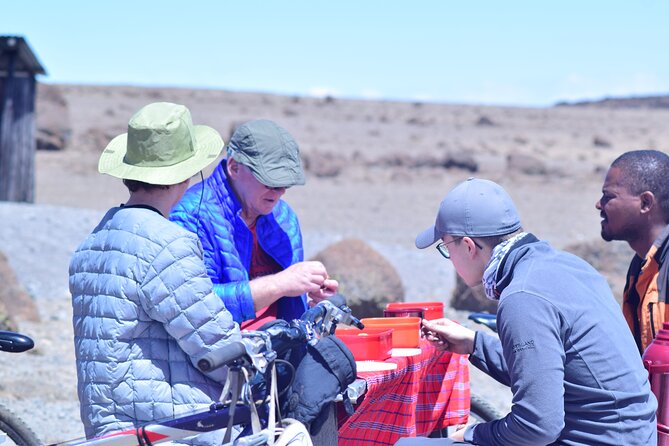
- Ride the Kilema Route from 1,950 meters to high alpine terrain: The first major cycling section runs from Kilema Gate to Horombo Hut over about 16 kilometers.
- Spend nights in mountain huts: Horombo and Kibo provide a more basic mountain stay than a hotel, while putting you close to the next day’s route.
- Expect a mixed ride-and-hike summit attempt: The upper trail is rocky and steep, and the final ascent to Uhuru Peak is not a continuous bike ride.
- See several climate zones in six days: The route passes through forest-like lower country, alpine desert, and ice-covered high ground.
- Use the included support wisely: A guide, porters, meals, transportation, and park charges are covered, but bike hire and personal mountain gear are not.
- Plan for an early finish and a serious summit night: The high point comes after a pre-dawn start, with the final descent continuing back toward Horombo.
Why this Kilimanjaro bike trek is different
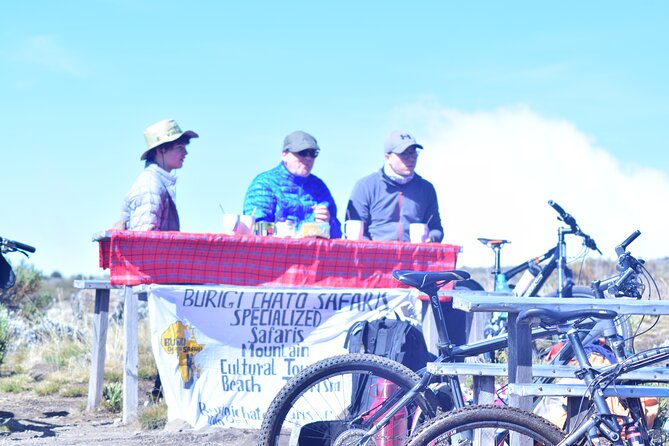
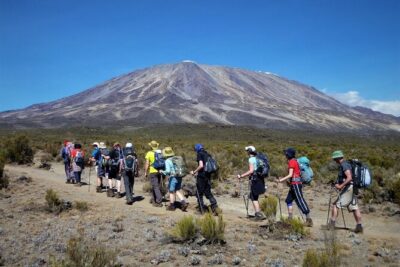
Most people picture Kilimanjaro as a walking expedition. This trip gives the mountain a different rhythm. You pedal where the trail allows it, push or walk across rougher sections, and carry the bike through the most difficult upper terrain before riding again where conditions improve.
That combination is the real appeal. You are not simply taking a mountain bike downhill, and you are not simply hiking with a bike strapped to your back. The route asks you to switch between cycling, walking, and conserving energy at altitude.
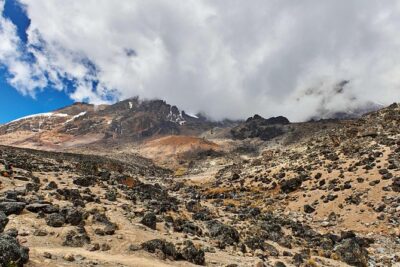
The scenery changes quickly. Lower sections have a forest feel, while Horombo and the Mawenzi area open into alpine country. Above the Saddle, the ground becomes stony and exposed, with little shelter and less oxygen. The summit area brings cold, ice fields, and a stark volcanic setting.
The itinerary is listed as a private experience with group discounts available, though the stated maximum is 200 participants. Ask how your own departure will be organized, especially if you want a small riding group and plenty of direct time with your guide.
More Marangu Route climbs:
- Kilimanjaro climb, Marangu route (6-day)
★ 5.0 · 72 reviews - Climbing Kilimanjaro – Marangu Route
★ 5.0 · 65 reviews - Private Full Day Hiking Experience to Marangu Route
★ 5.0 · 61 reviews
Day 1: Kilema Gate to Horombo Hut
Your morning begins with a transfer from Moshi toward Marangu Gate, about 45 minutes away. At Marangu, you register with the park authorities before continuing by vehicle to Kilema Gate at roughly 1,950 meters.
This extra gate procedure matters because it is where the route becomes a cycling trip rather than a standard hiking approach. Before setting off, check your daypack carefully. You should have drinking water, lunch, extra clothing, and anything you may need during the day. Your bike also gets a final check before the first long climb.
The ride to Horombo Hut covers about 16 kilometers and takes around six hours. The route gains a great deal of height, reaching roughly 3,705 meters, so the distance alone does not tell the full story. A strong cyclist may ride much of it, but road and trail conditions will decide how much time you spend walking.
This is where technical skill helps. The early route is not a smooth paved climb, and altitude begins to matter. Keep your effort controlled rather than trying to win the first day. The guide rides with you, which is useful for pacing and for deciding when a rough section is better handled on foot.
Horombo is an important overnight stop because it gives you your first real mountain base. The hut setting is functional, not luxurious. You should expect a simple high-altitude night, shared facilities, and a focus on rest, food, and preparation for the next stage.
Day 2: Alpine desert and the Mawenzi hut area
Day two is listed as a short cycling day of about 10 kilometers, but the schedule can run up to 12 hours because the point is altitude adjustment and exploration rather than speed. You ride through alpine desert vegetation toward Mawenzi Hut, with some sections covered in small stones.
The Mawenzi area gives you a close look at one of Kilimanjaro’s two major volcanic peaks. The ground is rough and the setting is open, so this is a good day to pay attention to how your body responds to height. The itinerary returns you to Horombo Hut rather than moving higher for the night.
That return is valuable. You gain time at altitude without giving up the relative comfort of the same hut for a second night. If you feel a headache, unusual fatigue, nausea, or poor coordination, tell the guide rather than trying to hide it. The trip information calls for moderate physical fitness, but high-altitude response varies from person to person.
The ride itself is not the main challenge today. It is the combination of stony ground, thin air, and a long day outside. Carry water and an extra layer where you can reach it. The alpine desert has little visual shelter, and conditions can change quickly.
Day 3: Across the Saddle toward Kibo Hut
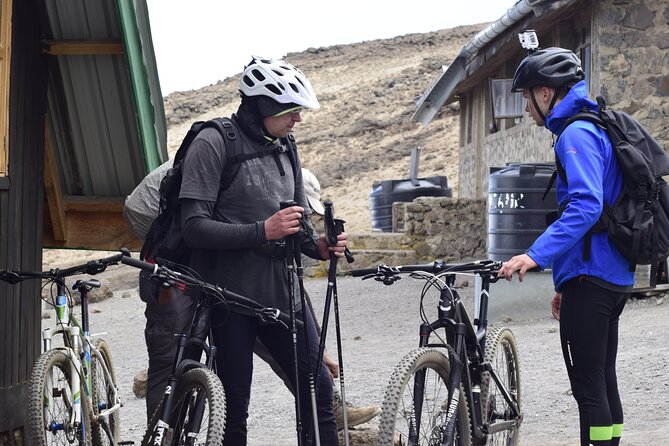
The route now heads toward Kibo Hut, the launch point for the summit attempt. The first three kilometers are described as very rocky, eroded, and difficult to cycle. You may need to push the bike for much of this part.
After that rough opening, the trail improves. The Saddle, the broad area between Mawenzi and Kibo, is relatively flat by comparison, and cycling becomes more practical. Do not mistake flatter ground for easy ground. At this altitude, low oxygen and cold can make seven kilometers feel much longer than expected.
The last kilometer before Kibo Hut is especially demanding. The sensible tactic is slow, steady progress, frequent drinking, and no race to the hut. This is a day when your guide’s judgment matters more than your cycling speed.
Kibo Hut is a basic high mountain stop. You arrive with the summit attempt close at hand, so the priority is food, warmth, and rest. The schedule includes an early wake-up and a pre-dawn start, meaning your afternoon should be quiet rather than social.
One detail deserves special attention: protect your batteries. Headlamp and camera batteries can lose power in freezing conditions. Bring a replacement headlamp and spare batteries, as instructed, and keep them protected from the cold. Your water container also needs care. One reported summit experience included a CamelBak freezing, so you should not rely on a single drinking system in the coldest hours.
More bike days around Kilimanjaro:
- Chagga Villages in Mount Kilimanjaro Cycling Day Trip
★ 5.0 · 42 reviews - Kilimanjaro bike park safari
★ 5.0 · 16 reviews - Cycling from Kilimanjaro to Ngorongoro Crater
★ 5.0 · 10 reviews - Best 5 Days Kilimanjaro Bike Trek Tour via Marangu Kilema Route
★ 5.0 · 9 reviews
Day 4: Rest, summit preparation, and a confusing schedule note
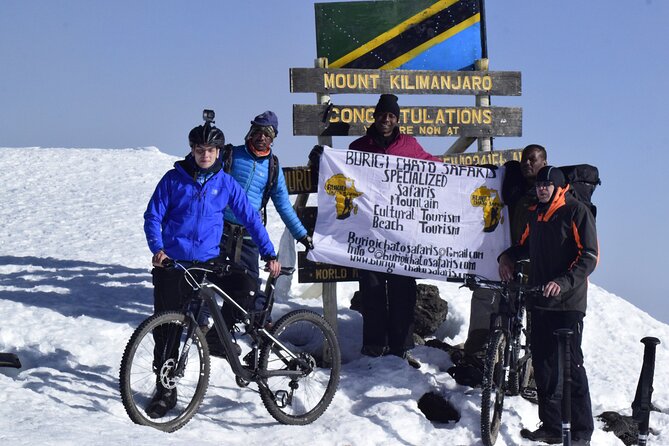
The supplied schedule describes a return toward Kibo Hut after breakfast, followed by lunch, rest, and perhaps a partial hike up the summit path around 4 p.m. This appears to overlap with the preceding day’s move to Kibo, so the exact order should be confirmed with the operator before departure.
The practical point remains clear: you need a protected rest period before the summit attempt. Use it to organize thermal clothing, gloves, headlamp, camera batteries, water, and anything you will need in darkness. A short orientation walk may help you understand the opening section of the summit trail, but only if your guide thinks your condition allows it.
This is also the moment to be honest about your energy. The summit is another 1,195 meters above Kibo Hut. At this height, a small problem can become a major one, and turning around is a sensible decision if the guide advises it.
The overnight summit push is physically and mentally demanding. The experience is not designed around a leisurely late-morning ride to the top. You rest in the afternoon, start in darkness, and attempt the highest section when temperatures are at their lowest.
Day 5: Uhuru Peak, a short summit ride, and the long descent
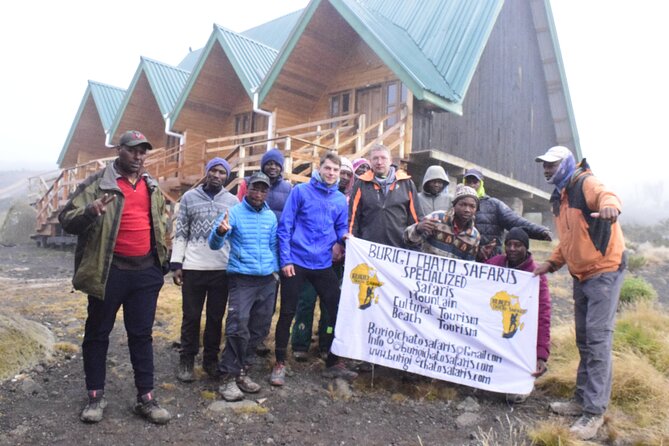
The summit day begins at about 4 a.m. You hike up a zigzagging scree slope for roughly two hours to Hans Meyer’s Cave. Above the cave, the gradient becomes steeper, and the trail demands careful, slow movement.
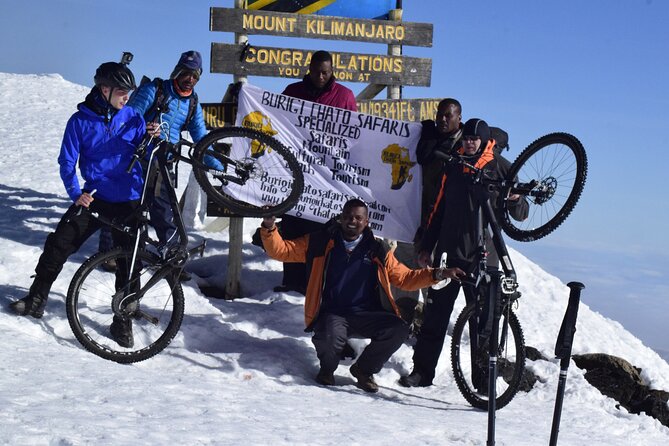
After about three more hours, you aim to reach Gilman’s Point. From there, porters bring your bike forward so you can ride toward Uhuru Peak. This is a limited summit ride, not a continuous descent from Kibo. The upper path remains high, cold, and difficult, and walking may still be necessary.
At Uhuru Peak, you have time for photographs and a brief celebration before riding down toward Stella Point. The summit moment can be brief because exposure, cold, and exhaustion are real concerns. Keep your clothing and gloves ready, even if you are eager to get moving.
After lunch, the route continues down toward Horombo Hut. The itinerary describes the Kibo to Horombo section as alpine desert and ice-cap country, with only about 15 to 20 percent vegetation in the upper area. That stark setting is one of the trip’s strongest visual rewards, but it also makes the descent tiring.
The downhill riding may sound easy, yet rough volcanic ground is hard on hands, arms, brakes, tires, and concentration. This is where competent mountain-bike handling matters. You will need to control speed rather than simply let the bike run.
The descent is also where mechanical preparation becomes important. One available account describes a guide’s bicycle breaking down and causing concern about the continuation of the trip. That does not prove a routine problem, but it is a good reason to ask what repair tools, spare parts, and backup arrangements accompany your departure. Confirm that your hired bike, if you need one, is suitable for rocky high-altitude riding.
Day 6: Ride from alpine country back to the forest
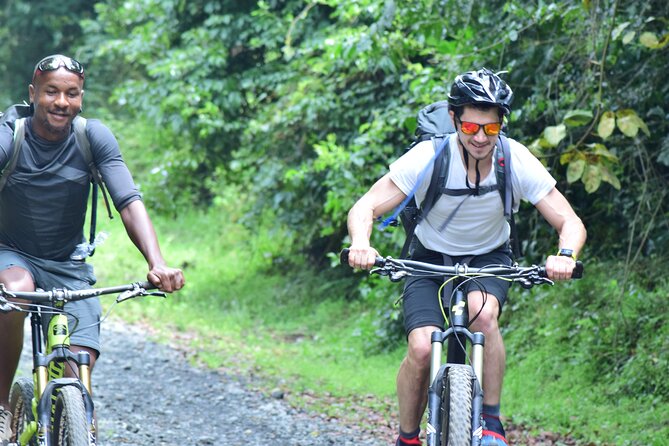
The last riding day takes you from Horombo toward Kilema Gate, passing from alpine terrain into rainforest-like country. The scheduled cycling time is about two hours, although the total timing can depend on trail conditions, stops, and the final transfer.
This is a satisfying change of scenery after the summit section. The air becomes thicker, vegetation returns, and the route feels less exposed. You finish at Kilema Gate, transfer to Marangu Gate for checkout, and then continue to your Moshi hotel.
Round-trip transport is one of the trip’s useful strengths. You do not need to arrange a separate vehicle between the two gates or find your way back into town after six hard days. Airport pickup and drop-off are also listed among the included transport services.
What the $3,668 price really covers
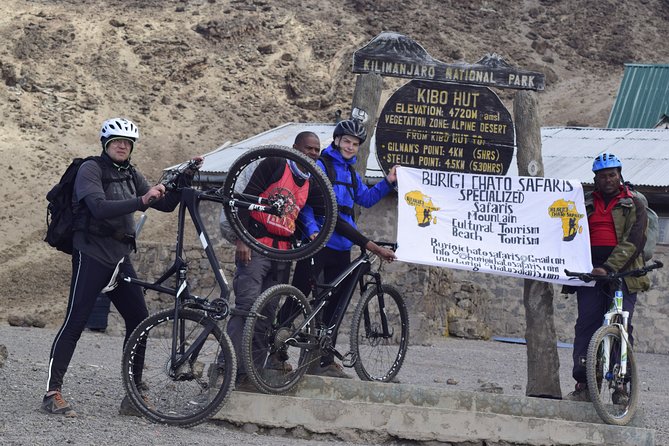
At $3,668 per person, this is expensive compared with an ordinary multi-day bike tour. The price makes more sense when you consider that it bundles park fees, private transportation, crew wages, porter support, meals, and the logistical work of moving a bike and people onto Kilimanjaro.
Dinner is listed for six nights, lunch for six, and breakfast for five. Hotel accommodation before and after the trek can be arranged by you directly or through the operator, so confirm exactly what is included in your quotation. Mountain hut accommodation is part of the route, but the listing does not give hotel names or room standards.
The important exclusions are bike rental and personal mountain gear. You should budget separately for a suitable mountain bike if you are not bringing your own, plus clothing and equipment for cold, wet, and high-altitude conditions. Tipping the crew, visas, and international and domestic flights are also outside the stated price.
The value is strongest for someone who wants one company handling the complicated pieces. It is weaker if you already have local transport, park access, equipment, and support arranged independently.
Guide support, equipment, and the feedback to weigh carefully
The experience has a five-star rating from 15 published ratings, with 100 percent recommending it. The strongest positive themes are motivated crew support, capable porters, organized transfers, and the sheer satisfaction of reaching Kilimanjaro by bike.
Guide Gabriel is named in one account connected with the Kilimanjaro ride. The crew is described as encouraging, and one account says first-aid help was available when altitude sickness became a concern. That is reassuring, but you should still ask about the guide’s medical procedures, emergency communication, and the point at which a summit attempt is stopped.
Some of the available feedback concerns Moshi city rides, Arusha cycling, hot springs, villages, waterfalls, and a safari by bike rather than this six-day summit itinerary. Those comments suggest the operator also runs a range of cycling activities, but they should not be treated as direct evidence about every section of the Kilimanjaro route.
The equipment comments are mixed enough to deserve attention. Several accounts praise well-maintained bikes and good protective equipment on city rides, while another describes a bicycle failure during a Kilimanjaro trip. Ask for the exact bike model, tire size, repair plan, and replacement policy before paying.
Who should book this adventure?
You should consider it if you already enjoy mountain biking, can handle long days outdoors, and want a less conventional way to experience Africa’s highest mountain. It suits a strong cyclist who is comfortable with rough trails but also accepts that walking and carrying the bike are part of the challenge.
It is not a good match if you want a relaxed ride, smooth trails, private hotel rooms each night, or a guaranteed summit. The route involves high altitude, a pre-dawn climb, cold conditions, rocky ground, and a demanding descent.
Free cancellation is available up to 24 hours before the start time. Poor weather may lead to a new date or a full refund, but changes inside 24 hours are not accepted.
Should you book the Kilema bike trek?
Book this trip if the unusual combination of Kilimanjaro, mountain biking, and summit support is exactly what you want. The strongest reasons are the bike-accessible route, varied climate zones, included porters and transport, and the rare chance to ride near Uhuru Peak.
Before committing, get written answers about bike hire, the day four schedule, hut arrangements, emergency support, and spare equipment. If those details are clear and you are ready for a ride-and-hike expedition rather than a normal cycling tour, the six-day Kilema route offers a memorable and demanding way to reach the Roof of Africa.
FAQ
How long is the Kilimanjaro bike trek?
The experience lasts approximately six days, beginning and ending with transfers from the Moshi area.
Where does the cycling begin?
After registration at Marangu Gate, you continue by vehicle to Kilema Gate, where the main cycling route begins at about 1,950 meters.
Is this the only route where you can cycle to the Kilimanjaro summit?
The experience is described as using Kilimanjaro’s only bike-accessible route to the summit.
Do I need to bring or hire my own bike?
Bike hire is not included. You must arrange trekking mountain bike rental separately or bring a suitable bike.
Are meals included?
Yes. The listed package includes six dinners, six lunches, and five breakfasts.
Are porters and crew included?
Yes. Porter support and crew wages are included in the stated package.
Does the tour include airport transfers?
Airport pickup and drop-off are listed among the included transportation services.
What fitness level is required?
A moderate physical fitness level is required, along with mountain-biking skills. The route includes rocky sections, high altitude, a pre-dawn summit climb, and a long descent.
More Six-Day Trips in Kilimanjaro
- Kilimanjaro climb, Lemosho Route (6-day)
★ 5.0 · 129 reviews - 6 Days Tanzania Classic Safari
★ 5.0 · 52 reviews - The Best of Machame Route in 6 Days: Your World’s Summit Guide
★ 5.0 · 44 reviews - 6 Days Machame Route Kilimanjaro Climbing
★ 5.0 · 42 reviews
More Trekking Tours in Kilimanjaro
- Kilimanjaro climb by Lemosho Route (7-day)
★ 5.0 · 651 reviews - Kilimanjaro climb, Machame Route (7-day)
★ 5.0 · 262 reviews - Kilimanjaro Climbing Lemosho Route 8 Days.
★ 5.0 · 186 reviews - 8-Day Small-group Lemosho Kilimanjaro Summit Trekking
★ 5.0 · 186 reviews
Just added around Kilimanjaro
- 6 days Machame route climbing Mt.Kilimanjaro★ 5.0 · 8 reviews
- Mt Kilimanjaro 6 days Marangu route hike★ 5.0 · 3 reviews
- machame route★ 5.0 · 16 reviews
- Private Cycle to Kilimanjaro Bike Park Safari★ 5.0 · 6 reviews
- West Kilimanjaro cycling Adventures★ 4.5 · 8 reviews
- Kilimanjaro Climb • Marangu Route ~ 9 Day★ 5.0 · 4 reviews
- 3 Days Private E-Bike Tour in West Kilimanjaro★ 5.0 · 3 reviews
- Kilimanjaro Climb • Machame Route ~ 10 Day★ 5.0 · 6 reviews
Marangu Route Climbs, compared.
Browse the lists this tour appears in