
Reviewed · LEMOSHO ROUTE CLIMBS
8-Day Small-group Lemosho Kilimanjaro Summit Trekking
Kilimanjaro’s Lemosho route gives you the full mountain story: rainforest on day one, open volcanic country by day two, and a midnight push across scree to Uhuru Peak on day seven. The extra acclimatization time makes this a sensible route for first-time high-altitude hikers, while the Barranco Wall and summit night still demand real fitness.
I like the small-group format, which can mean better attention when your energy or breathing changes. I also like the practical all-inclusive setup: park fees, meals, camping equipment, and hotel transfers are covered. The catch is simple: this is not a casual walking holiday. Summit day is long, cold, steep, and mentally tough.
Key points to know before booking
- An 8-day route with extra altitude time: You spend several days adjusting before summit night, including a high trek to Lava Tower.
- A full range of Kilimanjaro scenery: Expect montane forest, heather, volcanic rock, high desert, senecio plants, and Arctic terrain.
- Small groups up to 15 people: Previous departures included much smaller groups, sometimes only four or five climbers.
- Summit night starts around midnight: Reaching Stella Point for sunrise is the main physical test of the trip.
- Camping, meals, equipment, fees, and transfers included: The price covers much of the costly mountain infrastructure.
- Strong fitness is required: The route is non-technical, but altitude and long walking days make it demanding.
Why the Lemosho route earns eight days
At $2,895 per person, this is a serious purchase, but you are paying for more than a guided hike. The price includes park fees, camping equipment, meals, and round-trip transfers from your Arusha hotel. You also get a guide team, porters, camp support, and a route designed to give your body more time to adjust.
The main value is the schedule. Faster Kilimanjaro routes can save money or days, but they leave less room for altitude adjustment. Here, the trail rises gradually, then gives you a high acclimatization day at Lava Tower before dropping to Barranco Camp. That climb high, sleep lower pattern is useful on a mountain where low oxygen, not technical climbing, causes many problems.
You should still read the price carefully. The supplied details do not list extras such as flights, visas, personal clothing, tips, or other costs outside the mountain package. Ask Climb Kili for a current list of exclusions before paying.
More Lemosho Route climbs:
- Kilimanjaro climb by Lemosho Route (7-day)
★ 5.0 · 651 reviews - Kilimanjaro Climbing Lemosho Route 8 Days.
★ 5.0 · 186 reviews - Kilimanjaro climb, Lemosho Route (8-day)
★ 5.0 · 148 reviews
Arusha pickup and the walk into Big Tree Camp
Your day begins with pickup from your Arusha hotel, with the listed start time at 8:00 a.m. The transfer takes you toward Kilimanjaro’s western side and the Londorossi Gate, where the trek begins after park entry procedures.
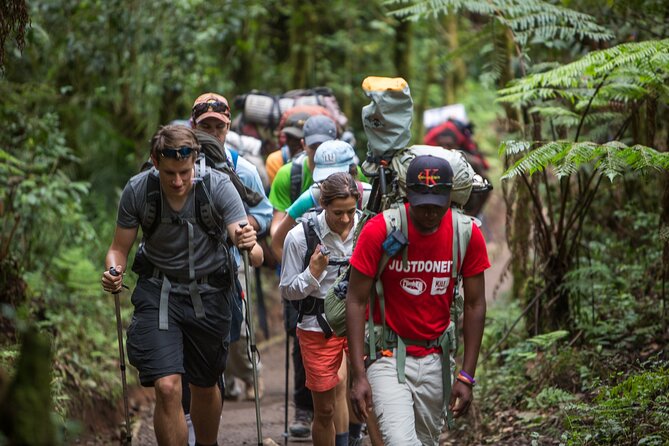
The first walking section covers about 3 miles, or 4.8 kilometers, and takes roughly three to four hours. The trail rises gently through montane forest, a welcome opening after the road journey. Your first camp is Mti Mkubwa, which means Big Tree in Swahili, at about 7,742 feet, or 2,360 meters.
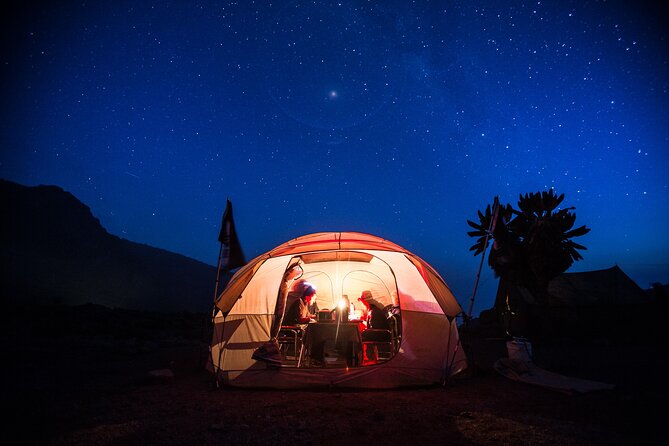
This is a relatively short day, but do not dismiss it. It gets your legs moving and gives the guides a first chance to watch how the group handles the pace. Your tent is already set up under the Climb Kili banner, and your personal belongings are placed inside. That kind of camp support matters after a transfer and a first hike.
Shira Plateau brings the first wide views
Day two is where the scenery changes fast. You leave the forest and enter tall grass, heather, volcanic rock, and lichen. The route climbs to roughly 11,500 feet, or 3,505 meters, over about 4.9 miles, or 8 kilometers.
The walking time is listed at five to six hours, though the itinerary gives four hours in its summary line. Treat the longer figure as the safer planning estimate. Mountain schedules shift with weather, group pace, and rest stops.
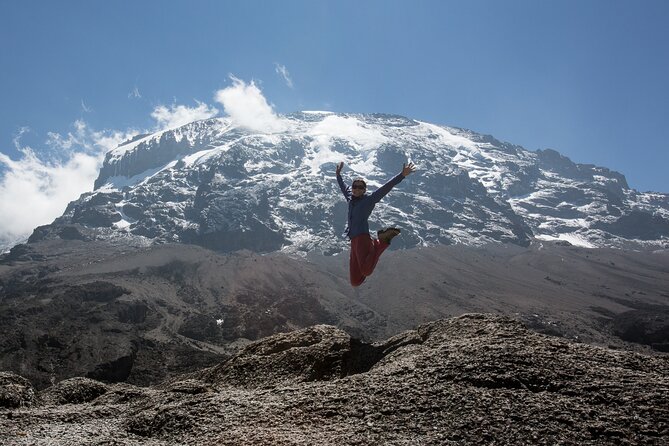
You follow the Shira Ridge toward the high plateau, where Kilimanjaro’s upper peaks begin to appear. The contrast with the forest is the real reward. You are no longer walking through enclosed greenery. You are crossing open volcanic country, with more sky, wind, and distance around you.
This is also when a slow pace becomes important. The guides repeatedly encourage the group to walk slowly, and that is not empty mountain talk. You want to arrive at camp with enough energy for the days ahead, not prove that you can race uphill at 11,500 feet.
Shira Plateau exploration and Moir Camp
Day three gives you time at altitude without a huge summit-style effort. The route covers about 8.7 miles, or 14 kilometers, and reaches approximately 13,800 feet, or 4,206 meters. Walking time is around five to seven hours.
You head east toward Kibo, Kilimanjaro’s highest cone, with an optional visit to the collapsed Shira cone. This is a useful day for appreciating the mountain’s volcanic structure rather than simply chasing the next camp. The high plateau has a stark, open feel, with volcanic ground and broad views toward the upper mountain.
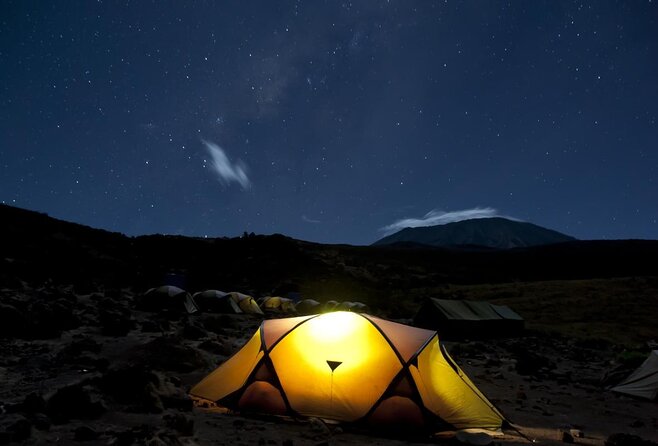
Moir Camp sits in a large gorge at the end of a dormant lava flow. The setting gives this night a different character from the forest camp below. It also brings a practical concern: altitude may begin to affect sleep, appetite, or energy. Tell your guide how you feel instead of trying to hide symptoms to keep up with the group.
More treks and hikes around Kilimanjaro:
- Kilimanjaro climb, Machame Route (7-day)
★ 5.0 · 262 reviews - Climbing Kilimanjaro – Machame Route
★ 5.0 · 170 reviews - Climbing Kilimanjaro through 7 days Machame Route
★ 5.0 · 151 reviews - Kilimanjaro climb, Lemosho Route (6-day)
★ 5.0 · 129 reviews
Lava Tower and the Barranco descent
Day four is one of the smartest parts of the route. You climb to Lava Tower, listed at about 15,000 feet, or 4,500 meters, for acclimatization, then descend toward Barranco Camp at around 13,000 feet, or 3,962 meters.
The walking distance is about 4.3 miles, or 7 kilometers, and the day takes roughly four to six hours, with six hours also shown in the schedule. The high point is the point, not the camp. You spend time at a much higher elevation, then sleep lower.
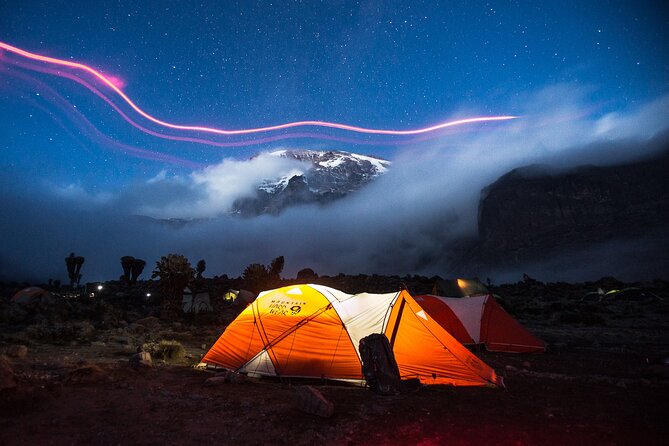
The route passes the junction toward Arrow Glacier before dropping through a large senecio area. You finish near a waterfall and camp below the Barranco Wall, where clouds can move through the valley. It is one of the most memorable camp settings on the trek, but it can also be windy and exposed.
The Lava Tower day is where you learn that Kilimanjaro is not just a matter of walking farther each day. You are training your body to function with less oxygen. A strong group guide will monitor your condition and adjust the pace when needed.
Barranco Wall and Karanga Valley
Day five is short on paper, about 2.2 miles, or 3.2 kilometers, with four to five hours of walking. The challenge is not distance. It is the climb up the Barranco Wall.
The wall is an adventurous, hands-on section of the non-technical route. You do not need rock-climbing skills, but you should be comfortable with a steep, uneven ascent. From the top, the trail enters the Arctic zone and continues along the South Circuit toward Karanga Valley.
You camp at Karanga, around 13,100 feet, or 3,992 meters. The shorter day is welcome because it gives you time to recover, eat, drink, and prepare for the final push. Do not assume the short mileage makes this an easy day. At altitude, even a modest climb can feel slow and heavy.
A small group helps here. Guides can keep the pace together without turning the wall into a traffic jam. Past departures included groups of four or five, while the official maximum is 15. Ask how many people are booked on your departure if personal attention is important to you.
Kosovo Camp and the quiet before summit night
Day six takes you slowly toward Kosovo Camp, at about 16,000 feet, or 4,876 meters. The listed distance is 2.6 miles, or 3.5 kilometers, with about five to six hours of walking.
You pass Barafu Camp and gain views toward Kibo and Mawenzi, two of Kilimanjaro’s major peaks. Kosovo Camp sits on an exposed ridge, so the practical advice is to get familiar with your surroundings before darkness arrives.
This is preparation day in every sense. You rest, keep eating and drinking, check your clothing and equipment, and try to sleep before the midnight start. The itinerary describes the day as continuing acclimatization, and that is exactly how you should treat it. Avoid wasting energy on unnecessary wandering around camp.
The exposed setting may appeal to you if you want a direct mountain feel, but it can be uncomfortable in bad weather. Conditions are part of the experience, not something the company can control. Your guides, including names such as Amani, Raymond, Herment Mosha, Manny, and others used on different departures, are assigned by trip. Do not assume a particular guide will lead your group unless the company confirms it.
Summit night to Stella Point and Uhuru Peak
Day seven is the reason you came, and it is also the day that requires the clearest expectations. You begin around midnight and climb toward Stella Point, following a steep, non-technical route over heavy scree.
The itinerary gives about six to seven hours for the ascent to Stella Point, where you aim to see sunrise. From there, Uhuru Peak is roughly another hour. The summit reaches 19,340 feet, or 5,895 meters.
The final approach passes between the Rebmann and Ratzel glaciers before turning toward the crater rim. At this height, the cold, darkness, thin air, and loose ground can make every step feel deliberate. This is the section where encouragement from the guide team matters most. Past climbers have singled out guides such as Goodluck, John, Amani, Isaya, Isaiah, and Steve for patience, safety checks, humor, and steady support, but your exact team will vary.
The schedule lists the day at 11 hours, with about 13 miles, or 21 kilometers, including roughly 5 kilometers of ascent and 12 kilometers of descent. It also gives four to six hours for the descent. Those figures do not line up perfectly, so plan for a very long day rather than relying on the shortest number.
At Uhuru Peak, the highest point in Africa, you take in the achievement, then begin the descent. You continue down to Mweka Camp for dinner and celebration. That camp is not the end of the day emotionally or physically. Your legs will have worked hard, and the descent can be punishing after the summit climb.
Mweka Gate and the return to Arusha
The final morning is a 6.4-mile, or 10.3-kilometer, walk to Mweka Gate. The scheduled time is three to four hours, with camp at roughly 5,400 feet, or 1,645 meters.
The trail gives you a chance to think back over the route, from the wet forest to the dry high plateau and the frozen summit zone. At the gate, the Climb Kili vehicle transfers you back to your Arusha hotel for that long-awaited shower.
The trip ends here rather than with another sightseeing day. If you are planning a safari or extra time in Tanzania, leave room for rest before scheduling something demanding. The supplied information confirms the hotel transfer, but it does not specify onward safari arrangements in this particular trek.
What the small-group setup is really worth
A maximum of 15 climbers is reasonable for Kilimanjaro, but smaller departures can feel much more personal. You may be walking at different speeds, and a compact group makes it easier for guides to notice changes in breathing, mood, appetite, or balance.
The strongest praise for this operator centers on the crew’s attention to safety, comfort, food, encouragement, and pacing. Guides are described as patient and professional, while assistant guides often add humor and teach Swahili phrases. Crew members such as Simon are identified as chefs, and porters handle the camp work that makes a multi-day trek possible.
There is a human side to this setup, too. You are not simply buying a route through a national park. You are relying on a mountain team for meals, tents, guidance, and decisions at altitude. Ask about staff welfare and tipping expectations before departure, since those details are not provided here.
Who should book this Kilimanjaro trek
This trip suits you if you want a scenic route, prefer a gradual schedule, and are willing to camp for seven nights. It can work for a first Kilimanjaro attempt, but the phrase suitable for beginners should not be confused with easy.
You should have a strong fitness level, as the booking information requires. You also need patience. Walking slowly, resting when told, eating when you do not feel hungry, and accepting that summit success depends on your health are all part of the job.
Experienced hikers may like the route because it offers varied scenery and a solid acclimatization plan. Still, prior mountain experience does not remove the altitude challenge. Kilimanjaro is a high mountain, and even fit hikers can struggle near the summit.
The 8-day schedule is especially appealing if you are choosing between a shorter route and a longer one. You pay more time and money, but you gain a better chance to adjust gradually. The operator reports a very high summit rate, though no exact percentage is given in the supplied details, so treat that claim as encouragement rather than a promise.
Should you book the 8-day Lemosho route?
I would choose this trek if you want the best balance of scenery, time, guide support, and included services. The route has real variety, the acclimatization structure makes sense, and the small-group approach can make a major difference on summit night.
I would hesitate only if you dislike camping, have limited fitness, or want a relaxed holiday with no long night climb. The price is fair for a package that includes mountain fees, meals, equipment, transfers, and crew support, but you should confirm every exclusion before booking.
Book it if you are ready for a demanding physical challenge and want a guided path from rainforest to Africa’s highest point. Skip it if you are looking for a simple day hike. Kilimanjaro rewards patience, preparation, and a willingness to walk slowly.
FAQ
How long is the Kilimanjaro trek?
The trek lasts approximately eight days, including the final walk to Mweka Gate and the transfer back to your Arusha hotel.
What route does this experience use?
It uses the Lemosho route, beginning on Kilimanjaro’s western side and continuing across the Shira Plateau, Lava Tower, Barranco, Karanga, Kosovo, and Mweka areas.
What is the price?
The listed price is $2,895 per person.
Is hotel pickup included?
Yes. Round-trip transfers from your Arusha hotel are included, and pickup is offered.
What is included in the price?
Camping equipment, park and admission fees, meals, and the listed hotel transfers are included.
How many people can join the group?
The maximum group size is 15 people. Some departures may be smaller.
What time does the experience start?
The listed start time is 8:00 a.m. The summit climb itself begins around midnight on day seven.
How fit should I be?
You should have a strong physical fitness level. The trek includes several long walking days, high altitude, the Barranco Wall, and a demanding summit night.
Can I cancel for a full refund?
Yes, if you cancel at least 24 hours before the experience start time. Cancellations made less than 24 hours ahead, along with late changes, are not accepted for a refund.
More Eight-Day Trips in Kilimanjaro
- Climbing Kilimanjaro through 8 days Lemosho Route
★ 5.0 · 52 reviews - Kilimanjaro climb, Northern Circuit route (8-day)
★ 5.0 · 40 reviews - 8 Days Kilimanjaro Hike via Lemosho Route
★ 5.0 · 39 reviews - 8 Days Climbing Mt.Kilimanjaro (Lemosho Route)
★ 4.5 · 37 reviews
Just added around Kilimanjaro
- 6 days Machame route climbing Mt.Kilimanjaro★ 5.0 · 8 reviews
- machame route★ 5.0 · 16 reviews
- Mt Kilimanjaro 6 days Marangu route hike★ 5.0 · 3 reviews
- Private Cycle to Kilimanjaro Bike Park Safari★ 5.0 · 6 reviews
- West Kilimanjaro cycling Adventures★ 4.5 · 8 reviews
- Kilimanjaro Climb • Marangu Route ~ 9 Day★ 5.0 · 4 reviews
- 3 Days Private E-Bike Tour in West Kilimanjaro★ 5.0 · 3 reviews
- Kilimanjaro Climb • Machame Route ~ 10 Day★ 5.0 · 6 reviews