
Reviewed · LEMOSHO ROUTE CLIMBS
8 Days Climbing Mt.Kilimanjaro (Lemosho Route)
Kilimanjaro’s Lemosho Route gives you the mountain in chapters: forest, giant heather, the open Shira Plateau, stark volcanic slopes, and finally the icy climb to Uhuru Peak. Eight days gives your body useful time to adjust, and the route’s quiet western start feels far removed from the streets of Moshi.
I like the small private groups, which let your guide set a sensible walking pace, and I like the amount of practical support: tents, mattresses, meals, porters, cooks, boiled water, first aid, pulse oximeters, and rescue fees are covered. The price also includes park entry, a major part of any Kilimanjaro budget.
The main caution is that this is still a serious high-altitude climb, not an easy holiday walk. Communication and delivery have been praised by many customers but criticized by others, so confirm the full price, hotel arrangements, crew details, and included gear in writing before paying.
Key points to know before you book
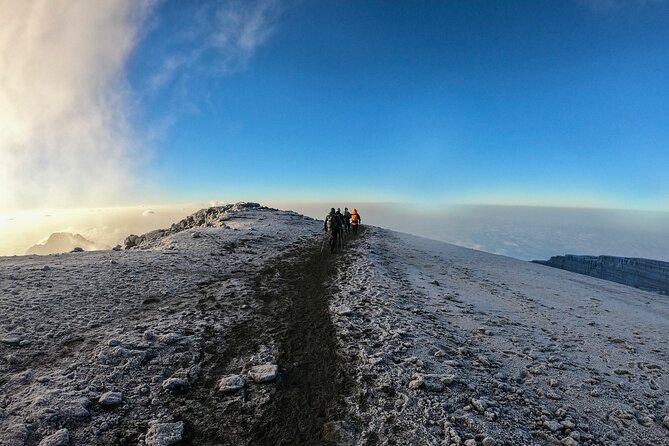
- The summit day begins around midnight to 2 am, then continues through scree, cold, darkness, and thin air to Uhuru Peak.
- The Lemosho Route climbs gradually, with an acclimatization day on the Shira Plateau and a high climb to Lava Tower before sleeping lower at Barranco.
- The crew handles the camp work, including tents, dining equipment, meals, boiled water, and luggage support from porters.
- The $2,300 price includes major park and operating costs, but gear, tips, drinks, personal items, visas, emergency oxygen, and two hotel nights are extra.
- Past crews have included guides such as Haji, Mariki, Adam, Fabian, Moses, and Tulzia, but your exact team is not promised in advance.
- The final descent is wet and muddy in places, so gaiters, trekking poles, and accessible rain gear matter.
Why the Lemosho Route is worth eight days
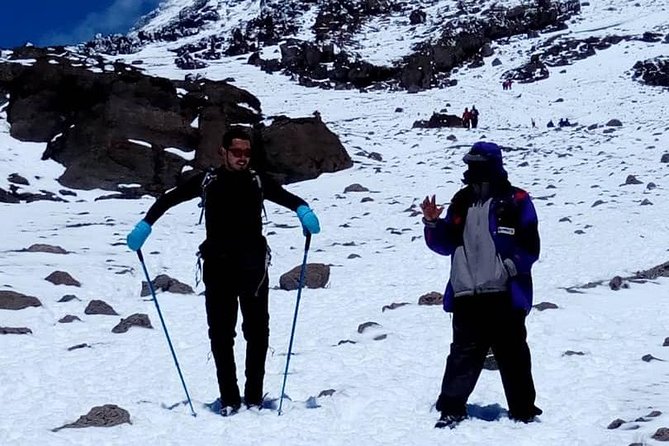
Kilimanjaro is not a technical mountaineering trip on this route. You do not need ropes or climbing skills as described here, but you do need stamina, patience, and a willingness to walk slowly for several hours each day.
The reason to choose eight days is acclimatization. You gain height in measured steps, spend a full day crossing the Shira Plateau, and climb high to Lava Tower before dropping to Barranco. That pattern gives your body more time than a rushed itinerary, although no schedule removes the risk of altitude sickness.
The route also gives you a better change of scenery than a short approach. You begin in montane forest, pass through moorland and giant heather, cross semi-desert terrain, and finish among alpine desert and high volcanic slopes. Native plant life and occasional wildlife are part of the early walk, while the upper mountain becomes spare, cold, and exposed.
The operator describes this as a private activity, so only your group takes part. That matters when the trail gets tiring. Your guide can monitor your pace, adjust breaks, and help you avoid racing stronger members of the group.
More Lemosho Route climbs:
- Kilimanjaro climb by Lemosho Route (7-day)
★ 5.0 · 651 reviews - Kilimanjaro Climbing Lemosho Route 8 Days.
★ 5.0 · 186 reviews - 8-Day Small-group Lemosho Kilimanjaro Summit Trekking
★ 5.0 · 186 reviews
Day 1: Mti Mkubwa begins in the forest
After breakfast and a briefing, you drive to Lemosho Park Gate. A 4WD vehicle continues along a forest track to Lemosho Glades, where you start walking.
The first day is short by Kilimanjaro standards: about 6 kilometers and two to three hours. You climb from roughly 1,830 meters to 2,650 meters and sleep at Mti Mkubwa, meaning Big Tree Camp.
This is a useful opening day because it lets you meet the guide and crew without immediately facing a long slog. The montane forest offers shade and a softer introduction to the mountain. The catch is that the access road and 4WD transfer are part of the experience, so the day is not simply a walk from a neat park entrance.
Lunch and dinner are provided. Your sleeping tent, mattress, dining tent, tables, chairs, and cooking support are also supplied as part of the package.
Day 2: Giant heather and the first Shira views
The trail steepens as you leave the forest and enter the giant heather and moorland zone. You cross several streams, climb over Shira Ridge, and then descend gently toward Shira 1 Camp.
The day covers about 8 kilometers in four to five hours. You rise from 2,650 meters to 3,500 meters, a noticeable gain that you will feel if you walk too quickly. Your guide should keep the pace deliberately slow. On Kilimanjaro, saving energy is not laziness. It is good planning.
Shira 1 sits beside a stream on the Shira Plateau. This is your first broad high-altitude setting, with the mountain opening around you rather than pressing in from all sides. Dinner and camp life become more important here. You will appreciate the cooks and porters, since the cold and thinner air can make even simple tasks feel demanding.
Day 3: A gentle acclimatization day on Shira 2
Day 3 is one of the strongest parts of the plan. You walk about 8 kilometers from Shira 1 to Shira 2, climbing from 3,500 meters to 3,850 meters. The hike takes four to five hours and crosses moorland meadows beside a stream.
The itinerary allows additional walks on the plateau. That flexibility is valuable. You are not merely covering distance; you are giving your body time to function at altitude while keeping your legs moving.
I would treat this as a day to watch your symptoms and be honest with your guide. Headache, unusual tiredness, nausea, or poor coordination should not be hidden to protect your summit hopes. The crew carries pulse oximeters and first-aid supplies, but those tools work best when you report how you actually feel.
More treks and hikes around Kilimanjaro:
- Kilimanjaro climb, Machame Route (7-day)
★ 5.0 · 262 reviews - Climbing Kilimanjaro – Machame Route
★ 5.0 · 170 reviews - Climbing Kilimanjaro through 7 days Machame Route
★ 5.0 · 151 reviews - Kilimanjaro climb, Lemosho Route (8-day)
★ 5.0 · 148 reviews
Day 4: Lava Tower before Barranco Camp
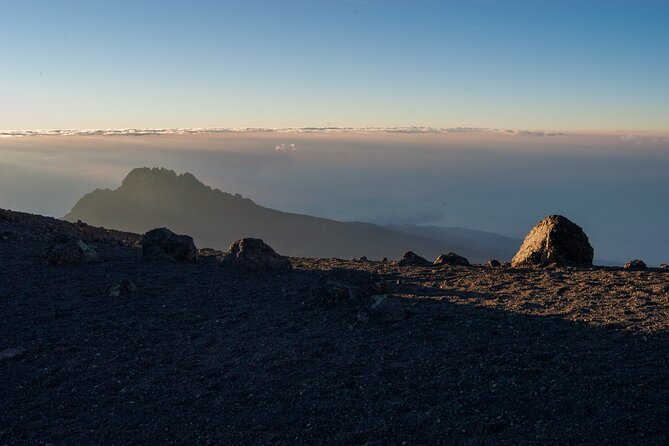
Day 4 is the route’s major acclimatization test. From Shira 2, you climb east toward the junction for Kibo, then continue southeast to Lava Tower, also called Shark’s Tooth, at about 4,650 meters.
After Lava Tower, the route passes the junction toward Arrow Glacier and descends to Barranco Camp. The day covers about 8 kilometers and takes five to six hours. You begin at roughly 3,850 meters and finish near 4,000 meters, so the net gain looks small. The climb to Lava Tower is the real point.
This is the classic high-up, sleep-lower pattern. You expose your body to a higher elevation, then rest at a lower camp. It can feel counterintuitive when you are tired, but it is one of the reasons this itinerary is more sensible than a compressed climb.
The terrain changes to semi-desert, with less shelter and a harsher feel. You may find this day harder than the distance suggests. Keep water close, walk slowly, and do not spend all your energy trying to match another person’s pace.
Day 5: The Barranco Wall and Karanga Valley
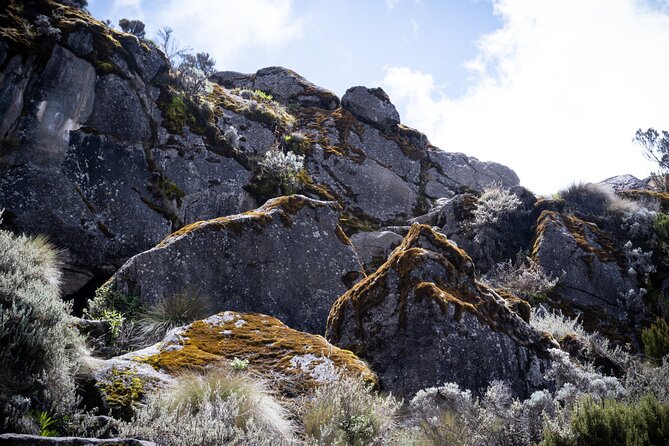
The climb from Barranco to Karanga is short, only about 5 kilometers and three to four hours. It is not necessarily easy. You leave Barranco Camp by climbing the steep Barranco Wall, then continue through Karanga Valley to the junction with the Mweka Trail.
The highest point is about 4,050 meters, only slightly above the previous camp. The habitat is alpine desert, with sparse vegetation and a more exposed feel.
The Barranco Wall is one of the memorable sections because it requires a different rhythm from the broad plateau. You may use your hands for balance in places, but the supplied information does not describe technical climbing. Follow the guide’s instructions, keep your pack secure, and give other people room.
The short day is welcome. You need time to eat, drink, dry clothing, and prepare for the final push. A good crew should make camp life easier without turning the mountain into a luxury trip. This remains tent camping at high altitude.
Day 6: Barafu Camp and the quiet before the summit
From Karanga, you climb 4 kilometers to Barafu Camp in about three to four hours. The camp sits at roughly 4,700 meters, in alpine desert, and marks the end of the Southern Circuit.
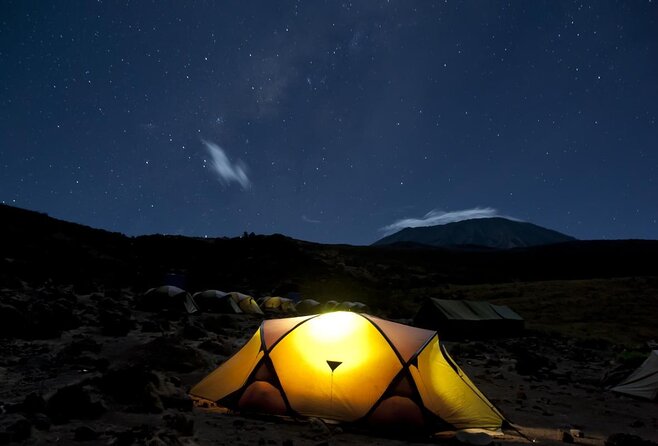
The route offers views of the summit from different angles, but the practical purpose of the day is preparation. You eat dinner, rest, organize warm layers, and try to sleep before the midnight start.
Sleep may be difficult at this altitude. That is normal enough, but it still affects summit performance. Keep the evening simple. Pack your headlamp, gloves, warm clothing, water, snacks if you use them, and any personal medication before lying down.
The dining tent, camp chairs, tables, and cooking team are useful here. You do not need to carry the equipment for camp, but you do need to manage your own personal gear carefully.
Day 7: Stella Point, Uhuru Peak, and Mweka Camp
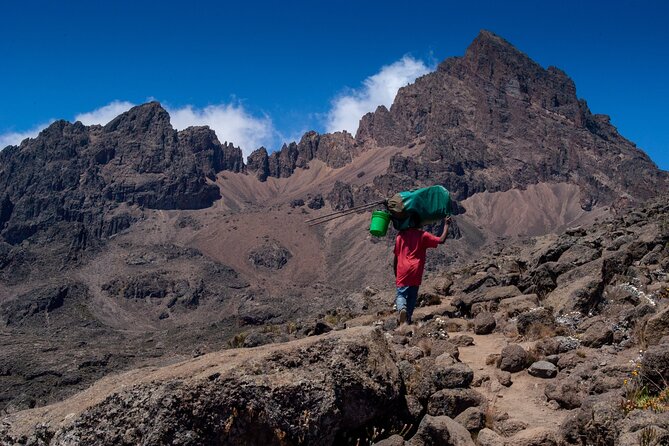
Summit day is the demanding heart of the trip. You leave Barafu between midnight and 2 am, climbing in darkness between the Rebmann and Ratzel glaciers. The route turns northwest and crosses heavy scree toward Stella Point on the crater rim.
This section takes the most mental strength. The cold, darkness, steep footing, and thin air combine to make each step feel important. The stated timing is six hours for the summit section, but your pace and conditions will affect the actual day. You then continue to Uhuru Peak, the highest point on Kilimanjaro, with the final hour from Stella Point potentially covered in snow.
Sunrise from Stella Point is one of the great rewards of the route. Faster climbers may reach the summit in time for sunrise, while others see it from the crater rim. Do not treat the timing as a race. Reaching the summit safely matters more than arriving at a particular minute.
After the summit, you descend to Mweka Camp. This is a long day, combining the hardest ascent with a major descent. Your legs will be tired, and downhill walking can be harder than expected. Eat, drink, and follow the guide’s pace rather than rushing to finish.
Day 8: A muddy descent and the return to Moshi
The last day takes you from Mweka Camp, at about 3,090 meters, down to Mweka Gate at roughly 1,680 meters. The distance is about 10 kilometers and the walking time is three to four hours.
The forest returns, along with wetter ground. Expect mud in places, especially if conditions are damp. Gaiters and trekking poles are specifically useful, while shorts and a T-shirt may be comfortable lower down. Keep rain gear and warmer clothing within reach because mountain weather can change before the descent ends.
At Mweka Gate, you receive summit certificates. A Monkey Adventures vehicle then takes you back to your Moshi hotel, with the drive listed at about 60 minutes.
This is a straightforward finish, but do not underestimate it. After the summit day, the descent can be tiring, and wet trails make footing less certain. Keep your boots tied firmly and use the poles.
What the $2,300 price really covers
At $2,300 per person, this is not a bare-bones park entry followed by a self-guided walk. The price covers qualified guides, porters, a cook and waiter, national park fees, rescue fees, tents, sleeping mattresses, a dining tent, camping furniture, meals, boiled water, first aid, and pulse oximeters.
That is a meaningful package. Kilimanjaro fees and the wages of a large mountain crew account for much of the cost. You are also paying for food logistics and the equipment needed to establish camp each night.
You still need to budget for tips, drinks, gear rental or purchase, personal items, visas, and emergency oxygen. Two nights of accommodation before and after the climb are not included. The information gives a Kili Base Hotel rate of $50 for a full-body arrangement, so confirm exactly what that amount covers and whether it applies to both nights.
The offer to take you to a local hiking store for rental gear can save time and money. Still, inspect every item before leaving Moshi. Proper warm layers, waterproof clothing, gloves, sturdy boots, and a suitable sleeping system matter more than saving a small amount on equipment.
The people behind the camp
The strongest part of this kind of trip is often the crew. The company has used guides named Haji, Mariki, Adam, Fabian, Moses, Tulzia, Geoffrey, Musa, Jonathan, Kaniki, and Seif on past departures. Do not assume you will receive one of those guides, but you can ask who will lead your group and how many people will support it.
Past departures have praised patient guiding, clear route support, caring treatment, strong cooking, and flexibility for a young climber. A solo female climber also described feeling well looked after. Those details matter because the relationship with your guide becomes central once you are tired and uncomfortable.
The picture is not spotless. Some customers have raised concerns about unclear communication, mismatched promises, hotel quality, and payment problems. One hotel complaint focused on a worn towel, while another called for better toilet facilities on the mountain. These are not reasons to dismiss the trip automatically, but they are reasons to get a written itinerary, payment receipt, accommodation details, crew plan, and equipment list.
Tipping is not included. Ask for the recommended tipping structure before departure so you can plan fairly for guides, porters, cooks, and other staff.
Who should choose this climb
This route suits you if you want a gradual eight-day ascent, a private group, broad changes in scenery, and a full support crew. It is also a good fit if you want the Lemosho approach rather than a faster route with fewer acclimatization opportunities.
You should be comfortable walking for up to six hours on several days and handling a very long summit day. You also need to accept basic tent camping, cold conditions, shared camp facilities, early starts, and the possibility of muddy trails.
The activity information says most people can participate, but it does not promise that the climb is suitable for every medical condition or fitness level. If you have health concerns, ask a medical professional before booking and tell the operator about them before arrival.
The tour is private, and service animals are allowed. It is also near public transportation, although the actual climb depends on the supplied vehicle transfer to the trailhead and the return from Mweka Gate.
Booking advice and cancellation terms
Confirmation is provided at booking, and cancellation is free up to 24 hours before the local start time for a full refund. Inside 24 hours, changes are not accepted and the payment is not refunded.
Poor weather can cancel the activity. In that case, you are offered another date or a full refund. Since mountain conditions affect safety, this is a sensible condition, but keep some flexibility in your wider Tanzania plans.
Because feedback is mixed despite a 4.6 rating and a 92 percent recommendation figure from 37 ratings, I would not book on price alone. Ask the operator to confirm what is included in the $2,300, the separate hotel charge, the guide and porter arrangements, and the exact meeting point. The published start point is Machame, while the climb begins at Lemosho, so confirm the transfer plan as well.
Should you book this Lemosho climb?
I would consider booking it if you value time for acclimatization, a private group, a varied route, and strong camp support. The Shira Plateau, Lava Tower acclimatization day, Barranco Wall, and sunrise summit attempt make this a well-shaped Kilimanjaro itinerary.
I would pause if you want hotel comfort, a guaranteed named guide, included personal gear, or perfectly predictable communication. Before committing, get every promise in writing and make sure your budget includes tips, equipment, drinks, visas, and hotel nights.
For a fit person who understands that Kilimanjaro is tough rather than glamorous, this eight-day Lemosho plan offers good value and one of the mountain’s most rewarding approaches.
FAQ
How long is the Kilimanjaro climb?
The activity lasts approximately eight days, including the approach, summit attempt, descent, and return to the hotel in Moshi.
How much does the climb cost?
The listed price is $2,300 per person. Tips, drinks, personal gear, visas, emergency oxygen, and two nights of accommodation before and after the climb are not included.
What route does the climb use?
The climb uses the Lemosho Route, beginning at Lemosho Park Gate and finishing through the Mweka route and Mweka Gate.
Is the activity private?
Yes. Only your group participates in the activity, rather than joining a larger shared departure.
Are meals included?
Breakfast, lunch, and dinner are included on the mountain on Days 2 through 7. Day 1 includes lunch and dinner, while Day 8 includes breakfast.
Is camping equipment supplied?
Yes. Tents, sleeping mattresses, a dining tent, tables, mini camping chairs, cutlery, and candles are included.
Is airport or hotel pickup available?
Pickup is offered, and the final day includes transport from Mweka Gate back to your hotel in Moshi. Confirm the exact pickup and meeting arrangements before departure.
Can I cancel for a full refund?
You can cancel at least 24 hours before the local start time for a full refund. Cancellations or changes within 24 hours are not accepted for a refund. If poor weather cancels the climb, you are offered another date or a full refund.
More Eight-Day Trips in Kilimanjaro
- Climbing Kilimanjaro through 8 days Lemosho Route
★ 5.0 · 52 reviews - Kilimanjaro climb, Northern Circuit route (8-day)
★ 5.0 · 40 reviews - 8 Days Kilimanjaro Hike via Lemosho Route
★ 5.0 · 39 reviews - The Ultimate 8-day Lemosho route Climbing Kilimanjaro
★ 5.0 · 28 reviews
Just added around Kilimanjaro
- 6 days Machame route climbing Mt.Kilimanjaro★ 5.0 · 8 reviews
- machame route★ 5.0 · 16 reviews
- Mt Kilimanjaro 6 days Marangu route hike★ 5.0 · 3 reviews
- Private Cycle to Kilimanjaro Bike Park Safari★ 5.0 · 6 reviews
- West Kilimanjaro cycling Adventures★ 4.5 · 8 reviews
- Kilimanjaro Climb • Marangu Route ~ 9 Day★ 5.0 · 4 reviews
- 3 Days Private E-Bike Tour in West Kilimanjaro★ 5.0 · 3 reviews
- Kilimanjaro Climb • Machame Route ~ 10 Day★ 5.0 · 6 reviews