
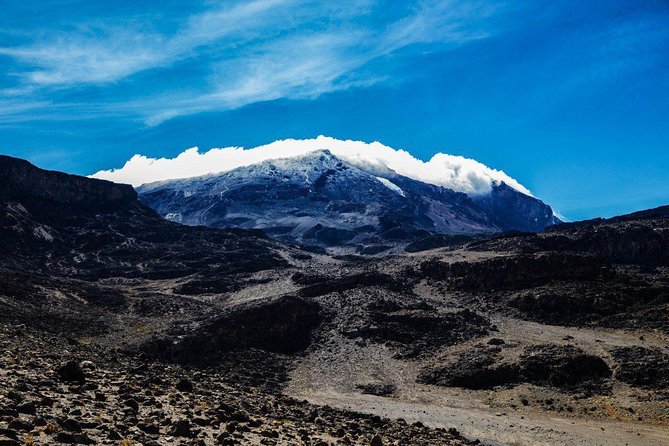
Reviewed · NORTHERN CIRCUIT SAFARIS
Kilimanjaro climb, Northern Circuit route (8-day)
The Northern Circuit gives you what most Kilimanjaro routes cannot: time and solitude. You start high on the western side, cross the Shira Plateau, circle the quiet northern slopes near Kenya, then approach Uhuru Peak from School Hut. I like the gradual altitude gains and the wide views toward Mount Meru, Tsavo, and Amboseli.
I also like the serious support system. You get Wilderness First Responder guides, medical checks, oxygen, altimeters, a full camp crew, and one guide for every two climbers on summit night. The tradeoff is simple: this is a long mountain trip, not a quick holiday hike. The price is high, the camping days are demanding, and summit night remains very hard even with good acclimatization.
Key points to know before booking
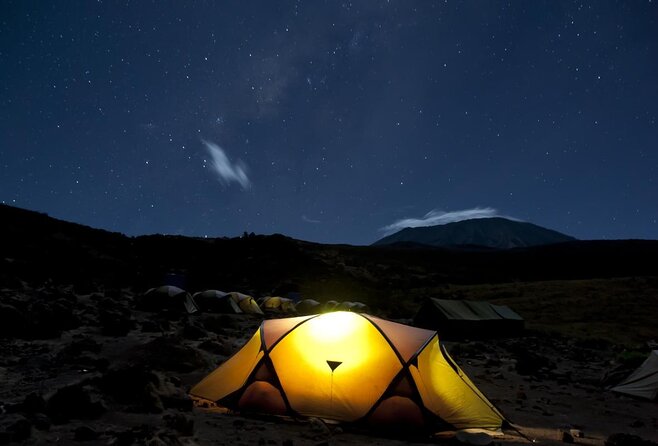
- A quiet route with excellent acclimatization: The Northern Circuit takes at least eight climbing days, with repeated high and low sections that help your body adjust.
- A high start on the Shira Plateau: You drive from Londorossi Gate to about 3,500 meters, then begin walking toward Shira 1.
- A real wilderness feel: The northern slopes see far fewer people than the better-known routes.
- Professional mountain support: Guides, porters, cooks, camp managers, medical kits, oxygen, and branded North Face tents are included.
- A demanding summit schedule: You sleep at School Hut at 4,750 meters, start around midnight, reach Uhuru Peak at 5,895 meters, then descend the same day.
- A costly but well-equipped package: At $4,010 per person, the trip includes most major mountain costs, but not flights, visa, insurance, tips, or personal gear.
Why the Northern Circuit earns eight climbing days
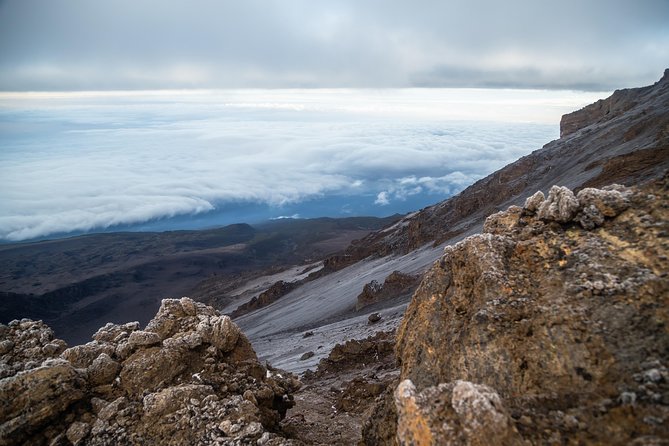
Kilimanjaro is not a technical climb. You do not need ropes or rock-climbing skills for the standard summit route. The main challenge is altitude, cold, tired legs, changing weather, and the mental strain of walking for hours while breathing thinner air.
That is why the Northern Circuit’s length matters. Instead of racing upward, you spend several days moving between camps at roughly 3,500 to 4,800 meters. The route includes high points followed by lower sleeping camps, a useful pattern for acclimatization.
The route also feels less busy. The Northern Circuit is the newest and longest major route on Kilimanjaro, and the northern side receives fewer people than the southern approaches. If you want quiet camps, broad views, and a stronger sense of remote mountain travel, this is the route to consider.
The cost is $4,010 per person. That is not a bargain price, but it covers the main expenses that make a Kilimanjaro trip work: park fees, transport, guides, porters, cooks, tents, meals, drinks, medical equipment, airport transfers, and two hotel nights. You still need to budget for flights to Tanzania, a visa, trekking insurance covering up to 6,000 meters, personal equipment, and crew tips.
More northern circuit safaris:
- Private 8 day Northern Circuit Kilimanjaro Climb
★ 5.0 · 8 reviews - Kilimanjaro Northern Circuit Route 8 Days
★ 5.0 · 5 reviews - 9 Days Kilimanjaro Hiking or Climbing via Northern Circuit route
★ 5.0 · 5 reviews
Your first and last nights in Moshi
The trip begins with pickup at Kilimanjaro International Airport. An Altezza representative takes you to Aishi Machame Hotel, where you receive a room, hot water, Internet access, and access to a swimming pool. Check-in begins at 2 p.m., so plan your arrival time carefully.
There is an evening briefing with the management team, followed by another meeting with your guide and support crew the next morning. This two-stage preparation is useful because it gives you time to check clothing, sleeping arrangements, and any missing equipment before leaving town.
You spend another hotel night after the climb. On the final day, you rest at the hotel and transfer to the airport. Check-out is at 11 a.m. If your flight leaves later, a late check-out costs extra.
A small practical point matters here: lunch and dinner at the hotel before and after the climb are not included. Hotel breakfasts are included for the nine listed breakfast services, but you should plan separately for meals at the hotel.
Day 2: Londorossi Gate and the high road to Shira 1
Your mountain morning starts with a drive of roughly three to four hours to Londorossi Gate, the western entrance to Kilimanjaro National Park. The crew handles climbing permits and registration with the search and rescue service.
Then comes an unusual feature of this route. Off-road vehicles carry the group farther uphill, to about 3,500 meters. This means you begin walking high on the mountain rather than spending a full day climbing from the forest zone.
The first walking section reaches Shira 1 Camp. The altitude gain is modest, and the trek is described as one of the easier days physically. You get your first broad views of the Shira Plateau, a high volcanic plain with open ground and dramatic mountain surroundings.
The high drop-off is convenient, but it also means you begin at altitude quickly. Pay attention to your body from the first hour. Do not treat the easy walking as proof that the mountain will be easy later.
Day 3: Shira 2, Mount Meru, and the Lava Tower acclimatization walk
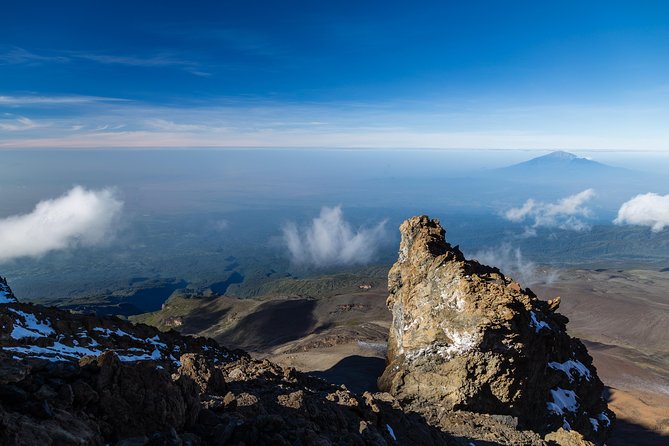
From Shira 1, you walk to Shira 2 Camp, gaining about 300 meters. It is another relatively gentle day, leaving time to notice Kilimanjaro’s changing plant life and, if skies are clear, Mount Meru.
Mount Meru is Tanzania’s second-highest mountain and Africa’s fifth-highest. Seeing it from the Shira Plateau adds variety to a day that might otherwise feel like a simple transfer between camps.
After lunch and about two hours of rest, you take an acclimatization walk toward Lava Tower, gaining another 300 meters before returning. This is one of the smartest parts of the schedule. You briefly reach higher ground, then sleep lower, helping your body adjust without adding a full night at the higher elevation.
More treks and hikes around Kilimanjaro:
- Kilimanjaro climb by Lemosho Route (7-day)
★ 5.0 · 651 reviews - Kilimanjaro climb, Machame Route (7-day)
★ 5.0 · 262 reviews - 8-Day Small-group Lemosho Kilimanjaro Summit Trekking
★ 5.0 · 186 reviews - Kilimanjaro Climbing Lemosho Route 8 Days.
★ 5.0 · 186 reviews
Day 4: Lava Tower at 4,630 meters and Moir Hut
Day four is where the route begins to feel serious. You leave Shira Camp at about 3,900 meters and climb toward Lava Tower at 4,630 meters. The route rises and falls, so the day can feel harder than the numbers suggest.
The group stops at Lava Tower for lunch and spends one or two hours at the higher altitude. That pause is not wasted time. It gives the guides a chance to assess how everyone is responding and lets you experience a useful acclimatization gain.
After Lava Tower, the route climbs slightly before descending to Moir Hut Camp. If someone is not adjusting well, the guide may bypass Lava Tower and use a porter trail, with a maximum height of about 4,400 meters instead.
That flexibility is important. A guide who changes the plan for health and safety is doing the job properly. You should also expect some discomfort here: headache, nausea, poor sleep, or unusual tiredness can appear at altitude. Tell the guide early rather than trying to hide symptoms.
Day 5: The northern slopes and views toward Kenya
Day five is long but not especially steep. After a short, sharp climb out of Moir Valley, you begin circling the northern slope of Kilimanjaro.
The path includes plenty of ups and downs. You do not simply walk uphill all day, but the repeated changes in height can wear down your legs. Keep your pace slow and steady. This is not a day for racing to camp.
The route runs close to the Kenyan border, with views toward the Tsavo and Amboseli valleys. These are some of the trip’s most distinctive views because they show Kilimanjaro from a less familiar side. The northern route feels open and remote, with fewer other groups around.
Day 6: Third Cave Camp and a schedule worth confirming
You finish crossing the northern slope and reach Third Cave Camp, where the route meets the traditional Rongai route. The walking is meant to be shorter than the previous day, and by now you should have spent several days around 4,000 meters.
There is one detail I would confirm before booking or departure: the listed duration for this day is 14 hours, even though the description calls the trek shorter than day five. That may refer to the full scheduled day rather than walking time, but it is worth asking the operator for the expected walking hours and departure time.
Third Cave is an important point in the route because you are now approaching the summit phase. You have crossed the quieter northern side and are preparing for a high camp and a midnight start.
Day 7: School Hut at 4,750 meters
The climb to School Hut Summit Camp reaches 4,750 meters. The walking itself is not described as especially difficult, but the altitude makes every task slower.
This is the day to conserve energy. Once you reach camp, rest, drink fluids, organize your summit clothing, and avoid unnecessary activity. You need to sleep if you can, although sleeping at 4,750 meters is not always easy.
The summit attempt begins around midnight. That means you may spend only a short time at School Hut before getting dressed and walking again. Keep your headlamp, warm layers, water, snacks, gloves, and other essentials ready before lying down.
Day 8: Uhuru Peak, Barafu, and Millennium Camp
Summit day is the heart of the trip and its toughest test. You climb from School Hut at 4,750 meters to Uhuru Peak at 5,895 meters. The route is not technically difficult, but altitude makes the effort slow and intense.
The safety plan assigns one guide to every two climbers. That allows close attention to your health, pace, and condition. Guides carry medical kits, oxygen, and altimeters, and medical checks are part of the support system. These tools do not remove the risks of altitude, but they provide a stronger safety net than a lightly supported trek.
The summit may offer a chance to walk near a glacier after reaching Uhuru Peak, depending on conditions and the group’s timing. Keep this optional. The main goal is reaching the summit safely, not adding extra distance when you are already tired.
After the summit, you descend to Barafu Camp for lunch and about two hours of rest, then continue to Millennium Camp at 3,820 meters. This is a punishingly long day. Descending can feel easier at first, but tired legs and loose ground create real fall risks. The operator specifically warns that most accidents happen during descent, so shorten your stride and watch every step.
Day 9: Rainforest descent and a proper finish
Millennium Camp sits in the tropical rainforest, where the lower altitude should help you recover. You have a hot breakfast, then make the final descent to Mweka Gate at 1,650 meters.
At the gate, you can recap the climb with the support crew before transferring to the company offices for accomplishment certificates. After that, you return to Aishi Machame Hotel for a well-earned shower and rest.
This final day is listed as up to 12 hours, so do not plan a tight same-day flight. The hotel night is valuable, especially after the summit day. Your body may feel more tired after the excitement fades.
Food, tents, and the support crew
The package includes three meals a day on the mountain, with choices for each meal. Vegetarian, vegan, lactose-free, gluten-free, halal, and other meal plans are available. Tea, coffee, juice, soda, and other drinks are also included.
The camp setup is more substantial than a basic backpacking trip. The crew provides a dining tent, sleeping pads, tables, chairs, crockery, and cutlery. You sleep two people per North Face VE-25 tent, except on a solo climb.
Porters, camp managers, cooks, and guides handle the mountain operation. That support is a major reason the price is higher than a bare-bones climb. It also raises an important ethical question: ask how crew tipping works and how the operator treats its porters. Tips are not included and are optional, based on your satisfaction.
Named guide and crew members associated with Altezza departures include Albert, Khatib, Ally, Bosco, Osman, Stanley, Osward, Regan David Lyimo, Frank Daudi Mbise, and others. Your own team is assigned for your departure, so confirm the lead guide’s name and the guide-to-climber ratio during the pre-climb briefing.
Safety and preparation
You need moderate physical fitness, but fitness alone does not prevent altitude sickness. The best preparation is regular walking, uphill training, and practice carrying the personal day pack you expect to use.
Bring suitable boots, hiking clothing, warm layers, a sleeping bag, and other personal equipment. Gear hire is available, but the supplied information does not list rental prices, so ask for those before you commit to a budget.
Mountaineering insurance covering trekking up to 6,000 meters is highly recommended and is not included. Standard travel insurance may not cover a climb this high, so read the policy carefully.
The medical checks, oxygen tanks, altimeters, and Wilderness First Responder guides are strong features. Still, no operator can guarantee a summit. One departure included a climber who left the route after becoming ill, while the rest of the group continued. That is a useful reminder: turning around is sometimes the correct decision.
Is $4,010 a fair price?
For a private trip, $4,010 is a serious investment. But the package includes nearly every major service you need once you arrive in Tanzania: airport transfers, hotel nights, park fees, transport to the gate, guides, porters, cooks, meals, tents, drinks, medical support, and mountain equipment.
You are paying for an eight-day route rather than a short summit schedule. You are also paying for a route with strong acclimatization potential and fewer people. If your priority is the lowest possible price, this is not the right package. If you value planning, close health monitoring, full camp support, and a quieter route, the cost is easier to justify.
The nine-day extended version with crater camping is also available. The supplied details do not give its price or exact schedule, so ask for those separately.
Who should book this climb?
I would choose this route if you want a long mountain journey, prefer quieter trails, and have enough time for a full acclimatization plan. It suits people who see the summit as one part of a larger wilderness experience rather than the only goal.
I would not choose it if you want a short, low-cost hike or dislike sleeping in tents for many nights. The route is remote, the daily schedule can be long, and the summit night is physically and mentally demanding.
You can cancel for a full refund if you cancel at least 24 hours before the experience begins. Changes or cancellations inside that window are not accepted for a refund, and the cut-off uses local Tanzanian time.
Should you book it?
Book this Northern Circuit climb if you have the budget, the time, and the patience to let acclimatization do its work. The route offers Kilimanjaro from a quieter angle, with striking northern views and a more gradual build toward the summit.
Before paying, confirm the day six timing, gear rental costs, tipping guidance, insurance requirements, and the exact hotel and airport arrangements. If those details suit you, this is a well-supported choice for a serious first Kilimanjaro climb.
FAQ
How long does the full experience take?
The full experience lasts about 10 days, including two hotel nights before and after the mountain portion. The climb itself takes eight days.
What is the price per person?
The listed price is $4,010 per person.
Is airport pickup included?
Yes. Pickup and drop-off at Kilimanjaro International Airport are included.
How many people are in the group?
This is a private activity, so only your group participates. The exact number of climbers in your group is not specified.
Where do I stay before and after the climb?
You receive two nights at Aishi Machame Hotel, with two guests per room except on solo climbs.
Are park fees and transportation included?
Yes. Kilimanjaro National Park fees and all ground transportation are included.
Are meals provided on the mountain?
Yes. Breakfast, lunch, and dinner are provided during the climb, along with drinks such as tea, coffee, juices, and soda. Special meal plans are available.
Do I need my own hiking equipment?
Yes. Personal clothing, hiking boots, a sleeping bag, and other personal gear are not included. Equipment is available for hire.
Is mountaineering insurance included?
No. Mountaineering insurance covering trekking up to 6,000 meters is recommended but must be purchased separately.
More Eight-Day Trips in Kilimanjaro
- Kilimanjaro climb, Lemosho Route (8-day)
★ 5.0 · 148 reviews - Climbing Kilimanjaro through 8 days Lemosho Route
★ 5.0 · 52 reviews - 8 Days Kilimanjaro Hike via Lemosho Route
★ 5.0 · 39 reviews - 8 Days Climbing Mt.Kilimanjaro (Lemosho Route)
★ 4.5 · 37 reviews
Just added around Kilimanjaro
- 6 days Machame route climbing Mt.Kilimanjaro★ 5.0 · 8 reviews
- machame route★ 5.0 · 16 reviews
- Mt Kilimanjaro 6 days Marangu route hike★ 5.0 · 3 reviews
- Private Cycle to Kilimanjaro Bike Park Safari★ 5.0 · 6 reviews
- West Kilimanjaro cycling Adventures★ 4.5 · 8 reviews
- Kilimanjaro Climb • Marangu Route ~ 9 Day★ 5.0 · 4 reviews
- 3 Days Private E-Bike Tour in West Kilimanjaro★ 5.0 · 3 reviews
- Kilimanjaro Climb • Machame Route ~ 10 Day★ 5.0 · 6 reviews
Northern Circuit Safaris, compared.
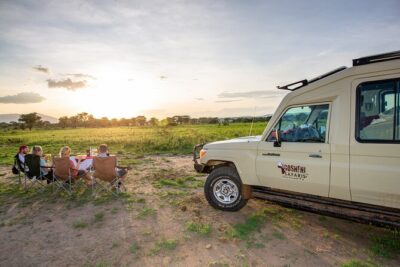
5-Day Private Northern Tanzania Safari from Arusha
Read our review →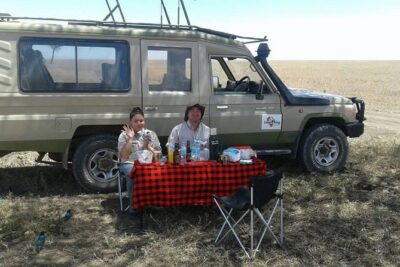
5 Days Best of Tanzania Luxury Safari Northern Circuit
Read our review →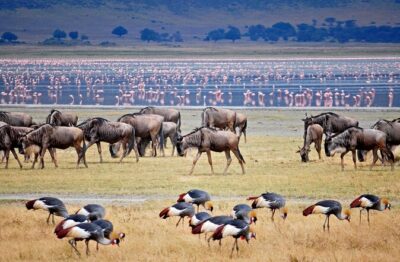
Private 4-Days Northern Circuit National Parks in Tanzania
Read our review →
From Arusha: 7 Days Classic Safari Central Northern Circuit
Read our review →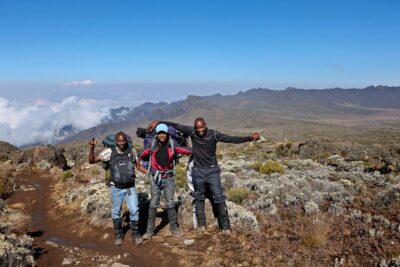
Private 8 day Northern Circuit Kilimanjaro Climb
Read our review →
5 Days Exclusive Camping Adventure in Northern Tanzania
Read our review →
9 Days Kilimanjaro Hiking or Climbing via Northern Circuit route
Read our review →Browse the lists this tour appears in