
Reviewed · NORTHERN CIRCUIT SAFARIS
Kilimanjaro Northern Circuit Route 8 Days
Kilimanjaro’s Northern Circuit takes the long way around the mountain, beginning on the Lemosho side and then crossing the quiet northern slopes. You spend more time away from the busiest routes, with broad views of Kibo and Mawenzi and a slower buildup to summit day.
I like the extra acclimatization and the private setup. The route gives your body more time at altitude, while the included support is unusually full: a mountain crew, fresh meals, purified water, oxygen, a Gamow bag, vital-sign checks, and AMREF Flying Doctors evacuation cover. The hard part is simple: eight days at altitude is still a serious physical test, and summit day can last 13 to 16 hours.
Key points at a glance
- The quiet northern route: After the Lemosho approach, you leave the more familiar trail network and cross remote valleys below Kibo.
- A slow altitude schedule: You climb from 1,981 meters to 4,790 meters before the summit, with several days designed for gradual adjustment.
- A demanding summit day: You leave around midnight, pass Gillman’s Point and Stella Point, then continue to Uhuru Peak at 5,895 meters.
- Strong camp support: Tents, a private flush toilet tent, shower and washing facilities, a mess tent, chairs, mattresses, tables, and hot meals are included.
- Serious safety equipment: The package includes emergency oxygen, a Gamow bag, a medical kit, a pulse oximeter, radio communication, and trained wilderness first responder support.
- A substantial package for $3,000: Park fees, transfers, staff wages, accommodation, meals, water, and medical provisions are included, but tips and personal trekking gear are not.
Why the Northern Circuit takes eight days
The Northern Circuit is the newest major route on Kilimanjaro and also the longest. It begins like the Lemosho route, then turns north and circles the mountain before joining the final ascent from the School Hut side.
That extra mileage matters. You gain altitude in stages rather than racing upward, which gives your body more time to adjust. The route is described as having the highest success rate among Kilimanjaro routes, but no itinerary can remove the effects of altitude or guarantee a summit.
You also get a quieter experience. The northern slopes see fewer climbers than the better-known southern approaches. That makes this a good choice if you care more about solitude, changing scenery, and a measured pace than about taking the shortest route to the top.
This is a private activity, so only your group participates. That gives you more control over walking speed, rest stops, and the rhythm of camp life. You still need to follow the guide’s safety advice. At high altitude, personal preference comes second to breathing, hydration, and careful pacing.
More northern circuit safaris:
- Kilimanjaro climb, Northern Circuit route (8-day)
★ 5.0 · 40 reviews - Private 8 day Northern Circuit Kilimanjaro Climb
★ 5.0 · 8 reviews - 9 Days Kilimanjaro Hiking or Climbing via Northern Circuit route
★ 5.0 · 5 reviews
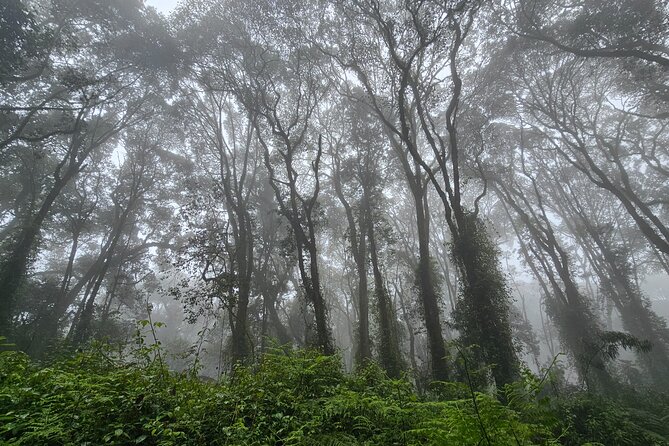
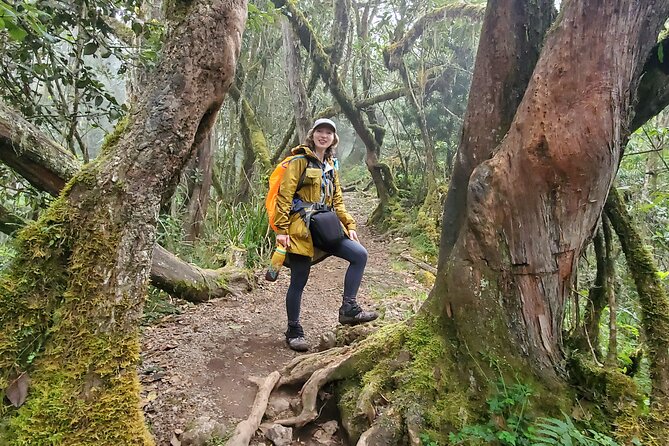
Day 1: Lemosho forest from Londrossi Gate
Your day begins with breakfast and a 4WD transfer to Londrossi Gate. The guide team handles national park registration, and your duffle bags are weighed so each porter’s load stays within the 20-kilogram limit.
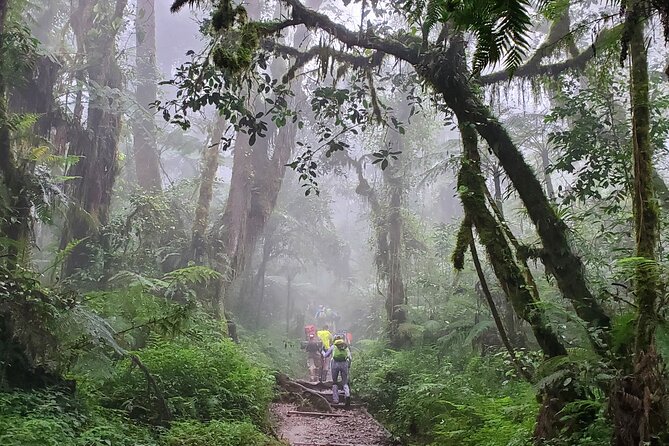
From the gate, you continue about 11 kilometers on narrow dirt roads through pine plantations to the Lemosho Glades. The hike itself covers about 7 kilometers and takes four to five hours, moving from 1,981 meters to 2,780 meters through montane rain forest.
The first day is not about speed. You are getting your first feel for the trail, your boots, and the way the crew operates. The forest offers shade and a softer start than the exposed upper mountain, though wet ground can make the path slick.
I like that the porter load is checked at the start. It is a practical sign of a better-organized climb and supports the stated policy of fair treatment for porters. You should still bring only what you need in your daypack, since your main duffle will be carried separately.
Day 2: Shira Plateau and the pole pole pace
Day two is longer, with about 12 kilometers of walking over seven hours. You climb from 2,780 meters to 3,511 meters as the forest thins into moorland.
The trail follows narrow tracks that weave across ridges. Giant heather and erica appear first, followed higher up by the unusual giant lobelia and giant groundsel. These plants make the mountain feel unlike an ordinary trek through East Africa. They are among the first signs that you are entering Kilimanjaro’s high-altitude world.
Your guide will encourage you to walk pole pole, Swahili for slowly slowly. Take that advice seriously. The point is not to arrive at camp first. The point is to reach camp feeling steady enough to eat, drink, and sleep.
The Shira Plateau gives you wide views and a sense of scale, but the day can feel long. Seven hours on narrow, uneven tracks is tiring even before altitude becomes a major concern. If you want a route with short walking days, this is not it.
Day 3: Shark’s Tooth and the alpine desert
The third day covers about 9 kilometers in five to six hours. You climb from 3,511 meters to 4,175 meters and enter the alpine desert zone.
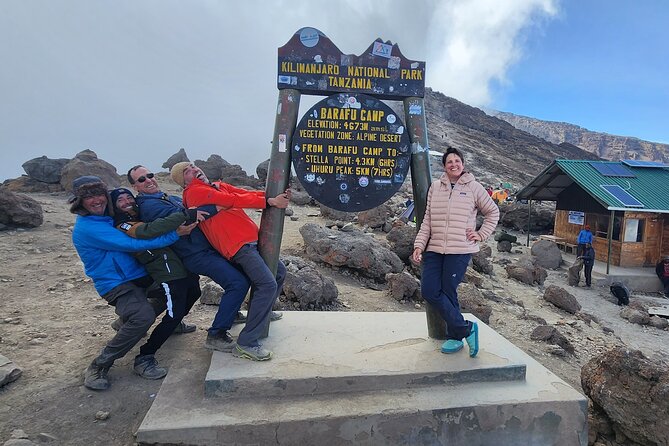
The route heads north through thinning heather toward the natural formation known as Shark’s Tooth. Vegetation becomes sparse, with only hardy everlasting flowers and small senecios able to survive. Above you is a glacier-carved bowl, with lava tube caves in the cliffs near its upper edge. The Kibo Massif and Northern Ice Field rise beyond it, while the Shira Plateau stretches below.
This is one of the route’s best scenic days because the setting changes quickly. You can see the mountain’s volcanic structure more clearly, rather than simply walking through trees or grass.
The practical challenge is the altitude. At 4,175 meters, the scenery may tempt you to push harder, but this is exactly when a slow pace matters. Tell your guide about headaches, nausea, unusual fatigue, or breathing trouble. The package includes a pulse oximeter, vital-sign monitoring, emergency oxygen, and a Gamow bag, but good safety equipment works best when you report problems early.
More eight-day trips in Kilimanjaro:
- 8-Day Small-group Lemosho Kilimanjaro Summit Trekking
★ 5.0 · 186 reviews - Kilimanjaro Climbing Lemosho Route 8 Days.
★ 5.0 · 186 reviews - Kilimanjaro climb, Lemosho Route (8-day)
★ 5.0 · 148 reviews - Climbing Kilimanjaro through 8 days Lemosho Route
★ 5.0 · 52 reviews
Day 4: Remote valleys on Kibo’s northern face
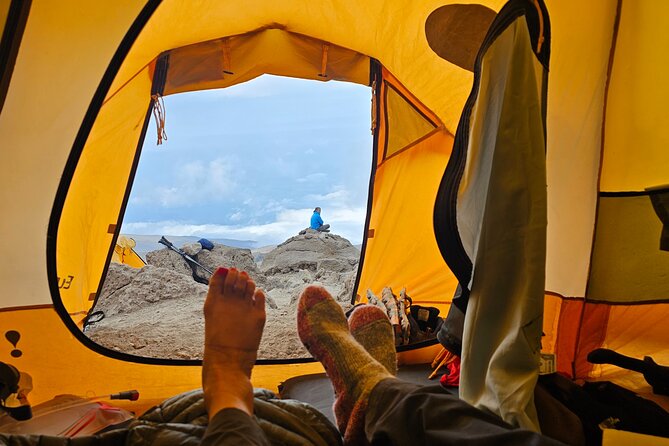
Day four is strenuous. You walk about 12 kilometers in seven to eight hours, starting at 4,175 meters and ending around 4,020 meters.
The numbers can look misleading because your final altitude is slightly lower. In practice, the route includes repeated climbs and descents as you cross valleys beneath Kibo’s northern face. Each ridge reveals a different view, then the trail drops again.
The plant life shifts from one valley to the next, but by the time you reach Pofu Campsite, the setting is mostly bare rock and high mountain desert. The camp sits on a remote, rocky ridge, which gives you a quieter night but not a soft or cozy one.
This is where the Northern Circuit earns its reputation as the long route. You are not simply walking upward. You are circling the mountain, spending energy on terrain that rises and falls. That variety is part of the appeal, but it also means you need to protect your legs for the final climb.
Day 5: Completing the Northern Circuit
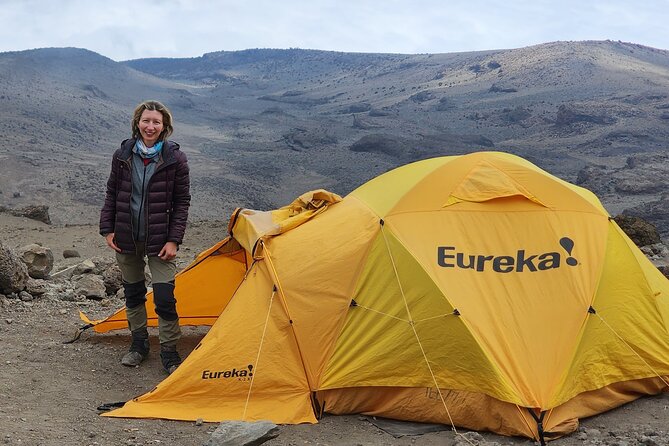
The fifth day is shorter in distance, about 7 kilometers over six hours. You move from 4,020 meters to 3,960 meters, again crossing rocky alpine desert and sparse moorland.
There are still frequent ascents and descents, but the views of Kibo and Mawenzi are excellent. The two peaks give you useful visual landmarks and make the day feel like a true circuit around the mountain rather than a straight march toward the summit.
You reach Third Cave Camp after completing the Northern Circuit itself. This is a satisfying point in the trip, though it is not the end of the hard work. You still have the climb to School Hut and the summit night ahead.
The lower mileage gives you a chance to recover, but do not assume that a short day means an easy day. Altitude can make six hours feel much longer, especially after several nights above 3,500 meters.
Day 6: The steep climb to School Hut
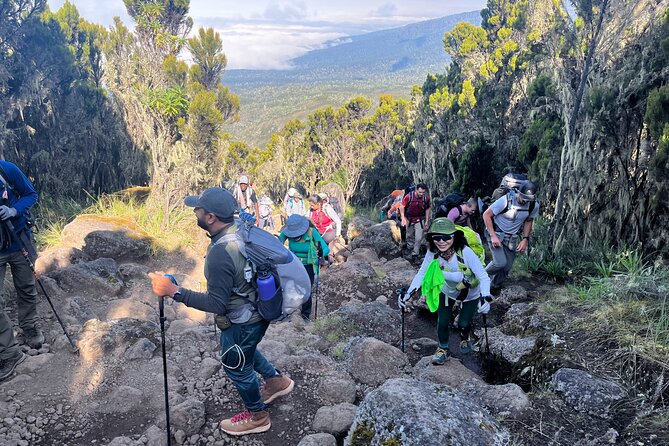
Day six covers only 6 kilometers, but you gain roughly 780 meters, climbing from 3,960 meters to 4,790 meters in about five hours.
The ascent to School Hut is sharp. You will likely stop often, not just for photographs but to catch your breath and keep your pace controlled. The views become more open as you approach the mountain’s upper slopes, and School Hut sits in a striking position with views toward Kibo Peak.
This is an important staging day. You are positioned close to the summit route, which makes the midnight start possible. It also means you spend the night at a very high altitude before the most demanding effort of the trip.
Use the afternoon for rest, food, hydration, and checking your summit clothing. Keep your daypack simple and make sure essential layers, headwear, gloves, water, and personal items are easy to reach. The guide team provides a mattress and camp facilities, but you are responsible for your personal trekking equipment.
Day 7: Gillman’s Point, Stella Point, and Uhuru Peak
Summit day begins around midnight. After a warm drink and light snack, you start the climb over stone scree toward Gillman’s Point and Stella Point.
The full day lasts 13 to 16 hours and covers about 19 kilometers. You begin at 4,790 meters, reach the summit at 5,895 meters, then descend all the way to about 3,100 meters. This is not just a morning hike. It is a full day of climbing and descent at high altitude.
The route to Stella Point is usually demanding, and the final section toward Uhuru Peak can be snow-covered. The last two hours may feel slow, with each step requiring focus. From Stella Point, you can stop, eat, and look over the clouds before tackling the final stretch.
Uhuru Peak is the highest point on Kilimanjaro. Reaching it is the main goal, but the descent deserves equal respect. Many people feel relief at the summit and then underestimate how tiring the walk down can be. Follow the guide’s pace and keep drinking.
The package includes wine and champagne for the summit, along with emergency oxygen and a trained wilderness first responder guide or assistant guide. Those extras add comfort, but they do not change the basic rule: turn around if the guide decides your health is at risk.
After the summit, you descend through stone scree and moorland to camp near 3,100 meters. Expect to be tired, dusty, and ready for sleep.
Day 8: Mweka forest and the park gate
The last hiking day covers about 8 kilometers in three to four hours, descending from 3,100 meters to around 1,800 meters through montane rain forest.
The Mweka trail is steep in places and can be slippery when wet. It follows the crest of a broad ridge between two river valleys, then reaches a road for the final 40 minutes to Mweka Park Gate.
At the gate, you stop for a picnic lunch and receive your summit certificate from the Kilimanjaro National Park Authority. Gold certificates are for Uhuru Peak, and green certificates are for Stella Point.
The contrast is sharp: after the bare upper mountain, the forest feels lush and warm. Your legs may be tired, but the final descent is much easier than summit night. After the gate, you transfer to your hotel for the night.
What the $3,000 price covers
At $3,000 per person, this is not a budget climb. The value depends on how much you care about support, safety systems, and a private group rather than simply finding the lowest published price.
The package includes two hotel nights with bed-and-breakfast at either Ameg Lodge or Salinero Hotels. It also includes airport transfers and transfers between an Arusha hotel and the park gate, although the route itself is based in the Moshi area.
On the mountain, you receive:
- Three-person expedition tents used by two clients
- Mountaineering mattresses
- A mess tent with table and chairs
- Shower and washing facilities
- A private flush toilet tent
- Hot washing water morning and evening
- Hot towels at camp
- Purified water
- Breakfast, lunch, and dinner
- Salaries for guides, cooks, and porters
- National park entrance, camping or hut, and rescue fees
- Government taxes and 18 percent VAT on park entrance fees
The medical and communication package is also substantial. It includes a two-way radio, mobile phone, medical kit, Gamow bag, emergency oxygen, pulse oximeter, vital-sign monitoring, and medical evacuation coverage with AMREF Flying Doctors.
You still need to budget for international airfare, visas, personal trekking equipment, staff gratuities, laundry, souvenirs, room service, communication charges, immunizations, and extra medical or evacuation costs. If illness prevents you from following the planned schedule, additional meals and transport may also be your responsibility.
Food, camp comfort, and the human side
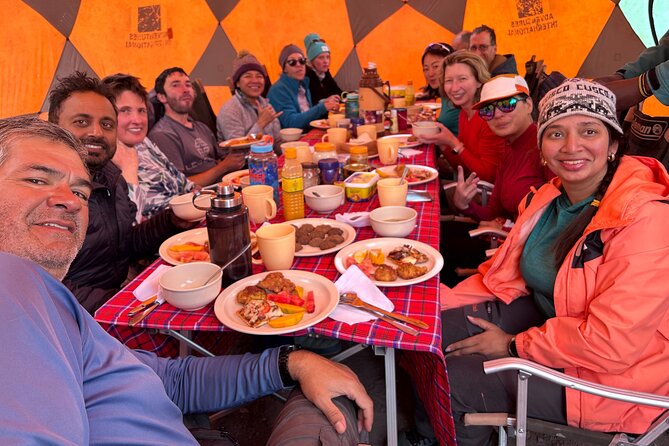
Large portions of fresh, healthy food are included, along with hot drinks and washing water. That matters more than it may sound. At altitude, eating enough can be difficult, and a regular meal routine helps you maintain energy during long walking days.
The tented facilities are more developed than a basic mountain camp. A mess tent, private flush toilet, shower or wash tent, chairs with back rests, tables, mattresses, and hot towels can make a real difference after seven or eight hours on uneven ground.
The porter policy is also worth examining. Bags are weighed at the gate, and the stated limit is 20 kilograms per porter. Staff salaries are included, and the company states that porters receive fair and ethical treatment. You should still plan to tip the mountain crew, since gratuities are not included.
The crew has received strong praise for professional, friendly service. Joseph is named in connection with a successful private Kilimanjaro climb, while Goodluck, Kisali, and Samuel are also praised for work on other trips. The available information does not confirm which of these people will lead your Northern Circuit departure, so ask for your guide names before you travel.
Who should choose this route
I would choose this route if you want the best chance to adjust gradually and do not mind paying for two extra things: time and quiet.
It suits people who can handle long walking days, repeated climbs and descents, basic tent living, and a very long summit day. It also suits private groups that want a more personal pace than a large departure can offer.
It is less suitable if you want the shortest possible route, dislike camping, or have limited time in Tanzania. The eight-day schedule is approximate, and the final summit day is physically severe. Most people can participate according to the provided activity information, but you should assess your own fitness and medical condition carefully before booking.
The cancellation terms are reasonable: cancel at least 24 hours before the start time for a full refund. Changes made inside that period are not accepted, and poor weather may lead to a different date or a full refund.
Should you book this Kilimanjaro climb?
Book it if you value a quiet route, careful acclimatization, private participation, and strong mountain support. The cost is high, but it covers major expenses that can otherwise add up quickly, including park fees, staff wages, meals, transfers, tents, water, and safety equipment.
Think twice if your priority is price or speed. The Northern Circuit is long, and its quieter northern valleys require patience. You are paying for a slower, more measured approach, not an easy climb.
For most people comparing Kilimanjaro routes, the clearest reason to choose this trip is the combination of extra acclimatization and remote scenery. Ask about the assigned guides, confirm the two hotel properties, check exactly what personal equipment you must bring, and make sure your budget includes tips and any medical costs outside the stated coverage.
FAQ
How long is the Kilimanjaro Northern Circuit tour?
The tour lasts approximately eight days, including seven nights on the mountain route and a hotel night after the descent. Two nights of hotel accommodation with breakfast are included in the package.
How much does the climb cost?
The listed price is $3,000 per person. Group discounts are offered.
Is this a private tour?
Yes. Only your group participates in the activity.
What is the highest point reached?
The summit day reaches Uhuru Peak at 5,895 meters. You approach the summit through Gillman’s Point and Stella Point.
Are park fees and rescue fees included?
Yes. Kilimanjaro National Park entrance, camping or hut, and rescue fees are included, along with government taxes and 18 percent VAT on park entrance fees.
Are meals included?
Yes. The package includes eight breakfasts, eight lunches, and seven dinners. Fresh, nutritious food and purified water are provided on the mountain.
What happens if the climb is canceled because of weather?
If poor weather causes the experience to be canceled, you are offered a different date or a full refund. For a standard cancellation, you must cancel at least 24 hours before the start time to receive a full refund.
Just added around Kilimanjaro
- 6 days Machame route climbing Mt.Kilimanjaro★ 5.0 · 8 reviews
- machame route★ 5.0 · 16 reviews
- Mt Kilimanjaro 6 days Marangu route hike★ 5.0 · 3 reviews
- Private Cycle to Kilimanjaro Bike Park Safari★ 5.0 · 6 reviews
- West Kilimanjaro cycling Adventures★ 4.5 · 8 reviews
- Kilimanjaro Climb • Marangu Route ~ 9 Day★ 5.0 · 4 reviews
- 3 Days Private E-Bike Tour in West Kilimanjaro★ 5.0 · 3 reviews
- Kilimanjaro Climb • Machame Route ~ 10 Day★ 5.0 · 6 reviews
Northern Circuit Safaris, compared.
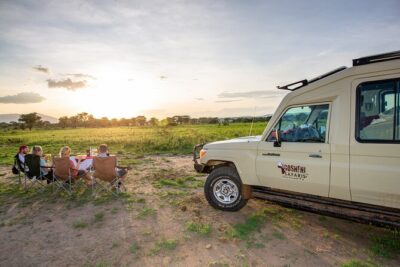
5-Day Private Northern Tanzania Safari from Arusha
Read our review →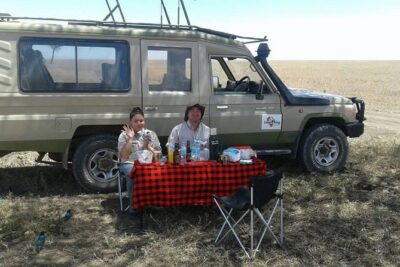
5 Days Best of Tanzania Luxury Safari Northern Circuit
Read our review →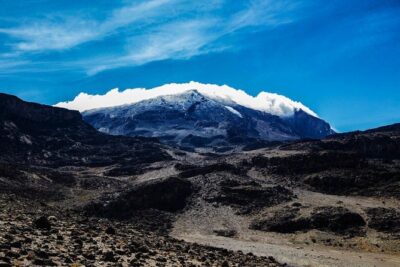
Kilimanjaro climb, Northern Circuit route (8-day)
Read our review →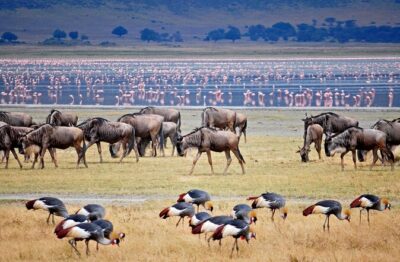
Private 4-Days Northern Circuit National Parks in Tanzania
Read our review →
From Arusha: 7 Days Classic Safari Central Northern Circuit
Read our review →
5 Days Exclusive Camping Adventure in Northern Tanzania
Read our review →Browse the lists this tour appears in