
Reviewed · NORTHERN CIRCUIT SAFARIS
Private 8 day Northern Circuit Kilimanjaro Climb
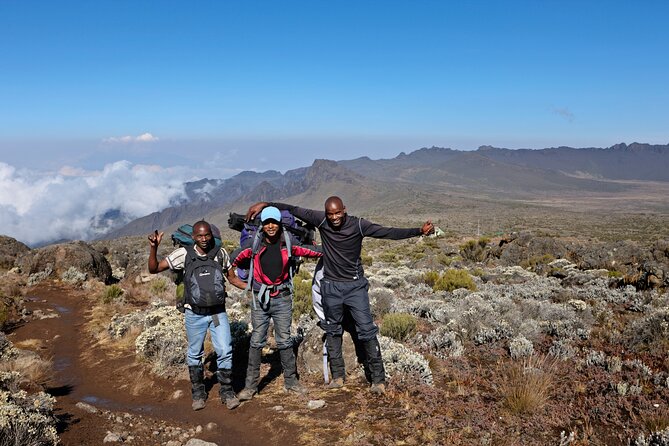
The best thing about this climb is the route itself. You circle Kilimanjaro from the western forest to the quiet northern slopes, then approach Uhuru Peak from the east before descending through the south. You see nearly every side of the mountain, not just one trail up and down.
I like the extra acclimatization built into eight days, and I like the small private format. Duma’s climbing teams have included guides such as Emmanuel, Imran, Humphrey, and Colman, with porters including Mariam. The main drawback is the summit night: you may walk for about 15 hours, starting around midnight, after sleeping at 4,717 meters.
Key points before you book
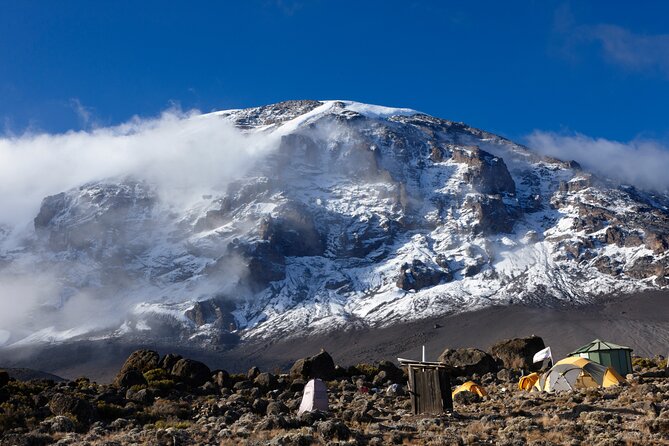
- The Northern Circuit is Kilimanjaro’s quiet side: You spend several days away from the busier southern routes.
- Eight days gives your body more time: The gradual rise from 2,389 meters to 5,895 meters is a major advantage.
- The route crosses several famous trails: You connect with sections associated with Lemosho, Rongai, Marangu, and Mweka.
- The summit push is very demanding: You climb from School Hut through Hans Meyer Cave and Gilman’s Point to Uhuru Peak.
- Your price covers the core mountain meals: The package includes eight lunches, seven breakfasts, and seven dinners.
- It is private: Only your group takes part, with pickup offered and a 9:00 am start.
Why the Northern Circuit is worth eight days
Kilimanjaro is not a technical climbing trip in the usual sense. The hard part is the altitude, the long walking days, and the mental strain of summit night. That makes the route you choose especially important.
This eight-day Northern Circuit itinerary takes a slow, wide arc around the mountain. You start near the western side, walk across the high Shira Plateau, continue around the northern slopes, and reach the eastern side before climbing to the summit. You then descend by the southern Mweka route.
That wider path gives you two practical benefits. First, you see much more of Kilimanjaro than you would on a shorter out-and-back route. Second, you gain height in stages, with several nights at altitude before the final climb.
The route is described as the least traveled option on Kilimanjaro. That does not mean you will have the mountain to yourself, but the northern section offers a quieter feel than the more familiar approaches. If you value solitude and changing scenery, the added days make sense.
The price is $2,999 per person. That is a serious amount of money, but it pays for eight days on the mountain, a private group, guides and porters, park access as part of the climb arrangement, camp support, meals, and transfers at the beginning and end. You are not simply paying for a walking route. You are paying for the staff, planning, food, camps, permits, and safety structure needed for a high-altitude expedition.
More Private Tours in Kilimanjaro
- Private Full Day Hiking Experience to Marangu Route
★ 5.0 · 61 reviews - Private Kilimanjaro Hike 7 Day Lemosho Route
★ 5.0 · 60 reviews - Kilimanjaro 7 Day Private Trekking Experience
★ 5.0 · 40 reviews
Day 1: Londorossi Gate to Mti Mkubwa Camp
Your day begins with a drive to Londorossi Gate, where you complete park registration. From there, a further 12-kilometer vehicle ride takes you to the Lemosho starting point. The rough road can make this final transfer last anywhere from 45 minutes to 90 minutes.
The first walk is relatively gentle by Kilimanjaro standards. You cover about 5 kilometers, rising from 2,389 meters to 2,785 meters. The destination is Mti Mkubwa, also called Big Tree Camp.
This opening section passes through forest, which gives you a soft introduction to the mountain. The walk lasts about four hours, and your tent is expected to be ready when you reach camp. A snack is also provided.
That prepared camp matters. You do not need to carry a tent or spend your first evening dealing with camp setup after a long transfer. Still, do not treat Day 1 as a free pass. You are already adjusting to a new routine, and the next few days will become much harder.
You sleep at Mti Mkubwa for the first night. The elevation gain is modest, which is exactly what you want at the start.
Day 2: Heather country and Shira One
Day 2 is one of the most varied walking days. You begin in the forest, then move into heather and moorland as the trees thin out. The change is clear and rewarding: open ground replaces the enclosed woodland, and Kilimanjaro begins to feel like a high mountain rather than a forest hike.
The route climbs toward the Shira Ridge, Kilimanjaro’s third summit area. From here, you may get your first major view of Kibo, the snow-capped main summit. The trail then drops slightly onto the Shira Plateau.
You walk about seven hours and finish at Shira One Camp, at 3,504 meters. The change from 2,785 meters to 3,504 meters is substantial, so a mild headache is possible. The useful rule here is simple: walk pole pole, or slowly, and keep drinking.
I like this day because it mixes scenery with sensible altitude gain. The drawback is that the open high ground can feel exposed, and you may notice the altitude more than you did in the forest.
Day 3: Shira, Moir Hut, and an acclimatization climb
Leaving Shira One, you reach Simba Camp and a junction with a four-wheel-drive emergency track. The trail then becomes rougher, passing boulders, petrified lava flows, grassy sections, and a striking cave near Moir Hut.
The day covers about 9.7 kilometers and gains 657 meters. You spend the night at Moir Hut, at 4,161 meters. The walking time is about six hours.
There is also an optional extra climb before dinner. You can walk up to a ridgeline at roughly 4,300 meters, gaining another 139 meters over 1.9 kilometers. This is a useful acclimatization outing, but you should judge it honestly. If your head hurts or your energy has dropped, resting may be wiser than collecting extra altitude.
Moir is one of the more unusual camps on this route. The cave and lava formations give the day a wild, rough character. You are also high enough now to learn how your body reacts. Do not hide symptoms from your guide. A headache may be mild, but it is still information worth sharing.
More northern circuit safaris:
- Kilimanjaro climb, Northern Circuit route (8-day)
★ 5.0 · 40 reviews - Kilimanjaro Northern Circuit Route 8 Days
★ 5.0 · 5 reviews - 9 Days Kilimanjaro Hiking or Climbing via Northern Circuit route
★ 5.0 · 5 reviews - 5-Day Private Northern Tanzania Safari from Arusha
★ 5.0 · 182 reviews
Day 4: Around Kibo to Second Pofu Camp
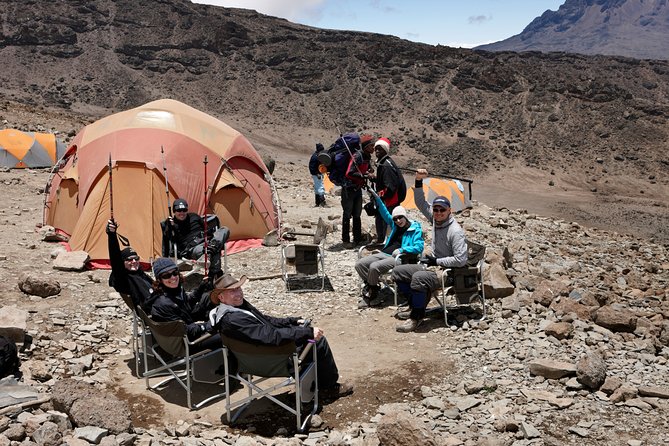
Day 4 brings the first serious high-altitude routine. You climb to around 4,402 meters, then descend to Second Pofu Camp at about 4,033 meters.
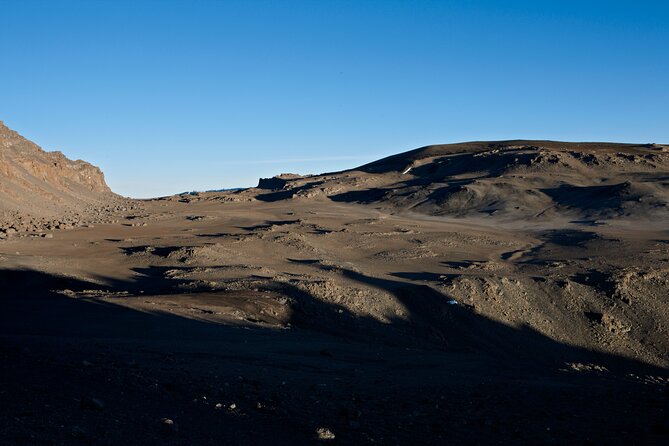
The trail begins with a steep, steady climb toward 4,300 meters. After that, you work around Kibo’s northern face, dropping into valleys and climbing out again. The scenery is stark and open, with boulders and barren slopes replacing the plant life of the lower mountain.
The walk takes about six hours. Distance alone does not tell the whole story here. The repeated ups and downs can leave you more tired than a longer but flatter day.
You may feel a headache or other mild symptoms of altitude sickness. The practical response is not to rush. Walk slowly, drink regularly, eat what you can, and tell your guide how you feel. This is one of the reasons a private trip can be useful: your group does not have to match the speed of a larger mixed party.
Second Pofu is less about comfort than preparation. You are getting used to high camps before the summit push. The quiet northern route also gives this part of the climb a more remote feel.
Day 5: Third Cave and the northern slopes
This 6.8-kilometer stage continues across the northern slopes. The climbs and descents are not as sharp as the previous day, but the constant changes in height still make the walk tiring.
You finish at Third Cave Campsite. Kibo remains to your right, while Mawenzi grows larger ahead. The saddle between Kibo and Mawenzi becomes easier to appreciate as you continue east.
The walk takes about four hours, which sounds short. Do not let that number fool you. At altitude, even a modest distance can feel demanding, particularly after several days of walking and sleeping high.
This is a good day to conserve energy. You are not trying to prove anything on the trail. The point is to arrive at the next camp in good enough shape for the final preparation.
Day 6: School Hut at 4,717 meters
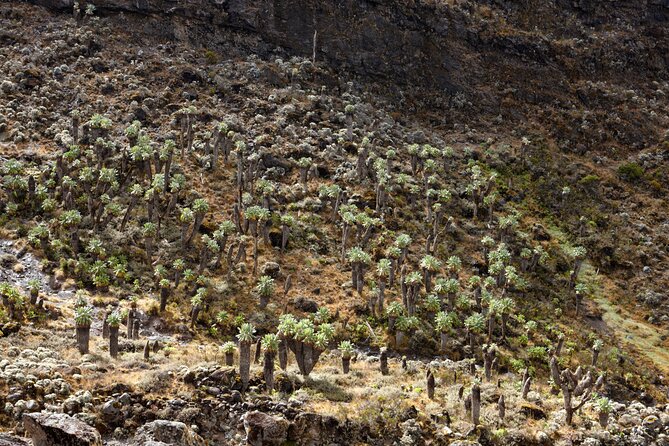
From Third Cave, you traverse the eastern slopes and climb to School Hut. The distance is only about 4.9 kilometers, but the height gain is 781 meters. You finish at 4,717 meters.
The group normally reaches camp in the early or middle part of the afternoon. That timing is deliberate. You need to eat, organize your summit clothing and headlamp, and sleep before the midnight wake-up.
School Hut is not a night for a late camp chat. Try to rest as soon as you can. Staff wake you for meals, so you do not need to manage the schedule alone.
This day deserves respect because the distance is short but the elevation gain is large. You may feel tired, cold, or unable to sleep well. That does not automatically mean you cannot continue, but it does mean you should speak plainly with your guide.
Day 7: From School Hut to Uhuru Peak
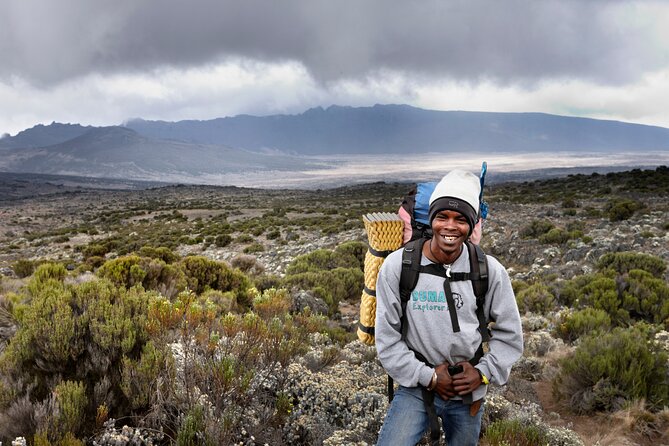
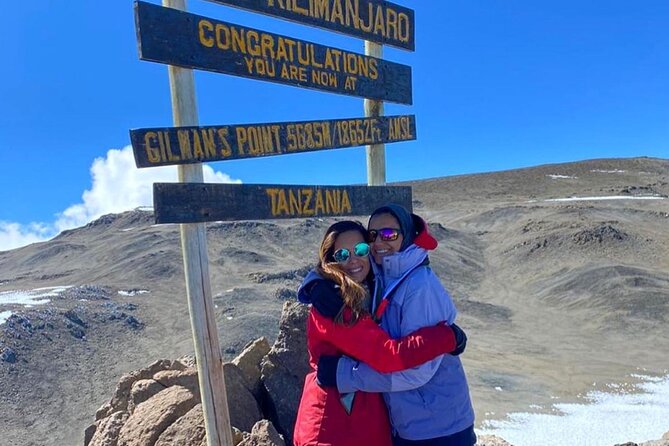
The summit attempt starts around midnight. You climb by way of Hans Meyer Cave at 5,259 meters, then reach Gilman’s Point on the crater rim at about 5,719 meters. From there, you continue to Uhuru Peak at 5,895 meters.
The final 550 meters are especially hard. The cold, darkness, steep ground, thin air, and lack of sleep all arrive at once. Your guide decides how long you can safely spend near the summit based on your condition, timing, and weather.
Gilman’s Point is already a major achievement. It is one of Kilimanjaro’s three summit points, and reaching it earns a certificate. If you continue to Uhuru Peak, you reach the highest point in Africa.
The day is listed at about 15 hours, so this is not a normal hiking day. After the summit, you descend 4.86 kilometers to Barafu Camp, where you eat breakfast and rest for about an hour before continuing another 6.6 kilometers down the mountain.
You need to pace yourself from the start. A fast opening climb can drain the energy you need for the crater rim. Listen to your guide, take small steps, and keep your attention on the next manageable section rather than the full height still above you.
This is also the point where a strong crew matters most. Duma’s teams have included Emmanuel, Imran, Humphrey, and Colman, with staff praised for keeping groups safe, fed, and encouraged. Assignments can change, so confirm your guide team before departure.
Day 8: Mweka Gate and the return to Arusha
After breakfast, you continue down the Mweka Trail to Mweka Gate at 1,633 meters. The final descent takes about four hours.
This is where you complete the park formalities and collect certificates for reaching Uhuru Peak or Gilman’s Point. A vehicle then takes you back to your hotel and onward to Arusha.
The descent may feel easier than summit night, but it still works your knees and legs. You have covered a great deal of ground, and fatigue can make uneven trail sections tricky. Keep your pace controlled until you reach the gate.
The return to a warm shower and a cold drink is part of the pleasure. After eight days of tents, high camps, and careful pacing, ordinary hotel comforts feel well earned.
Food, camp support, and group size
The package includes eight lunches, seven breakfasts, and seven dinners. That covers the main meals during the climb, though you should confirm any personal snacks, drinks, or special dietary arrangements before booking.
Duma has accommodated vegetarian food, and one past group even received birthday cake. That suggests useful flexibility, but you should still state your dietary needs clearly when arranging the trip.
Your tent is erected at camp, which saves time and effort. The private setup is another practical advantage. You can walk at a pace that suits your group rather than adjusting to strangers with different fitness levels.
The experience requires strong physical fitness. You do not need to move quickly, but you do need to handle repeated walking days, high altitude, cold conditions, and the long summit push.
Who should choose this climb?
I would choose this route if you want the fullest possible tour of Kilimanjaro and prefer a slower schedule. The Northern Circuit suits hikers who value quiet trails, changing scenery, and extra time for acclimatization.
It is also a sensible choice if reaching the summit matters more than keeping the trip short. Eight days is still demanding, but it gives you more time than many shorter routes.
You should think twice if you dislike camping, have limited fitness, or want a relaxed sightseeing holiday. The price is high, and the summit night is genuinely punishing. The route reduces some altitude risk through gradual gain, but it cannot remove the challenge.
The private format is best for couples, families, or friends who want to share one pace and one plan. It is also useful for groups that want close communication with the guides.
Is $2,999 good value?
At $2,999 per person, this is not a budget trek. Yet the eight-day schedule makes the price easier to understand. You are receiving a longer route, more acclimatization time, a private group, camp support, meals, porters, guides, and transportation at the end.
The real value lies in the route design. A cheaper five or six-day climb may save money, but it also gives your body less time to adjust. On Kilimanjaro, that can affect both safety and your chance of standing at Uhuru Peak.
Before paying, confirm exactly what is included beyond the listed meals and transfers. The supplied details confirm lunch, breakfast, dinner, pickup, and mobile ticket access, but they do not spell out every possible personal expense.
Booking confirmation is provided at the time of reservation. Free cancellation is available if you cancel at least 24 hours before the local start time. Changes or cancellations inside that window are not accepted for a refund.
Should you book Duma’s Northern Circuit climb?
Book it if you want a private, slow-paced route that circles Kilimanjaro rather than simply charging up one side. The northern trail, Shira Plateau, Moir Hut, Pofu camps, Mawenzi views, and Mweka descent give you a fuller mountain experience than a short summit itinerary.
I would especially recommend it to fit hikers who can commit to preparation and who understand that summit success is never guaranteed. The extra days help, but you still need patience, stamina, and the good sense to report altitude symptoms.
If you want the broadest route and can afford $2,999, this is a strong choice. If you mainly want a quick summit or dislike long nights in camp, choose a different kind of Tanzania trip.
FAQ
Where does the climb begin?
The trip begins with a drive from Arusha to Londorossi Gate, followed by registration and a further 12-kilometer vehicle ride to the Lemosho starting point.
How high is Uhuru Peak?
Uhuru Peak is 5,895 meters above sea level.
What is the highest camp before the summit attempt?
School Hut is the highest scheduled camp before the summit climb, at 4,717 meters.
How long is summit day?
The summit day is listed at about 15 hours. You start around midnight, climb to Uhuru Peak, descend to Barafu Camp, rest for about an hour, and continue down the mountain.
Are meals included?
Yes. The package includes eight lunches, seven breakfasts, and seven dinners.
Is this a private tour?
Yes. Only your group participates in the activity, and pickup is offered. The listed start time is 9:00 am.
More Eight-Day Trips in Kilimanjaro
- Kilimanjaro climb, Lemosho Route (8-day)
★ 5.0 · 148 reviews - Climbing Kilimanjaro through 8 days Lemosho Route
★ 5.0 · 52 reviews - 8 Days Kilimanjaro Hike via Lemosho Route
★ 5.0 · 39 reviews - 8 Days Climbing Mt.Kilimanjaro (Lemosho Route)
★ 4.5 · 37 reviews
More Trekking Tours in Kilimanjaro
- Kilimanjaro climb by Lemosho Route (7-day)
★ 5.0 · 651 reviews - Kilimanjaro climb, Machame Route (7-day)
★ 5.0 · 262 reviews - 8-Day Small-group Lemosho Kilimanjaro Summit Trekking
★ 5.0 · 186 reviews - Kilimanjaro Climbing Lemosho Route 8 Days.
★ 5.0 · 186 reviews
Just added around Kilimanjaro
- 6 days Machame route climbing Mt.Kilimanjaro★ 5.0 · 8 reviews
- machame route★ 5.0 · 16 reviews
- Mt Kilimanjaro 6 days Marangu route hike★ 5.0 · 3 reviews
- Private Cycle to Kilimanjaro Bike Park Safari★ 5.0 · 6 reviews
- West Kilimanjaro cycling Adventures★ 4.5 · 8 reviews
- Kilimanjaro Climb • Marangu Route ~ 9 Day★ 5.0 · 4 reviews
- 3 Days Private E-Bike Tour in West Kilimanjaro★ 5.0 · 3 reviews
- Kilimanjaro Climb • Machame Route ~ 10 Day★ 5.0 · 6 reviews
Northern Circuit Safaris, compared.
5-Day Private Northern Tanzania Safari from Arusha
Read our review →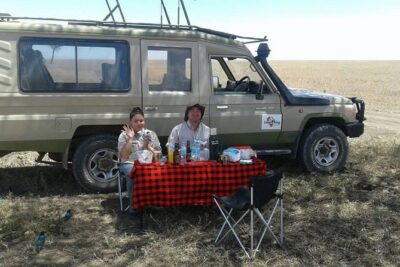
5 Days Best of Tanzania Luxury Safari Northern Circuit
Read our review →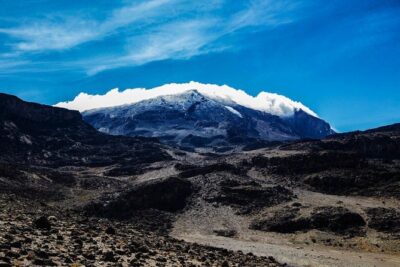
Kilimanjaro climb, Northern Circuit route (8-day)
Read our review →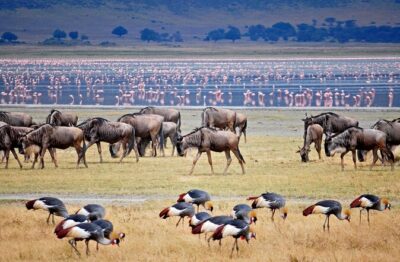
Private 4-Days Northern Circuit National Parks in Tanzania
Read our review →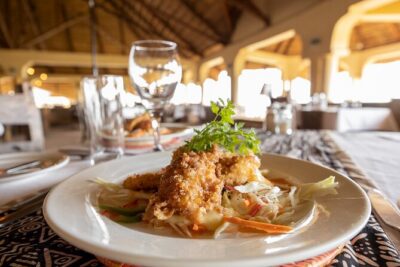
From Arusha: 7 Days Classic Safari Central Northern Circuit
Read our review →
5 Days Exclusive Camping Adventure in Northern Tanzania
Read our review →Browse the lists this tour appears in