
Reviewed · MACHAME ROUTE CLIMBS
machame route
Machame is Kilimanjaro’s scenic, rugged route, and it earns its nickname, the Whisky Route, by asking more of you than the gentler Marangu path. You climb through different sides of the mountain, sleep in camps, and finish with a demanding summit push toward Stella Point before descending by Mweka.
I like the small group limit of 10, which should make it easier for guides to watch your pace and comfort. I also like the strong focus on local staff. Guides such as Stan, Leon, Pio, and Stanley are repeatedly praised for calm support, good humor, route skill, and careful attention during the hardest hours.
The main caution is the six-day schedule. Machame is tough even with support, and the operator itself notes that seven days is the better version for acclimatization. You need a strong fitness level, patience, and a willingness to walk uphill for long stretches.
Key points to know before you book
- Machame crosses two sides of Kilimanjaro: You ascend through the southwest and south, then descend on the east-facing Mweka route.
- The route is steep and rugged: It suits fit hikers who want scenery and a more adventurous climb, not an easy mountain walk.
- A maximum of 10 people keeps the group manageable: This is useful when the pace, rest breaks, and summit support matter.
- Camping, three meals a day, and multilingual service are included: English, German, French, and Spanish options are offered.
- The guides receive the strongest praise: Stan, Leon, Pio, Stanley, Ilyas, Justo, and Evan are among the team members named in past accounts.
- Seven days is the wiser choice for many people: The six-day format costs less time, but gives you less room to adjust to altitude.
Why the Machame Route is worth the effort
The Machame Route gives you a fuller view of Kilimanjaro than a simple up-and-down trail. You approach through the mountain’s southwest and southern sides, then return by the Mweka route. That change of scenery matters on a six or seven-day climb, especially when your legs are tired and the days begin to feel similar.
The route is also known for its trek high, sleep low pattern. In practical terms, the trail gains and loses height in a way that can help your body adjust to altitude. This does not remove the risk of altitude sickness, and no route guarantees a summit, but the route profile is one reason Machame has a strong summit record compared with some shorter options.
You should not confuse scenic with easy. Machame is steeper than Marangu, and you walk longer distances on many days. The trail is commonly described as the Whisky Route, a nickname that captures its rougher character. If you want a smoother ascent with a more gradual feel, Marangu may suit you better. If you want a more dramatic route and accept harder walking, Machame is the stronger pick.
More Machame Route climbs:
- Kilimanjaro climb, Machame Route (7-day)
★ 5.0 · 262 reviews - Climbing Kilimanjaro – Machame Route
★ 5.0 · 170 reviews - Climbing Kilimanjaro through 7 days Machame Route
★ 5.0 · 151 reviews
What six days on Machame feels like
The published trip is about six days, with camping each night. Exact camp names and daily distances are not provided, so I would not book this expecting a rigid, publicly detailed day-by-day schedule. Instead, think of the climb in four broad parts: arrival and trail start, steady ascent through changing terrain, acclimatization and high camps, then the summit and descent.
Your meeting point is Kilimanjaro Airport, with pickup offered. That is helpful after an international flight, though you should confirm the pickup details and timing directly before arrival. The tour is based from Moshi, the main gateway for Kilimanjaro climbs.
The early walking introduces you to the rhythm of the trip. You will hike, eat, rest, and sleep in camp, repeating that pattern as the air gets thinner. Your local guides provide information about geography, history, anthropology, plants, and animals along the way, so the climb is not only a physical test.
The middle days are where Machame earns its reputation. The route becomes steeper and the distance can feel long. The value of a small group becomes clear here. A guide can monitor how you are moving, encourage a slow pace, and respond if you are struggling.
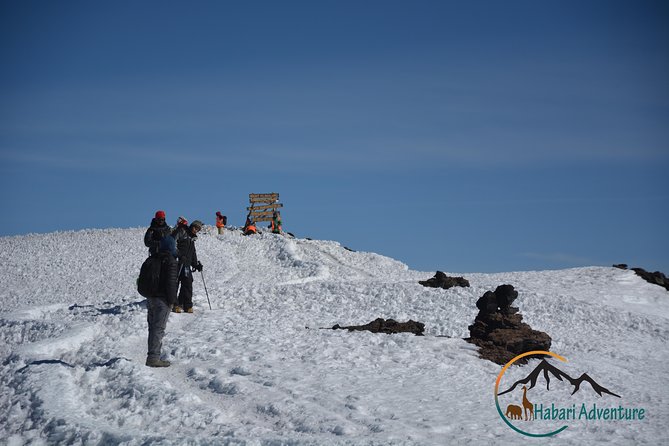
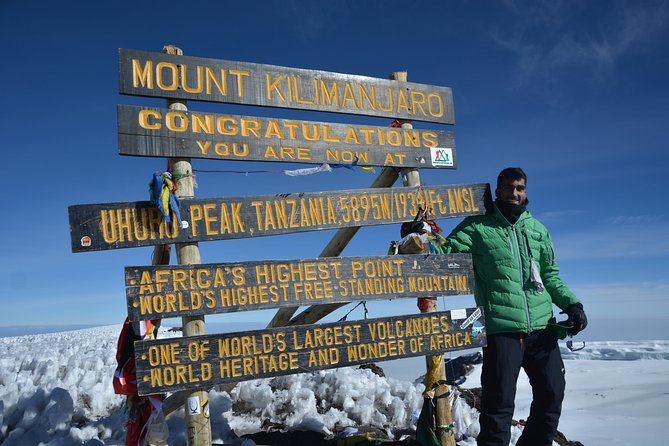
The final stage is usually the hardest. The route reaches the crater rim at Stella Point before the descent toward Mweka. Summit night brings cold, darkness, thin air, and a slow uphill push. One past account describes Stan timing the arrival for five minutes before sunrise, a detail that shows how important pacing can be at the top.
You then descend by Mweka, giving you a different side of the mountain and a chance to lose altitude more quickly. That descent is welcome, but it is not effortless. Tired knees and sore feet can make downhill walking surprisingly demanding.
Why seven days may be better than six
The operator describes Machame as best done in seven days. I would take that advice seriously, especially if this is your first high-altitude climb or you are arriving without recent mountain experience.
The advantage of the extra day is not simply comfort. It gives your body more time to adjust and lets the group move at a less frantic pace. The route already benefits from altitude changes that support acclimatization, but a six-day schedule still leaves less margin for slow progress, poor sleep, or a headache that needs watching.
The six-day version may suit you if time is tight and you are already fit for long uphill days. It also keeps the overall trip shorter. But the price of a failed summit attempt is high, both financially and emotionally. If adding a day is possible, I would favor the seven-day format.
Ask Habari Adventure exactly how the six-day and seven-day programs differ before paying. Confirm the daily route, camp elevations, summit timing, and what happens if someone needs to descend early. Those questions are more useful than relying on the route name alone.
Guides, porters, and the human side of the climb
This trip depends heavily on its Tanzanian crew. The strongest praise centers on the guides and porters, not on luxury or polished facilities. That is exactly what matters on Kilimanjaro.
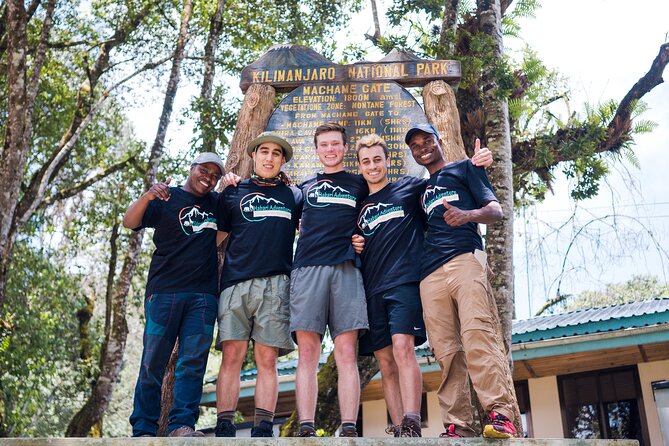
Guides named in past accounts include Stan, Stanley, Leon, Pio, Ilyas, Justo, and Evan. Stan is described as kind, funny, highly familiar with the mountain, and serious about safety. Another account says he adapted the climb to the group’s strengths and changed the plan when needed. Those are useful qualities on a mountain where people do not all react to altitude in the same way.
Leon and Pio are praised for being friendly and present throughout the climb. Leon, Justo, and Evan are also remembered for keeping the walking days lively with music and songs. That kind of warmth can make a difficult day feel less grim, but the key point is that the team is expected to combine good spirits with practical support.
Porters carry equipment and help with camp work, cooking, and cleaning. Past accounts make clear how much of the climb depends on their effort. You should ask the operator how porter welfare, tipping, baggage limits, and crew responsibilities are handled. These are important ethical questions on any Kilimanjaro trip.
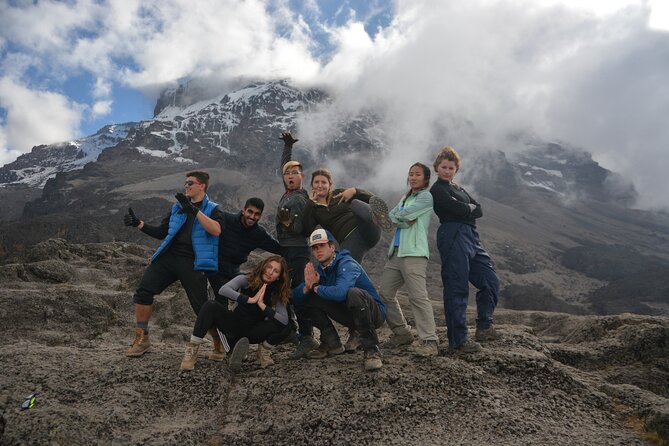
A group size of no more than 10 is a good middle ground. It is small enough for personal attention but large enough to provide a social setting. If you prefer complete solitude, even 10 people may feel busy. If you are climbing with friends or family, the limit should feel comfortable.
A few more Kilimanjaro trips worth comparing
- Kilimanjaro climb by Lemosho Route (7-day)
★ 5.0 · 651 reviews - Kilimanjaro Climbing Lemosho Route 8 Days.
★ 5.0 · 186 reviews - 8-Day Small-group Lemosho Kilimanjaro Summit Trekking
★ 5.0 · 186 reviews - Kilimanjaro climb, Lemosho Route (8-day)
★ 5.0 · 148 reviews
Food, camping, and daily comfort
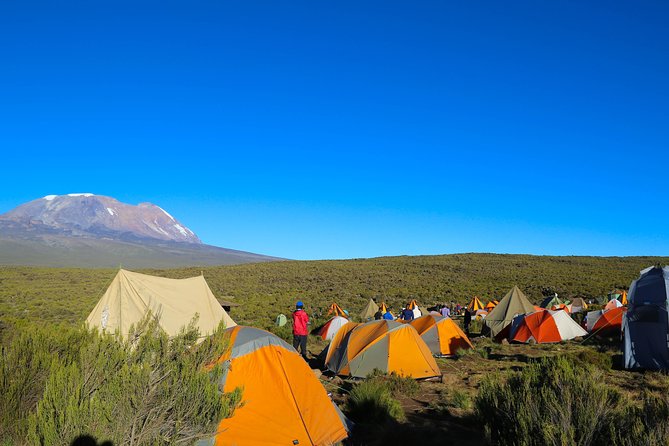
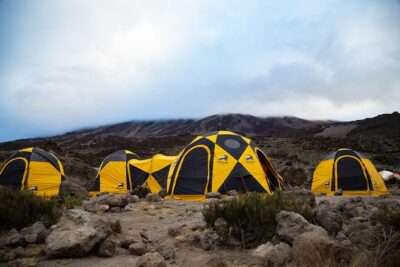
Camping is part of the deal, so this is not a lodge-based Kilimanjaro holiday. You should expect basic mountain living, changing weather, and limited personal space. The reward is a more direct connection with the route and a lower reliance on built-up facilities.
Breakfast, lunch, and dinner are provided each day. Food receives unusually strong praise in the available accounts, with descriptions of meals as varied, plentiful, and tasty. That matters more than it may sound. On long walking days, enough food and regular meals help you keep going.
Still, food quality does not make the climb easy. You need to arrive prepared for cold, fatigue, and the limits of camping. The supplied information does not list equipment, luggage allowances, water arrangements, tent details, or shower facilities, so get a written packing and inclusions list before departure.
The same point applies to transport. Airport pickup is offered, but the supplied details do not explain transfers between the airport, Moshi, and the trailhead. Confirm what is covered and when the pickup operates.
Price and what the package may be worth
The listed price is $2,255.39 per person. That is a substantial amount, but a guided Kilimanjaro climb includes far more than trail access. You are paying for permits and park operations, guides, porters, camp support, meals, transport arrangements, and the coordination required to move a team up and down a major mountain.
The value is strongest if you want an organized trip with local staff and no need to assemble separate services yourself. The small group limit also adds value, particularly if the guide-to-climber ratio is strong.
I would not judge the price until you confirm what it includes. The supplied details clearly mention camping, daily breakfast, lunch, dinner, airport pickup, and guiding, but they do not spell out every cost. Ask about park fees, rescue coverage, transfers, equipment, porter bags, tips, hotel nights, and bottled or treated water.
The six-day length also affects the value calculation. A shorter climb may save time, but seven days may give you a better chance of reaching the summit. Paying slightly more for an extra day can be sensible if it improves acclimatization and reduces the pressure of the schedule.
Language options and local context
Habari Adventure offers service in English, German, French, and Spanish. That is useful if you want to discuss health, pace, or safety in a language you understand well.
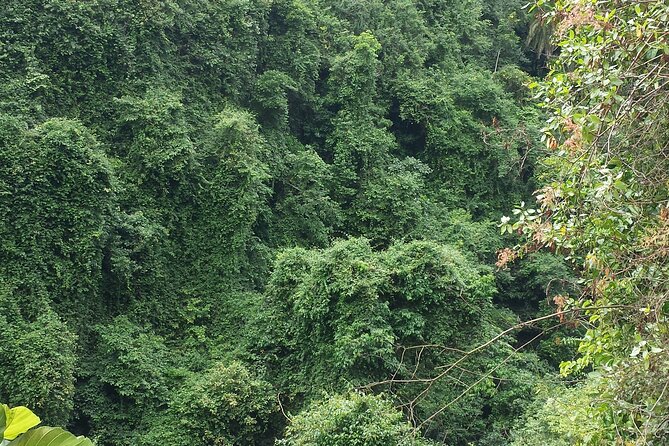
The guides are Tanzanian, and the route commentary includes local geography, history, anthropology, plants, and wildlife. These details can turn long walking stretches into a better sense of place. You are not simply counting steps toward the summit. You are moving through several ecological zones and learning how the mountain fits into the region around Moshi.
The information is not a substitute for a naturalist tour. The main purpose remains the climb. Still, having guides who can explain the area adds a worthwhile local layer, especially during easier walking days when you have the attention to listen.
Fitness, weather, and cancellation details
This activity requires a strong physical fitness level. That wording should be taken literally. The route is steep, walking days are long, and the summit attempt is physically demanding even for fit people.
You do not need to treat the climb like a race. Slow walking, steady breathing, drinking regularly, and telling your guide when something feels wrong are more useful than proving toughness. The route’s acclimatization pattern helps, but it does not guarantee that you will feel well at altitude.
The climb also depends on weather. If poor conditions cause cancellation, you are offered another date or a full refund. For ordinary cancellations, you can cancel at least 24 hours before the start for a full refund. Changes or cancellations inside that window are not accepted, and the local time cutoff applies.
Who should book the Machame climb
I would recommend this trip to fit hikers who want a scenic and demanding Kilimanjaro route, prefer camping, and value close support from Tanzanian guides. It is also a good match if you want a small group rather than a large expedition.
The route is less suitable for anyone seeking an easy ascent, a resort-style trip, or a relaxed walking holiday. It is not a good choice if you are uncertain about your fitness and unwilling to consider the seven-day version.
I would also think carefully about the summit timetable. Six days can work, but seven days gives you a better buffer. If the summit is your main goal, ask for the longer schedule and a detailed plan before booking.
Should you book this Kilimanjaro trek?
I would book it if you want the classic adventurous Machame experience and feel comfortable with basic camping, steep trails, and a serious summit day. The small group, local guides, meals, and strong crew support make the $2,255.39 price reasonable, provided the major park and transport costs are included.
My practical choice would be the seven-day version rather than six. Before paying, confirm the complete itinerary, inclusions, equipment rules, porter arrangements, summit plan, and pickup details. If those answers are clear and you are physically ready, Habari Adventure offers a well-supported way to tackle Kilimanjaro’s most popular rugged route.
FAQ
Where does the Machame Route tour begin?
The meeting point is Kilimanjaro Airport in Tanzania. Pickup is offered.
How long is the Kilimanjaro climb?
The advertised experience lasts about six days. The Machame Route is also commonly completed in seven days, and the longer schedule is described as the better option for acclimatization.
Is camping included?
Yes. The tour includes camping during the climb.
Are meals provided?
Yes. Breakfast, lunch, and dinner are provided each day.
What is the maximum group size?
The group can include a maximum of 10 people.
Which languages are offered?
Tours are offered for English, German, French, and Spanish speakers.
How difficult is the Machame Route?
It is a steep and demanding route that requires a strong level of physical fitness. It is more rugged and strenuous than the Marangu Route.
Which route is used for the descent?
The climb approaches the mountain from the southwest and south, then descends by the east-facing Mweka route toward the crater rim at Stella Point.
Can I cancel for a full refund?
Yes, if you cancel at least 24 hours before the experience start time. Cancellations or changes made less than 24 hours before the start are not accepted for a refund. If poor weather causes the activity to be canceled, you are offered another date or a full refund.
Just added around Kilimanjaro
- 6 days Machame route climbing Mt.Kilimanjaro★ 5.0 · 8 reviews
- Mt Kilimanjaro 6 days Marangu route hike★ 5.0 · 3 reviews
- Private Cycle to Kilimanjaro Bike Park Safari★ 5.0 · 6 reviews
- West Kilimanjaro cycling Adventures★ 4.5 · 8 reviews
- Kilimanjaro Climb • Marangu Route ~ 9 Day★ 5.0 · 4 reviews
- 3 Days Private E-Bike Tour in West Kilimanjaro★ 5.0 · 3 reviews
- Kilimanjaro Climb & Safari – Lemosho Route – 13 Day★ 5.0 · 10 reviews
- Kilimanjaro Climb • Machame Route ~ 10 Day★ 5.0 · 6 reviews
Machame Route Climbs, compared.
The Best of Machame Route in 6 Days: Your World’s Summit Guide
Read our review →Browse the lists this tour appears in