
Reviewed · MACHAME ROUTE CLIMBS
The Best of Machame Route in 6 Days: Your World’s Summit Guide
The best part of this Kilimanjaro climb is the changing world under your boots. In six days, you move from rainforest at Machame Gate to the cold, bare slopes of Uhuru Peak, Africa’s highest point. The route includes Lava Tower, Barranco Wall, Stella Point, and a sunrise near the crater rim.
I like the careful climb-high, sleep-lower pattern on Day 3, and I like that meals, camping equipment, hotel transfers in Moshi, and a summit certificate are included. The main caution is simple: this is a hard trek, especially the 10 to 13-hour summit day, and park fees, tips, hotels, flights, and personal gear cost extra.
Key points before you book
- Machame Route acclimatization: The trail gains height gradually, with a key climb to Lava Tower followed by a descent to Barranco Camp.
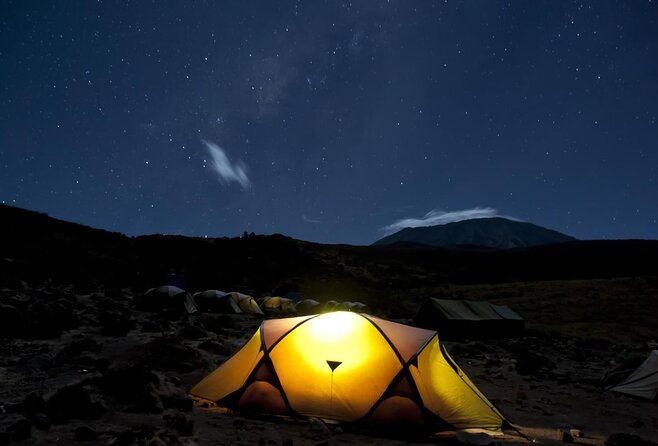
- Six days on the mountain: You sleep at Machame, Shira, Barranco, Barafu, and Mweka camps.
- Uhuru Peak at 5,895 meters: Summit day begins around midnight to 2 a.m. and includes a descent to Mweka Camp.
- Full-board trekking: Breakfast, lunch, and dinner are provided during the climb.
- Moshi hotel transfers: Pickup to Machame Gate and return from Mweka Gate are included when you stay at a hotel in Moshi town.
- Park fees are extra: Add the Kilimanjaro park charges to your budget before you compare prices.
Why the Machame Route works well in six days
The Machame Route is popular for a good reason: it gives your body some useful altitude changes instead of sending you straight uphill every day. The most important example comes on Day 3, when you climb to Lava Tower at about 4,650 meters, then descend to Barranco Camp.
You do not sleep at the highest point reached that day. That climb-high, sleep-lower pattern gives you a better chance to adjust to thinner air. It does not remove the risk of altitude sickness, and no route can guarantee a summit, but it is a sensible feature for a demanding climb.
The six-day schedule is efficient, not easy. A seven-day version is also advertised, but the detailed plan supplied here covers six days. If you are choosing between the two, confirm exactly which schedule, camps, and price apply before paying. An extra day can mean a gentler pace, but that specific seven-day plan is not provided here.
More Machame Route climbs:
- Kilimanjaro climb, Machame Route (7-day)
★ 5.0 · 262 reviews - Climbing Kilimanjaro – Machame Route
★ 5.0 · 170 reviews - Climbing Kilimanjaro through 7 days Machame Route
★ 5.0 · 151 reviews
From Moshi to Machame Gate at 1,830 meters
Your day begins with a drive of about 45 minutes from Moshi through Machame village. Pickup is included from the Moshi hotel you booked, which keeps the morning fairly simple. Airport transfers are not included, and hotels before or after the trek are also your responsibility.
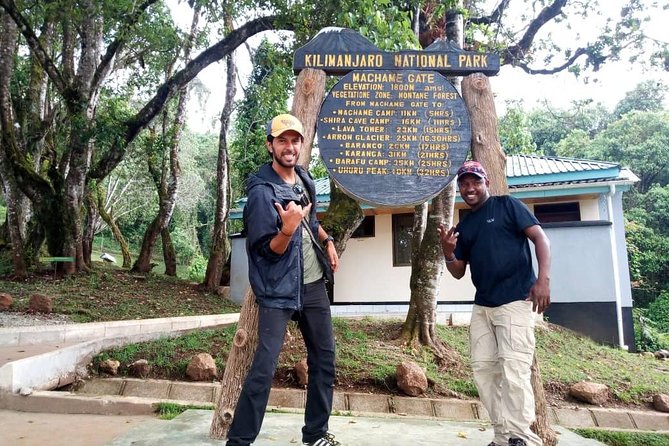
At Machame Gate, the trail enters montane forest. The first climb runs about 11 kilometers and takes roughly five to six hours, gaining almost 1,220 meters before you reach Machame Camp at 3,050 meters.
This is a fine opening day because the forest gives you shade and a clear sense of changing altitude. It is also a real hike, not a gentle warm-up. The trail winds upward, and you should expect a long day on your feet from the start.
Lunch and dinner are included, along with an overnight stay in a tent. Camping equipment such as a tent and mattress is supplied, but your personal hiking gear is not. That means boots, warm layers, rain protection, a headlamp, and other individual equipment must be arranged separately.
Shira Camp and the first open views
After breakfast, you leave the forest behind and enter moorland. Day 2 is shorter at about five kilometers, with four to five hours of walking, but the trail is still steadily uphill. You cross a valley, follow a steep rocky ridge, and then turn west toward a river gorge before reaching Shira Camp.
Shira Camp sits at about 3,850 meters. The jump from Machame Camp is significant, so you may feel the altitude more clearly here. Take the guide’s pace seriously. Slow walking is not wasted time on Kilimanjaro. It helps conserve energy for the days ahead.
The shift from dense forest to open moorland is one of the route’s rewards. You can see more of the mountain’s broad form, and the surroundings feel less sheltered and more exposed. Breakfast, lunch, and dinner are included on this day.
Lava Tower and Barranco Camp: the key acclimatization day
Day 3 is the route’s most important altitude lesson. From Shira Camp, you continue east along a ridge, pass the junction toward Kibo, and turn southeast for Lava Tower, also called Shark’s Tooth.
The trail reaches about 4,650 meters before dropping to Barranco Camp. You cover about 10 kilometers and walk for five to six hours. Although the day ends around 4,000 meters, the higher point in the middle matters. It gives your body time to experience greater altitude without making you sleep at the maximum height reached.
The setting changes again to semi-desert. Vegetation becomes sparse, and the mountain feels more severe. You should not judge the day only by distance. Altitude makes every uphill section harder, and the climb to Lava Tower can feel demanding even though you descend afterward.
Barranco Camp is one of the more memorable stops because it places you below the next morning’s famous obstacle. Dinner and camping follow another full day of walking. Pay attention to hydration, food, and rest here. You are halfway through the route, but the hardest section is still ahead.
More treks and hikes around Kilimanjaro:
- Kilimanjaro climb by Lemosho Route (7-day)
★ 5.0 · 651 reviews - 8-Day Small-group Lemosho Kilimanjaro Summit Trekking
★ 5.0 · 186 reviews - Kilimanjaro Climbing Lemosho Route 8 Days.
★ 5.0 · 186 reviews - Kilimanjaro climb, Lemosho Route (8-day)
★ 5.0 · 148 reviews
Barranco Wall and the push to Barafu Camp
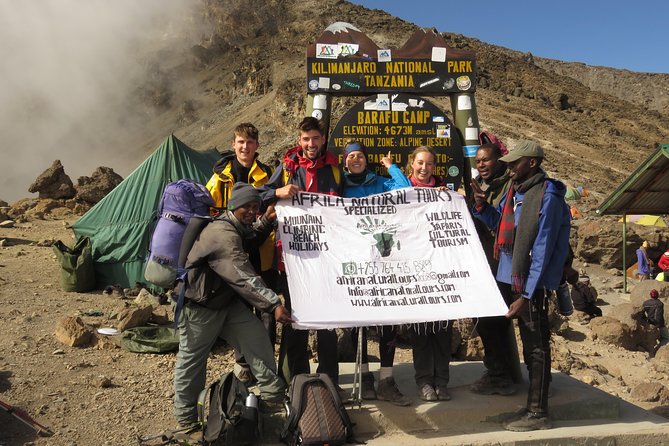
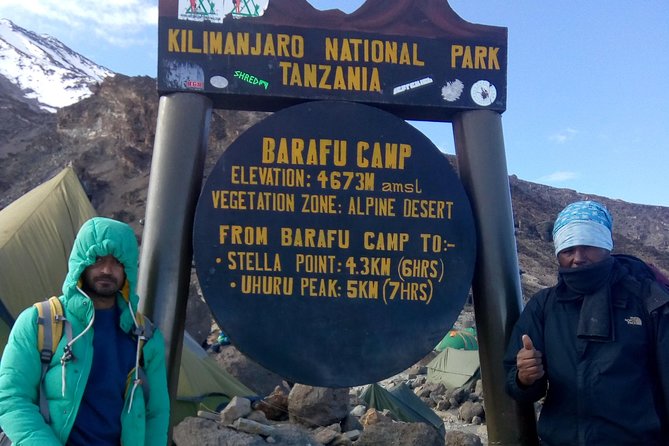
Day 4 begins with the Barranco Wall. This is a steep ascent to about 4,250 meters, followed by a traverse through the Karanga Valley at around 4,050 meters. You then continue to Barafu Camp, reaching approximately 4,700 meters.
The day covers nine kilometers and takes six to eight hours. The habitat becomes alpine desert, with little shelter and a much harsher feel than the lower forest. This is where the route begins to look and feel like a high mountain climb rather than a long walk.
The Barranco Wall can sound intimidating, but the bigger issue is the total effort of the day. You climb, descend, cross the valley, and then climb again toward Barafu. The route completes the South Circuit and gives you summit views, but you should save energy. Barafu is not the finish. It is the staging point for the hardest night of the trip.
You eat dinner at camp and try to sleep before the summit start. The start time is usually between midnight and 2 a.m. That early departure is necessary to reach Stella Point around sunrise and continue to Uhuru Peak. It also means Day 4 and Day 5 feel almost like one long effort.
Uhuru Peak at 5,895 meters
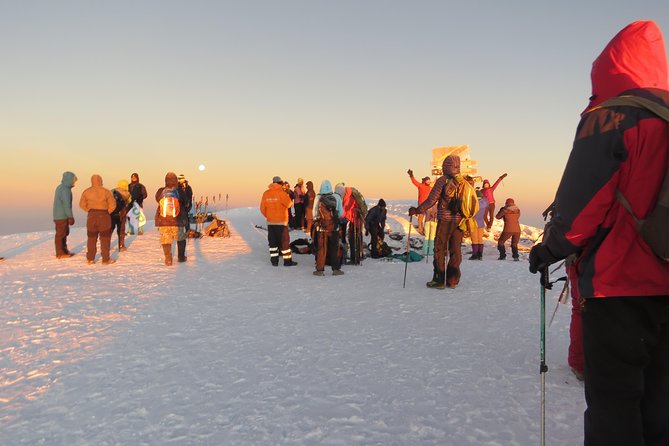
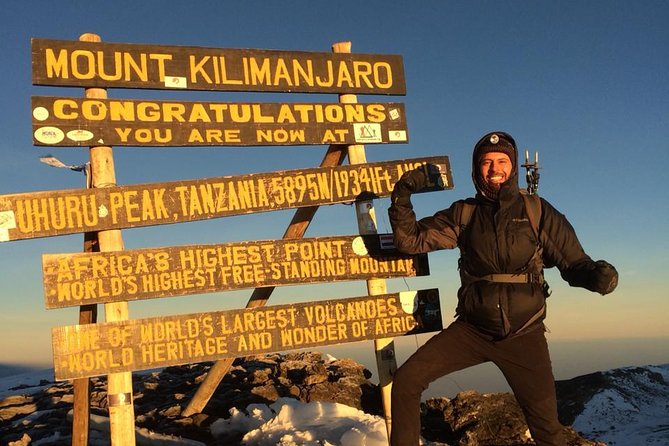
Summit day is the physical and mental test. You leave Barafu at about 4,700 meters and climb through scree between the Rebmann and Ratzel glaciers. The route reaches Stella Point on the crater rim before continuing to Uhuru Peak, the highest point in Africa at 5,895 meters.
The climb from Barafu to the summit covers about five kilometers, but it can take six to eight hours. At this altitude, distance tells only part of the story. The cold, darkness, steep ground, and thin air make a slow pace essential.
The reward is the chance to see sunrise from Stella Point or near the summit, weather permitting. The tour highlights an unforgettable sunset from the summit, but the detailed schedule describes a very early start and a sunrise at Stella Point. Confirm the exact summit timing with the operator, since sunset and sunrise are not the same plan.
After Uhuru Peak, you descend to Barafu for lunch, then continue to Mweka Camp at 3,090 meters. The full day involves about five kilometers up and 13 kilometers down, with 10 to 13 hours of hiking. That descent is not an easy finish. Your legs will be tired, and the long downhill can be hard on knees and feet.
Breakfast, lunch, and dinner are provided. You sleep at Mweka Camp, considerably lower than Barafu, which should feel like a welcome change after the summit effort.
The muddy descent to Mweka Gate
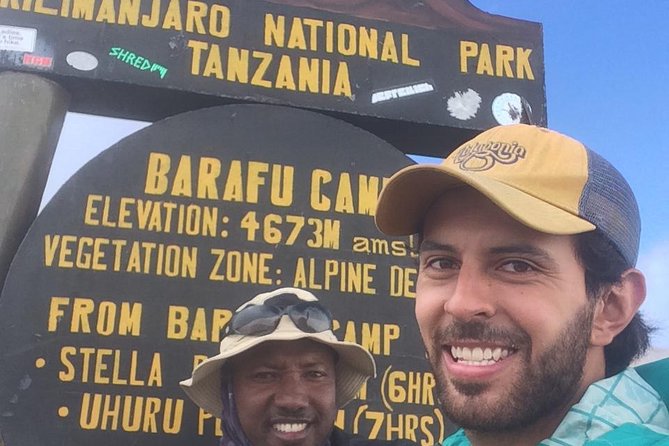
The final morning is shorter but still useful to plan for. From Mweka Camp, you descend 10 kilometers to Mweka Park Gate, dropping from about 3,090 meters to 1,680 meters in three to four hours.
Lower sections can be wet and muddy. Gaiters and trekking poles are specifically advised, and both are practical choices for keeping mud out of your boots and reducing strain on the descent.
At Mweka Gate, you receive your summit certificate. The operator’s vehicle then takes you back to your Moshi hotel, a drive of about 60 minutes. The return transfer applies to the hotel you booked in Moshi town. It does not include airport pickup or drop-off.
What the $1,150 price really covers
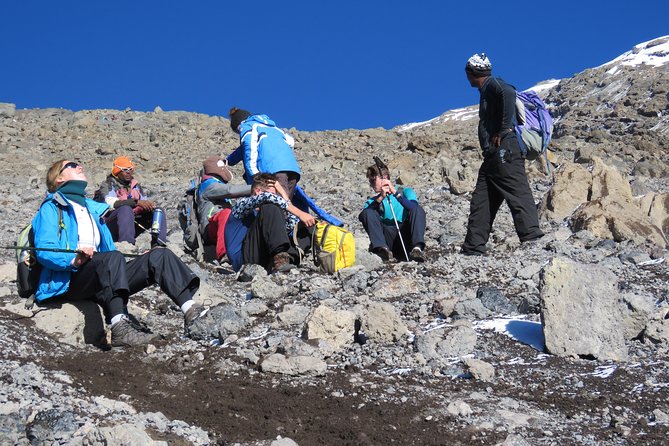
At $1,150 per person, the price includes several important services: a professional Kilimanjaro guide, meals during the trek, a tent, a mattress, the briefing, the summit certificate, and transportation between a Moshi hotel and the mountain gates.
That package gives you the main support needed for a camping climb. You are not paying only for a trail and a campsite. You are also paying for mountain guidance, food, equipment, and transfers at the beginning and end.
The price does not include all Kilimanjaro park fees. Those fees can be paid directly to the park or through the tour operator, so ask for the current total before booking. You also need to budget for crew tips, hotel nights before and after the climb, airport transfers, flights, and personal hiking gear.
The word all-in would be misleading here. The $1,150 is a starting cost, not your final trip budget. Still, the included meals and camping equipment make it easier to compare with cheaper-looking packages that may leave out tents, transfers, or food.
Food, camping, and support on the mountain
Breakfast, lunch, and dinner are supplied each trekking day. That matters because carrying and arranging all your meals would add weight and planning to an already tiring trip.
A tent and mattress are included, but the information does not specify the tent setup, sleeping bag provision, or group sleeping arrangements. Ask those questions before departure. You should also confirm what personal items the operator recommends and what can be carried by the mountain crew.
A professional Kilimanjaro guide is included, along with a pre-trek briefing. Use that briefing to clarify the daily pace, summit timing, park fees, weather planning, and tipping expectations. The mountain crew’s tips are not included, so ask for the operator’s current guidance rather than guessing.
The stated maximum is 100 people. That is a large possible group, though it does not tell you the actual size of your departure. If group atmosphere matters to you, ask how many people are expected on your date and how guides are assigned.
Who should choose this climb
This tour suits you if you want a direct route to Kilimanjaro’s summit with meals, camping basics, and Moshi transfers handled. It also suits people who value the Machame Route’s changing scenery and its useful acclimatization profile.
You need a moderate level of physical fitness at minimum. The long summit day makes this more than a casual hiking holiday. You should be ready for six to eight hours on several days, followed by up to 13 hours on summit day.
This may not be the right choice if you want a relaxed mountain trip, private comfort, or a short summit walk. It is also a poor fit if you have not planned for personal equipment, park charges, hotels, and crew tips. The route is rewarding, but it asks for patience and stamina.
Booking details and cancellation terms
Confirmation is provided at booking, and the activity offers a mobile ticket. Pickup is offered from your booked hotel in Moshi town, with return transport from Mweka Gate to that hotel after the climb.
Free cancellation is available if you cancel at least 24 hours before the experience start time. Cancellations or changes made within 24 hours are not accepted for a refund. The cutoff uses local time.
The activity is listed as being booked an average of 90 days in advance. That is a useful sign to plan early, especially if your dates are fixed, but it does not guarantee that every departure sells out.
Should you book the six-day Machame Route?
I would choose this climb if you want the classic Machame experience, accept basic camping, and are prepared for a very long summit day. The route gives you strong variety, from forest to moorland and alpine desert, while the Lava Tower to Barranco section provides a sensible acclimatization pattern.
Before paying, get three things clear in writing: the full park-fee total, the exact six-day or seven-day schedule, and what camping and personal equipment you must bring. Also confirm the summit timing, since the plan describes a sunrise push while the highlights refer to sunset.
Book it if the $1,150 price fits your wider budget and you are ready to work for the summit. Skip it if you want a soft adventure or an all-inclusive price with no extra mountain costs.
FAQ
How long is the Kilimanjaro climb?
The scheduled trek lasts six days, although a six-day or seven-day version is offered. The detailed route provided covers six days.
Which route does the climb use?
The climb uses the Machame Route, one of the most popular routes because of its acclimatization profile.
Is pickup included?
Pickup is included from the hotel you booked in Moshi town to Machame Gate. Airport pickup is not included, and other pickup locations shown in the package are not included.
Is the return transfer included?
Yes. After you descend to Mweka Gate, transport is provided to your booked hotel in Moshi town. The drive takes about 60 minutes.
Are meals included?
Breakfast, lunch, and dinner are included during the trekking portion of the experience.
Is camping equipment included?
A tent and mattress are included. Personal hiking gear is not included.
Are Kilimanjaro park fees included in the $1,150 price?
No. All Mount Kilimanjaro park fees are excluded. They can be paid directly to the park or through the tour operator.
How difficult is the climb?
You should have a moderate level of physical fitness. The hardest section is summit day, which begins around midnight to 2 a.m. and can involve 10 to 13 hours of hiking.
Can I cancel for a full refund?
Yes, if you cancel at least 24 hours before the experience start time. Cancellations made less than 24 hours before the start time are not refunded, and changes within that period are not accepted.
More Six-Day Trips in Kilimanjaro
- Kilimanjaro climb, Lemosho Route (6-day)
★ 5.0 · 129 reviews - Kilimanjaro climb, Marangu route (6-day)
★ 5.0 · 72 reviews - 6 Days Tanzania Classic Safari
★ 5.0 · 52 reviews - 6 Days Machame Route Kilimanjaro Climbing
★ 5.0 · 42 reviews
Just added around Kilimanjaro
- 6 days Machame route climbing Mt.Kilimanjaro★ 5.0 · 8 reviews
- machame route★ 5.0 · 16 reviews
- Mt Kilimanjaro 6 days Marangu route hike★ 5.0 · 3 reviews
- Private Cycle to Kilimanjaro Bike Park Safari★ 5.0 · 6 reviews
- West Kilimanjaro cycling Adventures★ 4.5 · 8 reviews
- Kilimanjaro Climb • Marangu Route ~ 9 Day★ 5.0 · 4 reviews
- 3 Days Private E-Bike Tour in West Kilimanjaro★ 5.0 · 3 reviews
- Kilimanjaro Climb • Machame Route ~ 10 Day★ 5.0 · 6 reviews