
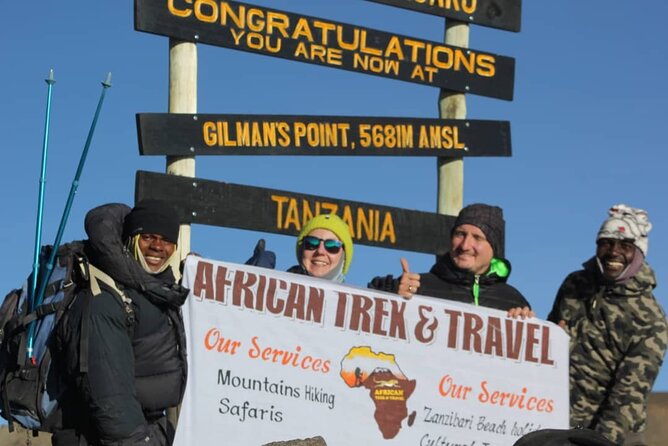
Reviewed · MACHAME ROUTE CLIMBS
6 Days Machame Route Kilimanjaro Climbing
Kilimanjaro’s Machame Route gives you the mountain in changing chapters: thick rainforest on day one, open moorland by Shira, high desert near Lava Tower, and a cold, demanding summit night from Barafu Camp. The route is not a sightseeing stroll. It asks for steady legs, patience, and a willingness to move slowly.
I like the strong route variety and the way the itinerary uses the South Circuit, giving you views of the summit from several angles before summit night. I also like the practical support: guides such as Sebastian help with gear planning, the crew handles camp and meals, and the group is limited to a maximum of 10 people.
The main caution is the schedule. Six days is a serious climb, and the summit attempt starts around midnight after a short stay at Barafu Camp. You need moderate physical fitness, and the short itinerary gives your body less time to adjust to altitude than longer Kilimanjaro routes.
Key points to know before booking
- Machame Gate starts the climb in rainforest, with about five hours of walking to Machame Camp.
- Lava Tower reaches 4,600 meters, followed by a descent to Barranco Camp to help your body adjust.
- Barranco Wall is the most memorable scramble, rising to about 4,250 meters before the trail continues toward Barafu.
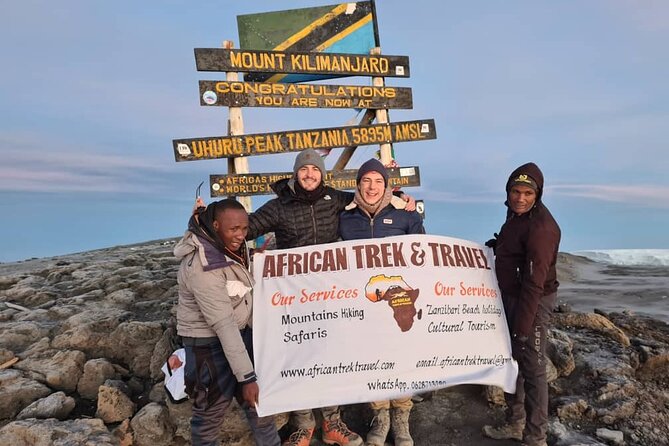
- Summit night begins around midnight, with Stella Point at 5,861 meters and Uhuru Peak one hour farther along the crater rim.
- The price is $2,600 for a group of up to one, including park charges, meals, and bottled water, but not crew tips or alcoholic drinks.
- The final descent ends at Mweka Gate, where successful climbers receive a green certificate for Stella Point or a gold certificate for Uhuru Peak.
Why Machame is Kilimanjaro’s classic six-day route
Machame is often chosen because it offers a strong visual progression without repeating the same trail on the way up. You begin under tall forest, cross the Shira Plateau, pass through high volcanic terrain, and approach the summit from the southern side.
That variety is the route’s great reward. You are not simply walking uphill for six days. Each day feels different in temperature, plant life, trail surface, and view.
The trade-off is that Machame is physically demanding. The route includes steep sections, high-altitude camps, and a summit night with several hours of walking before sunrise. The six-day version is efficient, but not especially forgiving if you struggle with altitude or need more recovery time.
African Trek & Travel lists a maximum group size of 10. That is small enough for guides to keep track of the group without creating the feel of a private climb. The listed price is $2,600 for a group of up to one, so you should confirm the final group arrangement and price details when booking.
More Machame Route climbs:
- Kilimanjaro climb, Machame Route (7-day)
★ 5.0 · 262 reviews - Climbing Kilimanjaro – Machame Route
★ 5.0 · 170 reviews - Climbing Kilimanjaro through 7 days Machame Route
★ 5.0 · 151 reviews
Day one: Machame Gate to rainforest camp
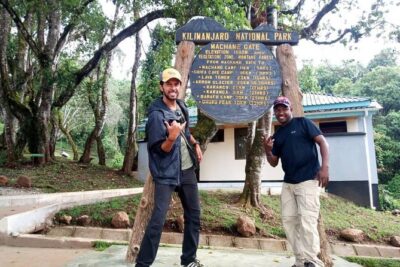
Your climb begins at Machame Gate, where you register with park authorities before entering Kilimanjaro National Park. The first five-hour walk passes through lush rainforest, a cool and leafy start compared with the bare volcanic ground higher up.
This is the gentlest day in terms of altitude gain, but it still sets the tone for the entire climb. You should walk slowly, keep your water close, and resist the urge to race ahead while your legs feel fresh.
The forest is one of the most enjoyable parts of the lower route. You can expect dense plant growth and the possibility of seeing forest wildlife, though wildlife sightings are not guaranteed. The trail eventually reaches Machame Camp for your first night.
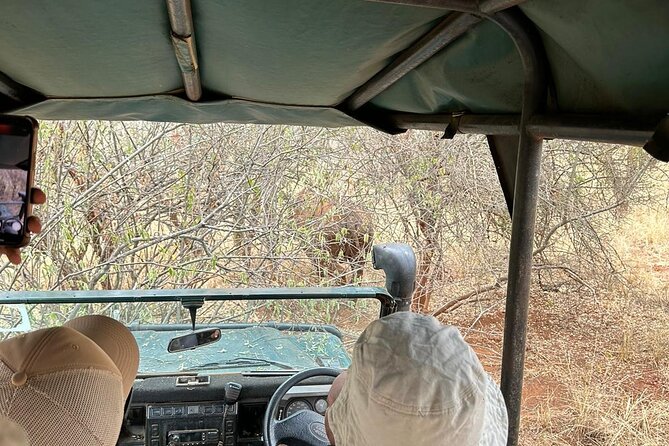
The supplied tour information describes comfortable vehicles with spacious seats, panoramic windows, climate control, storage, audio systems, Wi-Fi, and safety features. Those amenities matter mainly for pickup and transfers around Moshi. Once you enter the park, this becomes a walking trip, not a vehicle tour.
Day two: Shira Cave and the first real altitude gain
Day two is shorter, listed at about three hours, but it is steeper. You leave the rainforest behind and move through the moorland zone toward Shira Camp on the Shira Plateau.
The change in scenery is one of the route’s pleasures. Vegetation becomes more open, and the mountain begins to feel larger because there are fewer trees to block the view. You also gain considerable altitude, so the shorter walking time should not fool you into thinking this is an easy day.
Shira Camp is listed at Shira Cave Camp. The exact camp setup can vary with mountain operations, but the key point is that you spend the night much higher than you started. This is when pacing and hydration begin to matter even more.
Meals are included, with breakfast, lunch, and dinner provided during the climb according to the package details. Bottled water is also included at a stated amount of three liters per person. Since the information lists both meal counts and day-by-day inclusions in slightly different ways, ask the operator to confirm exactly how many meals and how much water are supplied for your departure.
Day three: Lava Tower at 4,600 meters, then Barranco
Day three is one of the smartest parts of the route. You cross a high desert plateau and climb to Lava Tower at about 4,600 meters before descending to Barranco Camp.
The climb high and sleep lower pattern gives you valuable exposure to altitude without spending the night at the highest point reached that day. You may feel the thinner air at Lava Tower, even if you are still walking well. This is a day for a slow pace and close attention to how you feel.
After Lava Tower, the trail drops toward Barranco Camp, located beneath the Barranco Wall. The descent can feel welcome after the climb, and the valley setting gives this camp a memorable sense of place.
At around five hours of walking, day three is not the longest on paper. The altitude makes it more tiring than the clock suggests. I would treat this as a key test of the climb, not a simple transfer between camps.
More treks and hikes around Kilimanjaro:
- Kilimanjaro climb by Lemosho Route (7-day)
★ 5.0 · 651 reviews - 8-Day Small-group Lemosho Kilimanjaro Summit Trekking
★ 5.0 · 186 reviews - Kilimanjaro Climbing Lemosho Route 8 Days.
★ 5.0 · 186 reviews - Kilimanjaro climb, Lemosho Route (8-day)
★ 5.0 · 148 reviews
Day four: Barranco Wall, Karanga Valley, and Barafu Camp
Day four begins with the Barranco Wall, a steep ridge reaching about 4,250 meters. This section can look intimidating from camp, but the route is described as a climb up the wall rather than a technical rock-climbing pitch.
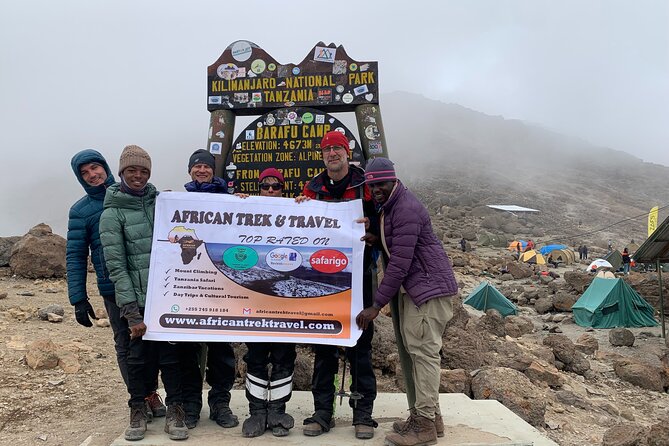
You continue through Karanga Valley at roughly 4,050 meters, then reach the junction with the Mweka Trail. From there, the route climbs toward Barafu Camp.
The day is listed at about six hours. By now you have already spent several days at altitude, so the steady rise can feel hard even if the distance is manageable. The best approach is to keep your steps short, follow the guide’s rhythm, and save energy for the next day.
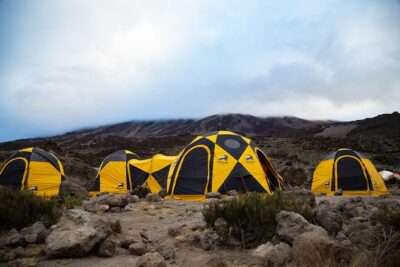
Barafu means ice in Swahili, and the camp is the launch point for the summit attempt. You have completed the South Circuit, which is valued for giving you views of Kibo, Kilimanjaro’s main volcanic cone, from different directions.
This is not a camp where you should expect a relaxed evening. You eat, organize summit clothing and equipment, and try to sleep before the midnight wake-up. The practical quality of the guiding matters here. Sebastian is specifically named in the supplied information as a climbing leader who helps with planning and gear decisions, and that kind of preparation can make the summit night less chaotic.
Day five: the midnight push to Uhuru Peak
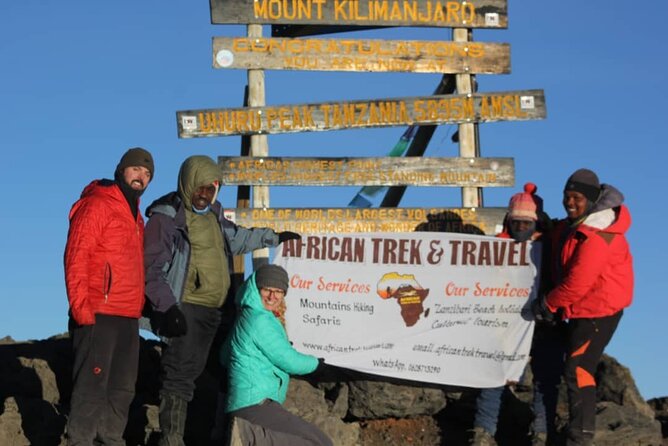
Summit day starts around midnight with a light breakfast. The aim is to reach Stella Point near sunrise, then continue along the crater rim to Uhuru Peak, Kilimanjaro’s highest point.
The trail from Barafu is steep and follows switchbacks over scree, with possible snow depending on conditions. You climb in darkness for much of the ascent, so the experience is less about scenery at first and more about measured effort.
Stella Point sits at approximately 5,861 meters, or 18,640 feet. From there, you can see the crater and glaciers, then walk for about another hour along the rim toward Uhuru Peak. The time you spend at the summit depends on how you feel, and that is exactly right. At this altitude, photographs are nice, but getting down safely matters more.
The supplied itinerary lists six hours for this portion, though summit timing can vary with pace, weather, and altitude. A successful summit is never guaranteed by a package description. You may reach Stella Point, Uhuru Peak, or need to turn back. The stated certificate system recognizes both outcomes: a green certificate for Stella Point and a gold certificate for Uhuru Peak.
After summit activities, you descend to a lower camp, though the provided day-by-day information does not specify that camp or the exact distance. Confirm the summit-day camping plan before departure, especially since the listed itinerary moves to Mweka Gate on day six.
Day six: descent through forest to Mweka Gate
The final day takes you down through the lower rainforest to Mweka Gate. The listed distance is 9 kilometers, or about 5.5 miles, and the walk takes roughly three to four hours.
After the exposed upper mountain, the return to forest feels like a major change. The air is warmer, the vegetation thickens, and the trail eventually reaches Mweka Gate at about 1,640 meters.
The descent can be harder on the knees than expected. Trekking poles, careful footing, and a controlled pace are useful here, even though the altitude is dropping. At the gate, successful climbers receive their certificates, then return to a hotel in Moshi.
Tipping the trekking crew is customary and is not included in the price. Plan for this as a separate expense and ask the operator for current guidance on how the group normally handles it.
What the $2,600 price covers
At $2,600 for a group of up to one, this is not a budget day trip. It is a multi-day mountain package with park fees, camp support, meals, bottled water, and guiding built into the price.
The listed inclusions cover:
- Park fees and taxes
- Breakfast, lunch, and dinner during the climb
- Bottled water, stated as three liters per person
- Pickup service
- Trekking support through the route
The package does not include crew tips, alcoholic drinks, or restroom facilities on board. Restroom-on-board wording appears to relate to the vehicle service, not the mountain camps, where facilities are basic and should not be confused with hotel bathrooms.
The value depends on what you want from Kilimanjaro. If you want a fully arranged climb with local staff, meals, transport support, and a guide handling the route, the price is easier to justify. If you are comparing only the number of walking hours, it may look high.
I also like the focus on local staff and small-company service. Several comments highlight the guides, cooks, porters, and the effort put into safety and organization. That does not remove the need to check the company’s current porter standards, equipment plan, emergency procedures, and exact meal arrangements before paying.
Guides, group size, and the human side of the climb
The experience depends heavily on the mountain crew. Sebastian is named as a guide and company leader associated with this climb. The available feedback places repeated emphasis on his planning, calm organization, encouragement, and attention to safety.
Those qualities matter more than polished vehicle features once you are above the forest. A good guide helps you decide what gear to carry, keeps the pace suitable, watches for signs of altitude trouble, and explains what comes next.
The group limit of 10 is another practical advantage. You are likely to have more personal space than in a large commercial group, while still sharing the work and mood of a team. At the same time, a small group does not guarantee that everyone will walk at the same speed or summit successfully.
The support crew also shapes the trip. Meals are included, and the available comments describe the food as plentiful and the camp operation as well managed. Remember that mountain comfort remains basic. This is a serious trek with support, not a hotel experience moved uphill.
Who should choose this six-day climb?
I would recommend this route to you if you:
- Have moderate physical fitness
- Can manage several consecutive days of uphill walking
- Want a varied route through rainforest, moorland, high desert, and volcanic terrain
- Prefer a group of no more than 10 people
- Are comfortable with a midnight summit start
- Value guides and support staff who handle planning, meals, and camp work
I would think twice if you dislike steep trails, have no experience with long walks, or want a generous schedule for altitude adjustment. A longer Kilimanjaro route may suit you better, though that option is not part of this package.
Service animals are allowed, and the meeting point is in Moshi, Tanzania. Pickup is offered, but you should confirm the exact pickup location and timing directly with the provider.
Should you book the Machame Route?
Book this six-day climb if you want a focused Kilimanjaro challenge with strong scenery, a clear summit goal, and a small operating group. The best features are the route variety, the South Circuit views, the Barranco Wall, the Lava Tower high point, and the organized support associated with African Trek & Travel and guides such as Sebastian.
Do not book it expecting an easy walk or a guaranteed summit. The midnight start, high camps, steep Barranco section, and limited acclimatization time make this a demanding plan.
Before confirming, ask for the current packing list, porter and guide arrangements, emergency plan, exact camp schedule after the summit, meal count, bottled-water provision, and suggested tip amount. If the answers are clear and you are ready for the effort, this is a well-focused way to approach Kilimanjaro.
FAQ
Where does the Machame Route climb begin?
The climb begins at Machame Gate after registration with park authorities. The listed meeting point is in Moshi, Tanzania.
How long is the experience?
The climb lasts six days, approximately. Walking times listed for the individual days range from about three to six hours, with the summit attempt beginning around midnight.
What is the highest point reached?
The goal is Uhuru Peak. The summit section also reaches Stella Point at approximately 5,861 meters, or 18,640 feet, before continuing along the crater rim.
What is the hardest part of the climb?
The route includes several demanding sections, especially the ascent to Lava Tower, the Barranco Wall, the climb to Barafu Camp, and the steep summit push from midnight onward.
Is food included?
Yes. Breakfast, lunch, and dinner are included in the package details. The information lists five breakfasts, six lunches, and five dinners in one section, so confirm the exact meal schedule before departure.
Is bottled water included?
Yes. The package states that three liters of bottled water per person are included.
Are park fees included?
Yes. All fees and taxes are included in the stated package.
Are crew tips included?
No. Tipping the trekking team is not included. It is customary to tip the crew at the end of the climb.
How many people can join the group?
The activity has a maximum of 10 travelers. The listed price is $2,600 per group, up to one person, so confirm the pricing and group arrangement when booking.
Can I cancel for a full refund?
You can cancel for a full refund if you do so at least 24 hours before the experience start time. Cancellations or changes made less than 24 hours before the start time are not accepted for a refund.
More Six-Day Trips in Kilimanjaro
- Kilimanjaro climb, Lemosho Route (6-day)
★ 5.0 · 129 reviews - Kilimanjaro climb, Marangu route (6-day)
★ 5.0 · 72 reviews - 6 Days Tanzania Classic Safari
★ 5.0 · 52 reviews - The Best of Machame Route in 6 Days: Your World’s Summit Guide
★ 5.0 · 44 reviews
Just added around Kilimanjaro
- 6 days Machame route climbing Mt.Kilimanjaro★ 5.0 · 8 reviews
- machame route★ 5.0 · 16 reviews
- Mt Kilimanjaro 6 days Marangu route hike★ 5.0 · 3 reviews
- Private Cycle to Kilimanjaro Bike Park Safari★ 5.0 · 6 reviews
- West Kilimanjaro cycling Adventures★ 4.5 · 8 reviews
- Kilimanjaro Climb • Marangu Route ~ 9 Day★ 5.0 · 4 reviews
- 3 Days Private E-Bike Tour in West Kilimanjaro★ 5.0 · 3 reviews
- Kilimanjaro Climb • Machame Route ~ 10 Day★ 5.0 · 6 reviews
Machame Route Climbs, compared.
The Best of Machame Route in 6 Days: Your World’s Summit Guide
Read our review →Browse the lists this tour appears in