
Reviewed · MACHAME ROUTE CLIMBS
Climbing Kilimanjaro through 7 days Machame Route
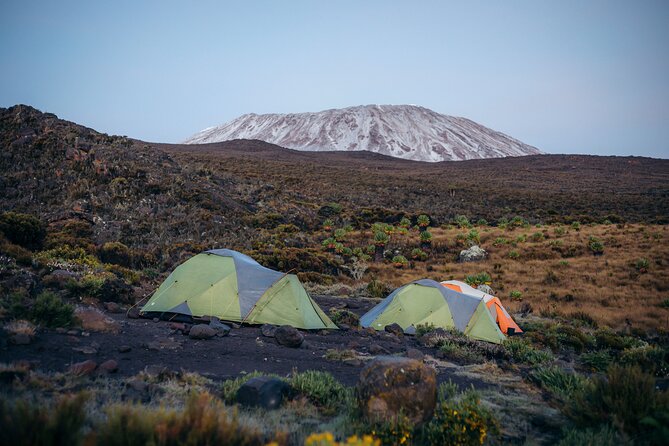
Kilimanjaro’s Machame Route earns its Whiskey Route nickname honestly: it is longer and steeper in places than Marangu, yet its changing terrain and high-low acclimatization pattern give you a strong shot at the summit. You start in rainforest and finish among volcanic rock and thin air, with the route climbing toward Shira, Barranco, Lava Tower, and Barafu before descending by Mweka.
I like two things in particular. Daily health checks and wilderness-first-responder guides give the climb a serious safety backbone, while fresh meals, a dining tent, mattresses, tables, and chairs make seven nights outside far more manageable. I also like that the crew includes guides with more than eight years on the mountain, including Alex, Gabriel, Mushi, and Farooq, names that recur in especially warm accounts of the service.
The main catch is simple: this is still a demanding seven-day climb, not a sightseeing walk. The route is busy, the summit day will test you, and the $2,425 price does not include accommodation in Moshi before or after the trek. You need moderate physical fitness and a willingness to move slowly, often one careful step at a time.
Key points to know before booking
- Machame Gate begins at 1,800 meters: Your first day moves through thick rainforest before the route gains height.
- The route crosses several mountain zones: Expect rainforest, Shira, Barranco, Lava Tower, Barafu, and a Mweka descent.
- Guides carry real safety responsibility: Guides have at least eight years of mountain experience and wilderness first responder certification.
- Walk high, sleep low helps acclimatization: The Lava Tower and Barranco section gives your body a useful adjustment to altitude.
- Camping equipment and meals are included: Private tents, a dining tent, mattresses, furniture, utensils, breakfast, lunch, dinner, tea, and coffee are provided.
- The $2,425 fee covers the mountain operation: You still need to arrange pre and post-climb Moshi lodging.
Why the seven-day Machame Route works
Machame is popular because it gives you variety without retracing the same trail on the way down. You approach from the southwest, cross the southern side of Kilimanjaro, reach the summit zone, then return by the Mweka trail.
That design matters. The route is not technically technical in the mountaineering sense, but it is physically demanding. You will encounter longer days, steeper stretches, and altitude rather than ropes or climbing equipment. The route’s gradual gains and the chance to walk high before sleeping lower are key reasons its summit record is described as strong.
The tradeoff is traffic. Machame is considered the busiest route on Kilimanjaro. If you want a quiet wilderness trip from start to finish, this is not the best fit. If you want a well-known route with a tested progression and plenty of support, its popularity can work in your favor.
You are not simply paying for a path through the park. Your fee supports a moving camp operation with guides, a chef, a waiter, and porters. That means food is cooked on the mountain, sleeping and dining areas are carried ahead, and the crew handles much of the practical work that would otherwise drain your energy.
More Machame Route climbs:
- Kilimanjaro climb, Machame Route (7-day)
★ 5.0 · 262 reviews - Climbing Kilimanjaro – Machame Route
★ 5.0 · 170 reviews - 7-Day Machame Kilimanjaro Summit Tour from Arusha
★ 5.0 · 125 reviews
Day one: Machame Gate and the rainforest
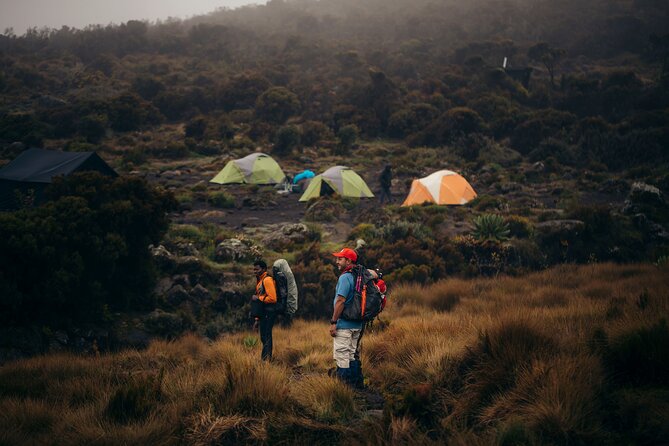
The climb begins at Machame Gate, at 1,800 meters. From there, the trail heads through Kilimanjaro’s rainforest on the southwestern side of the mountain.
This opening section is a good reminder that Kilimanjaro is not just a bare volcanic cone. The lower slopes have a very different feel from the summit zone, and the forest gives you shade and a gradual introduction to the rhythm of the trek. Your guide can also point out local plants and explain the mountain’s natural setting, one of the useful touches mentioned repeatedly about this crew.
Do not treat the first day as a warm-up you can rush. The guide’s job is to set a sustainable pace. Slow movement is part of the plan, not a sign that you are falling behind. You will need energy later, and the route soon begins to feel more exposed and demanding.
At camp, the included setup becomes important. You have a private tent, a mattress, and access to a dining tent with tables, chairs, utensils, and cutlery. Breakfast, lunch, and dinner are freshly prepared, with tea and coffee available. That is a major comfort on a trip where ordinary tasks can feel tiring.
Day two and the approach to Shira Camp
After the forest, the route continues upward toward Shira Camp. This is where the scenery opens up and the mountain begins to feel more serious.
Shira is also where the Lemosho Route joins from the west. You are not following an isolated spur for the entire climb, but a major route system that converges as it crosses Kilimanjaro. That helps explain why Machame can feel social and busy at camp, especially in popular climbing periods.
The move toward Shira is a useful test of your pacing and equipment. Temperatures and trail conditions change as you climb, so you should have clothing and personal gear easy to reach rather than buried at the bottom of a bag. The provided information does not specify a packing list, so confirm exactly what you must bring with ZAFS Tours before departure.
The guide team’s daily health checks are valuable here. Altitude problems can develop gradually, and a routine check gives the crew a chance to notice changes in how you are coping. Emergency oxygen is carried for the climb, but oxygen is not a substitute for careful monitoring or for following medical advice from the guide.
The Shira to Barranco section and Lava Tower
From Shira, the trail crosses the southern side of the mountain toward Barranco. The route passes through the Lava Tower area before descending to Barranco, creating the high-low pattern that makes Machame attractive for acclimatization.
This is one of the most important parts of the itinerary. You may climb to a higher point during the day, then sleep at a lower camp. That gives your body exposure to altitude without keeping you at the highest point all night. It is also why this seven-day version is more appealing than trying to squeeze the route into fewer days.
Lava Tower is not presented as a technical climbing obstacle, but it is a serious altitude marker. You may feel the thinner air even if the trail itself is manageable. The right approach is to walk slowly, drink as advised by your guide, eat the meals provided, and report symptoms honestly during health checks.
Barranco offers a change of mood. After the broad route toward Lava Tower, you prepare for the Great Barranco Wall. This is one of the more memorable physical sections of the Machame Route, and it is steeper than much of the lower trail. You should expect to use your hands for balance in places, though the supplied information does not describe it as technical climbing.
The wall is also where patience pays off. The guide team has made more than 100 trips up the mountain as a group, and the whole point of that experience is to help you find a safe pace rather than rush a difficult section. Guides such as Alex, Gabriel, Mushi, and Farooq are especially associated with calm encouragement and close attention to climbers.
More treks and hikes around Kilimanjaro:
- Kilimanjaro climb by Lemosho Route (7-day)
★ 5.0 · 651 reviews - 8-Day Small-group Lemosho Kilimanjaro Summit Trekking
★ 5.0 · 186 reviews - Kilimanjaro Climbing Lemosho Route 8 Days.
★ 5.0 · 186 reviews - Kilimanjaro climb, Lemosho Route (8-day)
★ 5.0 · 148 reviews
Barranco Wall to Barafu Camp
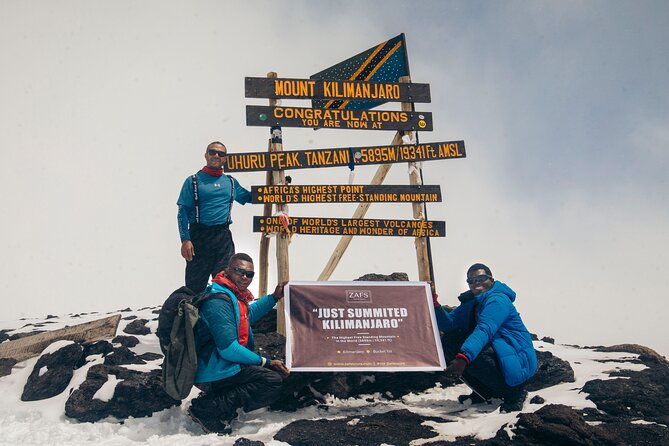
After Barranco, you continue across the southern side toward Barafu Camp. The route remains demanding, and the terrain is increasingly shaped by volcanic rock and high-altitude conditions.
Barafu is the launching point for the summit attempt. You will want to use the camp as a place to rest, eat, check clothing, and listen closely to the guide’s instructions. The itinerary does not specify exact summit departure or arrival times, so ask ZAFS Tours for the detailed day-by-day schedule before you book.
This is where the camping system earns its keep. A warm, freshly prepared meal may not sound like a major feature before the climb, but it becomes one when you are tired and preparing for the hardest section. The dining tent also gives you a shared place to sit, organize yourself, and stay out of the elements.
The crew structure is another practical advantage. Guides lead and monitor the climb. A chef prepares the meals, a waiter helps with camp service, and porters move the equipment. Past accounts of the service place particular emphasis on food, friendly camp support, and porters who keep checking on the group. Remember that the crew’s work is central to the trip, so plan a fair tipping budget even though no tipping details are provided here.
The summit attempt and Mweka descent
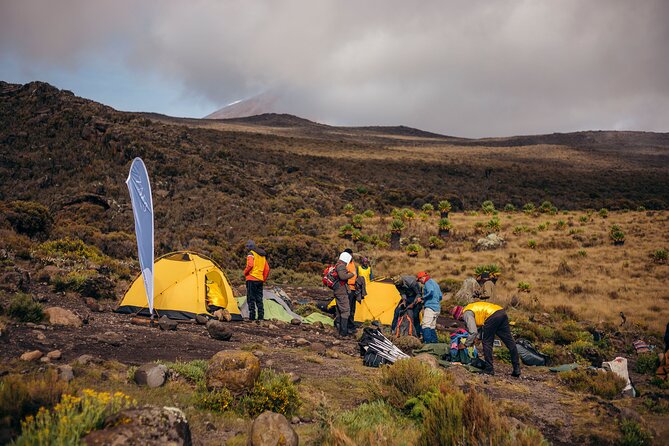
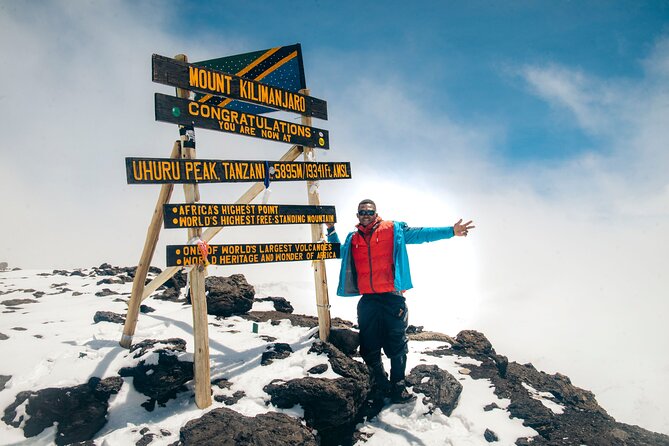
The summit is the emotional and physical high point of the trip. By then, you have crossed rainforest, Shira, Lava Tower, Barranco, and the route toward Barafu. The final push is not made easy by the scenery. It is made possible by pacing, preparation, and close support.
You should expect the summit day to be the hardest part of the trek. The description does not provide a precise distance, duration, or summit elevation, so do not rely on a generic schedule found elsewhere. Get the exact plan from the operator, including the expected start time, rest arrangements, and what happens if you need to turn back.
Once you have reached the summit area, the route descends by Mweka rather than returning along Machame. That gives you new views and avoids repeating the ascent trail. It also means the trip has a clear sense of movement: rainforest at the start, high camps and volcanic terrain in the middle, then a different descent route at the end.
Descending is not automatically easy. Tired legs, loose ground, and the accumulated strain of the climb can make the return challenging. Keep your pace controlled and continue to follow the guide’s instructions. The emergency oxygen cylinder and medical training are reassuring safeguards, but your best protection remains honest communication and sensible decisions.
Food, tents, and what $2,425 really buys
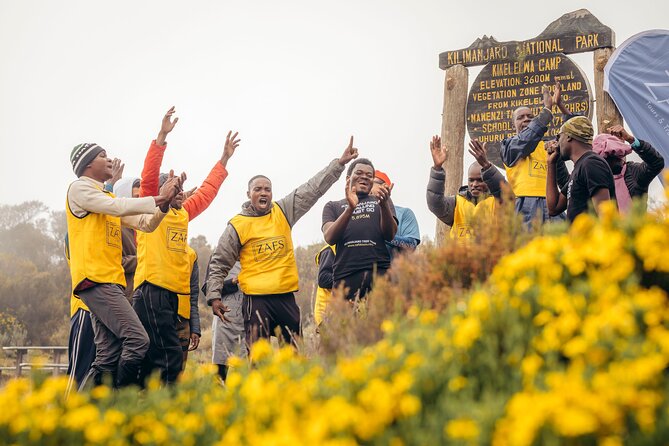
At $2,425 per person, this is not a budget walk, but the price includes much more than trail access. It covers private transportation, fees and taxes, camping equipment, the full mountain crew, and all listed mountain meals.
The equipment package includes private tents, a dining tent, tents for the crew, tables, chairs, mattresses, cutlery, and utensils. Breakfast, lunch, and dinner are freshly prepared on the mountain, with coffee or tea included. That setup is a meaningful part of the value because carrying and organizing these items yourself would add a great deal of work.
Private transportation is included, and pickup is offered. The meeting point is the Moshi Leopard Hotel on Market Street in Moshi, and the activity ends back there. The stated start time is 12:00 am, so confirm the exact pickup and departure arrangements before the trek. The listing also notes that the activity is private, with only your group participating, even though group discounts are available.
Pre and post-hike accommodation in Moshi is not included, but it can be arranged on request. Build those nights into your total budget, along with flights, visas if applicable, personal equipment, insurance, and crew tips. None of those costs are listed in the supplied price.
The booking pattern suggests you should plan ahead. This climb is booked about 65 days in advance on average. That is not a rule, but it is a good reason to avoid leaving your preferred dates until the last minute.
Who will get the most from this climb
This trip suits you if you want a serious Kilimanjaro attempt with a full support team and a route known for useful acclimatization. You should have moderate physical fitness and be ready for seven days of sustained walking, camping, altitude, and changing conditions.
It is also a good match if you value human support. The guides are not simply trail leaders. They handle health checks, explain the mountain’s plants and wildlife, watch your pace, and provide motivation when the climb becomes difficult. The crew’s support has helped people who were unsure they could summit, including climbers who needed to move at a slower pace.
I would be more cautious if you want luxury lodging, solitude, or a short and easy mountain outing. The dining tent and cooked meals provide comfort, but you are still camping. Machame is busy, and the Whiskey Route nickname is a fair warning about the physical work involved.
The tour is also a sensible choice for a solo booker who wants a private group arrangement rather than tackling the mountain alone. The experience is described as a private activity for your group, and one account describes a solo climber joining a group after an earlier booking did not fill. Confirm the exact group arrangement in writing before paying.
Booking details and cancellation terms
You receive confirmation at the time of booking. Pickup is offered, and the activity starts and ends at the Moshi meeting point.
You can cancel for a full refund up to 24 hours before the experience start time. Cancellations or changes made less than 24 hours ahead are not accepted for a refund. The operator uses local time, and if the minimum number of participants is not reached, you will be offered another date or experience, or a full refund.
The overall record attached to this experience is very strong, with a 5 rating from 151 reviews and a 100 percent recommendation figure. The most praised elements are consistent: caring guides, steady encouragement, fresh food, orderly camp arrangements, and medical attention that helps people keep moving safely. Those are exactly the details that matter most on Kilimanjaro.
Should you book the ZAFS seven-day Machame climb?
I would choose this trip if you want the Machame Route’s scenery and acclimatization pattern, but you also want a substantial support operation around you. The combination of experienced guides, wilderness first responder certification, daily health checks, emergency oxygen, cooked meals, and a full camp crew gives you a solid framework for a difficult climb.
Book it if you are prepared for the route’s busy reputation and physical demands. Before paying, ask for the exact daily distances, summit schedule, packing list, Moshi accommodation options, group size, and tipping guidance. If those details match your needs, the seven-day Machame Route offers a strong balance of challenge, scenery, and practical support.
FAQ
How long is the Kilimanjaro Machame Route experience?
The climb lasts approximately seven days.
Where does the climb begin?
The route begins at Machame Gate, at an altitude of 1,800 meters.
Where do I meet the tour?
The meeting point is the Moshi Leopard Hotel on Market Street in Tanzania.
Does the tour provide transportation?
Yes. Private transportation is included, and pickup is offered.
Are meals included?
Yes. Breakfast, lunch, and dinner are provided on the mountain, along with coffee and tea. Meals are freshly prepared by the mountain chef.
Is camping equipment included?
Yes. The package includes private tents, a dining tent, crew tents, tables, chairs, mattresses, cutlery, and utensils.
Does the climb include emergency oxygen and health checks?
Yes. The climb includes daily health checks, and every climb is equipped with an emergency oxygen cylinder. Guides are certified wilderness first responders.
Is accommodation in Moshi included?
No. Accommodation before and after the hike is not included, but it is available on request.
What is the cancellation policy?
You can cancel at least 24 hours before the start time for a full refund. Cancellations or changes made less than 24 hours before the start time are not refunded or accepted.
More Seven-Day Trips in Kilimanjaro
- 7 Days Kilimanjaro via Machame route affordable price
★ 5.0 · 110 reviews - Private Kilimanjaro Hike 7 Day Lemosho Route
★ 5.0 · 60 reviews - 7 Days Machame route – Kilimanjaro
★ 5.0 · 45 reviews - Best Kilimanjaro Adventure 7 days Machame route Trekking
★ 5.0 · 42 reviews
Just added around Kilimanjaro
- 6 days Machame route climbing Mt.Kilimanjaro★ 5.0 · 8 reviews
- machame route★ 5.0 · 16 reviews
- Mt Kilimanjaro 6 days Marangu route hike★ 5.0 · 3 reviews
- Private Cycle to Kilimanjaro Bike Park Safari★ 5.0 · 6 reviews
- West Kilimanjaro cycling Adventures★ 4.5 · 8 reviews
- Kilimanjaro Climb • Marangu Route ~ 9 Day★ 5.0 · 4 reviews
- 3 Days Private E-Bike Tour in West Kilimanjaro★ 5.0 · 3 reviews
- Kilimanjaro Climb • Machame Route ~ 10 Day★ 5.0 · 6 reviews
Machame Route Climbs, compared.
The Best of Machame Route in 6 Days: Your World’s Summit Guide
Read our review →Browse the lists this tour appears in