
Reviewed · MARANGU ROUTE CLIMBS
Mt Kilimanjaro 6 days Marangu route hike
Kilimanjaro’s Marangu Route takes the mountain’s most direct line from rainforest to Africa’s highest point. The steady trail, clear six-day plan, and extra acclimatization day make it a sensible choice if you want a structured climb without changing camps every night.
I like two things here: the full day at Horombo gives your body time to adjust, and the route packs in striking changes from eucalyptus forest and Colobus monkeys to giant lobelias, volcanic moonscape, and the summit crater rim. The main concern is altitude. The Marangu trail may be gradual, but summit night is still a long, cold effort after sleeping at 4,700 meters.
Key points to know before you book
- A six-day route with an acclimatization day: You spend Day 3 at Horombo rather than simply pushing higher every day.
- The summit attempt starts around midnight to 2:00 AM: Expect darkness, cold, headlamps, and steep scree before sunrise.
- Uhuru Peak is the goal: From Gilman’s Point on the crater rim, you continue to the highest point in Africa.
- The scenery changes quickly: Rainforest, heathland, alpine desert, and moorland all appear within the same climb.
- This is a private activity: Only your group participates, with pickup offered and group discounts available.
- The final descent is long: Day 6 covers about 20 kilometers, often on wet or muddy forest paths.
Why the Marangu Route works for a six-day climb
At $2,269.24 per person, this is not a casual mountain walk. The price needs to be judged against the length of the trip, the private format, the park access, the guide and porter operation, meals listed throughout most of the climb, transport from Moshi, and the planning required for a summit attempt.
The supplied details do not spell out every inclusion, so I would ask for a written list before paying. Confirm airport or hotel transfers, park fees, accommodation arrangements, porter support, equipment, and tips. That simple step makes it easier to compare this price with other Kilimanjaro operators.
The route is called the easiest and most popular Kilimanjaro option because it follows a gradual slope and a direct path. That does not mean easy in the usual sense. You still gain from 1,860 meters to 4,700 meters before the summit push, and altitude can affect you from Day 2 onward.
The private setup is useful if your group wants to set its own walking rhythm. One experienced party specifically praised a slow pace, and that is good advice here. On Kilimanjaro, arriving at camp feeling strong matters more than racing ahead on the trail.
The operator has used guides named Gasto and Lucas on Kilimanjaro activities. Guide assignments can change, so ask who will lead your climb and how large your support team will be.
More Marangu Route climbs:
- Kilimanjaro climb, Marangu route (6-day)
★ 5.0 · 72 reviews - Climbing Kilimanjaro – Marangu Route
★ 5.0 · 65 reviews - Private Full Day Hiking Experience to Marangu Route
★ 5.0 · 61 reviews
Day 1: eucalyptus forest and Maundi Crater
The first morning begins after breakfast and a briefing, followed by roughly two hours of driving to Kilimanjaro National Park Gate. Registration takes place there before you start walking.
Your first route is through rainforest to Mandara Camp. The numbers look friendly: about 8 kilometers, three to four hours, and a rise from 1,860 meters to 2,700 meters. This is a good opening day because the distance is manageable, but the forest can still feel humid and slippery.
Keep your eyes open for tall eucalyptus trees, birds, and Colobus monkeys. The forest gives you a real sense of the mountain’s changing climate zones rather than just a long uphill road.
If energy and time allow, the side walk to Maundi Crater is worth considering. It offers views toward northern Tanzania and Kenya, adding a little extra interest to a day that otherwise ends at camp fairly early.
Meals are listed as breakfast, lunch, and dinner. The day is scheduled as about 12 hours including transport, registration, walking, and camp arrangements, so do not read the three to four hiking hours as the total commitment.
Day 2: open moorland and the Horombo Camp
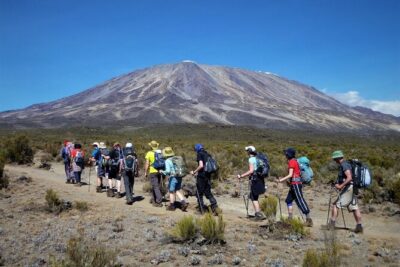
Day 2 leaves the thick forest behind. The trail climbs through open heathland toward Horombo Camp, with Mawenzi and Kibo coming into view.
This is about 12 kilometers and five to six hours of walking, rising from 2,700 meters to 3,700 meters. The route is longer than Day 1, and the altitude becomes more important than the distance.
Look for giant lobelias and groundsels, plants that give this section a distinctly high-mountain feel. The broad views toward the two major volcanic peaks are one of the strongest reasons to choose a route with time to walk slowly and look around.
This is also the first day when you may notice altitude symptoms. Headache, tiredness, or shortness of breath can appear even on a gradual trail. Tell your guide how you feel, drink as directed, and do not treat a fast pace as a sign of strength.
You eat breakfast, lunch, and dinner at camp. Horombo is important not only as a sleeping stop but also as the base for the following acclimatization day.
Day 3: the Horombo acclimatization day
The extra day at Horombo is the smartest feature of this six-day plan. Instead of sleeping higher immediately, you spend the day allowing your body to adjust.
You can take a guided day walk toward Mawenzi Hut at about 4,600 meters. This gives you more time at altitude without making you carry your overnight gear to a higher camp. The optional walk is also useful for seeing more of the mountain before summit preparation begins.
Lunch can be packed or taken at the hut, depending on what you prefer for the day. Breakfast and dinner are at the hut.
I would not treat this as a day to prove anything. If you feel unwell, ask your guide whether a shorter outing or rest is wiser. The purpose is to arrive at the summit stage with energy left, not to collect the biggest possible mileage.
More treks and hikes around Kilimanjaro:
- Kilimanjaro climb by Lemosho Route (7-day)
★ 5.0 · 651 reviews - Kilimanjaro climb, Machame Route (7-day)
★ 5.0 · 262 reviews - 8-Day Small-group Lemosho Kilimanjaro Summit Trekking
★ 5.0 · 186 reviews - Kilimanjaro Climbing Lemosho Route 8 Days.
★ 5.0 · 186 reviews
Day 4: across the saddle into alpine desert
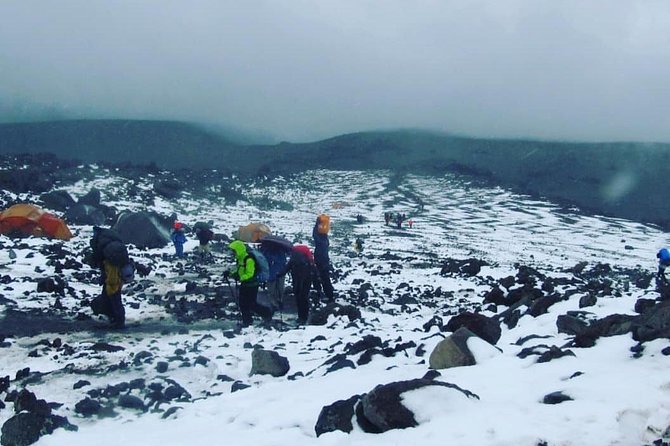
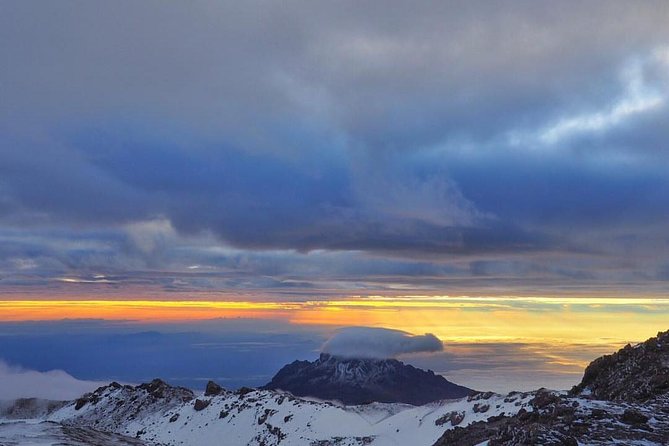
From Horombo, the trail climbs toward the final watering point and then crosses the broad saddle between Mawenzi and Kibo. The scenery changes sharply.
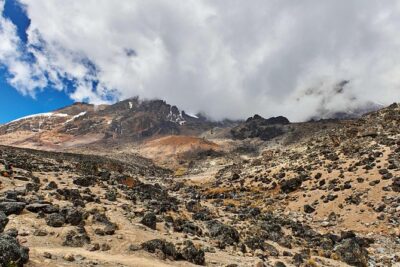
The route rises from 3,700 meters to 4,700 meters over about 9 kilometers. Walking takes five to six hours. Upper heathland gives way to bare volcanic ground, described here as a moonscape. There is little vegetation and much less shelter, so sun, wind, and cold can feel stronger.
This section can seem stark after the forest and plant life below, but it prepares you mentally for summit night. You are now walking in a high, dry zone where every step costs more effort.
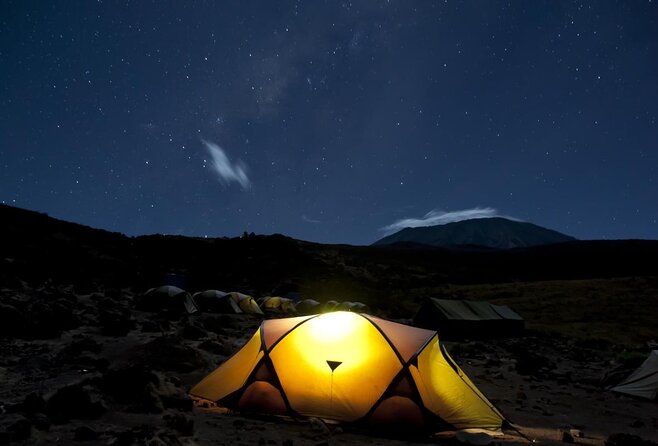
Dinner comes at the high camp, followed by rest and summit preparation. Because the climb begins between midnight and 2:00 AM, use this time to organize warm layers, headlamp or flashlight, water, and anything you need close at hand. The early start is not a small detail. You may get only a short period of sleep before leaving.
Day 5: Gilman’s Point, Uhuru Peak, and the long return
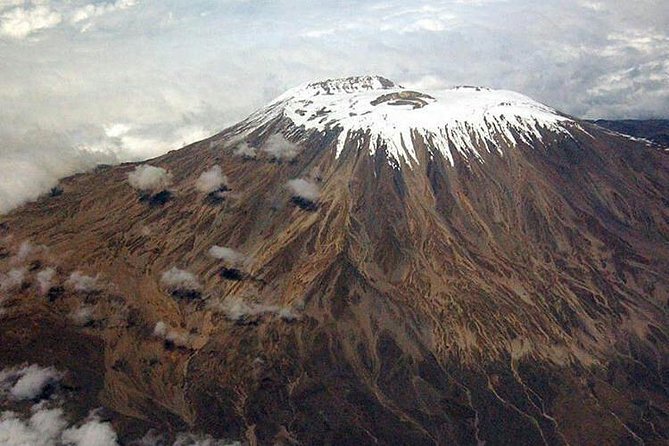
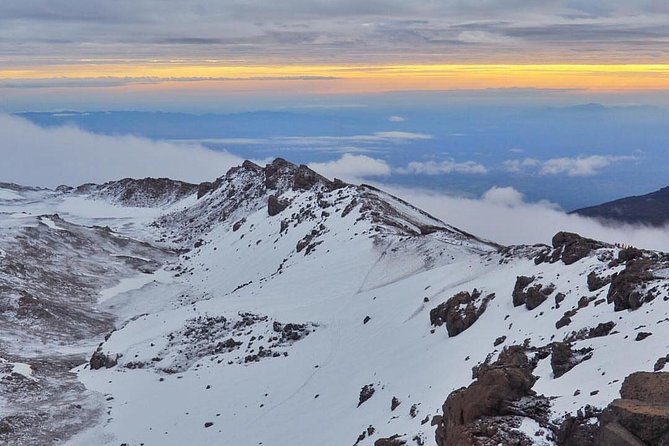
Summit day is the heart of the trip and the toughest part by far. You start in darkness, climbing steep scree or snow toward Gilman’s Point on the crater rim.
A headlamp or flashlight is required for the opening section. It can be very cold before you begin descending, so you need all your warm layers. The loose surface makes the climb tiring, and the high altitude slows even strong hikers.
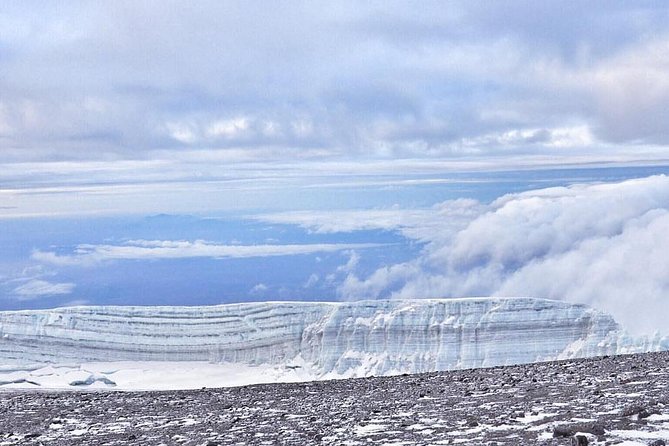
From Gilman’s Point, the route continues toward Uhuru Peak, the highest point in Africa. The summit photographs are part of the experience, but the practical goal is to keep moving safely and steadily. Your guide’s pacing matters greatly here.
After the summit, you descend to Kibo for lunch and a rest, then continue down to Horombo Camp. This is where the day’s total effort becomes clear. You have climbed in the dark, reached the summit, descended through loose ground, and still have more walking before sleep.
The itinerary gives the summit day about 12 hours, but the exact experience depends on pace, weather, and time spent at the summit. The supplied schedule is clear about the main demands: an early start, very cold conditions, steep scree, and a long descent.
If you are comparing routes, this is the point to be honest with yourself. A gradual route and an acclimatization day improve your chances, but they do not remove the physical strain of summit night.
Day 6: muddy forest paths and Marangu Gate
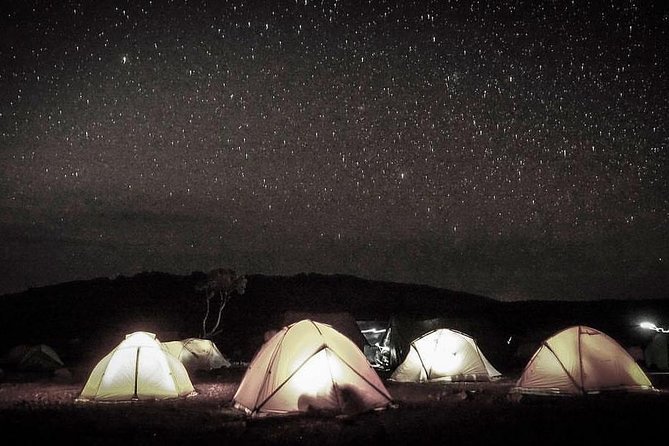
After breakfast, you descend from Horombo through moorland to Mandara Camp, then continue down through the rainforest to Marangu Gate.
The listed distance is about 20 kilometers, with four to five hours of hiking from 3,700 meters to about 1,700 meters. That is a long final descent, especially after summit day. Your knees and feet may feel the strain more than your lungs.
The lower forest can be wet and muddy. Gaiters and trekking poles are practical choices, and you should keep rain gear and warmer clothing handy even if you expect to wear shorts and a T-shirt at lower elevations.
A vehicle meets you at Marangu Gate and takes you back to your hotel or the airport. The trip finishes with a celebration and the customary need to tip your guides and porters. Ask in advance how tipping is handled and what the company recommends, so you are not making decisions while tired at the gate.
What the private format changes
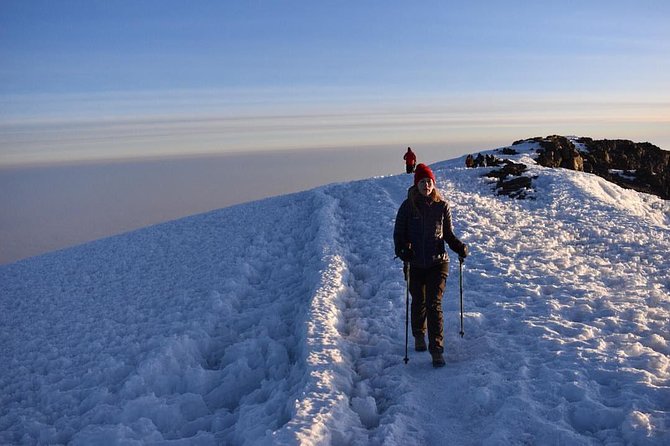
This is a private activity, so only your group takes part. That gives you more control over breaks and pace than a large mixed group, though your guide still needs to follow safe mountain procedures.
Private does not mean effortless. Your group must still be ready for the listed distances, early starts, cold temperatures, and altitude. The benefit is that your guide can hear your concerns directly and the walking rhythm can suit your party better.
Pickup is offered, and the listed meeting time is 8:00 AM. The first day includes a drive of about two hours to the park gate, so confirm the exact pickup point in Moshi and whether airport transport is included in your quoted price.
The booking system provides confirmation at the time of booking, mobile ticketing, and free cancellation up to 24 hours before the start time. Changes or cancellations inside that window are not accepted. Poor weather can also force a change of date or a full refund.
Food, accommodation, and what to confirm
Meals are listed clearly for Days 1 through 4, with breakfast, lunch, and dinner each day. Day 5 lists the summit climb, lunch and rest at Kibo, and the return to Horombo, while Day 6 includes breakfast.
Accommodation is described through the Mandara, Horombo, and Kibo camps, but the exact hut or room arrangements are not detailed. Ask what bedding is supplied and what you should bring.
One of the strongest practical points in the company’s operation is the reported standard of food and accommodation. Still, standards can depend on the specific camp and season, so get the current details in writing.
Pack for four distinct conditions: wet rainforest, cool heathland, exposed alpine desert, and freezing summit hours. You will also want a headlamp, rain protection, warm layers, comfortable hiking footwear, and trekking poles. The available information specifically points to gaiters for muddy sections and a flashlight for the summit start.
Who should choose this Kilimanjaro hike
This trip suits you if you want the most direct Kilimanjaro route, prefer a private group, and value an extra acclimatization day. It is especially appealing if you want a clear schedule with no camp move on Day 3.
It may not suit you if you want a short holiday hike, dislike night walking, or are uncomfortable with a 20-kilometer final descent. The word easiest should not persuade you to underestimate the mountain.
The itinerary is also a good match for hikers who want dramatic changes in scenery. You begin among forest birds and monkeys, pass giant high-altitude plants, cross bare volcanic ground, and finish back in wet forest.
Should you book it?
Book this six-day Marangu climb if the direct route, private format, Horombo acclimatization day, and included mountain support match what you want. The plan is thoughtfully paced compared with a rushed ascent, and the operator has received strong praise for organization, food, accommodation, and successful summit support.
Before booking, confirm the full price inclusions, guide assignment, group size, pickup details, accommodation, porter support, and tipping guidance. If you are comfortable with the midnight summit start and honest about the demands of altitude, this offers a practical path to Uhuru Peak. If you want more time on the mountain or a less punishing summit day, compare longer routes before making your choice.
FAQ
How long does the Kilimanjaro Marangu Route hike take?
The experience lasts approximately six days, including the summit climb and descent to Marangu Gate.
Where does the hike start?
The hike starts after a drive of about two hours from Moshi to the Kilimanjaro National Park Gate. The listed meeting time is 8:00 AM.
Is pickup available?
Yes. Pickup is offered, and transport returns you from Marangu Gate to your hotel or the airport at the end.
Is this a private tour?
Yes. Only your group participates in the activity.
How high is Uhuru Peak?
Uhuru Peak is the highest point in Africa. The supplied tour details do not give its exact elevation.
When does the summit climb begin?
The summit attempt begins very early, between midnight and 2:00 AM.
Is a headlamp needed?
Yes. The first part of the summit climb takes place in darkness and requires a headlamp or flashlight.
Is there an acclimatization day?
Yes. Day 3 is spent at Horombo Camp, with an optional day hike toward Mawenzi Hut at about 4,600 meters.
What happens if poor weather cancels the experience?
You will be offered a different date or a full refund if poor weather causes cancellation.
Can I cancel for a full refund?
Yes, if you cancel at least 24 hours before the experience start time. Cancellations made less than 24 hours before the start are not refunded.
More Six-Day Trips in Kilimanjaro
- Kilimanjaro climb, Lemosho Route (6-day)
★ 5.0 · 129 reviews - 6 Days Tanzania Classic Safari
★ 5.0 · 52 reviews - The Best of Machame Route in 6 Days: Your World’s Summit Guide
★ 5.0 · 44 reviews - 6 Days Machame Route Kilimanjaro Climbing
★ 5.0 · 42 reviews
Just added around Kilimanjaro
- 6 days Machame route climbing Mt.Kilimanjaro★ 5.0 · 8 reviews
- machame route★ 5.0 · 16 reviews
- Private Cycle to Kilimanjaro Bike Park Safari★ 5.0 · 6 reviews
- West Kilimanjaro cycling Adventures★ 4.5 · 8 reviews
- Kilimanjaro Climb • Marangu Route ~ 9 Day★ 5.0 · 4 reviews
- 3 Days Private E-Bike Tour in West Kilimanjaro★ 5.0 · 3 reviews
- Kilimanjaro Climb & Safari – Lemosho Route – 13 Day★ 5.0 · 10 reviews
- Kilimanjaro Climb • Machame Route ~ 10 Day★ 5.0 · 6 reviews
Marangu Route Climbs, compared.
Browse the lists this tour appears in