
Reviewed · MARANGU ROUTE CLIMBS
Kilimanjaro-marangu Route 6 Days Itinerary
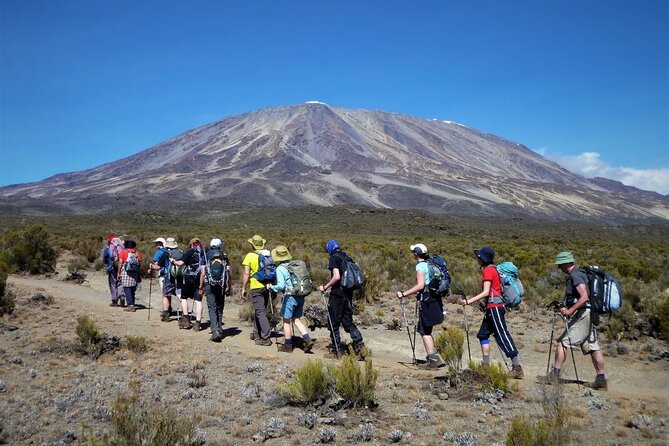
The main appeal here is a private Marangu Route climb that gives you a hotel night before the mountain, hut accommodation along the trail, and airport transfers at both ends. You begin in the forest, cross open moorland and the Saddle, then make the long night ascent toward Africa’s highest point.
I like the included transfer from Kilimanjaro International Airport and the extra acclimatization day at Horombo. I also like the practical pre-climb equipment check, since missing gloves or unsuitable footwear can cause real trouble above the tree line. The main drawback is simple but important: this is advertised as a six-day climb, while the day-by-day plan actually runs for eight days, and the summit day is extremely long.
Key points to know before booking
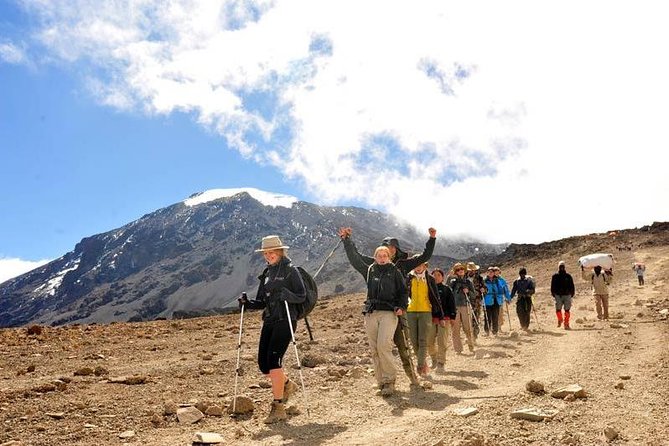
- Private eight-day schedule: The itinerary includes six mountain days plus arrival and departure days, despite the six-day title.
- Marangu’s hut route: You sleep in huts rather than tents, including Mandara, Horombo, and Kibo.
- Extra acclimatization day: Day four stays around Horombo and reaches toward Mawenzi before returning.
- Very demanding summit day: The Kibo to summit to Horombo section is listed at 13 to 15 hours.
- Airport transfers included: Private transfers are arranged from JRO to Marangu and back to the airport.
- Weather matters: January, February, August, and September are presented as the best climbing months, while the long rains of March through May are discouraged.
A Marangu climb with a hotel start in Marangu
At $1,950 per person, this is not a cheap mountain walk. You are paying for a private activity, airport transfers, a hotel base, park access, hut nights, meals listed in the schedule, guide support, and the organization needed for a high-altitude summit attempt.
The value depends on what you want. If you prefer a private arrangement with transfers already handled, the price may make sense. If you are comparing only the number of days on the mountain, be careful. The advertised title says six days, but the supplied plan includes Day 1 at the resort, six days on the mountain, and Day 8 for departure. Ask the operator to confirm exactly what the price covers before you pay.
The route begins and ends at Kilimanjaro Mountain Resort in Marangu. That gives you a fixed base for the briefing, the post-climb night, and airport connections. You can arrive at Kilimanjaro International Airport at any time, according to the supplied information, and a private transfer is meant to meet you there.
The activity is private, so only your group participates. That can make the pace and daily arrangements easier to manage, though the listing does not provide a maximum group size or the names of the guides. I would ask for those details directly.
More Marangu Route climbs:
- Kilimanjaro climb, Marangu route (6-day)
★ 5.0 · 72 reviews - Climbing Kilimanjaro – Marangu Route
★ 5.0 · 65 reviews - Private Full Day Hiking Experience to Marangu Route
★ 5.0 · 61 reviews
Day 1: briefing and equipment check at Kilimanjaro Mountain Resort
Your first night is at Kilimanjaro Mountain Resort, on the lower slopes of the mountain. The hotel is more than a place to sleep. It gives you time to settle in, check your bags, and prepare before heading to the park.
The formal pre-climb meeting is scheduled for 5:30 pm. The team checks your equipment and confirms that you have the required medical coverage and travel insurance. This is useful, practical preparation. You do not want to discover at the park gate that a key piece of equipment or insurance document is missing.
Dinner and breakfast are included for this night. The schedule lists the accommodation as bed, dinner, and breakfast. Since this is a high-altitude climb, use the evening to organize your daypack and ask clear questions about the next morning’s pickup time, water arrangements, meals, and the summit schedule.
Day 2: Marangu Gate to Mandara Hut through the forest
After breakfast, you make the short transfer from the hotel to the Marangu National Park gate. Park formalities take place here before you start walking. The first section passes through tropical rainforest, which gives the opening day a softer feel than the higher mountain stages.
The walk to Mandara Hut takes about five to six hours and ends at an elevation of 2,700 meters. The first hut night is a useful introduction to the mountain routine. You can eat, rest, and take in the forest around camp rather than rushing onward.
This day is not technically described as difficult, but you should not treat it as a casual stroll. Your goal is to conserve energy. Walk steadily, drink enough water, and avoid racing ahead simply because the altitude is still moderate.
Day 3: Mandara to Horombo and the first open views
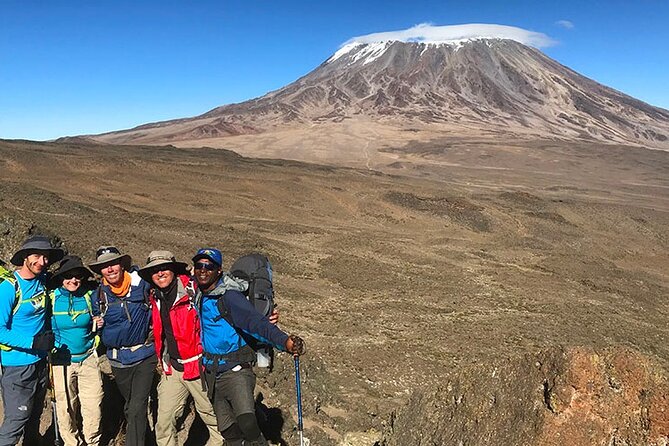
The route climbs steeply at first through the forest. Then the trees thin out and the trail opens into moorland. In clear weather, you may see Kibo and Mawenzi, the two major peaks that give this route its visual drama.
Horombo Hut sits at 3,720 meters. The walk from Mandara takes about four to six hours, and the plan expects you to reach camp in the afternoon. That timing gives you a chance to rest and look around before dinner.
I like this transition because it makes the mountain feel larger in stages. You start among trees, then gain wider views and cooler air. The tradeoff is that the altitude begins to matter here. Even a moderate walking day can feel tiring, so slow pacing is not just polite advice. It is central to your summit chances.
More six-day trips in Kilimanjaro:
- Kilimanjaro climb, Lemosho Route (6-day)
★ 5.0 · 129 reviews - 6 Days Tanzania Classic Safari
★ 5.0 · 52 reviews - The Best of Machame Route in 6 Days: Your World’s Summit Guide
★ 5.0 · 44 reviews - 6 Days Machame Route Kilimanjaro Climbing
★ 5.0 · 42 reviews
Day 4: the extra acclimatization day near Mawenzi
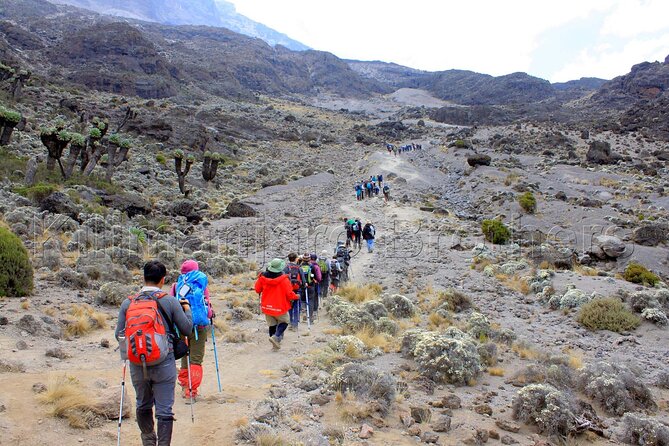
Day four is one of the strongest parts of the plan. Instead of moving higher immediately, you stay around Horombo and walk toward Mawenzi Hut, passing the Zebra Rocks. The scheduled walking time is about three hours.
This extra night gives your body more time at altitude before Kibo. The schedule specifically recommends drinking enough water and walking slowly, and all meals are provided at Horombo Hut for the day.
You should see this as a working rest day, not a day off. The short walk helps you adjust without adding a full night at a new camp. It also breaks up the climb before the long approach to Kibo. Not every itinerary includes this kind of pause, so it deserves real weight when you compare options.
Day 5: across the Saddle to Kibo Hut
The route now moves toward the high, stark area between Mawenzi and Kibo, known as the Saddle. The walk to Kibo Hut is listed at four to six hours, although the description also refers to six to seven hours at a slow pace. That small difference is worth clarifying with the operator.
Kibo Hut sits at 4,700 meters. There is no running water here. You spend the rest of the day resting and preparing for the final ascent, followed by a very early night.
This is where the Marangu Route becomes serious. The vegetation is gone, the air is thin, and your body has little room for wasted effort. Keep your evening quiet and organized. Set out the layers, headlamp, gloves, water, and any personal essentials before trying to sleep.
The hut is described as comfortable, but no details are supplied about room arrangements or washing facilities. Ask what you should carry from Horombo because the lack of running water at Kibo affects how you plan your evening and morning.
Day 6: Gillman’s Point, Uhuru Peak, and a long descent
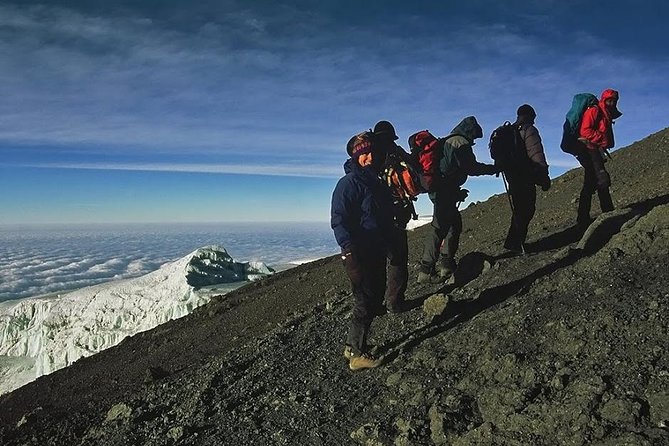
The summit day begins before midnight. You climb by headlamp over loose volcanic scree, using a slow and steady pace. The route includes well-graded zigzags, but the combination of darkness, steep ground, and altitude makes this the hardest part of the climb.
The plan first takes you to Gillman’s Point on the crater rim at 5,685 meters. You can pause there for the sunrise over Mawenzi. If you still feel strong, the itinerary allows a further three-hour round trip along the crater rim to Uhuru Peak at 5,895 meters, the highest point in Africa.
That final section is not a minor add-on. You are already high and tired at Gillman’s Point, so the decision to continue should be made carefully with your guide. Reaching the crater rim is a major achievement, but the stated goal is Uhuru Peak.
After the summit, you descend to Kibo Hut for refreshments and then continue to Horombo Hut. The full Kibo to summit to Horombo section is listed at 13 to 15 hours. That is an enormous day, and the itinerary contains one obvious typo, listing 13 minutes in one place. Read that as a planning error, not a realistic duration.
The descent may feel fast compared with the ascent, but it still puts stress on tired legs. You need enough energy for the walk back to Horombo, not only for the summit itself.
Day 7: Horombo to Marangu Gate and certificates
The final mountain day takes you from Horombo past Mandara Hut and down to Marangu Gate. The walk is listed at six to seven hours.
You return to the forest as you lose altitude. At the gate, successful climbers receive summit certificates. You then transfer back to Kilimanjaro Mountain Resort for dinner and another night.
This overnight return is a good practical choice. It keeps you from trying to reach the airport immediately after a long descent. Your legs may be tired, and the hotel gives you time to shower, eat, and sleep before the journey home.
Day 8: airport transfer or an added Tanzania plan
After saying goodbye to the guide team, a private departure transfer is included from Moshi to Kilimanjaro International Airport. The plan also says you can discuss a short safari or another option instead of flying out immediately.
That flexibility may suit you if the mountain is only part of a larger Tanzania trip. Still, confirm the added cost, timing, and transport arrangements before treating a safari as part of the package. The listed price and itinerary do not provide those details.
Best months, rain, and the limits of the schedule
The supplied guidance identifies January, February, August, and September as the best months to climb. January and February are described as the warmest, with mornings and evenings often clearer.
July can be colder. November and December can be wet, while November usually brings shorter rains rather than rain every day. March, April, and May are associated with long rains and are best avoided for this climb.
Weather on Kilimanjaro can change your experience, even when the route itself remains open. The activity requires suitable weather, and if poor weather forces cancellation, you are offered another date or a full refund.
The company presents its guides’ summit success as strong compared with the overall rate for climbers attempting the mountain. Treat that as a claim to discuss with the operator, not a guarantee. Ask how many guides will accompany your group and what support is available if someone needs to stop before the summit.
What the $1,950 price means for you
The price includes airport transfers, according to the supplied information, which removes two important transport decisions. It also includes the private tour format, the hotel base, the mountain itinerary, and admission tickets shown for the route.
The package looks most useful for someone who wants a planned climb without arranging each transfer separately. You should still confirm whether every listed meal, park fee, guide service, hut fee, and transfer is included in the final invoice. The wording clearly lists meals for some nights, but it does not provide a single full inclusions list.
The 4.3 rating from nine ratings suggests a generally positive overall impression, but the available written detail includes a serious complaint about a late pickup and poor communication at the start of one climb. The operator apologized and said the issue would help improve its service. I would take that as a reason to confirm pickup details in writing, not as proof that every departure will be late.
Who should book this Marangu itinerary?
I would consider this trip if you want a private climb, prefer huts to camping, value airport transfers, and can handle a very long summit day. The extra Horombo acclimatization day is especially useful for anyone who wants a less rushed schedule.
You should think twice if the six-day title is important to you, since the actual plan runs for eight days. You should also ask for clear answers about guide names, group size, meals, equipment, and the exact transfer schedule before booking.
Free cancellation is available up to 24 hours before the experience start time for a full refund. Changes or cancellations inside that 24-hour window are not accepted, based on the stated policy.
Should you book it?
Book this climb if the private format, hotel start, hut route, included transfers, and extra acclimatization day fit your priorities. The itinerary has a sensible rhythm through Horombo, but the summit day is still punishing and should not be underestimated.
Before paying $1,950, get the eight-day schedule confirmed in writing and ask the operator to correct the six-day title, explain the 13-minute typo, and spell out every inclusion. If you receive clear answers and your insurance and fitness are in order, this can be a practical Marangu Route plan. If you want a shorter summit day or detailed information about the guide team, keep comparing.
FAQ
How long is the experience?
The full schedule is approximately eight days. It includes a hotel night before the climb, six mountain days, and a departure day, although the tour title calls it a six-day itinerary.
Where does the climb begin and end?
The climb begins and ends at Kilimanjaro Mountain Resort in Marangu. Airport transfers connect the resort with Kilimanjaro International Airport.
Is airport pickup included?
Yes. A private transfer is provided from Kilimanjaro International Airport to the resort, and a private departure transfer from Moshi to the airport is also included.
Is this a private tour?
Yes. Only your group participates in the activity.
What is the starting time?
The listed meeting time is 8:30 am. The pre-climb briefing and equipment check on the first evening are scheduled for 5:30 pm.
Where do you sleep during the climb?
You stay at Kilimanjaro Mountain Resort before and after the mountain section. On the route, the itinerary lists Mandara Hut, Horombo Hut, and Kibo Hut.
How high is Uhuru Peak?
Uhuru Peak is listed at 5,895 meters. Gillman’s Point is listed at 5,685 meters.
How long is summit day?
The walk from Kibo Hut to the summit and then to Horombo Hut is listed at 13 to 15 hours. The itinerary also contains a 13-minute entry, which appears to be a typing error.
What fitness level is required?
The activity requires a moderate physical fitness level. You should also be prepared for a steep, high-altitude summit day and long walking periods.
Can I cancel for a full refund?
You can cancel at least 24 hours before the experience start time for a full refund. Cancellations or changes made less than 24 hours before the start are not accepted, and poor weather may result in another date or a full refund.
Just added around Kilimanjaro
- 6 days Machame route climbing Mt.Kilimanjaro★ 5.0 · 8 reviews
- machame route★ 5.0 · 16 reviews
- Mt Kilimanjaro 6 days Marangu route hike★ 5.0 · 3 reviews
- Private Cycle to Kilimanjaro Bike Park Safari★ 5.0 · 6 reviews
- West Kilimanjaro cycling Adventures★ 4.5 · 8 reviews
- Kilimanjaro Climb • Marangu Route ~ 9 Day★ 5.0 · 4 reviews
- 3 Days Private E-Bike Tour in West Kilimanjaro★ 5.0 · 3 reviews
- Kilimanjaro Climb • Machame Route ~ 10 Day★ 5.0 · 6 reviews