
Reviewed · MARANGU ROUTE CLIMBS
Climbing Kilimanjaro – Marangu Route
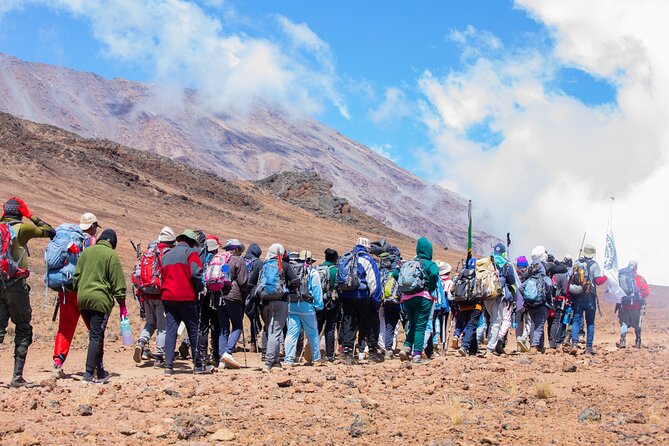
Kilimanjaro’s Marangu Route gives you the mountain’s simplest walking line, but simple does not mean easy. You’ll move from wet rainforest to bare high moorland, then face a steep, cold summit night above 5,800 meters. The altitude is the real opponent, not technical climbing.
I like the clear route and the useful support package. You get mountain meals, hut accommodation, guides, porters, rescue fees, boiled water, and two nights at the Springlands Hotel in Moshi. I also like that you can add a rest day at Horombo, which is a smart choice for acclimatization.
The main drawback is the five-day schedule. It is short for a high-altitude climb, and the summit day is long and tiring. If you want better odds of adjusting to the height, plan on six days rather than five.
Key points to know before booking
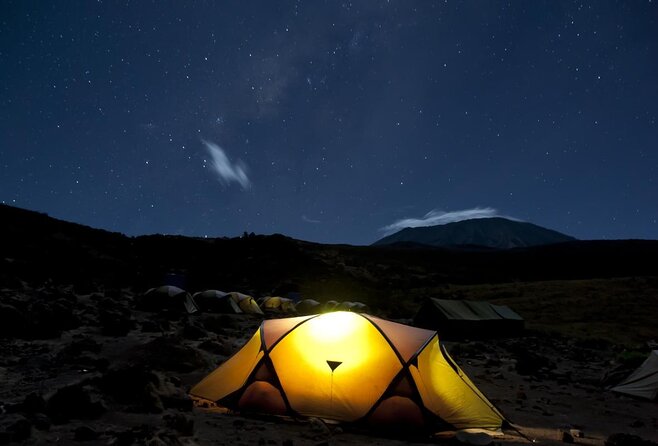
- The summit attempt begins around 1 AM: You climb by headlamp so you can reach the crater rim near sunrise and Uhuru Peak around 9 AM.
- The route uses mountain huts: Mandara, Horombo, and Kibo Huts provide basic shelter, with running water available at Horombo but not at Kibo.
- A sixth day can help: You may rest at Horombo or walk toward Mawenzi’s lower basecamp before continuing upward.
- The price covers major mountain costs: Park fees, rescue fees, crew wages, meals, transfers, hotel nights, and mountain accommodation are included.
- The crew is a major part of the experience: Guides, cooks, porters, and waiters carry supplies, prepare meals, and help you keep moving.
- Budget extra for equipment and tips: Sleeping bags, personal gear, insurance, visas, emergency oxygen, and crew tips are not included.
What the $2,004.11 price really covers
At $2,004.11 per person, this is not a cheap walk in the hills. It is a supported high-altitude expedition with national park charges, a mountain crew, food, transport, and hotel nights built into the rate.
You receive two nights at the Springlands Hotel in Moshi, normally one before and one after the climb. Airport transfers from Kilimanjaro International Airport are included, as are park fees, hut or camping charges, rescue fees, cooking equipment, eating utensils, sleeping pads, and boiled water on the mountain.
The food package covers breakfast, lunch, and dinner during the climb. That matters more than it may sound. You are walking for hours each day, and carrying enough food and cooking gear yourself would add a great deal of weight and work.
Still, the price is not all-inclusive. You need to arrange or pay for flights, a visa, travel insurance, sleeping bags, personal climbing clothing, and other private expenses. Crew tips are also separate, and you should treat them as a normal part of your budget rather than an optional surprise.
Some equipment can be rented, but the details of what is available and how much it costs should be confirmed before you arrive. A sleeping bag is specifically excluded, so do not assume the sleeping pad supplied by the operator replaces it.
More Marangu Route climbs:
- Kilimanjaro climb, Marangu route (6-day)
★ 5.0 · 72 reviews - Private Full Day Hiking Experience to Marangu Route
★ 5.0 · 61 reviews - From Arusha/Moshi: Kilimanjaro Hike Marangu Route Day Trip
★ 4.5 · 54 reviews
Day 1: Marangu Gate to Mandara Huts
The morning begins with breakfast and a guide briefing in Moshi. Departure for Marangu Gate is scheduled for 9 AM, with about a 45-minute drive to the eastern side of the mountain. At the gate, you register with the national park before beginning the hike around 10:30 AM.
The first part of the route runs through rainforest. Tall eucalyptus trees, bird life, and Colobus monkeys give this opening day plenty to notice, even though the walking itself is not yet dramatic. The forest can be wet and muddy, so gaiters and trekking poles are useful rather than decorative extras.
You can wear shorts and a T-shirt in the lower forest, but keep rainwear and warmer clothing close. Mountain weather can change, and your pack should not require a full unpacking every time clouds arrive.
A lunch stop breaks up the climb. By midafternoon, usually around 2 or 3 PM, you reach Mandara Huts. You can unpack, rest, and have tea or coffee before taking a short side walk to Maundi Crater.
That 15-minute trip is worth keeping in your plans. It gives you a first look across the surrounding area without demanding much extra effort. The day lasts about eight hours, but the walking pace and pauses make it a manageable introduction.
Day 2: Heathland and the long walk to Horombo
After breakfast at 7:30 AM, you pack and leave Mandara around 8:30 AM. The route first passes through open rainforest glades, then climbs into heathland. Giant lobelias and groundsels become the memorable plants here, a sharp change from the dense lower forest.
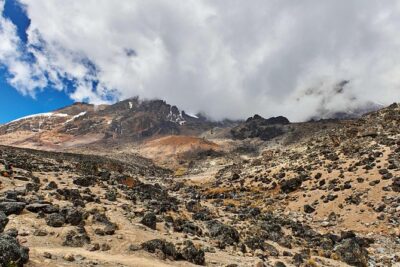
The path continues into open moorland, where low shrubs replace the taller growth below. This is one of the best parts of the route for seeing how Kilimanjaro changes with height. You are not simply walking toward a summit. You are passing through several distinct plant zones.
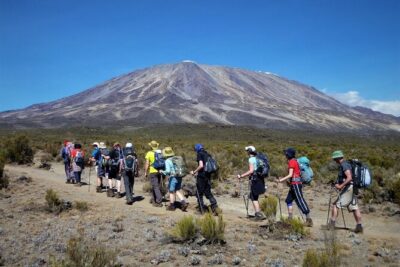
A lunch stop comes roughly halfway through the day. Views toward Mawenzi, one of Kilimanjaro’s major volcanic peaks, add drama to the walk. Horombo Huts usually come into view around 3 PM, with Kibo’s summit also visible from the area.
Horombo has bathrooms with running water, a small but welcome comfort after the more basic conditions higher up. You may also begin to feel the altitude here. Headache, nausea, unusual tiredness, or poor sleep should not be brushed aside.
This is the point where the optional sixth day becomes important. You can spend an extra day resting at Horombo or walking toward a basecamp below Mawenzi’s subpeak. That extra time gives your body more opportunity to adjust before the summit push. For many people, this is a better use of time than rushing through the route in five days.
Day 3: Across the saddle to Kibo Huts
The third day starts with breakfast, though an early start can reward you with sunrise views. The route climbs through the last thinning patches of heathland before opening onto the broad saddle between Mawenzi and Kibo.
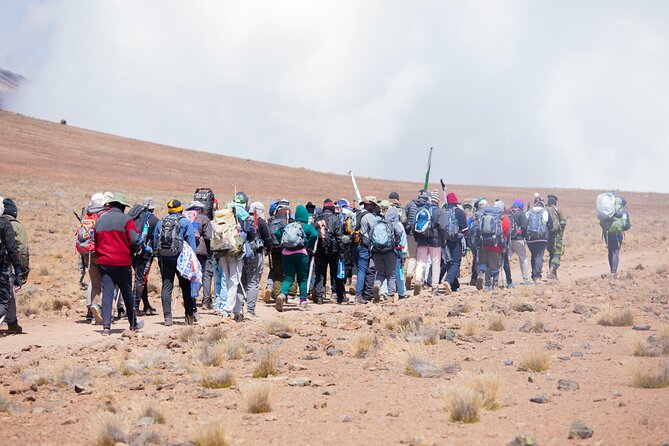
The vegetation fades, and the surroundings become stark and spare. This is a quiet section, with wide views and little shelter. You can see the summit climb ahead and get a practical sense of what the next night will demand.
The saddle is larger than many first-time climbers expect. Its scale can make the walk feel longer, especially as the air becomes thinner. A lunch break helps, but this is still an eight-hour day at altitude.
Kibo Huts are basic. There is no running water, so keep your water supply organized and use the boiled water provided by the crew as directed. Your guides will also watch for signs of altitude sickness, but you need to speak up quickly if you feel unwell.
The afternoon is usually about resting, organizing warm layers, and preparing for the midnight wake-up. Save your energy. There is no prize for wandering around Kibo Huts when your main task is to sleep or at least lie down before the summit attempt.
More treks and hikes around Kilimanjaro:
- Kilimanjaro climb by Lemosho Route (7-day)
★ 5.0 · 651 reviews - Kilimanjaro climb, Machame Route (7-day)
★ 5.0 · 262 reviews - Kilimanjaro Climbing Lemosho Route 8 Days.
★ 5.0 · 186 reviews - 8-Day Small-group Lemosho Kilimanjaro Summit Trekking
★ 5.0 · 186 reviews
Day 4: The steep route to Gilman’s Point and Uhuru Peak
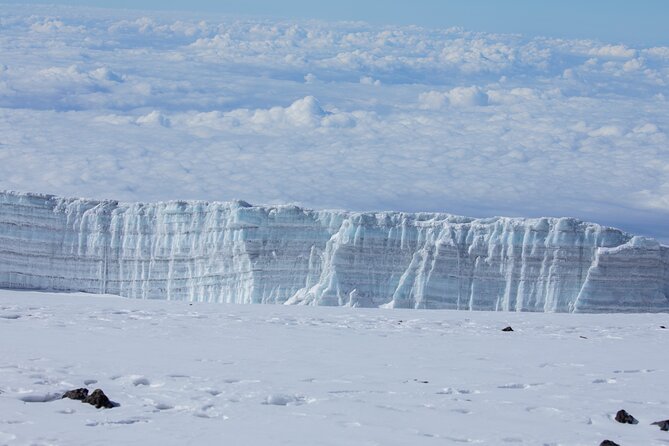
Summit day is the hardest part of the climb. You wake around midnight, eat a light breakfast, and leave close to 1 AM. The goal is to climb before dawn, reaching Gilman’s Point on the crater rim between roughly 5 and 7 AM.
The path rises through steep scree, with possible snow depending on conditions. You switch back slowly, often taking short steps. The air is cold and thin, and your pace may feel frustratingly slow. That is normal at this height.
Gilman’s Point sits at about 5,861 meters, or 18,640 feet. From there, you can see the crater and ice fields, then follow the crater rim for about two more hours toward Uhuru Peak.
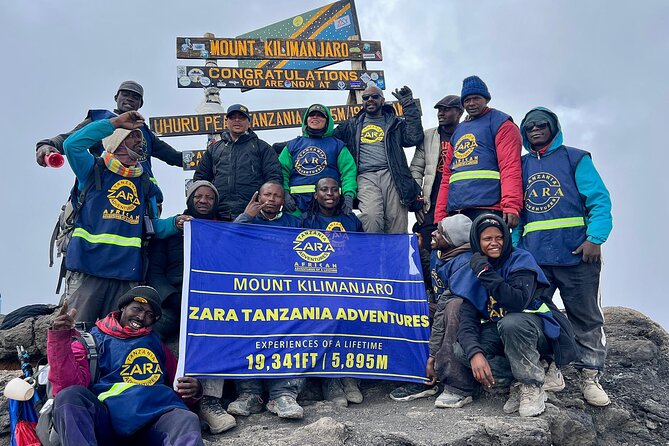
Uhuru Peak is Kilimanjaro’s true summit and the highest point in Africa. Reaching it around 9 AM, after climbing through the night, can be an emotional moment. Take the summit photo, but do not linger too long. Cold, fatigue, and altitude still matter even after you reach the top.
The descent returns to Kibo Huts, where you rest before continuing down toward Horombo. This makes the summit day unusually long. You do not simply reach the top and finish. You still have to lose much of the height you gained, and tired legs can make the descent feel just as demanding as the ascent.
This is the day when a calm guide and a supportive crew matter most. Zara’s mountain teams include guides, porters, cooks, and waiters, with pulse oximeters and a first aid kit carried as part of the support system. The company’s named guides on its Kilimanjaro trips have included Gilbert Kasaba, Charles, Living, Eddie, Felix, and Ambrose, though you should confirm your own guide team before departure.
Day 5: The long descent through the forest
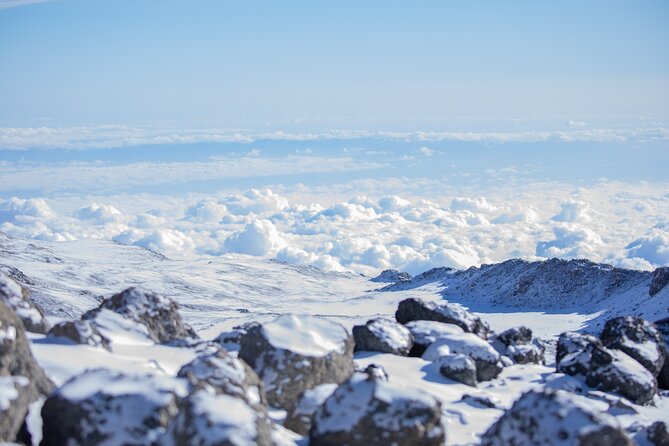
After breakfast, you pack and descend through the moorland toward Mandara Huts. Lunch is served there before the final walk through the rainforest to the park gate.
You should reach the gate around 2 or 3 PM. The lower forest may feel warm and lush after the bare upper slopes, but the descent is still tiring. Mud can return, particularly if the weather has been wet, so do not pack away your gaiters too early.
At the gate, you say goodbye to the mountain crew and return to Moshi by vehicle. This is also the time to settle crew tips. Guides, porters, cooks, and waiters are all part of the working team that makes the climb possible, and their tips are not included in the package price.
Back at the Springlands Hotel, a shower and a proper bed will feel like a luxury. The schedule allows you to continue to an airport or another destination in Tanzania or Kenya. Zanzibar is suggested as a way to recover after the climb, and extra safaris or local outings around Moshi can also be arranged, though they cost more.
The people who make the climb work
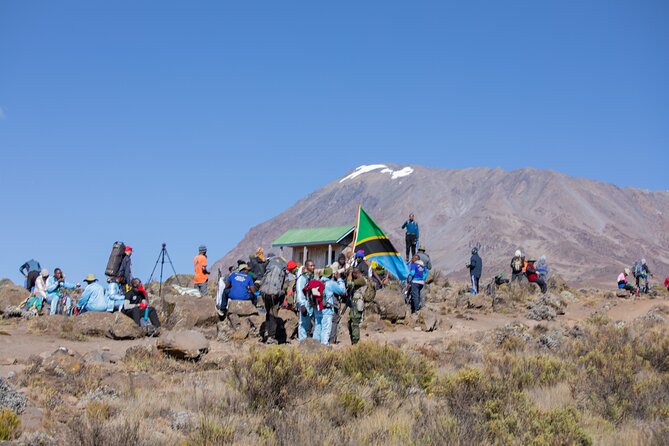
The guide is not just there to point out the path. A good guide sets the pace, checks how you are coping with the height, helps you make safe decisions, and keeps the group moving when the summit night becomes difficult.
The porters carry luggage and shared supplies, while cooks and waiters handle the daily food service. The strongest praise connected with Zara’s Kilimanjaro trips centers on this crew support. Specific names that have received warm recognition include Gilbert Kasaba, Charles, Living, Eddie, Felix, Ambrose, Johnny, John, James, and Tumaini.
That does not mean you will have one of those people on your climb. It does tell you what to clarify before booking: ask who is leading your departure, how many crew members will be assigned, what they carry, and how tipping is handled.
The maximum group size is 15 people. That is small enough to keep the group organized, though the practical feel will depend on the number of people booked for your date.
Food, sleeping arrangements, and daily comfort
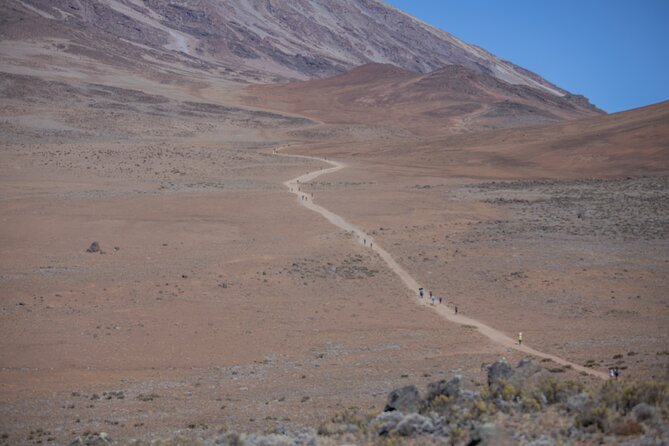
The mountain meals are included, and the food has been described as decent and sufficient on Zara climbs. Do not expect restaurant variety at high altitude. Expect practical meals designed to keep you fueled, with breakfast, lunch, and dinner provided each day.
Boiled water is included on the mountain. Bring a reliable water bottle or hydration system, since staying hydrated is important and the route includes long stretches between facilities.
Marangu is known for hut accommodation on the route, and the itinerary names Mandara, Horombo, and Kibo Huts. The package information also lists tents and camping equipment, so confirm the exact sleeping setup for your departure. Horombo has running water, while Kibo does not.
The huts are basic. You should be ready for shared, simple mountain accommodation rather than privacy or hotel comforts. The two Moshi nights are where you get a proper room, and a single-room supplement applies at Springlands Hotel unless you book the one-person rate.
Who should choose the Marangu Route?
This route suits you if you want a guided Kilimanjaro climb with a clear path, hut accommodation, and a shorter schedule. It is also a reasonable choice if you prefer not to camp for every night on the mountain.
The route is described as the easiest and shortest way to the summit, but that label needs context. You still climb to nearly 5,900 meters, and the five-day plan gives you limited time to adjust. You need moderate physical fitness, and you should be comfortable walking for about eight hours on several days.
The optional sixth day is a strong choice for anyone concerned about altitude. It costs time, but it can make the climb less rushed and give you a better chance to recognize how your body is responding.
You may prefer another route if you want a longer schedule, more gradual acclimatization, or a different style of mountain scenery. Zara also operates Machame and Lemosho trips, including six-, seven-, and eight-day versions, but those are separate itineraries and should not be confused with this Marangu package.
Booking details and cancellation
Pickup is offered, and airport transfers from Kilimanjaro International Airport are included. The listed meeting point is Kilimanjaro Airport and the national park area, with an 8 AM start time shown for the activity. Confirm the exact pickup time with the operator, especially if your flight arrives late or you are coming from another hotel.
Confirmation is provided when you book, and the activity is offered with a mobile ticket. You can cancel for a full refund if you do so at least 24 hours before the local start time. Changes or cancellations inside that 24-hour period are not accepted for a refund.
Should you book this Kilimanjaro climb?
Book it if you want the convenience of a full mountain crew, included meals and park fees, airport transfers, and a straightforward route from Moshi to the summit. The package removes much of the planning burden, and that has real value when the climb itself will take nearly all your attention.
I would strongly consider the six-day option if it is available. The five-day plan is efficient, but the extra day at Horombo gives you more time to adjust before the hardest night.
Do not book it casually because the route is called easy. Bring proper cold-weather gear, arrange travel insurance, budget for tips and equipment rental, and be honest about your fitness. If you accept the basic huts, long summit day, and serious altitude, this can be a well-supported way to reach Uhuru Peak.
FAQ
How long is the Marangu Route experience?
The scheduled experience lasts five days, with an optional sixth day available for resting at Horombo or walking toward the lower basecamp below Mawenzi.
What is included in the price?
The price includes two nights at the Springlands Hotel, guides, porters, cooks and waiters, national park fees, hut or camping fees, rescue fees, meals on the mountain, boiled water, airport transfers, cooking equipment, eating utensils, sleeping pads, a first aid kit, and pulse oximeters.
Are flights included?
No. Flight tickets are not included in the tour price.
Is a sleeping bag included?
No. Sleeping bags are listed as equipment you must provide or arrange separately. Some climbing equipment may be available for rent.
How fit do I need to be?
You should have a moderate level of physical fitness. The itinerary includes daily hikes of about eight hours and a steep overnight summit attempt.
Are meals provided during the climb?
Yes. Breakfast, lunch, and dinner are provided on the mountain. Extra meals and drinks outside the specified package are not included.
Can I cancel for a full refund?
Yes, if you cancel at least 24 hours before the experience start time, based on local time. Cancellations or changes made less than 24 hours before the start are not refunded.
Just added around Kilimanjaro
- 6 days Machame route climbing Mt.Kilimanjaro★ 5.0 · 8 reviews
- machame route★ 5.0 · 16 reviews
- Mt Kilimanjaro 6 days Marangu route hike★ 5.0 · 3 reviews
- West Kilimanjaro cycling Adventures★ 4.5 · 8 reviews
- Private Cycle to Kilimanjaro Bike Park Safari★ 5.0 · 6 reviews
- Kilimanjaro Climb • Marangu Route ~ 9 Day★ 5.0 · 4 reviews
- 3 Days Private E-Bike Tour in West Kilimanjaro★ 5.0 · 3 reviews
- Kilimanjaro Climb • Machame Route ~ 10 Day★ 5.0 · 6 reviews
Marangu Route Climbs, compared.
Browse the lists this tour appears in