
Reviewed · MARANGU ROUTE CLIMBS
Kilimanjaro Climb • Marangu Route ~ 9 Day
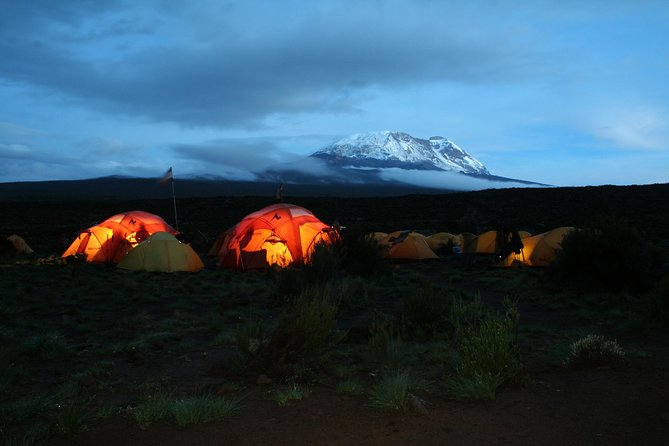
Kilimanjaro’s Marangu Route gives you something unusual on Africa’s highest mountain: sleeping huts instead of tents. Tusker Trail spreads the climb over nine days, with two nights at Horombo for acclimatization, then takes you from rainforest to alpine desert and the 19,340-foot summit of Uhuru Peak.
I like the careful pace and the strong mountain support. You get a full preparation day in Moshi, a dedicated acclimatization day, cooks trained through the Culinary Institute of America, and guides such as Urio and Pastorey. I also like Tusker’s attention to crew welfare, including higher pay, pensions, and medical benefits.
The main drawback is cost: $5,699 per person is a serious commitment, and equipment rental is not included. You should also check the dates closely, since the advertised nine-day plan refers to a separate calendar note about an available 12-day trip start date.
Key points before you book
- Two nights in Moshi: You get time for a gear check, climb briefing, and meeting your guides before hiking.
- Hut accommodation: Mandara, Horombo, and Kibo huts provide a different feel from a camping route, though rooms are shared.
- Extra acclimatization day: A second night at Horombo gives your body more time at altitude before the summit push.
- Midnight summit start: You climb from Kibo Hut in darkness, reach Gilman’s Point, then continue to Uhuru Peak.
- Maximum group of 16: The group is small enough for personal attention but not necessarily private or intimate.
- Strong safety focus: Tusker trains its guides in altitude medicine and places safety before the summit goal.
Why the Marangu Route works well for a first Kilimanjaro climb
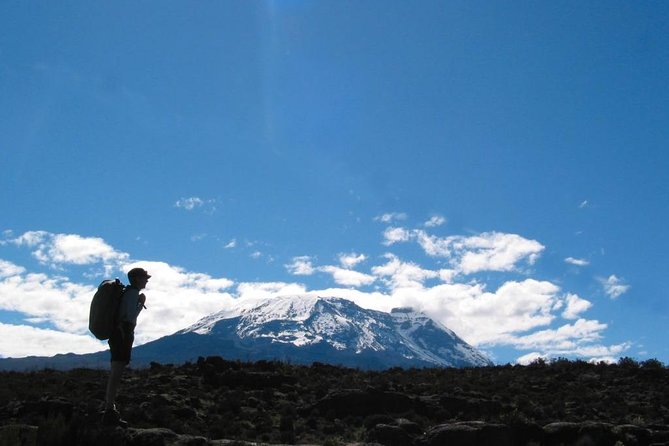
The Marangu Route is often chosen for its huts and straightforward trail system. You do not carry a tent or sleep on bare ground. Instead, the route uses shared mountain huts with running water and toilets at Mandara, Horombo, and Kibo.
That does not make the climb easy. Kilimanjaro still rises to 19,340 feet, and the final ascent asks you to walk uphill through darkness, cold, scree, and thin air. The huts simply change the style of the trip. You trade tent camping for shared bunk-style accommodation and common dining spaces.
I think the nine-day format is more important than the route label. The extra night at Horombo gives you a short acclimatization hike, lunch back at the hut, and a slower afternoon before dinner. That added time can matter far more than a fancy room or a faster itinerary.
Tusker says its summit success rate is 99 percent. Treat that as the company’s stated figure, not as a promise. Altitude affects every person differently, and the most sensible goal remains a safe climb, not a photograph at the top.
More Marangu Route climbs:
- Kilimanjaro climb, Marangu route (6-day)
★ 5.0 · 72 reviews - Climbing Kilimanjaro – Marangu Route
★ 5.0 · 65 reviews - Private Full Day Hiking Experience to Marangu Route
★ 5.0 · 61 reviews
Moshi gives you two useful preparation days
Your first day begins in Moshi, where you check into a family-owned hotel and settle in. The warm, informal setting is designed to let you rest after arrival rather than rush straight toward the mountain.
Day two is practical. You receive a detailed climb orientation, check your equipment, and spend time getting to know the guides. This is one of the best features of the schedule because it gives you a chance to discover a missing item or ask about the summit routine before you are high on the mountain.
The trip includes eight breakfasts and lunches, plus seven dinners. The food is prepared by Tusker’s mountain cooks, with the company highlighting chefs trained through the Culinary Institute of America. That matters on a long climb. Meals are not just fuel, they are part of your daily rhythm when the physical effort begins to wear you down.
You should use the Moshi days wisely. Check your boots, layers, rain gear, gloves, and headlamp before the mountain section begins. Equipment rental is not included, so you need to arrange your own gear or confirm rental options separately.
Day 3: rainforest and Mandara Hut
After the drive to Marangu Park Gate, you begin through lush montane forest. The first hiking section takes roughly three to five hours, depending on how the timing is applied, and leads to Mandara Hut.
This is a pleasant introduction to Kilimanjaro. The forest provides shade, bird calls, and the chance to look for black-and-white colobus monkeys in the trees. You are gaining altitude, but the surroundings still feel generous and alive rather than stark.
Mandara is a group of mountain huts shared with other climbers. Running water and toilets make the first night more comfortable than a remote camp, while the common dining room gives you a natural place to meet people from different countries.
The shared setup is also the first reminder that this is not a private lodge trip. You may be eating and sleeping near other groups. If you want quiet and solitude every evening, the hut system may test your patience. If you enjoy swapping route stories over dinner, it adds a social side to the climb.
Day 4: heath, moorland, and the first big views
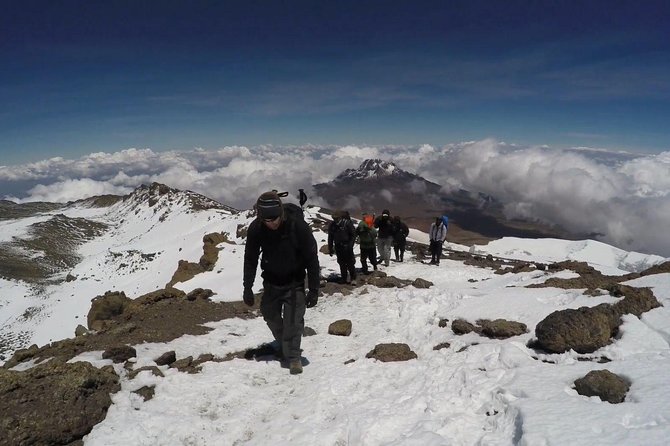
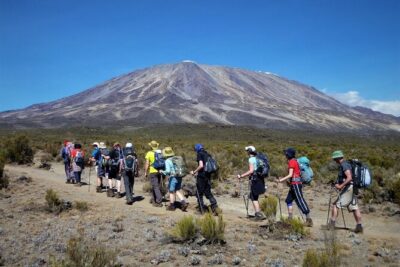
The forest fades as you enter the heath and moorland zone. The trail opens up, and Mawenzi and Kibo Peaks begin to appear in the distance.
This change in scenery is one of the satisfying parts of Kilimanjaro. You can see the mountain environment shifting as you climb. The vegetation becomes less dense, the horizon opens, and the scale of the two main peaks becomes easier to understand.
The hike to Horombo is listed at about eight hours. You arrive around mid-afternoon, which gives you time to rest before dinner. Horombo Hut sits at about 12,340 feet, so this is where altitude begins to feel like a serious part of the trip rather than a background concern.
Take the afternoon slowly. You do not need to prove anything by walking around more than planned. The next day is built into the schedule for acclimatization, which is one reason I see this itinerary as better structured than a rushed climb.
More treks and hikes around Kilimanjaro:
- Kilimanjaro climb by Lemosho Route (7-day)
★ 5.0 · 651 reviews - Kilimanjaro climb, Machame Route (7-day)
★ 5.0 · 262 reviews - Kilimanjaro Climbing Lemosho Route 8 Days.
★ 5.0 · 186 reviews - 8-Day Small-group Lemosho Kilimanjaro Summit Trekking
★ 5.0 · 186 reviews
Day 5: the Horombo acclimatization day
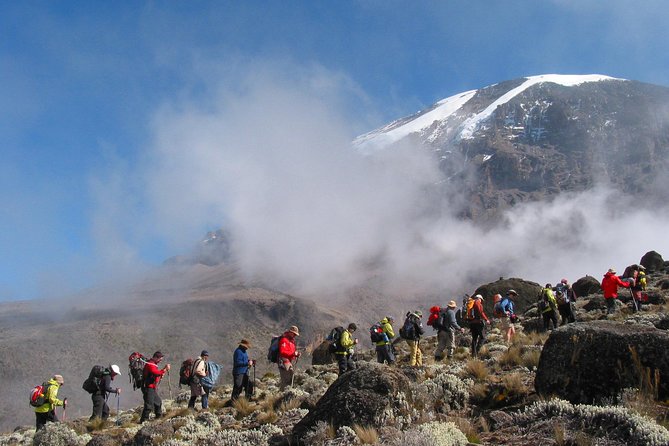
You spend a second night at Horombo and take a short acclimatization hike before returning for lunch and a quiet afternoon. This is not a wasted day. It is the day that gives your body more time to adjust before the route climbs higher.
The plan has a sensible pattern: walk higher, return lower, eat, rest, and prepare for the next stage. Your guides can also watch how you are handling the altitude before the trail moves toward Kibo.
The stated hiking time is about eight hours, though the actual acclimatization walk is described as short. The schedule may reflect the full day rather than continuous walking, so ask Tusker for the exact daily timing before departure.
Horombo also gives you a chance to take stock. If you have a headache, unusual fatigue, or other altitude concerns, tell the guides plainly. One past climber developed a headache early in the trip, and the guide team responded with close attention. That is the kind of communication you should expect from yourself too. Do not hide symptoms because you are worried about slowing the group.
Day 6: across the Kibo Saddle to Kibo Hut
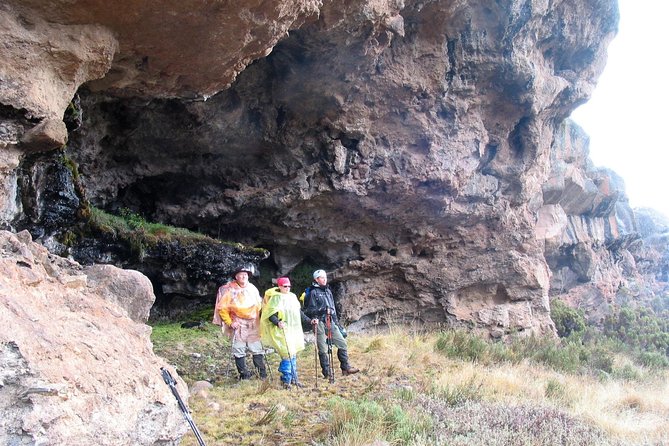
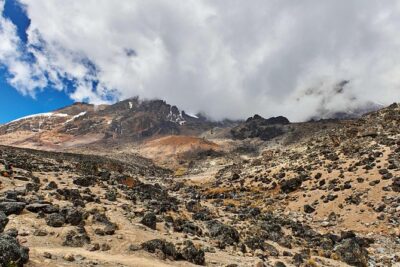
After breakfast, you leave the moorland behind and enter the alpine desert. The route crosses the barren Kibo Saddle between Mawenzi and Kibo Peaks, then climbs toward Kibo Hut.
This is a striking change. There is less vegetation, less shelter, and a greater sense that you are approaching the high mountain itself. On a clear day, you may see Gilman’s Point on the crater rim, a useful landmark for the following morning.
The hike takes about seven hours, and you reach Kibo around mid-afternoon. The plan is to relax, eat dinner, and prepare for a midnight summit departure. That means your evening is short. You will need to organize your layers, water, snacks, and headlamp before trying to sleep.
Kibo Hut is more basic than the lower huts, and the altitude makes rest difficult for some people. The schedule cannot guarantee a good night’s sleep. Your goal is simply to lie down, conserve energy, and follow the guide’s instructions.
Day 7: the hard night to Uhuru Peak
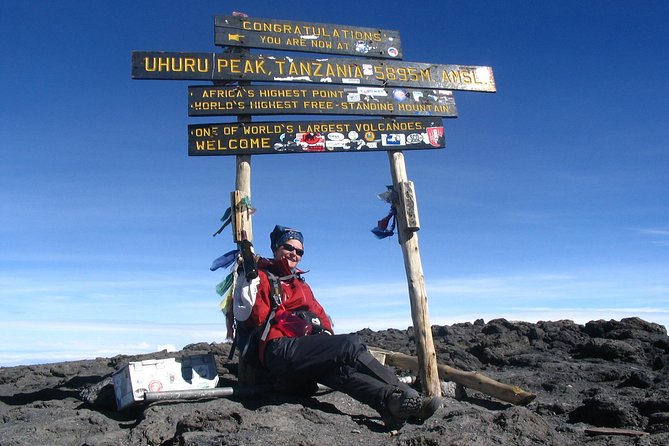
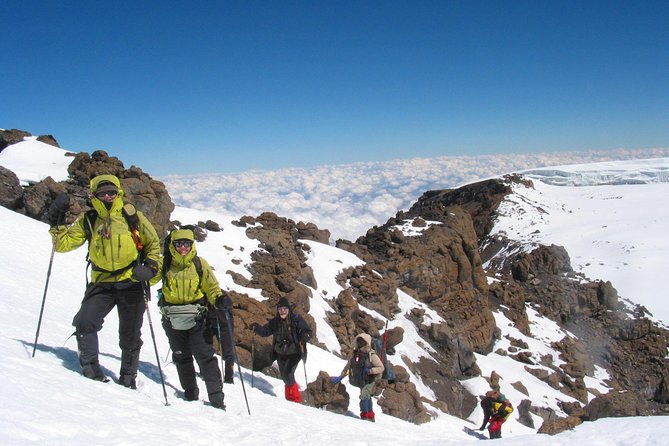
The summit day starts just before midnight with hot tea and snacks. You climb uphill over rocky ground and scree toward Gilman’s Point on the crater rim.
This is the hardest part of the trip. You move slowly, often in darkness, while the cold and altitude add weight to every step. The reward begins before the summit, with sunrise views of Mawenzi, the Kibo Saddle, and the plains below.
At Gilman’s Point, the route reaches the crater rim. From there, the schedule allows about two more hours to Uhuru Peak. The summit sits at 19,340 feet, or 5,895 meters, and the listed summit distance is 4.2 miles, or 6.7 kilometers.
The itinerary then sends you back toward Horombo Hut for the night. That is a demanding day: summit, descend, and continue to a lower sleeping point. You should be ready for the fact that reaching the top is only part of the work. The descent can be tiring, especially after hours awake.
Tusker’s medical training for its guides is a major point in its favor here. The company says its guides receive expert altitude medical training, and the strongest praise in the available feedback focuses on safety, preparation, and attention to detail. Guide leadership is credited to people including Urio and Pastorey, with Julian helping coordinate the Moshi side of the operation.
Day 8: rainforest descent and a proper shower
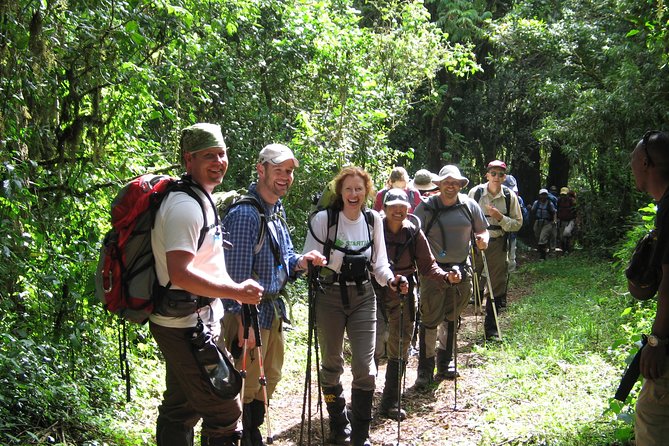
After breakfast at Horombo, you begin the long descent past Mandara Hut and back to the national park gate. The trail returns through rainforest, giving you one last look at the greener lower zone.
The hiking time is listed at about four hours, followed by a roughly 90-minute drive to Moshi. Tusker vehicles meet you at the gate, which saves you from arranging your own transport at the end of a physically demanding day.
Back at the hotel, you get the reward that sounds modest but feels important after a mountain climb: a shower, a bed, and a final celebration. The schedule allows you to finish the climb without immediately heading to an airport or another long transfer.
Day 9: leave Tanzania or add a safari
The final day is open for departure or for continuing into a Tanzanian safari. Tusker has specialized in East African safaris since 1983 and can arrange a continuation through Tanzania’s major wildlife reserves.
The safari option makes practical sense because you are already in the region and may want to balance the physical challenge of Kilimanjaro with time spent watching wildlife. It also lets you extend the trip instead of treating the mountain as a stand-alone visit.
Do not assume the safari is part of the $5,699 price. The climb description presents it as an option after the mountain trip, so ask for separate costs, timing, and park details if you want to continue.
What the $5,699 price covers
At $5,699 per person, this is not a budget climb. The value comes from the amount of planning and support built into the nine-day schedule.
You are paying for two hotel nights before the climb, mountain hut accommodation, park admission, meals, guide support, transport connected with the route, acclimatization time, and a maximum group size of 16. Tusker also highlights its custom walk-in tents on its wider operations, though this Marangu plan uses huts, not tent camps.
The food program and guide preparation help explain the premium. The company’s social commitments also matter if you care about how a climb supports its local crew. Tusker says it provides high pay, pensions, and medical benefits for guides and porters, and works with the local Lions Club on community development, including a school for deaf children.
Still, the price does not remove every extra cost. Gear rental is excluded, and the safari option is separate. You should also confirm what airport transfers, tips, insurance, and personal purchases require before you commit, since those details are not specified here.
Who should choose this climb
I would consider this trip a good fit if you want a structured Kilimanjaro climb with hut accommodation, serious guide support, and a built-in acclimatization day. It also suits you if shared sleeping areas and common dining spaces sound acceptable.
The plan is designed for most people who can participate in this type of activity, but that does not mean it is easy or suitable for every medical condition. High altitude is the central challenge. You should discuss the climb with your doctor if you have health concerns, and you should be honest with the guides about symptoms.
A group of up to 16 is manageable, but it is not a tiny private party. You may find the larger group helpful on a major expedition, while those seeking a quiet, custom experience may prefer a smaller arrangement.
The itinerary information also needs one careful check: it is described as a nine-day climb, while the booking note says to check the calendar for an open 12-day trip start date. Confirm the exact departure length and dates before paying.
Should you book Tusker Trail’s Marangu Route?
Book it if you value safety systems, extra acclimatization time, and a long-established operation more than a low price. The two Moshi preparation days, Horombo rest day, trained guides, included meals, and hut accommodation give you a well-supported way to approach Kilimanjaro.
Think twice if you need private rooms, dislike shared huts, or are searching for the cheapest possible route. You also need to budget for gear, and you should verify the nine-day versus 12-day scheduling detail.
For the right climber, this is a serious, carefully managed mountain trip rather than a quick summit gamble. The strongest reason to choose it is not the promise of reaching the top. It is the combination of preparation, pacing, experienced leadership, and a clear priority on getting you home safely.
FAQ
How long is the Kilimanjaro climb?
The experience is described as a nine-day trip, including two nights in Moshi, the mountain climb, and the final departure or safari day. The booking information also refers to a 12-day trip start date, so confirm the exact schedule before booking.
Where does the climb begin?
The trip begins in Moshi, Tanzania. You then drive to Marangu Park Gate for the start of the mountain hike.
Where do I sleep on the mountain?
You sleep in shared mountain huts at Mandara, Horombo, and Kibo. The huts have running water and toilets, and meals are served in a common dining area.
Is there an acclimatization day?
Yes. You spend two nights at Horombo Hut, using the extra day for a short acclimatization hike before returning for lunch and an afternoon of rest.
Are meals included?
Eight breakfasts, eight lunches, and seven dinners are included. The meals are prepared by Tusker’s mountain cooks.
Is equipment rental included?
No. Equipment and gear rental are not included in the listed price, so you need to arrange your equipment separately.
More Nine-Day Trips in Kilimanjaro
- 9 Days Kilimanjaro Climb via Lemosho Route
★ 5.0 · 6 reviews - Kilimanjaro 360° 9 days Tour
★ 5.0 · 6 reviews - 9 Days Mount Kilimanjaro Climb Machame Route
★ 5.0 · 6 reviews - 9 Days Kilimanjaro Hiking or Climbing via Northern Circuit route
★ 5.0 · 5 reviews
Just added around Kilimanjaro
- 6 days Machame route climbing Mt.Kilimanjaro★ 5.0 · 8 reviews
- machame route★ 5.0 · 16 reviews
- Mt Kilimanjaro 6 days Marangu route hike★ 5.0 · 3 reviews
- Private Cycle to Kilimanjaro Bike Park Safari★ 5.0 · 6 reviews
- West Kilimanjaro cycling Adventures★ 4.5 · 8 reviews
- 3 Days Private E-Bike Tour in West Kilimanjaro★ 5.0 · 3 reviews
- Kilimanjaro Climb • Machame Route ~ 10 Day★ 5.0 · 6 reviews
- Kilimanjaro Climb & Safari – Lemosho Route – 13 Day★ 5.0 · 10 reviews
Marangu Route Climbs, compared.
Browse the lists this tour appears in