
Reviewed · MACHAME ROUTE CLIMBS
6 days Machame route climbing Mt.Kilimanjaro
Kilimanjaro’s Machame Route gives you the mountain in changing chapters: dripping rainforest, open moorland, high rocky desert, the Barranco Wall, and a sunrise summit at 5,895 meters. The climb is hard, but the route’s gradual rise and high point at Lava Tower help your body adjust before summit night.
I like the full support package, which includes airport transfers, two Moshi hotel nights, tents, sleeping mats, meals, treated water, guides, porters, a cook, oxygen, and an emergency kit. I also like the local feel. The team handles the practical work, while the walking remains the main event.
The catch is simple: six days is a tight schedule for Africa’s highest mountain. You need strong fitness, patience with cold and wet conditions, and enough grit for a long summit day followed by a very long descent.
Key points to know before you book
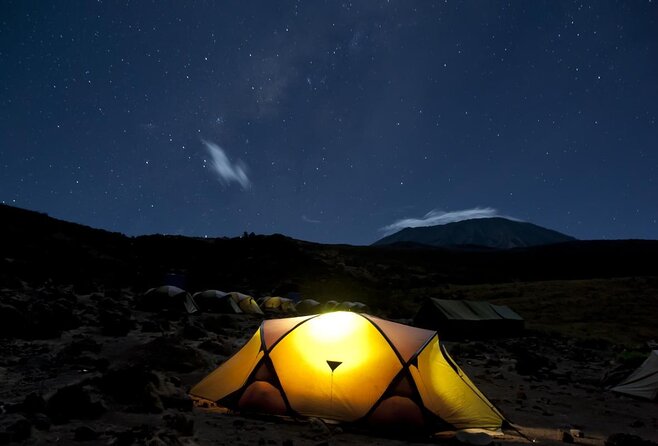
- Machame Route scenery: You move from montane forest to moorland, semi-desert, alpine desert, and an ice-capped summit.
- A serious summit day: The climb to Uhuru Peak begins around 11:30 p.m. and can take eight hours, followed by up to eight hours descending to Mweka.
- High-altitude preparation: Day three reaches Lava Tower at 4,630 meters before dropping to Barranco Camp, a useful acclimatization pattern.
- A well-supported camp life: A cook provides three hot meals daily, while porters carry equipment and boil water for drinking and washing.
- A practical package: The $2,290 price includes park and camping fees, transport, two Moshi nights, VAT, rescue fees, and mountain staff.
- Small-group format: The maximum group size is 15 people, with pickup offered and mobile confirmation at booking.
Why Machame is a good six-day route
Machame is often called the Whiskey Route, though you will be doing more walking than sipping. Its appeal is the variety. The trail does not simply point uphill each day. You climb high, descend to sleep lower, cross ridges, and approach the summit from a different angle.
That pattern matters. On day three, you climb to Lava Tower at 4,630 meters, then lose about 680 meters before sleeping at Barranco. It makes for a punishing day, but the high climb followed by a lower night gives your body a chance to work on altitude adjustment.
The tradeoff is time. A longer Kilimanjaro itinerary usually gives you more gentle walking days. Here, the route compresses forest, plateau, high desert, summit, and descent into six days. I would choose this trip only if you are comfortable with sustained physical effort and do not expect a relaxed holiday pace.
The group limit of 15 is useful. It is small enough for the guides to keep the party together, yet large enough to create the shared mountain-camp feeling that makes a climb like this memorable.
More Machame Route climbs:
- Kilimanjaro climb, Machame Route (7-day)
★ 5.0 · 262 reviews - Climbing Kilimanjaro – Machame Route
★ 5.0 · 170 reviews - Climbing Kilimanjaro through 7 days Machame Route
★ 5.0 · 151 reviews
Day one: 18 kilometers through the montane forest
Your morning begins with an early breakfast at your hotel, followed by pickup and transport toward Machame Village. The village is the last practical place mentioned for buying mineral water and receiving a packed lunch.
The road from the village to Machame Gate may be difficult. Depending on conditions, the vehicle can continue, or you may walk the final three muddy kilometers, which takes about an hour. That detail is easy to miss when reading a mountain plan, but it matters. Your first day can begin with a wet approach before the official trail even gets going.
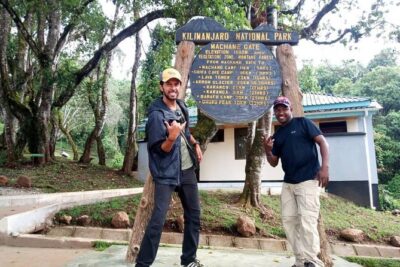
At the gate, you register and enter the rainforest almost immediately. The day covers about 18 kilometers and takes around seven hours. The forest is cool and shaded, but rain is common, and the path can become soggy, slippery, and muddy.
This is not a gentle sightseeing walk. You will carry your personal day items while porters handle the larger mountain load, and you still need to manage a long first day. A welcome lunch stop comes roughly halfway through, with dinner served at camp later.
Machame Camp marks your first night on the mountain. The forest section is a fine opening because it feels close and enclosed, but it also tests your footwear and rain protection at once. Good socks and waterproof layers are not optional luxuries here.
Day two: from forest to the Shira Plateau
Day two starts with a climb of about an hour toward the top of the forest. The trail then becomes gentler for around two hours as you enter the moorland zone.
You cover roughly nine kilometers in about six hours. After lunch and a rest, the route follows a rocky ridge onto the Shira Plateau. The surroundings open up, and you can look east toward the Western Breach and its glaciers. You are now west of Kibo, Kilimanjaro’s main volcanic cone.
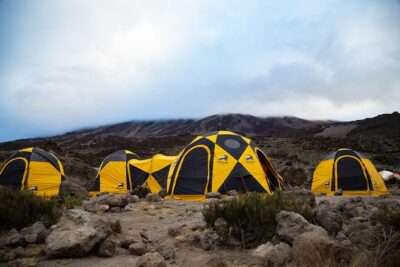
Shira Camp sits at about 3,840 meters. The porters boil water for drinking and washing, and dinner comes after camp is set up. This is where the mountain begins to feel more exposed. Temperatures can fall well below freezing, so a warm sleeping system matters.
The shorter distance does not make this an easy day. Altitude, cold, and the change from sheltered forest to open moorland can make the evening feel harder than the mileage suggests. I like this section because it gives you your first broad views, but you should not mistake the scenery for a break.
Day three: Lava Tower and the descent to Barranco
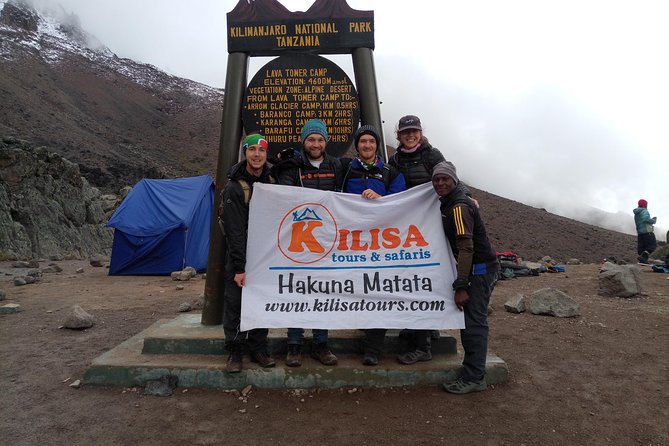
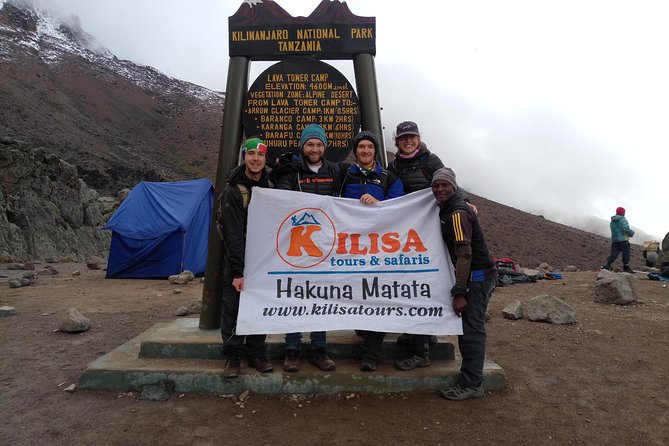
Day three is the route’s great acclimatization test. You walk about 15 kilometers for around seven hours through semi-desert terrain, heading east across a rocky high-altitude area toward Lava Tower.
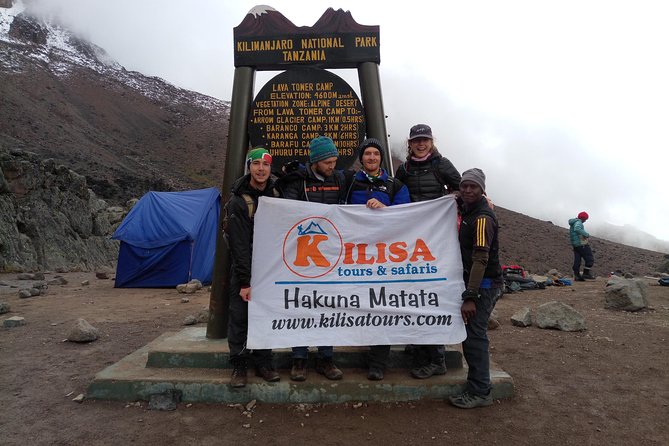
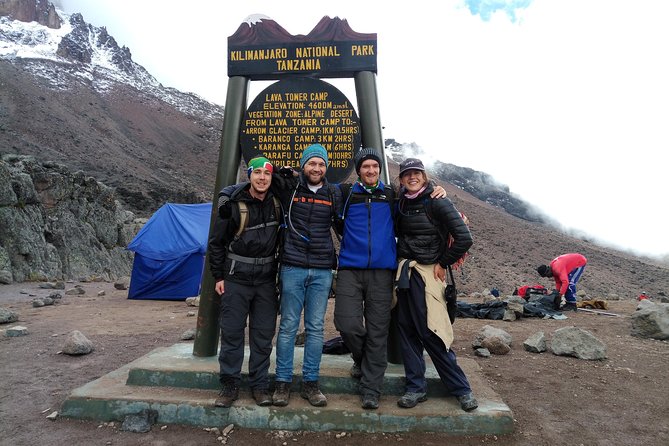
The climb to Lava Tower reaches 4,630 meters after roughly five hours. Lunch is served in a designated area before the final rocky scree section. This is often the point where altitude symptoms can begin, including breathlessness, irritability, and headaches.
The route then drops nearly 680 meters to Barranco Camp, taking around two hours. That descent is not wasted effort. Reaching a high point and then sleeping lower is one of the most useful features of this itinerary.
Day three may be the toughest walking day before the summit push. The semi-desert is stark and exposed, with fewer visual comforts than the forest below. You need to walk slowly, drink the treated water provided, and tell the guide promptly if you feel unwell.
The supplied package includes portable oxygen tanks and an oximeter, along with an emergency first-aid kit. Those are reassuring safety tools, but they do not make altitude harmless. The guide’s judgment and your willingness to report symptoms remain important.
Barranco Camp offers one of the most memorable settings on the route. The Great Barranco Wall rises nearby, looking more intimidating than it usually proves to be.
More treks and hikes around Tanzania:
- Kilimanjaro climb by Lemosho Route (7-day)
★ 5.0 · 651 reviews - Kilimanjaro Climbing Lemosho Route 8 Days.
★ 5.0 · 186 reviews - 8-Day Small-group Lemosho Kilimanjaro Summit Trekking
★ 5.0 · 186 reviews - Kilimanjaro climb, Lemosho Route (8-day)
★ 5.0 · 148 reviews
Day four: the Barranco Wall and Barafu Camp
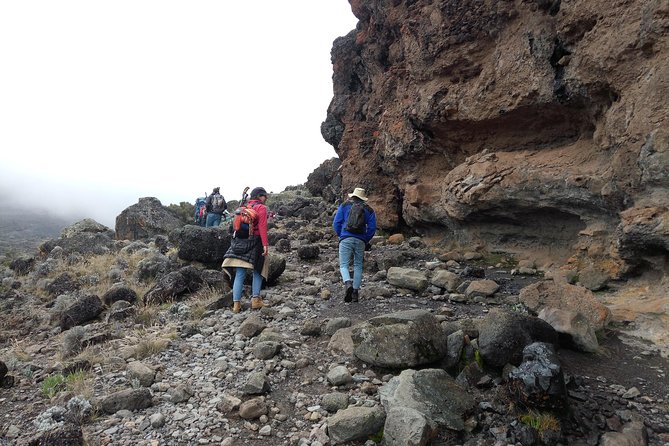
The morning begins at the Barranco Wall. From below, it looks like a serious obstacle. The route climbs it to a point just beneath the Heim Glacier, and the trail usually feels more manageable than the wall first suggests.
This is one of the most rewarding sections because you gain height through a visually dramatic feature rather than a long, dull slope. You also get a strong sense of how high you have come.
After the wall, the trail drops through the Karanga Valley, crossing ridges and valleys before joining the Mweka route. Mweka is the usual way down from the mountain, so you will see part of your descent route before summit day.
The final climb leads to Barafu Hut, at roughly 4,600 meters. Barafu means ice in Swahili, and the camp is exposed and cold. There is no water at Barafu, so the last water stop is in Karanga Valley. The support team must carry what you need from there.
This is an important practical detail. Keep your water bottle or hydration system accessible, and use the washing water thoughtfully. After four days of walking, you may want a long wash, but the mountain camp routine is limited by altitude, cold, and supply.
You will need to rest at Barafu even though sleep may be difficult. Summit preparation begins here, and the next alarm comes before midnight.
Day five: Stella Point, Uhuru Peak, and Mweka
Summit day is the reason to take this route, and it is also the part that demands the most from you. You rise around 11:30 p.m., have tea and biscuits, and begin walking in darkness.
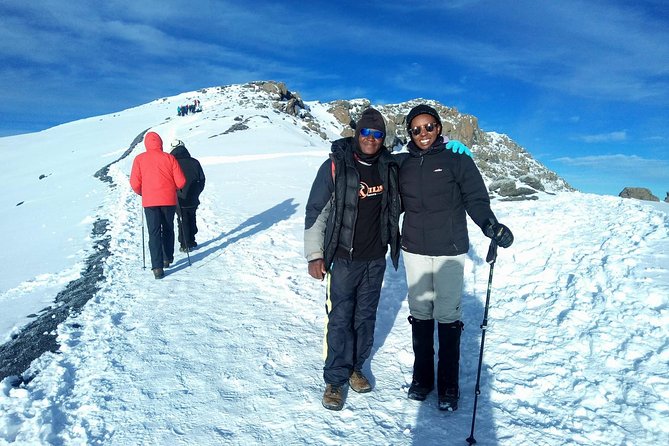
The route heads northwest through heavy scree toward Stella Point on the crater rim. This climb takes about six hours for many people and is described as the most mentally and physically demanding section of the route. The slope, cold, darkness, and thin air combine to make every step feel deliberate.
At Stella Point, at 5,685 meters, you can stop briefly. If the weather cooperates, sunrise arrives over the crater rim. From there, snow may cover the trail for the roughly two-hour climb to Uhuru Peak at 5,895 meters.
The summit itself is a short moment compared with the effort needed to reach it. Take your photographs, follow the guide’s instructions, and do not linger longer than you safely can. At this altitude, the descent is not an afterthought.
The day covers about seven kilometers uphill and around 23 kilometers downhill. The stated walking time is eight hours to Uhuru Peak, followed by seven to eight hours descending to Mweka. That is an enormous day, even for a fit person.
You may reach Stella Point rather than Uhuru Peak. The park awards a green certificate for Stella Point and a gold certificate for Uhuru Peak. Reaching Stella Point is still a major achievement, and the guides should help you make sensible decisions based on your condition.
The route down to Mweka changes the mood quickly. After the high stone and snow, the trail eventually returns toward forest. You will be tired, but the return to thicker vegetation can feel like a physical sign that the hardest altitude is behind you.
Day six: celebration, certificates, and the return to Moshi
After breakfast, the mountain team holds a celebration with singing and dancing. This is also the point when tips are presented to the guides, assistant guides, cook, and porters.
Tips are not included in the tour price, so plan for them separately. The supplied details do not specify an amount, and you should ask the operator before departure how the team prefers gratuities to be handled.
You then descend for about three hours to Mweka Gate. All hikers sign their names at the national park gate before receiving their completion certificates. From the gate, the plan continues to Mweka Village, about three kilometers away, where a hot lunch is served.
The final drive returns you to Moshi for showers and more celebration. After a cold mountain camp and a long summit day, that shower may feel like one of the trip’s great luxuries.
The last day is short compared with summit day, but your legs may not agree. Take the descent carefully, especially if fatigue has made you careless with footing.
What the $2,290 price really covers
At $2,290 per person, this is not a bare-bones trail permit. The price includes private transport between Kilimanjaro International Airport and your Moshi accommodation, two nights of Moshi lodging, transport to and from the park gate, park entry fees, camping fees, rescue fees, government taxes, and 18 percent VAT.
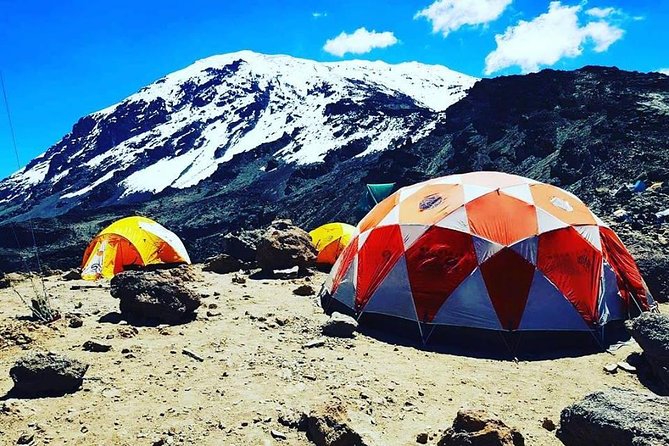
On the mountain, you receive four-season tents, double-layer sleeping mats, three hot meals each day, treated and filtered drinking water, and hot water for washing. A professional mountain team includes guides, assistant guides, a cook, and porters.
The safety equipment includes portable oxygen tanks, an oximeter, and an emergency first-aid kit. These inclusions help explain the price. Kilimanjaro costs are not only about the number of walking days. Park charges, staff wages, food, transport, equipment, and rescue arrangements all add up.
Six breakfasts, five lunches, and five dinners are included according to the package details. Flights, travel insurance, and tips are not included. The omission of insurance is normal for a tour package, but you need to arrange it yourself before departure.
The value is strongest if you want one operator to coordinate the mountain and the Moshi logistics. If you already have a hotel, airport transfer, and mountain equipment arranged, part of the package may matter less to you. For a first Kilimanjaro climb, the included transport and staff support make the price easier to justify.
Food, camping, and the human side of the climb
Three hot meals a day can change how you cope with the mountain. The menu is not specified, but the presence of a dedicated cook means you are not relying only on packed snacks and instant food.
Porters boil water for drinking and washing, while filtered and treated water is supplied throughout the trek. Bring your own preferred bottle or hydration setup, since the practical details of carrying and accessing water matter more as the days get higher and colder.
The camp routine is basic. You sleep in mountain tents, use double-layer sleeping mats, and deal with cold nights, especially at Shira, Barranco, and Barafu. This is camping at altitude, not a hotel moved outdoors.
The human side seems to be one of the strongest parts of the operation. The team includes local guides, porters, and a cook, and past bookings describe smooth airport pickup, friendly staff, careful planning, and good food. Nicholson, a driver, was specifically praised for helping with a short walking tour of Moshi when there was spare time. Naick was singled out for clear booking support.
Those details matter because the experience starts before the first trail step. Good communication about pickup, hotel arrangements, equipment, and timing can remove a lot of pre-climb worry.
Safety, group size, and who should choose it
The operator gives safety and comfort a central role, with local experience, rescue coverage, oxygen, an oximeter, and a first-aid kit included. That is encouraging, but Kilimanjaro remains a high-altitude climb. No equipment package changes that basic fact.
You should choose this trip if you have strong physical fitness and can handle seven to eight hours of walking on several days. Summit day is much longer. The route also includes mud, scree, cold, rocky ridges, a steep wall, and a long descent.
This trip suits you if you want:
- A six-day climb with major changes in scenery
- A group of no more than 15 people
- A local Tanzanian operator
- Two Moshi hotel nights included
- A staffed camping experience with a cook and porters
- Airport pickup and mountain transport arranged
It is less suitable if you want a slow itinerary, private luxury, or a short summit day. The route is active from the first morning to the final descent.
The tour allows free cancellation up to 24 hours before the start time for a full refund. Changes made later are not accepted, and poor weather may lead to a new date or a full refund. Pickup is offered from the Kilimanjaro Airport Road meeting point, with an 8:30 a.m. start time listed.
Should you book the Kilisa Machame Route climb?
I would book this climb if you want a well-supported, locally operated Kilimanjaro trip and you understand what six days demands. The strongest reasons are the complete transport and camping package, the high-climb-then-descend acclimatization day at Lava Tower, and the range of scenery packed into one route.
I would pause if your fitness is only moderate or if you want plenty of spare time at altitude. The summit day is long, the trail can be wet and cold, and the $2,290 price does not include insurance, flights, or tips.
For a fit hiker who wants the full Kilimanjaro experience without organizing every moving part alone, this is a sensible choice. Go in expecting hard work, basic camps, and a very early summit morning. The reward is a mountain route that keeps changing right up to the snow at Uhuru Peak.
FAQ
How long does the Kilimanjaro Machame Route tour last?
The climb lasts six days, approximately. The package also includes two nights of accommodation in Moshi.
What time does the activity start?
The listed start time is 8:30 a.m. Pickup is offered from Kilimanjaro Airport Road in Tanzania.
What is the maximum group size?
The activity has a maximum of 15 people.
Is airport transportation included?
Yes. Private transport to and from Kilimanjaro International Airport and your accommodation in Moshi is included. Transport to and from the Kilimanjaro gate is also provided.
Are meals and drinking water included?
Yes. Three hot meals are provided daily on the mountain, along with treated and filtered drinking water. The package lists six breakfasts, five lunches, and five dinners.
What happens if the climb is canceled because of bad weather?
If poor weather causes the activity to be canceled, you will be offered a different date or a full refund. Free cancellation is also available if you cancel at least 24 hours before the experience start time.
More Six-Day Trips in Tanzania
- Tanzania Wildlife Encounters – 6 Days
★ 5.0 · 277 reviews - Private 6-Day Tarangire Manyara Crater and Serengeti with Mid-Range Lodges
★ 5.0 · 238 reviews - 6 Days Private Budget Safari
★ 5.0 · 163 reviews - 6 Days Tanzania Budget Camping Safari
★ 5.0 · 145 reviews
Just added around Tanzania
- Walking in Stone Town with a Expert Tourguide★ 3.7 · 3 reviews
- Stone Town Tour★ 5.0 · 16 reviews
- Jet Ski Experience from Kendwa Beach★ 5.0 · 21 reviews
- Turtle Snorkeling, Jozani Forest, Kuza Cave, Rock Restaurant★ 3.7 · 8 reviews
- Zanzibar boat rental/charters★ 5.0 · 6 reviews
- Prison island(Changuu island) & stone town walking tour★ 5.0 · 6 reviews
- Full Day Private Zanzibar Triple Delight Tour★ 4.5 · 3 reviews
- Zanzibar Tumbatu Island Cultural Experience★ 5.0 · 4 reviews
Machame Route Climbs, compared.
The Best of Machame Route in 6 Days: Your World’s Summit Guide
Read our review →Browse the lists this tour appears in