
Reviewed · LEMOSHO ROUTE CLIMBS
The Ultimate 8-day Lemosho route Climbing Kilimanjaro
Kilimanjaro’s Lemosho Route gives you eight days to reach Africa’s highest point, with time to cross the Shira Plateau, adjust to altitude, and tackle the mountain at a steady pace. You camp each night, eat meals prepared on the mountain, and travel with a private group rather than being folded into a large mixed party.
I like the generous route length and the way the trip includes the practical basics: tents, mattresses, meals, guiding, and park transfers. I also like the personal feel. Guides named in the company’s past climbs include Paul, Martin, Gabrielle, Prudence, Edwin, Noka, and Barakael, with particular praise for patient summit support and careful organization.
The main caution is the price structure. The advertised $1,300 covers many essentials, but park fees, tips, insurance, hotels, flights, airport transfers, and personal gear are extra. Also, the published day-by-day plan needs clarification, since Day 1 and Day 2 do not clearly describe the usual first camp transition.
Key points to know before booking
- Eight days on Lemosho: A longer schedule gives you more time for a gradual climb than a rushed short route.
- Private pace: You hike with your own group, though the route itself is shared with other climbers.
- Meals and camping included: Breakfast, lunch, dinner, tents, and sleeping mattresses are supplied.
- Summit night is demanding: You climb to the summit, then descend to Barafu and continue toward Mweka Camp on the same day.
- Park fees are not included: Add this major cost before comparing the package with other operators.
- The crew is central to the experience: Strong praise has focused on guides, porters, cooks, and practical organization.
Why the eight-day Lemosho Route makes sense
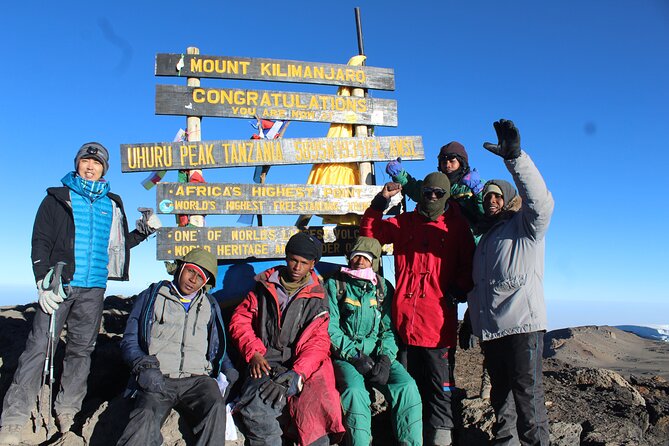
Kilimanjaro is the world’s highest free-standing mountain, rising to Uhuru Point at about 5,895 meters, or roughly 19,340 feet. You do not need technical climbing skills for the standard route, but you do need stamina, patience, and a sensible approach to altitude.
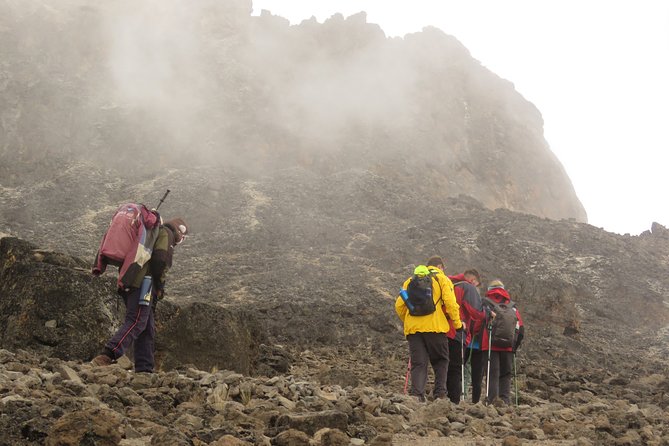
Lemosho is a popular choice because it approaches the mountain from the west and crosses the Shira Plateau before joining the southern routes. The early days offer broad views and quieter walking, while the route later passes through Lava Tower, Barranco, Karanga, and Barafu.
The extra day matters. Eight days lets you spread the ascent over more time, which is usually more comfortable than forcing the same climb into a shorter schedule. You still face a serious physical challenge, but the pace is less frantic.
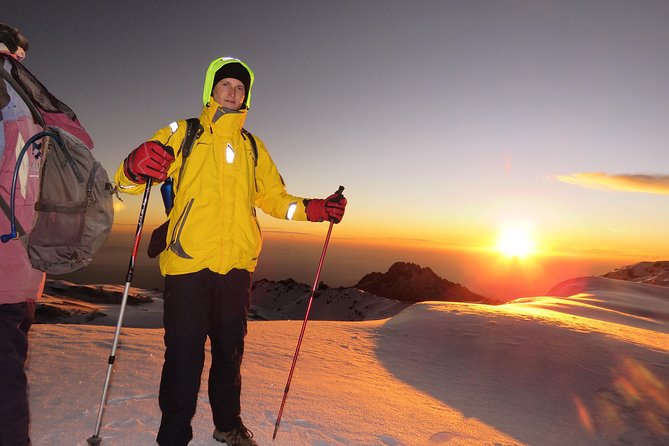
This is not a luxury mountain holiday. You sleep in tents, walk for several hours most days, and spend the summit night moving in darkness and cold. The reward is a changing series of mountain zones, from forest and moorland to bare volcanic ground and the ice and rock near the top.
More Lemosho Route climbs:
- Kilimanjaro climb by Lemosho Route (7-day)
★ 5.0 · 651 reviews - 8-Day Small-group Lemosho Kilimanjaro Summit Trekking
★ 5.0 · 186 reviews - Kilimanjaro Climbing Lemosho Route 8 Days.
★ 5.0 · 186 reviews
Day 1: Moshi briefing and the drive to Londorossi Gate
The trip begins at 7:00 a.m. at Africa Natural Tours on Mkwawa Avenue, or with pickup from your Moshi hotel. After breakfast, your chief guide gives a briefing before the group drives toward Londorossi Park Gate.
The drive takes about two and a half hours. This is useful preparation time. You can meet the guide team, check your bags, and ask about the walking pace, food, water, weather, and summit plan.
The published description gives Londorossi Gate an altitude of 2,250 meters, or 7,380 feet. It also refers to Mti Mkubwa Camp in the next day’s heading, but the first night’s camping arrangement is not fully explained in the schedule. Ask the operator to confirm exactly where you sleep on Day 1 and how the transfer from the gate to the first camp works.
That small detail matters because mountain logistics are rarely casual. Your guide team and porters need to move food, tents, and equipment ahead of you, and you want the daily distances to be clear before you start.
Day 2: From the first camp toward Shira 1
The route begins to steepen as you leave the lower forest and enter the moorland zone. The vegetation becomes shorter and more open, and the mountain begins to feel less like a woodland walk and more like a high-altitude trek.
The day includes a crossing of Shira Ridge at about 3,600 meters, or 11,810 feet. That is a significant rise from Moshi, so your guide should keep the pace slow and controlled. On Kilimanjaro, walking too fast early in the trip can cause trouble later.
Shira Camp is the first major high point of the route. You eat dinner and spend the night there, with your camping equipment supplied by the operator. The sleeping mattress and tent are included, but you still need a suitable sleeping bag and personal clothing. Personal hiking gear is not provided.
Expect the campsite to feel basic. The value here is not comfort in the hotel sense. It is having an organized camp, hot meals, and a crew handling much of the equipment while you focus on walking and recovery.
Day 3: An easier crossing of the Shira Plateau
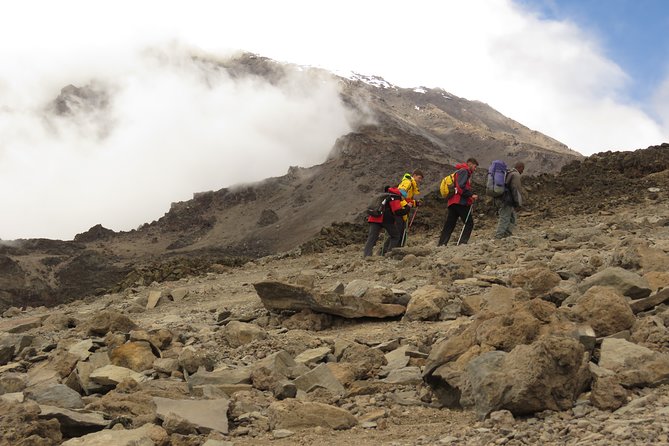
Day 3 is described as a fairly easy trek across the Shira Plateau to Shira Camp 2. The walking is gentler than the previous day, with moorland meadows and a stream near camp.
This is one of the reasons to choose Lemosho. You are not simply racing uphill each day. You get a longer period to settle into the rhythm of walking, eating, drinking, resting, and sleeping at altitude.
The plateau also gives you a sense of Kilimanjaro’s scale. The route opens out, and the mountain’s main mass begins to dominate the view. The setting is exposed, so sun, wind, and sudden weather can matter more than they did in the lower forest.
Meals are included three times daily throughout the trek. The cook is an important part of this arrangement, and the company’s strongest praise has often focused on the cooks, waiters, porters, and guides working together. Still, food preferences and dietary needs should be discussed before departure rather than assumed.
More treks and hikes around Kilimanjaro:
- Kilimanjaro climb, Machame Route (7-day)
★ 5.0 · 262 reviews - Climbing Kilimanjaro – Machame Route
★ 5.0 · 170 reviews - Climbing Kilimanjaro through 7 days Machame Route
★ 5.0 · 151 reviews - Kilimanjaro climb, Lemosho Route (8-day)
★ 5.0 · 148 reviews
Day 4: Shira 2 to Lava Tower at 3,840 meters
From Shira Camp 2, the path heads east toward Kilimanjaro’s upper slopes. The vegetation thins as you climb toward Lava Tower, which is listed at about 3,840 meters, or 12,600 feet.
This is a demanding acclimatization day because you climb high even though you do not finish the day at the summit. The point is to spend time at altitude and then continue through the route, giving your body a chance to adapt.
The description calls the trail steep above the vegetation. You should expect rough volcanic ground and a more exposed setting. The mountain feels less gentle here, and the weather can change quickly.
The published schedule moves from Lava Tower on Day 4 to Barranco Camp on Day 5, but it does not spell out the overnight location or the exact descent between those points. Ask for the confirmed camp sequence before paying. A clear daily plan should show both where you sleep and the approximate walking time.
Day 5: Barranco Wall and the walk to Karanga
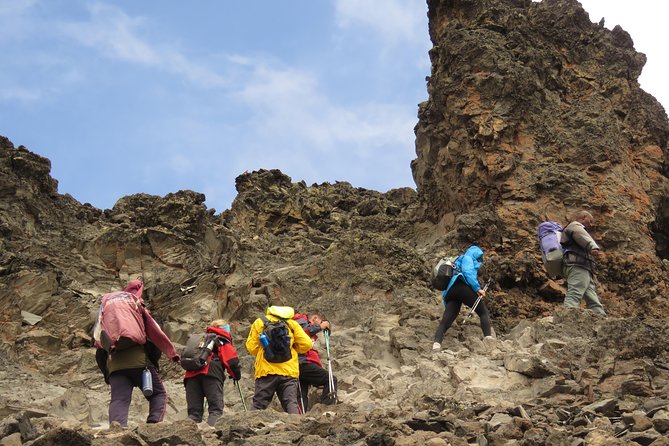
The Barranco Wall is the day’s big feature. From a distance it can look intimidating, but the route is described as easier to climb than it appears. You use your hands in places and move carefully, but this is not presented as technical rock climbing.
Your guide’s job becomes especially important here. A good guide sets a measured pace, helps with footing, and keeps the group together without turning every step into a crisis. Past guide teams have included Paul, Martin, Gabrielle, Prudence, Edwin, Noka, and Barakael. The most useful praise attached to these guides has been practical: attentive pacing, clear communication, and strong support on summit night.
After the wall, the trail continues toward Karanga Camp at about 4,200 meters, or 13,780 feet. The route rises and falls rather than simply climbing in a straight line. That can make the day feel longer than the distance suggests.
Karanga is another high camp, so warmth and rest become important. Keep your evening routine simple: eat, drink, organize your summit clothing, and sleep as much as you can.
Day 6: Karanga to Barafu Camp
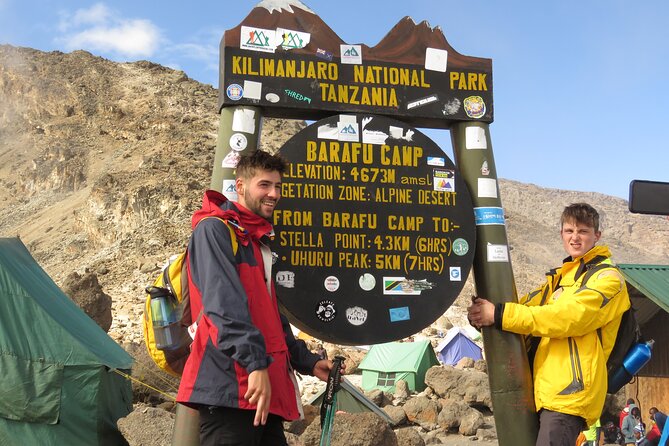
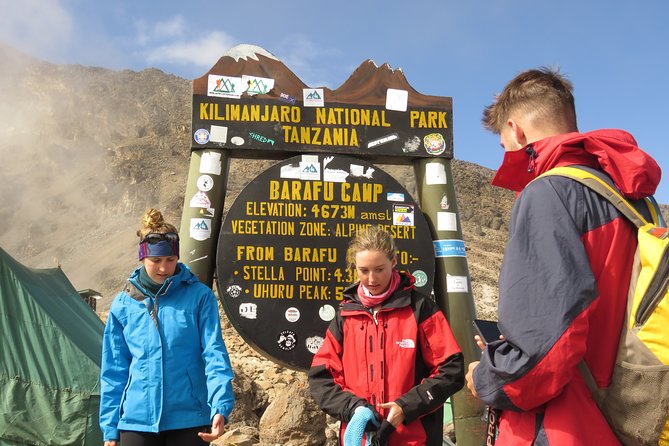
The walk from Karanga to Barafu Camp is shorter in concept than the summit day, but it takes you to a serious altitude. Barafu is listed at about 4,680 meters in the detailed route information, though the supplied schedule does not give its elevation in the Day 6 heading.
Barafu is the launch point for the summit attempt. The camp is exposed and high, and you should not expect a long, relaxed afternoon. Your guide will need to check the group, explain the night schedule, and make sure you have the clothing, water, snacks, and headlamp needed for the climb.
This is where the private format can help. Your group can discuss the pace and timing with the guide rather than being tied to a large public departure. Private does not mean you have the mountain to yourself. You will still share the route and camps with other climbing groups.
Day 7: Summit attempt and descent to Mweka
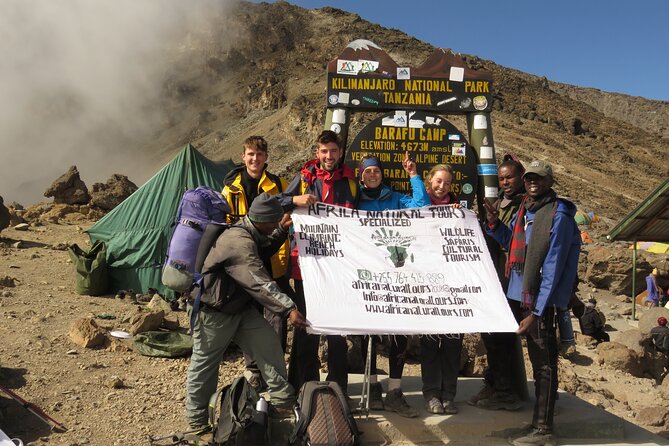
Summit day is the hardest part of the trip. You climb from Barafu toward Uhuru Point, then descend to Barafu before continuing down to Mweka Camp.
That is a large amount of work in one day. The summit attempt usually begins during the night, although the exact departure time is not provided here. Confirm the schedule with your operator, along with the plan for meals, water, and rest during the descent.
Reaching the top is only half of this day. Once you have stood at Uhuru Point, you still need to return over rough ground and lose a great deal of elevation. A guide who watches your pace and condition is more valuable here than one who simply pushes for speed.
One past account singled out Martin for carrying a climber’s bag for much of summit night. That should not be treated as a promised service, but it does show the kind of personal support you should ask about before setting out. Your own daypack should remain light, and you should not plan on the guide carrying your standard load.
The descent to Mweka Camp at about 3,100 meters, or 10,170 feet, provides some relief from the summit altitude. You will likely be tired, dusty, and ready for a proper night of sleep.
Day 8: Mweka Camp to the park gate
The final walk goes from Mweka Camp to Mweka Gate. This is a downhill day, but tired legs and rough trail can still make it slow.
At the gate, the trek ends and transport returns you to your Moshi hotel or the stated meeting point. A trekking certificate is included, which gives you a small official reminder of the climb.
The package includes pickup from your Moshi hotel to Londorossi Gate and drop-off from Mweka Gate to your Moshi hotel. It does not include airport pickup or drop-off, and hotel accommodation before and after the trek must be arranged separately.
What the $1,300 price really covers
At $1,300 per person, the package appears attractive for an eight-day private climb, but you must calculate the full cost. Included items are:
- Camping equipment, including tents and sleeping mattresses
- Breakfast, lunch, and dinner during the trek
- Professional mountain guide
- Briefing before the climb
- Transport from Moshi to Londorossi Gate
- Transport from Mweka Gate to your Moshi hotel
- Trekking certificate
The biggest extra is Kilimanjaro National Park fees. These can make a large difference to the final price, so ask for a written total that includes every required park charge.
You also need to budget for crew tips, travel and medical insurance, hotels in Moshi, flights, airport transfers, and personal hiking equipment. The operator does not provide your boots, warm layers, gloves, headlamp, sleeping bag, or other individual gear.
The package offers real value if the park fees and crew arrangements are clearly explained before payment. It is less attractive if you compare $1,300 with an all-inclusive quote from another company. Compare final prices, not headline prices.
The crew, private format, and group size
The strongest part of this experience is the human support. The company’s climbing teams include guides, porters, cooks, and waiters, and the most repeated praise focuses on organization, food, and care from the mountain staff.
Paul received especially warm attention for checking on the group throughout the climb. Martin was praised for summit-night support, while Gabrielle, Prudence, Edwin, Noka, and Barakael were also named in positive accounts of Lemosho climbs.
You should still ask who your actual lead guide will be. Names from earlier climbs do not guarantee that a particular guide will lead your departure.
The experience is described as private, so you and your group can set a more personal pace. At the same time, the activity information allows up to 90 people, which likely refers to the operator’s maximum capacity rather than the size of your private climbing party. Ask how many people will actually be in your group.
Who should book this climb
I would choose this route if you want scenery, a longer ascent, and a private arrangement with meals and camping organized for you. It suits people with moderate physical fitness who are prepared to walk for several days and spend one very hard day reaching the summit.
You should not book it casually because the phrase moderate fitness can sound too gentle. Kilimanjaro is a high-altitude mountain. You need to be comfortable with long uphill walks, basic camping, cold conditions, and an early or overnight summit push.
This is also a good option if you value guide support more than luxury. The trip is practical rather than polished. You get tents, mattresses, food, transport, and a trained crew, but not hotel rooms on the mountain or personal equipment.
The route may not suit you if you want a short, simple hike or a fixed itinerary with no unclear camp transitions. Before booking, request the exact Day 1 and Day 4 overnight plan, the full park-fee total, the expected group size, and the name of the lead guide.
Should you book the 8-day Lemosho climb?
I would recommend it for a fit, prepared climber who wants one of Kilimanjaro’s scenic routes and values a private group. The eight-day schedule is the right length to take the ascent seriously, and the included meals, camping gear, transfers, and guide support remove much of the logistical work.
I would hold off until the operator clarifies the camp sequence and total cost. If the park fees are added fairly, the group size is genuinely private, and you arrive with proper insurance and gear, this can be a strong-value route to Uhuru Point. If you want a simple price with no major extras, compare it carefully with other eight-day Lemosho packages.
Free cancellation is available when you cancel at least 24 hours before the local start time. Changes or cancellations made later are not accepted for a refund.
FAQ
Where does the Kilimanjaro climb start?
The listed meeting point is Africa Natural Tours on Mkwawa Avenue in Tanzania, with a start time of 7:00 a.m. Pickup from a hotel booked in Moshi town is also offered.
How long is the Lemosho climb?
The experience lasts approximately eight days, ending with the walk from Mweka Camp to Mweka Gate.
Are meals included during the trek?
Yes. Breakfast, lunch, and dinner are included during the mountain portion of the trip.
Is camping equipment provided?
Yes. The package includes camping equipment, quality tents, and sleeping mattresses. Personal hiking gear is not included.
Are Kilimanjaro National Park fees included?
No. All Mount Kilimanjaro park fees are excluded from the listed price and must be paid directly to the park or through the tour operator.
Is transportation included?
Round-trip mountain transportation is included between Moshi and the park. Pickup goes to Londorossi Gate, and drop-off follows the trek from Mweka Gate. Airport transfers are not included.
Can I cancel for a full refund?
Yes, if you cancel at least 24 hours before the experience start time. Cancellations or changes made less than 24 hours before the local start time are not eligible for a refund.
More Eight-Day Trips in Kilimanjaro
- Climbing Kilimanjaro through 8 days Lemosho Route
★ 5.0 · 52 reviews - Kilimanjaro climb, Northern Circuit route (8-day)
★ 5.0 · 40 reviews - 8 Days Kilimanjaro Hike via Lemosho Route
★ 5.0 · 39 reviews - 8 Days Climbing Mt.Kilimanjaro (Lemosho Route)
★ 4.5 · 37 reviews
Just added around Kilimanjaro
- 6 days Machame route climbing Mt.Kilimanjaro★ 5.0 · 8 reviews
- machame route★ 5.0 · 16 reviews
- Mt Kilimanjaro 6 days Marangu route hike★ 5.0 · 3 reviews
- Private Cycle to Kilimanjaro Bike Park Safari★ 5.0 · 6 reviews
- West Kilimanjaro cycling Adventures★ 4.5 · 8 reviews
- Kilimanjaro Climb • Marangu Route ~ 9 Day★ 5.0 · 4 reviews
- 3 Days Private E-Bike Tour in West Kilimanjaro★ 5.0 · 3 reviews
- Kilimanjaro Climb • Machame Route ~ 10 Day★ 5.0 · 6 reviews