
Reviewed · MARANGU ROUTE CLIMBS
Best 5 Days Kilimanjaro Bike Trek Tour via Marangu Kilema Route
The striking idea here is simple: you take a mountain bike toward Uhuru Peak, Africa’s highest point, on the only Kilimanjaro route designed for a bike ascent. The Kilema route gives you real riding on rough mountain tracks, but the upper mountain still demands plenty of hiking and bike carrying.
I like the five-day route because it gives you time to reach Horombo, spend a day riding around Mawenzi, and sleep at Kibo before the summit attempt. I also like that transfers, park fees, meals, guides, and porter support are included, which removes much of the usual mountain planning.
The catch is that this is not a five-day downhill adventure. You need moderate fitness, a reliable mountain bike, and a strong tolerance for cold, altitude, steep scree, and a very long summit day. Bike hire is extra, and one poor bicycle can turn a hard trip into a repair workshop at 4,000 meters.
Key points to know before booking
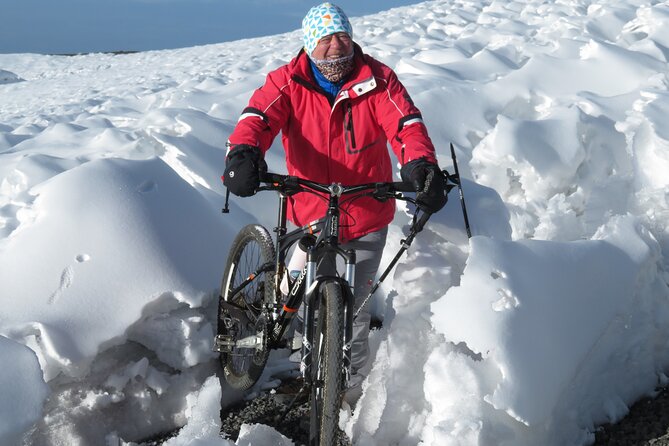
- The Kilema route is the mountain-bike route: You ride from Kilema Gate toward Horombo and later handle sections between Kibo, Uhuru Peak, and Horombo.
- The summit still involves hiking: The steepest upper slopes are reached on foot, with the bike carried or handled by porters until riding becomes possible.
- Day four is the test: Expect roughly 10 hours, an early morning start, thin air, a summit climb, a short ride near Uhuru, and a long descent.
- Altitude is built into the plan: Horombo is around 3,700 meters, and Kibo sits much higher in the alpine desert.
- Bring or arrange your own bike: Mountain-bike hire is not included, and a professional bike with dependable tires matters.
- The package covers the basics: Meals, park fees, private transfers, guides, and porter support are included, while flights, visas, insurance, and personal gear are not.
Why this Kilimanjaro bike trek is different
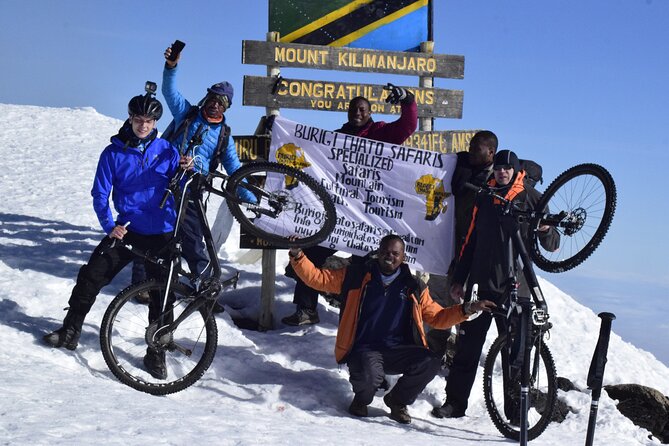
Most Kilimanjaro climbs are walking trips. This one adds a bike to the mix, but you should think of it as a hybrid climb, not a pure cycling tour. The lower and middle sections offer proper riding, while the summit zone becomes a hike with a bike involved.
The route begins near Marangu on the eastern side of the mountain. You register at Marangu Gate, transfer to Kilema Gate, and start riding from about 1,950 meters. The trail rises through changing vegetation until the forest gives way to open alpine terrain.
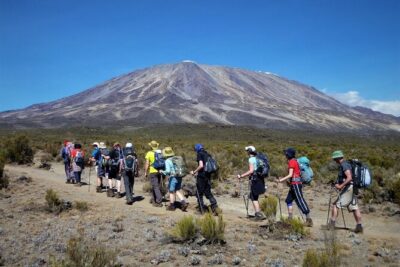
That change is the reward. In a single trip, you move from green lower slopes to sparse alpine desert and finally to the icy summit zone. The bike gives you a different way to experience the mountain, but it does not make Kilimanjaro easier.
The operator lists a maximum of 200 people, which is a large possible capacity. Your actual riding group may be smaller, but you should confirm the expected group size before paying. A smaller group matters here because bike repairs, pace, and altitude symptoms are easier to manage with fewer people.
More Marangu Route climbs:
- Kilimanjaro climb, Marangu route (6-day)
★ 5.0 · 72 reviews - Climbing Kilimanjaro – Marangu Route
★ 5.0 · 65 reviews - Private Full Day Hiking Experience to Marangu Route
★ 5.0 · 61 reviews
Day one: Marangu Gate to Horombo by bike
Your day starts at 8:00 a.m. with pickup and a roughly 45-minute drive to Marangu Gate. The road passes through Marangu village on the lower slopes of Kilimanjaro, giving you a look at the settled foothills before the mountain track begins.
At Marangu Gate, you register with the park authorities. You then transfer to Kilema Gate, where the actual cycling begins. Before setting off, check your water, lunch, spare clothing, and bike. This is the right moment to discover a loose brake, soft tire, or missing layer, not halfway up the mountain.
The first route section covers about 16 kilometers from Kilema Gate to Horombo Hut. The advertised riding time is about six hours, so the distance alone does not tell the whole story. Rough surfaces, climbing, stops, and altitude make this a slow mountain day.
Your guide rides with you on a mountain bike. Porters support the group, and you meet them later at Horombo. The route is valuable because you get substantial riding early in the trip, before the air becomes much thinner.
Horombo sits at roughly 3,700 meters. That is high enough for some people to feel headache, fatigue, or shortness of breath. Take the evening slowly, eat what is provided, drink water, and tell your guide if you feel unwell. The hut setting is practical rather than luxurious, with the focus on rest and acclimatization.
Day two: Mawenzi Hut and a useful acclimatization ride
After breakfast, you ride through the alpine desert toward Mawenzi Hut, then return to Horombo. The planned cycling distance is about 10 kilometers, and around 90 percent of the day is described as riding.
This is one of the smartest parts of the schedule. You gain altitude during the day but return to the same sleeping place, so you do not need to pack up and move your sleeping gear. The ride also gives you time to see how your body responds before the summit push.
The trail includes small stones and rough surfaces. You might ride much of it, but do not treat the percentage as a promise that every rider will pedal every meter. Your pace depends on the bike, the surface, your fitness, and how you are coping with altitude.
Mawenzi adds drama to the day. Its rocky profile gives you a strong sense of being high on the mountain, even before Kibo and Uhuru become the main focus. The return to Horombo is also a reminder that climbing Kilimanjaro is about managing energy, not winning a race.
A practical rule applies here: keep your speed under control. One account of a five-day bike ascent specifically warns against riding too fast and recommends a bike suited to serious off-road riding. Flat tires are a real concern if your bicycle is not built for this kind of route.
Day three: Horombo to Kibo Hut
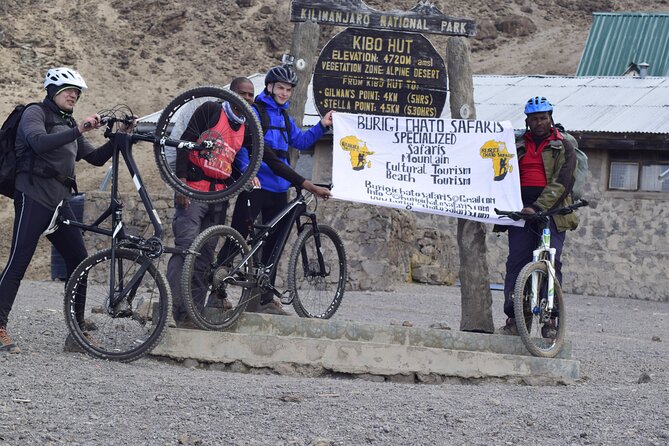
Day three starts early. You pack your duffel, eat breakfast, and ride or climb toward Kibo Hut. The first three kilometers are described as harder, while the final seven kilometers offer a better biking trail.
The route now feels more exposed. Vegetation becomes sparse, and the alpine desert replaces the greener lower sections. Kibo Hut is a stone building with bunk beds for about 60 climbers, so expect a basic shared mountain shelter rather than privacy or comfort.
Lunch comes at Kibo, followed by a rest period. Around 4:00 p.m., depending on your condition, you may hike partway up the summit path to get familiar with the route. This orientation walk can be useful because the summit attempt begins in darkness and fatigue.
The summit is another 1,195 meters above Kibo Hut. You should prepare your thermal layers, headlamp if required by the operator, gloves, and other personal climbing equipment before trying to sleep. The supplied package does not include personal climbing gear, so you must bring or arrange those items yourself.
Kibo is an important dividing line. The lower ride has finished for practical purposes, and the main job becomes walking uphill in cold, thin air. If you are hoping for a continuous bike ride to the top, adjust that expectation now.
More bike days around Kilimanjaro:
- Chagga Villages in Mount Kilimanjaro Cycling Day Trip
★ 5.0 · 42 reviews - Kilimanjaro bike park safari
★ 5.0 · 16 reviews - Top 6 Days Mt. Kilimanjaro Bike trek Tour by Marangu-Kilema Route
★ 5.0 · 15 reviews - Cycling from Kilimanjaro to Ngorongoro Crater
★ 5.0 · 10 reviews
Day four: the summit attempt and the hardest riding
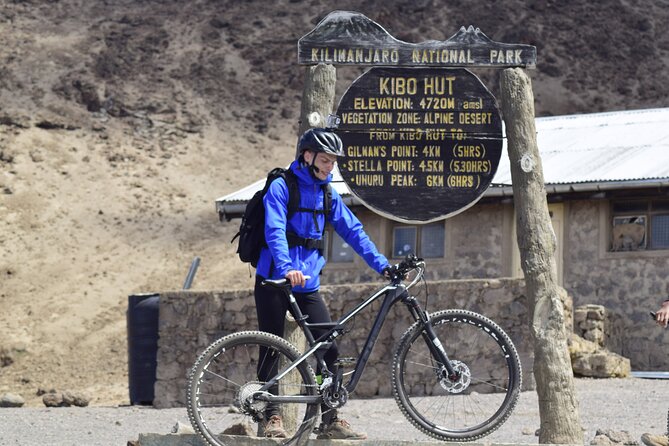
At about 4:00 a.m., your guides wake you for the summit climb. You follow a zigzag route up a long scree slope. After roughly two hours, you reach Hans Meyer’s Cave, then face steeper ground for about three more hours toward Gilman’s Point.
The schedule describes you taking your bike from the porters at Gilman’s Point and riding toward Uhuru Peak. In reality, how much you ride will depend on the surface, weather, fatigue, and your guide’s judgment. The upper mountain is not a normal cycling trail, and you should be ready to push or carry the bike.
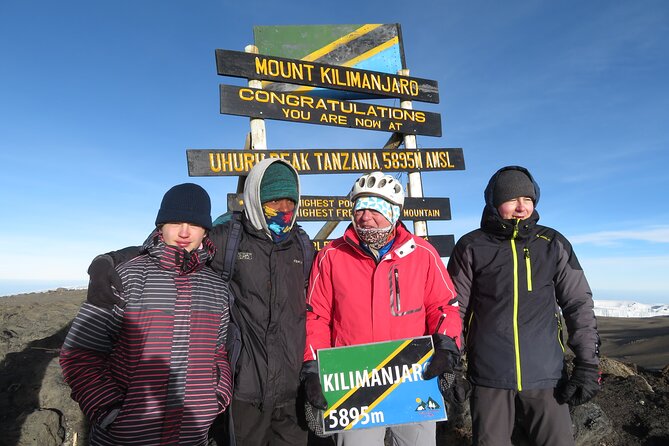
At Uhuru Peak, you have time for photographs before riding down toward Stella Point. The summit moment may be brief. Cold, altitude, and the long descent make it sensible to take your photos, celebrate, and keep moving rather than linger.
The day is listed at about 10 hours. That includes the climb, summit section, descent, lunch, and the ride back toward Horombo. It is the day that separates a fit cyclist from someone who simply enjoys recreational riding.
The description identifies the upper section as alpine desert and icecap terrain, with the Kibo to Horombo portion still in the high, barren zone. That means little shelter and limited visual comfort. Your clothing, water, pacing, and ability to follow instructions matter more than cycling pride.
The ride from Kibo to Horombo is the payoff after the summit. It is also a long descent after a sleepless or nearly sleepless night, so do not race. A controlled pace protects your brakes, tires, and concentration.
Day five: riding back through the mountain zones
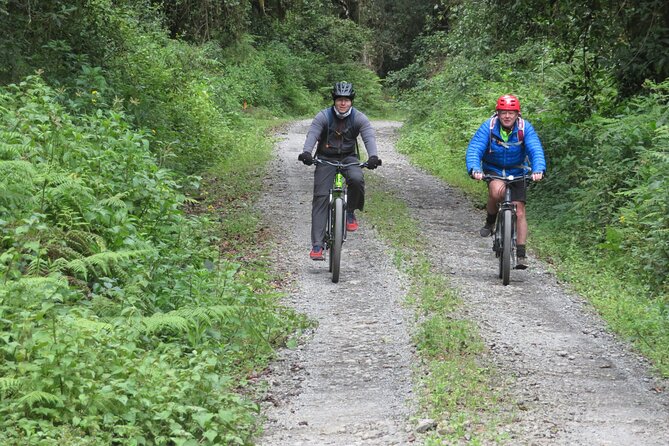
After breakfast, you make the final ride down to Kilema Gate. The route passes through alpine terrain and rainforest, reversing the vegetation changes you saw on the way up.
This descent is shorter on the published schedule, about two hours, but conditions can change the timing. Wet ground, rocks, tired legs, or mechanical problems may slow you down. Enjoy the change in temperature and vegetation, but keep enough attention for the trail.
At Kilema Gate, you transfer to Marangu Gate for checkout. From there, private transport takes you back to your Moshi hotel. The package includes gate transfers and airport pickup and drop-off, although you should confirm exactly how the airport service fits your flight schedule.
What the $3,292 price includes
At $3,292 per person, this is an expensive specialist trip. The price makes more sense if you value a private mountain operation with park fees, transfers, guides, porter support, meals, and accommodation before and after the climb arranged through the operator.
The listed meals cover five lunches, four dinners, and four breakfasts. That matches the five-day mountain schedule, though accommodation details are flexible. Hotel accommodation before and after the trek can be booked directly by you or through the operator.
Private transportation is included for gate transfers and airport pickup and drop-off. All fees and taxes are also included. Those items can add up quickly on Kilimanjaro, so the package offers convenience even if it is not a budget climb.
The important extra cost is the bike. Mountain-bike hire is not included. Flights, visas, medical insurance, and personal climbing gear are also your responsibility. Ask for a precise equipment list and bike specification before booking, especially if you plan to use a rented bicycle.
Bike choice, fitness, and practical preparation
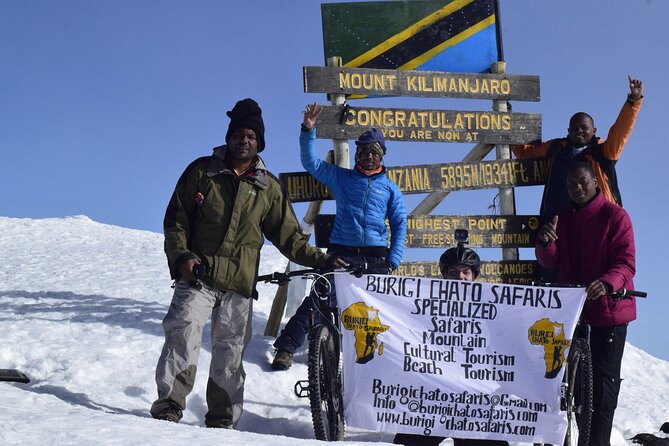
You need moderate physical fitness at minimum, but I would treat the summit day as a serious endurance challenge. You are cycling uphill, hiking at altitude, sleeping in basic huts, and attempting the summit after an early wake-up.
A dependable mountain bike matters. One account advises using a professional bike and specifically warns about flat tires. Carrying repair supplies may be useful, but the operator should explain what spares, tools, and mechanical support are provided.
Pack for changing conditions. You need drinking water, lunch supplies for the day, extra clothing, and personal thermal gear. The information provided does not give a full packing list, so request one before departure.
Do not use the first day to prove anything. Ride steadily, listen to your guide, and save strength for Kibo and the summit. The best cycling skill here is restraint.
Meals, huts, guides, and support
The experienced guide rides with you on the first route section and directs the mountain schedule. Porters carry duffel bags and assist with the bike during sections where riding is not practical. You should ask how the bike is handled on the summit route and what happens if you cannot continue by bike.
The huts are simple. Horombo and Kibo provide bunk-style sleeping arrangements, with Kibo described as holding about 60 climbers. This is mountain accommodation, not a private lodge, so pack patience along with your sleeping bag and warm clothes.
Meals are included, but the supplied information does not give menus or dietary details. If you have food restrictions, tell the operator before arrival and ask what can be provided.
The tour has a strong safety advantage in having guides and porter support, but no mountain operator can remove altitude risk. Medical insurance is not included, so arrange your own cover before you go.
Cancellation and booking details
You receive confirmation at booking. The activity starts at 8:00 a.m., offers pickup, and ends back at the meeting point after the return transfer. Service animals are allowed.
You can cancel for a full refund up to 24 hours before the local start time. Cancellations or changes made inside 24 hours are not refunded or accepted. Poor weather can lead to a different date or a full refund.
Is this five-day bike climb right for you?
Book it if you want a demanding Kilimanjaro ascent with genuine mountain biking, accept that hiking remains central, and are prepared to arrange your own bike or pay for hire. It suits experienced cyclists who enjoy rough trails and want a less ordinary route to Uhuru Peak.
Skip it if you want a relaxed cycling holiday, dislike shared huts, or expect to pedal continuously from gate to summit. The $3,292 cost is easier to justify when you use the included transfers, guides, park fees, meals, and porter services, but bike hire and personal equipment still add to the total.
Before paying, confirm the actual group size, the bike specification, repair support, hut arrangements, airport transfer details, and the full clothing list. If those answers are clear, this is a bold and unusual way to approach Kilimanjaro.
FAQ
How long is the Kilimanjaro bike trek?
The experience lasts approximately five days, with an itinerary running from the Marangu and Kilema gates to the summit area, then back to Moshi.
Which route does the bike trek use?
The bike trek uses the Kilema route, reached after registration at Marangu Gate. The route goes from Kilema Gate toward Horombo and then onward toward Kibo and the summit.
Does the tour include a mountain bike?
No. Mountain-bike hire is not included. You must arrange a bike separately or ask the operator about available rental options.
Is the summit reached entirely by bicycle?
No. The route includes hiking, especially on the steep upper slopes. The itinerary describes taking the bike from porters near Gilman’s Point and riding sections toward Uhuru Peak, but riding every part is not promised.
What meals are included?
The package includes five lunches, four dinners, and four breakfasts.
What is not included in the price?
Flights, personal climbing gear, medical insurance, visas, and mountain-bike hire are not included.
More Five-Day Trips in Kilimanjaro
- Kilimanjaro Climbing 5 days Marangu route
★ 5.0 · 22 reviews - 5 Days Marangu Route Kilimanjaro hiking
★ 5.0 · 13 reviews - Best 5 Days Marangu Route Climbing on Kilimanjaro
★ 5.0 · 12 reviews - Our Top 5-Day Kilimanjaro Marangu Route: 2025 and 2026 Updates
★ 5.0 · 11 reviews
More Trekking Tours in Kilimanjaro
- Kilimanjaro climb by Lemosho Route (7-day)
★ 5.0 · 651 reviews - Kilimanjaro climb, Machame Route (7-day)
★ 5.0 · 262 reviews - 8-Day Small-group Lemosho Kilimanjaro Summit Trekking
★ 5.0 · 186 reviews - Kilimanjaro Climbing Lemosho Route 8 Days.
★ 5.0 · 186 reviews
Just added around Kilimanjaro
- 6 days Machame route climbing Mt.Kilimanjaro★ 5.0 · 8 reviews
- machame route★ 5.0 · 16 reviews
- Mt Kilimanjaro 6 days Marangu route hike★ 5.0 · 3 reviews
- Private Cycle to Kilimanjaro Bike Park Safari★ 5.0 · 6 reviews
- West Kilimanjaro cycling Adventures★ 4.5 · 8 reviews
- Kilimanjaro Climb • Marangu Route ~ 9 Day★ 5.0 · 4 reviews
- 3 Days Private E-Bike Tour in West Kilimanjaro★ 5.0 · 3 reviews
- Kilimanjaro Climb & Safari – Lemosho Route – 13 Day★ 5.0 · 10 reviews
Marangu Route Climbs, compared.
Browse the lists this tour appears in