
Reviewed · MARANGU ROUTE CLIMBS
Kilimanjaro Trek 6 Days Marangu Route
Mount Kilimanjaro’s Marangu Route is the mountain’s most practical path to the summit, thanks to shared mountain huts instead of tents. You start in Moshi, walk through forest and moorland, cross the high Saddle, then make the midnight push to Uhuru Peak at 5,895 meters.
I like the comfort of hut sleeping, the private format, and the fact that a cook, porters, guides, and assistant guides handle the hard logistics. I also like the optional extra acclimatization day, which is a sensible upgrade on a mountain where altitude, not trail length, defeats many strong walkers.
The main drawback is the schedule. The five-day plan moves quickly, and summit day is a punishing 27-kilometer effort with a midnight start. If your budget and time allow, the sixth day is worth serious consideration.
Key points at a glance
- Hut accommodation on every mountain night: You sleep in shared huts, not a tent, with drinks and snacks available to buy at some camps.
- A private climb for your own group: The tour is not a large mixed group, so pacing and daily decisions can be handled around your party.
- Five days, with a sixth day available: The shorter plan is efficient but demanding, while the extra day is intended to improve acclimatization.
- A full support crew: Guides, assistant guides, porters, and a cook are included, along with park, hut, forest, and rescue fees.
- A dramatic summit day: You leave around midnight, pass Hans Meyer Cave and Gillman’s Point, then continue toward Uhuru Peak.
- Strong personal service: Guides Robert and Donovan are named among the team, and the operation is based in Tanzania rather than managed remotely from abroad.
Why the Marangu Route works for some climbers
Marangu is often called the easier Kilimanjaro route because of its gradual trail and hut accommodation. That label can mislead you. The route is less demanding in terms of camping logistics, but the summit day remains hard, and the five-day version gives your body little time to adjust to altitude.
The biggest practical advantage is the huts. You do not need to carry a tent or sleep on the ground. Shared dormitory-style accommodation gives you a roof, a mattress, and shelter from mountain weather. Bring a sleeping bag, though. It is not included, and renting one costs about $40.
At camp, you may be able to buy mineral water, soft drinks, chocolate, and beer. That is useful for topping up supplies, but it should not replace the water plan set by your guide. Bottled water is provided on the first day, and water on the mountain is boiled and filtered.
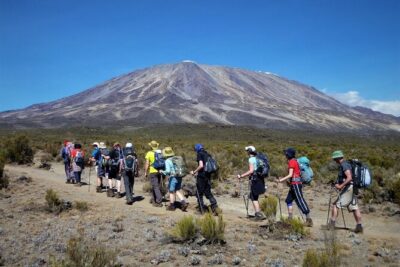
This is a private activity, meaning only your own party participates. That matters on a climb. You can move at the pace your guide recommends without being tied to a large group, and you have a more direct line to the staff if someone feels unwell.
More Marangu Route climbs:
- Kilimanjaro climb, Marangu route (6-day)
★ 5.0 · 72 reviews - Climbing Kilimanjaro – Marangu Route
★ 5.0 · 65 reviews - Private Full Day Hiking Experience to Marangu Route
★ 5.0 · 61 reviews
Moshi preparation and the Marangu Gate
The package includes one hotel night before the climb and one night afterward, with bed and breakfast. Pickup is offered, and the listed start time is 8:30 in the morning. The daily plan says the transfer to Marangu Gate begins around 9, so confirm the exact pickup time with Kilitwende Adventures before the morning of departure.
You receive a briefing before driving to the gate. The trip takes about 45 minutes, followed by registration and park formalities. This is a useful moment to check your daypack, rain protection, water, camera, extra clothing, and skin care items. Your porters carry the larger load, but you still need a small pack for the day.
The first walk covers about 12 kilometers and takes roughly five hours. You gain 720 meters while moving through montane forest toward Mandara Hut. This is a pleasant opening section, but do not treat it as a casual stroll. Starting slowly helps conserve energy for the higher days.
Your support crew is one of the package’s important strengths. Expert guides, assistant guides, porters, and a cook are included. The price also covers park entry, hut fees, forest fees, rescue fees, and 18 percent VAT on tour services. Fair wages are included according to the stated standards of the Kilimanjaro Park Authority and local associations.
Day two, Mandara Hut to Horombo through moorland
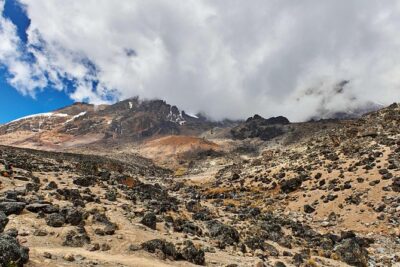
The second day is about 15 kilometers and six hours of walking, with a 1,020-meter climb. You leave the forest behind and enter the moorland zone on the way to Horombo Hut.
A short detour to the rim of Maundi Crater is one of the best small choices in the itinerary. From there, you can look toward Kibo Crater, and clear conditions may reveal Kibo’s glaciers. The detour also gives the day a pause before the trail continues upward.
You carry a picnic lunch, while the cook prepares the main meals included in the program. Three meals a day are provided during the climb, which removes one major chore from your schedule. You still need to budget for drinks and snacks beyond what is supplied or sold at camp.
Horombo is a shared-hut stop, so expect less privacy than you would have in a private tent. That is the tradeoff for avoiding tent camping. If you sleep lightly, earplugs are a practical addition to your packing list, though personal gear is not included in the price.
Day three, across the Saddle toward Kibo
Day three covers another 15 kilometers in around six hours, with nearly 980 meters of ascent. The surroundings become drier and more exposed as you enter the alpine desert zone.
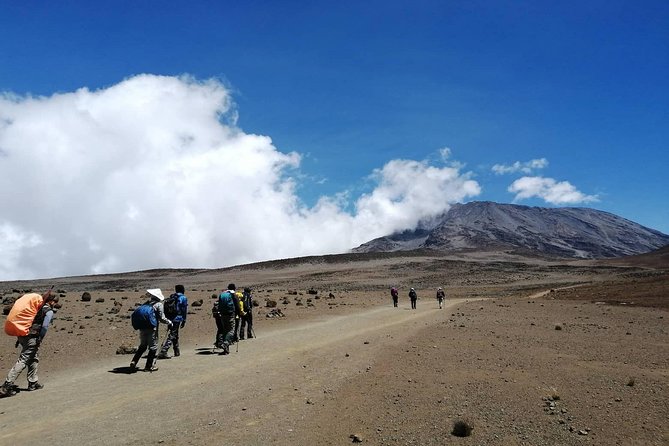
The trail crosses the Saddle between Mawenzi and Kibo. You are advised to take the lower route, which is easier and passes the last watering point before the summit attempt. Take this advice seriously. You need to carry enough water for the high section because the next reliable supply is back at Horombo during the descent.
This is where the pace matters most. The air is thinner, and a fast walk can leave you exhausted before the summit push even begins. Tell your guide about headaches, nausea, unusual tiredness, or breathing trouble. The package includes an oxygen tank for emergencies, but oxygen is not a substitute for careful pacing or a descent when needed.
The listed five-day schedule places you at Kibo before the summit attempt. If you choose the optional sixth day, ask exactly how it will be used. The information describes it as an acclimatization day, but it does not provide a separate route plan. Confirm whether it is spent at Horombo, how meals and hut nights change, and what the extra charge is before booking.
More treks and hikes around Kilimanjaro:
- Kilimanjaro climb by Lemosho Route (7-day)
★ 5.0 · 651 reviews - Kilimanjaro climb, Machame Route (7-day)
★ 5.0 · 262 reviews - Kilimanjaro Climbing Lemosho Route 8 Days.
★ 5.0 · 186 reviews - 8-Day Small-group Lemosho Kilimanjaro Summit Trekking
★ 5.0 · 186 reviews
Day four, the midnight climb to Uhuru Peak
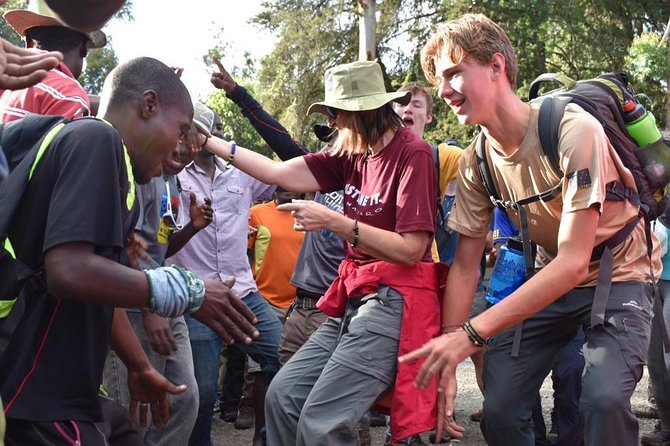
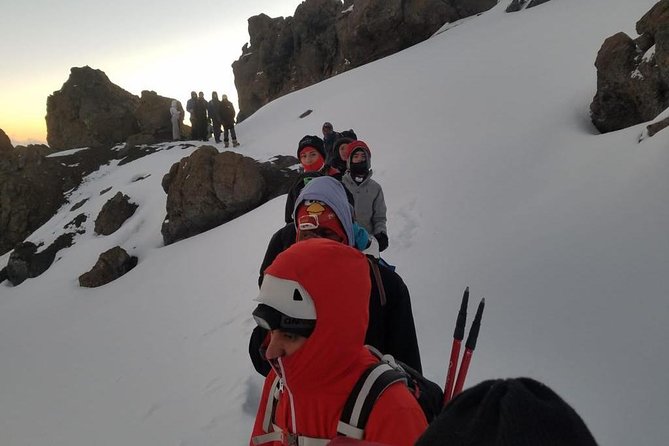
Summit day is the toughest part of the climb. You wake just before midnight and begin up a rocky trail toward Hans Meyer Cave at about 5,150 meters. The first goal is Gillman’s Point, at roughly 5,680 meters, after a steep and stony section.
From Gillman’s Point, the route may be snowy for the next two hours. The final approach to Uhuru Peak is slow, cold, and physically demanding. The listed elevation gain is 1,195 meters, followed by a descent of 2,175 meters, with about 27 kilometers of walking in total.
The schedule awards little time for hesitation, so your preparation matters. Pack warm layers, gloves, a hat, rain protection, a headlamp if your provider does not supply one, and easy-to-reach snacks. Use your daypack wisely. You will not want to stop and reorganize it in the dark.
The guide team’s role is especially important here. The named guides Robert and Donovan have been associated with the company, and the operation also uses assistant guides. The point is not simply to reach the top at any cost. A good guide watches your pace, checks how you are coping, and makes sensible decisions if altitude symptoms become serious.
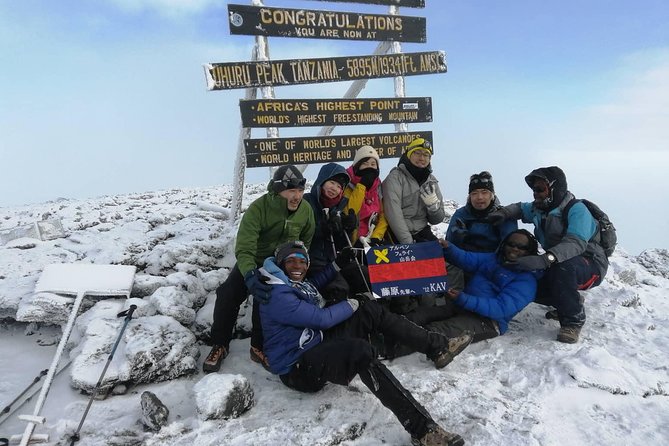
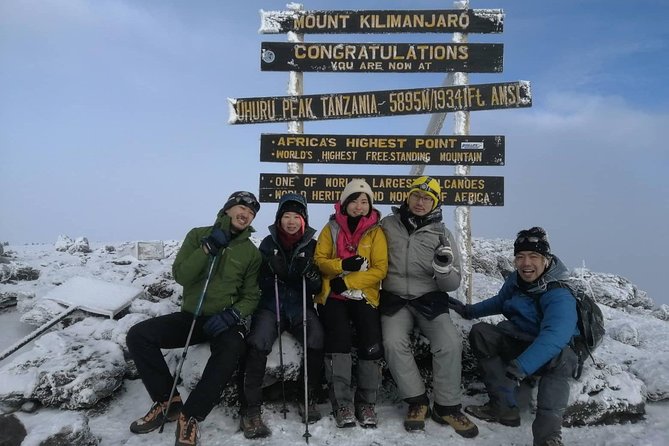
Uhuru Peak is the highest point on Kilimanjaro. If you reach it, you receive a gold summit certificate. Reaching Gillman’s Point earns a green certificate. That distinction is useful because it recognizes progress even if altitude or fatigue prevents the final stretch.
After the summit, you descend to Horombo Hut. This is not a gentle victory lap. Descending on tired legs over loose stone can be hard on knees and ankles, and the long day continues until you reach shelter.
Day five, the long descent to Marangu Gate
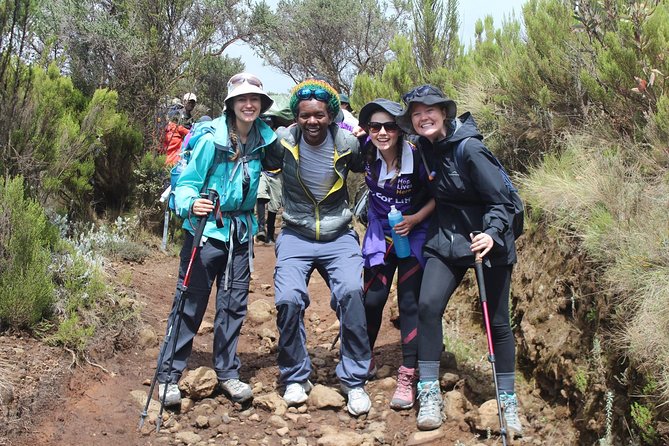
The final day takes about six hours and covers another 27 kilometers, with a descent of about 1,740 meters. You pass through moorland and back into rainforest before reaching Marangu Gate.
At the gate, you sign out and receive your certificate. A road transfer then returns you to your Moshi hotel, where the package includes a second night with bed and breakfast. A hot shower and a proper bed will feel like part of the reward.
This final day is often underestimated. Even if all the uphill walking is finished, the descent can be tiring. Keep your walking poles handy if you use them, protect your knees with a controlled pace, and avoid rushing simply because you can see the finish ahead.
What the $1,846.16 price covers
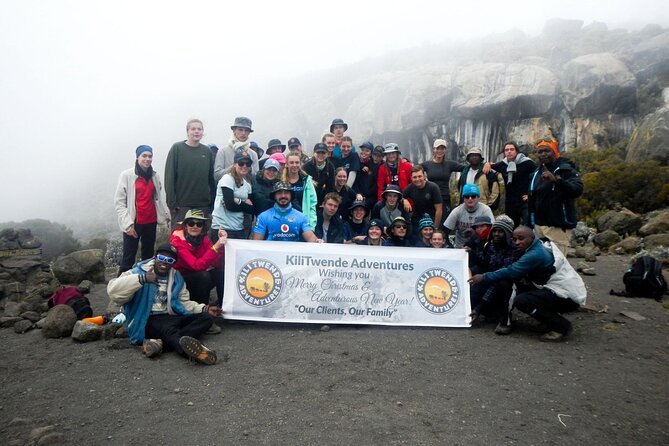
At $1,846.16 per person, this is not a budget walk, but the cost includes far more than guiding. You receive hotel nights before and after the mountain, transfers to and from the gates, meals during the trek, hut accommodation, park charges, rescue fees, and a full crew.
The included staff structure is important. A guide-only trip would leave you handling food, equipment, and mountain permits yourself. Here, a cook manages meals, porters carry group equipment and supplies, and assistant guides support the climb. The stated fair-wage policy also helps explain why a professionally supported Kilimanjaro trip costs more than a simple day hike.
You still need to set aside money for tips. Guides, assistant guides, porters, and the cook are not covered by the listed price in the tipping section. You also pay for personal gear rentals if needed, such as a sleeping bag for $40, duffle bag for $35, hiking boots for $40, and walking sticks for $10.
Flights, visas, insurance, cameras, laundry, and hotel lunches, dinners, and drinks are not included. Add those expenses before deciding that the tour fits your budget.
The gear and fitness question
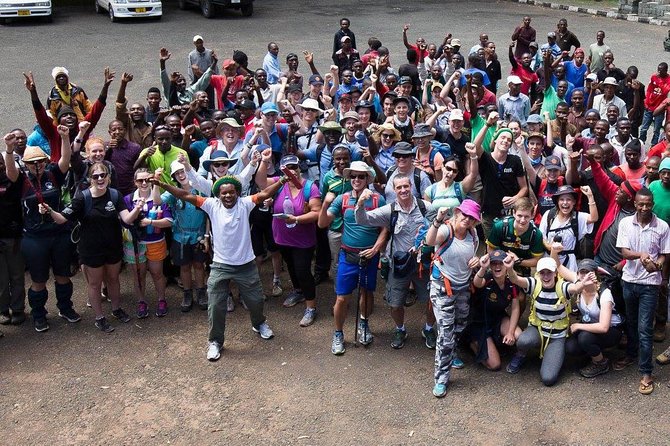
You need a moderate level of physical fitness. This does not mean you must be a technical mountaineer. It does mean you should be comfortable walking for five to ten hours, followed by a very long summit day.
The most important clothing is layered clothing that can handle changing temperatures. The forest can feel very different from the cold summit zone. You also need sturdy hiking boots, rain protection, warm clothing, a sleeping bag, and a small daypack. Missing equipment can be rented in Moshi before the trek.
Do not fill your daypack with everything you own. Porters carry the main luggage, while you carry the items needed for each day. Keep water, rainwear, extra layers, snacks, sunscreen, personal medication, and a camera easy to reach.
Service, communication, and the human side
The company is Kilitwende Adventures, a Tanzanian operator. That local connection can be useful when you need to rent gear in Moshi, arrange transfers, or clarify mountain conditions.
The named guides Robert and Donovan have been specifically associated with successful climbs for the company. The available feedback also points to a supportive style that is caring without feeling overbearing. That balance matters on a private climb, where you spend many hours with the same small team.
The review record is small, with three five-star entries, so I would not treat it as a broad statistical record. Still, the recurring praise focuses on genuine points: reliable equipment and vehicles, dedicated staff, attentive service, and strong guide support. One account specifically praised Robert and Donovan for motivation and assistance during the climb.
Ask practical questions before you pay: Who will lead your group? How many porters are assigned? What does the extra acclimatization day involve? How much luggage may each porter carry? What happens if you need to descend early? Clear answers are more useful than general promises.
Cancellation and booking details
Confirmation is provided at booking, and free cancellation is available until at least 24 hours before the experience start time. Cancellations made less than 24 hours before departure are not refunded, and late changes are not accepted.
The listed meeting time is 8:30 in the morning. Since the daily plan mentions a transfer around 9, confirm the final schedule, hotel pickup point, and exact length of the trip. The main description calls it a five-day climb with a sixth day available, while the product title uses six days. Treat the extra day as an option that needs confirmation, not as an automatic part of every booking.
Should you book this Kilimanjaro climb?
I would choose this tour if you want a private climb with hut accommodation, a full support crew, and a local operator that can help with equipment in Moshi. The Marangu Route is a good fit if you prefer a roof and mattress over tent camping, and if the idea of shared huts does not bother you.
I would not choose the five-day version casually. The summit day is long, the altitude rises quickly, and the schedule gives you little spare time. If you can afford the added day, the acclimatization option is the most sensible improvement.
Before booking, confirm the sixth-day plan, porter arrangements, guide names, gear rentals, and exact pickup time. With those points clear, the $1,846.16 price offers solid value for a fully supported Kilimanjaro climb. You get the mountain, the meals, the huts, the permits, and the people needed to focus on walking steadily toward the summit.
FAQ
How long is the Kilimanjaro Marangu Route experience?
The main itinerary takes five days. An optional sixth day is available for acclimatization, but you should confirm the details and price of that extra day before booking.
Does the tour include hotel accommodation?
Yes. One hotel night before the trek and one night after it are included, with bed and breakfast.
Do I sleep in a tent on the Marangu Route?
No. The Marangu Route uses shared huts at the mountain camps. A sleeping bag is still required and can be rented for about $40.
Are meals included during the climb?
Yes. Three meals a day are provided during the climb. The package also lists four breakfasts, four dinners, and five lunches. Hotel lunches, dinners, and drinks in Moshi are not included.
Is transportation included?
Yes. Transfers to and from the mountain gates are included, and pickup is offered. The listed meeting time is 8:30 in the morning, but confirm the final pickup time with the operator.
What is the cancellation policy?
You can receive a full refund if you cancel at least 24 hours before the experience start time. Cancellations or changes made less than 24 hours before departure are not accepted for a refund.
More Six-Day Trips in Kilimanjaro
- Kilimanjaro climb, Lemosho Route (6-day)
★ 5.0 · 129 reviews - 6 Days Tanzania Classic Safari
★ 5.0 · 52 reviews - The Best of Machame Route in 6 Days: Your World’s Summit Guide
★ 5.0 · 44 reviews - 6 Days Machame Route Kilimanjaro Climbing
★ 5.0 · 42 reviews
Just added around Kilimanjaro
- 6 days Machame route climbing Mt.Kilimanjaro★ 5.0 · 8 reviews
- machame route★ 5.0 · 16 reviews
- Mt Kilimanjaro 6 days Marangu route hike★ 5.0 · 3 reviews
- Private Cycle to Kilimanjaro Bike Park Safari★ 5.0 · 6 reviews
- West Kilimanjaro cycling Adventures★ 4.5 · 8 reviews
- Kilimanjaro Climb • Marangu Route ~ 9 Day★ 5.0 · 4 reviews
- 3 Days Private E-Bike Tour in West Kilimanjaro★ 5.0 · 3 reviews
- Kilimanjaro Climb • Machame Route ~ 10 Day★ 5.0 · 6 reviews
Marangu Route Climbs, compared.
Browse the lists this tour appears in