
Reviewed · MARANGU ROUTE CLIMBS
Kilimanjaro Summit Challenge: 6 Days via Marangu Route
The Marangu Route gives you Kilimanjaro’s classic mountain experience without camping. You walk from rainforest to volcanic alpine desert, sleep in huts, and make the final push for Uhuru Peak at 5,895 meters. The day at Mawenzi Ridge is especially useful because this six-day plan gives your body more time to adjust.
I like the practical hut system and the clear support package, which includes guides, porters, a cook, meals, transfers, and a first-aid kit. I also like the twice-daily health checks described by the company’s mountain team. The drawback is the short schedule: six days is workable, but altitude remains the big challenge, and summit day can last 10 to 14 hours.
Key points to know before you book
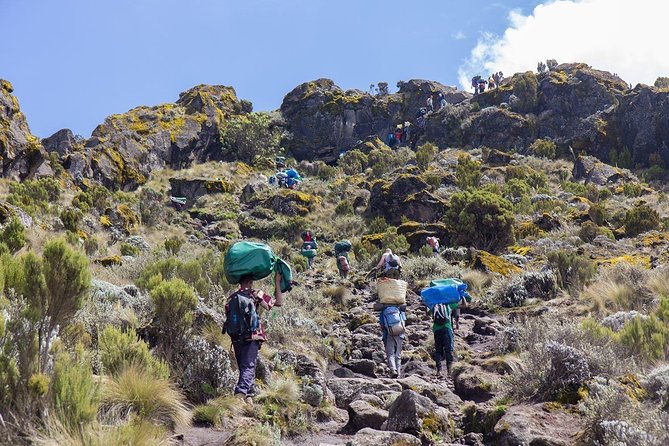
- Sleep in huts instead of tents: Mandara, Horombo, and Kibo Huts provide the basic shelter used along the Marangu Route.
- Acclimatize near Mawenzi: Day three adds a four-hour hike toward Mawenzi Ridge before you return to Horombo Hut.
- Expect a midnight summit start: You’ll climb to Gilman’s Point, continue to Uhuru Peak, then descend first to Kibo and later Horombo.
- The package covers the working essentials: Guides, assistant guides, porters, a cook, wages, meals, water, park charges, taxes, and airport transfers are included.
- Bring or rent your own gear: Personal hiking equipment, medicines, snacks, insurance, flights, visas, and a portable toilet are not included.
- The price reflects full mountain support: At $2,213 per person, the cost is not just for guiding. It also covers the mountain crew, huts, food, transfers, and required fees.
Why the six-day Marangu Route appeals to me
Marangu is often called the Coca-Cola Route because it is the best-known and most established way up Kilimanjaro. The name can make it sound easy. It is not. You still climb from 1,870 meters at Marangu Gate to 5,895 meters at Uhuru Peak, and the final night is physically demanding.
The attraction is its direct route and hut accommodation. You do not carry a tent or sleep on the ground. That makes the trip simpler for anyone who prefers a more defined mountain setup. The route also gives you a striking change of scenery in a short time: thick forest, open moorland, high volcanic desert, and the bare rock and scree around the summit.
The six-day format includes an important acclimatization day at Horombo Hut. You climb toward Mawenzi Ridge, reaching about 4,600 meters, eat lunch near the ridge, and return to Horombo. That extra up-and-down day is more than a sightseeing break. It lets you spend time high on the mountain before summit night, then sleep at a lower altitude.
Still, no itinerary can remove the risks of altitude. The operator includes emergency oxygen for emergencies only, not as a way to help you reach the summit. A basic first-aid kit is also included, and the mountain team checks your health twice a day according to the service details. You should treat those checks as an important safety practice, not a formality.
More Marangu Route climbs:
- Kilimanjaro climb, Marangu route (6-day)
★ 5.0 · 72 reviews - Climbing Kilimanjaro – Marangu Route
★ 5.0 · 65 reviews - Private Full Day Hiking Experience to Marangu Route
★ 5.0 · 61 reviews
Day one: Marangu Gate to Mandara Huts
Your climb begins with a drive from Moshi to Marangu Gate. At the gate, you register and prepare to enter the mountain area. The first walking section covers about 8 kilometers and takes roughly three to four hours, though the full stop is listed at about five hours.
The path runs through dense rainforest. This is the most shaded part of the climb, and you might spot colobus monkeys among the trees. The forest feels very different from the high, dry slopes still ahead, so take time to notice the change rather than rushing through the first day.
Mandara Huts sit at 2,720 meters. This first night gives you a taste of hut life and your first real gain in altitude. The package includes dinner and a place to sleep, along with fresh drinking water and hot water for washing each day.
Keep the first day easy. It is tempting to walk quickly because the distance looks modest, but a slow pace helps you conserve energy and adjust. Ask your guide about the next morning’s timing, and organize your clothing before bed. Small tasks become harder when you are tired and cold.
Day two: Moorland views on the way to Horombo
Day two climbs from Mandara Huts to Horombo Hut, reaching 3,720 meters. The distance is about 12 kilometers, with six to seven hours of walking. You pass through the final part of the forest before the route opens into rolling moorland.
This is where Kilimanjaro begins to feel broad and exposed. Views open toward Kibo and Mawenzi, the two major peaks you’ll see during the climb. The vegetation changes as the trees thin, and the open ground gives you a better sense of how much height you have gained.
Horombo Hut is your base for the night and again after the Mawenzi acclimatization walk. That repeat stay matters. You can leave some items in your hut, hike lighter on day three, and return to a familiar sleeping place.
The included meals are useful here because food planning becomes one less job. Breakfast, lunch, and dinner are included on the relevant mountain days, though snacks and drinks not specified in the package are your responsibility. Carry snacks you know you can eat when your appetite is low.
Day three: The Mawenzi Ridge acclimatization walk
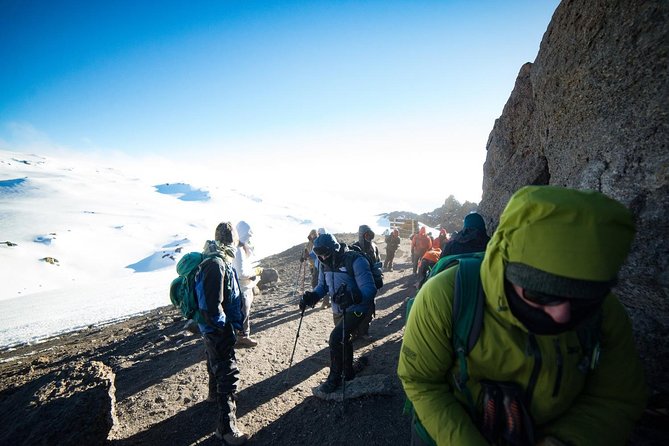
The third day is the smart feature of this schedule. After breakfast at Horombo, you take a day hike toward Mawenzi Ridge, reaching approximately 4,600 meters. The walk takes about four hours, includes lunch near the ridge, and returns to Horombo for dinner and sleep.
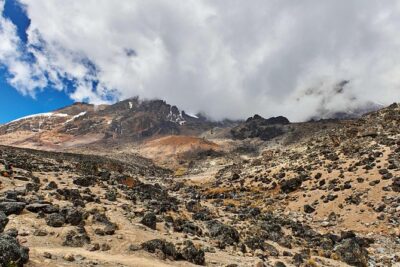
Mawenzi is a jagged volcanic peak, and the ridge gives you a close look at one of Kilimanjaro’s most dramatic high points. The setting is more stark than the forest below, with open moorland and high-altitude rock replacing thick vegetation.
The main value is physiological, not just scenic. You go higher during the day, then come back down to sleep at 3,720 meters. This is the kind of climb high, sleep lower pattern that makes an acclimatization day useful.
Do not treat this as a free day. Four hours at altitude can still tire you, especially after two walking days. Drink the provided water, follow your guide’s pace, and report headaches, nausea, unusual fatigue, or breathing trouble promptly. The mountain team’s health checks are most useful when you give clear information.
More treks and hikes around Kilimanjaro:
- Kilimanjaro climb by Lemosho Route (7-day)
★ 5.0 · 651 reviews - Kilimanjaro climb, Machame Route (7-day)
★ 5.0 · 262 reviews - Kilimanjaro Climbing Lemosho Route 8 Days.
★ 5.0 · 186 reviews - 8-Day Small-group Lemosho Kilimanjaro Summit Trekking
★ 5.0 · 186 reviews
Day four: Crossing the alpine desert to Kibo Hut
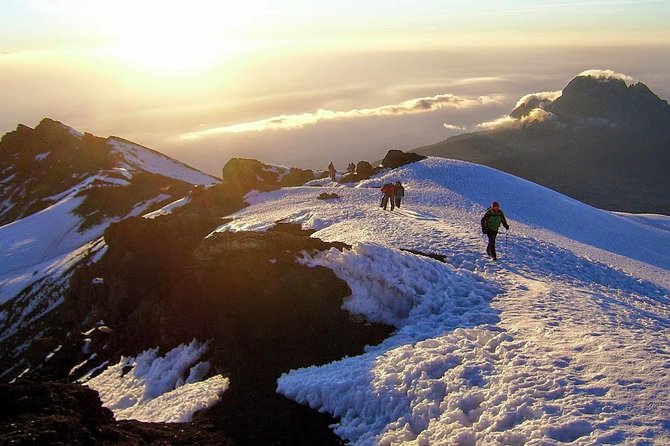
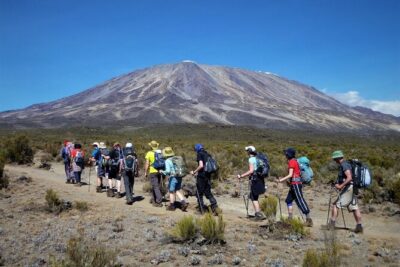
Day four takes you from Horombo to Kibo Hut at 4,703 meters. The route covers about 10 kilometers and takes five to six hours. The surroundings become drier and more severe as you cross the alpine desert toward the summit cone.
There is little shelter on this section, and the terrain can feel mentally harder because the finish is visible but still far away. Kibo Hut is the final overnight stop before the summit attempt. You need to conserve energy, eat what you can, and prepare your summit clothing before resting.
This is the point where your packing choices matter. The tour does not provide personal trekking gear, though some equipment can be rented from trekking shops in Tanzania. Check your boots, warm layers, gloves, headlamp, water containers, and rain protection before leaving Moshi.
A portable toilet is optional but highly recommended by the operator. It costs extra, but you may find the added privacy worthwhile during the hut nights. Personal medicine and water-purifying tablets are also not included, so bring the supplies you normally need.
Day five: The long push to Uhuru Peak
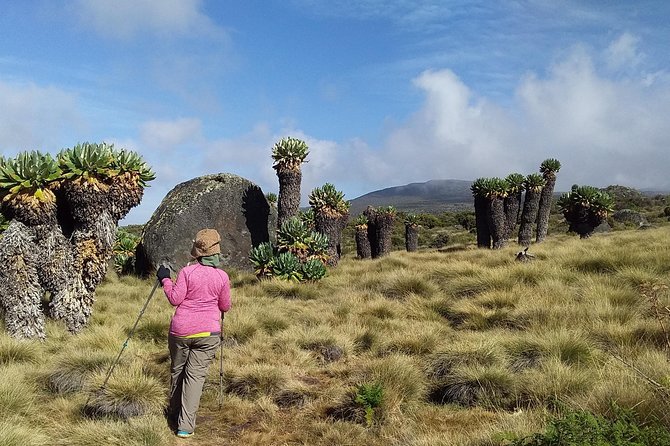
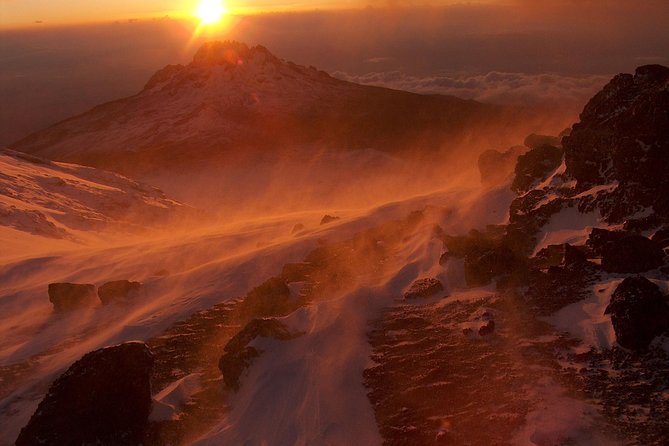
Summit day begins around midnight. From Kibo Hut, you climb steeply over scree and volcanic rock toward Gilman’s Point at 5,685 meters. From there, you continue to Uhuru Peak, the highest point on Kilimanjaro at 5,895 meters.
The listed distance is about 16 kilometers, and the full day can last 10 to 14 hours. That figure includes the ascent, time at the summit, the descent to Kibo Hut for a short rest, and the continued walk to Horombo Hut. It is the hardest day by a wide margin.
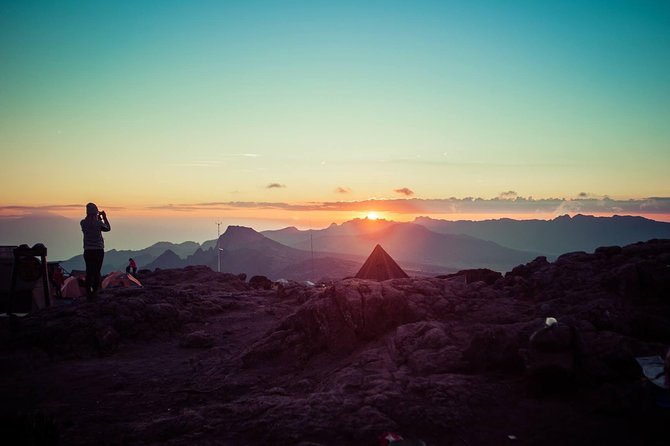
The midnight start is practical. It gives you a chance to reach the crater rim around sunrise, when the views can be at their most striking. It also means you will climb for hours before a normal breakfast, so eat and drink as directed by your guide and keep simple snacks close at hand.
The section to Gilman’s Point is steep and slow. The loose volcanic surface can make each step feel inefficient. Once you reach the point, the route continues toward Uhuru Peak rather than ending there. Your guide will help manage the pace, but you still need to watch your own condition.
At Uhuru Peak, take a short, sensible pause for photographs and the view. High altitude is not the place for a long celebration. Afterward, you descend to Kibo Hut, rest briefly, and continue toward Horombo. That second descent is tiring because your legs have already done the day’s hardest work.
The company says its mountain staff provided gear help, bag assistance when needed, meals, and health checks twice each day. That kind of support can matter greatly on summit day. You should still pack only what you need in your day bag and let the porters handle the main load within the operator’s arrangements.
Day six: A long descent through changing vegetation
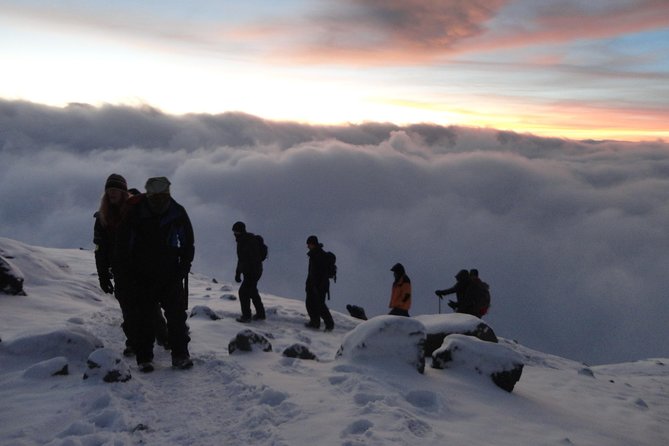
The final day drops from Horombo to Marangu Gate, passing Mandara Hut on the way. The distance is about 20 kilometers, with six to seven hours of walking. You return through the moorland and rainforest, reversing the scenery from the first two days.
A descent can sound easy after the summit, but 20 kilometers is a serious finish. Your knees and feet may be sore, and the trail can feel longer than expected. Use trekking poles if you have them, watch your footing, and tell the guide if pain changes your walking.
At Marangu Gate, you receive summit certificates before returning to Moshi. The package includes a transfer back to Moshi and a return transfer from Moshi to Kilimanjaro Airport. The service also includes airport pickup and drop-off, which simplifies the start and finish of a trip that involves early mornings and tired legs.
The schedule describes a celebratory evening in Moshi. No specific meal or evening program is included, so plan on treating that as free time unless your booking arrangements say otherwise.
What the $2,213 price covers
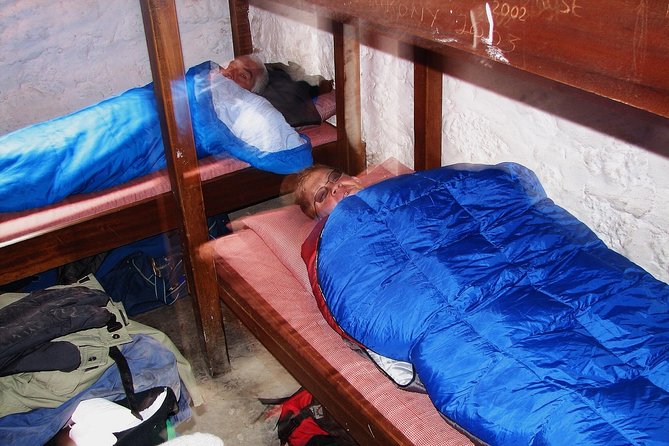
At $2,213 per person, this is a substantial purchase, but the price includes many costs that can add up quickly on Kilimanjaro. You receive a qualified mountain guide, assistant guides, porters, and a cook, with their wages included. You also receive mountain fees and taxes, hut accommodation, fresh drinking water, hot wash water, and the listed meals.
The package includes six lunches, six dinners, and five breakfasts. The meal count is worth checking against your exact start and end arrangements, especially if you arrive early or leave Moshi after the climb. Snacks, unspecified drinks, and extra meals are not part of the stated price.
Airport transfers between Kilimanjaro Airport and Moshi are included in both directions. That is useful because arranging transport after a long international flight, or after the summit, can be a hassle.
The price does not cover flights, visas, travel or health insurance, personal hiking gear, medicine, snacks, or water-purifying tablets. Yellow fever vaccination is listed as compulsory in the tour information. Confirm current entry and health requirements before you travel, since these rules can change.
Group discounts are offered, and the activity is described as private, meaning only your own group participates. That combination may work well for families or friends who want a private climb and can reduce the per-person cost through a group rate.
The human support behind the climb
The strongest practical feature is the mountain crew. You are not simply following a path with a guide. The package includes a lead guide, assistant guides, porters, and a cook, and the cost includes their wages.
The company’s wider Tanzania service has named guides Sele and Abdul, who were praised for helping a family reach the summit. They are not specifically assigned to every booking, so ask before departure if you want to know who will lead your group.
You should expect direct help with pacing, route decisions, gear, food, and health checks. One useful detail from the service record is that the team checked health twice a day and helped with bags and gear when needed. That is exactly the sort of support that becomes valuable when you are cold, tired, or struggling with altitude.
The emergency oxygen is for emergencies only. It is not a substitute for acclimatization, a medical assessment, or a decision to descend. Ask how the guide team handles symptoms and what the evacuation procedure is before the climb begins.
Who should choose this Kilimanjaro trip
This route suits a reasonably fit person who wants a direct six-day climb with hut accommodation and organized support. It also suits first-time high-altitude hikers who prefer not to camp, provided they understand that Kilimanjaro is still a serious physical challenge.
The Mawenzi day makes this plan more appealing than a rushed schedule with no extra acclimatization. Still, six days leaves little spare time if you need to slow down or descend. If altitude has affected you before, ask a medical professional about preparation and consider comparing longer itineraries.
This is a good fit for private groups, families with suitable fitness levels, and friends who want the same guide team and schedule. It is less suitable if you want a relaxed walking holiday, short daily stages, or a guaranteed summit. No responsible operator can guarantee the summit because health and altitude conditions control the final decision.
You can cancel at least three full days before the start time for a full refund. Cancellations or changes inside that period are not accepted for a refund, and the cut-off follows local time.
Should you book the six-day Marangu climb?
Book it if you want Kilimanjaro’s classic route, hut accommodation, a private group setting, and a package that handles the major mountain costs. The Mawenzi acclimatization hike and the included mountain crew are the best reasons to choose this particular schedule.
Before paying, confirm the exact guide names, hut arrangements, meal timing, equipment rental options, group discount, and airport transfer details. Prepare seriously for summit day, especially the midnight start and the long descent afterward.
I would choose this trip if the Marangu Route appeals to you and you value simple logistics over a longer, slower climb. I would compare other routes first if your top priority is extra acclimatization time, quieter trails, or more flexible summit preparation.
FAQ
Where does the Kilimanjaro climb start and end?
The activity starts in Moshi Urban, Tanzania, and ends back at the meeting point after the descent. Airport transfers between Kilimanjaro Airport and Moshi are included.
How long is the experience?
The climb lasts approximately six days. The daily walking times range from about three to seven hours, except for summit day, which can take 10 to 14 hours.
Which Kilimanjaro route does this trip use?
The trip uses the Marangu Route, also known as the Coca-Cola Route. It is a well-established route with hut accommodation.
Where do you sleep during the climb?
You sleep at Mandara Huts, Horombo Hut, and Kibo Hut. The itinerary returns you to Horombo Hut after the Mawenzi acclimatization hike and after the summit descent from Kibo.
Is there an acclimatization day?
Yes. Day three is an acclimatization hike toward Mawenzi Ridge at about 4,600 meters. You have lunch near the ridge and return to Horombo Hut to sleep.
What is the highest point reached?
The highest point is Uhuru Peak, at 5,895 meters, or 19,341 feet. The summit attempt begins around midnight from Kibo Hut.
Are meals included?
The package includes six lunches, six dinners, and five breakfasts. Meals and drinks not specifically listed, along with snacks, are not included.
Is hiking equipment included?
No. Personal hiking and trekking gear is not included, although some gear can be rented from trekking equipment shops in Tanzania. Personal medicine, snacks, and water-purifying tablets are also not included.
Is the tour private?
Yes. The activity is described as a private tour, so only your group participates. Group discounts are offered.
More Six-Day Trips in Kilimanjaro
- Kilimanjaro climb, Lemosho Route (6-day)
★ 5.0 · 129 reviews - 6 Days Tanzania Classic Safari
★ 5.0 · 52 reviews - The Best of Machame Route in 6 Days: Your World’s Summit Guide
★ 5.0 · 44 reviews - 6 Days Machame Route Kilimanjaro Climbing
★ 5.0 · 42 reviews
Just added around Kilimanjaro
- 6 days Machame route climbing Mt.Kilimanjaro★ 5.0 · 8 reviews
- machame route★ 5.0 · 16 reviews
- Mt Kilimanjaro 6 days Marangu route hike★ 5.0 · 3 reviews
- Private Cycle to Kilimanjaro Bike Park Safari★ 5.0 · 6 reviews
- West Kilimanjaro cycling Adventures★ 4.5 · 8 reviews
- Kilimanjaro Climb • Marangu Route ~ 9 Day★ 5.0 · 4 reviews
- 3 Days Private E-Bike Tour in West Kilimanjaro★ 5.0 · 3 reviews
- Kilimanjaro Climb • Machame Route ~ 10 Day★ 5.0 · 6 reviews
Marangu Route Climbs, compared.
Browse the lists this tour appears in