
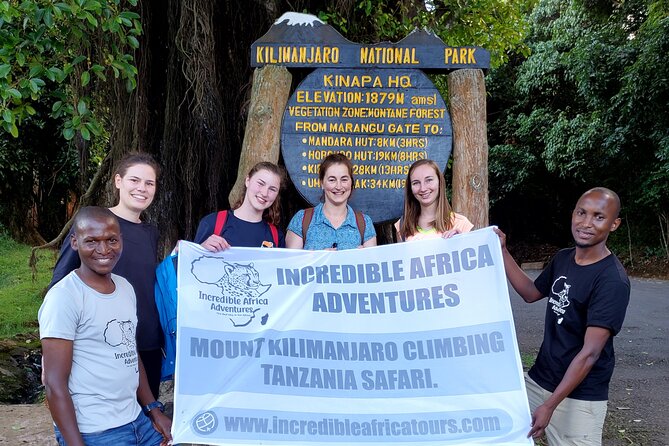
Reviewed · MARANGU ROUTE CLIMBS
Kilimanjaro Climb – 6 Days Marangu Route
Kilimanjaro’s Marangu Route is the mountain’s shortest popular path, and its permanent sleeping huts make it simpler than a tent-based climb. You walk through rainforest, moorland, and high desert before a demanding summit night from Kibo Hut to Uhuru Peak.
I like the full acclimatization day at Horombo, which gives your body a needed pause before the high camp. I also like the practical package: airport transfers, park fees, meals, guides, porters, oxygen, and first-aid equipment are included. The catch is clear: six days is a tight schedule, with a steep summit push and less time to adjust to altitude than longer routes offer.
Key points to know before you book
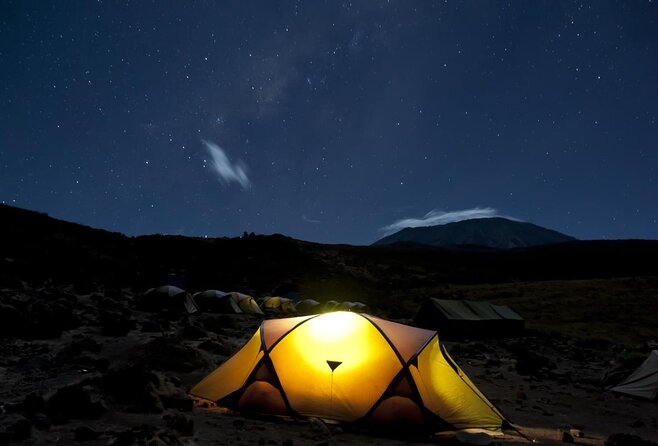
- Permanent huts: Sleep indoors at Mandara, Horombo, and Kibo rather than carrying or sleeping in a tent.
- One rest day: Day three at Horombo includes short guided hikes to help with acclimatization.
- Steep summit night: From Kibo Hut, you climb at night toward Gilman’s Point and Uhuru Peak.
- Same route up and down: Marangu uses one corridor in both directions, so the trail can feel busier.
- Private group format: Only your own group takes part in the activity.
- Strong support package: Three hot meals a day, porters, guides, a cook, oxygen, an oximeter, and first-aid supplies are provided.
What the six-day Marangu climb is really like
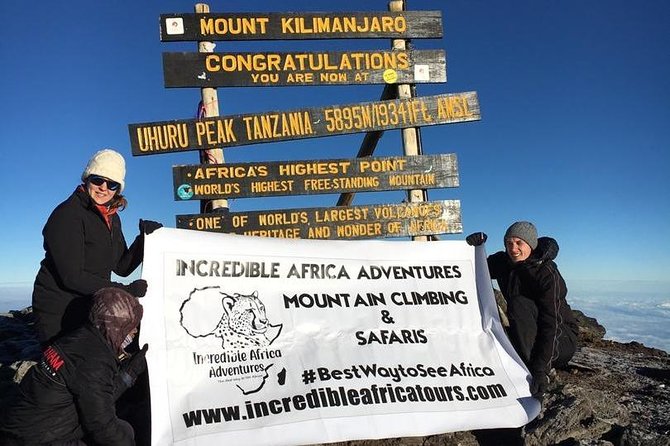
This is not a casual high-altitude walk. The first days are manageable for someone in good shape, but the summit section is a serious physical test. You gain about 4,000 meters from Marangu Gate to Uhuru Peak, then lose much of that height on the way down.
The route is often called the Coca Cola Route because it is shorter and more direct than several alternatives. That convenience comes with a tradeoff. You spend fewer days on the mountain, but your body has less time to adjust to thin air. The permanent huts are useful, yet they do not remove the effects of altitude.
The trip begins with arrival at Kilimanjaro International Airport. A private transfer takes you to your hotel in Moshi or Arusha, and the head guide meets you for a briefing. This is when you discuss the route, check your gear, and arrange any equipment hire you still need.
That first meeting matters. You should use it to ask about the pace, the summit schedule, clothing, and what you still need to rent. Since the climb requires strong physical fitness, this is not the time to discover that your boots, warm layers, or sleeping setup are unsuitable.
More Marangu Route climbs:
- Kilimanjaro climb, Marangu route (6-day)
★ 5.0 · 72 reviews - Climbing Kilimanjaro – Marangu Route
★ 5.0 · 65 reviews - Private Full Day Hiking Experience to Marangu Route
★ 5.0 · 61 reviews
Day 1: Marangu Gate to Mandara Huts through rainforest
The first trekking day covers about 7 kilometers and takes four to five hours. You gain roughly 950 meters, ending at Mandara Hut at 2,750 meters.
The lower route passes through rainforest, which gives the opening day a green, shaded feel. It is a good introduction to the mountain because the pace is steady and the altitude gain, while noticeable, is not yet extreme.
Your first night is in one of Marangu’s permanent huts. That is the route’s main practical advantage from the start. You do not need to pitch a tent, and the hut system gives the climb a more structured feel.
Still, do not race through this day because it feels easy. A slow pace helps you conserve energy for the days ahead. Eat well, drink regularly, and treat the first night as part of the altitude plan, not just a stop for sleep.
Day 2: Mandara Huts to Horombo Huts and the moorland
Day two is longer, at about 11 kilometers and five to six hours. You climb another 1,030 meters to Horombo Hut, which sits at approximately 3,780 meters.
The rainforest gives way to moorland. The vegetation becomes lower and more open, and the changing scenery makes this one of the most satisfying transition days on the route. You can feel the mountain opening around you as the trees thin out.
Horombo is important because you spend two nights here. The hut is both a stopping point and the base for your acclimatization day. By this stage, you may notice that the climb is no longer just a matter of leg strength. Sleep, appetite, breathing, and headache symptoms can all affect how you feel.
The listed walking times are estimates, not a race schedule. Your guide should set a measured pace, and you should tell the guide promptly if you feel unwell. Quietly pushing through symptoms is a poor strategy at altitude.
Day 3: A necessary acclimatization day at Horombo
The third day is the best feature of this six-day plan. You stay at Horombo, rest, and take short guided hikes in the area to help your body adjust before the move to Kibo Hut.
This day can feel deceptively easy. You may be tempted to sleep late and do nothing, but the planned short walks give your body some activity without the burden of a full trekking day. They also help break up the climb before the hardest section.
Use the extra time sensibly. Check your personal gear, organize your daypack, eat as well as you can, and rest. Your next destination is Kibo Hut at 4,700 meters, where the air is much thinner and the summit attempt begins.
The hut stay does not guarantee that you will acclimatize well. The schedule is still compact, and the summit success rate on this route tends to be lower than on longer routes. That is the central compromise of choosing Marangu in six days.
More treks and hikes around Kilimanjaro:
- Kilimanjaro climb by Lemosho Route (7-day)
★ 5.0 · 651 reviews - Kilimanjaro climb, Machame Route (7-day)
★ 5.0 · 262 reviews - Kilimanjaro Climbing Lemosho Route 8 Days.
★ 5.0 · 186 reviews - 8-Day Small-group Lemosho Kilimanjaro Summit Trekking
★ 5.0 · 186 reviews
Day 4: Horombo to Kibo Hut across the high desert
Day four covers about 12 kilometers in five to six hours, with a gain of roughly 920 meters. You leave Horombo and cross the high, dry section known as the desert before reaching Kibo Hut at 4,700 meters.
This is a steady, exposed day. There is no need to hurry, and you should expect the altitude to affect your pace. The distance is not extreme on paper, but the height makes ordinary walking feel more demanding.
Kibo Hut is the launch point for the summit. Once you arrive, the main job is to eat, prepare your clothing and daypack, and rest before the night climb. The schedule gives you only a short window before the summit attempt, so keep your evening quiet and practical.
The support team is a major part of the value here. Professional guides, a cook, and porters accompany the climb, and three hot meals a day are included while you are on the mountain. A cook associated with this operator is named King, and the mountain kitchen team has been specifically praised for keeping people well fed. Food matters more than it might on a normal trek because you are using energy constantly in cold, thin air.
Day 5: Kibo Hut to Uhuru Peak, then down to Horombo
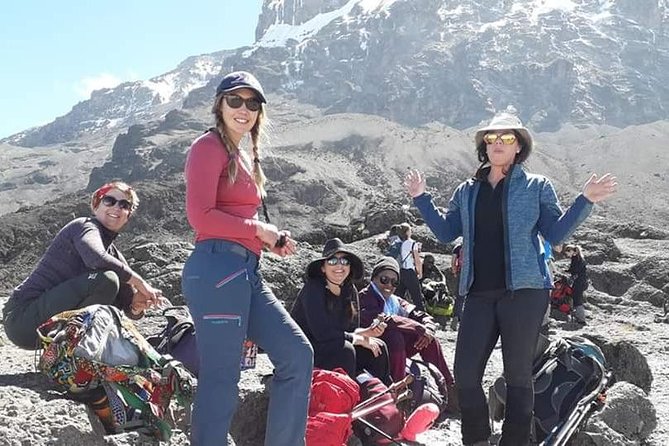
Summit day begins from Kibo Hut. The climb to the top takes about six to eight hours, covers around 7 kilometers, and gains another 1,145 meters.
The route is steep and includes Gilman’s Point before continuing toward Uhuru Peak, the summit of Kilimanjaro. The plan is to spend a short time at the top, then begin the descent. The schedule is tough because you are climbing during the coldest and most tiring part of the trip, then continuing downhill for hours.
After the summit, you descend about 12 kilometers over five to six hours, losing roughly 2,175 meters, and return to Horombo Hut. This is an enormous day. Reaching the summit is only part of it, and tired legs can make the descent feel surprisingly hard.
You need to take the guide’s instructions seriously here. The provided oxygen, oximeter, and emergency first-aid kit are useful safety provisions, but they are not a substitute for good preparation or sound decisions. No one can promise a summit result, and altitude symptoms must be handled carefully.
The strongest praise connected with this operator focuses on the human support. Octavian, associated with the company, is noted for arranging customized support, while guides named Alex, Rafael, and Manme are described as attentive and professional. You should confirm your assigned team before departure, but the guiding setup is clearly an important part of the experience.
Day 6: Horombo Hut to Marangu Gate
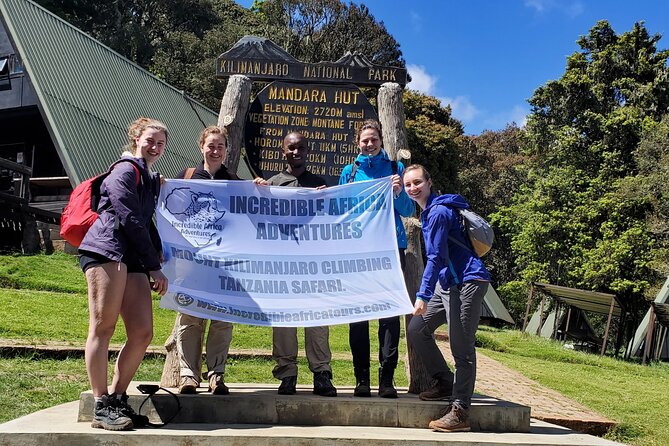
The final day covers about 18 kilometers and takes five to seven hours. You lose around 1,878 meters on the way back to Marangu Gate.
This is a long descent through the lower parts of the route. Your knees and feet may be more tired than expected, especially after summit day. Keep your pace controlled and use trekking poles if they are part of your personal kit.
At Marangu Gate, you receive your Kilimanjaro summit certificate. Afterward, a transfer takes you back to your hotel in Moshi or Arusha.
The certificate is a nice finish, but the more useful reward is having the entire route behind you. The last day also gives you a clear reason to avoid overpacking. Porters carry the main load, but you still need a manageable daypack with water, personal items, and the layers you need during the day.
What the $2,200 price covers
At $2,200 per person, this is not a cheap mountain holiday, but the price includes many major costs:
- Private transport to and from Kilimanjaro International Airport
- Hotel accommodation connected with the arrival and return
- Park fees and taxes
- Three hot meals daily while on the mountain
- Professional mountain guides, a cook, and porters
- Portable oxygen, an oximeter, and an emergency first-aid kit
That package makes the price easier to assess. Park fees alone can form a large part of a Kilimanjaro climb, and the crew, food, transport, and safety equipment add real value. You are paying for an organized mountain operation rather than simply a walking guide.
You still need to budget for hotel lunches, dinners, and drinks before and after the climb. Travel insurance, personal items, toiletries, and tips for the guides, porters, and cook are also outside the listed price.
Tips deserve planning. The crew does much of the physical work that makes the climb possible, so carry enough money for this separate cost. The exact amount is not provided here, and you should ask the operator for current guidance before departure.
Who should choose this route?
I would point you toward this trip if you have limited time and want the shortest standard route with hut accommodation. The private format also suits you if you prefer your own group rather than joining a large mixed party.
The route is a reasonable fit for someone with strong physical fitness who wants a structured climb and does not want to sleep in tents. The acclimatization day at Horombo helps, and the included crew reduces the amount of practical work you must handle yourself.
I would think twice if your main goal is to give yourself the best possible altitude adjustment. A longer Kilimanjaro route provides more time, while this six-day version asks you to gain height quickly. The summit night is particularly demanding, and the same trail is used for both ascent and descent, which can mean more traffic.
You should also be comfortable with a private activity that follows a fixed mountain schedule. The operator can customize support needs, but the altitude and terrain set hard limits on how flexible the climb can be.
Practical details before departure
Pickup is offered, and the stated meeting point is Kilimanjaro International Airport in Tanzania. Confirmation is received at booking, and the activity is listed as being near public transportation, though the included private airport transfer is the more useful option for this trip.
The experience is generally booked about 18 days in advance. That is not a rule, but it gives you a sensible planning target. You need time to arrange flights, insurance, clothing, personal equipment, and any required rental items.
Cancellation is free up to 24 hours before the experience begins. Cancellations or changes made inside that window are not refunded or accepted. The local cut-off time applies.
The climb also depends on weather and a minimum number of participants. If poor weather cancels the activity, you are offered another date or a full refund. If the minimum number is not reached, you are offered another date or experience, or a full refund.
Should you book this six-day climb?
Book it if your priorities are limited time, hut sleeping, private organization, and a full support crew. The itinerary gives you a real shot at Kilimanjaro without stretching the trip beyond six mountain days, and the Horombo rest day is a valuable part of the plan.
Do not book it simply because it is the shortest option. The quick altitude gain and hard summit night make it less forgiving than longer routes. If you are fit, prepared, and realistic about the physical challenge, the Marangu Route offers a direct and well-supported way to reach Uhuru Peak. If acclimatization time matters most, look for a longer itinerary instead.
FAQ
How long is the Kilimanjaro Marangu Route experience?
The climb lasts approximately six days. It includes the mountain trek, an arrival transfer and hotel accommodation, and a return transfer after you reach Marangu Gate.
Where does the experience begin?
The stated meeting point is Kilimanjaro International Airport in Tanzania. Private transport to and from the airport is included.
Where do you sleep on the mountain?
You sleep in permanent huts at Mandara Hut, Horombo Hut, and Kibo Hut. This is a key feature of the Marangu Route.
Is there an acclimatization day?
Yes. Day three is spent at Horombo Hut, with time to rest and short guided hikes in the surrounding area to help with acclimatization.
How difficult is the climb?
You should have a strong physical fitness level. The summit section is steep, and day five combines the climb from Kibo Hut to Uhuru Peak with a long descent to Horombo Hut.
Are meals included?
Three hot meals daily are included while you are on the mountain. Hotel lunches, dinners, and drinks before and after the climb are not included.
What safety equipment is provided?
The package includes portable oxygen tanks, an oximeter, and an emergency first-aid kit. Professional mountain guides, a cook, and porters also accompany the climb.
Is this a private tour?
Yes. Only your own group participates in the activity.
What happens if the climb is canceled?
If poor weather causes cancellation, you are offered a different date or a full refund. If the minimum number of participants is not met, you are offered a different date or experience, or a full refund.
More Six-Day Trips in Kilimanjaro
- Kilimanjaro climb, Lemosho Route (6-day)
★ 5.0 · 129 reviews - 6 Days Tanzania Classic Safari
★ 5.0 · 52 reviews - The Best of Machame Route in 6 Days: Your World’s Summit Guide
★ 5.0 · 44 reviews - 6 Days Machame Route Kilimanjaro Climbing
★ 5.0 · 42 reviews
Just added around Kilimanjaro
- 6 days Machame route climbing Mt.Kilimanjaro★ 5.0 · 8 reviews
- machame route★ 5.0 · 16 reviews
- Mt Kilimanjaro 6 days Marangu route hike★ 5.0 · 3 reviews
- Private Cycle to Kilimanjaro Bike Park Safari★ 5.0 · 6 reviews
- West Kilimanjaro cycling Adventures★ 4.5 · 8 reviews
- Kilimanjaro Climb • Marangu Route ~ 9 Day★ 5.0 · 4 reviews
- 3 Days Private E-Bike Tour in West Kilimanjaro★ 5.0 · 3 reviews
- Kilimanjaro Climb • Machame Route ~ 10 Day★ 5.0 · 6 reviews
Marangu Route Climbs, compared.
Browse the lists this tour appears in