
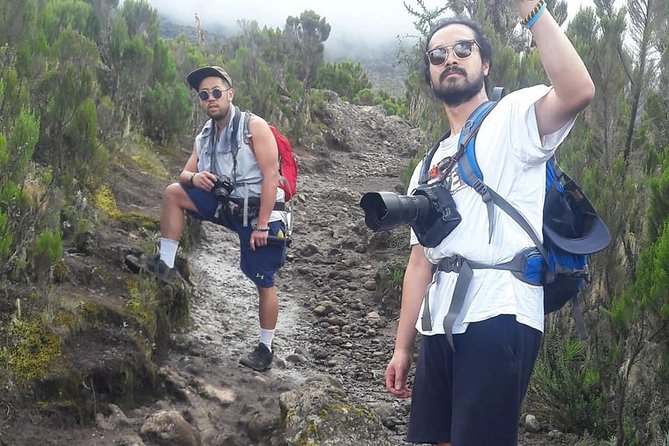
Reviewed · MARANGU ROUTE CLIMBS
Climb Kilimanjaro via Marangu Route 6 Days
Kilimanjaro’s Marangu Route gives you a clear six-day path to Uhuru Peak, Africa’s highest point, without camping every night. You’ll walk from rainforest to moorland, cross the stark saddle between Mawenzi and Kibo, then make the hard push to 5,895 meters. The route is steady, but the altitude is not a small matter.
I like the extra acclimatization day at Horombo Huts, and I like the simple hut-based plan. The named crew members connected with this operator include guides Seleman Honguo and Allen Katunzi, while Joachim is praised for his cooking and David for personal attention. The main caution is the altitude, plus a few details that need confirming before you pay: the description mentions both Marangu and Machame, and the sleeping arrangements list both huts and tents.
Key points to know before booking
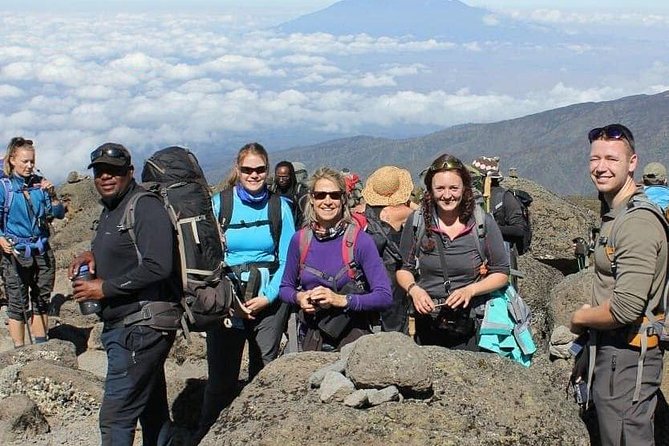
- The route is Marangu, not Machame: The day-by-day plan uses Marangu Gate, Horombo Huts, Kibo Huts, and the rainforest descent.
- You get an acclimatization day: Day 3 at Horombo gives your body time to adjust before the high crossing to Kibo.
- The summit comes at 5,895 meters: Expect the toughest section near the top, with possible snow and very cold conditions.
- The price is $1,800 per person: Park fees, meals, crew wages, taxes, sleeping equipment, and transport support are included.
- It is a private activity: Only your group participates, which can make pacing and rest stops more flexible.
- Clarify the equipment details: The plan names mountain huts, while the inclusions mention three-season tents and sleeping mats.
Marangu Route or Machame Route?
The most important point is to make sure you are booking the right climb. The title and itinerary describe the Marangu Route, which starts at Marangu Gate on Kilimanjaro’s southeast side. The opening overview, however, describes Machame, also called the Whiskey Route. Machame is a different route, with longer walking days, steeper sections, and camping rather than the hut pattern shown here.
For this review, the usable six-day plan is clearly Marangu. You begin at Marangu Gate, sleep around Horombo and Kibo, reach Uhuru Peak, then return through the rainforest to the same gate. Ask the operator to confirm the route in writing before departure. A simple check can prevent a very large packing and expectation error.
Marangu is often chosen because the path is more direct and the nights are planned in huts. That does not make it easy. You still reach nearly 6,000 meters, and the summit attempt follows a long approach to Kibo. The mountain tests your breathing, sleep, legs, and patience more than your ability to scramble over technical rock.
More Marangu Route climbs:
- Kilimanjaro climb, Marangu route (6-day)
★ 5.0 · 72 reviews - Climbing Kilimanjaro – Marangu Route
★ 5.0 · 65 reviews - Private Full Day Hiking Experience to Marangu Route
★ 5.0 · 61 reviews
Day 1: Marangu Gate to the rainforest
After breakfast, you leave Moshi for Marangu Gate. The stated start time is 12:00 am, but the itinerary also says you leave after breakfast, so confirm the actual pickup hour. Pickup is offered, and the tour is private, which should make the transfer simpler for your own group.
At the gate, you check in and register before starting the walk. The first day passes through eucalyptus trees and rainforest, with birds and the possibility of seeing a black-and-white colobus monkey. You may also encounter wet, muddy ground, so waterproof footwear and sensible socks matter.
The walking time is listed as five to seven hours, with an overnight altitude of about 8,858 feet, or roughly 2,700 meters. That is a full first day, but the forest gives you shade and a gradual introduction to the route.
The practical challenge is not distance alone. Mud can slow you down, and damp gear becomes unpleasant quickly. Keep rain protection easy to reach rather than buried at the bottom of your bag. You should also use this day to notice how your body feels, since the next stages rise much faster.
Day 2: Moorland views and Horombo Huts
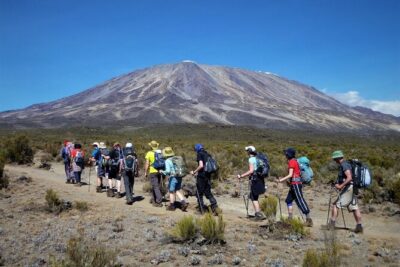
Day 2 leaves the last woodland behind and opens onto heath and moorland. The scenery changes quickly, and Mawenzi’s jagged peaks begin to dominate the view. This is one of the strongest parts of the route because you can see the mountain’s volcanic character rather than walking through trees all day.
The walk takes five to seven hours, ending at Horombo Huts at about 12,205 feet, or approximately 3,720 meters. Altitude sickness can begin around here. Headache, unusual tiredness, nausea, and poor coordination are reasons to tell your guide immediately. Do not treat silence as toughness. On a mountain, early information gives the crew more choices.
At Horombo, you have time to unpack, rest, and look toward Kibo before dinner. The hut setting is a practical advantage over carrying a tent and building camp each night, though the available sleeping arrangement should be confirmed because the inclusions also mention three-season tents and double-layer sleeping mats.
Day 3: The Horombo acclimatization day
The extra day at Horombo is one of the smartest features of this schedule. You remain at roughly 14,400 feet, or about 4,390 meters, and give your body time to adjust before heading toward Kibo. This day is not wasted time. It is part of the summit plan.
If you feel well, the itinerary allows a walk toward Mawenzi Hut to see both Kibo and Mawenzi. Another option is Zebra Rocks, which involves a 310-meter climb. The stated walking time is only one to two hours, so the day is meant to be controlled rather than heroic.
If you feel sick or unusually tired, rest at camp. The route specifically advises staying put when altitude symptoms appear. That is good mountain judgment. You should not feel pressured to use every optional walk simply because it is available.
This is also a useful day to organize warm clothes, check footwear, and ask your guide about the next two stages. The stronger reviews connected with the operator highlight friendly, professional support from people including Seleman Honguo and Allen Katunzi. Still, your own guide assignment should be confirmed, since the names may not describe every departure.
More treks and hikes around Kilimanjaro:
- Kilimanjaro climb by Lemosho Route (7-day)
★ 5.0 · 651 reviews - Kilimanjaro climb, Machame Route (7-day)
★ 5.0 · 262 reviews - Kilimanjaro Climbing Lemosho Route 8 Days.
★ 5.0 · 186 reviews - 8-Day Small-group Lemosho Kilimanjaro Summit Trekking
★ 5.0 · 186 reviews
Day 4: Across the high saddle to Kibo Huts
Day 4 takes you across the dry highlands between Mawenzi and Kibo. Heath gradually gives way to alpine desert, with volcanic rocks scattered across the open ground. There is little cover here, and the surroundings feel spare and exposed.
The walk lasts five to seven hours. The final approach to Kibo Huts is steep and physically demanding, finishing at about 15,430 feet, or approximately 4,700 meters. This is where your pace matters. Slow, steady walking is more useful than trying to prove you are strong early in the day.
At Kibo, prepare for the summit attempt before dinner. Set out your warm layers, headwear, gloves, and any personal items you will need. Keep drinking water in a thermos so it is less likely to freeze. The plan tells you to sleep early, though many people find sleep difficult at this height. The important point is to rest as much as possible and conserve energy.
This is the point where the six-day schedule becomes serious. The extra Horombo day helps, but it cannot remove the physical strain of high altitude. A strong fitness level is required, and you should be honest with your guide about how you feel.
Day 5: Uhuru Peak and the long descent
The summit day takes you toward Uhuru Peak at 5,895 meters, the highest point in Africa. Snow may appear on the final section depending on conditions. The reward is the summit sign and wide views from the top, assuming your body and the weather allow you to reach it.
The published hiking time for this day is four to five hours, followed by a return to Kibo Huts and then Horombo Huts. That timing appears unusually short for the full summit schedule described, so ask for the operator’s detailed summit timetable. The itinerary itself presents the day as a summit climb, a return to Kibo for lunch, and a further descent to Horombo for the night.
The descent from Uhuru to Kibo is described as moving quickly, but it still requires care. Loose volcanic ground can be tiring on the knees, and altitude can affect balance and judgment. Eat at Kibo, drink steadily, and keep enough warmth for the continued walk to Horombo.
Sleeping at Horombo after the summit gives you a much better night than remaining at Kibo. It also sets up the final descent through the forest. You should expect Day 5 to be the hardest day, even if the listed walking time does not fully explain every section.
Day 6: Rainforest descent and return to town
The final day returns through the rainforest to Marangu Gate. The stated walking time is five to seven hours. After lunch, you say goodbye to the mountain crew and leave Kilimanjaro National Park.
The schedule then calls for a drive back to Arusha for a shower and commemorative dinner. The tour is based in Moshi, so confirm the exact drop-off plan and town before departure. The supplied information gives both Moshi and Arusha as reference points, and that distinction matters if you have a hotel, flight, or onward transfer waiting.
The descent is easier on your lungs than the summit approach, but tired legs can make it feel long. Take care on wet ground and do not rush simply because the altitude is dropping. This final forest walk also gives you a last look at the changing plant life that makes Marangu more varied than the summit slopes alone suggest.
What the $1,800 price covers
At $1,800 per person, the trip is not a budget day hike. It includes Kilimanjaro fees and taxes, 18 percent VAT on tour fees and services, meals, mountain sleeping equipment, and fair wages for the crew as approved by the park authority. Breakfast, lunch, and dinner are listed for five days, which fits a six-day trip with food coverage during the mountain portion, though you should ask about the exact first and last meals.
The price also includes three-season mountain tents and double-layer sleeping mats, plus WiFi on board. Since the route describes hut nights, ask whether the tents are backup equipment, used for a particular section, or simply included in the general package. WiFi availability on the mountain is not explained, so do not plan your communication around it.
You pay extra for flights, personal items, tips to the crew, and a doctor for the group. A portable flush toilet with a toilet tent costs an additional $150 per toilet and tent. That last option may matter to you if privacy and sanitation are high priorities, but it is not part of the base price.
The value is strongest if you want a private climb with park charges and crew costs handled in one package. The price is less easy to judge until you confirm the route, sleeping setup, summit-day timing, and transport destination. Those are not minor details on a six-day mountain trip.
Food, crew, and the human side of the climb
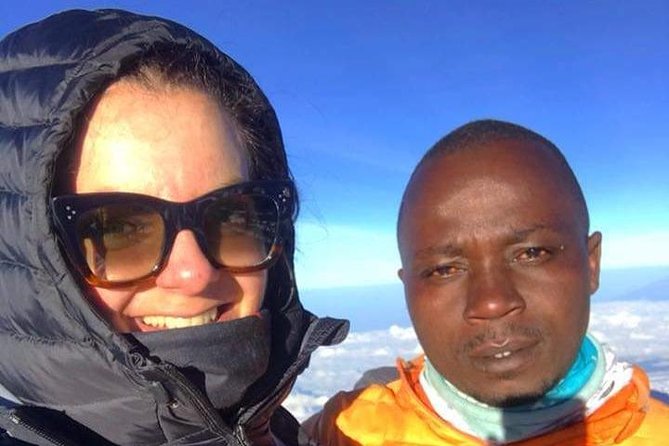
Food becomes important when you are walking for hours at altitude. The package includes five breakfasts, five lunches, and five dinners. One of the strongest personal details connected with this operator is praise for Joachim’s cooking, while guides Seleman Honguo and Allen Katunzi are singled out for supportive work.
David, identified as the company owner, is also connected with personal attention and flexibility. One climber was able to finish in four days after requesting an earlier finish. That shows willingness to adjust, but I would not treat a shorter schedule as a normal option. Cutting the plan removes acclimatization and adds risk.
Tips are not included. Ask before departure how the operator handles crew tipping and what is customary for guides, cooks, and porters. Fair wages are listed, which is important, but a clear tipping policy helps you budget and avoids awkwardness at the gate.
Who should book this climb?
This trip suits you if you want a private Kilimanjaro climb, prefer hut-based nights, and can manage long walking days with a strong level of fitness. The extra day at Horombo is a real advantage for acclimatization, and the changing scenery gives you rainforest, moorland, volcanic highlands, and alpine desert in one route.
It is not a good choice if you are looking for a relaxed sightseeing tour or a fixed, low-effort schedule. The summit reaches 5,895 meters, and the itinerary includes steep sections, cold conditions, possible snow, and symptoms of altitude sickness. You need to accept that reaching the top is not guaranteed simply because you have paid for the climb.
Before booking, confirm four things in writing: that your group is doing Marangu, not Machame; where you sleep each night; the full summit-day timing; and whether the final drive goes to Moshi or Arusha. Those answers will tell you more about the package than the headline price.
The cancellation policy is generous if your plans change early. You can cancel at least 24 hours before the local start time for a full refund. Changes made inside 24 hours are not accepted, and poor weather may lead to a new date or a full refund.
FAQ
How long is the Kilimanjaro climb?
The experience lasts approximately six days. The route includes five mountain walking days plus the return from the mountain on Day 6.
Which Kilimanjaro route does this tour use?
The itinerary uses the Marangu Route, beginning at Marangu Gate and passing through Horombo Huts and Kibo Huts. The description also mentions Machame, so confirm the route before booking.
Is pickup available?
Yes. Pickup is offered, though the exact pickup time and location should be confirmed. The stated start time is 12:00 am, while the itinerary says you leave after breakfast.
Is this a private tour?
Yes. Only your group participates in the activity.
What meals are included?
Breakfast, lunch, and dinner are listed for five days. The package includes five breakfasts, five lunches, and five dinners.
Are tips included in the price?
No. Tips to the mountain crew are not included.
Can I cancel for a full refund?
Yes, if you cancel at least 24 hours before the experience start time. Cancellations made less than 24 hours before the start are not refunded. Weather cancellations may result in a different date or a full refund.
More Six-Day Trips in Kilimanjaro
- Kilimanjaro climb, Lemosho Route (6-day)
★ 5.0 · 129 reviews - 6 Days Tanzania Classic Safari
★ 5.0 · 52 reviews - The Best of Machame Route in 6 Days: Your World’s Summit Guide
★ 5.0 · 44 reviews - 6 Days Machame Route Kilimanjaro Climbing
★ 5.0 · 42 reviews
Just added around Kilimanjaro
- 6 days Machame route climbing Mt.Kilimanjaro★ 5.0 · 8 reviews
- machame route★ 5.0 · 16 reviews
- Mt Kilimanjaro 6 days Marangu route hike★ 5.0 · 3 reviews
- Private Cycle to Kilimanjaro Bike Park Safari★ 5.0 · 6 reviews
- West Kilimanjaro cycling Adventures★ 4.5 · 8 reviews
- Kilimanjaro Climb • Marangu Route ~ 9 Day★ 5.0 · 4 reviews
- 3 Days Private E-Bike Tour in West Kilimanjaro★ 5.0 · 3 reviews
- Kilimanjaro Climb • Machame Route ~ 10 Day★ 5.0 · 6 reviews
Marangu Route Climbs, compared.
Browse the lists this tour appears in