
Reviewed · MARANGU ROUTE CLIMBS
Marangu Route 6 Days 5 Nights/Kilimanjaro Climb
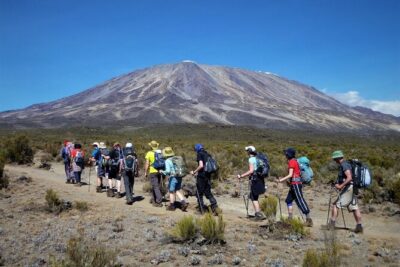
Kilimanjaro’s Marangu Route gives you a clear six-day path to Africa’s highest point, from the primate-filled rainforest to the cold, bare slopes above the clouds. The route uses huts rather than tents, and its gradual early slopes make it a sensible choice for a first high-altitude climb.
I like the built-in acclimatization day at Horombo Hut, and I like that meals, crew wages, park fees, accommodation, and airport pickup are included in the $1,900 price. The main caution is the summit schedule: you start around midnight, climb for hours in the cold, reach Uhuru Peak at 5,895 meters, then continue down to Horombo Hut the same day.
Key points to know before booking
- Summit day lasts about 15 hours: You climb from Kibo Hut to Uhuru Peak and return to Horombo Hut.
- Horombo includes a useful acclimatization day: The four-hour walk to Zebra Rocks helps your body adjust before the summit push.
- The route changes dramatically: Expect rainforest, heath, moorland, the stark saddle, and volcanic summit terrain.
- You sleep in mountain huts: This is not a camping trip, though conditions remain basic and demanding.
- The price covers major essentials: Park fees, crew salary, accommodation, meals, and airport pickup are included.
- The guides matter: Previous teams have included Vitalis, Goodluck, Nicolas, Amos, Issa, and JoJo.
What the $1,900 price means
At $1,900 per person, this climb is priced as a fairly full-service Kilimanjaro package rather than a bare-bones trek. The stated inclusions cover all fees and taxes, crew salary, accommodation, breakfast, lunch, dinner, and airport pickup.
That matters on Kilimanjaro. Park access and mountain support are not minor add-ons, and food and hut stays form the backbone of the trip. You are also paying for a guide team to manage the route, timing, and summit attempt. Previous feedback gives special credit to guides and support staff, with Vitalis named as a chief guide and Goodluck and Nicolas praised for their work on another Marangu climb. Amos and Issa were also singled out for handling arrangements and transport, while JoJo was part of another successful team.
There are a few details you should clarify before paying. The inclusions list says five breakfasts, six lunches, and six dinners, while the route description gives meals on each day. Ask the operator to confirm the exact meal count and what is served at each hut. Alcohol and soft drinks are not included, and the separate reference to gratitude means tips for the mountain crew are also outside the price.
International flights and visas are not included. That is normal for a Kilimanjaro package, but it means the advertised cost is not your complete trip budget. You will also need to account for flights, visa costs if required for your nationality, personal drinks, and crew tips.
More Marangu Route climbs:
- Kilimanjaro climb, Marangu route (6-day)
★ 5.0 · 72 reviews - Climbing Kilimanjaro – Marangu Route
★ 5.0 · 65 reviews - Private Full Day Hiking Experience to Marangu Route
★ 5.0 · 61 reviews
Day 1: Moshi to Mandara Hut through rainforest
The morning starts with pickup from your lodge in Moshi at about 9:00 am. You are driven to the Marangu Gate, where registration and park paperwork take place before you begin walking.
The first section feels more like a forest hike than a high mountain climb. The trail passes through dense rainforest, with thick vegetation and the possibility of seeing primates. This is one of the most pleasant parts of the route because the air is greener and warmer than what comes later.
You cover about 8.3 kilometers and walk for roughly five hours to Mandara Hut. After resting, your guide can lead you to Maundi Crater. The viewpoint gives you a look toward the Kenyan interior and offers a worthwhile extra walk on the first afternoon.
The day is moderate, but do not treat it as a free warm-up. You are already gaining height, and saving energy from the start helps later. Eat the provided meals, drink regularly, and keep your pace comfortable.
Day 2: Heath and moorland on the way to Horombo Hut
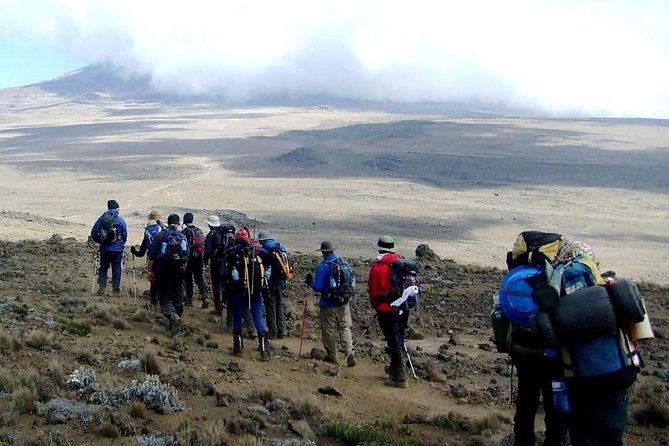
After breakfast, the forest gives way to the timberline. The scenery opens into heath and moorland, with less shade and a broader view of the mountain surroundings.
This is a longer day, covering about 12.5 kilometers and taking roughly nine hours. Horombo Hut sits at around 3,700 meters, so the distance is only part of the challenge. The bigger change is the altitude.
From Horombo, you can look toward Mawenzi, Kibo, and the wide plains of the Masai steppe. The views become one of the rewards of this section, but the thin air may make a steady pace feel slow. You should listen closely to your guide and report symptoms such as headache, nausea, unusual tiredness, or dizziness.
The huts provide a more protected base than a tent, but you should not expect hotel comfort. This is a mountain stay, and your focus should be rest, food, and preparation for the next days.
Day 3: Zebra Rocks and the value of acclimatization
Day 3 is not a day off. It is a planned acclimatization day, and it may be the most important part of the six-day schedule.
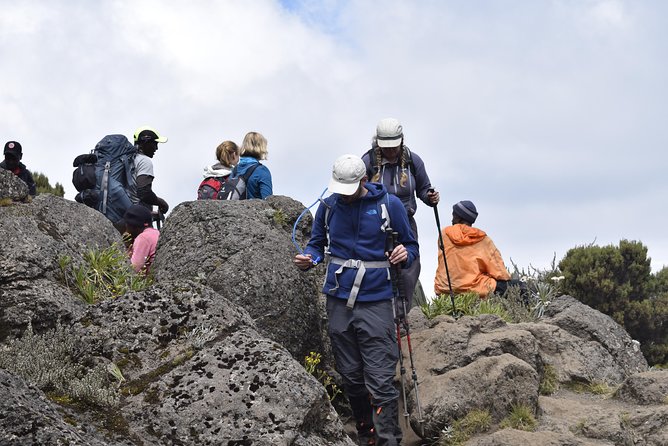
After breakfast, you walk for about four hours to Zebra Rocks at roughly 4,020 meters. The rocks take their name from their black and white stripes. You then return to Horombo Hut for a warm lunch and a quieter afternoon.
I like this design because it gives you extra time at altitude without sending you higher for a full day and then onward immediately. Your body gets a chance to adjust before the summit route begins. Skipping or underplaying this day would be a poor trade, even if you feel strong.
Use the afternoon well. Eat, drink, organize your clothing, and rest. The next stage is longer, colder, and more exposed. A quiet afternoon at Horombo is part of your summit preparation, not wasted time.
More treks and hikes around Kilimanjaro:
- Kilimanjaro climb by Lemosho Route (7-day)
★ 5.0 · 651 reviews - Kilimanjaro climb, Machame Route (7-day)
★ 5.0 · 262 reviews - 8-Day Small-group Lemosho Kilimanjaro Summit Trekking
★ 5.0 · 186 reviews - Kilimanjaro Climbing Lemosho Route 8 Days.
★ 5.0 · 186 reviews
Day 4: Across the saddle to Kibo Hut
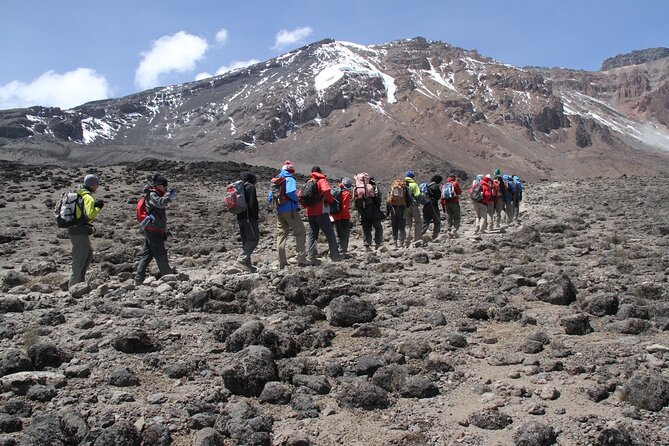
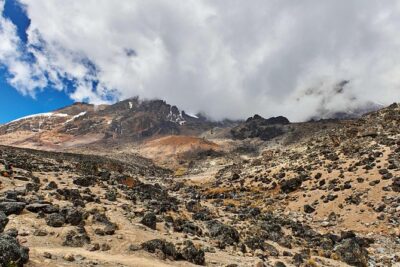
The route becomes more severe as you leave the heath and moor zone. You pass the Last Water point, then cross the saddle, a broad plateau with very little vegetation between Mawenzi and Kibo.
This section takes about five to six hours, with the full day listed at roughly seven hours. The land feels stark and open. There is less plant life to soften the view, and the sense of distance grows as Kibo becomes your target.
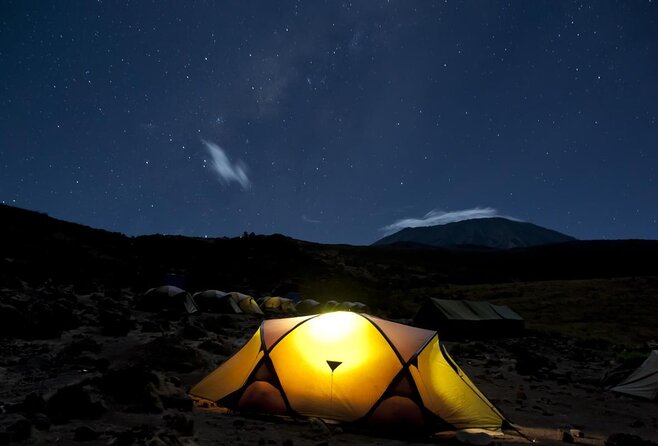
Kibo Hut is usually reached in the afternoon. You eat an early evening meal and go to bed early because the summit climb begins around midnight. That early bedtime can be difficult after a full day of walking, but the schedule is necessary if you want to reach the crater rim around sunrise.
Pack what you need for the summit before lying down. Keep warm layers, water, and essential personal items close at hand. The less searching you do in the dark, the better.
Day 5: The midnight climb to Uhuru Peak
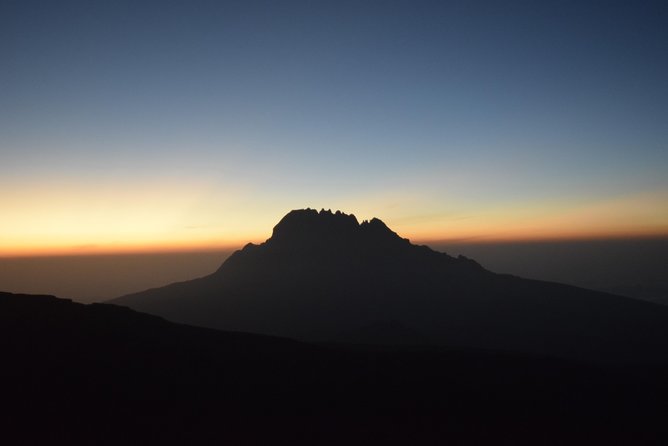
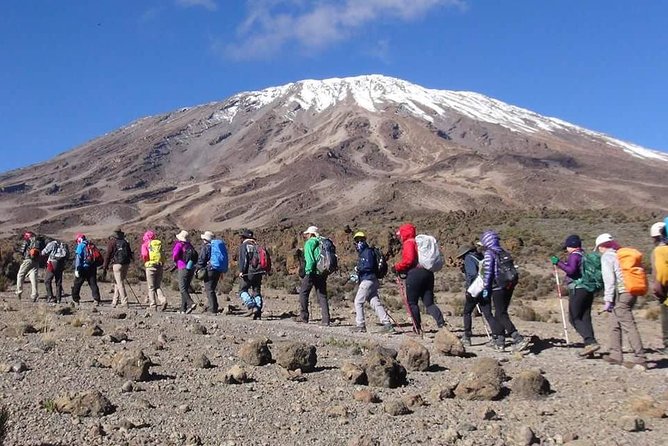
This is the hardest day by far. You leave Kibo Hut around midnight for a long ascent over cold, dark ground. The trail rises gradually but relentlessly toward the crater rim.
You pass Hans Meyer Cave at about 5,220 meters before continuing upward. The route then reaches Gillman’s Point at 5,681 meters, where you arrive around sunrise if the timing goes well. This is the crater rim, and the first light can bring a welcome change after hours in the cold.
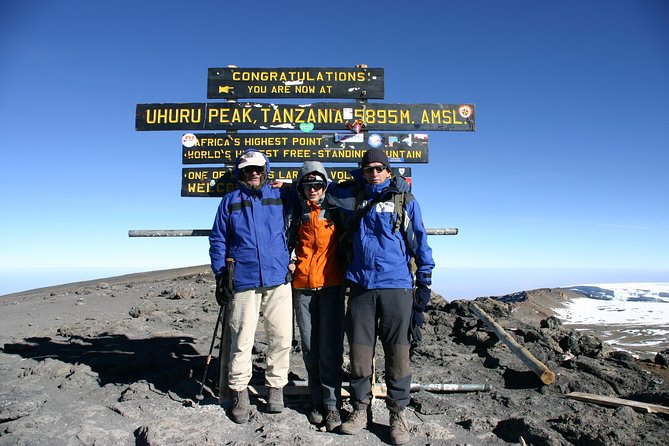
From Gillman’s Point, you continue for another one to two hours toward Uhuru Peak. At 5,895 meters, Uhuru is the highest point in Africa. The final stretch may feel surprisingly hard after the earlier climb, so keep your pace slow and follow your guide’s instructions.
The full summit day takes about 15 hours. After reaching Uhuru Peak, you return to Kibo Hut for a warm meal and a one to two-hour break. Then you continue down to Horombo Hut.
That same-day descent is the main physical drawback of this schedule. Reaching the summit is only the midpoint of the day. Your legs, feet, and energy reserves will be tested again on the way down. The reward is a sunrise summit and the satisfaction of completing the highest section of the mountain, but you should be honest about your fitness before choosing this trip.
Day 6: Descending through the forest to Moshi
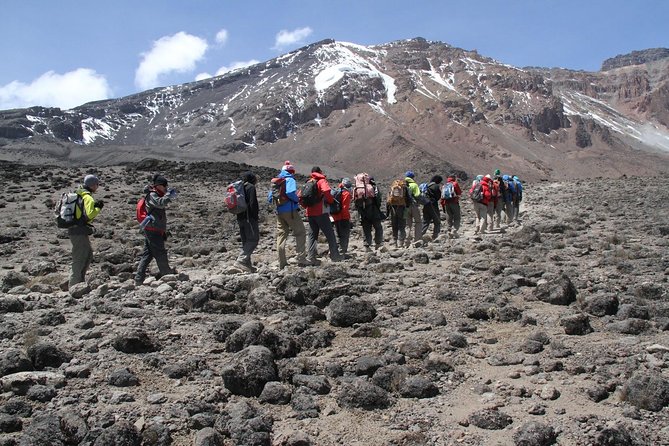
The final day takes you from Horombo back through the heath and moor zone to Mandara Hut. A warm lunch is scheduled there before you enter the rainforest again.
The stated walking time is about four hours, though the full descent to the Kilimanjaro National Park Gate is described as roughly six hours. At the gate, you say goodbye to the mountain guides and transfer back to your Moshi hotel.
This last forest section often feels very different from the summit morning. You are lower, the air is warmer, and the vegetation becomes thick again. A hot shower at the hotel and a proper celebration are well earned.
The route ends where the practical part began, in the Moshi area. That makes the included transfer useful, especially after a long descent when you may not want to arrange local transport yourself.
The guide team and personal service
A Kilimanjaro climb depends heavily on the people leading it. The available feedback repeatedly points to professional service, flexible arrangements, and strong guide support.
Names associated with previous climbs include Vitalis, Goodluck, Nicolas, Amos, Issa, and JoJo. Vitalis was credited with leading a group successfully toward Uhuru Peak. Goodluck and Nicolas were also named as guides on a Marangu climb, while Amos and Issa handled parts of the wider arrangements for a solo climber.
You should not assume a particular guide will lead your own group unless the company confirms it. Still, these names are useful when you ask about staffing, guide experience, group support, and how the operator handles changes before the climb.
This is a private activity, meaning only your group participates. The exact group size is not stated, so ask how many climbers will be assigned to your guide team. A private trip can make pacing and communication easier, but it does not remove the demands of altitude or summit day.
Who will enjoy this climb most
This trip suits you if you want a structured route with hut accommodation, set daily stages, guide support, and meals included. The gradual slopes of Marangu make the early days approachable, while the acclimatization day at Horombo gives the schedule a sensible pause.
You still need moderate physical fitness. The summit day is not a casual walk, and the 15-hour schedule requires endurance as well as determination. If you are uncomfortable with long uphill days, sleeping at altitude, or a midnight start, you should think carefully before booking.
This climb may also suit a solo participant who wants private arrangements rather than joining an unknown group. The provided feedback includes a successful trip organized for a woman traveling alone, but the company should confirm exactly what private support is included for your booking.
Practical details before you commit
Pickup is offered, and the meeting time is listed as 9:00 am. Confirmation is sent at booking, and the location is near public transportation, though you may not need public transport if you use the included airport or lodge transfer.
You can cancel for a full refund if you do so at least 24 hours before the local start time. Changes made inside that 24-hour window are not accepted, and late cancellations are not refunded. If poor weather forces cancellation, you are offered another date or a full refund.
The company also issues certificates of achievement. That is a pleasant keepsake, but the real proof of the climb is reaching the summit and completing the descent safely.
Should you book the Marangu Route?
Book this climb if you want a well-defined six-day Kilimanjaro plan with huts instead of camping, a built-in acclimatization day, meals, park fees, and transport support included in one price. The guides and support staff receive the strongest praise, and names such as Vitalis, Goodluck, Nicolas, Amos, Issa, and JoJo give you useful points to raise before departure.
Think twice if you want a relaxed holiday, short walking days, or a gentle summit attempt. The climb to Uhuru Peak begins at midnight and is followed by a long descent the same day. For a fit person who accepts that challenge, this Marangu route offers a clear and practical way to experience Kilimanjaro, from rainforest shade to sunrise at Africa’s highest point.
FAQ
How long is the Marangu Route climb?
The experience lasts six days and five nights.
What time does the experience start?
The listed start time is 9:00 am, with pickup from your lodge in Moshi.
Is airport pickup included?
Yes. Airport pickup is included in the stated package.
What meals are included?
Breakfast, lunch, and dinner are included. The package details list five breakfasts, six lunches, and six dinners, so confirm the exact meal schedule before departure.
How high is Uhuru Peak?
Uhuru Peak reaches 5,895 meters.
Can I cancel for a full refund?
Yes, if you cancel at least 24 hours before the experience start time. Poor weather cancellations offer either another date or a full refund.
More Six-Day Trips in Kilimanjaro
- Kilimanjaro climb, Lemosho Route (6-day)
★ 5.0 · 129 reviews - 6 Days Tanzania Classic Safari
★ 5.0 · 52 reviews - The Best of Machame Route in 6 Days: Your World’s Summit Guide
★ 5.0 · 44 reviews - 6 Days Machame Route Kilimanjaro Climbing
★ 5.0 · 42 reviews
Just added around Kilimanjaro
- 6 days Machame route climbing Mt.Kilimanjaro★ 5.0 · 8 reviews
- machame route★ 5.0 · 16 reviews
- Mt Kilimanjaro 6 days Marangu route hike★ 5.0 · 3 reviews
- Private Cycle to Kilimanjaro Bike Park Safari★ 5.0 · 6 reviews
- West Kilimanjaro cycling Adventures★ 4.5 · 8 reviews
- Kilimanjaro Climb • Marangu Route ~ 9 Day★ 5.0 · 4 reviews
- 3 Days Private E-Bike Tour in West Kilimanjaro★ 5.0 · 3 reviews
- Kilimanjaro Climb • Machame Route ~ 10 Day★ 5.0 · 6 reviews
Marangu Route Climbs, compared.
Browse the lists this tour appears in