
Reviewed · MARANGU ROUTE CLIMBS
Kilimanjaro Climb Marangu Route 6 days
Kilimanjaro’s Marangu Route gives you a clear, classic ascent: rainforest on day one, open moorland above it, the stark Saddle between Mawenzi and Kibo, then a cold midnight climb to Uhuru Peak. The route uses huts rather than tents, which makes a difference after long walking days.
I like the built-in acclimatization day at Horombo, and I like that the price includes private transport, meals, filtered water, hot wash water, park costs, and fair wages for the mountain crew. The catch is the schedule. Six days is workable, but the summit push is hard, and the extra day at Horombo is spent walking rather than simply resting.
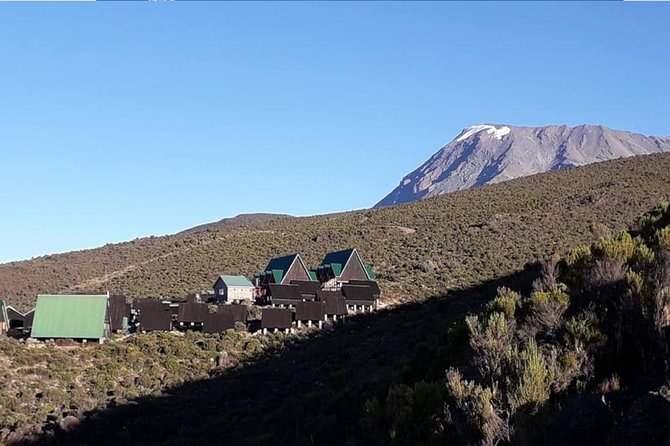
- Mandara Hut begins in tropical forest, with a chance to see blue monkeys near the upper tree line.
- Horombo’s extra day helps your body adjust, with a walk toward Mawenzi Ridge at 14,400 feet.
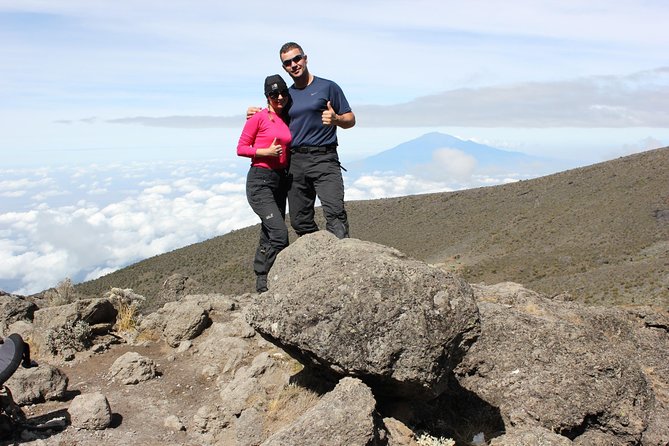
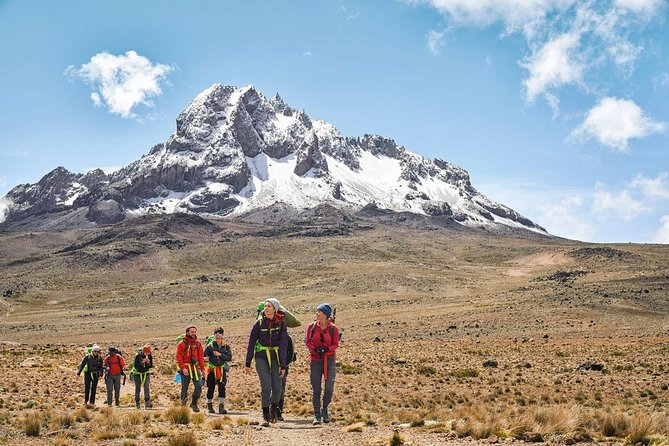
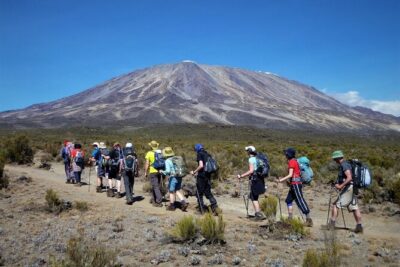
- The Saddle is a high, stark crossing between Kibo and the jagged Mawenzi peak.
- Summit morning begins around midnight, followed by the climb to Gilman’s Point and Uhuru Peak.
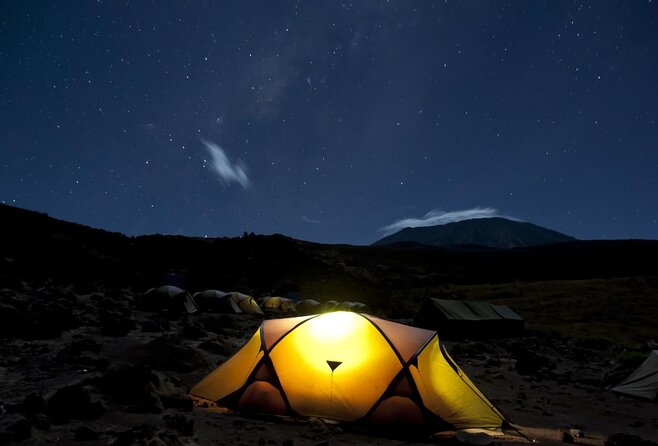
- Hut accommodation replaces camping, while meals, water, transport, and park fees are covered.
- Shungu is associated with the guiding team, whose personal, respectful approach is a recurring strength in the supplied accounts.
Why the Marangu Route works for a six-day climb
Marangu is often called the easier Kilimanjaro route because its trail is relatively direct and its huts provide a roof at night. That label can mislead you. The summit still reaches 19,341 feet, and altitude, cold, steep scree, and lack of sleep do not become easier because you are sleeping indoors.
This six-day plan follows a sensible shape. You gain height gradually for the first four days, use day three for acclimatization, then reach Kibo Hut before the summit attempt. After Uhuru Peak, you descend all the way to Horombo, then walk out to Marangu Gate on the final day.
You need a moderate level of fitness and comfort with long mountain walks. The daily distances are not extreme at first, but day five is a major test. You climb from 15,430 feet to the summit, then descend to Horombo in the same day. That combination makes pacing and hydration important.
The private format is useful if you want your own group rather than joining a large departure. The supplied details say only your group participates, and transport is provided from Moshi to Marangu Gate and back after the walk.
Day one: Marangu Gate to Mandara Hut
The climb begins with park formalities at Marangu Gate. This is more than a paperwork stop. It is your final transition from Moshi’s roads and shops into Kilimanjaro National Park.
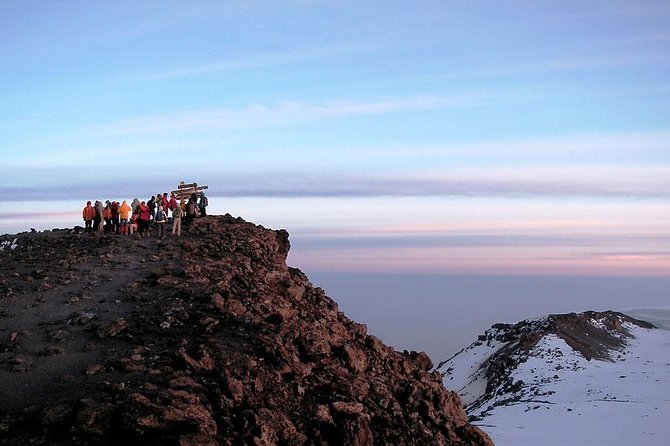
The trail rises through tropical rainforest toward Mandara Hut. The distance is 8 kilometers, or about 5 miles, with a gain from 6,046 to 8,858 feet. Plan on four to five hours of walking.
This first section is pleasant but can feel humid. The broad forest gives way gradually as you climb, and blue monkeys may appear near the upper edge of the trees. The route then opens onto wider hillsides before reaching Mandara.
I like this opening because it gives you a gentle introduction to the mountain. You are walking uphill, but the day is short enough to leave energy for settling into the hut. The main drawback is that the forest can make the early climb feel warm and damp, so breathable clothing and a waterproof layer are sensible.
More Marangu Route climbs:
- Kilimanjaro climb, Marangu route (6-day)
★ 5.0 · 72 reviews - Climbing Kilimanjaro – Marangu Route
★ 5.0 · 65 reviews - Private Full Day Hiking Experience to Marangu Route
★ 5.0 · 61 reviews
Day two: Mandara Hut to Horombo Hut
Day two takes you from 8,858 to 12,205 feet over 12 kilometers. The stated walking time is six to eight hours. You continue through forest at first, then enter the heath zone and higher moorland.
This is where Kilimanjaro begins to look less like a tropical mountain and more like a high volcanic world. If conditions are clear, you may get your first views of Kibo and Mawenzi, two of the three volcanic peaks that form the summit area.
Horombo Hut is an important stop because you spend two nights here. The extra night lets you walk high and sleep lower, a useful pattern for adjusting to altitude. It also breaks up what would otherwise be a rapid climb toward Kibo Hut.
Do not treat this as a light day. The height gain is substantial, and seven hours of walking can leave you tired before the acclimatization walk. Keep your pace controlled from the start. You are not racing anyone, and the summit is still several days away.
Day three: Mawenzi Ridge for acclimatization
The third day is the plan’s smartest feature. From Horombo, you walk toward Mawenzi Ridge, gaining from 12,205 to about 14,400 feet. The uphill section takes two to three hours, followed by a one to two-hour descent back to Horombo.
The ridge gives you views toward both Kibo and Mawenzi, along with a different sense of the mountain’s scale. Mawenzi is craggy and sharply formed, while Kibo is the broad, higher summit you will climb later.
This walk is not just sightseeing. Spending time at altitude and returning to sleep at Horombo gives your body a better chance to adjust before Kibo Hut. It also lets you test your boots, layers, water routine, and general energy level while the route is still forgiving.
The listed hiking time is only two to three hours for the ascent, so you have time to move slowly and notice how your body responds. If you have a headache, nausea, unusual fatigue, or other altitude symptoms, tell the mountain crew. The point of this day is not to prove toughness. It is to prepare wisely.
Day four: Crossing the Saddle to Kibo Hut
You leave Horombo for Kibo Hut, climbing from 12,205 to 15,430 feet over 10 kilometers. The walk takes six to eight hours and crosses the high-altitude desert known as the Saddle.
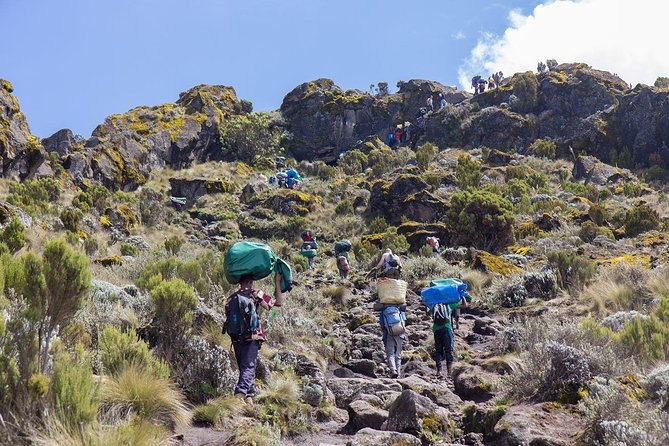
The Saddle separates Kibo from Mawenzi. It is broad, sparse, and exposed, with little shelter from wind. The change from heath to alpine desert is striking. Vegetation fades, and the route becomes a steady approach toward the crater wall.
Kibo Hut sits at the foot of that wall. Once you arrive, the main task is to rest, eat an early dinner, and prepare for the midnight start. This is a quiet, serious evening. You will not have much time for sleep, and the cold can make every small task feel slower.
The value of this day is its controlled pace. You are not climbing to the summit yet, but you are placing yourself close enough to make the attempt possible. The drawback is that sleeping at 15,430 feet can be uncomfortable, particularly after seven hours on your feet.
More treks and hikes around Kilimanjaro:
- Kilimanjaro climb by Lemosho Route (7-day)
★ 5.0 · 651 reviews - Kilimanjaro climb, Machame Route (7-day)
★ 5.0 · 262 reviews - 8-Day Small-group Lemosho Kilimanjaro Summit Trekking
★ 5.0 · 186 reviews - Kilimanjaro Climbing Lemosho Route 8 Days.
★ 5.0 · 186 reviews
Day five: The midnight climb to Uhuru Peak
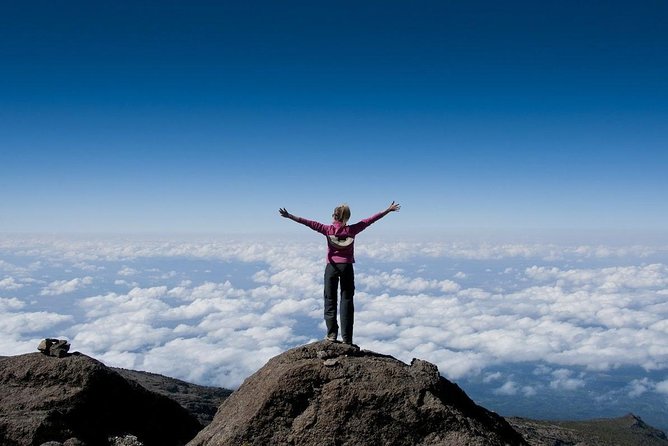
Summit day begins around midnight. From Kibo Hut, you climb 6 kilometers to Uhuru Peak, gaining nearly 4,000 feet. The ascent takes six to eight hours, and the terrain reaches the Arctic zone.
You start in darkness, often moving slowly over steep scree. The ground can be easier when frozen, but the cold and wind may be severe. Frequent short breaks are part of the rhythm. Long stops can make you colder, so listen to the guide’s pacing.
Gilman’s Point sits at about 18,600 feet on the crater rim. Reaching it around dawn can bring spectacular views as the sun rises over the high volcanic terrain. From there, Uhuru Peak is just above, though the remaining section can still feel demanding after hours of climbing.
The summit is 19,341 feet. You should expect thin air and a strong physical and mental test. The final approach is not a normal hike. Your guide may ask you to move slowly and steadily, and you should focus on the next few steps rather than the full distance.
After Uhuru Peak, you descend to Horombo Hut. The return covers about 16 kilometers, or 10 miles, and takes another four to five hours. This long descent is one of the most difficult parts of the entire trip. Your legs are tired, the air is still thin near Kibo, and the excitement of reaching the summit does not remove the need for care.
This is the day that makes six days feel tight. You gain the summit, descend from 19,341 to around 12,250 feet, and sleep at Horombo. A fit person used to walking in mountain areas may manage it, but you should not underestimate the strain.
Day six: The long descent to Marangu Gate
The final day takes you from Horombo back to Marangu Gate. The distance is about 20 kilometers, or 12 miles, with five to seven hours of mostly downhill walking.
You return through the heath and rainforest zones, reversing the changes you saw on the way up. The forest may feel warmer and more enclosed after the open slopes above it. At the park headquarters, you collect your summit certificate before private transport takes you back to your Moshi hotel.
The final descent is easier on breathing than the upper mountain, but it can be tiring on knees and feet. Walking poles can be useful, though personal trekking gear is not included, so you must bring or arrange your own equipment.
What the $2,290 price covers
At $2,290 per person, this is not a low-cost day trip, but a Kilimanjaro climb involves permits, transport, food, crew, and several days of support. The price includes all fees and taxes, private transportation, filtered water throughout the trek, hot water for washing, and meals.
You receive six lunches, five breakfasts, and six dinners. That food provision matters because you are spending nearly a week on the mountain, including the demanding summit day.
The price also includes fair wages for the mountain crew as approved by the Kilimanjaro National Park Authority. That is an important practical and ethical point. The crew’s work supports every stage of the climb, from carrying supplies to managing the mountain days, and fair pay should be part of the cost rather than an afterthought.
You still need to budget for visas, insurance, flights, personal trekking gear, personal expenses, and alcoholic or non-alcoholic drinks. The package is strongest for someone who wants the main operating costs handled in advance, but it does not remove the need to prepare your own clothing and equipment.
The human side of the guiding team
The personal tone of the operation is one of its more appealing features. Shungu is named in connection with the team, and the accounts supplied describe a guide who treated the crew with respect and worked closely with people he had known since childhood.
That matters on a climb where cooperation is not a small detail. You spend long hours walking slowly, managing cold, fatigue, and altitude. A crew that communicates well and looks after one another can make the experience feel more organized and humane.
The available accounts also describe the operation as helpful with broader Tanzania plans, including safari arrangements. That may be useful if you are combining Kilimanjaro with a safari, though the climb itself is the focus here and safari services are not part of the listed package.
Who should book this climb
I would point this experience toward a fit person who already walks in mountain areas and wants a structured route with hut accommodation. It suits you if you prefer private transport and a private group, and if you value having meals, water, park costs, and crew pay arranged together.
It may not suit you if you want a relaxed holiday, dislike very early starts, or have little experience with long uphill and downhill days. The phrase moderate physical fitness should not be read as easy. Altitude changes the effort, and summit day is demanding even for a strong walker.
The six-day schedule is helped by the Horombo acclimatization day, but it remains a compact plan. If you are deciding between this and a longer Kilimanjaro program, the extra days would likely offer more time for altitude adjustment. The supplied plan specifically recommends an extra acclimatization day, and day three provides it.
Booking details and cancellation
Pickup is offered from Moshi Urban, and the activity ends back at the meeting point after the return from Marangu Gate. Confirmation is provided at booking, and this is a private activity for your group.
You can cancel for a full refund up to 24 hours before the local start time. Cancellations or changes made within 24 hours are not accepted for a refund.
Should you book the Marangu Route in six days?
Book it if you want the classic Kibo summit approach, prefer huts to tents, and can commit to a serious mountain effort. The rainforest, Mawenzi views, Saddle crossing, dawn at Gilman’s Point, and final push to Uhuru Peak give the route real variety.
I especially like the Horombo acclimatization day and the clear inclusion of transport, meals, water, park costs, and crew wages. I would hesitate only if your fitness is uncertain or if you need a slower altitude schedule. For a prepared walker who understands that day five is a major test, this is a well-organized private climb with strong practical value.
FAQ
How long is the Kilimanjaro Marangu Route climb?
The climb lasts approximately six days, beginning and ending with transport connected to Moshi.
Where does the climb start?
The meeting point is in Moshi Urban, Tanzania. The trek itself begins at Marangu Gate in Kilimanjaro National Park.
Is pickup included?
Yes. Pickup is offered, and private transportation is included.
Is this a private tour?
Yes. Only your group participates in the activity.
How high is Uhuru Peak?
Uhuru Peak reaches 19,341 feet.
Does the route include an acclimatization day?
Yes. Day three is an acclimatization day based at Horombo Hut, with a walk toward Mawenzi Ridge.
Where do you sleep on the route?
The route uses huts at Mandara, Horombo, and Kibo. The provided details identify hut stops but do not specify the exact sleeping arrangements inside each hut.
Are meals included?
Yes. The package includes six lunches, five breakfasts, and six dinners.
Is drinking water included?
Filtered water is provided throughout the trek.
What does the $2,290 price exclude?
The price excludes visas, insurance, flights, personal trekking gear, personal expenses, and alcoholic or non-alcoholic beverages.
More Six-Day Trips in Kilimanjaro
- Kilimanjaro climb, Lemosho Route (6-day)
★ 5.0 · 129 reviews - 6 Days Tanzania Classic Safari
★ 5.0 · 52 reviews - The Best of Machame Route in 6 Days: Your World’s Summit Guide
★ 5.0 · 44 reviews - 6 Days Machame Route Kilimanjaro Climbing
★ 5.0 · 42 reviews
Just added around Kilimanjaro
- 6 days Machame route climbing Mt.Kilimanjaro★ 5.0 · 8 reviews
- machame route★ 5.0 · 16 reviews
- Mt Kilimanjaro 6 days Marangu route hike★ 5.0 · 3 reviews
- Private Cycle to Kilimanjaro Bike Park Safari★ 5.0 · 6 reviews
- West Kilimanjaro cycling Adventures★ 4.5 · 8 reviews
- Kilimanjaro Climb • Marangu Route ~ 9 Day★ 5.0 · 4 reviews
- 3 Days Private E-Bike Tour in West Kilimanjaro★ 5.0 · 3 reviews
- Kilimanjaro Climb • Machame Route ~ 10 Day★ 5.0 · 6 reviews
Marangu Route Climbs, compared.
Browse the lists this tour appears in