
Reviewed · MARANGU ROUTE CLIMBS
Kilimanjaro Private Climbing in 6 Days Marangu Route
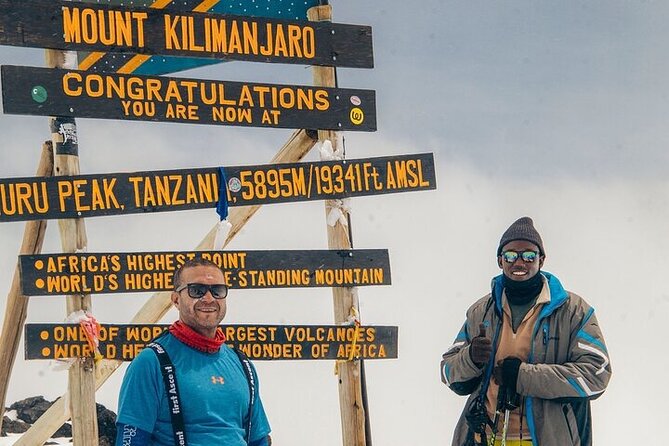
Kilimanjaro’s Marangu Route is the mountain’s hut-to-hut option, and this six-day plan wisely adds a full acclimatization day at Horombo. You move from rainforest to moorland, then across the stark saddle below Kibo before making the midnight summit push toward Uhuru Peak.
I like the small private-group format, which lets the guide set a sensible pace instead of pushing you along with a large crowd. I also like the practical safety setup: daily health checks, wilderness first responder guides, emergency oxygen, and a support crew averaging four staff members per climber.
The main drawback is the schedule itself. The summit day can last about 14 hours, and the six-day Marangu route still gives you less acclimatization time than longer Kilimanjaro programs. You need moderate fitness, proper gear, and a willingness to walk slowly for several demanding days.
Key points to know before booking
- A full Horombo acclimatization day gives you time to rest or walk toward Mawenzi and Zebra Rocks.
- Hut accommodation replaces tents, with nights at Mandara, Horombo, and Kibo huts.
- The summit push begins around midnight to 2 a.m., followed by a long descent.
- Guides Alex and Moshi are among the team members named in the experience’s published feedback.
- Meals, drinking water, park fees, rescue fees, porters, and emergency oxygen are included on the mountain.
- The $2,000 price includes hotel nights and airport transfers, but not gear, insurance, snacks, tips, visas, or international flights.
What the six-day Marangu climb is really like
Marangu is often called the Coca-Cola Route, but that nickname can make it sound easy. It is not. The path is well established, and you sleep in huts rather than tents, but you still climb to 5,895 meters and face cold, altitude, steep ground, and a long summit night.
This private trip starts from Moshi, with pickup offered and airport transfers included. The advertised meeting point is Kilimanjaro Airport, while the mountain transfer takes you to Marangu Gate. Confirm your exact arrival and pickup details before you fly, since the listed start time is 12:00 a.m.
The climb costs $2,000 per person. That is a substantial sum, but it covers the expensive mountain basics: national park entry, hut fees, climbing fees, rescue fees, transport, two hotel nights on bed and breakfast, all mountain meals, drinking water, porters, guides, and a summit certificate.
I would judge the price by the level of support rather than by the number of days alone. You are not simply paying for a path and a bed. You are paying for permits, logistics, food at altitude, a staffed private climb, and help if your health changes. You still need to budget for tips, insurance, snacks, personal equipment, visas, and flights.
More Private Tours in Kilimanjaro
- Private Full Day Hiking Experience to Marangu Route
★ 5.0 · 61 reviews - Private Kilimanjaro Hike 7 Day Lemosho Route
★ 5.0 · 60 reviews - Kilimanjaro 7 Day Private Trekking Experience
★ 5.0 · 40 reviews
Day 1: Marangu Gate to Mandara Hut
The first mountain day begins with about a 60-minute drive from Moshi through Marangu village to the Kilimanjaro National Park Gate. Gate procedures can take time while permits are issued and climbing crews organize their loads, so do not expect to step from the vehicle straight onto the trail.
From the gate, you walk into the rainforest. The route is shaded and green, with your guide pointing out local plant life and wildlife. The trail rises steadily, and wet weather can turn it muddy and slippery. Trekking poles are useful from the start, not only on the steep upper mountain.
After about four hours, you reach Mandara Hut. These are wooden A-frame huts in a forest clearing, a more sheltered first night than a tented camp. The short distance makes this day a gentle introduction, but you should still keep your pace slow and drink regularly.
Pack your rain jacket where you can reach it. The lower forest can be wet, and waterproof trousers or gaiters may save you from spending the evening in muddy clothing. A mobile ticket is provided for the activity, but your operator handles the park entry process.
Day 2: Heathland, giant plants, and Horombo Hut
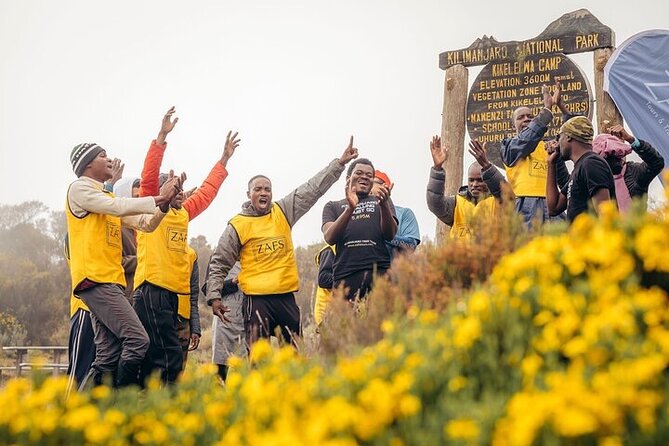
After breakfast, the trail leaves the rainforest and enters heathland. The vegetation changes quickly. You may see giant lobelias and groundsels, followed by open moorland where smaller shrubs replace the thick forest.
This is a longer day of about seven hours. You climb toward Horombo Hut, with views toward Mawenzi during the walk and the Kibo summit area ahead. The changing plant life helps make this one of the most interesting sections of the route, since the mountain feels different every few hours.
Horombo sits at high altitude, and temperatures drop in the afternoon and evening. Keep a warm layer in your daypack rather than buried in your duffle bag. The guides carry out daily health checks, so expect them to ask about symptoms such as headache, tiredness, dizziness, or appetite.
The strong point here is the hut system. You have a bed and shelter, and the crew prepares meals instead of asking you to manage camp cooking. The tradeoff is that a hut does not remove the effects of altitude. You still need to eat, drink, rest, and report problems early.
Day 3: The acclimatization walk toward Mawenzi
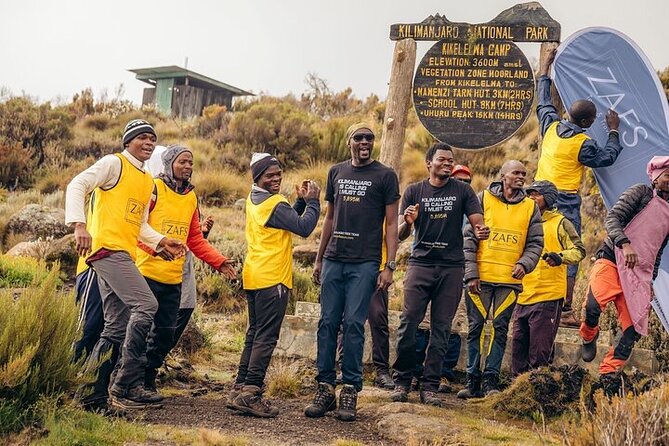
This is the day that gives the itinerary its best practical feature. You spend a second night at Horombo instead of climbing higher immediately. You can rest at the hut, or take the recommended walk toward Mawenzi Base Camp and Zebra Rocks before returning to Horombo.
The walk is listed at about four hours. It adds height for a controlled period, then brings you back down to sleep at the same hut. That pattern helps your body adjust better than simply rushing upward, though no schedule can guarantee that you will avoid altitude sickness.
Zebra Rocks are a useful target because they give the day a clear purpose without requiring a summit attempt. The route also helps you see the relationship between Mawenzi and Kibo, the two major volcanic forms on Kilimanjaro.
I would not treat this as an optional lazy day. If your guide says conditions and your health are suitable, the acclimatization walk is one of the most valuable parts of the program. At the same time, rest is the right choice if you are already struggling. The point is to arrive at summit night in good shape, not to collect extra mileage.
More Marangu Route climbs:
- Kilimanjaro climb, Marangu route (6-day)
★ 5.0 · 72 reviews - Climbing Kilimanjaro – Marangu Route
★ 5.0 · 65 reviews - From Arusha/Moshi: Kilimanjaro Hike Marangu Route Day Trip
★ 4.5 · 54 reviews - Mount Kilimanjaro Day Hike Through Marangu Route to Mandara Hut
★ 5.0 · 37 reviews
Day 4: Across the saddle to Kibo Hut
After breakfast, you leave the remaining heathland and cross the broad saddle between Mawenzi and Kibo. The vegetation fades into a stark, almost moonlike setting. This is one of the route’s great visual changes, but it can also feel exposed and demanding because there is little shelter.
The day takes about seven hours. Lunch comes during the crossing, and you can look ahead toward the Kibo summit route. The last listed water point is at 4,130 meters, so pay close attention to your water supply and follow the crew’s instructions.
Kibo Hut is at the foot of the summit route. From there, Uhuru Peak requires about 1,195 meters of further ascent. You arrive, eat, organize your summit clothing, and try to sleep early. That early bedtime is not a luxury. The summit start comes around midnight to 2 a.m.
This is where packing discipline matters. Put gloves, warm layers, headlamp, water, snacks, and any personal medication where you can reach them quickly. The operator provides food and drinking water on the mountain, but snacks are not included, so bring or buy the energy foods you know you can tolerate.
Day 5: The midnight climb to Uhuru Peak
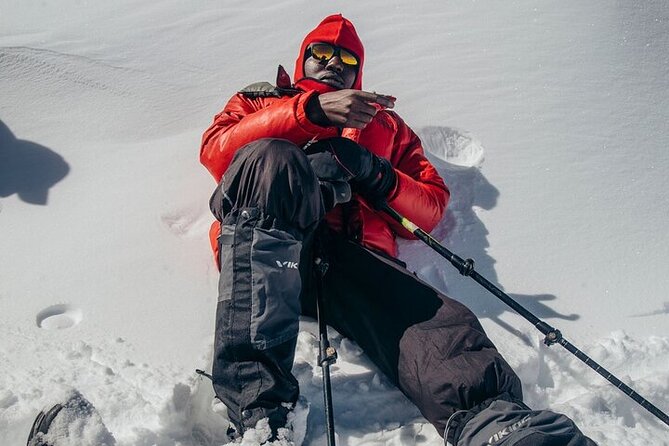
Summit day is the hardest part of the trip. You start in darkness, usually between midnight and 2 a.m., and climb by switchbacks over heavy scree. Snow is possible, and the cold can be severe. Your guide sets a slow, steady pace, which is exactly what you need at this height.
The first major target is Gillman’s Point on the crater rim. The climb is physically tiring and mentally repetitive. You may feel that every step takes too long, but the slow pace protects energy and helps the group stay together.
At Gillman’s Point, you can rest and see the sunrise. Faster climbers may reach the summit in time to watch sunrise from Uhuru Peak, but you should not turn the timing into a race. Reaching Gillman’s Point is not the same as reaching Uhuru Peak, and the final section still requires roughly an hour of ascent according to the schedule.
The itinerary text is cut off after the mention of snow, so you should ask the operator to confirm the exact summit-day descent plan before booking. The listed day lasts about 14 hours, which indicates a very long outing from Kibo Hut to the summit and down toward the lower huts.
This is also the day when the guide team matters most. The company says its guides have at least eight years of mountain experience and wilderness first responder certification. The climb includes emergency oxygen and a first aid kit. Those are important safeguards, but they are not a substitute for travel insurance that covers trekking up to 6,000 meters.
After the summit attempt, you descend. The drop in altitude is welcome, but fatigue can make the descent risky. Use trekking poles, keep drinking, and tell your guide if you feel unwell rather than trying to hide it.
Day 6: Descent through the forest and return to Moshi
The final day begins with breakfast and a thank-you ceremony with the crew. You then descend through the route, stopping at Mandara Hut for lunch before continuing to Marangu Gate.
The descent is listed at about seven hours. It can feel easier than the ascent, but the trail becomes wet, muddy, and steep as you return to the rainforest. Gaiters and trekking poles are recommended, and both are sensible choices.
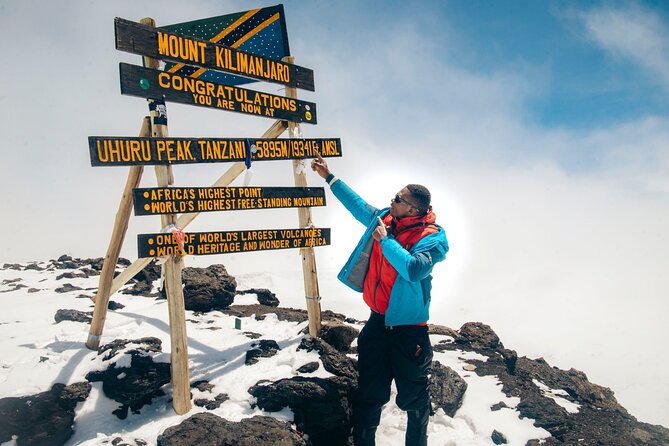
At the gate, you receive a summit certificate if you completed the stated summit ascent. You then meet a vehicle for the roughly 60-minute drive back to your Moshi hotel. The included post-climb hotel night gives you a proper place to wash, repack, and recover.
Remember to set aside tips for guides, cooks, and porters. Tips are not included, and the crew’s work is a major part of the service. The listed support ratio averages four staff members per climber, so ask before departure how the tip is divided among the team.
Guides, food, and support on the mountain
The most praised parts of this experience are the crew, encouragement, food, and porter support. Published comments repeatedly describe the team as kind, patient, motivating, and attentive. Alex and Moshi are named as guides in one account, while other climbers describe the guides as careful with pacing and altitude concerns.
You should expect the guide to check your condition each day and give advice about how to continue safely. That can include walking slowly, managing rest, drinking, eating, and deciding when a symptom needs attention.
Meals are included from the mountain start through the descent. The food receives especially strong praise, with several accounts describing it as surprisingly good for a high-altitude trek. That matters because you burn energy every day, and a hot, filling meal can make the difference between merely enduring the climb and handling it well.
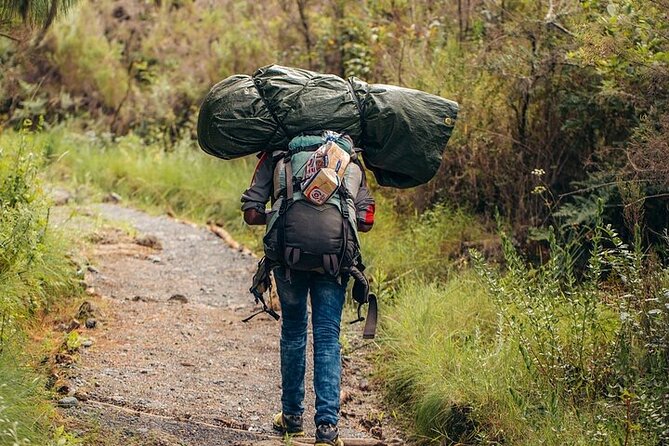
Porters carry the group’s main bags and equipment. You should still pack a light daypack with water, rain gear, warm layers, personal medication, snacks, and anything you need during the day. Do not assume your duffle will be beside you every minute of the route.
The private format also helps if your group has mixed abilities. A guide can watch individual conditions more closely than on a large departure, though the group still needs to respect the pace of its slowest member.
What the $2,000 price includes and leaves out
The price covers:
- Two hotel nights before and after the climb, on a bed and breakfast basis
- Airport pickup and drop-off
- Transfers to and from the mountain
- National park entry, hut fees, and climbing fees
- Rescue fees
- Guides, cooks, and porters for a fully supported climb
- Mountain meals and drinking water
- First aid equipment and emergency oxygen
- Summit certificate
You pay separately for international flights, visas, food and drinks outside the mountain, snacks, personal trekking gear, travel insurance, and tips. The insurance requirement deserves special attention. Standard holiday insurance may not cover a climb to this altitude, so check the wording carefully before you travel.
The operator also offers free cancellation up to 24 hours before the experience starts. Changes made inside that 24-hour window are not accepted, and the minimum group requirement can affect departures. Those terms are worth checking before you commit to flights.
Who should book this Marangu route?
This climb suits you if you want Kilimanjaro with hut accommodation, organized transfers, and close guide support. It is also a good fit if you prefer a private trip and want an acclimatization day built into a six-day schedule.
You should have moderate physical fitness. You do not need to be an elite mountaineer based on the information provided, but you must be ready for long uphill walks, cold temperatures, slippery forest trails, and a 14-hour summit day.
I would hesitate to recommend it if you want a relaxed holiday, dislike early starts, or have not arranged high-altitude insurance. The six-day timetable is workable, but it is still compact. A longer climb may give some people more time to adjust.
Should you book it?
Book this ZAFS Tours climb if you value personal guide attention, hut sleeping, strong meal support, and a built-in acclimatization day. The published record is impressive, with a 5 rating from 16 ratings and a 100 percent recommendation, and the most consistent praise centers on the guides, food, porters, and care during the climb.
Before paying, confirm the summit-day details, the exact airport pickup plan, what gear can be rented, and how the support team is organized. If your fitness and insurance are in order, the six-day Marangu Route offers a practical, well-supported way to attempt Kilimanjaro without camping each night.
FAQ
How much does the six-day Marangu climb cost?
The price is $2,000 per person. It includes the mountain program, hotel accommodation before and after the climb, airport transfers, meals and drinking water on the mountain, park and hut fees, guides, porters, rescue fees, emergency oxygen, and a summit certificate.
Is airport pickup included?
Yes. Airport pickup and drop-off are included, along with transfers to and from the mountain. The stated meeting point is Kilimanjaro Airport, and the activity ends back at the meeting point.
Where do you sleep during the climb?
You sleep in wooden mountain huts at Mandara Hut, Horombo Hut, and Kibo Hut. The plan includes two nights at Horombo to support acclimatization.
Is food included?
All meals and drinking water on the mountain are included. Meals and drinks outside the mountain are not included, and you need to provide your own snacks for the trek.
Do I need travel insurance?
Yes. You must have insurance that covers trekking up to 6,000 meters. Personal trekking gear is also not included.
Can I cancel for a full refund?
You can cancel at least 24 hours before the experience start time for a full refund. Cancellations or changes made less than 24 hours before the start are not accepted for a refund.
More Six-Day Trips in Kilimanjaro
- Kilimanjaro climb, Lemosho Route (6-day)
★ 5.0 · 129 reviews - 6 Days Tanzania Classic Safari
★ 5.0 · 52 reviews - The Best of Machame Route in 6 Days: Your World’s Summit Guide
★ 5.0 · 44 reviews - 6 Days Machame Route Kilimanjaro Climbing
★ 5.0 · 42 reviews
More Trekking Tours in Kilimanjaro
- Kilimanjaro climb by Lemosho Route (7-day)
★ 5.0 · 651 reviews - Kilimanjaro climb, Machame Route (7-day)
★ 5.0 · 262 reviews - 8-Day Small-group Lemosho Kilimanjaro Summit Trekking
★ 5.0 · 186 reviews - Kilimanjaro Climbing Lemosho Route 8 Days.
★ 5.0 · 186 reviews
Just added around Kilimanjaro
- 6 days Machame route climbing Mt.Kilimanjaro★ 5.0 · 8 reviews
- machame route★ 5.0 · 16 reviews
- Mt Kilimanjaro 6 days Marangu route hike★ 5.0 · 3 reviews
- Private Cycle to Kilimanjaro Bike Park Safari★ 5.0 · 6 reviews
- West Kilimanjaro cycling Adventures★ 4.5 · 8 reviews
- Kilimanjaro Climb • Marangu Route ~ 9 Day★ 5.0 · 4 reviews
- 3 Days Private E-Bike Tour in West Kilimanjaro★ 5.0 · 3 reviews
- Kilimanjaro Climb & Safari – Lemosho Route – 13 Day★ 5.0 · 10 reviews
Marangu Route Climbs, compared.
Browse the lists this tour appears in