
Reviewed · MARANGU ROUTE CLIMBS
Discover Our Latest 6 Days Climbing Kilimanjaro – Marangu Route
Kilimanjaro’s Marangu Route gives you a clear, classic path to Africa’s highest summit, with dormitory huts instead of tents and a planned acclimatization day at Horombo. You begin in rainforest, cross open moorland, pass between Mawenzi and Kibo, then make the hard pre-dawn push toward Uhuru Peak.
I like the private-party format, since you can share the climb with people you know rather than being placed with strangers. I also like the practical setup: meals, a mountain guide, porters, and return transport from Moshi are included. The main catch is serious: the $1,150 price does not include all Kilimanjaro park fees, personal gear, insurance, tips, or hotels before and after the trek.
Key points before you book
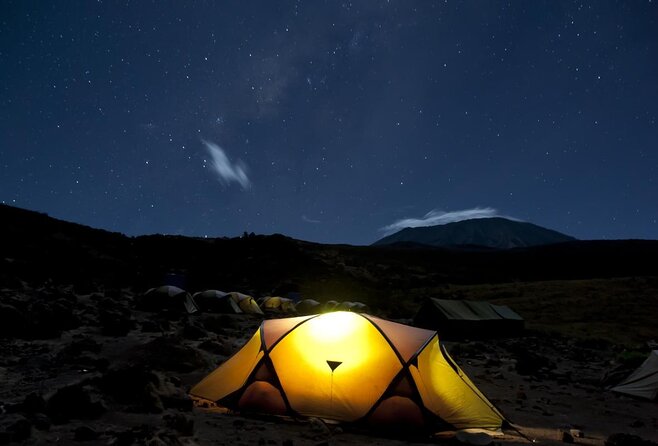
- Marangu is the hut route: You sleep in dormitory-style huts at Mandara, Horombo, and Kibo rather than camping in tents.
- Horombo acclimatization day: The extra day includes a walk toward Mawenzi Peak, reaching about 4,600 meters before returning to the hut.
- Summit morning is demanding: Day five lasts about 12 hours and begins shortly after midnight, with a climb to Gillman’s Point and, for those with enough strength, Uhuru Peak.
- Moshi transfers are included: Pickup from your Moshi hotel and return transport from Marangu Gate are covered.
- The price needs careful checking: Park fees are excluded, and you also pay for insurance, tips, gear, flights, and town hotels.
- Private does not necessarily mean tiny: The experience is sold for a private party, but the stated maximum capacity is 90 people, so confirm your actual group size before paying.
What the six-day climb really involves
This is not a sightseeing walk with a summit added at the end. You spend six days gaining altitude, adjusting to thinner air, and managing your energy for the final climb. The route covers forest, heather, moorland, tundra desert, scree, and a high volcanic summit zone.
The biggest benefit is the itinerary’s slower middle section. Many people rush up Kilimanjaro and then pay for it at altitude. Here, you spend a full day at Horombo before moving to Kibo. That does not guarantee success, but it gives your body more time to adjust and gives you a useful training walk at higher elevation.
The guide and porter team matter as much as the route. Your professional mountain guide leads the pace and safety decisions, while porters handle much of the shared load. One especially useful detail from the experience is that your guide can help you keep going during the summit attempt, when motivation can fade and every step feels expensive.
More Marangu Route climbs:
- Kilimanjaro climb, Marangu route (6-day)
★ 5.0 · 72 reviews - Climbing Kilimanjaro – Marangu Route
★ 5.0 · 65 reviews - Private Full Day Hiking Experience to Marangu Route
★ 5.0 · 61 reviews
Day 1: Marangu Gate to Mandara Hut
Your pickup begins in Moshi, followed by a drive to Marangu Gate. Registration takes place at the park entrance, where the guide and porter team prepare for the climb. Once you leave the gate, the first day brings a steady walk through Kilimanjaro’s rainforest.
The forest is one of the most enjoyable parts of the lower route. Look for colorful birds, colobus monkeys, other monkey species, mosses, lichens, flowers, and orchids. On a clear day, you may also see Moshi far below at the edge of the plain.
The walk takes about four to five hours. The distance is manageable for many fit hikers, but do not treat it as a free warm-up. You are starting a multi-day climb, so a slow pace and careful water intake make sense from the first hour.
Mandara Hut is your first overnight stop. Accommodation is dormitory style, not a private hotel room. That keeps the climb relatively simple, but you should be comfortable sharing sleeping space and living with limited amenities.
Day 2: Mandara Hut to Horombo at 3,720 meters
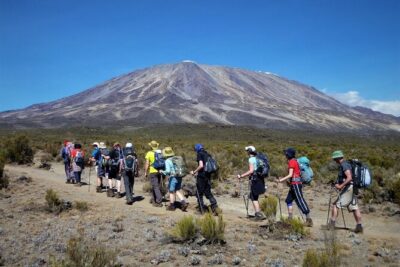
After breakfast, the route finishes its final stretch of rainforest and enters open moorland. The change is striking. Tall forest gives way to rolling ground, large heather, sparse plants, and wide views toward Kilimanjaro’s two major summits, snow-capped Kibo and rocky Mawenzi.
This is a longer day, taking roughly five to seven hours depending on pace. You gain about 1,000 meters, so the walk may feel harder than the mileage suggests. The advice to go pole pole, meaning slowly, is not decoration. A calm pace helps you conserve energy and gives your body a better chance to handle the altitude.
Horombo Hut sits at about 3,720 meters. It is an important stop because you spend the next day here instead of climbing higher immediately. The huts provide shelter and dormitory beds, while the included meals save you from managing food on your own.
Day 3: Acclimatization near Mawenzi Peak
Day three is the smart part of the schedule. You stay at Horombo and take a four to five-hour round-trip walk toward the base of Mawenzi Peak. The route reaches around 4,600 meters before you return to Horombo for dinner and another night.
The walk gives you altitude without forcing you to sleep higher that night. That is useful preparation for Kibo and the summit attempt. It also keeps the day active, so you are not simply sitting around waiting for the next climb.
You should use this day to pay attention to how your body feels. The available information does not promise medical support beyond the guide team, so bring any required personal medication and tell your guide promptly if you feel unwell. The purpose of acclimatization is to give your body time, not to prove toughness.
This is also the point where the six-day schedule shows its value. Marangu is often described as the easier route because of its straightforward trail and huts, but altitude remains the main challenge. The extra Horombo day improves the pacing considerably.
More treks and hikes around Kilimanjaro:
- Kilimanjaro climb by Lemosho Route (7-day)
★ 5.0 · 651 reviews - Kilimanjaro climb, Machame Route (7-day)
★ 5.0 · 262 reviews - Kilimanjaro Climbing Lemosho Route 8 Days.
★ 5.0 · 186 reviews - 8-Day Small-group Lemosho Kilimanjaro Summit Trekking
★ 5.0 · 186 reviews
Day 4: Horombo to Kibo Hut across the Saddle
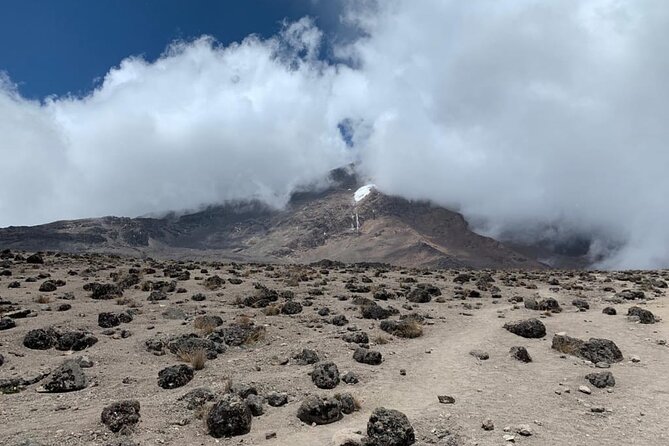
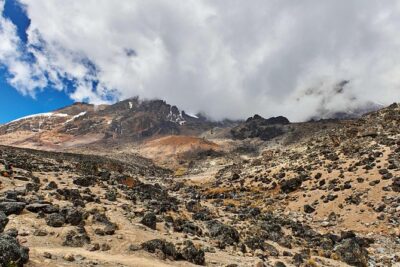
The route becomes drier and more severe as you leave Horombo. Alpine flowers and unusual high-altitude plants give way to stone, open ground, and a broad tundra desert known as the Saddle, between Mawenzi and Kibo.
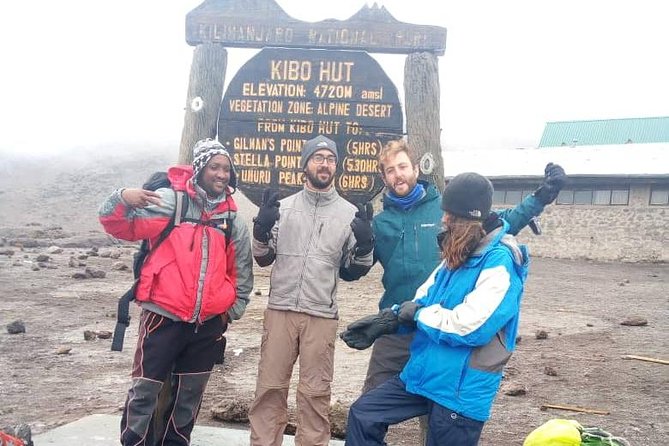
The walk to Kibo Hut takes about five to seven hours. You pass the Last Water point, so pay attention to your supply before entering the driest section. The final approach brings views of Kibo’s upper slopes and the dry-stone-walled hut at about 4,705 meters.
Kibo has dormitory rooms and limited amenities. You arrive with one job: rest and prepare for the summit attempt. Repack your daypack and give unnecessary items to the porters, since carrying less weight will help during the long climb.
You should expect a short night. The guides wake you shortly after midnight, and the summit effort starts before dawn. Put your warmest clothing, headlamp or torch, water, and essential personal items where you can reach them easily. The supplied information does not list personal gear, so you need to arrange suitable hiking clothing and equipment separately.
Day 5: The pre-dawn push to Uhuru Peak
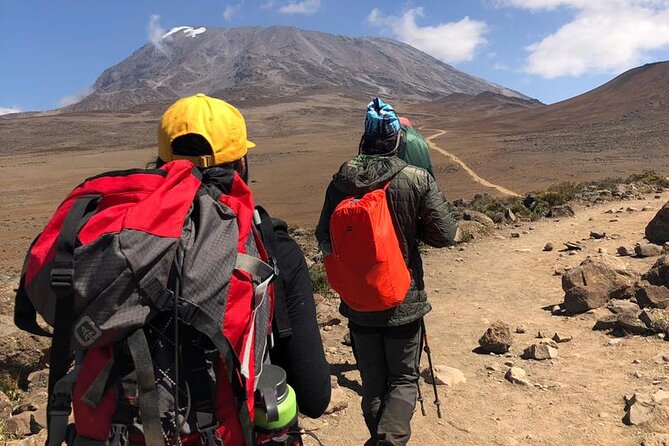
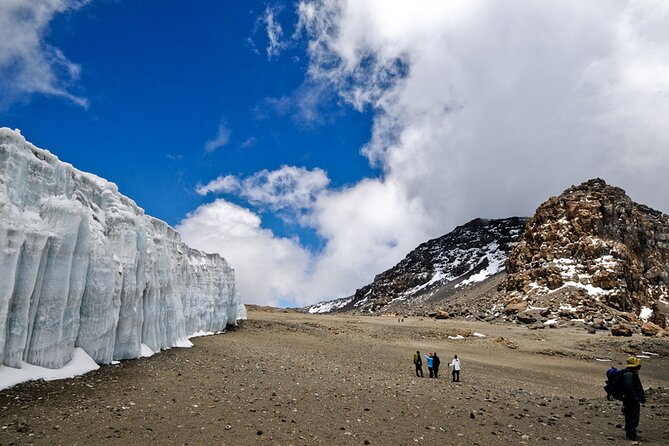
Summit day is the hardest and longest part of the trip. You begin shortly after midnight by climbing a long slope of scree, loose volcanic gravel that can shift under your boots. At that hour, the scree is frozen, which can make it easier to walk than later in the day.
After about two hours, you reach Hans Meyer’s Cave. The climb continues toward Johanne’s Notch, then steepens as you approach the crater rim. The goal is to reach Gillman’s Point at 5,685 meters in time for sunrise.
This is where a supportive guide and a patient group make a real difference. A guide can help you maintain a measured pace and keep moving when the climb becomes mentally rough. The experience includes a guide who is there to support the summit effort, and one previous climber credited the guide, chef, and porters with helping them reach the top.
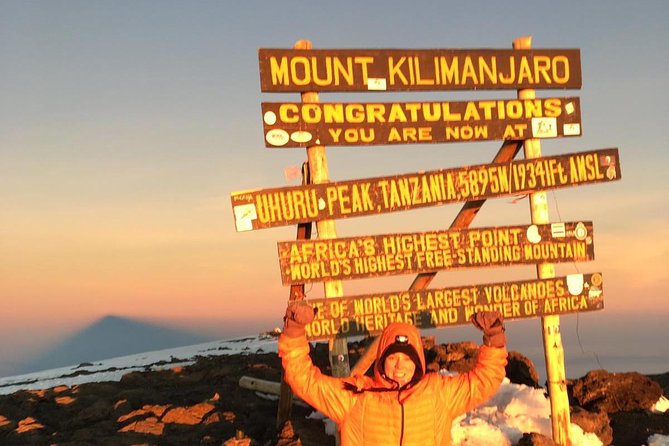
At Gillman’s Point, you can see the sun rise over Kilimanjaro’s ice fields and the jagged form of Mawenzi. If you still have enough strength, you continue around the crater rim toward Uhuru Peak, the highest point on Kilimanjaro. The information provided does not give the exact walking time from Gillman’s Point to Uhuru, so expect the guide to judge your condition and pace on the day.
The full day lasts about 12 hours. That figure includes the climb, time at altitude, and descent. Do not assume reaching Gillman’s Point automatically means you will continue to Uhuru Peak. The guide’s safety judgment, your physical condition, and the mountain weather all matter.
Day 6: Descending from Kilimanjaro to Moshi
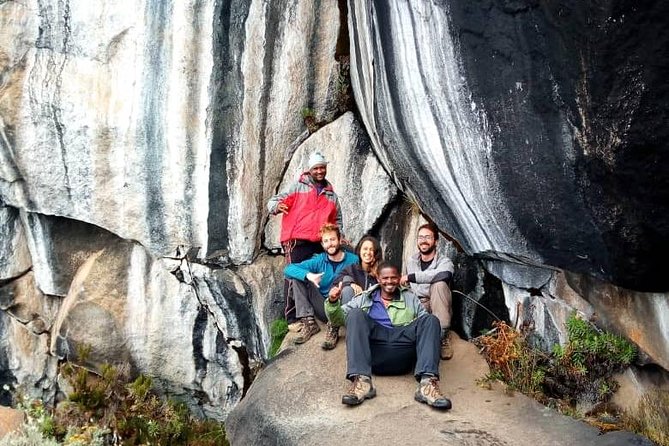
After the summit day, you descend through the alpine meadow and rainforest, passing Mandara Hut before reaching Marangu Gate. The pace often feels quicker downhill, but tired legs and loose ground can still make the descent demanding.
The stated distance for this final day is 20.8 kilometers, or about 12.9 miles, with roughly eight hours on the move. Breakfast and lunch are included. At the gate, you board the vehicle back to your hotel in Moshi, where the trek ends.
The return transfer is a useful practical feature. You do not need to arrange a separate taxi from the park, and the included certificate gives you a formal reminder of the achievement. Hotel accommodation in Moshi before and after the climb is not included, so plan those nights separately.
What the $1,150 price includes, and what it does not
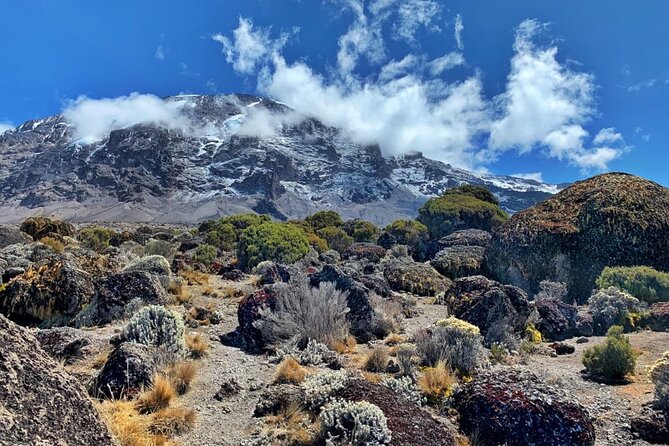
At first glance, $1,150 per person looks reasonable for six days on a major mountain. You receive hotel pickup and return transport within Moshi, a briefing, a professional guide, porters, hut accommodation, and breakfast, lunch, and dinner during the trek.
The value comes from having the main mountain logistics handled for you. You are not arranging park transfers, carrying every shared supply, or planning meals day by day. The private-party setup also gives you more control over who shares the experience.
But the advertised price is not the final cost. All Mount Kilimanjaro park fees are excluded, and these can make a substantial difference. Confirm the exact amount and payment process before booking. You also need to budget for:
- Travel and medical insurance
- Tips for the mountain crew
- Personal hiking gear
- Flights
- Airport transfers
- Hotels in Moshi before and after the trek
The phrase camping fees appears among the inclusions, but the route uses huts rather than standard tent camping. Ask the operator to explain exactly which accommodation and park charges are covered. Clear answers here will prevent an unpleasant surprise.
Private party, group size, and the human side of the climb
A private party is appealing if you want to climb with friends or family. You already know the people sharing the early starts, hard walking, and summit nerves. That can make the long days more comfortable.
At the same time, the experience states a maximum of 90 participants. That figure may refer to the operator’s overall capacity rather than your actual private group, but the wording deserves clarification. Ask how many people will be in your party, how many guides and porters will support it, and whether the group can split during the summit attempt.
The support team is a major part of the experience. The guide sets the pace and helps with difficult decisions. The chef prepares the included meals, and porters carry equipment. Tips are not included, so plan for them as part of the real cost.
Who should choose this Marangu climb?
I would look at this option if you want the most straightforward Kilimanjaro route, prefer huts to tents, and value a private booking. It also suits you if a six-day schedule is important but you still want one proper acclimatization day.
The route is a good match for a person who can handle long uphill walks and a very demanding summit day. You do not need to be an elite mountaineer based on the information provided, but you do need good fitness, proper gear, and a realistic attitude toward altitude.
I would think twice if you want a quiet, tiny group without first confirming the party size. I would also hesitate if you are shopping only by the headline price. Once park fees, insurance, tips, gear, and Moshi hotels are added, your total will be higher than $1,150.
The 4.7 rating from 11 submitted ratings and a 100 percent recommendation figure suggest strong satisfaction, especially with the guide, chef, and porter support. Still, the small number of ratings means I would use those figures as encouragement, not as a guarantee.
Cancellation and weather notes
You can cancel up to 24 hours before the local start time for a full refund. Changes or cancellations made inside that 24-hour window are not accepted for a refund.
The climb depends on suitable weather. If poor weather causes the operator to cancel, you receive the option of another date or a full refund. Since the summit attempt is the key moment of the trip, check the local forecast and keep some flexibility in your wider Tanzania plans.
Should you book this six-day Marangu Route climb?
Book it if you want hut accommodation, Moshi transfers, a private-party format, and an itinerary that gives you a full Horombo acclimatization day. Those are practical advantages, and the Mawenzi walk adds useful altitude practice before Kibo.
Before paying, ask for the exact park-fee total, your actual group size, the full gear list, and the tipping expectations. If the answers are clear and you are prepared for a 12-hour summit day, this is a sensible route for a first Kilimanjaro attempt. If you want the lowest possible total cost or a guaranteed small group, compare carefully before committing.
FAQ
Where does the Kilimanjaro climb begin?
The tour begins with pickup from your hotel in Moshi, followed by transport to Marangu Gate.
How long does the experience last?
The climb lasts approximately six days, ending with the return from Marangu Gate to Moshi.
Where do you sleep during the trek?
You stay in dormitory-style mountain huts at Mandara, Horombo, and Kibo. The huts have limited amenities, especially at Kibo.
Is an acclimatization day included?
Yes. Day three is spent at Horombo Hut, with a four to five-hour walk toward the base of Mawenzi Peak. The walk reaches about 4,600 meters before returning to Horombo.
Is food included?
Breakfast, lunch, and dinner are included during the trek. Breakfast and lunch are specifically included on the final day back to Moshi.
Are Kilimanjaro park fees included in the price?
No. All Mount Kilimanjaro park fees are excluded and must be paid directly to the park or through the tour operator.
Can I cancel for a full refund?
Yes, if you cancel at least 24 hours before the experience start time. If poor weather causes the operator to cancel, you are offered another date or a full refund.
More Six-Day Trips in Kilimanjaro
- Kilimanjaro climb, Lemosho Route (6-day)
★ 5.0 · 129 reviews - 6 Days Tanzania Classic Safari
★ 5.0 · 52 reviews - The Best of Machame Route in 6 Days: Your World’s Summit Guide
★ 5.0 · 44 reviews - 6 Days Machame Route Kilimanjaro Climbing
★ 5.0 · 42 reviews
Just added around Kilimanjaro
- 6 days Machame route climbing Mt.Kilimanjaro★ 5.0 · 8 reviews
- machame route★ 5.0 · 16 reviews
- Mt Kilimanjaro 6 days Marangu route hike★ 5.0 · 3 reviews
- Private Cycle to Kilimanjaro Bike Park Safari★ 5.0 · 6 reviews
- West Kilimanjaro cycling Adventures★ 4.5 · 8 reviews
- Kilimanjaro Climb • Marangu Route ~ 9 Day★ 5.0 · 4 reviews
- 3 Days Private E-Bike Tour in West Kilimanjaro★ 5.0 · 3 reviews
- Kilimanjaro Climb • Machame Route ~ 10 Day★ 5.0 · 6 reviews
Marangu Route Climbs, compared.
Browse the lists this tour appears in