
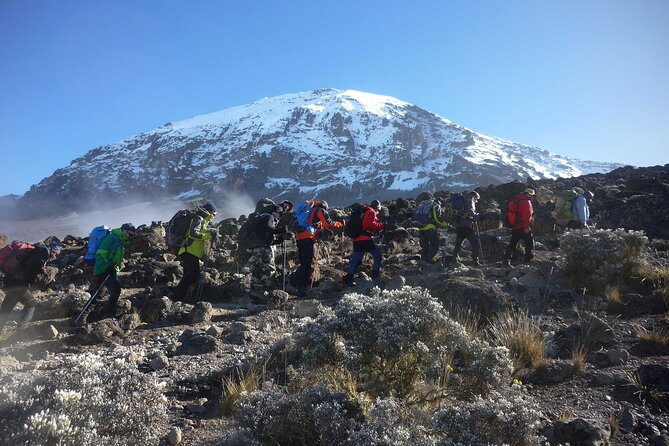
Reviewed · MARANGU ROUTE CLIMBS
6 Day Kilimanjaro Climbing Via Marangu Route
Reaching Uhuru Peak at 5,895 meters is the heart of this Kilimanjaro climb. You’ll move from thick rainforest to cold alpine desert, then make the hard pre-dawn push toward Africa’s highest point. The route is often called the Coca-Cola Route, but don’t let that nickname fool you. The altitude makes this a serious mountain trip.
I like the way this plan keeps the route simple, with overnight stops at Mandara, Horombo, and Kibo Huts. I also like the practical package: guides, porters, meals, water, sleeping bags, camping equipment, and park fees are included. The main point to check before paying is the schedule. The title says six days, while the supplied day-by-day plan describes five trekking days, so confirm the exact number of nights and acclimatization time.
Key points to know before booking
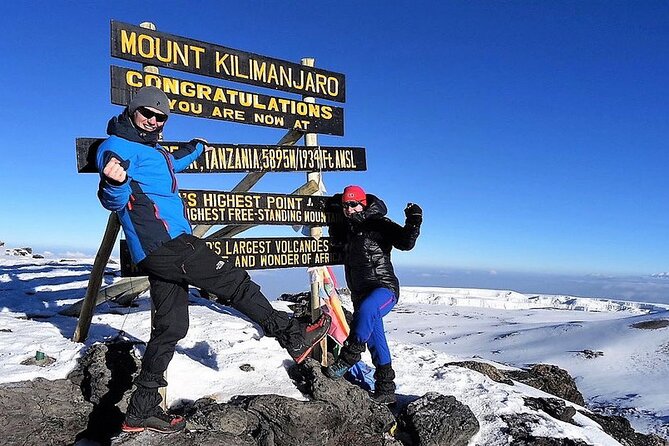
- Pre-dawn summit attempt: You start the hardest climb in the early morning and aim to reach Uhuru Peak before sunrise.
- Four ecological zones: The route passes through rainforest, heathland, alpine desert, and the cold arctic zone near the summit.
- Hut-based route: Nights are listed at Mandara Hut, Horombo Hut, and Kibo Hut, rather than in ordinary backcountry tents.
- Experienced support team: Guides and porters accompany you, with Antipas, Emanuel, William, and Tuliza named in past departures.
- Meals and gear included: Five breakfasts, five lunches, five dinners, snacks, bottled water, sleeping bags, and camping equipment are included.
- Important itinerary check: The product is called six days, but the detailed schedule covers five days, so ask the operator to clarify the plan.
What the $2,196 price covers
At $2,196 per person, this is not a cheap walk in the hills. It is a supported high-altitude expedition with park access, a guide, porters, food, sleeping gear, camping equipment, and all listed fees included.
That price has real value if you want a guided climb and do not want to arrange each part yourself. You are paying for more than a walking route. The package brings together entry to Kilimanjaro National Park, meals for the trek, water, sleeping equipment, transport from the stated meeting point, and a mountain crew.
The included food is also important. You receive five breakfasts, five lunches, and five dinners, plus snacks, coffee or tea, and bottled water. At altitude, regular food and fluids matter. You should still ask how water is supplied each day and what meal choices are available if you have dietary needs, since those details are not provided.
The price does not include your visa or international flights. You must also confirm exactly what airport pickup means. The meeting point is Kilimanjaro International Airport, with a listed start time of 7:30 am, and the activity ends back at the meeting point. That makes the package useful if your arrival and departure plans match the schedule, but less flexible if you need a hotel transfer or an extra night before the climb.
More Marangu Route climbs:
- Kilimanjaro climb, Marangu route (6-day)
★ 5.0 · 72 reviews - Climbing Kilimanjaro – Marangu Route
★ 5.0 · 65 reviews - Private Full Day Hiking Experience to Marangu Route
★ 5.0 · 61 reviews
Day 1: From Marangu Gate into the rainforest
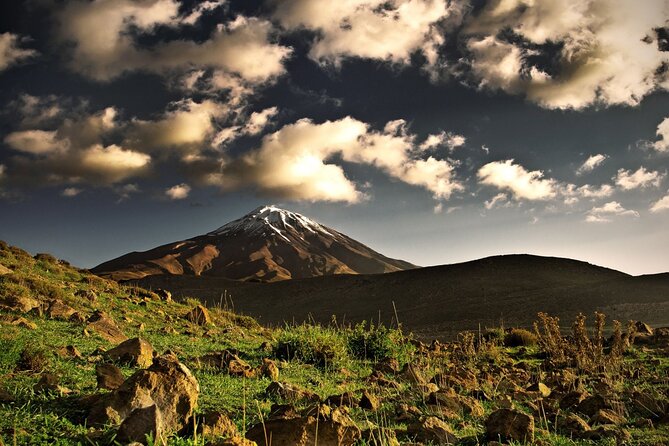
Your climb begins at Marangu Gate, where park formalities are completed and you meet the guides and porters. This administrative start is part of the real Kilimanjaro experience, so expect the first morning to include registration and preparation before your feet settle into a steady rhythm.
The trail enters the rainforest, with thick plant life and the chance to spot birds and other forest creatures. The first walk covers about 8 kilometers and takes roughly four hours. Compared with the days ahead, it is relatively gentle.
Your first overnight stop is Mandara Hut at about 2,700 meters. This is a useful first step in altitude gain. You are not yet near the summit, but your body has begun adjusting to thinner air. Take this day slowly, even if the path feels easy. The goal is not to prove how fast you can walk. The goal is to arrive ready for tomorrow.
The rainforest is one of the best features of the route because it gives the climb a strong sense of change. You begin among dense greenery, then gradually leave that world behind. Bring a rain layer and keep small essentials easy to reach, since weather in a mountain forest can shift.
Day 2: Heathland, Mawenzi views, and Horombo Hut
After breakfast, you continue upward and leave the rainforest for the heathland zone. The vegetation becomes lower and more open, and the views begin to stretch farther. You may catch sight of Mawenzi Peak, one of Kilimanjaro’s distinctive volcanic cones.
The day covers about 12 kilometers and ends at Horombo Hut, around 3,700 meters. The listed walking time is only about three minutes, which is clearly inconsistent with the distance and the other daily timings. Treat the 12-kilometer distance and the altitude gain as the useful information, and ask the provider for the expected walking time.
Horombo is an important point in the climb. You are high enough for altitude symptoms to become a serious concern, yet you still have more distance to cover. Walk at the pace your guide sets, drink regularly, and tell the crew if you develop a headache, nausea, unusual tiredness, or trouble breathing.
The supplied plan does not describe a separate acclimatization day at Horombo. That matters. A longer Kilimanjaro itinerary can give your body more time to adjust, while a tighter plan asks more from you. The advertised six-day wording and the five-day day-by-day schedule make this the key detail to clarify before booking.
Day 3: The alpine desert and Kibo Hut
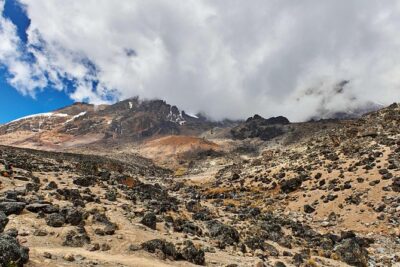
On the third day, the route enters the alpine desert zone. The plants thin out, the ground feels more exposed, and Kilimanjaro’s size becomes easier to grasp. You can see the saddle between Mawenzi and Kibo, the mountain’s two major volcanic cones.
The destination is Kibo Hut at about 4,700 meters. This is a major altitude jump from the lower parts of the route, and the description correctly warns that the day is challenging. Your pace, hydration, and patience matter more now than your speed.
Kibo is the staging point for the summit attempt. You will need to rest as much as possible before the early start. The surroundings are spare and severe, with little of the forest comfort you had on the first morning. That change is part of the appeal, but it can also make the night feel long and cold.
Sleeping bags and camping equipment are included, but the detailed itinerary names huts rather than tent camps. Ask what sleeping arrangement is provided at each stop. This is a practical question, not a minor one. Your comfort before summit morning can affect how well you handle the hardest hours of the trip.
More treks and hikes around Kilimanjaro:
- Kilimanjaro climb by Lemosho Route (7-day)
★ 5.0 · 651 reviews - Kilimanjaro climb, Machame Route (7-day)
★ 5.0 · 262 reviews - 8-Day Small-group Lemosho Kilimanjaro Summit Trekking
★ 5.0 · 186 reviews - Kilimanjaro Climbing Lemosho Route 8 Days.
★ 5.0 · 186 reviews
Day 4: The hard push to Uhuru Peak
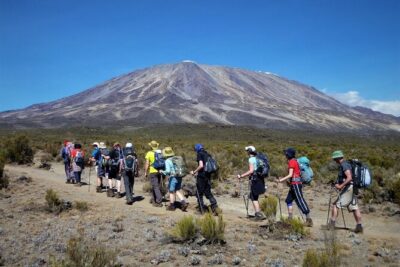
Summit day begins in the early hours, with the goal of reaching Uhuru Peak before sunrise. This is the physical and mental center of the climb. You will ascend in darkness, work steadily over difficult ground, and deal with the cold and thin air at the same time.
The summit is listed at 19,340 feet in the tour information, or roughly 5,895 meters. After reaching the top, you descend to Kibo Hut and then continue down to Horombo Hut. That makes this an especially demanding day: the summit climb is followed by a long descent rather than a simple rest.
The pre-sunrise timing has a clear purpose. It gives you the chance to stand at Africa’s highest point as the light reaches the surrounding peaks. It also means you should expect little sleep before the attempt. Follow your guide’s pace and instructions closely.
Your support team can make a big difference here. Antipas is named as a guide who took particular care of a 70-year-old father on one family climb. Emanuel, William, and Tuliza are also named in accounts of successful departures. These names give you a sense of the local team attached to the operator, but they do not guarantee that one of them will lead your group.
One especially useful detail comes from a departure where a climber needed seven days but completed the ascent in six with support from the crew. That points to a flexible, encouraging team, but it should not make you assume that a fast schedule suits everyone. Kilimanjaro success depends on health, preparation, pacing, and altitude response. No guide can remove those limits.
Day 5: Descending through the forest to Marangu Gate
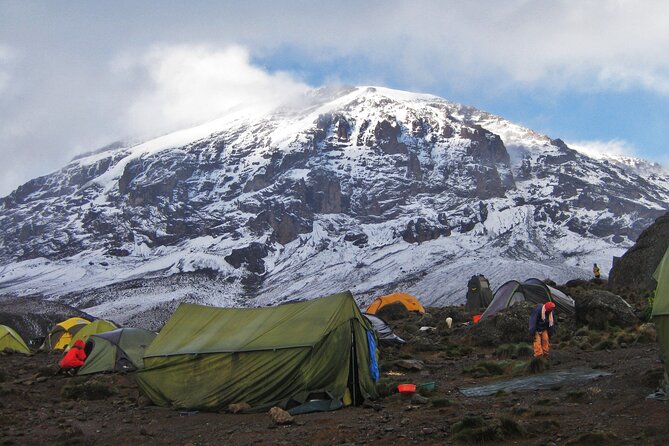
The final scheduled day takes you from Horombo Hut back to Marangu Gate. You descend through heathland and rainforest, returning to the thicker plant life seen at the start.
The route may offer sightings of colobus monkeys and birds. After several days above the tree line, that return to forest can feel like a genuine change of world. It also marks the end of the physical effort, though the downhill walk can still be tiring after summit day.
At the gate, you receive summit certificates and say goodbye to the guides and porters. This is more than a formal finish. The mountain crew has managed navigation, food, equipment, pacing, and support while you focused on the climb. The supplied feedback places strong emphasis on kind, serious, entertaining staff who helped climbers keep going.
The schedule has one clear problem here: the experience is marketed as six days, but the detailed route ends on Day 5. It may be that an additional arrival, rest, or transfer day is counted separately. Do not guess. Ask for the complete day-by-day schedule, including where you sleep each night.
The Marangu Route: simple logistics, limited flexibility
Marangu is attractive because the route is straightforward to follow and the overnight stops are established huts. You do not have to build a full camping plan from scratch, and the package includes a sleeping bag and camping equipment.
The tradeoff is that Marangu is not a private wilderness experience. The route is well known, and the hut system can feel more basic and communal than a lodge-based holiday. The supplied information also mixes Marangu with references to Machame and Signature Camping. Those are not small wording issues. They suggest that the description may combine details from different route products.
Before booking, confirm these points:
- The trip is definitely on the Marangu Route.
- The nights are in huts, tents, or a mix of both.
- The plan lasts five or six trekking days.
- The quoted price includes porter support and airport transfers as you need them.
- The group size for your departure is known. The stated maximum is 100 people, which is a large possible cap.
A group of up to 100 does not mean every departure will have 100 climbers, but it is worth asking. Group size affects walking pace, meal arrangements, support, and how personal the guide attention can feel.
Who should choose this climb?
You should consider this trip if you want a guided Kilimanjaro ascent with meals, equipment, and a support crew arranged in advance. It suits someone who values a clear route and hut stops more than a remote camping experience.
It may also suit families or mixed-age groups if everyone is properly prepared. One recorded climb included four brothers in their thirties and forties with their 70-year-old father, with the guide paying close attention to the older climber. That does not mean the climb is easy for older people. It shows that the crew can provide attentive support when the group’s needs are clear.
You should be cautious if you want a relaxed acclimatization schedule, private guiding, or a highly detailed itinerary before paying. The conflicting five-day and six-day information needs an answer. You should also be honest about your fitness and altitude experience. Most participants can take part according to the supplied information, but Kilimanjaro remains a demanding high-altitude climb.
Booking, pickup, and cancellation details
The listed meeting point is Kilimanjaro International Airport, with a 7:30 am start. Pickup is offered, and the activity ends back at the meeting point. Confirm whether you need to arrive before that morning or whether the operator coordinates with your flight.
Confirmation is provided at booking. The activity is near public transportation, and the stated maximum group size is 100 people.
Cancellation is generous if your plans change early. You can cancel at least 24 hours before the local start time for a full refund. Cancellations or changes made within 24 hours are not refunded or accepted.
Should you book the 6-day Marangu climb?
I would book this trip if the operator confirms the schedule in writing and you want a supported Kilimanjaro climb with food, equipment, huts, and park fees bundled into one price. The strongest features are the ecological variety, the clear summit goal, and the support team’s record of patient, encouraging care.
I would pause if you need certainty about the route description, sleeping arrangements, or number of days. Ask why Machame and Signature Camping appear in the information for a Marangu trip, and ask for the exact accommodation plan. If the answer is clear and the itinerary is truly six days, the $2,196 price can be fair for the services included. If it is actually five days, compare that shorter schedule with longer options before committing.
FAQ
Where does the Kilimanjaro climb start?
The stated meeting point is Kilimanjaro International Airport on Kilimanjaro Airport Road in Tanzania.
What time does the activity start?
The listed start time is 7:30 am.
Which Kilimanjaro route does this trip use?
The tour is described as a Marangu Route climb.
How long does the climb last?
The experience is marketed as six days, but the detailed schedule lists five trekking days. Confirm the exact duration with Spirit of Kilimanjaro before booking.
How high is Uhuru Peak?
Uhuru Peak is listed at 19,340 feet, the highest point in Africa.
Where do you sleep during the climb?
The detailed plan names Mandara Hut, Horombo Hut, and Kibo Hut as overnight stops. Camping equipment and a sleeping bag are also included, so confirm the exact sleeping arrangements.
What meals are included?
The package includes five breakfasts, five lunches, and five dinners, along with snacks, coffee or tea, and bottled water.
Are park fees included?
Yes. All fees and taxes are listed as included.
Are international flights and visas included?
No. International flights and visas are not included.
Can I cancel for a full refund?
Yes, if you cancel at least 24 hours before the local start time. Cancellations made within 24 hours are not refunded.
More Six-Day Trips in Kilimanjaro
- Kilimanjaro climb, Lemosho Route (6-day)
★ 5.0 · 129 reviews - 6 Days Tanzania Classic Safari
★ 5.0 · 52 reviews - The Best of Machame Route in 6 Days: Your World’s Summit Guide
★ 5.0 · 44 reviews - 6 Days Machame Route Kilimanjaro Climbing
★ 5.0 · 42 reviews
Just added around Kilimanjaro
- 6 days Machame route climbing Mt.Kilimanjaro★ 5.0 · 8 reviews
- machame route★ 5.0 · 16 reviews
- Mt Kilimanjaro 6 days Marangu route hike★ 5.0 · 3 reviews
- Private Cycle to Kilimanjaro Bike Park Safari★ 5.0 · 6 reviews
- West Kilimanjaro cycling Adventures★ 4.5 · 8 reviews
- Kilimanjaro Climb • Marangu Route ~ 9 Day★ 5.0 · 4 reviews
- 3 Days Private E-Bike Tour in West Kilimanjaro★ 5.0 · 3 reviews
- Kilimanjaro Climb • Machame Route ~ 10 Day★ 5.0 · 6 reviews
Marangu Route Climbs, compared.
Browse the lists this tour appears in