
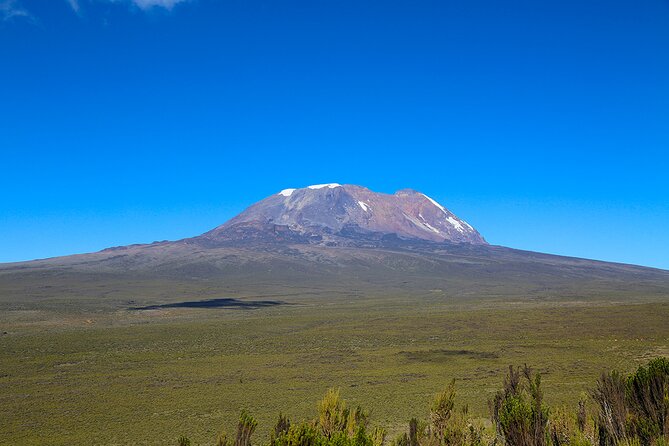
Reviewed · MARANGU ROUTE CLIMBS
6 Days Trekking Marangu Route Mount Kilimanjaro
The Marangu Route gives you Kilimanjaro with a roof over your head each night, not a tent. That is the big appeal: you walk through rainforest, moorland, and alpine desert, then return to basic mountain huts instead of sleeping on the ground. The route is steady for most of the climb, but summit night is a serious test.
I like the extra acclimatization night at Horombo Hut, which gives your body more time at altitude. I also like the practical package: guides, porters, cook, park fees, meals, transfers, and a night before climbing are included. The main caution is simple: six days is still a short schedule for a high-altitude climb, and the final ascent begins around midnight after a brief rest.
Key points to know before booking
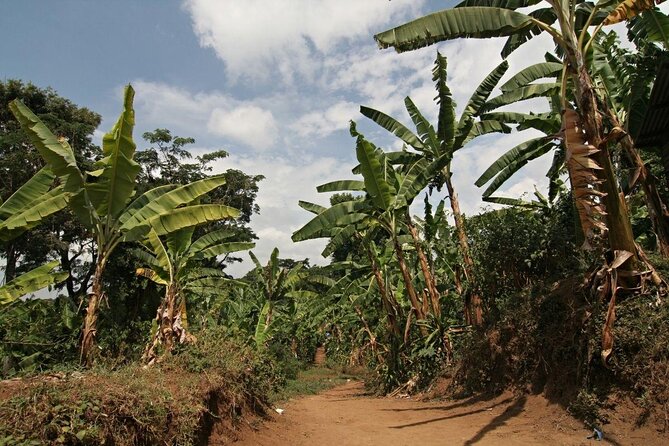
- Hut accommodation replaces camping: You sleep in simple mountain huts at Mandara and Horombo, with the route’s later lodging also planned around hut stops.
- A full acclimatization day matters: Day three includes a recommended hike toward Mawenzi and Zebra Rocks before returning to Horombo.
- The hardest section comes at night: The route to Gillman’s Point is steep, loose, and physically demanding.
- The group is capped at six people: That allows a more personal setup than a large climbing party.
- The package covers the costly essentials: Park fees, staff wages, meals, transfers, and accommodation before the climb are included.
- You can earn a summit certificate: Gillman’s Point brings a silver certificate, while Uhuru Peak brings a gold certificate.
Why the Marangu Route appeals to first-time climbers
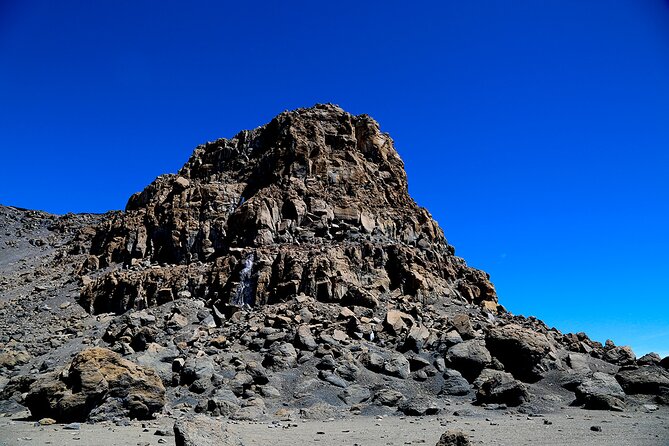
Marangu is often called the easier and more comfortable route up Kilimanjaro. That description needs a little care. The trail is well developed, the climb is gradual for much of the approach, and hut accommodation is more convenient than camping. But the mountain is still 5,895 meters high, and the last push can be brutal.
The route’s constant upward grade helps you settle into a walking rhythm. You do not face the same camping routine found on routes with tents, which can make a real difference if you prefer a bed, a hut, and a simpler evening. The huts are basic, so do not expect hotel comfort. Their value is shelter and a place to rest, not luxury.
This six-day plan includes a second night at Horombo Hut. That is one of the strongest features of the schedule. You gain a full day for your body to adjust before moving higher, and the recommended walk toward Mawenzi gives you useful altitude exposure without committing you to the summit push.
The tradeoff is time. A longer climb usually gives you more opportunity to adjust to altitude. This plan gives you an extra Horombo night, but it remains a compact itinerary. You should arrive prepared for long walking days and understand that reaching the summit is never guaranteed.
More Marangu Route climbs:
- Kilimanjaro climb, Marangu route (6-day)
★ 5.0 · 72 reviews - Climbing Kilimanjaro – Marangu Route
★ 5.0 · 65 reviews - Private Full Day Hiking Experience to Marangu Route
★ 5.0 · 61 reviews
Day 1: Marangu Gate to Mandara Hut through the rainforest
The day begins with departure from Arusha or Moshi at about 8:00 a.m., although the stated meeting time is 7:00 a.m. Confirm the exact pickup time with Meru Slopes before departure. You ride to Marangu Gate, complete mountain registration, and begin walking.
The first day leads through Kilimanjaro’s rainforest. This is a good introduction because the setting changes quickly from town and road travel to a shaded mountain trail. The route is narrow, and the walking is steady rather than wildly steep.
You stop for a picnic lunch at Kisambioni, described as the halfway point. After lunch, you continue through the forest to Mandara Hut. The day ends at roughly 2,700 meters, so this is your first real altitude adjustment.
If you still have energy, take the short walk to Mahundi Crater. On a clear day, the view reaches east toward Taveta and northwest toward Mawenzi Peak. It is a worthwhile outing, but do not treat it as mandatory. Resting, drinking, and eating well are also good uses of your afternoon.
The hut stay is an advantage for people who do not want to carry camping equipment or sleep in a tent. Still, simple huts mean shared, functional accommodation. Pack a warm sleeping bag and personal essentials unless the operator gives you different equipment instructions.
Day 2: Moorland views on the way to Horombo Hut
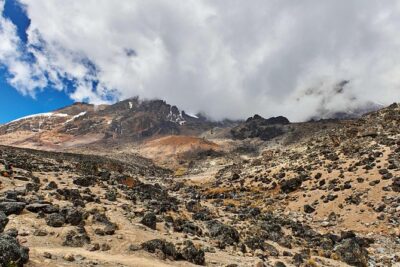
After breakfast, you leave the forest and enter Kilimanjaro’s moorland. The trees thin out, the ground becomes rockier, and plants take on a more unusual, dry-climate appearance. This change in scenery makes the second day feel like a genuine step higher on the mountain.
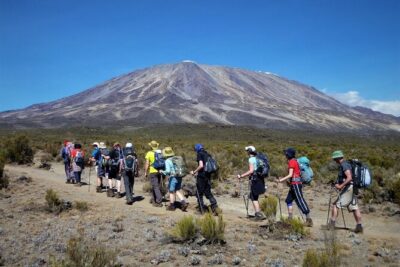
You stop for a picnic lunch at Kambi ya Taabu, then continue toward Horombo Hut. The day offers views toward Mawenzi and Kibo when the sky is clear. These two peaks give you a useful sense of the mountain’s scale, especially as you begin to see the route ahead.
Arrival at Horombo is expected around 3:00 p.m. That leaves time to eat, settle into the hut, and rest. Do not be tempted to spend the afternoon racing around. The next day is designed to help your body adjust, and a quiet evening is part of that plan.
Horombo is one of the most important stops on this route. At about 3,720 meters, you are high enough to notice the effects of altitude, yet you are not making the final summit attempt. Pay attention to how you feel and tell your guide about any symptoms.
Day 3: The useful acclimatization day at Horombo
The extra night at Horombo is not wasted time. It is the day that gives this six-day plan more breathing room. The recommended outing climbs toward Mawenzi and passes Zebra Rocks, taking about three hours up and one and a half hours back down.
That walk gives you more time at altitude while keeping you based at Horombo. It also adds a strong visual element to the trek, since Mawenzi is one of Kilimanjaro’s distinctive volcanic peaks. If the weather is clear, this can be one of the most memorable days because you are walking near the mountain’s higher terrain without yet facing the summit night.
Your guide should help decide how hard to push. The itinerary calls the hike strongly recommended, but altitude affects people differently. If you are struggling, rest may be wiser than forcing the full outing. The point is to prepare your body, not to collect extra mileage.
I particularly like this day for people who are new to high-altitude trekking. It gives you a chance to learn how your body responds before the route becomes more demanding. It also makes the schedule less rushed than a basic five-day ascent.
More treks and hikes around Kilimanjaro:
- Kilimanjaro climb by Lemosho Route (7-day)
★ 5.0 · 651 reviews - Kilimanjaro climb, Machame Route (7-day)
★ 5.0 · 262 reviews - Kilimanjaro Climbing Lemosho Route 8 Days.
★ 5.0 · 186 reviews - 8-Day Small-group Lemosho Kilimanjaro Summit Trekking
★ 5.0 · 186 reviews
Day 4: Into the alpine desert and the last water point
After breakfast, the trail leaves the moorland and enters the alpine desert. The scenery becomes more exposed and spare, with less plant life and fewer signs of the lower mountain. You also pass the final water point at about 4,130 meters.
This is a practical day, not just a scenic one. You must fill your bottles with enough water for the climb to Kibo Hut and the summit attempt, then the return to Horombo two nights later according to the schedule. The alternative mentioned is buying mineral water at Kibo Hut, but carrying a proper supply is the safer plan.
The summit is still about 1,195 meters higher. That number can look modest on paper, but altitude makes every step harder. Your pace should remain slow and controlled, and you should conserve energy for the night ahead.
You are expected to go to bed around 6:30 p.m. This early bedtime is useful, though many people find it hard to sleep before a midnight wake-up. Even quiet rest helps. Organize your clothes, water, headlamp, and snacks before lying down so you do not waste energy later.
The supplied meal plan lists seven breakfasts, seven lunches, and seven dinners. Since the climb is described as six days, ask the operator to confirm exactly how those meals are counted and where each meal is served. The important point is that breakfast, lunch, and dinner are included in the package.
Day 5: The midnight push to Gillman’s Point and beyond
Around 11:30 p.m., you wake for tea and biscuits. This is the mountain’s hardest stretch. You leave in darkness, with the route climbing over rough, rocky ground toward Hans Meyer Point at about 5,250 meters.
Hans Meyer Point provides a useful rest stop before the steepest section. From there, the trail zigzags upward toward Gillman’s Point on the crater rim. Loose stone and steep footing make this more than a test of fitness. It requires patience, balance, and mental control.
The midnight start serves a purpose. It gives you a chance to reach the crater rim near sunrise, although the exact timing depends on your pace and conditions. You should expect cold, darkness, fatigue, and a very slow rhythm. This is where good guiding matters most.
Gillman’s Point is at about 5,681 meters. Climbers who reach it receive a silver certificate. Uhuru Peak, the highest point at 5,895 meters, brings a gold certificate. The itinerary identifies both achievements, but it does not guarantee that every participant will reach either point. Your guide will judge progress and safety as the climb continues.
The schedule does not spell out every movement between the summit attempt and the following morning. It indicates that the return to Horombo is part of the plan and that the descent to Marangu Gate comes on Day 6. Ask for the exact overnight arrangement before you pay, particularly if you want a clear picture of where you sleep after the summit effort.
Day 6: A slippery descent through cloud forest
After breakfast, you descend to Marangu Gate. The final walk passes back through Kilimanjaro’s cloud forest, giving you a very different view from the dry upper slopes.
The descent is easier on your breathing, but it can be tough on knees and feet. The trail may be slippery, so sturdy footwear and careful steps matter. Do not rush simply because you are going downhill.
At Marangu Gate, you sign out and collect your certificate if you reached Gillman’s Point or Uhuru Peak. The vehicle then takes you back to Arusha. That transfer is included, which makes the end of the climb simpler after several demanding days.
What the $1,900 price includes
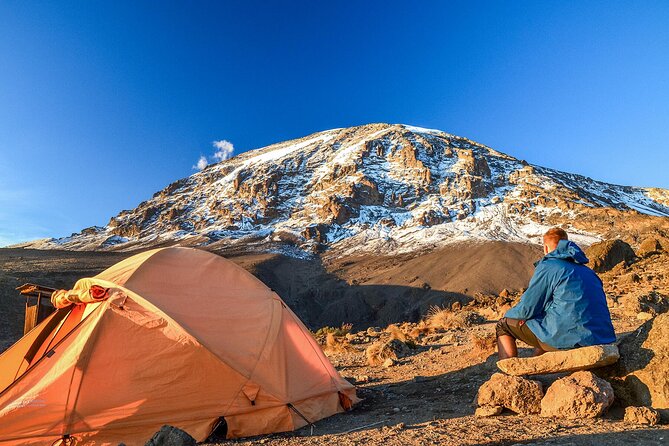
At $1,900 per person, this is not a budget walk, but the price covers many of the large costs that can catch you by surprise on Kilimanjaro. Included items are park fees, taxes, private transportation, arrival and departure transfers, a pre-climb night, guides, porters, a cook, staff salaries, and mountain accommodation.
Meals are also included, with breakfast, lunch, and dinner listed in the package. Alcohol is not included, and it would be a poor priority on a high-altitude climb anyway. International and domestic flights, visa fees, tips, and mountaineering insurance are extra.
The staffing costs matter. A supported climb depends on guides, porters, and a cook, so the price is paying for a working mountain team as well as your own place on the route. Tips are excluded, and you should budget for them separately.
Private transportation and a maximum group size of six add value if you prefer a more personal trip. A small group can make pace, rest stops, and communication easier. It does not remove the physical demands of the mountain, but it can make the logistics feel less crowded.
Guides, group size, and practical planning
Meru Slopes Tours and Safaris operates the climb, with experienced mountain guides and porters included. Michael and Yano are among the guides associated with its Kilimanjaro trips. If having a particular guide matters to you, ask whether either is available before booking.
The stated maximum is six participants. Pickup is offered, mobile tickets are available, and confirmation is provided at booking. The meeting point is listed with a 7:00 a.m. start, while the first day describes departure at about 8:00 a.m., so confirm the actual schedule.
The activity is described as suitable for most participants, but this should not be confused with easy. The summit section reaches nearly 5,900 meters. You need to be comfortable with sustained walking, steep loose ground, cold conditions, and a night start.
Free cancellation is available if you cancel at least 24 hours before the local start time. Changes or cancellations inside that window are not refunded. Poor weather can also cause cancellation, in which case you are offered another date or a full refund.
Who should book this climb
I would choose this route if hut accommodation matters to you, if you want a small group, and if you like the idea of a gradual approach with a built-in acclimatization day. It is also a sensible fit if you want an organized package rather than arranging guides, transport, meals, and park fees yourself.
I would hesitate if you want a long, slow altitude schedule or if you dislike night walking. The final ascent is not gentle, and the route’s reputation as the easiest option can create a dangerous false sense of security.
Ask about the exact sleeping arrangements after the summit push, the equipment provided, the meal count, and the pickup time. Those questions are especially important because the written plan contains a few timing details that deserve confirmation.
Should you book the six-day Marangu Route?
Book it if you want the convenience of mountain huts, a maximum group of six, and a package that includes the major climbing costs. The extra Horombo day is a real strength, and the route offers changing scenery from rainforest to crater rim without requiring camping.
Do not book it simply because Marangu is described as easy. The summit night is steep, cold, dark, and tiring. If you are prepared for that challenge and accept that altitude may determine how far you go, this is a practical and well-supported way to attempt Kilimanjaro.
FAQ
How long is the Marangu Route experience?
The climb lasts approximately six days. It begins with pickup from Arusha or Moshi and ends with transport from Marangu Gate back to Arusha.
Where does the trek begin?
The trek begins at Marangu Gate, where you complete mountain-climb registration before entering the Kilimanjaro trail.
Do I sleep in tents?
No. The accommodation is in simple mountain huts rather than tents.
Is an acclimatization day included?
Yes. Day three is an extra night at Horombo Hut, with a recommended hike toward Mawenzi and Zebra Rocks.
What is the maximum group size?
The activity has a maximum of six participants.
Are meals and park fees included?
Yes. Park fees, guides, porters, the cook’s salary, and meals are included. The package lists breakfast, lunch, and dinner.
What happens if bad weather cancels the climb?
You are offered a different date or a full refund if the experience is canceled because of poor weather.
More Six-Day Trips in Kilimanjaro
- Kilimanjaro climb, Lemosho Route (6-day)
★ 5.0 · 129 reviews - 6 Days Tanzania Classic Safari
★ 5.0 · 52 reviews - The Best of Machame Route in 6 Days: Your World’s Summit Guide
★ 5.0 · 44 reviews - 6 Days Machame Route Kilimanjaro Climbing
★ 5.0 · 42 reviews
Just added around Kilimanjaro
- 6 days Machame route climbing Mt.Kilimanjaro★ 5.0 · 8 reviews
- machame route★ 5.0 · 16 reviews
- Mt Kilimanjaro 6 days Marangu route hike★ 5.0 · 3 reviews
- Private Cycle to Kilimanjaro Bike Park Safari★ 5.0 · 6 reviews
- West Kilimanjaro cycling Adventures★ 4.5 · 8 reviews
- Kilimanjaro Climb • Marangu Route ~ 9 Day★ 5.0 · 4 reviews
- 3 Days Private E-Bike Tour in West Kilimanjaro★ 5.0 · 3 reviews
- Kilimanjaro Climb • Machame Route ~ 10 Day★ 5.0 · 6 reviews
Marangu Route Climbs, compared.
Browse the lists this tour appears in