
Reviewed · MARANGU ROUTE CLIMBS
6 Days Kilimanjaro Climbing Marangu Route
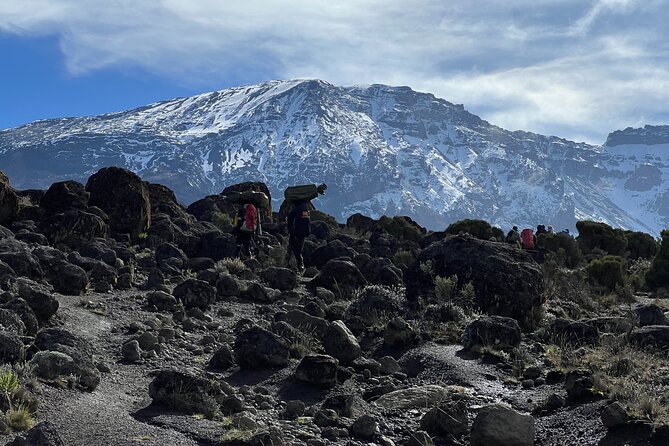
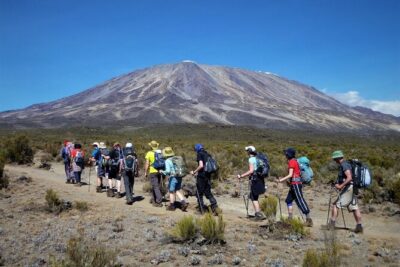
The Marangu Route gives you something no other Kilimanjaro route offers: sleeping huts instead of mountain tents. You walk through rainforest, heath, moorland, and high volcanic desert before making a cold, midnight push toward Uhuru Peak at 5,895 meters.
I like the extra night at Horombo Huts, which gives your body more time to adjust, and I like the route’s clear, practical setup: park fees, meals, drinking water, guides, porters, cooks, and airport transfers are included. The main concern is that the published schedule contains a few inconsistencies about accommodation and the final descent, so confirm the exact sleeping plan before paying.
Key points to know before you book
- Hut-based trekking: Mandara, Horombo, and Kibo Huts replace mountain camping on the main route.
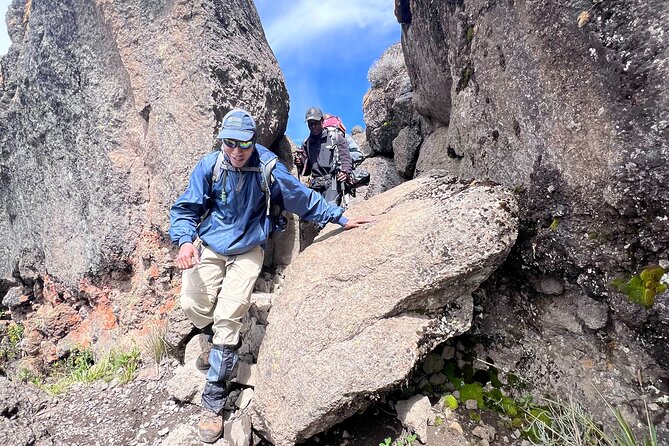
- A useful acclimatization day: Day three is spent at Horombo, with an optional walk toward Mawenzi base camp.
- A hard summit night: You begin between midnight and 2 a.m., reach Gillman’s Point, and continue toward Uhuru Peak.
- Private group format: Only your group participates, with professional guides, porters, and a cook.
- Strong practical inclusions: Park fees, meals, purified water, salaries for the mountain crew, and airport transfers are covered.
- Check the route details: The schedule refers to both Mweka Camp and Horombo Huts after the summit, so ask Furaha Adventures to clarify this point.
Why the Marangu Route remains popular
At $2,000 per person, this is not a casual mountain walk. It is a serious high-altitude climb with a summit attempt above 5,800 meters. Still, the price covers many of the expensive and essential pieces: national park fees, crew wages, six breakfasts, six lunches, six dinners, purified drinking water, and transfers.
The route is often called the Coca-Cola Route. That nickname reflects its popularity and relatively direct trail, not an easy stroll. You still gain thousands of meters, sleep at altitude, and face a long summit night in darkness and cold.
The biggest practical appeal is the hut system. You are not carrying a private mountain tent or sleeping on bare ground. The huts make the route attractive to people who prefer a more established trekking setup, though you should not expect hotel comfort. The provided material does not describe hut room arrangements, bedding, bathrooms, or whether sleeping tents are used alongside the huts. Ask for those details before departure.
This is a private activity, so your group will not be combined with strangers. That can make the pace and daily routine easier to manage. Godfrey is identified as a helpful contact during the booking process, and the mountain team includes professional guides, porters, and a cook.
More Marangu Route climbs:
- Kilimanjaro climb, Marangu route (6-day)
★ 5.0 · 72 reviews - Climbing Kilimanjaro – Marangu Route
★ 5.0 · 65 reviews - Private Full Day Hiking Experience to Marangu Route
★ 5.0 · 61 reviews
Day 1: Moshi to Mandara Huts through rainforest
Your climb begins with a drive of about 45 minutes from Moshi to the Kilimanjaro National Park gate. The route passes through Machame village before reaching the gate, where your crew waits for permits and completes the formal start.
This gate period is not wasted time. It is where you see the practical machinery of a Kilimanjaro climb: crews organizing loads, permits being checked, and groups preparing for several days on the mountain. You may want patience here, since the schedule does not promise a quick departure.
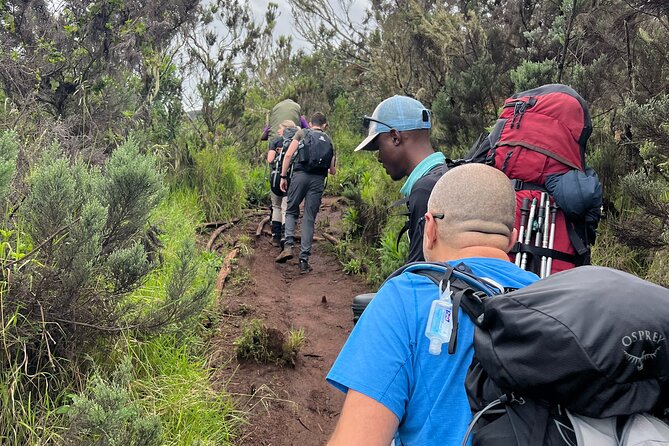
From the gate, the trail rises from about 1,905 meters to 2,723 meters. The walk takes about five hours through rainforest. Expect a wet, shaded trail with mud and slippery sections, especially if conditions are poor. Gaiters and trekking poles are especially useful on this first day, and they remain valuable later during the descent.
Your guide points out local plants and wildlife as the forest closes around the path. This is one of the nicest parts of the route because the climb begins with a gradual change in scenery rather than an immediate slog over bare rock.
Mandara Huts are your first overnight stop. The schedule lists five hours for the accommodation portion, but that appears to be a planning block rather than a second hike. Clarify the sleeping arrangement, as the package mentions both hut accommodation and private, waterproof, four-season mountain tents. Those details do not fully match, and the answer matters when you pack.
Day 2: Heathland, giant plants, and Horombo Huts
After breakfast, the forest thins and the route enters heathland. The vegetation becomes shorter and stranger, with giant lobelias and groundsels marking the change in altitude. You continue upward for about six hours, climbing from 2,723 meters to 3,721 meters.
The day’s walking is steady rather than technical. You stop halfway for lunch, with views toward Mawenzi, one of Kilimanjaro’s major volcanic peaks. By late afternoon, you reach Horombo Huts beneath the Kibo summit area.
The gain of almost 1,000 meters is substantial. Temperatures also begin to drop, so keep a warm layer in your daypack rather than buried in your main luggage. A common mistake on mountain trips is to pack for the warm forest and forget that the evening at Horombo will feel very different.
Horombo is an important stop for acclimatization. You are high enough to notice the altitude, yet still have a full day in the schedule before moving farther toward Kibo. I like this rhythm. A faster itinerary may look efficient on paper, but it gives your body less time to adjust.
Day 3: The Horombo acclimatization day
Day three is the quiet hinge of the climb. You spend a second night at Horombo Huts and can either rest or take a walk toward Mawenzi base camp before returning to the huts.
That optional walk is useful for two reasons. It lets you gain some additional height without changing sleeping altitude, and it gives you more time to learn how your body reacts. The supplied schedule describes the day as lasting up to 12 hours, with about 10 hours assigned to accommodation, so treat it as a flexible acclimatization day rather than a fixed sightseeing program.
You should use the day sensibly. Rest if you feel unwell, drink the provided purified water, and tell your guide about symptoms rather than trying to prove your toughness. The climb is not won by walking quickly on day three.
The views and weather can change around Mawenzi and the saddle, so keep your jacket nearby. The extra night also helps you understand the mountain’s routine: early meals, cold evenings, limited comfort, and a need to keep personal items organized.
More treks and hikes around Kilimanjaro:
- Kilimanjaro climb by Lemosho Route (7-day)
★ 5.0 · 651 reviews - Kilimanjaro climb, Machame Route (7-day)
★ 5.0 · 262 reviews - 8-Day Small-group Lemosho Kilimanjaro Summit Trekking
★ 5.0 · 186 reviews - Kilimanjaro Climbing Lemosho Route 8 Days.
★ 5.0 · 186 reviews
Day 4: Across the saddle to Kibo Huts
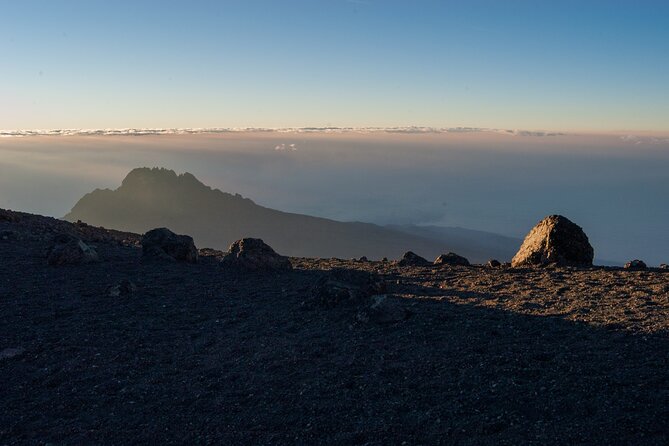
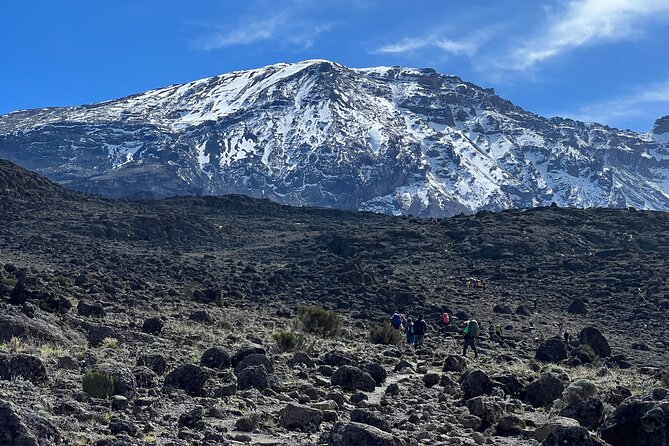
After breakfast, you leave the heathland behind. The vegetation becomes sparse, and the route crosses the broad saddle between Mawenzi and Kibo. This is the high, open section where the mountain begins to look almost lunar, with wide spaces and very little shelter.
You climb from 3,721 meters to 4,714 meters over about six hours. Lunch comes along the route, and you can look ahead toward the summit path you will tackle just a few hours later. This view has a practical benefit: you see the scale of the climb before committing to it.
Kibo Huts are the final overnight stop before the summit attempt. The schedule indicates a six-hour accommodation period, which points to an early rest and a very short night. You will need warm clothing, a headlamp, gloves, water, and snacks ready before lying down.
The route provides meals, but the description does not specify snack supplies. Bring or purchase personal summit snacks and any preferred drinks, since soft drinks and alcohol are not included. Alcohol is a poor choice at altitude in any case, but soft drinks may simply be something you want available after a hard day.
Day 5: The midnight push to Uhuru Peak
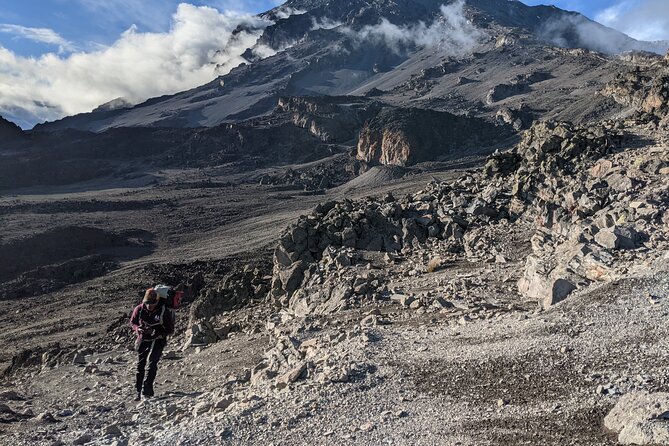
This is the demanding day. You start between midnight and 2 a.m., climbing from Kibo Huts at 4,714 meters toward the summit at 5,895 meters. The ascent gains about 1,181 meters before a steep descent of roughly 2,174 meters toward the lower overnight area.
The first goal is Gillman’s Point. You climb switchbacks in the dark, managing cold, tired legs, and thin air. The sunrise from this high section can be the emotional high point of the entire trip, even before the final summit.
From Gillman’s Point, Uhuru Peak is described as about another hour away, possibly over snow. That final stretch may feel short on a map and long in your body. Keep your pace steady and follow your guide’s instructions. The summit success depends as much on patience as strength.
At Uhuru Peak, you celebrate briefly, take photographs, and begin the descent. The schedule says you continue steeply to Mweka Camp via Barafu, and it recommends gaiters and trekking poles. It also lists Horombo Huts elsewhere for this day, which is not consistent with the stated Mweka Camp plan.
This is the most important detail to clarify with Furaha Adventures before booking. Ask exactly where you sleep after the summit, which trail you descend, and how the day’s transport or meal arrangements work. The difference affects fatigue, packing, and the next morning’s plan.
Day 6: Descent, crew farewell, and return to Moshi
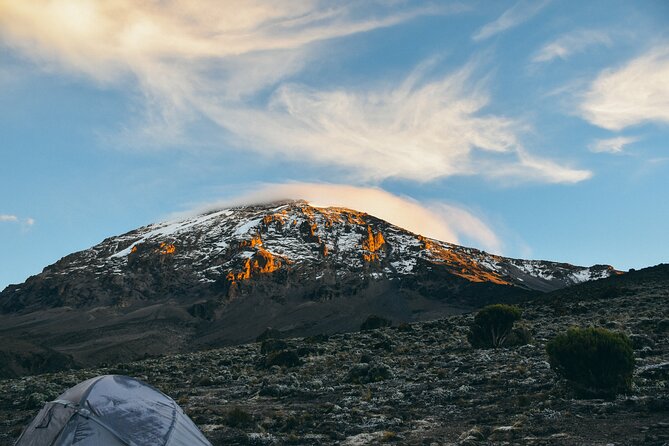
The final day descends from about 3,721 meters to 1,905 meters, with roughly 1,816 meters of altitude loss. The schedule describes breakfast, a farewell ceremony with the crew, lunch at Mandara Huts, and a final walk to the Marangu gate.
The lower trail can be wet, muddy, and steep. This is where tired knees meet slippery ground, so poles are not just a nice extra. Gaiters also help keep mud and water out of your boots.
At the gate, you receive summit certificates before boarding a vehicle back to your Moshi hotel. The drive takes about 45 minutes. A hot shower, dinner, and a long sleep will feel well earned.
The description says you tip guides, cooks, and porters as you leave them. Tips are not included in the $2,000 price, so budget for them separately. The amount is not stated, and you should ask the operator for current guidance rather than guessing.
What the $2,000 price covers
The package includes the main costs that make a Kilimanjaro climb workable:
- All park fees
- Professional mountain guides
- Porters and cook salaries
- Airport transfers
- Breakfast, lunch, and dinner for six days
- Clean, purified drinking water
- Mountain sleeping equipment described as private, waterproof, and four-season
That is a useful bundle, particularly because park fees and crew wages can make up a large part of a Kilimanjaro trip. The private format also adds value if you want your group to walk together rather than join a larger departure.
There are limits. Alcohol, soft drinks, tips, and personal spending are excluded. Souvenirs and other purchases are also your responsibility. Most importantly, confirm whether the trip uses huts, tents, or both. The route description emphasizes huts, while the inclusions mention private tents.
The published rating is 5 based on five entries, and the strongest praise focuses on the crew. Godfrey receives specific credit for helping with the booking process, while the guides and porters are repeatedly described as friendly, supportive, and attentive to safety. That personal support can matter more than fancy equipment on a high-altitude climb.
Who should choose this six-day climb?
This route suits you if you want a clear, established trail with hut accommodation and an extra acclimatization night. It also works well if you prefer a private group and want transport, meals, crew wages, and park charges placed into one price.
You should be ready for long walking days, cold nights, mud, steep descent, and a midnight summit start. The schedule says most people can participate, but that does not make the climb physically easy. If you have concerns about altitude or fitness, discuss them with the operator before booking.
The route is less suitable if you want a quiet, remote mountain experience. Marangu is the oldest and most established route, so it is popular. You also need to be comfortable with basic hut conditions, unless the operator confirms a different sleeping setup.
Free cancellation is available if you cancel at least 24 hours before the start time. Changes or cancellations inside that window are not accepted for a refund. The meeting information names Kilimanjaro Airport and Kilimanjaro National Park, so confirm the exact pickup point and time with Furaha Adventures.
Should you book it?
I would consider booking this climb if hut accommodation, a private group, and a built-in acclimatization day are your priorities. The price includes the major operational costs, and the crew support described by the operator gives the trip a reassuring human touch.
Before committing, ask four direct questions: Are you sleeping in huts or private tents? Where exactly do you sleep after the summit? Is the final descent to Mweka or back through Horombo? What tipping guidance should you follow?
If those details are confirmed clearly, this is a practical six-day route for a first Kilimanjaro attempt. If the answers remain vague, pause before paying. On a mountain climb, a tidy itinerary is not a luxury. It is part of the safety plan.
FAQ
How long is the Kilimanjaro Marangu Route experience?
The climb lasts approximately six days, beginning with pickup and transfer toward Kilimanjaro National Park and ending with a return drive to a hotel in Moshi.
Is airport pickup included?
Yes. Airport transfers are included, and the meeting information names Kilimanjaro Airport. Confirm the exact pickup arrangements with Furaha Adventures before arrival.
Where do you sleep during the climb?
The Marangu Route is known for hut accommodation, with stops listed at Mandara Huts, Horombo Huts, and Kibo Huts. The package also mentions private mountain tents, so you should confirm the exact sleeping arrangements before booking.
Is food included?
Yes. The package includes six breakfasts, six lunches, and six dinners. Alcoholic drinks and soft drinks are not included.
Is this a private group activity?
Yes. Only your group participates in the activity. Guides, porters, and a cook support the climb.
Can you cancel for a full refund?
You can cancel for a full refund if you do so at least 24 hours before the experience start time. Cancellations or changes made less than 24 hours before the start are not accepted for a refund.
More Six-Day Trips in Kilimanjaro
- Kilimanjaro climb, Lemosho Route (6-day)
★ 5.0 · 129 reviews - 6 Days Tanzania Classic Safari
★ 5.0 · 52 reviews - The Best of Machame Route in 6 Days: Your World’s Summit Guide
★ 5.0 · 44 reviews - 6 Days Machame Route Kilimanjaro Climbing
★ 5.0 · 42 reviews
Just added around Kilimanjaro
- 6 days Machame route climbing Mt.Kilimanjaro★ 5.0 · 8 reviews
- machame route★ 5.0 · 16 reviews
- Mt Kilimanjaro 6 days Marangu route hike★ 5.0 · 3 reviews
- Private Cycle to Kilimanjaro Bike Park Safari★ 5.0 · 6 reviews
- West Kilimanjaro cycling Adventures★ 4.5 · 8 reviews
- Kilimanjaro Climb • Marangu Route ~ 9 Day★ 5.0 · 4 reviews
- 3 Days Private E-Bike Tour in West Kilimanjaro★ 5.0 · 3 reviews
- Kilimanjaro Climb • Machame Route ~ 10 Day★ 5.0 · 6 reviews
Marangu Route Climbs, compared.
Browse the lists this tour appears in