
Reviewed · MARANGU ROUTE CLIMBS
6 Days Kilimanjaro climb – Marangu route
The Marangu Route gives you Kilimanjaro with huts instead of tents, a welcome touch when rain, cold, or fatigue set in. You follow the mountain’s classic path through rainforest, moorland, alpine desert, and Arctic summit terrain, with a midnight start for Uhuru Peak.
I like the extra acclimatization day at Horombo Hut and the fact that meals, private transport, and five nights of breakfast, lunch, and dinner are included. I also like the strong crew support described by the company, including prompt booking help from Issa and close care when one climber developed altitude sickness.
The main caution is the pace. Six days is not a gentle schedule, and summit day combines a long nighttime ascent with a major descent. The Marangu Route has huts, but it is still a serious high-altitude climb.
Key points to know before booking
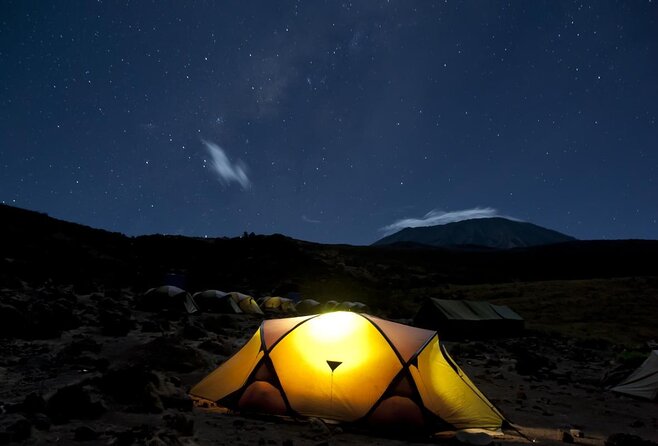
- Hut sleeping instead of camping: You sleep at Mandara, Horombo, and Kibo huts, which makes this route appealing if you do not want a tent-based trek.
- A useful acclimatization day: Day three takes you up Mawenzi Ridge and back to Horombo without changing camp.
- A demanding summit day: You start around midnight, reach Uhuru Peak at 19,341 feet, then descend to Horombo Hut.
- Meals and transport are included: The package covers private transportation plus five breakfasts, six lunches, and five dinners.
- Private group format: Only your group participates, with a 7:00 a.m. start on the first day and pickup offered.
- Strong crew support: Issa handles reservations, and the company has provided large support teams for private climbing groups.
Why the Marangu Route appeals to so many climbers
The Marangu Route is Kilimanjaro’s familiar classic. It is also called the Coca-Cola Route, partly because it is the most established and direct of the mountain’s better-known paths. The name can make it sound easy. It is not.
What makes it approachable is the hut system. Instead of carrying a tent and sleeping on the ground, you stay in mountain huts along the route. That does not remove the cold, altitude, steep walking, or early summit start, but it does simplify the nights. If basic hut accommodation suits you better than camping, this is an important advantage.
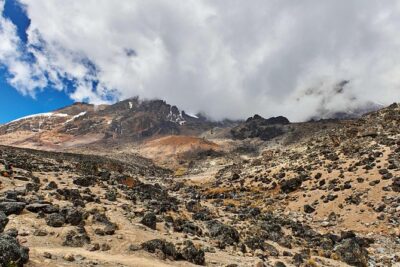
You also get a clear change of scenery over six days. The first hours pass through tropical rainforest. Higher up, the trees give way to heath and moorland, then to the bare alpine desert of the Saddle. Summit day brings Arctic conditions, with darkness, wind, snow or ice possibilities, and thin air.
The $2,000 price needs to be judged as a guided mountain package, not as six days of ordinary sightseeing. Private transport, meals, hut-based climbing, and a mountain crew are included. Tips and personal expenses are not, so your real budget must allow for those extras.
More Marangu Route climbs:
- Kilimanjaro climb, Marangu route (6-day)
★ 5.0 · 72 reviews - Climbing Kilimanjaro – Marangu Route
★ 5.0 · 65 reviews - Private Full Day Hiking Experience to Marangu Route
★ 5.0 · 61 reviews
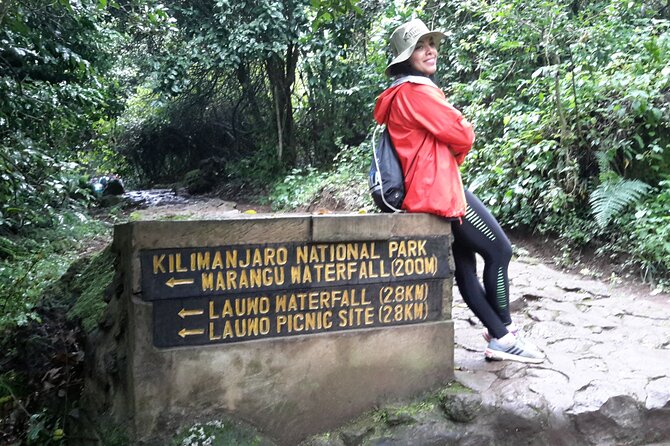
Day one: Marangu Gate to Mandara Hut
Your climb begins with a departure from Moshi at about 7:00 a.m. You first go to Marangu Gate for the required formalities. That start can feel administrative, but it is part of entering the mountain route properly. Once walking begins, the trail rises through rainforest from roughly 6,046 feet to 8,858 feet.
The first day covers about 5 miles and takes around four to five hours. This is a manageable opening, though you should resist the temptation to walk quickly. A slow rhythm gives your body a better chance to adjust, and your guide will set the pace.
The rainforest is the day’s main attraction. You may see blue monkeys near the upper edge of the forest, and the trail gradually widens as you gain height. The change from warm, damp vegetation to more open hillsides gives you your first clear sense that this is a mountain climb, not a simple forest walk.
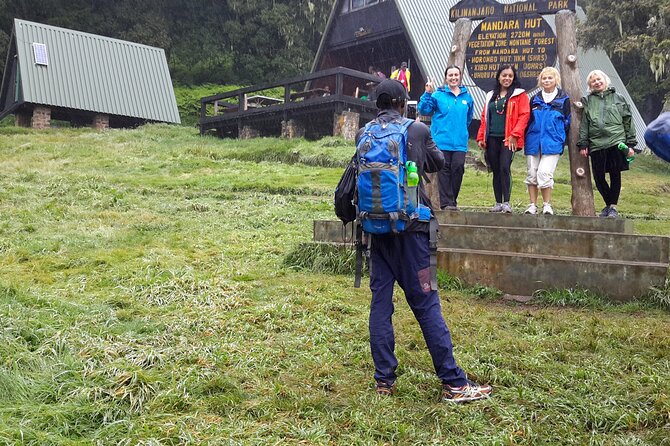
Mandara Hut is your first overnight stop. Sleeping in a hut is the practical draw here. You avoid tent setup and get a fixed place to rest, but you should not expect hotel comfort. The supplied information does not specify hut room arrangements, so ask the operator what bedding and sleeping facilities are provided before departure.
Day two: Moving into moorland at 12,205 feet
Day two takes you from Mandara Hut toward Horombo Hut. The walk covers about 7 miles and takes six to eight hours. You continue through forest at first, then reach open high moorland.
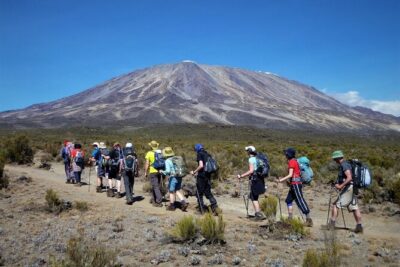
This is where Kilimanjaro begins to feel broad and exposed. You may get early views of Kibo and Mawenzi, two of the three volcanic peaks that form the mountain. Kibo is the summit cone, while Mawenzi gives the route a dramatic second point of reference.
The elevation rises to about 12,205 feet. That number matters more than the distance. A 7-mile walk at lower altitude might feel routine, but here your breathing may change and your legs may tire sooner. Keep drinking and follow the slow pace that is standard for high-altitude climbing.
Horombo Hut is an important base because you return here after the acclimatization walk on day three. Reaching it is not the end of the work for this stage. You are already high, and a good night’s rest becomes part of your summit preparation.
Day three: Mawenzi Ridge and the value of a spare day
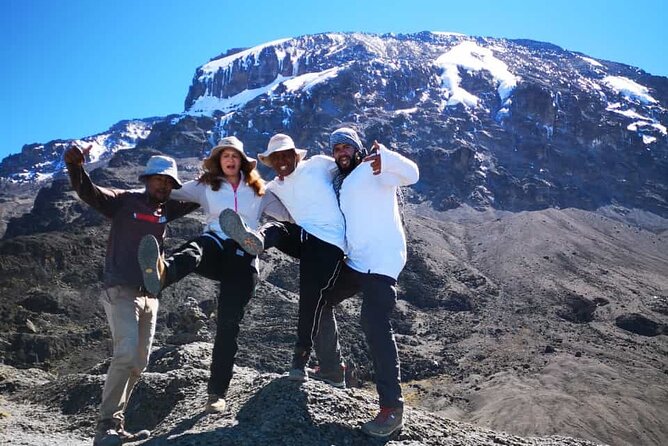
Day three is the smartest feature of this schedule. Rather than moving to a higher hut, you hike from Horombo Hut toward Mawenzi Ridge, climb to about 14,400 feet, and then return to Horombo.
The walking distance is about 3 miles each way, with two to three hours going up and one to two hours coming down. The day totals around six hours. It is not a rest day in the usual sense, but it gives your body time at altitude without forcing you to sleep higher.
The views toward Kibo and Mawenzi make this a worthwhile outing in its own right. You get a closer look at Mawenzi’s distinctive volcanic form, along with a useful sense of the route ahead. The return to Horombo also means you are not carrying your overnight kit to a new camp.
This extra day can make the six-day plan more sensible than a rushed itinerary, but it does not guarantee that altitude will cause no trouble. One climber in a six-person group supported by the company developed altitude sickness and had to turn back. That is a useful reminder: a strong support team can help you respond safely, but it cannot promise a summit.
More treks and hikes around Kilimanjaro:
- Kilimanjaro climb by Lemosho Route (7-day)
★ 5.0 · 651 reviews - Kilimanjaro climb, Machame Route (7-day)
★ 5.0 · 262 reviews - 8-Day Small-group Lemosho Kilimanjaro Summit Trekking
★ 5.0 · 186 reviews - Kilimanjaro Climbing Lemosho Route 8 Days.
★ 5.0 · 186 reviews
Day four: Crossing the Saddle to Kibo Hut
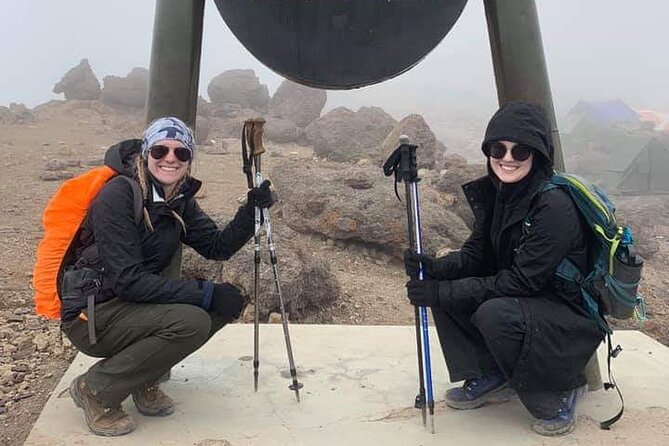
On day four, you leave Horombo and head toward Kibo Hut. The route rises from about 12,205 feet to 15,430 feet, covers roughly 6 miles, and takes six to eight hours.
The scenery changes sharply as you cross the Saddle, the broad, bare area between Mawenzi and Kibo. The alpine desert feels stark and open. There is little shelter, so sun, wind, and temperature shifts matter. The walking itself is gradual, but the altitude makes the day feel longer than the mileage suggests.
Kibo Hut sits at the base of the Kibo crater wall. This is your launch point for the summit, and the schedule changes here. You have an early dinner, rest, and prepare for a midnight start. The practical challenge is sleep. You may have only a short window to rest before the hardest section begins.
Pack your summit items before dinner so you are not searching through bags in the dark. Keep warm layers, water, headlamp, gloves, and any personal essentials ready. The supplied details do not list a personal equipment package, so you should confirm exactly what you need to bring.
Day five: Uhuru Peak and the long return to Horombo
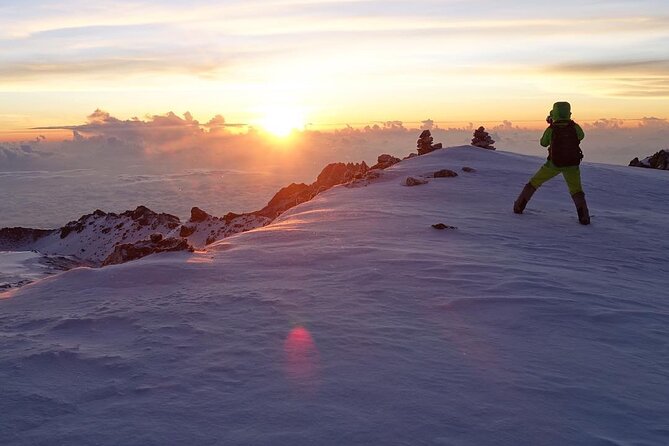
Summit day is the test of the whole climb. You begin around midnight from Kibo Hut at 15,430 feet. The route to Uhuru Peak rises to 19,341 feet and takes about six to eight hours.
For several hours, you walk in darkness, taking frequent short breaks. Wind and cold can be severe at this height and time of day. The slope and thin air make each step deliberate. This is where a patient guide and reliable crew matter most. A company response to a difficult climb specifically describes the importance of making sure a struggling climber was not left alone.
Gilman’s Point, at about 18,600 feet, is a major marker. From there, the route continues along the crater rim toward Uhuru Peak. Reaching the summit gives you wide views across the mountain and the sunrise over Mawenzi, weather permitting.
The summit is only half of the day. After reaching Uhuru Peak, you descend to Horombo Hut, a further four to five hours. The full day covers about 10 miles and lasts around 13 hours. Your legs may feel spent, but descending is also where you regain some easier breathing.
This is the biggest drawback of the six-day format. You gain an acclimatization day, but summit day remains extremely long. You need moderate physical fitness, a steady mindset, and the willingness to turn around if your health requires it.
Day six: A 12-mile descent through the rainforest
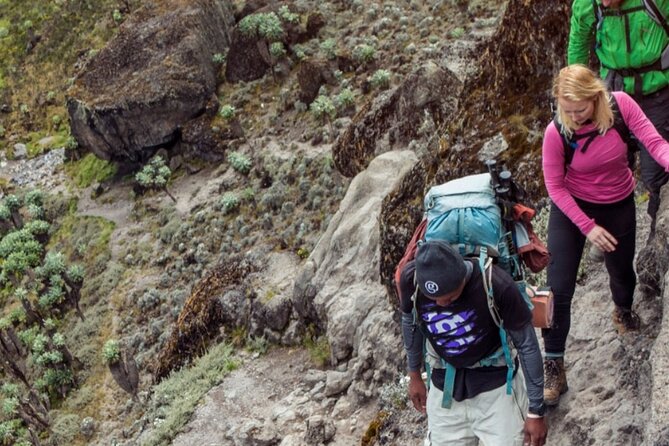
The final day takes you from Horombo Hut down to Mweka Gate. The descent covers about 12 miles and takes five to seven hours, dropping from roughly 12,205 feet to 6,046 feet.
Downhill walking can sound easy after the summit, but tired knees and feet may disagree. The lower route can be wet and muddy, especially in the rainforest. Good footwear and patience matter more here than speed.
At Mweka Gate, you collect your summit certificates. From there, the route continues for about another hour to Mweka Village, where a vehicle meets you for the drive back to your Moshi hotel.
The finish is practical rather than ceremonial. You complete the required gate formalities, receive your certificate, and return to the hotel. Build recovery time into your wider Tanzania plans. After six days on the mountain, you may want a shower, food, and a quiet evening more than another scheduled activity.
Meals, transport, and crew support
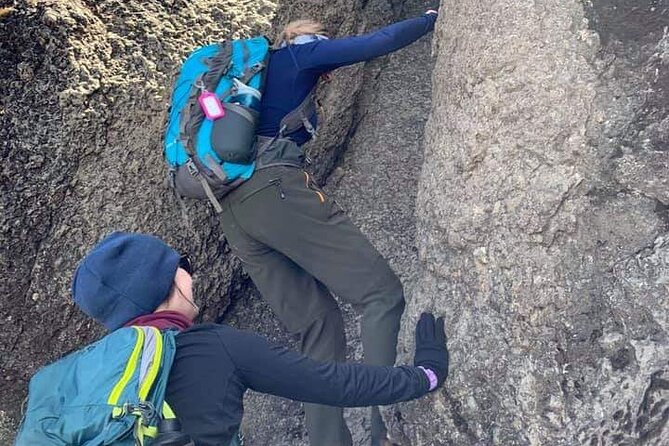
The package includes private transportation, six lunches, five breakfasts, and five dinners. Those meal counts fit the six-day schedule, with breakfast beginning after the first night and dinner provided on the five nights in the huts.
Fresh food was a particular strength of the company’s service for one climbing party. You should still confirm the menu, dietary arrangements, and how food is handled on the mountain before paying, especially if you have allergies or strict dietary needs.
The private format means only your group participates. That gives you more control than a large shared departure, but it also means your group’s fitness and pace shape the climb. A six-person party previously had a support team of 27 guides, cooks, and porters. That is a substantial crew, though staffing can vary, so confirm the expected guide-to-climber ratio for your booking.
Issa handled reservation questions and was described as replying within a day with detailed explanations. That kind of communication is useful before a climb, when you need clear answers about equipment, airport or hotel pickup, tipping, and altitude procedures.
Tips for the mountain crew are not included. Personal expenses are also separate. Ask for the company’s current tipping guidance so you can budget fairly and avoid carrying too little cash.
Who should choose this six-day climb?
I would consider this route if you want hut accommodation, a private group, and a classic Kilimanjaro approach. It suits someone with moderate fitness who is comfortable walking for several hours each day and handling one very long summit day.
It may also suit you if you prefer a fixed route and simple logistics. The company offers pickup, private transportation, meals, and a mountain crew, so you do not need to assemble every part of the trip yourself.
I would think twice if you want a relaxed mountain holiday. The nickname Coca-Cola Route can create the wrong impression. Six days is compact, the summit day lasts around 13 hours, and altitude sickness remains a real concern even with the acclimatization day.
The route is also not ideal if you strongly prefer private tents, quieter camping, or a slower schedule. The huts are the defining feature, and the timetable is built around reaching the summit within six days.
Is the $2,000 price fair?
At $2,000 per person, the value depends on what you want included. You receive private transport, hut-based climbing, the services of a mountain crew, and most meals. You also get a private group rather than being placed with unrelated climbers.
The price does not cover tips or personal expenses. It also does not spell out every practical item, such as equipment rental, drinks, travel insurance, or transfers outside the stated transport. Ask for a written list before booking.
For a private six-day climb with meals and crew support, the package can make sense if you value convenience and direct communication. The main question is not simply if the price is low. It is whether the operator explains the inclusions clearly and gives you a realistic plan for altitude problems.
Should you book this Marangu Route climb?
Book it if hut accommodation matters, you want a private climb, and you like the idea of seeing Kilimanjaro change from rainforest to Arctic summit terrain. The extra day at Horombo is a useful part of the plan, and the company’s support record, fresh meals, and responsive contact through Issa are encouraging.
Do not book it just because Marangu sounds friendly or easy. The climb reaches 19,341 feet, includes a midnight start, and ends with a long descent. If you choose it, train for sustained uphill and downhill walking, ask detailed questions about equipment and crew support, and budget separately for tips and personal expenses.
Cancellation is free if you cancel at least 24 hours before the 7:00 a.m. start. Inside that window, the payment is not refunded.
FAQ
How long is the Kilimanjaro climb?
The climb lasts approximately six days, beginning in Moshi and ending with a return to the hotel after the descent to Mweka Village.
Which route does the climb use?
It uses the Marangu Route, also known as the Coca-Cola Route.
Do I sleep in tents?
No. The Marangu Route uses mountain huts at Mandara Hut, Horombo Hut, and Kibo Hut.
What time does the experience start?
The listed start time is 7:00 a.m.
Is pickup available?
Yes. Pickup is offered, and private transportation is included.
Is this a private tour?
Yes. Only your group participates in the activity.
What meals are included?
The package includes six lunches, five breakfasts, and five dinners.
What is the highest point reached?
The summit is Uhuru Peak, at approximately 19,341 feet.
Are tips included in the price?
No. Tipping the mountain crew and personal expenses are not included.
More Six-Day Trips in Kilimanjaro
- Kilimanjaro climb, Lemosho Route (6-day)
★ 5.0 · 129 reviews - 6 Days Tanzania Classic Safari
★ 5.0 · 52 reviews - The Best of Machame Route in 6 Days: Your World’s Summit Guide
★ 5.0 · 44 reviews - 6 Days Machame Route Kilimanjaro Climbing
★ 5.0 · 42 reviews
Just added around Kilimanjaro
- 6 days Machame route climbing Mt.Kilimanjaro★ 5.0 · 8 reviews
- machame route★ 5.0 · 16 reviews
- Mt Kilimanjaro 6 days Marangu route hike★ 5.0 · 3 reviews
- Private Cycle to Kilimanjaro Bike Park Safari★ 5.0 · 6 reviews
- West Kilimanjaro cycling Adventures★ 4.5 · 8 reviews
- Kilimanjaro Climb • Marangu Route ~ 9 Day★ 5.0 · 4 reviews
- 3 Days Private E-Bike Tour in West Kilimanjaro★ 5.0 · 3 reviews
- Kilimanjaro Climb & Safari – Lemosho Route – 13 Day★ 5.0 · 10 reviews
Marangu Route Climbs, compared.
Browse the lists this tour appears in