
Reviewed · MACHAME ROUTE CLIMBS
The 6 Days Kilimanjaro Climbing Tour via Machame Route in 2025/26
The six-day Machame Route gives you Kilimanjaro’s classic scenery in a short, tough package. You begin in rainforest, cross the Shira Plateau, climb toward Lava Tower, sleep beneath the Barranco Wall, and make the final push from Barafu Camp to Uhuru Peak at 19,345 feet.
I like two things here. First, the route climbs high on day three and then drops to Barranco Camp, a useful acclimatization pattern. Second, the scenery changes constantly, from wet forest to heather, rock, scree, and Arctic summit terrain. The catch is serious: days four and five form a punishing stretch with roughly 19 to 24 hours of walking and only four to six hours of sleep.
I also like the human side of the operation. Past trips have singled out guides including Baraka and Buda, along with friendly porters, good camp meals, and steady support. Still, this is not a gentle introduction to high-altitude trekking. You need good fitness, patience, and a willingness to turn around if your body says no.
Key points to know before booking
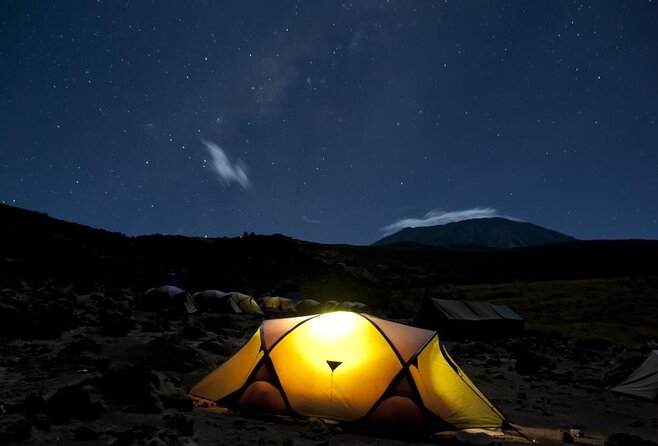
- The summit push starts around midnight: You climb through the coldest, darkest hours before reaching Stella Point and then Uhuru Peak.
- Day three is the acclimatization day: You climb toward Lava Tower at about 16,000 feet before descending to Barranco Camp at 13,000 feet.
- The Barranco Wall is part of the route: It is a steep, rocky section rather than a simple walking trail.
- The final two days are extremely demanding: You go from Barafu to the summit, then descend all the way to Mweka Camp.
- The price is $2,000 per person: Park fees, taxes, meals, and the listed six-day food service are included, but flights, visas, and crew tips are not.
- The group limit can reach 200 people: Ask about your expected group size if you want a quieter, more personal climb.
Why the Machame Route works in six days
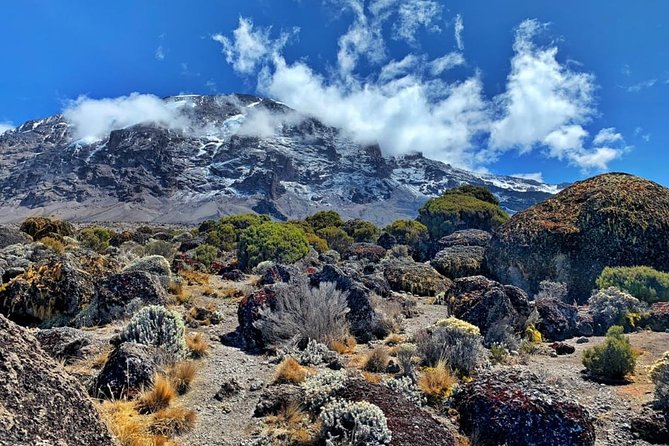
Machame is often called the scenic route, and that description fits the changing terrain. You start beneath Kilimanjaro in thick rainforest, then move into open heather and moorland. Higher up, the trail becomes dry, rocky, and spare, with glaciers and the summit ridge ahead.
The route’s real strength is its altitude profile. On day three, you climb high toward Lava Tower, then sleep lower at Barranco. That climb-high, sleep-lower pattern gives your body a better chance to adjust than a route that simply pushes upward every day.
There is no magic in the schedule, though. Six days is short for a mountain this high. The route helps, but it does not remove the risk of altitude sickness or the strain of a rushed summit schedule. I would choose this trip only if you already walk regularly and feel comfortable with long uphill days.
The listed price of $2,000 offers reasonable value for a guided Kilimanjaro climb if the stated inclusions match your booking. Park charges and mountain logistics make up a large share of the cost, while meals, transport from the mountain, and the guide and porter team add practical value. You still need to budget for flights, a Tanzanian visa, and crew tips.
More Machame Route climbs:
- Kilimanjaro climb, Machame Route (7-day)
★ 5.0 · 262 reviews - Climbing Kilimanjaro – Machame Route
★ 5.0 · 170 reviews - Climbing Kilimanjaro through 7 days Machame Route
★ 5.0 · 151 reviews
Day one: Machame Gate to the rainforest camp
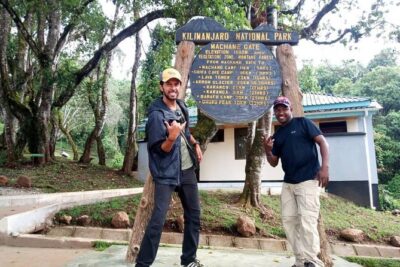
The morning begins at 8:00 a.m. from the Kiliserengoro Tours meeting point in Moshi. The drive to Mount Kilimanjaro National Park Gate takes about 50 minutes and passes through Machame village on the mountain’s lower slopes.
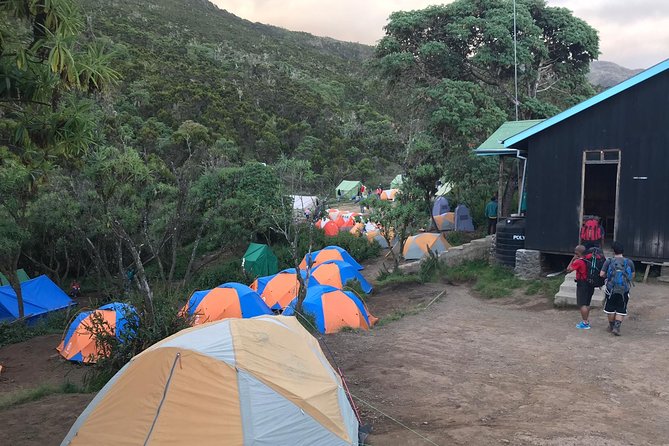
After the gate formalities, you walk into the rainforest on a winding trail. The lower path can be muddy and slippery, especially in wet conditions, and the day takes about six hours. Gaiters and trekking poles are useful here, not fancy extras.
This first day is less about altitude than rhythm. You are learning how slowly the group moves, how your pack feels, and how the guide manages breaks. The trail climbs steadily to Machame Camp, where you rest after your first proper mountain day.
The rainforest is the first great visual reward. You leave the road and buildings behind quickly, with dense vegetation closing around the path. Since the information provided does not specify the exact camp facilities, ask before departure what tent, sleeping, and washing arrangements are supplied.
Day two: Moorland and the climb to Shira
After breakfast, you leave the trees and climb into moorland. The route crosses a small valley and follows a steep, rocky ridge covered with heather before turning west toward a river gorge.
This is a shorter day by distance, about five kilometers, but the elevation gain matters. You rise from about 9,400 feet to 12,500 feet and walk for roughly four to six hours. At this height, a modest slope can feel surprisingly hard.
Shira Camp gives you a first open view of the mountain environment. The rainforest is behind you, and the air is thinner and cooler. You have dinner and spend the night at the campsite, so keeping your water bottle, warm layer, and headlamp close at hand is sensible.
I would treat this day as an early test of pacing. Walk slowly, drink regularly, and tell the guide about headaches, nausea, unusual tiredness, or poor coordination. A six-day schedule leaves little spare time if altitude problems begin.
Day three: Lava Tower, the high point before Barranco
Day three is the route’s key acclimatization day. From the Shira Plateau, you climb east along a ridge, pass the junction toward Kibo, and continue southeast toward Lava Tower, also known as the Shark’s Tooth.
The route reaches about 13,000 feet in the listed camp figures and may take six to eight hours over 10 kilometers. The trail passes through semi-desert terrain, and the higher sections feel dry, exposed, and demanding.
The most useful part comes after the climb. You can continue toward the Arrow Glacier junction at about 16,000 feet, then descend to Barranco Camp at roughly 13,000 feet. You finish the day around the same elevation where you started, but your body has spent time much higher.
That is why this day matters. You may feel tired at dinner, but the schedule has given you a better adjustment period before the summit attempt. It is also one of the days when patience matters most. Do not race uphill simply because the camp is not gaining much elevation.
Barranco Camp is a memorable stopping place, with the Barranco Wall rising nearby. You rest, eat, and prepare for the harder days ahead. This is also a good moment to check your gloves, rain gear, headlamp, and footwear.
More treks and hikes around Kilimanjaro:
- Kilimanjaro climb by Lemosho Route (7-day)
★ 5.0 · 651 reviews - Kilimanjaro Climbing Lemosho Route 8 Days.
★ 5.0 · 186 reviews - 8-Day Small-group Lemosho Kilimanjaro Summit Trekking
★ 5.0 · 186 reviews - Kilimanjaro climb, Lemosho Route (8-day)
★ 5.0 · 148 reviews
Day four: The Barranco Wall and Barafu Camp
Day four is long and should not be treated as an easy transfer day. You leave Barranco after breakfast and climb along a steep ridge, passing the Barranco Wall before reaching the Karanga Valley campsite.
The trail then connects with the Mweka route and continues upward to Barafu Camp. The listed distance is about nine kilometers, with eight to ten hours of hiking. You finish at around 15,000 feet in alpine desert terrain.
The Barranco Wall is steep and rocky, but the information provided does not describe technical climbing or ropes. You should still expect hands-on scrambling in places and a slower pace than on a normal trail. The guide’s judgment and your ability to follow instructions matter here.
At Barafu, you can see Mawenzi and Kibo, the two main peaks of Kilimanjaro. The view is a fine reward, but Barafu is mainly a staging point. You eat dinner, prepare summit clothing and equipment, and try to sleep before the midnight start.
This is where the six-day version shows its weakness. You have already walked a full day, then must rest briefly before the hardest section of the entire climb. If you need a more forgiving schedule, ask the operator about longer routes before paying.
Day five: Stella Point, Uhuru Peak, and the long descent
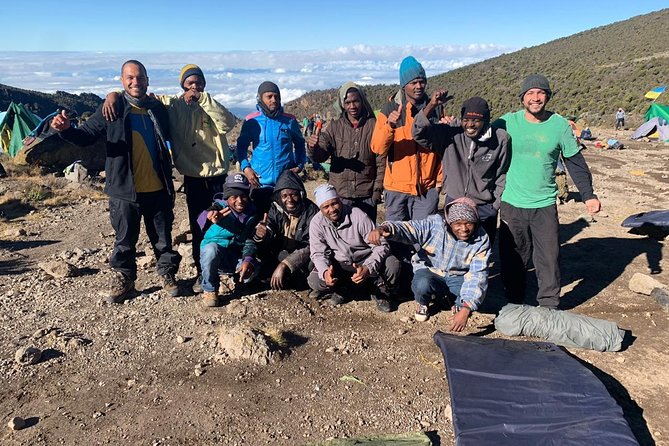
Summit day begins between midnight and 2:00 a.m. You leave Barafu at about 15,300 feet and climb through the night toward the crater rim. The ascent covers about five kilometers and takes roughly seven to eight hours.
The route heads northwest between the Rebmann and Ratzel glaciers, then climbs through heavy scree toward Stella Point at 18,600 feet. Scree is loose volcanic rock that makes every step slide slightly backward. At this height, the cold, darkness, thin air, and fatigue combine into the hardest mental and physical section.
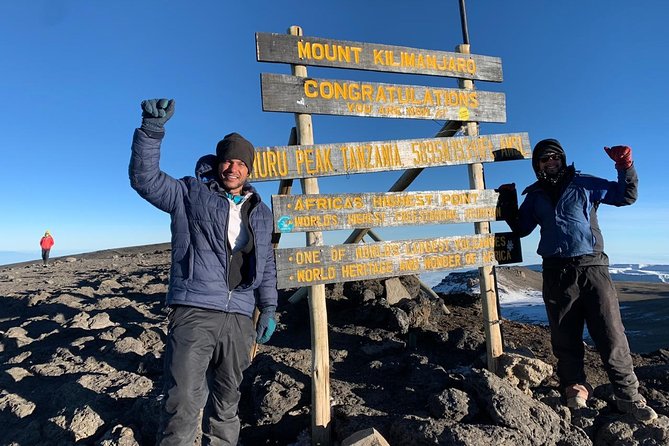
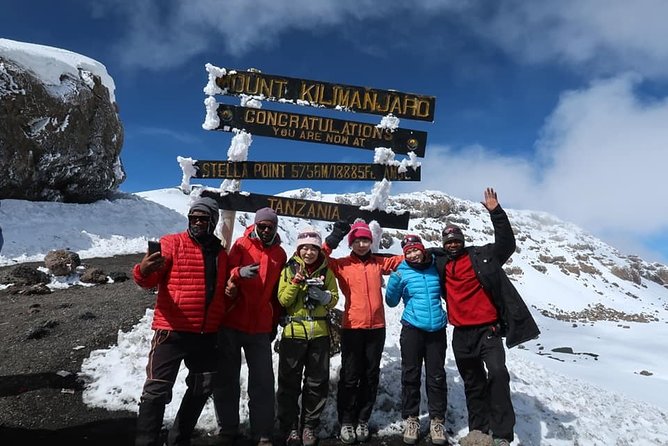
At Stella Point, you can pause and, if the weather allows, see the sunrise. From there, the route continues around the crater rim toward Uhuru Peak, the summit of Kilimanjaro, at 19,345 feet, or 5,895 meters.
The summit is not the end of the day. You descend toward the lower camp area, with about 12 kilometers of descent listed after the five-kilometer ascent. The total walking time is about 11 to 14 hours, depending on how the schedule is counted and how the group moves.
The supplied program describes this as an eight-hour day, but its own ascent and descent estimates show why you should plan for a very long day. You may reach the top in the morning and still have hours of rough downhill walking ahead. Keep snacks, water, warm clothing, and sun protection accessible rather than buried in your pack.
The summit is a personal achievement, but reaching it is not guaranteed. A good guide should put health ahead of the certificate. If you turn around before the summit, you will still have completed a demanding high-altitude trek.
Day six: Mweka descent and the return to Moshi
The final day begins after breakfast with a descent from about 10,000 feet to the Mweka Park Gate at roughly 5,400 feet. The walk takes three to four hours over about 10 kilometers.
The lower trail can again be wet and muddy, so keep your gaiters and trekking poles handy. At this point, your knees may feel the descent more than your lungs felt the climb. Shorts and a T-shirt may be comfortable at lower elevations, but keep rain gear and warmer clothing accessible until the weather is clear.
At Mweka Gate, you receive summit certificates before continuing for another hour to Mweka village. A vehicle then takes you back to your hotel in Moshi. The activity ends at the listed meeting point.
This return arrangement is useful because you do not need to organize a separate transfer from the mountain. If you are arranging your own hotel or airport connection, leave extra time after the descent. The program gives an approximate schedule, not a guaranteed arrival hour.
Guides, porters, meals, and camp support
The strongest praise attached to this operator centers on the mountain crew. Guides named in past accounts include Baraka, described as Maasai, and Buda, who was credited with strong knowledge of the mountain. Assignments can change, so ask who will lead your group and how many porters will support it.
The crew is not just there to point out the trail. On a six-day climb, you depend on the guide to set a slow pace, watch for altitude problems, judge weather, and decide when a summit attempt is sensible. Friendly porters and good food also make a real difference after a cold, tiring day.
The package lists six breakfasts, six lunches, and five dinners, along with all fees and taxes. Dinner is not listed for the final day, which makes sense if you return to Moshi after the descent, but confirm the meal schedule before departure.
The operator’s past service descriptions also point to tasty mountain meals and a supportive crew. Food preferences and dietary needs are not specified here, so raise them before booking rather than hoping the camp kitchen can adjust at the last minute.
Crew tips are excluded. You should plan for them as part of the real cost of the climb, but the supplied information does not state a recommended amount. Ask the operator for its current tipping guidance and how tips are shared among guides, cooks, and porters.
Group size, timing, and the value of the $2,000 price
The advertised price is $2,000 per person. Included fees and taxes, meals, mountain transport, and the organized guide service make that a useful starting price, but it is not your complete Tanzania budget.
Flights, visa costs, and crew tips are extra. Pickup is offered, yet the formal meeting point is the Kiliserengoro Tours office in Moshi, with an 8:00 a.m. start. Confirm the pickup address, hotel coverage, and departure time in writing.
The maximum group size is listed as 200 people. That is a very large possible limit for a mountain route, even if your actual group is smaller. Ask for the expected number of climbers, the guide-to-climber ratio, and the plan if someone needs to descend early.
Booking confirmation is provided at the time of booking. Cancellation is free up to 24 hours before the local start time, with a full refund. Cancellations or changes inside 24 hours are not accepted for a refund, and poor weather can lead to a different date or a full refund.
Who should choose this six-day climb?
I would suggest this route to a fit hiker who has limited time and wants the classic Machame scenery. You should be comfortable with six to ten-hour walking days, steep ground, cold nights, and one very long summit day with little sleep.
It can also suit someone who values a lower price and a direct schedule more than extra rest days. The acclimatization climb toward Lava Tower is a real strength, and the route gives you a broad view of Kilimanjaro’s different zones.
I would be cautious if this is your first serious mountain trip, if you dislike steep loose ground, or if you need a relaxed pace. The description says moderate fitness is required, but the actual schedule is tougher than that phrase may suggest. The final ascent and descent are the deciding factors.
Should you book the Machame Route in six days?
Book it if you want a scenic route, have six days available, and accept that the summit schedule will be hard. The best features are the varied terrain, the climb-high and descend-to-sleep pattern on day three, and the experienced-feeling guide and porter support described in the supplied information.
Think twice if you can afford more time. An extra acclimatization day would likely make the experience less rushed, but this particular package is built for a short window. Before paying, confirm the group size, guide assignment, meal arrangements, pickup details, tipping expectations, and the exact plan for day five.
For the right person, $2,000 is a fair price for a tightly organized Kilimanjaro attempt. Just remember what you are buying: not an easy holiday, but a demanding mountain crossing with a dramatic reward at the top.
FAQ
Where does the Kilimanjaro climb start?
The listed meeting point is Kiliserengoro Tours in Moshi, Tanzania. The scheduled start time is 8:00 a.m., and pickup is offered.
How long is the tour?
The climb lasts approximately six days. The walking times range from about three to ten hours on most days, with the summit schedule requiring a particularly long ascent and descent.
What route does the tour use?
The tour uses the Machame Route. It passes through rainforest, moorland, semi-desert, alpine desert, and Arctic summit terrain before descending through the Mweka route.
Is the summit attempt made at night?
Yes. The summit climb begins very early, between midnight and 2:00 a.m., from Barafu Camp. You climb toward Stella Point and then continue toward Uhuru Peak.
What is included in the price?
The price includes all fees and taxes, six breakfasts, six lunches, and five dinners. Flights, crew tips, and a visa are not included.
What level of fitness is required?
The activity states that you should have a moderate physical fitness level, but the schedule is demanding. The route includes steep climbs, long walking days, high altitude, and a short sleep period before the summit attempt.
What happens if bad weather cancels the climb?
If poor weather causes cancellation, you will be offered a different date or a full refund. You can also cancel for a full refund if you do so at least 24 hours before the local start time.
More Six-Day Trips in Kilimanjaro
- Kilimanjaro climb, Lemosho Route (6-day)
★ 5.0 · 129 reviews - Kilimanjaro climb, Marangu route (6-day)
★ 5.0 · 72 reviews - 6 Days Tanzania Classic Safari
★ 5.0 · 52 reviews - The Best of Machame Route in 6 Days: Your World’s Summit Guide
★ 5.0 · 44 reviews
Just added around Kilimanjaro
- 6 days Machame route climbing Mt.Kilimanjaro★ 5.0 · 8 reviews
- machame route★ 5.0 · 16 reviews
- Mt Kilimanjaro 6 days Marangu route hike★ 5.0 · 3 reviews
- Private Cycle to Kilimanjaro Bike Park Safari★ 5.0 · 6 reviews
- West Kilimanjaro cycling Adventures★ 4.5 · 8 reviews
- Kilimanjaro Climb • Marangu Route ~ 9 Day★ 5.0 · 4 reviews
- 3 Days Private E-Bike Tour in West Kilimanjaro★ 5.0 · 3 reviews
- Kilimanjaro Climb • Machame Route ~ 10 Day★ 5.0 · 6 reviews
Machame Route Climbs, compared.
The Best of Machame Route in 6 Days: Your World’s Summit Guide
Read our review →Browse the lists this tour appears in