
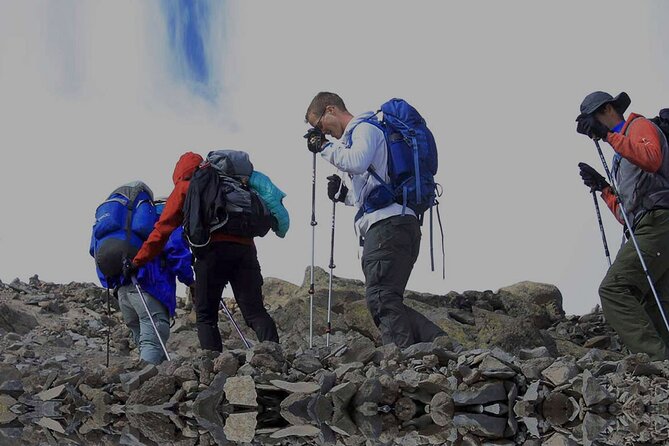
Reviewed · MACHAME ROUTE CLIMBS
Private 6-Day Kilimanjaro Climbing via Machame route from Arusha
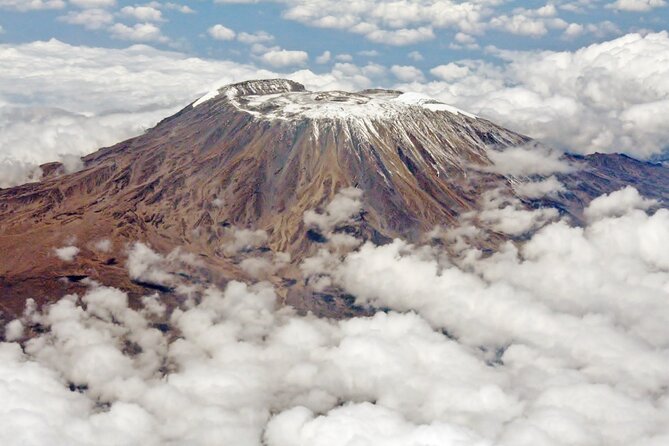
The heart of this trip is the Machame Route, a scenic climb that takes you from wet rainforest to volcanic rock, high moorland, glaciers, and the roof of Africa. You sleep at several camps, spend one key day gaining altitude and then descending, and make the summit attempt in darkness.
I like the route’s strong acclimatization day and the private crew setup, which gives your group more personal support than a large shared departure. I also like that meals, park fees, transport, and a cook and porters are included. The main caution is the demanding six-day schedule and the unusually low $160 price, so confirm exactly what is covered before paying.
Key points to know before you book
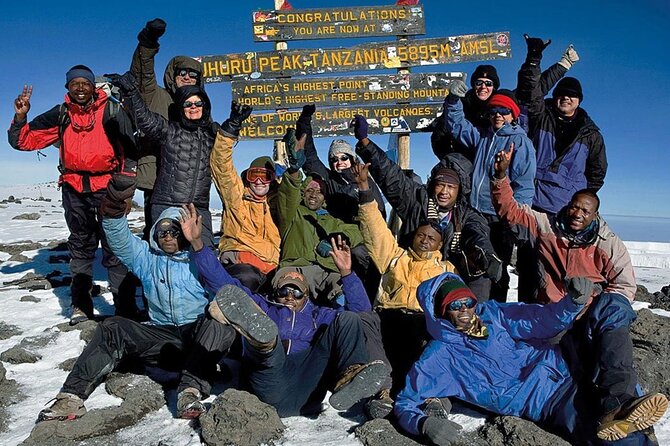
- The Machame Route reaches Uhuru Peak at 5,895 meters, with steep ground, cold nights, and a strenuous summit day.
- Day 3 is built for acclimatization, taking you up toward Lava Tower before descending to Barranco Camp.
- The Barranco Wall is the route’s most exciting scramble, followed by the long push to Barafu Camp.
- Summit night begins around midnight to 2 a.m., with about 1,233 meters of ascent before the highest point.
- A private guide, cook, and porters support your group, with named crew connected to the climb including Ema, Godwin, and Peter.
- The $160 price includes many major costs, but you should verify accommodation, airport transfers, and the exact meal count before booking.
Why the six-day Machame Route works
Machame is often called the Whisky Route, a name that hints at its harder, more adventurous character. You do not simply walk uphill for six straight days. The route changes altitude, scenery, and footing almost every day, giving you a better chance to adjust before summit night.
The route begins in forest and ends on bare volcanic slopes. Between those points, you pass through moorland, the Shira Plateau, high camps, rocky ridges, and the southern side of Kibo. The views change often, which helps keep the long walking days interesting.
The six-day schedule is still tough. You gain altitude quickly, and the fifth day combines a night ascent to the summit with a major descent. I would view this as a serious mountain trip, not a casual holiday walk.
The private format matters. Only your own group takes part, so the pace, encouragement, and conversations are more personal than they would be in a large mixed group. A cook and porters handle camp support, while your guide manages the route and the day’s rhythm.
More Private Tours in Kilimanjaro
- Private Full Day Hiking Experience to Marangu Route
★ 5.0 · 61 reviews - Private Kilimanjaro Hike 7 Day Lemosho Route
★ 5.0 · 60 reviews - Kilimanjaro 7 Day Private Trekking Experience
★ 5.0 · 40 reviews
Day 1: Machame Gate to the rainforest
The trip starts at 6 a.m. at Arusha Airport, with pickup offered. The published route description also refers to a drive from Moshi and a return to a hotel in Moshi, so you should confirm the exact pickup and drop-off plan if you are staying in Arusha rather than Moshi.
The drive to Kilimanjaro National Park takes about 45 minutes from Moshi and passes through Machame village. At the park gate, your crew waits while permits are issued and supplies are organized. This waiting period is part of the mountain routine, not wasted time. You get your first look at the porters, guides, and other crews preparing for the climb.
From the gate, the path enters rainforest. The lower trail can be muddy and slippery, especially in wet conditions. Gaiters and trekking poles are not decorative extras here. They help keep mud out of your boots and give you balance on slick ground.
You gain about 1,210 meters, walking from 1,811 meters to 3,021 meters. The day takes around six hours. Your guide can point out local plants, wildlife, and forest features as the trail rises.
This is a good first day because the scenery does much of the work. You begin under thick forest cover, with winding paths and a sense of gradual progress. The drawback is that mud, humidity, and a long uphill walk can make the day feel harder than the distance suggests.
Day 2: Leaving the forest for Shira Camp
Day 2 takes you from 3,021 meters to 3,839 meters, with about 818 meters of ascent. The walking time is listed at roughly five hours, making it shorter than several later days.
The forest gives way to more open ground. You cross a valley and follow a steep, rocky ridge before turning west toward a river gorge. The route feels more exposed now, and temperatures begin to fall.
Shira Camp sits on the Shira Plateau, one of the first places where the scale of Kilimanjaro becomes clear. You are no longer walking through dense trees. The open setting gives you broad views and a sharper sense that you are climbing a major volcanic mountain.
The practical challenge is the cold. A warm layer should be easy to reach in your daypack, rather than buried in a porter’s bag. You will also want to drink regularly even if you do not feel thirsty. Dry air and altitude can quietly reduce your energy.
Because this day is shorter, you may have time to rest at camp. Use it well. Eat, drink, organize your gear, and avoid treating the afternoon as a sightseeing session. The next day is important for altitude adjustment.
Day 3: Lava Tower and the best acclimatization day
Day 3 is the clever part of the route. You leave Shira Plateau and climb toward Lava Tower, also called the Shark’s Tooth, at about 4,650 meters. After reaching the high point, you descend to Barranco Camp at 3,986 meters.
Your sleeping elevation is only about 147 meters higher than the previous night, but your body has spent time much higher. That is the point. You climb high during the day and sleep lower, giving yourself useful exposure to altitude without spending the night at Lava Tower.
The day takes around six hours. You pass a junction toward Kibo Peak, then continue southeast toward Lava Tower. Another junction leads toward Arrow Glacier before the route drops toward Barranco.
This is a day when pacing matters. You may feel strong at the start, then notice the altitude as the trail rises. Keep your steps short, follow the guide’s pace, and tell the guide promptly if you feel unwell.
Barranco Camp is a memorable overnight stop because it sits beneath the Barranco Wall. The next morning’s route is visible from camp, which can be either motivating or slightly intimidating. The bare rock and high setting also make this a colder night than the forest camps.
More Machame Route climbs:
- Kilimanjaro climb, Machame Route (7-day)
★ 5.0 · 262 reviews - Climbing Kilimanjaro – Machame Route
★ 5.0 · 170 reviews - Climbing Kilimanjaro through 7 days Machame Route
★ 5.0 · 151 reviews - 7-Day Machame Kilimanjaro Summit Tour from Arusha
★ 5.0 · 125 reviews
Day 4: The Barranco Wall and Barafu Camp
Day 4 is the most varied walking day before the summit attempt. You begin around 3,986 meters, climb the Barranco Wall, pass through Karanga Valley, and continue toward Barafu Camp at about 4,662 meters.
The Barranco Wall looks serious from below, but the route is described as a steep scramble rather than a technical climbing pitch. You use your hands in places and move carefully over rock. This is where a capable crew can make a real difference. Guide Ema, assistant guide Godwin, cook Peter, and the porter team are names associated with this climb, and the crew’s strength and coordination are part of the experience.
After the wall, you continue through Karanga Valley and pass the junction with the Mweka Trail. The route then climbs toward Barafu Camp. From here, the southern circuit gives you views of the summit from different angles.
The day lasts about eight hours. You gain around 676 meters, but the effort feels greater because of the altitude and uneven ground. At Barafu, you have completed the South Circuit and reached the camp used for the summit start.
Dinner is scheduled early, followed by rest. This is not the evening for a long chat or a late gear session. Put your summit clothing, water, snacks, headlamp, gloves, and poles where you can reach them. You may leave for the summit between midnight and 2 a.m.
Day 5: The midnight climb to Uhuru Peak
Summit day is the hardest part of the experience. You climb from Barafu Camp at 4,662 meters to Uhuru Peak at 5,895 meters, gaining about 1,233 meters. After reaching the top, you descend all the way to around 3,106 meters.
The first part of the climb follows switchbacks through heavy scree. You move between the Rebmann and Ratzel glaciers, then continue toward Stella Point on the crater rim. The exact conditions can make this section slow and mentally tiring.
Stella Point offers a major reward: sunrise over Kilimanjaro. Faster hikers may reach the summit in time to see sunrise from Uhuru Peak, while others enjoy it from the crater rim. From Stella Point, the final hour leads toward the summit.
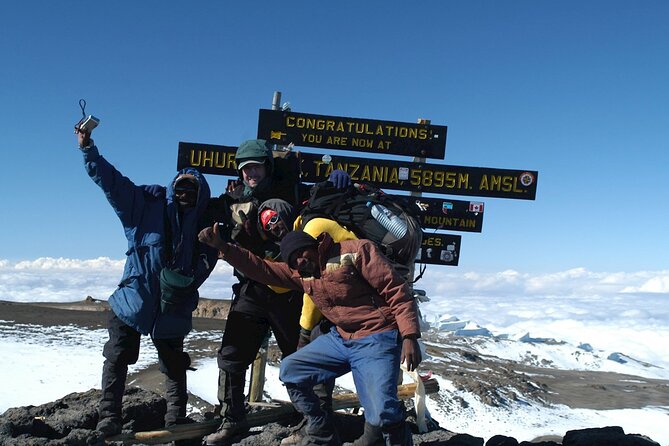
At Uhuru Peak, you are at 5,895 meters. The moment is short but meaningful. You have climbed through forest, moorland, rock, and cold darkness to reach the highest point in Africa.
The work is not finished at the summit. You descend from the high point, then continue to the lower camp. The full day is listed at about ten hours, though actual timing can vary with pace, conditions, and rest stops.
You should prepare for cold, wind, fatigue, and loose ground. The summit section is described as the most mentally and physically demanding part of the climb. If you are not feeling well, tell your guide rather than trying to hide it.
Day 6: Mweka Gate and the return to warmer air
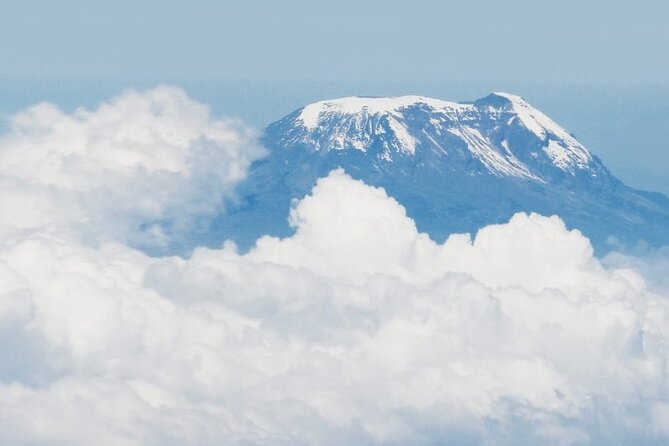
The final day begins after breakfast with a ceremony of appreciation and team bonding. This is a thoughtful part of the trip because the guide, cook, and porters have shared the mountain with you from start to finish.
You descend from about 3,106 meters to Mweka Park Gate at 1,633 meters. The walk takes around four hours. As you lose altitude, the air becomes warmer, but the path becomes wet, muddy, and steep.
Gaiters and trekking poles are useful again. Your boots may be tired, your legs may be stiff, and downhill walking can put more strain on your knees than climbing. Take short steps and keep your balance.
At the gate, you receive summit certificates. A vehicle then meets you at Mweka village for the drive back to your hotel in Moshi, listed at about 30 minutes. The promise of a hot shower, dinner, and celebration is well earned.
Meals, porters, and the value of the crew
The price includes a mountain cook and porters, along with a proper food ration for the crew before and after the climb. Meals listed for you include four dinners, four breakfasts, and five lunches.
The meal count deserves a quick check because the climb covers six days and includes a summit-night schedule. Ask how the food plan matches each day, especially Day 5, when your timing starts before breakfast and continues through a long descent.
Food can make or break a high-altitude trip. The strongest praise attached to this climb concerns the cooking, preparation, and safety work. Cook Peter is specifically named in the account connected with the experience. You should still tell the operator about dietary needs before departure.
Tips are not included. Set aside money for the guide, assistant guide, cook, and porters. The amount is not stated here, so ask Inno Africa Safaris for its current tipping guidance rather than guessing.
Is $160 a good price?
At $160 per person, this is a strikingly low price for a private six-day Kilimanjaro climb with transport, park fees, crew support, meals, airport transfers, and pre- and post-climb accommodation listed among the inclusions.
That can make the trip excellent value if every listed item is genuinely included. It also means you should confirm the details in writing. Pay particular attention to the meaning of pre- and post-accommodation, the airport transfer plan, the start point at Arusha Airport, and whether the return is to Moshi or Arusha.
The price includes all fees and taxes, private transportation, meals, and the mountain crew. Tips are extra. Free cancellation is available if you cancel at least 24 hours before the local start time. Within 24 hours, no refund is offered.
Who should book this climb?
This trip suits you if you have moderate physical fitness, can walk for several hours on steep and uneven ground, and accept that summit night will be very demanding. You should also be comfortable with basic camp conditions and changing weather.
The private format is useful for couples, families with suitable fitness, or friends who want to climb together. It gives your group one guide structure instead of a large public departure.
I would hesitate if you want a relaxed mountain holiday, dislike cold nights, or have little time to prepare. Six days is a compact schedule, and the summit day combines altitude, darkness, cold, and a long descent.
Should you book the six-day Machame climb?
I would consider booking it if you want a scenic route, strong crew support, and a private climb at a very low advertised price. The Shira Plateau, Lava Tower acclimatization section, Barranco Wall, and sunrise summit attempt give you a varied route rather than a simple uphill march.
Before paying, confirm the Arusha and Moshi transport details, accommodation, meal schedule, guide assignment, and what happens if you cannot reach the summit. If those points are clear, this is a serious but rewarding Kilimanjaro plan for a fit hiker who values scenery, a personal crew, and a well-structured route.
FAQ
Where does the climb start?
The stated meeting point is Arusha Airport in Arusha, Tanzania, with a start time of 6 a.m.
How long is the experience?
The climb lasts approximately six days.
Which Kilimanjaro route does it use?
It uses the Machame Route, also known as the Whisky Route.
What is the highest point reached?
The summit target is Uhuru Peak at 5,895 meters, or 19,341 feet.
Is the activity private?
Yes. Only your own group participates in the activity.
What level of fitness do I need?
A moderate physical fitness level is required. The route includes steep, rocky, muddy, and high-altitude sections.
Are meals included?
Yes. The listed inclusions are four dinners, four breakfasts, and five lunches.
Are park fees and taxes included?
Yes. All fees and taxes are included in the stated tour inclusions.
Are tips included?
No. Tips are not included in the price.
Can I cancel for a full refund?
Yes, if you cancel at least 24 hours before the experience start time. Cancellations within 24 hours are not refunded.
More Six-Day Trips in Kilimanjaro
- Kilimanjaro climb, Lemosho Route (6-day)
★ 5.0 · 129 reviews - Kilimanjaro climb, Marangu route (6-day)
★ 5.0 · 72 reviews - 6 Days Tanzania Classic Safari
★ 5.0 · 52 reviews - The Best of Machame Route in 6 Days: Your World’s Summit Guide
★ 5.0 · 44 reviews
More Trekking Tours in Kilimanjaro
- Kilimanjaro climb by Lemosho Route (7-day)
★ 5.0 · 651 reviews - 8-Day Small-group Lemosho Kilimanjaro Summit Trekking
★ 5.0 · 186 reviews - Kilimanjaro Climbing Lemosho Route 8 Days.
★ 5.0 · 186 reviews - Kilimanjaro climb, Lemosho Route (8-day)
★ 5.0 · 148 reviews
Just added around Kilimanjaro
- 6 days Machame route climbing Mt.Kilimanjaro★ 5.0 · 8 reviews
- Mt Kilimanjaro 6 days Marangu route hike★ 5.0 · 3 reviews
- machame route★ 5.0 · 16 reviews
- Private Cycle to Kilimanjaro Bike Park Safari★ 5.0 · 6 reviews
- West Kilimanjaro cycling Adventures★ 4.5 · 8 reviews
- Kilimanjaro Climb • Marangu Route ~ 9 Day★ 5.0 · 4 reviews
- 3 Days Private E-Bike Tour in West Kilimanjaro★ 5.0 · 3 reviews
- Kilimanjaro Climb • Machame Route ~ 10 Day★ 5.0 · 6 reviews
Machame Route Climbs, compared.
The Best of Machame Route in 6 Days: Your World’s Summit Guide
Read our review →Browse the lists this tour appears in