
Reviewed · LEMOSHO ROUTE CLIMBS
Mt Kilimanjaro Climb – 8 days Lemosho
The Lemosho Route gives you a longer, steadier way up Kilimanjaro, with broad views, two Shira camps, and a gradual approach to the mountain’s high point. It is a strong choice if you want time to adjust to altitude rather than rushing up a shorter route.
I like the generous acclimatization schedule and the care built into the package: three meals a day, an oxygen cylinder, an oximeter, transport, and a professional guide are included. I also like the operator’s fair-pay commitment under KPAP guidelines, plus the personal touch reported from guides such as Joy, Geopron, Davis, Kevin, and Amnaay.
The catch is simple: this is a serious mountain trip, not a walking holiday. You camp for seven nights, need your own climbing gear and insurance, and face a very long summit day of 10 to 14 hours. Altitude can affect anyone, including fit hikers.
Key points before you book
- Eight days on the scenic Lemosho Route: You approach Kilimanjaro from the western side and gain height in measured stages.
- A demanding summit day: From Barafu Camp, you climb to Uhuru Peak at 5,895 meters, then descend all the way to Mweka Camp.
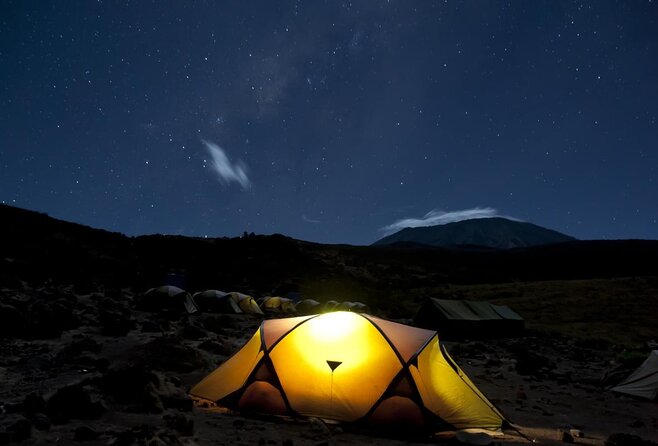
- Camping with meals included: Your package covers seven nights, tents, mattresses, a mess tent, breakfast, lunch, dinner, and drinking water.
- Strong emphasis on team support: Guides including Joy, Geopron, Davis, Kevin, Amnaay, Robert, Herick, and Francis have led groups on this route.
- Useful safety equipment provided: An oxygen cylinder and pulse oximeter are included, along with park and rescue fees.
- Good fit for prepared hikers: You need moderate physical fitness, suitable personal gear, travel insurance, and patience with slow uphill walking.
Why the eight-day Lemosho route makes sense
Kilimanjaro is 5,895 meters high, and the main challenge is not technical climbing. It is the altitude, the cold, and the number of hours spent walking. The Lemosho schedule gives you more time on the mountain than faster routes, which makes the daily height gain easier to manage.
You begin at 2,385 meters and reach the summit on Day 7. That gradual rise matters. You sleep at 2,780 meters on the first night, then move to 3,500 meters, 3,900 meters, and 3,960 meters before the final push. This does not remove the risk of altitude sickness, but it gives your body more time to respond.
The route also has a pleasant rhythm. Some days are short enough to let you eat, rest, and enjoy camp. Other days are longer and include steep climbs and descents. You should expect plenty of pole pole, the Swahili approach of slowly and steadily, even if the phrase itself is not part of the formal itinerary.
The package costs $3,500 per person. That is a major expense, but the price includes park entry, camping, forest department and rescue fees, transport to and from the gate, seven nights of camping, three meals daily, water, guides, and safety equipment. It also includes hotel pickup and drop-off.
That makes the price easier to assess than a low headline rate that adds park fees, food, tents, or transport later. You still need to budget for tips, personal mountain gear, travel insurance, pre- and post-climb accommodation, and airport transfers. An overnight stay in Kibo Crater is mentioned as an optional extra for people with additional time and money, but it is not part of this eight-day plan.
More Lemosho Route climbs:
- Kilimanjaro climb by Lemosho Route (7-day)
★ 5.0 · 651 reviews - 8-Day Small-group Lemosho Kilimanjaro Summit Trekking
★ 5.0 · 186 reviews - Kilimanjaro Climbing Lemosho Route 8 Days.
★ 5.0 · 186 reviews
Day 1: Lemosho Gate to Big Tree Camp
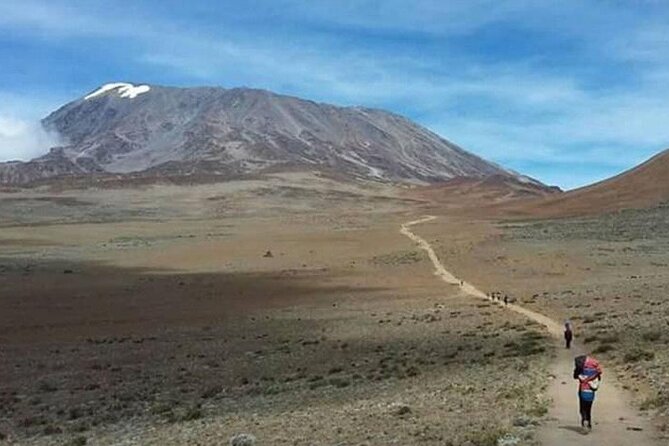
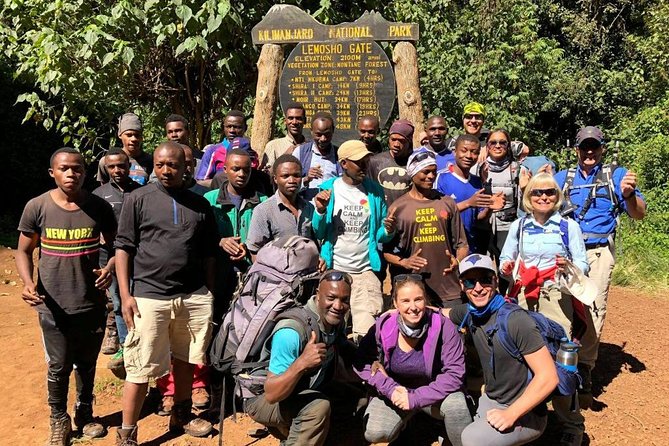
Your climb begins at Lemosho Gate, at 2,385 meters. The first walk takes about two to three hours and finishes at Big Tree Camp, at 2,780 meters.
This is a gentle introduction by Kilimanjaro standards. The altitude gain is 395 meters, so you have a chance to settle into the group, meet the mountain team, and learn how the daily routine works. The short walking time can feel reassuring, though you should not treat the day as a free pass. You are still beginning a week at high altitude.
The included transport to the gate removes one practical headache. Pickup and drop-off from your hotel are included, while airport transfers and accommodation before or after the climb are not. Check those arrangements carefully before you arrive in Moshi.
Day 2: Big Tree Camp to Shira Camp 1
Day 2 takes you from 2,780 meters to Shira Camp 1 at 3,500 meters. The walk lasts about four to five hours, with 720 meters of climbing.
This is your first clear test of the route. You gain a fair amount of height, but the walking time remains manageable. The key is not to race. Keep your pace controlled, drink regularly, and tell your guide early if you feel unwell.
Shira Camp 1 marks a change in the trip. You are now sleeping above 3,500 meters, and the cold and thinner air may become more noticeable. The route’s gradual design begins to show its value here. You are not attempting the summit after only a few nights.
Day 3: Shira Camp 1 to Shira Camp 2
The third day is shorter, with three to four hours of walking from 3,500 meters to Shira Camp 2 at 3,900 meters. The listed gain is 400 meters.
This is a useful adjustment day. You continue upward, but you are not asked to cover a huge distance. That gives you time to watch how your body reacts to sleeping higher. A slow day can feel almost too easy, but on Kilimanjaro, an easy day is useful preparation.
Camping every night means you will have to accept a basic routine. The package provides tents, mattresses, and a mess tent, but it does not turn the mountain into a hotel. If you value comfort, pack carefully and expect the camping element to be part of the experience, not a minor detail.
More treks and hikes around Kilimanjaro:
- Kilimanjaro climb, Machame Route (7-day)
★ 5.0 · 262 reviews - Climbing Kilimanjaro – Machame Route
★ 5.0 · 170 reviews - Climbing Kilimanjaro through 7 days Machame Route
★ 5.0 · 151 reviews - Kilimanjaro climb, Lemosho Route (8-day)
★ 5.0 · 148 reviews
Day 4: Shira Camp 2 to Barranco Camp
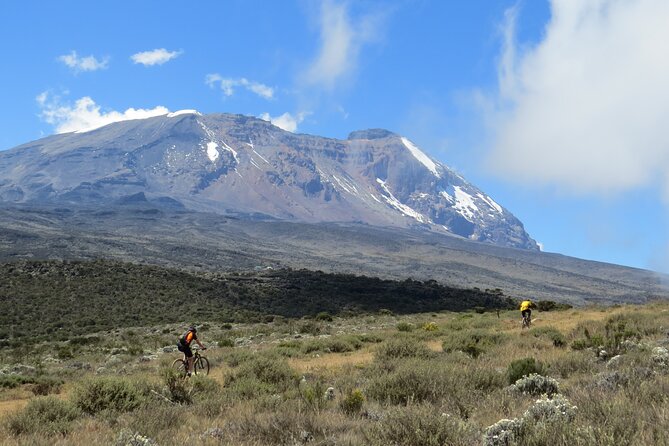
Day 4 is one of the more varied sections. You leave Shira Camp 2 at 3,900 meters and finish at Barranco Camp at 3,960 meters, but the route includes substantial climbing and descending. The stated walking time is six to seven hours, with 740 meters of ascent and 680 meters of descent.
The small difference between the starting and finishing altitudes hides the effort involved. You spend much of the day walking up and down rather than simply gaining height. This is exactly the kind of day that helps prepare you for summit conditions, but it can also be tiring because the distance and terrain do not show up in the final altitude number.
Barranco Camp is an important point in the route because the next morning begins with the Barranco Wall. You should arrive ready for another physical challenge, even though the camp altitude is only slightly higher than the previous night.
Day 5: The Barranco Wall and Karanga Camp
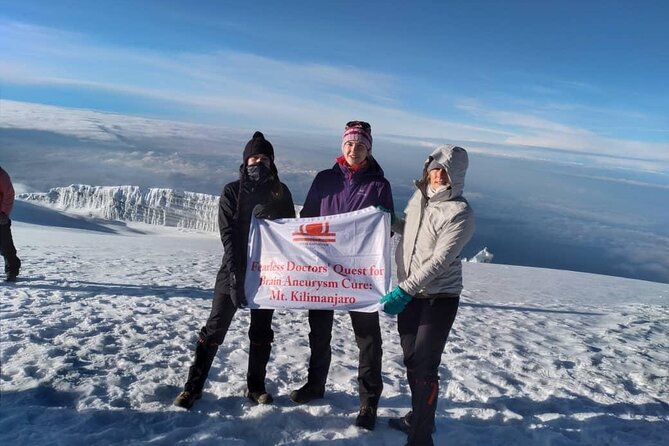
From Barranco Camp at 3,960 meters, you climb to Karanga Camp at 4,035 meters. The walking time is three to four hours, with 100 meters of ascent and 25 meters of descent.
The Barranco Wall is the day’s feature. It is a steep climb, followed by more up-and-down walking. The route description highlights views toward Kibo’s southern glacier, which gives you a fine reward for the effort.
This is not presented as technical rock climbing, but you should be ready to use your hands at times and move carefully. Your guide’s pace and positioning matter here. Guides named in the company’s climbing teams include Joy, Geopron, Davis, Kevin, Amnaay, Robert, Herick, Francis, and Ibrahim. The exact guide assigned to your climb should be confirmed before departure.
The day is short on paper, but the steep section and high altitude can make it feel substantial. This is a good place to keep your expectations realistic. The summit is still ahead, and conserving energy matters more than showing speed.
Day 6: Karanga Camp to Barafu Camp
Day 6 takes you from 4,035 meters to Barafu Camp at 4,640 meters. The walk lasts three to four hours and climbs 615 meters.
Barafu means ice in Swahili, and the camp marks the launch point for the summit attempt. From here, the routine changes. You typically rest, eat, organize your layers, and prepare your daypack for the long climb ahead. The provided itinerary does not state an exact summit departure time, so ask your operator for the planned schedule.
This is a short walking day, but sleeping at 4,640 meters can be difficult. You may feel the altitude more strongly, and simple tasks can take longer. Keep your evening calm. Lay out your clothing, headlamp, water, snacks, and personal items before resting.
Day 7: Barafu Camp to Uhuru Peak and Mweka Camp
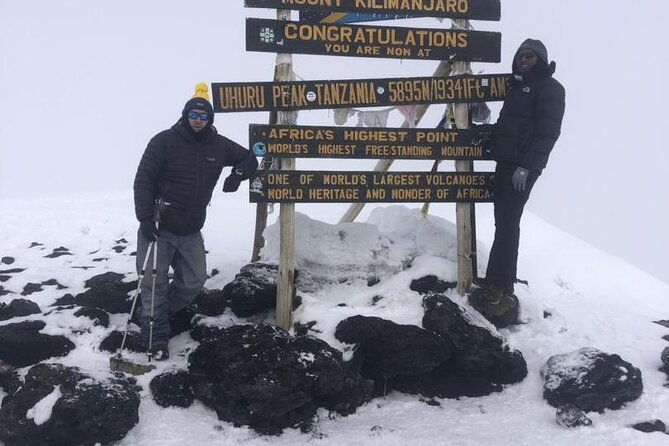
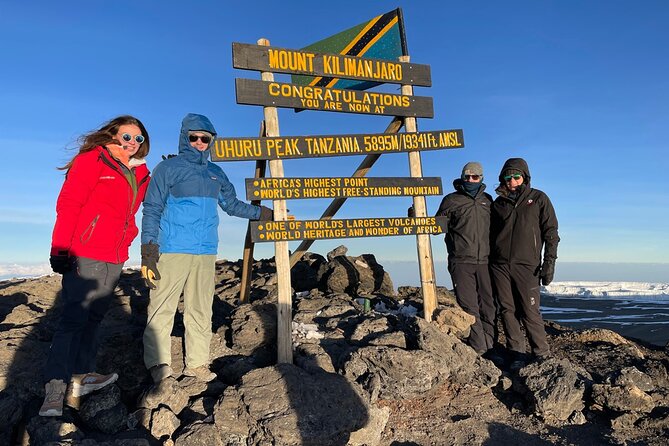
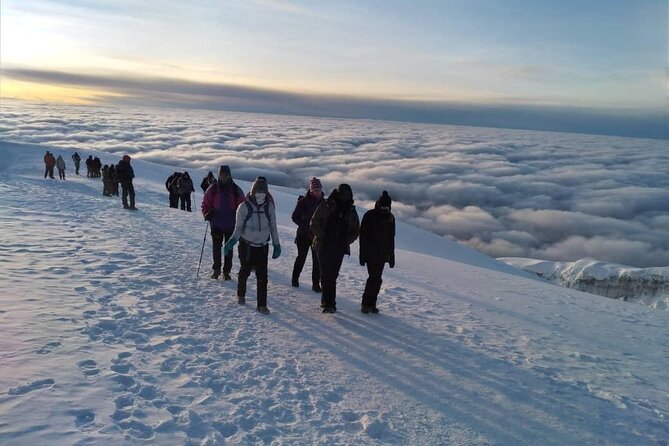
This is the hardest day by a wide margin. You climb from Barafu Camp at 4,640 meters to Uhuru Peak at 5,895 meters, then descend to Mweka Camp at 3,080 meters. The full day lasts about 10 to 14 hours.
The climb to Stella Point is very steep, long, and potentially cold. After reaching the crater rim, you continue toward Uhuru Peak. The reward is a wide view from the summit ridge and the satisfaction of reaching Africa’s highest point.
Do not underestimate the descent. After standing at the summit, you still have a long, steep walk down to Mweka Camp. The listed descent is 1,255 meters from the summit area to one stage of the route, followed by a further 2,815 meters toward Mweka Camp. Your legs may be tired, your sleep may have been limited, and altitude can affect your judgment and energy.
This is where patient guiding becomes especially valuable. The company’s past climbing teams have included guides such as Davis, Kevin, Amnaay, Joy, Geopron, Robert, Herick, and Francis. The most useful support is not drama or speed. It is steady pacing, attention to how you feel, and good decisions if altitude symptoms appear.
An oxygen cylinder and pulse oximeter are included. That is reassuring, but neither replaces acclimatization or medical judgment. You should tell your guide about headaches, nausea, dizziness, unusual breathlessness, or worsening fatigue. Reaching the summit is never more important than descending safely.
The itinerary also mentions an overnight stay in Kibo Crater as an option for people with the budget and time. That is not part of this standard eight-day schedule. Ask about its exact arrangement before assuming it will be included.
Day 8: Mweka Camp to Mweka Gate
The final morning is much shorter. You walk from Mweka Camp at 3,080 meters to Mweka Gate at 1,630 meters, a descent of 1,450 meters that takes about two to three hours.
After the long summit day, this should feel manageable, although tired knees can make downhill walking uncomfortable. At the gate, your mountain experience ends and the included transport takes you onward to your hotel.
The final day is also a reminder of how quickly Kilimanjaro’s conditions change. In one week, you move from the lower gate to high alpine terrain and back down again. Give yourself time after the climb before making demanding travel plans.
Food, camping, and the mountain team
Three meals a day are included, along with drinking water. That is a real convenience because you do not need to organize food supplies on the mountain. The company’s cooks and service staff receive unusually specific praise in the supplied feedback, including chef Oscar, cook Nikaas, waiter Sam, and Mohammed, nicknamed the stomach engineer by one group.
The exact menu is not provided, so you should tell the operator about dietary needs before the climb. The food is described as local and organic in one account, and several comments praise its quality. Still, appetite can change at altitude, so bring personal snacks if you have foods you know you can eat when tired.
Seven nights are spent in tents, with mattresses and a mess tent supplied. You do not need to carry the full camp yourself, but you do need personal clothing and climbing equipment. The package specifically excludes all personal mountain gear, so ask for a current equipment list before arriving.
The company states that it pays fair and ethical salaries under KPAP guidelines. Porters are part of the operation, and tips for the guide, cook, and porters are not included. Set aside money for tips and ask for local guidance on appropriate amounts and distribution.
Who this climb suits best
This route suits you if you want a scenic, longer climb with time for acclimatization. It also works well for people who prefer a private activity, since only your group participates, although group arrangements may vary depending on how the booking is made.
The climb can suit solo participants as well. One person whose original group changed to a solo trip found that the smaller setup allowed greater flexibility and more time with the mountain team. If you book alone, confirm whether you will have a private crew or join another group.
You should have moderate physical fitness and be comfortable walking for several hours on consecutive days. You do not need to be an elite mountaineer based on the stated requirements, but you do need stamina, patience, and the ability to handle cold, camping, steep ground, and altitude.
The route also suits older hikers who prepare carefully. A 73-year-old participant completed the ascent with support from the Nyange Adventures team. That is encouraging, but it is not a promise that age or fitness alone will determine your result. Your medical condition, acclimatization, and response to altitude matter more than a simple age comparison.
What you still need to arrange
The package is useful but not fully all-inclusive. You need to arrange or pay for:
- Personal mountain clothing and equipment
- Travel insurance
- Tips for the guide, cook, and porters
- Accommodation before and after the climb
- Airport transfers
Hotel pickup and drop-off, transport to and from the park gate, park fees, rescue fees, meals, water, tents, mattresses, and the mess tent are included. Mobile ticketing and confirmation at booking make the initial arrangements fairly simple.
The cancellation policy allows a full refund if you cancel at least 24 hours before the start time. Cancellations within 24 hours are not refunded, and changes within that period are not accepted.
Should you book the Nyange Adventures Lemosho climb?
I would consider this a good-value Kilimanjaro package for a prepared hiker who wants the longer Lemosho schedule and prefers having major costs handled in advance. The fair-pay policy, included rescue fees, safety equipment, meals, transport, and strong praise for the guides and food all add practical value.
I would not book it casually. The price does not include gear, insurance, airport transfers, or accommodation outside the seven mountain nights. The summit day is also a serious physical test, and the route’s length does not make altitude harmless.
Book this climb if you want a measured approach, can commit to camping for a week, and are willing to listen to your guide when your body says slow down. Before paying, confirm your assigned guide, the equipment list, tipping expectations, dietary arrangements, airport transport, and any plan for pre- and post-climb nights. If those details fit your budget and preparation, the eight-day Lemosho route offers a sensible path to Uhuru Peak with a well-supported mountain team.
FAQ
How long is the Kilimanjaro Lemosho climb?
The climb lasts approximately eight days, including seven nights of camping. The itinerary begins at Lemosho Gate and ends at Mweka Gate.
What is included in the $3,500 price?
The price includes park entry, camping, forest department and rescue fees, seven nights of accommodation in tents, three meals daily, drinking water, camping equipment, transport to and from the gate, hotel pickup and drop-off, a professional guide, an oxygen cylinder, and a pulse oximeter.
Is personal climbing equipment included?
No. You must provide or rent your own personal mountain clothing, footwear, and climbing equipment. Travel insurance is also not included.
How difficult is the summit day?
The summit day is the most demanding part of the climb. It takes about 10 to 14 hours, includes a steep ascent from Barafu Camp to Uhuru Peak at 5,895 meters, and finishes with a long descent to Mweka Camp.
Is this a private tour?
Yes. The activity is described as private, meaning only your group participates. The exact group arrangement should be confirmed when booking, particularly for solo travelers.
Can I cancel for a full refund?
You can receive a full refund if you cancel at least 24 hours before the experience start time. Cancellations or changes made less than 24 hours before the start time are not accepted for a refund.
More Eight-Day Trips in Kilimanjaro
- Climbing Kilimanjaro through 8 days Lemosho Route
★ 5.0 · 52 reviews - Kilimanjaro climb, Northern Circuit route (8-day)
★ 5.0 · 40 reviews - 8 Days Kilimanjaro Hike via Lemosho Route
★ 5.0 · 39 reviews - 8 Days Climbing Mt.Kilimanjaro (Lemosho Route)
★ 4.5 · 37 reviews
Just added around Kilimanjaro
- 6 days Machame route climbing Mt.Kilimanjaro★ 5.0 · 8 reviews
- machame route★ 5.0 · 16 reviews
- Mt Kilimanjaro 6 days Marangu route hike★ 5.0 · 3 reviews
- Private Cycle to Kilimanjaro Bike Park Safari★ 5.0 · 6 reviews
- West Kilimanjaro cycling Adventures★ 4.5 · 8 reviews
- Kilimanjaro Climb • Marangu Route ~ 9 Day★ 5.0 · 4 reviews
- 3 Days Private E-Bike Tour in West Kilimanjaro★ 5.0 · 3 reviews
- Kilimanjaro Climb • Machame Route ~ 10 Day★ 5.0 · 6 reviews