
Reviewed · MACHAME ROUTE CLIMBS
Machame Route 6 days 5 Nights/Kilimanjaro Climb
Kilimanjaro’s Machame Route gives you a real mountain journey in just six days: rainforest on day one, open high country by day two, volcanic rock and thin air after that. I like the route’s South Circuit, which lets you climb high to Lava Tower and sleep lower at Barranco, a useful rhythm for acclimatization. I also like that this is a private trip, so your guide can adjust the pace and attention to your group.
The tradeoff is the schedule. Summit day can last about 14 hours, beginning around midnight and ending after a long descent. Six days is the shorter Machame option, so you need steady fitness, patience, and a willingness to walk slowly when the altitude starts to matter.
Key points at a glance
- Sunrise at 18,600 feet: Reach Stella Point in time for sunrise, weather permitting, then continue to Uhuru Peak, Africa’s highest point.
- A useful acclimatization climb: Day three rises to Lava Tower before dropping to Barranco, giving your body time to adjust.
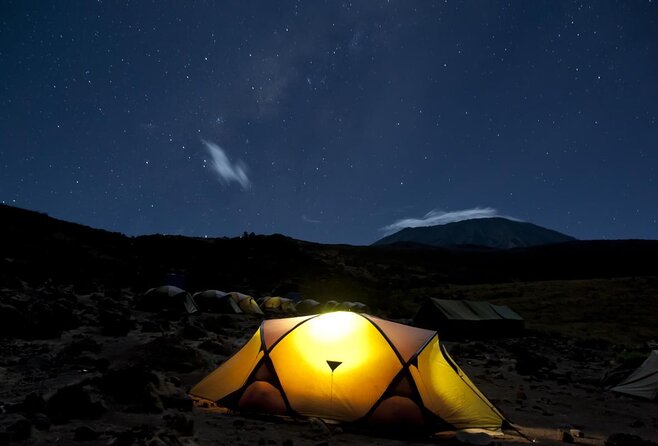
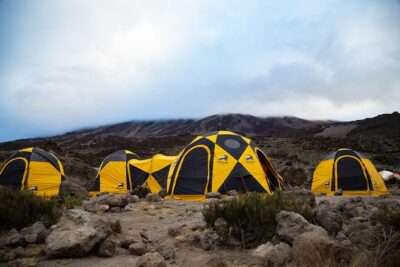
- Five nights under canvas: Camping replaces lodge comfort, with breakfast, lunch, dinner, and bottled water included.
- A private group: Only your party takes part, with a guide and support crew assigned to your climb.
- A demanding final push: The summit attempt begins between midnight and 2 a.m. and includes heavy scree, cold, darkness, and a long descent.
- Good value for a full-service climb: The $1,990 price includes park access, meals, mountain transport, camping support, and the Moshi return transfer, but not tips, insurance, visas, or personal gear.
What the six-day Machame climb is really like
This is not a sightseeing walk with a mountain in the background. You spend six days moving through several climate zones, carrying a daypack while a support team handles camp logistics. Your route rises from the lower slopes near Moshi to Uhuru Peak at 19,341 feet, then drops quickly back toward the forest.
I would choose Machame if I wanted more variety than the Marangu route and did not mind sleeping in tents. The itinerary includes an extra acclimatization advantage compared with the shorter Marangu plan, though six days is still a demanding timetable. The route is often described as having a higher summit success rate than Marangu, but no itinerary can remove the effects of altitude.
The price is $1,990 per person. That is a serious amount of money, but it covers the items that make a Kilimanjaro climb possible: national park access, mountain transport, camping, a private guide, meals, bottled water, porters, and the return transfer to Moshi. You still need to budget for international flights, a visa, insurance, drinks, personal equipment, optional activities, and gratuities.
The minimum booking is two people. The private format means you are not simply added to a large public group, though the size of the guiding and porter team can vary with your party and the operator’s arrangements.
More Machame Route climbs:
- Kilimanjaro climb, Machame Route (7-day)
★ 5.0 · 262 reviews - Climbing Kilimanjaro – Machame Route
★ 5.0 · 170 reviews - Climbing Kilimanjaro through 7 days Machame Route
★ 5.0 · 151 reviews
Day one: Moshi to Machame Gate and the rainforest
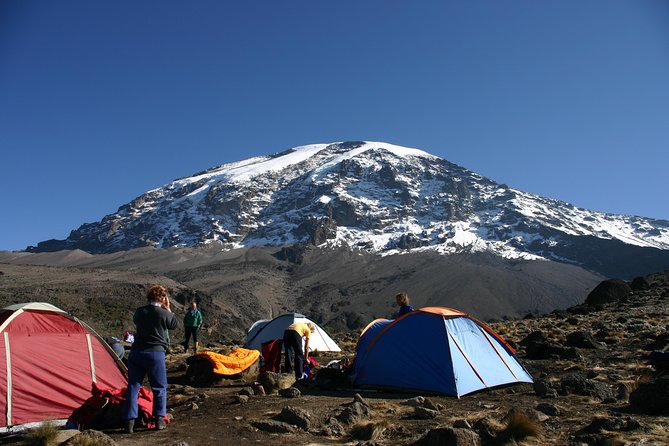
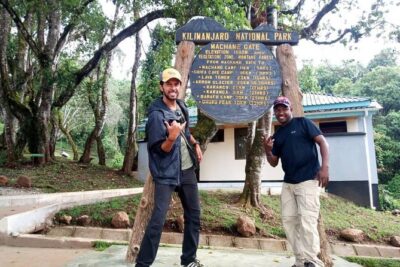
The first drive from Moshi to Kilimanjaro National Park takes about 50 minutes. You pass through Machame village, which sits on the mountain’s lower slopes, before reaching the park gate and beginning the walk.
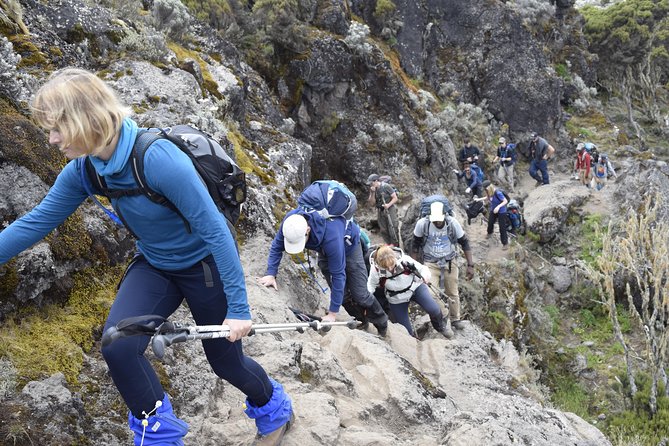
The trail enters rainforest almost at once. Expect a winding path up a ridge, with roots, damp ground, and muddy sections lower down. The supplied advice about gaiters and trekking poles is worth taking seriously. This is not the place for smooth city shoes or a loose daypack.
The walk to Machame Camp takes about seven hours. That estimate includes the steady uphill pace typical of a first mountain day, but actual timing can change with weather and group speed. Your first night is at camp rather than in a hotel, so you begin adjusting to the routine immediately: walk, eat, rest, and prepare for the next morning.
I like this opening because the rainforest gives you a gradual introduction to the mountain. The drawback is that wet conditions can make the first day feel harder than the distance suggests. Keep rain gear, dry socks, and a warm layer where you can reach them.
Day two: Heather country and Shira Camp
After breakfast, you leave the forest behind and climb through heather. The path crosses a small valley and follows a steep, rocky ridge before turning west toward a river gorge.
This is a shorter walking day at about five hours, which matters after the seven-hour start. The change in vegetation also gives you a clear sense of progress. You are no longer walking beneath trees. The air and views open up as you move toward the Shira Plateau.
You spend the night at Shira Camp. This stage is less punishing than the next two days, but it is still uphill, and the altitude begins to become part of the trip. Walk slowly from the start. There is little benefit in racing through an easier morning if you arrive at camp tired and short of breath.
Day three: Lava Tower, the Shark’s Tooth, and Barranco
Day three is the most important acclimatization day in the itinerary. From Shira, you climb east toward the junction leading to Kibo, then turn southeast toward Lava Tower, also called the Shark’s Tooth.
The route reaches about 16,000 feet near the Arrow Glacier junction before dropping to Barranco Hut at about 13,000 feet. The day takes roughly seven hours, and you finish at nearly the same elevation where you began. That may look inefficient on paper. It is actually one of the best features of the plan because you spend time higher up before sleeping lower.
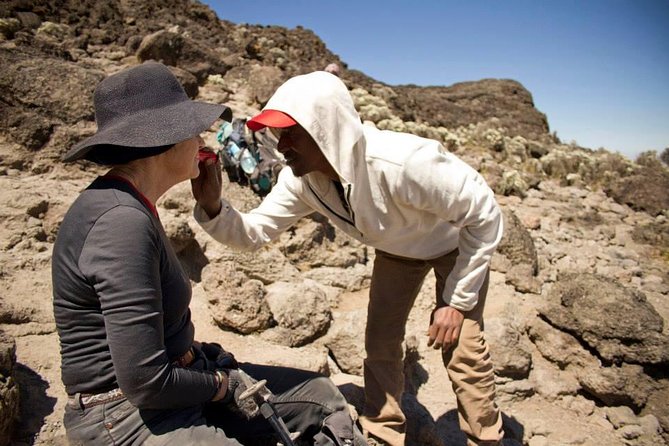
You should expect this to be a tiring day even though the route eventually loses height. The high point can bring headache, nausea, or unusual fatigue. Tell your guide early if you feel unwell. Waiting until symptoms become severe makes the problem harder to manage.
Barranco Camp brings a dramatic change in scenery. The following morning begins with the Barranco Wall, so this is a good evening to organize your clothing, water, and walking poles. You will want both hands available at times while moving over steep sections.
More treks and hikes around Kilimanjaro:
- Kilimanjaro climb by Lemosho Route (7-day)
★ 5.0 · 651 reviews - 8-Day Small-group Lemosho Kilimanjaro Summit Trekking
★ 5.0 · 186 reviews - Kilimanjaro Climbing Lemosho Route 8 Days.
★ 5.0 · 186 reviews - Kilimanjaro climb, Lemosho Route (8-day)
★ 5.0 · 148 reviews
Day four: The Barranco Wall and Barafu Camp
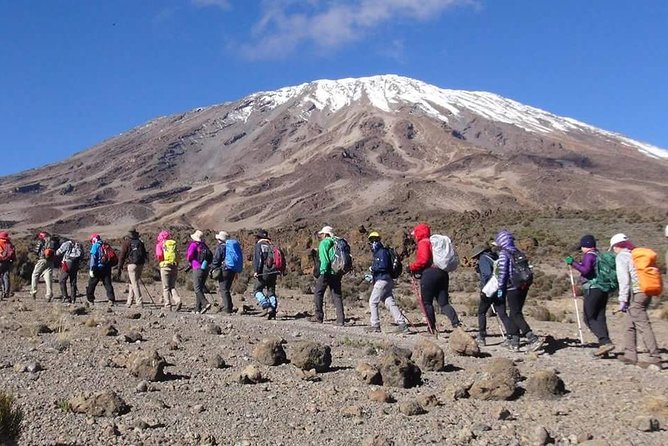
After breakfast, you climb the Barranco Wall and continue to Karanga Valley. The route then joins the Mweka Trail before rising to Barafu Hut.
The walking time is about nine hours, making this one of the longer regular days. You complete the South Circuit here, a route section that gives views toward both Mawenzi and Kibo from different angles. Barafu is your final high camp, and the mood changes from ordinary trekking to summit preparation.
At this point, your guide should help you focus on the next stage: a very early start, warm layers, headlamp readiness, water, and a manageable daypack. You have a long night ahead, so use the time at camp for rest rather than unnecessary activity.
Barafu is not a place where comfort is the point. The camp marks your highest overnight stop before the summit push, and cold, wind, and altitude can make even simple tasks feel slow. Your best strategy is to eat what you can, drink regularly, and follow the guide’s pacing.
Day five: Stella Point, Uhuru Peak, and the long descent
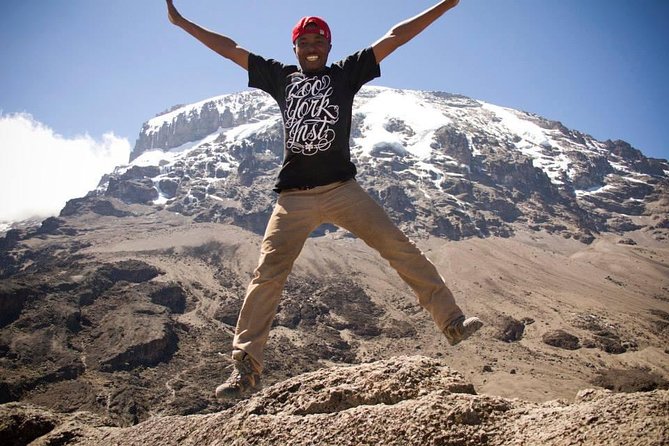
Summit day begins between midnight and 2 a.m. The climb heads northwest between the Rebmann and Ratzel glaciers, then follows heavy scree toward Stella Point on the crater rim.
This is the hardest part of the climb mentally and physically. You are walking in darkness after limited sleep, and the route rises steadily over loose rock. The slow pace is not a failure. It is the sensible way to protect your energy and manage the altitude.
At Stella Point, around 18,600 feet, you pause for a short rest. If the weather cooperates, sunrise is the reward. This is one of the strongest reasons to choose this itinerary. You see the sky brighten from the crater rim, then continue for about another hour toward Uhuru Peak.
Snow may appear along the final section. At Uhuru Peak, you reach the highest point on Kilimanjaro and in Africa. The time at the summit can be brief because cold and altitude still matter. Take your photographs, absorb the view, and listen to your guide about when to begin descending.
The descent continues to Barafu for a rest, then onward toward the lower camp route. The total day is listed at about 14 hours, so you should treat it as an endurance day rather than a simple summit walk. Fatigue can be as serious a concern as the climb itself.
Day six: Mweka Gate and the return to Moshi
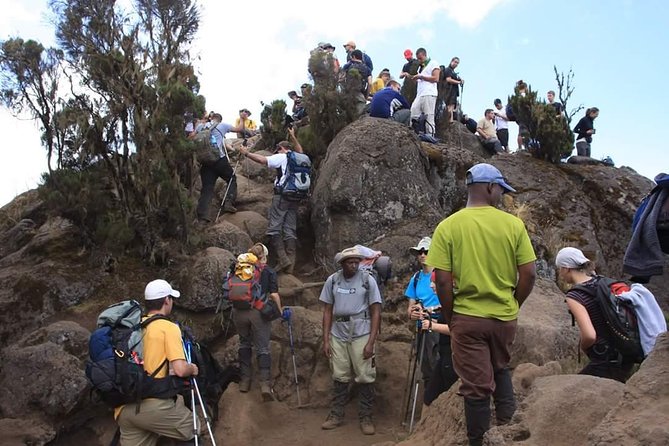
After breakfast, you descend to Mweka Park Gate to receive your summit certificate. The lower trail can again be wet and muddy, so keep gaiters and poles handy even though the air is warmer.
The walk to the gate takes about four hours, followed by another hour to Mweka village. A vehicle meets you there for the drive back to your Moshi hotel.
This final morning is practical rather than scenic, but it closes the trip with a useful sense of completion. Keep a warm layer and rain protection accessible until the walk is over. The advice that shorts and a T-shirt may be enough at lower elevations does not mean you should pack away all your gear before reaching the vehicle.
Guides, porters, food, and the human side of the climb
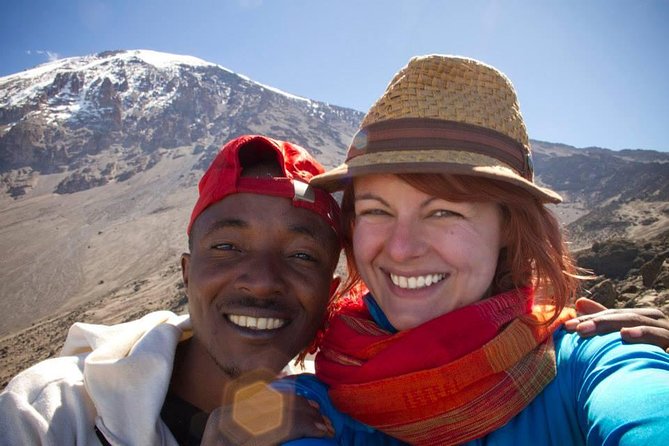
The private format is one of the strongest features here. The operator has worked with guides including Epa, Rama, David, Goodluck, Vitto, Nicholas, Eric, Siza, and Vitals on different departures. Your own guide may be different, so ask for the name and role of the lead guide before arrival.
The best accounts of this climb repeatedly point to the human support on the mountain. Guidance, encouragement, and careful pacing matter most on the summit night, when even a short conversation can help you keep moving. The crew also handles camp work and meals while you focus on the trail.
Food is included throughout: six breakfasts, seven lunches, and six dinners, along with bottled water. The unusual count of seven lunches fits the long summit day, when you need food during more than one walking section. Tell the operator about dietary requirements when you book.
Tips are not included. The suggested mountain gratuities are $15 to $20 per guide per day, $10 to $15 per cook per day, and $8 to $10 per porter per day. These amounts are recommended for group sharing, so clarify how your party plans to divide them. Carry enough local cash or confirm the preferred method before leaving Moshi.
What to pack and how to prepare
The booking notes say formal dress, but that is not practical clothing for the mountain. You need proper hiking clothes and layers, and you should ask the operator to clarify that instruction before the climb.
At minimum, plan around the conditions specifically described in the route:
- Gaiters for muddy rainforest and lower trail sections
- Trekking poles for slippery ground, steep sections, and the descent
- Warm layers for Barafu, Stella Point, and Uhuru Peak
- Rain protection for the forest and Mweka descent
- A daypack that keeps water, snacks, and extra clothing close at hand
You need a moderate level of physical fitness. That phrase should not be read as a promise that the climb is easy. The daily walks range from about five to nine hours, and summit day lasts about 14 hours. Training should include long uphill walks and long descents, but the supplied information does not prescribe a formal training plan.
Altitude is the key uncertainty. A strong hiker can still struggle, while a slower walker may do well with careful pacing. Your guide’s job is not simply to lead the route. It is also to watch how you respond and help you make sensible decisions.
Who should book this Machame Route climb?
I would recommend it to someone who wants a classic Kilimanjaro route, values a private guiding arrangement, and accepts that camping is part of the point. It suits couples, friends, and small parties who want their own pace rather than a fixed public group.
It is less suitable if you want a relaxed holiday, dislike early starts, or need a high level of comfort each night. The 14-hour summit day is the clearest warning. Six days gives you a strong route with an important acclimatization day, but adding a day can make a climb less rushed if your schedule and budget allow it.
The start time is listed as 9 a.m., but that refers to the overall trip start in Moshi. The summit morning begins much earlier, between midnight and 2 a.m. Passport name, number, expiration date, and country are required for everyone at booking. Children must be accompanied by an adult, and the climb runs in all weather conditions.
Free cancellation is available if you cancel at least 24 hours before the local start time. Changes or cancellations inside that window are not accepted for a refund.
Is $1,990 a fair price?
For a six-day Kilimanjaro climb, the price makes sense if you use the included services. You are not paying only for a guide and a trail. The fee covers park access, camping, food, bottled water, the mountain support system, pickup, and the transfer from Mweka village back to Moshi.
The value depends on what you already own. If you need to buy or rent substantial personal equipment, your actual trip cost will be higher. International flights, visas, insurance, alcoholic and nonalcoholic drinks, tips, and post-climb activities such as safari, waterfalls, or massage are all extra.
I would also treat insurance as essential, even though it is not included. The itinerary involves high altitude, remote mountain walking, and a long summit day. The tour information does not specify the policy requirements, so confirm the needed coverage before booking.
Should you book it?
Book this climb if you want Kilimanjaro’s rainforest, high volcanic camps, Barranco Wall, sunrise at Stella Point, and Uhuru Peak in one focused six-day route. The private setup, full meal plan, Moshi transfers, and repeated praise for the guiding and support crew add real value.
Think twice if you want a gentle introduction to high-altitude trekking. Machame is scenic and well planned, but it is still a hard climb, and the final day is especially long. If you choose it, arrive prepared, walk slowly, ask questions early, and treat your guide’s advice as part of the safety plan.
FAQ
How long is the Kilimanjaro Machame Route experience?
The climb lasts six days and five nights. The walking times listed for individual days range from about four to 14 hours.
Where does the climb begin and end?
The experience begins with pickup in Moshi and a drive of about 50 minutes to Kilimanjaro National Park. After descending to Mweka village on day six, a vehicle takes you back to your Moshi hotel.
Is this a private climb?
Yes. Only your group participates in the activity. A minimum of two people is required per booking.
Are meals included?
Yes. The package includes six breakfasts, seven lunches, six dinners, and bottled water. You should provide any dietary requirements when booking.
Are tips and personal equipment included?
No. Personal equipment, drinks, insurance, visas, flights, and gratuities are extra. Suggested tips are $15 to $20 per guide per day, $10 to $15 per cook per day, and $8 to $10 per porter per day.
Can I cancel for a full refund?
Yes, if you cancel at least 24 hours before the experience start time. Cancellations or changes made less than 24 hours before the local start time are not accepted for a refund.
More Six-Day Trips in Kilimanjaro
- Kilimanjaro climb, Lemosho Route (6-day)
★ 5.0 · 129 reviews - Kilimanjaro climb, Marangu route (6-day)
★ 5.0 · 72 reviews - 6 Days Tanzania Classic Safari
★ 5.0 · 52 reviews - The Best of Machame Route in 6 Days: Your World’s Summit Guide
★ 5.0 · 44 reviews
Just added around Kilimanjaro
- 6 days Machame route climbing Mt.Kilimanjaro★ 5.0 · 8 reviews
- machame route★ 5.0 · 16 reviews
- Mt Kilimanjaro 6 days Marangu route hike★ 5.0 · 3 reviews
- Private Cycle to Kilimanjaro Bike Park Safari★ 5.0 · 6 reviews
- West Kilimanjaro cycling Adventures★ 4.5 · 8 reviews
- Kilimanjaro Climb • Marangu Route ~ 9 Day★ 5.0 · 4 reviews
- 3 Days Private E-Bike Tour in West Kilimanjaro★ 5.0 · 3 reviews
- Kilimanjaro Climb • Machame Route ~ 10 Day★ 5.0 · 6 reviews
Machame Route Climbs, compared.
The Best of Machame Route in 6 Days: Your World’s Summit Guide
Read our review →Browse the lists this tour appears in