
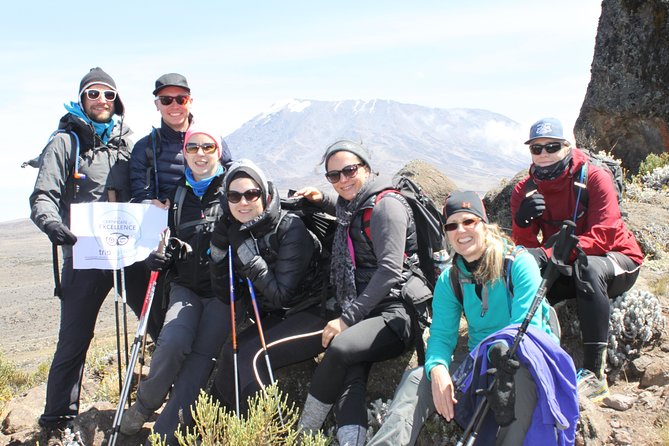
Reviewed · MARANGU ROUTE CLIMBS
Kilimanjaro Marangu Route 6 Days
The best feature here is the six-day pace. An extra night at Horombo gives you more time to adjust to altitude before the hard summit push, and you sleep in huts rather than tents. I like the practical comfort of fixed beds, dining rooms, warm washing water, and prepared meals. I also like the safety setup, with radios, oxygen, a Gamow Bag, pulse-oximeter checks, and rescue fees included.
The main drawback is the final summit day, which can last about 13 hours and starts before midnight. Marangu may be one of Kilimanjaro’s easier routes, but Uhuru Peak is still a serious high-altitude climb. You need moderate fitness, patience, and a willingness to walk slowly for hours.
Key points to know before booking
- The extra Horombo night matters: It gives you a full acclimatization day before climbing higher.
- You sleep in mountain huts: Marangu is the only Kilimanjaro route here described with hut rooms, dining facilities, and simple mountain lodging.
- Summit day is long: Expect a pre-midnight start, a climb to Gillman’s Point, and an optional continuation to Uhuru Peak.
- Safety equipment is included: Oxygen, VHF radios, a Gamow Bag, a pulse-oximeter, and mountain rescue fees are part of the package.
- Meals and water are covered: You receive breakfast, lunch, dinner, purified drinking water, and warm water for washing.
- The price includes more than the climb: Transfers, two hotel nights, park fees, taxes, porters, guides, and mountain meals are included.
Why the six-day Marangu Route is the sensible version
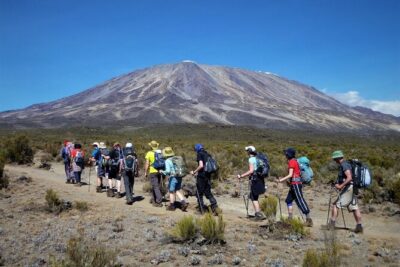
Marangu is often chosen because its path has a moderate slope and hut accommodation. That makes it less rough logistically than a camping route. You do not need to carry a tent or sleep on the ground, and meals are served at aluminum tables and chairs with backs and armrests.
Still, I would not confuse convenience with ease. The mountain rises to 5,895 meters at Uhuru Peak. Altitude remains the central challenge, and the climb demands steady effort even when the path itself is relatively straightforward.
The six-day plan improves on the shorter five-day version by adding an acclimatization day at Horombo. That day is not wasted time. You walk toward Mawenzi Hut and the Zebra Rocks, then return to Horombo for another night at 3,720 meters. The trip instructions stress drinking enough water and moving slowly, advice worth taking seriously.
You also get a private trip, meaning only your group participates. That can make the walking pace and daily routine easier to manage than a large mixed group. The available information does not specify the maximum group size, so I would ask about that before paying if group size matters to you.
More Marangu Route climbs:
- Kilimanjaro climb, Marangu route (6-day)
★ 5.0 · 72 reviews - Climbing Kilimanjaro – Marangu Route
★ 5.0 · 65 reviews - Private Full Day Hiking Experience to Marangu Route
★ 5.0 · 61 reviews
Starting at Marangu Gate and entering the rainforest
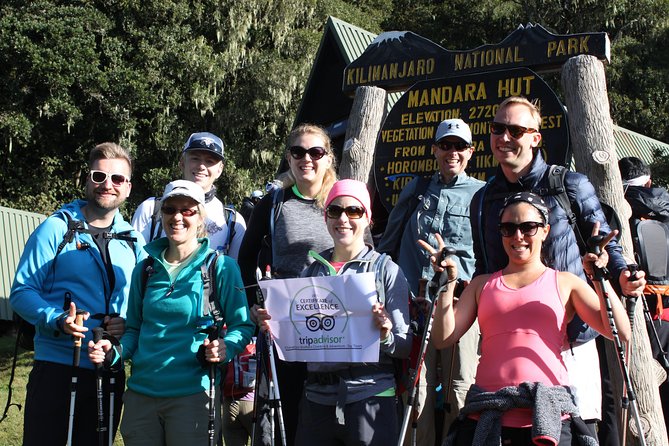
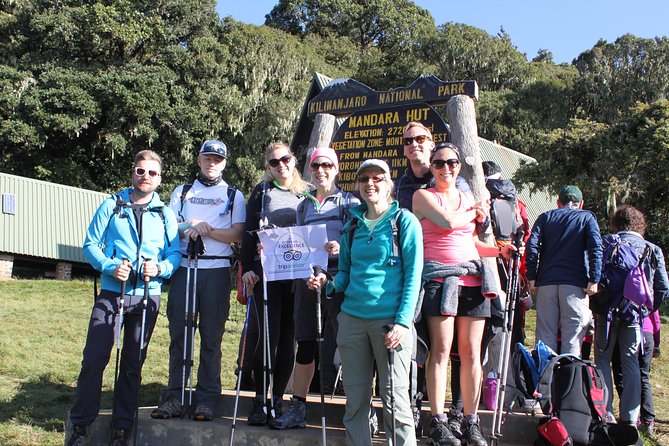
After breakfast, you travel from your hotel to Marangu National Park Gate. The gate formalities come first, then the route enters the tropical rainforest.
The first day takes about five to six hours, ending at Mandara Hut at 2,700 meters. This is a pleasant introduction to the climb because the forest gives you shade and a clear sense of moving into a different world. The day is not a sprint. You want to arrive with energy left for the next morning.
Mandara is used for dinner and the first night on the mountain. You can also rest around camp and take in the forest. The package includes all mountain meals, purified drinking water, and warm water for washing, small comforts that matter after several hours on foot.
The day begins at the park gate, so arrival and transport arrangements are important. This package includes arrival and departure transfers and transportation in the destination area, along with one hotel night before and one after the trek. The exact hotel name is not given in the supplied details, though the final night is described as a stay at Mountain Inn after the descent.
Mandara to Horombo, where the air starts to change
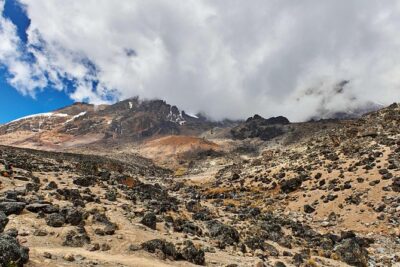
The second day climbs from Mandara to Horombo Hut at 3,720 meters. The first part is a steep ascent through forest, but the trees give way to moorland. In clear weather, you can see Kibo and Mawenzi, the two major peaks in this part of the mountain.
The walking time is listed as four to six hours. You reach Horombo around mid-afternoon, leaving time to rest and look out across the high country. This is the point where the climb begins to feel less like a forest walk and more like a high-altitude expedition.
Horombo is your base for two nights. That makes the accommodation easier to settle into, since you are not packing and moving every morning. The route description calls the zone low alpine, though the next acclimatization walk moves toward the high alpine zone.
I like this arrangement because it gives you a chance to notice how your body reacts. Headaches, poor sleep, unusual tiredness, or a reduced appetite can become more noticeable as you gain height. The supplied plan includes a pulse-oximeter and professional mountain guides, but you still need to report how you feel.
The Horombo acclimatization day is not an optional luxury
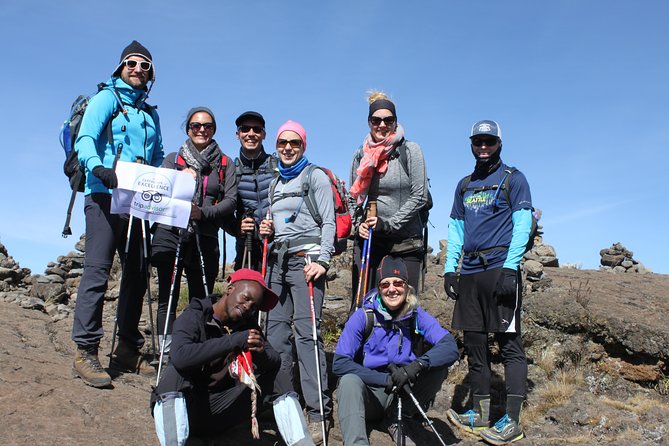
Day three is the reason I prefer the six-day version. You walk toward Mawenzi Hut and pass the Zebra Rocks, then return to Horombo. The walking time is about six hours, and all meals are provided at the hut.
This is a useful day because you gain height during the walk without sleeping higher that night. You also get a chance to practice the slow pace needed later. The route instructions specifically recommend drinking enough water and walking slowly. Those are simple instructions, but they are central to a successful summit attempt.
There is no promise that an acclimatization day will remove altitude problems. It only gives your body more time to adjust. I would treat this day as part of the climb, not as sightseeing or a free day. Keep your effort controlled, eat the meals provided, and use the time to understand the routine of walking, resting, and hydrating.
More six-day trips in Kilimanjaro:
- Kilimanjaro climb, Lemosho Route (6-day)
★ 5.0 · 129 reviews - 6 Days Tanzania Classic Safari
★ 5.0 · 52 reviews - The Best of Machame Route in 6 Days: Your World’s Summit Guide
★ 5.0 · 44 reviews - 6 Days Machame Route Kilimanjaro Climbing
★ 5.0 · 42 reviews
The Saddle and Kibo Hut at 4,700 meters
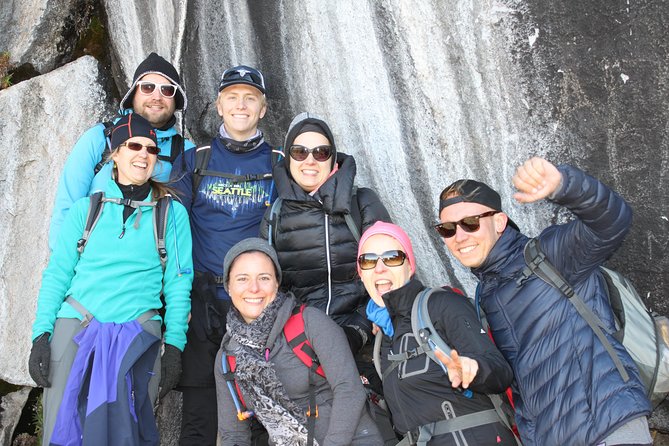
On day four, you leave Horombo and cross toward the Saddle, the high, open area between Mawenzi and Kibo. The route climbs gradually through a lunar-looking desert zone. The walk is described as six to seven hours in the explanation, while the daily schedule lists four to six hours, so you should plan for a substantial day rather than rely on the shorter figure.
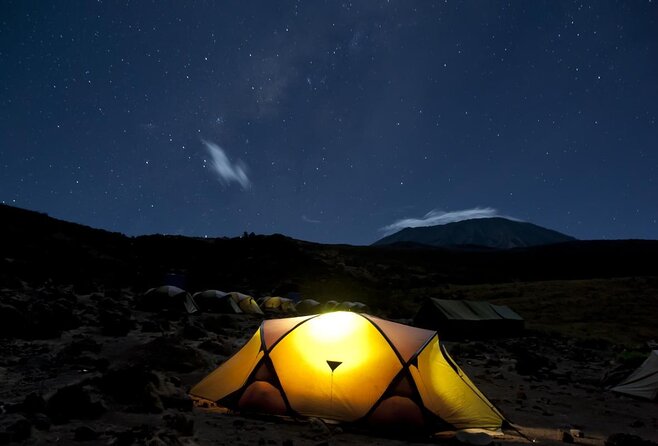
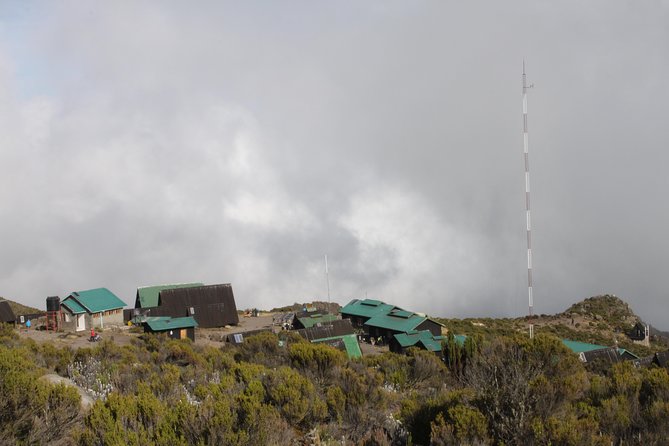
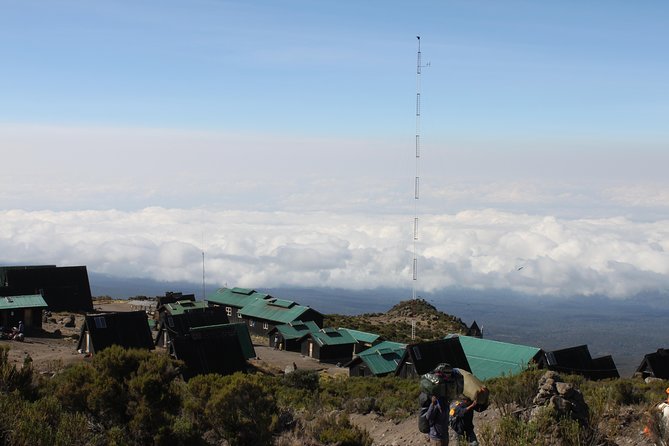
Kibo Hut sits at 4,700 meters. There is no running water there. That detail affects comfort and preparation, especially after the earlier hut facilities. You spend the afternoon resting and preparing for the summit, then go to bed early because the final ascent begins before midnight.
This is a quiet, demanding part of the climb. The scenery is broad and exposed, and the air is thin. Your goal is not to race to Kibo. It is to arrive with enough strength for the summit night.
The package provides meals throughout the mountain stay and warm water for washing every day, but the lack of running water at Kibo means conditions are basic. If you want a hotel-style mountain experience, this is not it. If you value a route with huts instead of tents and can accept simple facilities, Marangu is a reasonable compromise.
Summit night: Gillman’s Point, sunrise, and Uhuru Peak
Day five is the hardest day by far. You wake before midnight and begin climbing in darkness over loose volcanic scree. The route uses zigzags, and the stated approach is slow and steady.
The first major goal is Gillman’s Point on the crater rim at 5,685 meters. You stop there for a short rest and, if the weather allows, watch the sunrise over Mawenzi. Reaching Gillman’s Point is a major achievement, but the itinerary also offers the option to continue along the crater rim to Uhuru Peak.
The trip description gives the crater-rim walk to Uhuru as a three-hour round trip. Uhuru Peak is 5,895 meters, the highest point in Africa. You spend a short time appreciating the achievement, then descend to Kibo Hut for refreshments before continuing down to Horombo Hut.
The full day is listed at about 13 hours. That number is the clearest warning in the entire program. You are not simply walking uphill to a viewpoint and returning to a nearby lodge. You climb through the night, reach extreme altitude, descend to Kibo, then continue down to Horombo.
The option to turn around at Gillman’s Point is useful, since the final stretch to Uhuru can feel very different after the first summit effort. Your guide will be central to decisions about pace and safety. The company supplies emergency oxygen, VHF radios, a Gamow Bag, a pulse-oximeter, and rescue fees, but no equipment can replace a careful decision if you are unwell.
The long descent through the rainforest
Day six takes you from Horombo past Mandara Hut and down to Marangu Gate. The listed walking time is six to seven hours, with the route returning to the rainforest zone.
After the gate formalities, successful climbers receive summit certificates. You are then transferred to Mountain Inn for dinner, a summit celebration, and the final overnight stay.
The descent is easier on the lungs than the summit climb, but it can be tiring on the legs. After the long summit day, another six hours on foot is a real finish, not a quick stroll. I like that the program ends with a hotel night and dinner rather than putting you straight into an airport transfer.
The package includes departure transportation, so you should confirm the timing of your onward travel before booking. The supplied details do not give an exact departure schedule from Mountain Inn.
What the $2,179.49 price covers
At $2,179.49 per person, this is not a low-cost mountain walk. The price makes more sense when you count what is included.
You receive park entrance fees, government taxes, rescue fees, arrival and departure transfers, local transportation, two hotel nights, hut accommodation, all mountain meals, purified drinking water, and warm washing water. You also receive English-speaking mountain guides, porter support, and a porter to carry your day-pack during the summit attempt.
The safety equipment adds practical value. Emergency oxygen, VHF handheld radios, a Gamow Bag, and a pulse-oximeter are listed as standard inclusions. You should still ask how the equipment is used and how many guides or porters are assigned to your group, since those details are not provided.
Meals are another meaningful part of the price. The company describes large portions of fresh, healthy food, with breakfast, lunch, and dinner supplied each day. On a long climb, food is not a minor extra. It affects how well you recover from one day to the next.
Tips are not included, and neither are visa costs, laundry, phone use, beverages, personal spending, or optional activities such as a short safari. Build those costs into your budget. The advertised price is for the climb and listed services, not a complete Tanzania holiday.
Guides, porter treatment, and practical support
The experience is operated by Kilimanjaro Brothers. George Mtaki is identified as the director of sales and marketing, and he introduces the trip before the climb. The company provides professional English-speaking mountain guides and says porters are treated fairly and ethically.
That last point matters. Porters do the heavy work that makes a hut climb possible, so I would ask how many porters are assigned, what they carry, and how tipping is handled. Tips are expressly excluded from the price, which means you should plan for them separately.
The group carries VHF radios for communication. Warm washing water is provided daily, and meals are served using large aluminum tables and chairs with backs and armrests. These details do not make the mountain luxurious, but they show attention to the routine of a long climb.
The tour is listed as suitable for people with moderate physical fitness. That is a useful minimum, not a guarantee that the climb will feel easy. You should be comfortable walking for five to seven hours on several days and prepared for the 13-hour summit day.
What the strong feedback tells me
The most consistent praise focuses on organization, safety, food, and personal support. One account describes airport pickup, the mountain accompaniment, and regular food and water as well organized. Another praises the team for helping climbers reach the top while keeping safety in view.
A particularly useful detail is the emphasis on nourishment. The company repeatedly points to substantial meals as part of its service, and that is worth noting because appetite and energy can become difficult at altitude. You will still need to drink enough water and follow the slow pace advised by the guides.
The experience also has a track record with organized climbing groups. An Alpine club manager from Iran arranged teams for Kilimanjaro in 2020 and 2021 and described the arrangements as orderly. That does not remove the need to ask your own questions, but it supports the impression that this operator is used to handling structured groups.
The sample is small, so I would not treat the perfect rating as proof that every departure runs identically. Instead, use the praise to identify what to confirm: airport pickup, food quantity, guide coverage, porter arrangements, radio communication, and the plan for altitude problems.
Who should book this climb
I would recommend this route to you if you want Kilimanjaro with hut accommodation, prefer a private group, and value an extra acclimatization day. It also suits you if a camping route sounds less appealing and you want transport, meals, park fees, and safety provisions arranged together.
It is a good match for someone with moderate fitness who can accept basic mountain facilities. You should be comfortable with simple huts, no running water at Kibo, long walking days, and a pre-midnight summit start.
I would think twice if you want a relaxed holiday, dislike early starts, or expect the easiest route to feel easy. The final summit day is demanding, and the price does not include tips, visas, personal costs, or optional safari plans.
Free cancellation is available if you cancel at least 24 hours before the local start time. Cancellations made later are not refunded, and poor weather may lead to a new date or a full refund. Check these terms before you commit to flights and hotels.
Should you book the six-day Marangu climb?
I would choose this version over the five-day Marangu plan because the extra Horombo night gives you a better chance to adjust before Kibo and the summit. The huts, prepared meals, water, transfers, safety gear, and hotel nights make the $2,179.49 price easier to justify.
Book it if you want a structured Kilimanjaro climb with practical support and can prepare for a very long summit day. Before paying, confirm the group size, guide-to-climber ratio, porter arrangements, hotel names, and the exact transfer schedule. Those details will help you decide if this well-supported hut route fits your expectations.
FAQ
How long is the Kilimanjaro Marangu Route experience?
The mountain program lasts six days. It includes five nights on the mountain, plus one hotel night before and one after the trek.
How much does the climb cost?
The listed price is $2,179.49 per person.
Is pickup available?
Yes. Arrival and departure transfers are included, along with transportation in the destination area.
Where does the climb begin?
The first day starts with a transfer from your hotel to Marangu National Park Gate.
Where do you sleep on the mountain?
You stay in mountain huts at Mandara, Horombo, and Kibo. Marangu is described as the only route in this program with huts, simple dining facilities, and rooms.
Is there an acclimatization day?
Yes. Day three is an additional night at Horombo. You walk toward Mawenzi Hut and the Zebra Rocks before returning to Horombo.
How long is the summit day?
The summit day is listed at about 13 hours. You begin before midnight, climb to Gillman’s Point, may continue to Uhuru Peak, and then descend to Horombo.
Can you continue from Gillman’s Point to Uhuru Peak?
Yes. The itinerary describes a three-hour round trip along the crater rim from Gillman’s Point to Uhuru Peak, at 5,895 meters.
Are meals and drinking water included?
Yes. Breakfast, lunch, dinner, large portions of food, and clean purified drinking water are included while you are on the mountain.
What safety equipment is included?
The package includes emergency oxygen tanks, VHF handheld radios, a Gamow Bag, a pulse-oximeter, and mountain rescue fees.
Are tips included?
No. Tips are not included in the price. Visa costs, personal expenses, beverages, laundry, telephone use, and optional tours are also excluded.
What fitness level is required?
The experience is intended for people with a moderate physical fitness level. The route includes walking days of several hours and a summit day of about 13 hours.
Is this a private tour?
Yes. Only your group participates in the activity.
What happens if poor weather cancels the climb?
If poor weather causes cancellation, you are offered a different date or a full refund.
Can you cancel for a full refund?
Yes, if you cancel at least 24 hours before the experience start time. Cancellations made less than 24 hours before the start are not refunded.
Just added around Kilimanjaro
- 6 days Machame route climbing Mt.Kilimanjaro★ 5.0 · 8 reviews
- machame route★ 5.0 · 16 reviews
- Mt Kilimanjaro 6 days Marangu route hike★ 5.0 · 3 reviews
- Private Cycle to Kilimanjaro Bike Park Safari★ 5.0 · 6 reviews
- West Kilimanjaro cycling Adventures★ 4.5 · 8 reviews
- Kilimanjaro Climb • Marangu Route ~ 9 Day★ 5.0 · 4 reviews
- 3 Days Private E-Bike Tour in West Kilimanjaro★ 5.0 · 3 reviews
- Kilimanjaro Climb • Machame Route ~ 10 Day★ 5.0 · 6 reviews
Marangu Route Climbs, compared.
Browse the lists this tour appears in