
Reviewed · LEMOSHO ROUTE CLIMBS
Kilimanjaro Climb- 8 Days Lemosho Route
The Lemosho Route gives you Kilimanjaro in broad strokes: open heath first, alpine meadows next, then cold arctic ground near Uhuru Peak. I like the steady change in scenery and the extra time built into an eight-day climb. The package also includes proper mountain basics, from full-board meals and a mattress to oxygen and an oximeter.
I also like the planning support associated with Kelvin, who is praised for quick replies and clear preparation advice. Joseph is named as an airport pickup driver in one account, while Goodluck appears in the company’s guest care. The main caution is simple: this is still a serious high-altitude trek. Moderate fitness is required, and personal gear, insurance, medication, and a sleeping bag are your responsibility.
Key points to know before you book
- Eight days on the Lemosho Route: You cross heath, alpine meadow, and arctic terrain before descending through rainforest.
- Useful safety equipment included: An emergency first-aid kit, oxygen cylinder, and mountain oximeter are supplied.
- Food is part of the value: Full-board mountain meals and large portions of fresh, nutritious food are included.
- Moshi time is built in: The package includes two bed-and-breakfast nights in Moshi, plus pickup and Kilimanjaro gate transfers.
- A small-to-medium group setting: The maximum group size is 20 people, with an English-speaking mountain guide.
- Budget for extras: Flights, visas, insurance, sleeping bags, boots, clothing, medication, tips, drinks, and personal spending are not included.
Why Lemosho is Kilimanjaro’s scenic choice
Kilimanjaro is not one uniform climb. The Lemosho Route takes you through several climate zones, and that variety is the heart of the experience.
You begin among heath and upland vegetation, where the mountain feels open and spacious. The route then moves through alpine meadows before reaching the stark, cold arctic zone near Uhuru Peak. On the way down, the setting changes again as you pass through rainforest.
I like this route because the scenery keeps changing instead of giving you the same view for days. That also helps the climb feel like a journey rather than a long uphill walk. The trade-off is that changing conditions require careful packing. Warm layers, waterproof clothing, sturdy hiking boots, and a suitable sleeping bag are not optional extras in practical terms, even though you buy or provide them yourself.
The route is described as premium, but that does not mean easy. More days on the mountain can give you a less rushed schedule, yet you still need to deal with altitude, cold, fatigue, and basic camp life. The operator lists moderate fitness as the expected level, so you should arrive ready for sustained walking rather than treating this as a sightseeing trip with a few short hikes.
More Lemosho Route climbs:
- Kilimanjaro climb by Lemosho Route (7-day)
★ 5.0 · 651 reviews - 8-Day Small-group Lemosho Kilimanjaro Summit Trekking
★ 5.0 · 186 reviews - Kilimanjaro Climbing Lemosho Route 8 Days.
★ 5.0 · 186 reviews
Starting in Moshi before the mountain
The experience is based in Moshi, Tanzania, and pickup is offered. The stated meeting time is 8:00 am, with Kilimanjaro gate transfers included. That takes away one of the awkward parts of an independent climb: arranging the first transfer and getting to the park entrance with your equipment and group.
Two nights of bed-and-breakfast accommodation in Moshi are included. This gives you a place to sleep before or around the climb, but you should confirm how those nights fit your own arrival and departure dates. The package also lists the climb as eight days and seven nights, so it is worth checking the exact room and mountain-night schedule before paying.
The airport transfer experience described in the supplied information involved a driver meeting an arriving party at Kilimanjaro Airport and taking them to Moshi. Joseph is named in that account. Kelvin is also repeatedly associated with fast replies and practical preparation help during the booking process. Those details matter because a Kilimanjaro trip has plenty of questions before day one: what to pack, when to arrive, what is included, and how the transfers work.
You should still get written confirmation of your pickup point and start time. The experience is near public transportation, but the included gate transfer is the more relevant detail for the climb itself.
What the first days on Lemosho feel like
The opening section takes you into the heath zone and then toward alpine meadows. The supplied schedule does not give individual camp names or daily mileage, so I will not pretend to know the exact distances or walking hours for each day. What you can count on is a gradual move away from the lower mountain environment and toward higher, colder ground.
This is where the eight-day format earns its keep. A longer route gives you more time to adjust to the effort and the changing altitude than a rushed itinerary. It also leaves room to appreciate the mountain rather than staring at your boots all day.
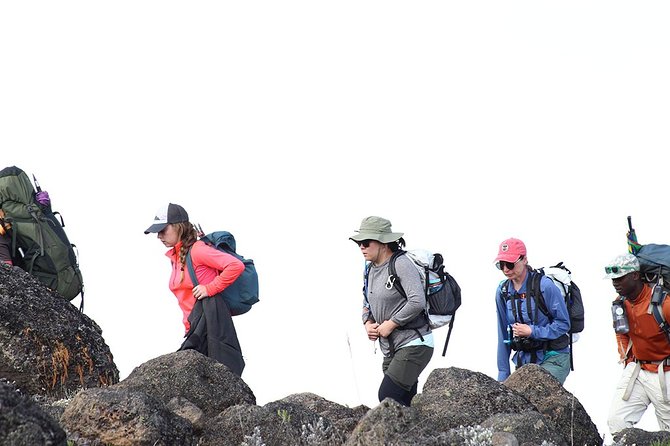
Your English-speaking guide is central to the experience. A good guide sets the pace, watches the group, and helps you respond to changing conditions. The company supplies an oximeter on the mountain, which can provide a useful reading as the climb gets harder. It also supplies an emergency oxygen cylinder and first-aid kit.
Those items are reassuring, but they are not a guarantee against altitude problems. You should take the guide’s instructions seriously, report symptoms honestly, and understand that insurance is required. Medication is not included, so any personal prescriptions or approved altitude medicine must be arranged before departure with your medical provider.
The group maximum is 20. That is not a private climb, and the experience may feel different depending on the final group size. A larger group can bring social energy and shared encouragement, but it can also mean a less personal pace. If you want a smaller team, ask about the expected group size before booking.
Alpine meadows and the value of a slower pace
The alpine meadow section is one of the more rewarding parts of the route because it sits between the lower vegetation and the bare, cold upper mountain. You get a clear sense that the climb is changing character.
I like this middle section for two reasons. First, the route offers a strong visual progression. Second, the longer schedule gives you time to settle into the daily rhythm of walking, eating, resting, and preparing for the next stage.
Meals are full board on the mountain, with large portions of fresh, healthy food included. That is more important than it sounds. You are using energy for hours each day, and carrying or buying every meal separately would add work and cost. The food is not described in detail, so do not assume a particular menu or dietary arrangement. If you have allergies or special dietary needs, ask the operator before departure.
Drinking water is included. Energy food and beverages are not, so you need to budget for any preferred snacks or drinks beyond the supplied meals and water. Alcoholic drinks, soft drinks, and personal treats are also excluded. For a climb like this, familiar snack foods can be useful, but they are part of your own packing list.
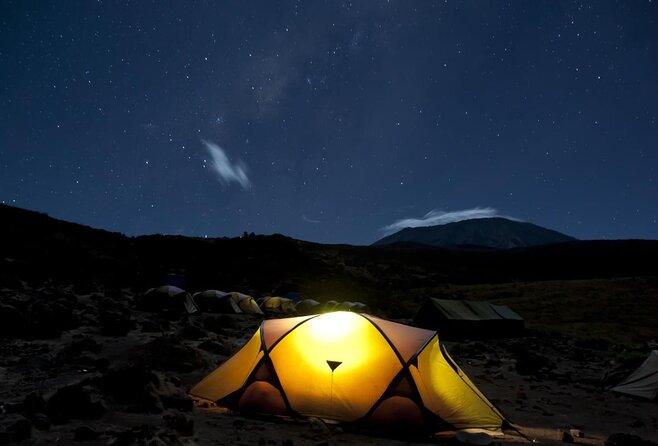
A sleeping mattress is provided, along with mountain tents. Your sleeping bag is not. That distinction catches people out. You have shelter and a mattress, but you still need an appropriate sleeping system for cold mountain nights.
More treks and hikes around Kilimanjaro:
- Kilimanjaro climb, Machame Route (7-day)
★ 5.0 · 262 reviews - Climbing Kilimanjaro – Machame Route
★ 5.0 · 170 reviews - Climbing Kilimanjaro through 7 days Machame Route
★ 5.0 · 151 reviews - Kilimanjaro climb, Lemosho Route (8-day)
★ 5.0 · 148 reviews
The upper mountain and Uhuru Peak
The route eventually reaches the arctic zone near Uhuru Peak. This is the high point of the experience and the section where the climb becomes most demanding.
The information provided does not state the exact summit-day departure time, walking duration, success rate, or altitude profile. Those are important questions, so you should request the detailed daily plan before booking. The operator can also clarify how the final ascent is paced and what happens if someone cannot continue.
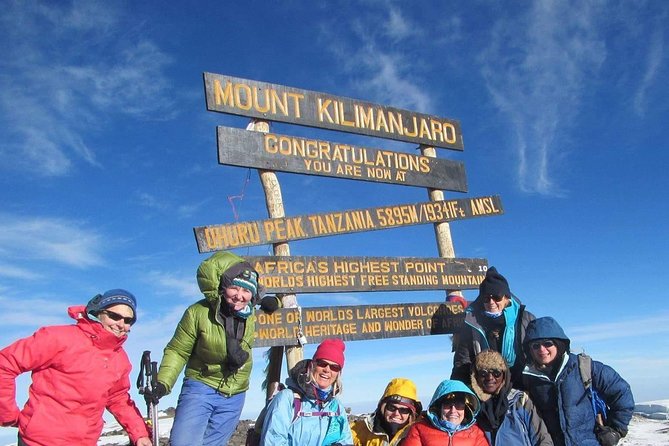
What is clear is that Uhuru Peak is the goal, not simply a high viewpoint along the way. Reaching it will require patience, physical effort, and close attention to your guide. Cold, fatigue, and altitude can turn a manageable climb into a difficult one, even for fit people.
The emergency oxygen cylinder and oximeter are sensible provisions. The fair and sustainable salary listed for the crew is another meaningful part of the package. Porters and mountain staff make a supported climb possible, and a stated commitment to fair pay gives you a better basis for judging the price than a low headline cost alone.
Still, you should ask how tipping is handled. Tips and gratuities are not included, and the information does not specify suggested amounts or whether tips are pooled. Get clear guidance before you arrive, and carry enough local cash if the operator recommends it.
Descending through rainforest
The descent passes through rainforest, giving the trip a final change of mood. After the cold upper mountain, the return to thicker vegetation can feel like a major shift rather than a simple walk downhill.
Descending is easier on the lungs for many people, but it can be tiring on the knees and legs. You should not assume the hardest work ends at the summit. Keep your boots comfortable, use walking poles if you normally rely on them, and save enough energy for the return to the gate.
Kilimanjaro gate transfers are included, which is helpful after several days on foot. The exact transfer timing is not provided, so confirm how the last mountain day connects with your Moshi accommodation and onward travel.
What the $2,600 price really covers
At $2,600 per person, this is not a bare-bones park entry followed by a self-guided walk. The price includes mountain park fees and taxes, an English-speaking guide, tents, mattress, drinking water, full-board meals, emergency equipment, gate transfers, and crew pay described as fair and sustainable under KINAPA approval.
The two Moshi bed-and-breakfast nights add practical value, especially if you are arriving by air and want the beginning of the trip organized. Pickup is offered, and the company has a track record of answering planning questions quickly, with Kelvin singled out for responsive communication.
Your out-of-pocket costs can still be significant. Flights, visa fees, medical and travel insurance, a sleeping bag, boots, clothes, medication, snacks, drinks, tips, souvenirs, and other personal spending are excluded. A Gamow Bag is also not included. That last item matters because it is specialized emergency equipment, so ask the operator what emergency procedures and evacuation arrangements apply.
I would judge the price by the support and equipment included, not just the number of days. If you already own suitable trekking equipment, $2,600 may look more attractive. If you need to buy or rent nearly everything, your real trip cost will be higher.
The people who make the climb work
A mountain trip depends heavily on communication before departure. Kelvin is repeatedly associated with quick email and WhatsApp replies, detailed preparation information, and flexibility with questions. That is useful for first-time climbers, who often need help understanding clothing, equipment, arrival plans, and timing.
Joseph is identified as an airport pickup driver, and Goodluck signs several company responses. The material also highlights the guides and porters as an important part of the service. You should ask for the name of your assigned lead guide, the guide-to-climber ratio, the porter arrangement, and the tipping guidance before you travel.
The English-speaking guide is included. No promise is given about other languages, private guiding, or a particular guide for every departure. If those details matter to you, confirm them in writing.
Who should book this climb
This trip suits you if you want a scenic Kilimanjaro route with more time than the shortest options and prefer having transport, food, tents, and basic emergency equipment arranged. It is also a good fit if you value responsive pre-trip communication and do not want to assemble every mountain service yourself.
It may suit a small group of friends or couples particularly well. One account describes four friends climbing the route together, while another describes a couple planning the climb after discussing the details by email and WhatsApp. The maximum group size of 20 means you should not assume a private experience.
You should think twice if you want a luxury lodge trek, a fully private climb, or a package that includes every piece of personal equipment. This is supported camping on a high mountain, not a hotel-based holiday.
You should also postpone booking until you have medical and travel insurance. Insurance is required, and the package does not include medication or specialized personal equipment. Make sure your policy covers the type of mountain activity you are undertaking.
Booking and cancellation details to keep in mind
Confirmation is provided at booking. The experience can be canceled up to 24 hours before the local start time for a full refund. Changes made less than 24 hours before the start are not accepted, and cancellations inside that period are not refunded.
Weather and minimum group numbers can also affect the departure. If poor weather or an insufficient number of participants causes cancellation, you are offered another date or experience, or a full refund.
That policy is fairly clear, but an eight-day climb involves flights and hotel planning around it. Leave some flexibility in your wider Tanzania schedule instead of arranging a tight same-day connection.
Should you book the 8-day Lemosho Route?
I would choose this climb for the scenic route, the longer schedule, and the practical inclusions. The move from heath to alpine meadow to arctic ground, followed by rainforest on descent, gives you a fuller picture of Kilimanjaro than a quick up-and-down itinerary.
The $2,600 price is reasonable if you value organized transfers, meals, tents, park costs, guide support, safety equipment, and Moshi accommodation. It is less of a bargain if you must add a full set of trekking gear, insurance, tips, and personal food to the budget.
Book it if you are moderately fit, comfortable with camping, prepared to buy or rent your own sleeping bag and clothing, and willing to follow mountain safety advice. Before paying, ask for the exact day-by-day plan, expected group size, guide details, gear recommendations, tipping guidance, and emergency procedures. If those answers suit you, the eight-day Lemosho Route offers a well-supported way to take on Kilimanjaro without rushing through its best scenery.
FAQ
Where does the Kilimanjaro climb start?
The experience is based in Moshi, Tanzania. Pickup is offered, and Kilimanjaro gate transfers are included.
How long is the climb?
The experience lasts approximately eight days and is described as an eight-day, seven-night Kilimanjaro climb via the Lemosho Route.
What time does the experience start?
The stated start time is 8:00 am.
Is accommodation in Moshi included?
Yes. Two nights of bed-and-breakfast accommodation in Moshi are included.
What meals are included?
Full-board meals on the mountain are included, along with drinking water and large portions of fresh, healthy, nutritious food.
Is a mountain guide included?
Yes. An English-speaking mountain guide is included.
Are tents and sleeping equipment provided?
Mountain tents, a sleeping mattress, and drinking water are included. A personal sleeping bag is not included.
Is travel insurance required?
Yes. Travel or medical insurance is required. Insurance is not included in the price.
What is the cancellation policy?
You can cancel at least 24 hours before the local start time for a full refund. Cancellations or changes made less than 24 hours before the start are not accepted for a refund. If poor weather or an insufficient number of participants cancels the experience, you are offered another date or experience, or a full refund.
More Eight-Day Trips in Kilimanjaro
- Climbing Kilimanjaro through 8 days Lemosho Route
★ 5.0 · 52 reviews - Kilimanjaro climb, Northern Circuit route (8-day)
★ 5.0 · 40 reviews - 8 Days Kilimanjaro Hike via Lemosho Route
★ 5.0 · 39 reviews - 8 Days Climbing Mt.Kilimanjaro (Lemosho Route)
★ 4.5 · 37 reviews
Just added around Kilimanjaro
- 6 days Machame route climbing Mt.Kilimanjaro★ 5.0 · 8 reviews
- machame route★ 5.0 · 16 reviews
- Mt Kilimanjaro 6 days Marangu route hike★ 5.0 · 3 reviews
- West Kilimanjaro cycling Adventures★ 4.5 · 8 reviews
- Private Cycle to Kilimanjaro Bike Park Safari★ 5.0 · 6 reviews
- Kilimanjaro Climb • Marangu Route ~ 9 Day★ 5.0 · 4 reviews
- 3 Days Private E-Bike Tour in West Kilimanjaro★ 5.0 · 3 reviews
- Kilimanjaro Climb • Machame Route ~ 10 Day★ 5.0 · 6 reviews