
Reviewed · LEMOSHO ROUTE CLIMBS
Kilimanjaro Climb – 8 Days Lemosho Route
The best thing about this Kilimanjaro climb is its slow, scenic approach. The Lemosho Route begins in the rainforest on the mountain’s western side, crosses the broad Shira Plateau, then joins the busier trail near Lava Tower. That longer route gives you more time to adjust to altitude before summit night.
I like the careful structure, with shorter days early on and the climb-high, sleep-lower pattern around Lava Tower and Barranco. I also like that the price includes the working team, meals, camping gear, airport transfers, and an emergency first-aid kit. The main drawback is the summit day: you gain nearly 1,300 meters, then descend almost 2,900 meters in one punishing stretch.
Key points to know
- Eight days on the mountain: The schedule allows more acclimatization than a shorter Kilimanjaro route.
- Lemosho’s western start: You walk through rainforest before reaching the open Shira Plateau.
- Lava Tower and Barranco: Day four gives you an important altitude test before the route drops into Barranco Valley.
- A serious summit night: The Barafu to summit section takes 6 to 8 hours, followed by another 6 to 8 hours of descent.
- A full support team: Guides, porters, and a cook are included, along with three meals daily and water on the mountain.
- Private booking: Only your own group participates, though the supplied information also describes solo climbers being placed into a small group.
Why the Lemosho Route is worth eight days
Kilimanjaro is not a technical climbing trip in the information provided here, but it is a demanding high-altitude trek. The key challenge is not only distance. Your body must adjust as you move from Moshi to camps well above 4,000 meters, and the longer Lemosho schedule gives it more time to do that.
The route starts at Londorossi Gate, below the Shira Plateau. From there, you pass through the rainforest of western Kilimanjaro before reaching Mti Mkubwa Camp. In later days, the trees thin out, the views open, and the route crosses land shaped by Kilimanjaro’s volcanic past.
I like this progression because every day feels different. You begin among trees, move into moorland, cross a high plateau, then enter semi-desert and alpine desert. Near the summit, the setting becomes colder and more severe, with glaciers and volcanic rock replacing vegetation.
An eight-day route also avoids the rushed feel of shorter schedules. It does not make the climb easy, but it gives you a better framework for handling the altitude. You still need patience, steady pacing, and a willingness to stop when your body needs it.
More Lemosho Route climbs:
- Kilimanjaro climb by Lemosho Route (7-day)
★ 5.0 · 651 reviews - Kilimanjaro Climbing Lemosho Route 8 Days.
★ 5.0 · 186 reviews - 8-Day Small-group Lemosho Kilimanjaro Summit Trekking
★ 5.0 · 186 reviews
Arrival in Moshi and the first mountain briefing
The package includes transport from Kilimanjaro International Airport to your accommodation in Moshi. After the overnight stay, your head guide meets you for a briefing and gear check.
This first meeting matters. It gives you a chance to confirm what you have packed and arrange the hire of any equipment you still need. The information does not specify which items are available for hire, so ask before arrival if you need clothing or mountain gear.
The first hotel night is not included as a meal package. Hotel meals are listed among the exclusions, so budget separately for food before and after the trek. On the mountain, however, three meals a day and water are provided.
The trip is offered as a private activity. That means your booking is for your group, not a large public departure. The supplied details also note that a solo climber was placed into a small group, so ask how the operator handles solo bookings before paying if you want a private party of one.
Day 1: Londorossi Gate to Mti Mkubwa Camp
The first walking day covers about 7 kilometers in roughly 3 hours, with a 360-meter altitude gain. The destination is Mti Mkubwa Camp, in the rainforest zone.
This is a sensible opening day. You get moving without facing a long march, while the forest provides shade and a clear sense that you have left ordinary road travel behind. The western approach is quieter than the more commonly used routes, which is one of Lemosho’s main attractions.
Do not mistake the short distance for a free pass. You are beginning a multi-day climb, so use the first day to settle into a slow rhythm. Keep your daypack light, drink regularly, and avoid racing ahead simply because you feel fresh.
Day 2: Mti Mkubwa to Shira I Camp
Day two is longer, covering 10 kilometers in 6 to 7 hours. You gain 755 meters and leave the rainforest for moorland, ending at Shira I Camp.
This is one of the route’s most noticeable changes. Trees give way to more open ground, and the climb begins to feel like a high mountain trek rather than a forest walk. The altitude gain is substantial compared with day one, so your pace matters.
The Shira Plateau is not just a place to camp. It was formed by an earlier volcanic eruption and later filled by material from the larger Kibo eruption. That gives the plateau a useful sense of scale: you are walking across part of Kilimanjaro’s volcanic structure, not simply following a trail from camp to camp.
More treks and hikes around Kilimanjaro:
- Kilimanjaro climb, Machame Route (7-day)
★ 5.0 · 262 reviews - Climbing Kilimanjaro – Machame Route
★ 5.0 · 170 reviews - Climbing Kilimanjaro through 7 days Machame Route
★ 5.0 · 151 reviews - Kilimanjaro climb, Lemosho Route (8-day)
★ 5.0 · 148 reviews
Day 3: Shira I to Shira Hut
The third day is shorter, with 8 kilometers taking about 3 to 4 hours. The altitude gain is 305 meters, and the route remains in moorland.
This easier day is valuable after the longer climb to Shira I. It gives you time to walk without rushing and lets the body keep adjusting before the route climbs higher. The open plateau also offers broad views, although conditions on a high mountain can change quickly.
I would treat this as a recovery day, not a sightseeing day with extra exertion. Eat the meals provided, keep drinking water, and protect your energy for the harder section ahead.
Day 4: Shira Hut to Lava Tower to Barranco Camp
Day four is the route’s key acclimatization day. You walk about 10 kilometers over 6 to 7 hours, passing through semi-desert. The listed net altitude gain is only 50 meters because the trail rises to Lava Tower and then descends to Barranco Camp.
That up-and-down pattern is useful. You reach a higher point near Lava Tower, then sleep lower in Barranco. It is a practical way to expose yourself to greater altitude without spending the night at the highest point reached that day.
This is also where the Lemosho trail meets the Machame Route. The quieter western approach begins to connect with a more established part of the mountain route. After Lava Tower, you descend into Barranco Valley, where the next day brings the Great Barranco Wall.
Day four may be one of the most tiring days before the summit because it combines time on the trail with a high point and a descent. The benefit is that it prepares you for the thin air ahead. Pay attention to how you feel, and tell the guide promptly if you have altitude symptoms.
Day 5: Barranco Camp to Karanga Camp
The walk to Karanga Camp covers 6 kilometers in 3 to 4 hours, with a 140-meter altitude gain. The route is listed as alpine desert.
The day begins with the Great Barranco Wall, one of the most distinctive parts of the route. The name sounds more dramatic than the information allows us to measure, but you should expect a hands-on, uphill section rather than a flat stroll. After the wall, the trail traverses below Kilimanjaro’s Southern Ice Field.
This shorter day gives you room to recover after the Lava Tower section. It is also a good reminder that altitude changes the character of walking. A modest distance can still take effort when you are high on the mountain, carrying a daypack and conserving energy for summit night.
Day 6: Karanga to Barafu Camp
Day six covers just 4 kilometers and takes 2 to 4 hours, but the altitude gain is 600 meters. You climb through alpine desert to Barafu Camp.
The short distance can be misleading. This is the final camp before the summit, and the steep gain brings you to a high starting point for the night climb. You need to use the afternoon for rest rather than treating the short walk as a chance to spend extra energy.
Barafu is where the schedule becomes very focused. Organize your summit clothing, keep essential items close, eat what you can, and follow the guide’s instructions about timing. The supplied itinerary does not state the exact summit departure hour, so confirm that during the briefing.
Day 7: Barafu Camp to the summit and Mweka Camp
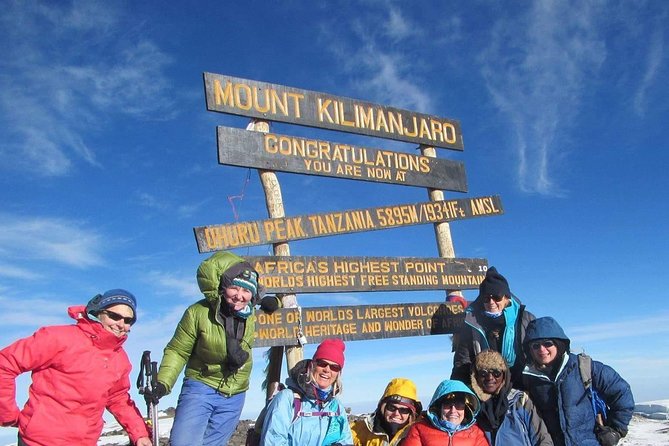
Summit day is the hardest part of the trip. The climb from Barafu to the summit is about 7 kilometers, taking 6 to 8 hours, with a 1,296-meter altitude gain. After reaching the summit, you descend 12 kilometers over another 6 to 8 hours, losing 2,896 meters before reaching Mweka Camp.
That is a very long day. The summit section alone is a serious effort, and the descent begins when your legs are already tired. Your success depends less on speed than on keeping a steady pace and following the guide’s rhythm.
The itinerary lists the summit zone as glaciers. You should expect cold, high-altitude conditions and a stark setting, but no technical climbing equipment or glacier procedures are specified in the supplied information. Ask the operator exactly what equipment and clothing are needed for the summit date.
The descent to Mweka Camp is not an afterthought. A rapid loss of altitude can be welcome, but uneven ground and tired muscles increase the risk of slips. Trekking poles, if permitted and available to you, may be useful, though they are not listed as included equipment.
Day 8: Mweka Camp to Mweka Gate and Moshi
The final day covers 10 kilometers in 4 to 5 hours, descending 1,360 meters through rainforest. After reaching Mweka Gate, you return to Moshi.
This last section brings you back into trees and warmer air. It may feel easier after the summit, but the descent can be hard on knees and ankles. Keep your pace controlled and do not assume the trek is finished until you reach the gate.
The package includes transport between the airport and your Moshi accommodation, but the day-eight return transfer from Mweka Gate to Moshi is not separately described in the inclusion list. Confirm that this ground transport is covered when you book.
What the $2,900 price covers
At $2,900 per person, the price is substantial, but it covers many of the costly parts of a Kilimanjaro operation. Included are park entry fees, camping fees, mountain accommodation equipment, professional guides, a cook, porters, three meals daily, water, airport transfers, and an emergency first-aid kit.
The crew is a major part of the value. You are not carrying all camping equipment, preparing every meal, or managing the route alone. The company also states that its crew receives fair treatment, an important point on a trek that depends heavily on porters and camp staff.
The package does not include hotel meals, travel insurance, personal items, or tips for the guide, porters, and cook. Those extras can affect your actual budget, so do not treat $2,900 as the final amount you will spend.
I also like the emphasis on preparation and problem solving. The strongest praise connected with this operator centers on meticulous planning, attentive support, and a crew that handled unexpected problems. That is exactly the kind of service you want on a high-altitude trek, though a short set of supplied comments cannot guarantee that every departure will feel identical.
Food, equipment, and support on the mountain
Three meals daily and water are included while you are on the mountain. The information does not provide sample menus, dietary details, or water quantities, so tell the company about dietary needs before departure and ask how water is distributed during each day.
Camping equipment is included, but personal items are not. The pre-trek gear check is therefore important. Use it to identify anything missing and ask what can be hired locally.
You have professional mountain guides, porters, and a cook. You also have an emergency first-aid kit with facilities intended to keep you safe. That does not replace travel insurance or personal preparation, and travel insurance is specifically excluded.
Tips are not included. Plan for separate gratuities for the guide, porters, and cook, and ask the operator about its recommended tipping practice so you arrive prepared.
Who should book this Kilimanjaro climb?
This route suits you if you want a longer Kilimanjaro schedule with varied scenery and more time for acclimatization. It is a good match for someone who values a smaller private booking, a full mountain crew, and an itinerary that includes the Shira Plateau, Lava Tower, Barranco Wall, and the Southern Ice Field.
You need a moderate level of physical fitness. The company lists that as a requirement, and the schedule supports it: several days are manageable, but day seven is exceptionally demanding.
This is not the right choice if you want a relaxed holiday with a little walking added. The summit day can last up to 16 hours when the ascent and descent are combined. You should also be comfortable with camping and with spending a week in changing mountain conditions.
The trip may suit solo climbers, but confirm how your group will be formed. The activity is private for the participating group, while the supplied details indicate that a solo booking may be combined with other climbers.
Booking, cancellations, and weather
Confirmation is provided at the time of booking. Free cancellation is available if you cancel at least 24 hours before the experience start time, based on local time. Cancellations made later than that are not refunded, and changes inside the same 24-hour window are not accepted.
Weather matters. If poor conditions force a cancellation, you are offered another date or a full refund. The trip also requires a minimum number of participants, and if that number is not reached, you are offered another date or experience, or a full refund.
Should you book the 8-day Lemosho climb?
I would choose this trip if your priority is a scenic, longer route with strong logistical support. The gradual movement from rainforest to moorland, semi-desert, alpine desert, and the summit zone gives the climb real variety, while the eight-day schedule gives you more time to adjust than a rushed itinerary.
The decision comes down to stamina and expectations. The route is not easy, the summit day is very long, and several important costs remain outside the $2,900 price. If you are prepared for those limits and want a well-supported Kilimanjaro attempt with airport transfers, meals, porters, and a cook included, this is a sensible option.
FAQ
How long is the Kilimanjaro climb?
The experience lasts approximately eight days, including the mountain trek from Londorossi Gate through Mweka Gate and the return to Moshi.
What route does the climb use?
It uses the Lemosho Route. The trail begins at Londorossi Gate, crosses the Shira Plateau, meets the Machame Route near Lava Tower, continues through Barranco, and finishes via Mweka.
What is included in the $2,900 price?
The price includes airport transfers to and from your Moshi accommodation, park and camping fees, mountain accommodation equipment, guides, a cook, porters, three meals daily, water on the mountain, fair treatment of the crew, and an emergency first-aid kit.
Are hotel meals included?
No. Meals at your hotel are not included.
Is travel insurance included?
No. Travel insurance is not included in the price.
What level of fitness is required?
A moderate level of physical fitness is required. The summit day includes 6 to 8 hours of climbing, followed by 6 to 8 hours of descent.
Is this a private activity?
Yes. The activity is described as private, with only your group participating. Solo bookings may be placed into a small group, so confirm the arrangement before booking.
Can I cancel for a full refund?
Yes, if you cancel at least 24 hours before the experience start time, using the local time at the destination. A poor-weather cancellation or cancellation caused by not reaching the minimum number of participants may result in another date, another experience, or a full refund.
More Eight-Day Trips in Kilimanjaro
- Climbing Kilimanjaro through 8 days Lemosho Route
★ 5.0 · 52 reviews - Kilimanjaro climb, Northern Circuit route (8-day)
★ 5.0 · 40 reviews - 8 Days Kilimanjaro Hike via Lemosho Route
★ 5.0 · 39 reviews - 8 Days Climbing Mt.Kilimanjaro (Lemosho Route)
★ 4.5 · 37 reviews
Just added around Kilimanjaro
- 6 days Machame route climbing Mt.Kilimanjaro★ 5.0 · 8 reviews
- machame route★ 5.0 · 16 reviews
- Mt Kilimanjaro 6 days Marangu route hike★ 5.0 · 3 reviews
- Private Cycle to Kilimanjaro Bike Park Safari★ 5.0 · 6 reviews
- West Kilimanjaro cycling Adventures★ 4.5 · 8 reviews
- Kilimanjaro Climb • Marangu Route ~ 9 Day★ 5.0 · 4 reviews
- 3 Days Private E-Bike Tour in West Kilimanjaro★ 5.0 · 3 reviews
- Kilimanjaro Climb • Machame Route ~ 10 Day★ 5.0 · 6 reviews