
Reviewed · LEMOSHO ROUTE CLIMBS
Climb Kilimanjaro in 8 Days via Lemosho Route
The best thing about this 8-day Lemosho route is its patient climb toward Africa’s highest point. You begin in rainforest, cross the Shira Plateau, spend time high near Lava Tower, then reach Uhuru Peak after a long summit night. That slower pattern gives you more time to adjust to altitude than a rushed route.
I like the quiet, scenic start and the strong support built into the trip. You have local guides, porters, a cook, camping gear, meals, drinking water, and safety equipment handled for you. The company’s team has included guides and staff such as Jackson, Efatha, Sebastian, Elissafi, Kenny, Innocent, and Martin, with many climbers praising their friendly support.
The catch is simple: this is still a serious mountain climb. Summit day takes about 13 hours, and the $2,500 price does not include international flights, insurance, personal clothing, or tips. You need moderate fitness, patience, and a willingness to sleep in tents for seven nights.
Key points at a glance
- A gradual western approach: The Lemosho route takes you from rainforest to heath, Shira Plateau, alpine desert, and the summit zone.
- A valuable acclimatization day: Day 3 is relatively short, helping you spend more time adjusting before the harder sections.
- A dramatic Lava Tower crossing: You climb high for acclimatization, then descend to Barranco Camp.
- A small group format: The maximum group size is 10 people, allowing the guide team to keep a closer eye on the pace.
- A fully supported camp trek: Park fees, tents, sleeping equipment, meals, drinking water, guides, porters, and safety equipment are included.
- A demanding final push: You reach Stella Point around sunrise, continue to Uhuru Peak, then descend to Mweka Camp on the same day.
Why the Lemosho route works so well
Kilimanjaro is not a technical climb in the usual mountaineering sense, but altitude makes it hard. The route rises from warm forest to nearly 6,000 meters, and your body must adjust as you go. The Lemosho itinerary spreads that change across several days instead of hurrying you toward the summit.
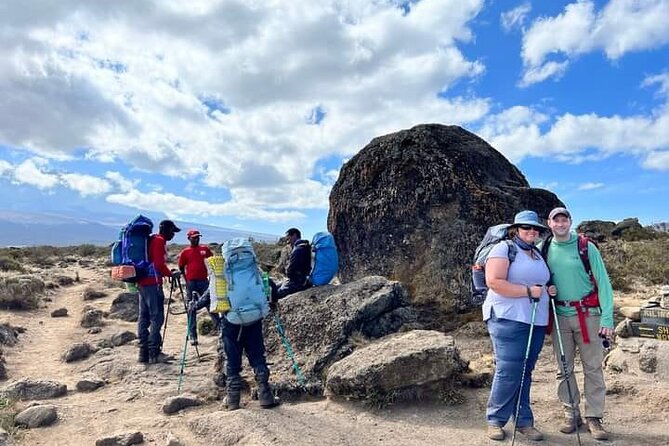
I like the way the route changes scenery almost every day. At first, you walk under rainforest trees. Soon the vegetation thins into heath, then open ground on the Shira Plateau. By the time you reach Barafu Camp, you are in dry alpine desert, with Mawenzi and Kibo dominating the view.
The route also gives you a useful high point before the summit. On Day 4, you climb toward Lava Tower, pause there for acclimatization, and then descend to Barranco Camp. That climb high, sleep lower pattern is one of the most useful features of the schedule.
This is not a private luxury trek. You camp throughout the mountain portion, and daily walking times can feel long. Still, the package covers the basic infrastructure that makes the climb possible, including camping equipment, food, water, park permits, and porters.
More Lemosho Route climbs:
- Kilimanjaro climb by Lemosho Route (7-day)
★ 5.0 · 651 reviews - 8-Day Small-group Lemosho Kilimanjaro Summit Trekking
★ 5.0 · 186 reviews - Kilimanjaro Climbing Lemosho Route 8 Days.
★ 5.0 · 186 reviews
Day 1: Moshi to Big Tree Camp
Your day begins with breakfast and transport from Moshi to Londorossi Gate. At the gate, the team handles registration formalities before driving a short distance to the Lemosho trailhead.
The first walk takes about four hours through rainforest to Big Tree Camp. This is a sensible opening day. You gain altitude gradually, but the walking itself is not yet brutal. The forest gives you shade and a soft introduction to the trail.
You should treat this day as a test of your pace. Walk slowly, drink regularly, and avoid trying to prove anything in the first few hours. Your guide is there to help set a rhythm you can keep for the entire climb.
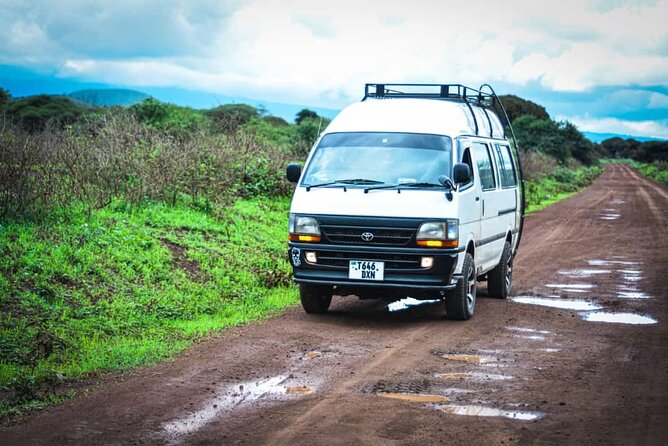
The included transport is useful here because the trailhead is not in Moshi. Airport transfers are also part of the package, but you should confirm the exact arrival and departure arrangements when booking.
Day 2: Rainforest to Shira Camp 1
Day 2 continues through the forest for about five hours. The trail gradually steepens, and the trees give way to the heath zone. This change is one of the pleasures of Lemosho: you can see the mountain environment alter as you gain height.
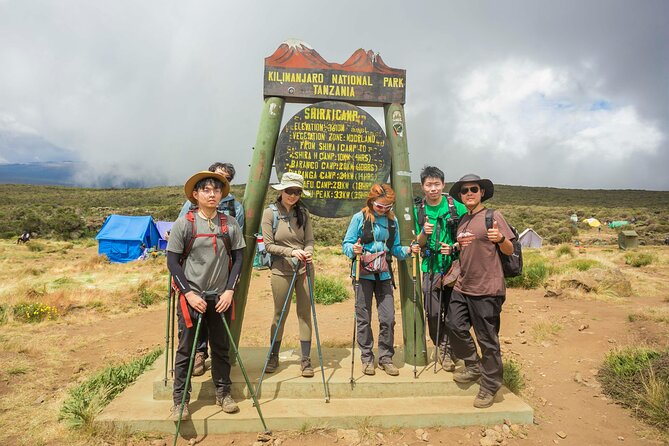
You finish at Shira Camp 1. The camp marks a clear shift from enclosed forest walking to more open country, with wider views and cooler air. It also reminds you that the mountain is beginning to test your breathing and recovery.
This is a good day to focus on camp habits. Keep your sleeping gear dry, organize your small essentials, and bring only what you need into the tent each night. The included tents, sleeping bags, sleeping mats, and other camping equipment reduce your load, but you still need personal hiking clothing and a daypack.
Day 3: The Shira Plateau and a useful pause
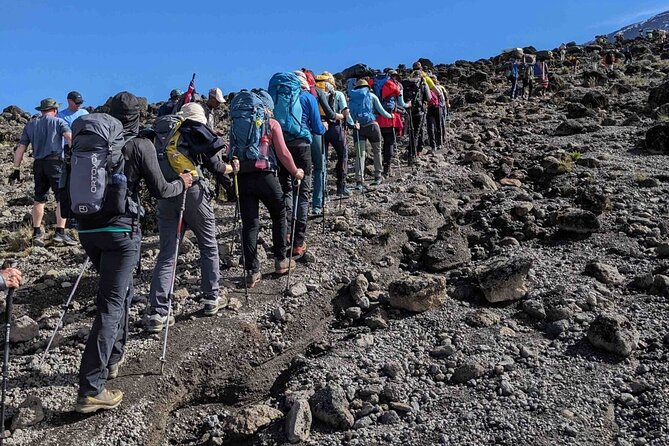
The third day is relatively short, with about five hours of walking toward the Shira Plateau. That shorter schedule matters. You gain altitude without spending the entire day exhausting yourself, giving your body more time to adjust.
The plateau offers broad views of Kilimanjaro and the surrounding country. This is one of the most scenic parts of the route because the setting feels open and exposed after the rainforest. You get a better sense of the mountain’s size, too.
I would not treat this as an easy day in the ordinary sense. Altitude can make a moderate walk feel surprisingly demanding. Eat the supplied meals even if your appetite fades, sip the clean drinking water provided during the trek, and tell your guide about headaches, nausea, unusual tiredness, or breathing problems.
More treks and hikes around Kilimanjaro:
- Kilimanjaro climb, Machame Route (7-day)
★ 5.0 · 262 reviews - Climbing Kilimanjaro – Machame Route
★ 5.0 · 170 reviews - Climbing Kilimanjaro through 7 days Machame Route
★ 5.0 · 151 reviews - Kilimanjaro climb, Lemosho Route (8-day)
★ 5.0 · 148 reviews
Day 4: Lava Tower, then Barranco Wall
Day 4 is the route’s big acclimatization day. You cross the Shira Plateau, climb toward Lava Tower, and then descend to Barranco Camp. The full walk takes about seven hours.
The value is not just the scenery. You spend time at a higher elevation before sleeping lower at Barranco. That gives your body a useful test without making you spend the night at the day’s highest point.
The descent leads to the Barranco area, where the famous Barranco Wall comes into view. The route description includes the wall as part of the scenic descent, but the more direct climb comes the next morning. You should expect a day with plenty of up and down, not a simple walk across flat ground.
This is also where the mountain’s terrain begins to feel more serious. You may be walking slowly, and the weather can change. Keep your waterproof layer handy, even if the morning looks clear.
Day 5: Up the Barranco Wall to Karanga
The morning starts with the climb up Barranco Wall. It looks intimidating from below, but the route is described as easier than it first appears. You should still follow the guide’s instructions and take your time. This is a hands-on section rather than a technical rock climb, based on the information provided.
After the wall, the trail winds through valleys and ridges toward Karanga Camp. The walk takes about five hours, with views toward Kibo’s southern glacier. The camp offers a welcome chance to rest after the wall and before the final approach to Barafu.
This day shows why a guide matters. The team can set a steady pace, help you choose safe footing, and keep the group moving together. The company’s staff has received strong praise for encouragement, humor, and practical help, with names such as Efatha, Sebastian, Elissafi, and Kenny associated with the guiding team.
Day 6: Alpine desert and Barafu Camp
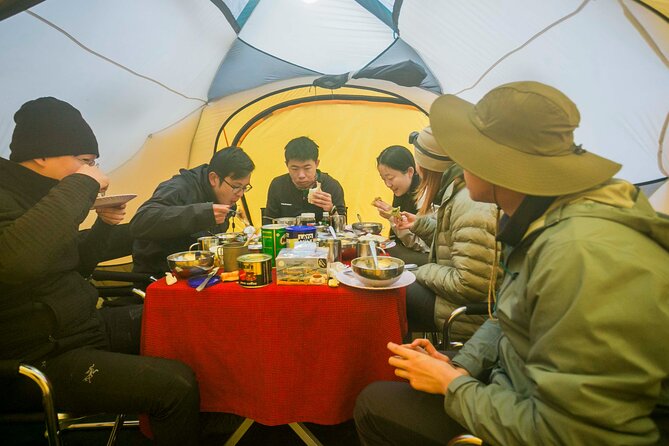
Day 6 is shorter at about four hours, but the altitude makes it important. You leave the vegetation behind and walk through alpine desert toward Barafu Camp.
Barafu is your launch point for the summit attempt. From camp, you can see Mawenzi and the summit ridge. The setting is stark and impressive, with little cover and a strong feeling that the easy part is over.
You need to rest as much as possible here. Eat, drink, prepare your summit clothing, and listen carefully to the pre-climb instructions. The package includes safety equipment such as first-aid kits and oxygen tanks, but that does not remove the need for you to report symptoms promptly.
The schedule gives you only four hours of walking on this day, yet sleep may be difficult because of altitude, anticipation, or both. Keep your evening simple and conserve energy for the night ahead.
Day 7: Stella Point, Uhuru Peak, and Mweka Camp
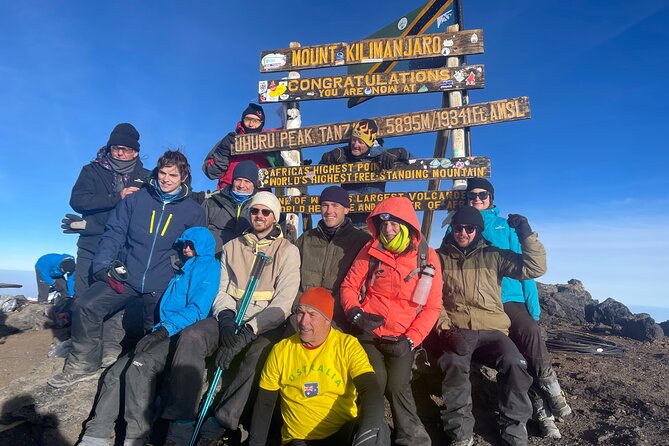
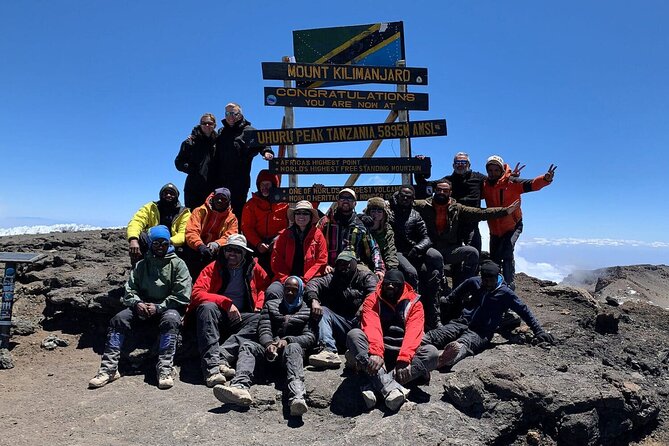
Summit day begins in the early hours and lasts about 13 hours. You climb toward Stella Point and aim to arrive around sunrise. From there, you continue to Uhuru Peak, the highest point in Africa.
This is the hardest section of the trek. You will be walking in darkness at first, moving slowly over steep, high ground. The cold, thin air, and long hours make this a test of persistence more than speed.
Reaching Stella Point is a major milestone, but it is not the final summit. You still continue to Uhuru Peak. The summit certificate included in the package gives you a lasting record of the achievement, but the bigger reward is the view and the knowledge that you kept going when the mountain felt most demanding.
After the summit, you descend to Barafu Camp for a short rest. Then you continue down to Mweka Camp for the night. That second descent is easy to underestimate. Your legs are tired, and the total day is long, so save enough energy for the route to camp.
Day 8: Mweka Gate and the return to Moshi
The final descent takes about five hours through rainforest to Mweka Gate. After the dry, high mountain, the return to trees feels almost startling.
At the gate, you say goodbye to the mountain crew before transferring back to your hotel in Moshi. The package includes transport to and from the trailhead, plus airport transfers to and from Kilimanjaro International Airport. Additional hotel nights, meals, or activities before and after the climb are not included.
Plan some quiet time after the trek. The return to Moshi may feel like a celebration, but your body may still need rest, food, and a hot shower more than a packed schedule.
What the $2,500 price really covers
At $2,500 per person, this is not a bare-bones trail permit. The cost includes park fees and permits, transport to the trailhead, airport transfers, experienced guides and porters, tents, sleeping bags, sleeping mats, safety equipment, drinking water, and all listed meals during the eight-day trek.
Meals are covered as eight breakfasts, eight lunches, and eight dinners. The team’s cooking has been praised for variety, balance, and hot drinks served at camp. Food quality matters more than you might expect on a climb like this, because regular meals help you keep going when your appetite is uneven.
The value also comes from the logistics. Kilimanjaro permits and camp arrangements are not things you want to manage from a tent after a long day. Having local staff handle the route, food, equipment, and camp support lets you concentrate on walking and staying healthy.
Budget separately for international flights, travel insurance, personal gear, tips, alcohol, personal expenses, and extra nights or excursions. Insurance is especially important because the package does not include medical, evacuation, or trip cancellation cover.
What the company support looks like
The strongest pattern in the available feedback is praise for the human side of the climb. Guides have been described as encouraging and safety-minded, while porters are frequently praised for being helpful and cheerful. Named team members include Jackson, Efatha, Sebastian, Elissafi, Kenny, Innocent, and Martin.
You should still ask practical questions before paying. Confirm what personal gear can be borrowed, the exact sleeping bag rating, the guide-to-climber ratio, the tipping expectations, and the airport pickup details. The published maximum is 10 climbers, which is small enough for a personal feel but large enough that walking speeds may vary.
The company also offers group discounts. If you are booking with friends or family, ask how the discount applies and whether the group will remain together on the mountain.
Who should book this climb
I would recommend this route to a fit first-time Kilimanjaro climber who values scenery and a slower altitude schedule. It also suits small groups that want a supported experience without arranging every permit, meal, tent, and transfer themselves.
It is less suitable if you dislike camping, struggle with long walking days, or want a soft adventure with guaranteed summit success. The route has a high success focus, but no operator can promise that you will reach Uhuru Peak. Altitude, weather, and your health on the day all matter.
The itinerary requires moderate physical fitness. You do not need to be a technical climber based on the information provided, but you do need to handle up to 13 hours of walking on summit day.
Booking details worth checking
The advertised start time is 8:00 a.m., and confirmation is received at booking. Pickup is offered, and mobile tickets make the reservation easy to carry.
The cancellation terms are friendly if your plans change early: cancel at least 24 hours before the local start time for a full refund. Cancellations or changes made within 24 hours are not accepted for a refund. If poor weather forces cancellation, you are offered another date or a full refund.
I would confirm the meeting point, hotel pickup location, and airport transfer timing before arrival. Those details matter more after a long international flight than they do when you first click Book.
Should you book the 8-day Lemosho route?
I would choose this climb if you want a scenic, carefully paced route with a strong amount of support included in the price. The Shira Plateau, Lava Tower acclimatization stop, Barranco Wall, and sunrise summit attempt give the trip real variety.
Book it with clear expectations. You will camp, walk for long hours, face altitude, and pay extra for insurance, personal gear, flights, and tips. If you accept that tradeoff, the eight-day Lemosho schedule offers one of the better ways to give yourself time, scenery, and support on the way to Uhuru Peak.
FAQ
How long is the Kilimanjaro Lemosho climb?
The experience lasts approximately eight days, beginning and ending with transport connected to Moshi.
Where does the climb begin?
You start from Moshi, drive to Londorossi Gate for registration, and then continue to the Lemosho trailhead.
What is the maximum group size?
The maximum is 10 travelers.
Are airport transfers included?
Yes. Transfers to and from Kilimanjaro International Airport are included.
Are meals included during the trek?
Yes. The package includes eight breakfasts, eight lunches, and eight dinners.
Is camping equipment provided?
Yes. Tents, sleeping bags, sleeping mats, and other camping equipment are included.
Is drinking water provided?
Yes. Clean drinking water is provided during the trek.
What fitness level is required?
You should have a moderate physical fitness level. Summit day takes approximately 13 hours, making it the most demanding part of the schedule.
What happens if bad weather cancels the climb?
You will be offered a different date or a full refund if the experience is canceled because of poor weather.
More Eight-Day Trips in Kilimanjaro
- Climbing Kilimanjaro through 8 days Lemosho Route
★ 5.0 · 52 reviews - Kilimanjaro climb, Northern Circuit route (8-day)
★ 5.0 · 40 reviews - 8 Days Kilimanjaro Hike via Lemosho Route
★ 5.0 · 39 reviews - 8 Days Climbing Mt.Kilimanjaro (Lemosho Route)
★ 4.5 · 37 reviews
Just added around Kilimanjaro
- 6 days Machame route climbing Mt.Kilimanjaro★ 5.0 · 8 reviews
- machame route★ 5.0 · 16 reviews
- Mt Kilimanjaro 6 days Marangu route hike★ 5.0 · 3 reviews
- Private Cycle to Kilimanjaro Bike Park Safari★ 5.0 · 6 reviews
- West Kilimanjaro cycling Adventures★ 4.5 · 8 reviews
- Kilimanjaro Climb • Marangu Route ~ 9 Day★ 5.0 · 4 reviews
- 3 Days Private E-Bike Tour in West Kilimanjaro★ 5.0 · 3 reviews
- Kilimanjaro Climb • Machame Route ~ 10 Day★ 5.0 · 6 reviews