
Reviewed · HIKING & TREKKING
Mt Kilimanjaro Trek, 6 Days – Umbwe Route
The Umbwe Route is Kilimanjaro’s hard case: quiet, direct, and brutally steep. You climb from rainforest to summit in only six days, with little time to adjust to altitude. It suits a strong, experienced hiker who wants fewer people and accepts a lower chance of reaching the top.
I like the route’s seclusion and the careful support system, with guides, assistant guides, porters, and a cook handling the mountain work around you. I also like the practical package: airport transfers, two hotel nights, camping gear, meals, warm washing water, and emergency oxygen are included. The drawback is serious: this is not a gentle introduction to high-altitude trekking, and seven days would be the wiser schedule if available.
Key points before you choose Umbwe
- Steepest route profile: The trail climbs almost constantly, with no easy acclimatization stage.
- Quiet mountain experience: Umbwe is the least used major route, so you get more solitude than on busier approaches.
- Five summit days in one: Day five combines the midnight summit push with a long descent to 3,090 meters.
- Strong mountain support: A qualified guide, assistant guides, porters, and cook travel with your private group.
- Useful pre and post trek care: Airport transfers and one hotel night before and after the climb are included, with dinner and breakfast.
- Mweka finish: You descend through the Mweka route, collecting summit certificates before returning to Moshi.
Why the Umbwe Route is so demanding
Most Kilimanjaro routes give your body more time to adjust to thinner air. Umbwe does not. The climb rises from 1,660 meters at the gate to 4,000 meters at Barranco Camp by the end of the second day, then pushes toward 4,700 meters at Barafu on day four.
That rapid gain is the central issue. The path is not only physically steep. It also asks your body to handle altitude before it has had much time to settle. The stated success rate is low, so you should not book this route simply because it is shorter or less crowded.
I would consider Umbwe only if you already have strong mountain fitness and experience at altitude. You should be comfortable walking uphill for several hours, then doing it again the next morning. A seven-day version is recommended, even though six days is the minimum schedule described here.
The reward is a more private feel. The route is used far less than Machame, Lemosho, and Shira. You may find the quiet especially valuable in the first days, when the forest and open moorland give you room to focus on your pace rather than on a stream of hikers.
More Umbwe Route climbs:
- Kilimanjaro climb, Umbwe Route (6-day)
★ 5.0 · 7 reviews - 6-Day Kilimanjaro Umbwe Route–Steep,Adventurous, Challenging Path
★ 5.0 · 6 reviews - Kilimanjaro Climbing Umbwe Route
★ 5.0 · 3 reviews
Day one: Umbwe Gate to the rainforest
The day begins with a drive of about one hour from Moshi to Umbwe Gate, at 1,660 meters. After the park entry process, you start climbing through rainforest with a packed lunch on the route.
The distance is 11 kilometers, or about seven miles, and the listed walking time is five to six hours. That is a full first day, but the elevation gain to 2,850 meters is the bigger story. You are climbing 1,190 meters almost immediately.
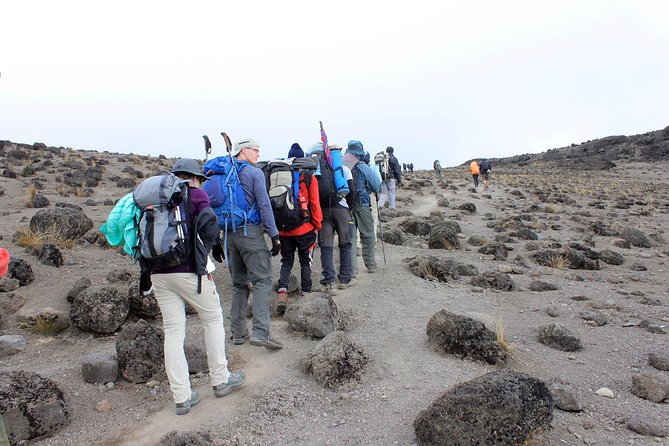
The forest section gives Umbwe its first sense of character. The trail is direct and steep rather than gently rolling. You will want sturdy footwear, careful footing, and a pace that leaves energy for the days ahead. Trekking poles can help on the sustained uphill sections.
Your mountain team carries the camping equipment and cooks the meals. That matters here because your own pack can remain lighter, though you still need to carry personal clothing, water, snacks, and anything you need during the day.
Day two: Open moorland and Barranco Camp
After breakfast, the route leaves the forest and reaches open moorland. The trail climbs from 2,850 meters to 4,000 meters over six kilometers, or four miles, in about four to five hours.
This is a short day by distance but a demanding one by altitude. You gain another 1,150 meters. By the time you reach Barranco Camp, the issue is no longer simply tired legs. You are asking your body to function at a height where the air is much thinner than in Moshi.
The move from trees to open high country also makes this part feel more exposed. The route is less varied than the western approaches because the ascent and descent remain close together, but the shift from rainforest to moorland still gives you a clear sense of progress.
At Barranco, pay attention to how you feel. The itinerary moves onward quickly, and Umbwe offers little spare time for recovery. Emergency oxygen is carried for emergencies only, not as a way to help you push through normal altitude discomfort. Your guide is the right person to consult if symptoms become a concern.
Day three: Barranco Wall and the Karanga Valley
Day three covers five kilometers in roughly three to four hours. You leave Barranco and climb the steep Barranco Wall before continuing to the Karanga Valley at about 4,050 meters.
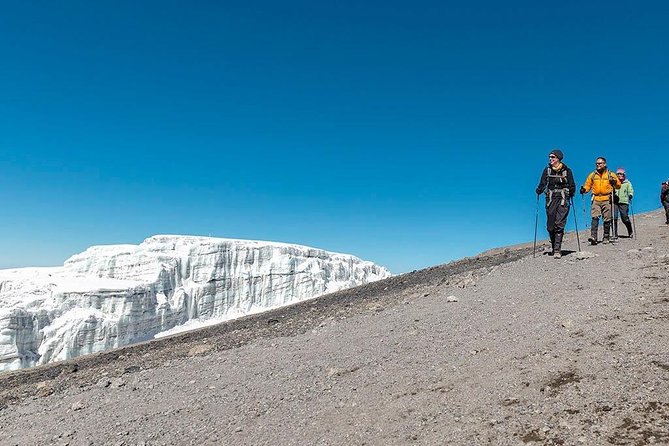
This is one of the route’s defining sections. The wall adds a more hands-on, steep-ridge feel than the forest approach. The elevation gain is small on paper, only about 50 meters, but the trail itself remains demanding because of the wall and the uneven ground.
From Karanga, you reach the junction connecting with the Mweka Trail. That junction matters because it marks the point where the route links with the path used for the descent. You are also completing the South Circuit, which provides summit views from several angles.
I like this day because it breaks up the relentless elevation gain. You still climb, but you are not asked to gain another thousand meters in a single push. It is also a good reminder that distance alone does not tell you how hard a Kilimanjaro day will feel.
More treks and hikes around Kilimanjaro:
- Kilimanjaro climb by Lemosho Route (7-day)
★ 5.0 · 651 reviews - Kilimanjaro climb, Machame Route (7-day)
★ 5.0 · 262 reviews - Kilimanjaro Climbing Lemosho Route 8 Days.
★ 5.0 · 186 reviews - 8-Day Small-group Lemosho Kilimanjaro Summit Trekking
★ 5.0 · 186 reviews
Day four: Karanga to Barafu Camp
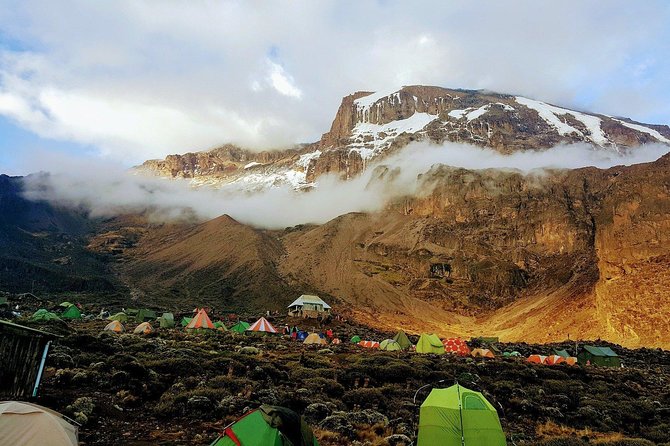
The fourth day is only four kilometers, or two miles, and takes about three to four hours. You climb from 4,050 meters to Barafu Camp at 4,700 meters.
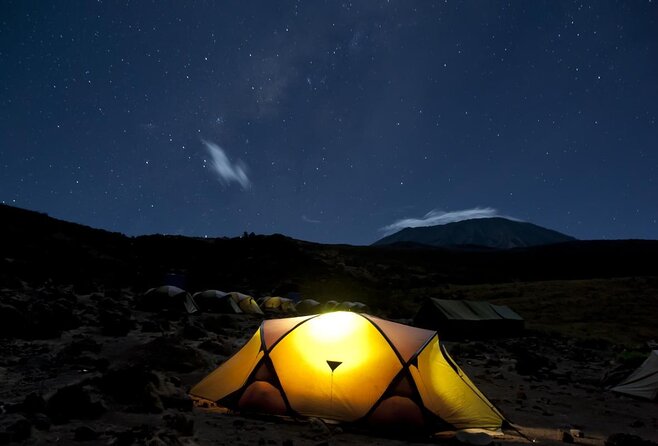
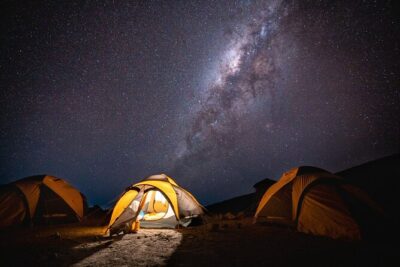
The short distance should not fool you. Barafu is the launch point for summit night, and reaching it at this height is tiring. Once there, you make camp, eat dinner, rest, and prepare for the hardest part of the trip.
This is where the schedule becomes unusual. You are not simply ending a hiking day and sleeping normally. You need to organize warm layers, headlamp equipment, water, snacks, and personal items before trying to rest. The summit departure is planned for midnight to 2 a.m.
The package includes tents, camp chairs, tables, and sleeping mattresses. Fresh drinking water and warm water for washing are also provided daily. Those details may sound modest before the trip, but at 4,700 meters, even warm water and a place to sit can make camp feel much more manageable.
Day five: Summit night and the long descent
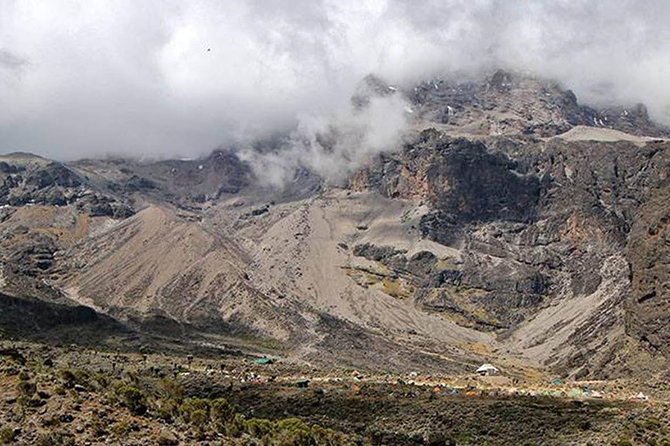
Day five is the tour’s great test. You begin between midnight and 2 a.m., climbing from Barafu at 4,700 meters toward the summit at 5,895 meters. The upward distance is five kilometers, or three miles, followed by a 13-kilometer, or eight-mile, descent to 3,090 meters.
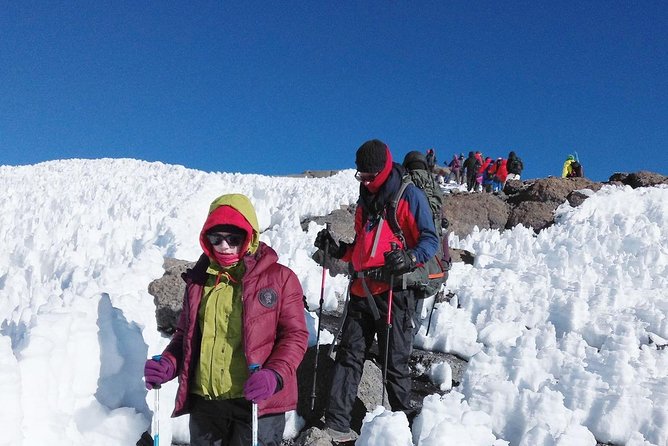
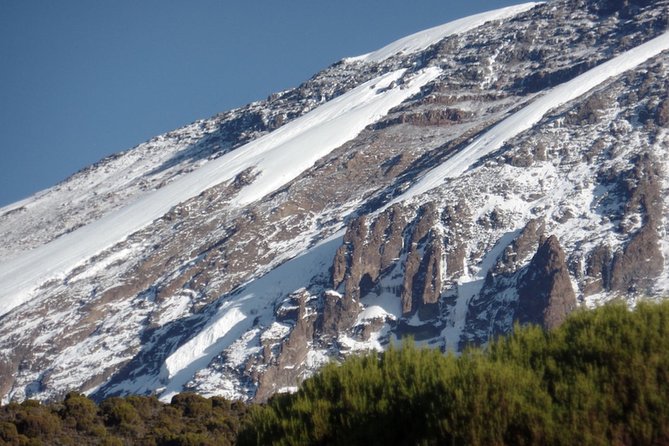
The first section heads toward Stella Point on the crater rim, passing between the Rebmann and Ratzel glaciers and climbing through heavy scree. This is slow, tiring ground. The combination of darkness, cold, steepness, and altitude makes the section mentally as well as physically difficult.
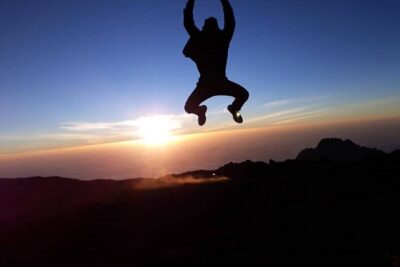
At Stella Point, you stop briefly. Sunrise from the crater rim is one of the major rewards of the schedule, although faster hikers may see it from the summit. From Stella Point, the final ascent takes about one hour and may include snow.
At the top, you reach 5,895 meters before turning around. The descent is not an afterthought. You still have 13 kilometers to cover, ending at 3,090 meters, so this becomes a roughly 14-hour day according to the schedule.
That length is the strongest argument for considering seven days instead of six. The six-day plan is possible on paper, but it leaves very little room for a slow summit morning, poor weather, or a body that needs extra time. You should treat summit day as a major endurance event, not simply another day of walking.
Day six: Mweka Trail back to Moshi
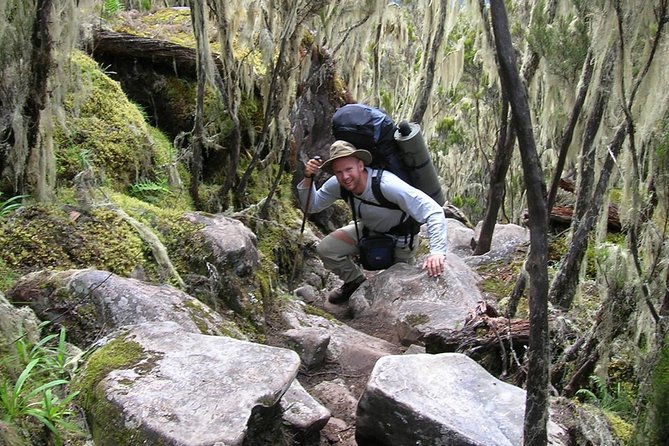
After breakfast, you descend from 3,090 meters to the Mweka Park Gate at 1,680 meters. The walking distance is 10 kilometers, or six miles, and the listed time is three to four hours.
The lower section can be wet and muddy. Gaiters and trekking poles are useful here, and you may be comfortable in shorts and a T-shirt at the lower elevation. Keep rain gear and warmer clothing within reach, since conditions can change during the descent.
At the park gate, you receive your summit certificates. The route then continues for about another hour to Mweka Village, where a vehicle takes you back to your Moshi hotel in roughly 30 minutes.
This final transfer is a welcome practical touch. You do not need to arrange a separate ride after a long descent. The included post-climb hotel night also gives you a proper place to wash, eat, and recover.
What the $2,260 price covers
At $2,260 per person, this is not a simple trail walk with a guide. The price includes a full mountain operation and transport package.
You receive return transfers between Kilimanjaro Airport and Moshi, plus a hotel night before and after the climb. Dinner and breakfast are included at the hotel. On the mountain, the package covers five breakfasts, six lunches, and five dinners.
Camping equipment includes tents, camp chairs, tables, and sleeping mattresses. You also get drinking water and warm water for washing each day. A qualified mountain guide, assistant guides, porters, and cook accompany the private group, with crew salaries set according to Kilimanjaro National Park guidelines.
Emergency oxygen and a basic first aid kit are included, but both are for emergencies only. They are not substitutes for good preparation, sensible pacing, or a longer acclimatization plan.
The value depends on what you would otherwise need to arrange yourself. Airport rides, two hotel nights, mountain staff, meals, equipment, and park-related fees add up quickly. I see the package as reasonable for a private, fully supported climb, but the price cannot remove the route’s physical risk or make six days equal to a more gradual ascent.
You must budget separately for flights, visas, health and travel insurance, personal gear, snacks, personal medicine, and water-purifying tablets. A portable toilet is optional but highly recommended, and personal hiking equipment can be rented from the operator’s equipment store in Tanzania.
Support from the Moshi team
The experience is private, meaning only your group participates. That gives you more control over pace and conversation than a large shared departure, though the steep route and altitude still set the basic limits.
Wence, the owner, is identified as someone who worked with the group to shape the tour around its preferences. The support team also includes guides, porters, and a cook. The food gets special attention in the available feedback, with the cook’s evening meals described as a highlight.
That support is not a luxury add-on. Porters carry shared supplies and camping equipment, while the cook handles meals across six days on the mountain. You should still pack thoughtfully, but you are not carrying the full camping load yourself.
Before booking, ask the operator to confirm the exact guide team, daily meal plan, gear rental costs, and whether a seven-day schedule can be arranged. The supplied trip details confirm the general crew structure but do not name the individual mountain guides.
Packing and preparation for this route
Your fitness preparation should focus on sustained uphill walking, not only speed or flat-distance endurance. Umbwe climbs constantly, and summit day combines a pre-dawn ascent with a long descent.
Bring personal hiking and trekking gear suitable for steep, wet, cold, and high-altitude conditions. The operator can rent some equipment in Tanzania, but you should confirm what is available before relying on rental gear.
Keep the following needs in mind:
- Warm summit clothing, plus lighter clothing for the lower descent
- Rain gear for the rainforest and muddy Mweka Trail
- Gaiters for the wet lower section
- Trekking poles for steep and slippery ground
- Snacks and personal medicine
- Water-purifying tablets
- A headlamp and personal items needed during the summit departure
The included warm washing water is useful, but it is not a full shower. A portable toilet is optional and highly recommended, especially if you value privacy at camp.
Who should book the six-day Umbwe Route?
You should consider this climb if you want the least crowded route, have strong physical fitness, and already understand how your body responds to altitude. You should also be comfortable with a steep path and a compressed schedule.
This is a poor choice for a first serious mountain trek or for anyone choosing it mainly because six days sounds efficient. The route has a low success rate because the ascent profile gives you little time to adjust.
If you want the Umbwe character but can spare another day, ask about the recommended seven-day version. The extra time may make the schedule less punishing. It will not remove the challenge, but it can give your body and legs more breathing room.
Cancellation is free if you cancel at least 24 hours before the local start time. Changes or cancellations made within 24 hours are not accepted for a refund.
Should you book this Kilimanjaro climb?
Book it if quiet trails and a hard physical challenge matter more to you than a forgiving ascent. The private format, strong crew support, included Moshi nights, airport transfers, meals, and camping equipment make the $2,260 price easier to justify.
Do not book it simply because it is shorter or less crowded. Umbwe is steep from the start, reaches high altitude quickly, and makes summit day exceptionally long. If you have altitude experience and want a demanding, secluded route, it can be a powerful Kilimanjaro choice. If your priority is the best possible chance of reaching the summit, ask first about adding a seventh day or using a slower route.
FAQ
How long is the Umbwe Route tour?
The tour lasts six days, approximately. Seven days is recommended for a more gradual schedule.
Where does the trek begin?
The climb begins at Umbwe Gate in Umbwe, Tanzania, after a drive of about one hour from Moshi.
Where does the trek end?
The mountain descent ends at Mweka Park Gate, followed by another hour to Mweka Village. A vehicle then takes you back to your Moshi hotel.
How high does the trek go?
The route reaches 5,895 meters at the summit of Mount Kilimanjaro.
Is airport pickup included?
Yes. Return transfers between Kilimanjaro Airport and Moshi are included.
Are hotel nights included?
Yes. One night before the climb and one night after the climb are included, with dinner and breakfast.
Are meals included on the mountain?
Yes. The package includes five breakfasts, six lunches, and five dinners.
Is camping equipment provided?
Yes. Tents, camp chairs, tables, and sleeping mattresses are included.
Is emergency oxygen included?
Yes. Emergency oxygen is provided for emergencies only and is not intended as summit assistance.
What fitness level is required?
A strong physical fitness level is required. The route is consistently steep and gives you limited time to adjust to altitude.
More Six-Day Trips in Kilimanjaro
- Kilimanjaro climb, Lemosho Route (6-day)
★ 5.0 · 129 reviews - Kilimanjaro climb, Marangu route (6-day)
★ 5.0 · 72 reviews - 6 Days Tanzania Classic Safari
★ 5.0 · 52 reviews - The Best of Machame Route in 6 Days: Your World’s Summit Guide
★ 5.0 · 44 reviews
Just added around Kilimanjaro
- 6 days Machame route climbing Mt.Kilimanjaro★ 5.0 · 8 reviews
- Mt Kilimanjaro 6 days Marangu route hike★ 5.0 · 3 reviews
- machame route★ 5.0 · 16 reviews
- Private Cycle to Kilimanjaro Bike Park Safari★ 5.0 · 6 reviews
- West Kilimanjaro cycling Adventures★ 4.5 · 8 reviews
- Kilimanjaro Climb • Marangu Route ~ 9 Day★ 5.0 · 4 reviews
- 3 Days Private E-Bike Tour in West Kilimanjaro★ 5.0 · 3 reviews
- Kilimanjaro Climb • Machame Route ~ 10 Day★ 5.0 · 6 reviews
Hiking & Trekking, compared.
7-Day Machame Kilimanjaro Summit Tour from Arusha
Read our review →
Private Full Day Hiking Experience to Marangu Route
Read our review →
4 days Best experience Kilimanjaro Hike, Serengeti &Ngorongoro
Read our review →
Best Kilimanjaro hiking day trip tour with Kilinge Adventures
Read our review →Browse the lists this tour appears in