
Reviewed · MACHAME ROUTE CLIMBS
Mt Kilimanjaro Climbing; 6 Days Machame route
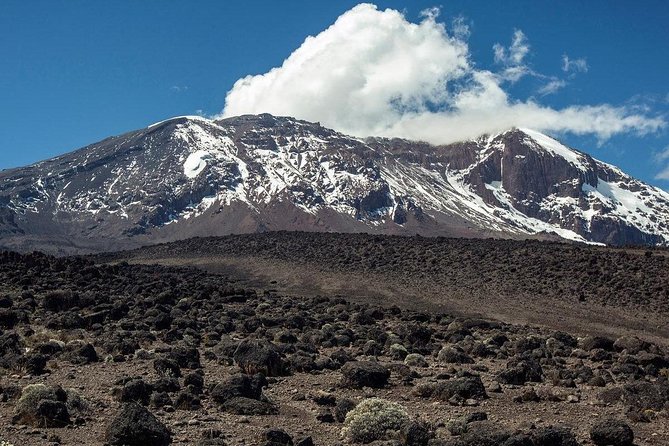
The Machame Route earns its Whiskey Route nickname the hard way. You sleep in tents, tackle steep and rocky sections, and reach the summit after a long night climb. In return, you cross five distinct habitats, from wet rain forest to bare Arctic ground, with a better sense of the mountain than the gentler hut-based route.
I like the Lava Tower to Barranco descent, which gives your body a useful altitude test before you sleep lower down. I also like the small private-group format, included crew pay, filtered water, meals, tents, and transport. The main concern is simple: six days is a demanding schedule, and the summit day combines a night ascent with a long descent.
Key points at a glance
- The route crosses rain forest, moorland, semi-desert, alpine desert, and Arctic terrain.
- Lava Tower reaches 4,600 meters before you descend to Barranco Camp.
- You sleep in tents every night, with no mountain huts on this route.
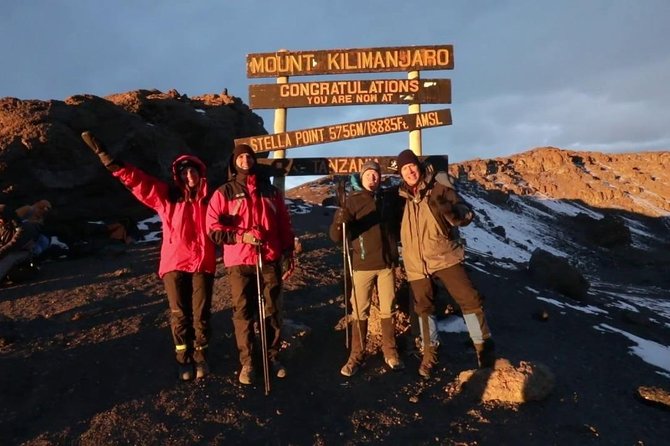
- Summit day includes Stella Point, Uhuru Peak, and a descent to Mweka Camp.
- A private vehicle picks you up in Moshi or Arusha and returns you after the climb.
- The $2,200 price includes guides, porters, food, tents, filtered water, park fees, and private transport.
Why the six-day Machame Route is a serious but rewarding choice
The Machame Route is the second most popular way up Kilimanjaro. It is more physically demanding than the Marangu Route, which is often nicknamed the Coca Cola Route because it uses huts and has a somewhat easier trail profile.
Here, you get tents instead of huts and a more varied path. That means less shelter and more effort, but also a stronger sense of moving through the mountain’s changing zones. I would choose Machame if you want the climb itself to feel like the main event, not simply a direct walk toward the summit.
This is a private activity, so only your group takes part. That matters on a mountain where people move at different speeds. It should make the experience easier to manage, though the six-day schedule still leaves little room for an easy day.
You need moderate physical fitness. This is not a casual walk, and the hardest work comes near the summit, when you begin in darkness, climb toward the crater rim, continue to Uhuru Peak, then walk down to camp.
More Machame Route climbs:
- Kilimanjaro climb, Machame Route (7-day)
★ 5.0 · 262 reviews - Climbing Kilimanjaro – Machame Route
★ 5.0 · 170 reviews - Climbing Kilimanjaro through 7 days Machame Route
★ 5.0 · 151 reviews
Day 1: Machame Gate to the rain forest
Your morning begins with pickup at 8:00 a.m. in Moshi or Arusha. The vehicle takes you toward Mount Kilimanjaro National Park Gate, passing through Machame village on the lower slopes.
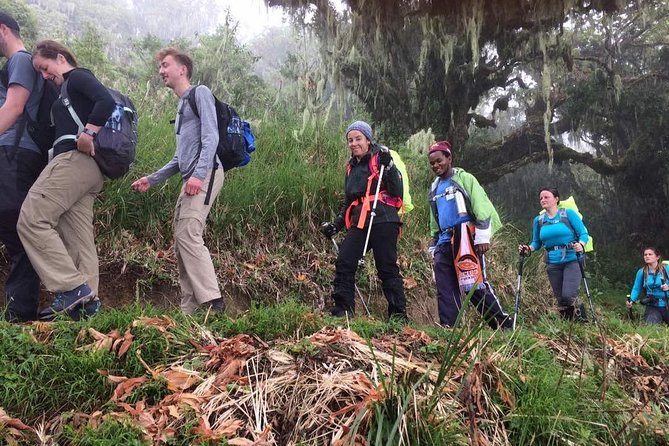
After park entry, the route enters thick rain forest. The first day covers about 11 kilometers and takes roughly five to seven hours, ending at Machame Camp. The trail winds uphill along a ridge, and some sections can be muddy and slippery.
This is where gaiters and trekking poles earn their place in your bag. Gaiters help keep wet soil out of your boots, while poles give you more control on slick ground. The pace should feel manageable, but do not burn energy early. A steady first day is worth more than a fast one.
Machame Camp is your first night in a tent. There are no huts on this route, so bring realistic expectations about mountain camping. The included sleeping tents, meals, filtered water, guides, and porters remove much of the logistical burden, but you still need to be comfortable with basic camp living.
Day 2: Moorland and the Shira plateau
Day two is shorter, at about five kilometers and four to six hours. The trail leaves the thicker trees behind and enters moorland, with lower bushes and wider views.
You finish at Shira Camp, located on a small plateau. From here, you may see Kibo to the northeast and Mount Meru to the west. White-necked ravens are a regular sight, and the nearby Shira Caves offer a short walk from camp.
The shorter distance does not make this a throwaway day. You are gaining height, and your body is beginning to adjust. I would use the extra time to eat well, drink the filtered water provided, and keep your kit organized.
Shira is also the first place where the scale of Kilimanjaro becomes clearer. The trees no longer frame every view. You begin to see open ground, volcanic slopes, and the distant cones that define the mountain.
Day 3: Lava Tower gives you an altitude test
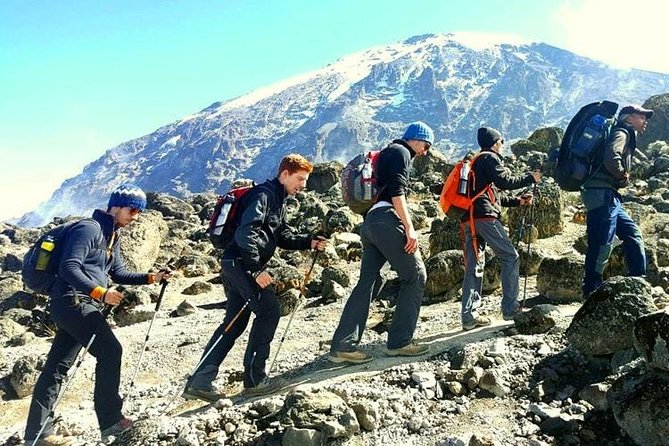
Day three is one of the most important days for acclimatization. You walk about 10 kilometers for six to eight hours through semi-desert terrain, heading east toward Lava Tower.
The trail becomes rockier and more exposed. Lunch is served in a designated area before you continue up the rocky path to Lava Tower, which reaches about 4,600 meters. After spending time at that height, you descend for roughly two hours to Barranco Camp.
That up-and-down pattern is valuable. You reach a higher point during the day, then sleep lower. It gives you a practical test of how your body handles altitude without making you spend the night at the highest point reached.
Barranco Camp also delivers some of the finest views of the trip. The descent offers photo opportunities toward the Western Breach and Breach Wall. Keep your camera handy, but do not let photography distract you from your footing. Rock, dust, and uneven ground are now part of the route.
More treks and hikes around Kilimanjaro:
- Kilimanjaro climb by Lemosho Route (7-day)
★ 5.0 · 651 reviews - Kilimanjaro Climbing Lemosho Route 8 Days.
★ 5.0 · 186 reviews - 8-Day Small-group Lemosho Kilimanjaro Summit Trekking
★ 5.0 · 186 reviews - Kilimanjaro climb, Lemosho Route (8-day)
★ 5.0 · 148 reviews
Day 4: Barranco Wall, Karanga, and Barafu
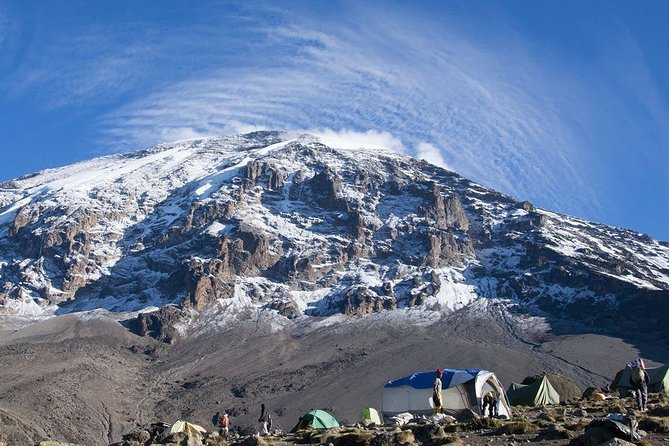
Day four covers about nine kilometers and takes roughly eight hours. It begins with a short scramble to the top of the Great Barranco. The word scramble is useful here. This is not a technical climbing section, but you should expect hands, feet, and careful movement to work together.
From the top, you cross scree and ridges toward Karanga Valley. The route passes beneath the icefalls of the Heim, Kersten, and Decken Glaciers. After a break, you leave Karanga and cross the junction with the Mweka Trail, the route used for your descent.
Then comes the climb to Barafu Camp. This is where the trip changes character. Barafu is the launch point for the summit attempt, so dinner and rest become part of your preparation. You can also see Mawenzi and Kibo, the mountain’s two volcanic cones.
I would treat this night as a work session, not a social evening. Organize warm layers, headlamp supplies if you use them, water, camera, snacks, and anything needed for the early start. You will want to make as few decisions as possible when the wake-up call comes.
Day 5: Stella Point, Uhuru Peak, and the long descent
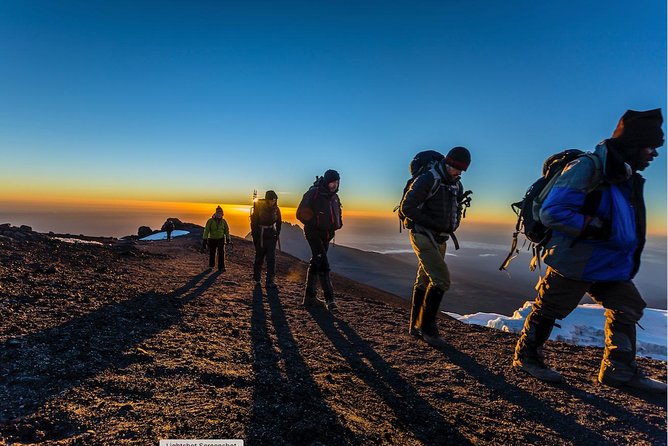
Day five is the hardest part of the trip. The ascent covers about five kilometers and takes seven to eight hours. The descent adds 12 kilometers and another four to six hours. In practice, you should prepare for a very long day.
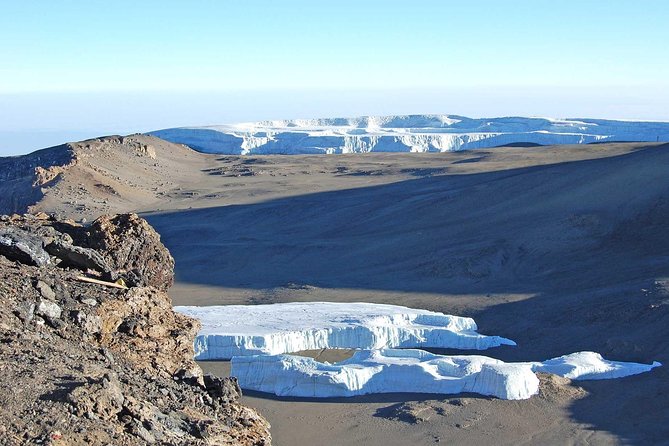
You start early, usually before sunrise, climbing toward the rim of Kibo Crater between the Rebmann and Ratzel Glaciers. The upper trail can be snow-covered, and an ice axe or ski stick may help with balance in those conditions.
You first reach Stella Point on the crater rim. From there, Uhuru Peak is about another hour. The summit sunrise is the emotional high point of the climb, and the view from the top is the reward for every slow step below. Keep the summit stop sensible. Photos matter, but warmth and energy matter more.
After the summit, you descend to Barafu Camp for rest and lunch. Then you continue past Millennium Camp toward Mweka Hut in the giant heather zone near the forest edge.
The descent is not an afterthought. It is long, tiring, and hard on the legs after the summit effort. This is one reason I would not recommend the six-day version to anyone who is only moderately prepared. The itinerary uses a compact schedule, so you need to accept that the summit day may test both your strength and your patience.
Day 6: Mweka Camp to the park gate
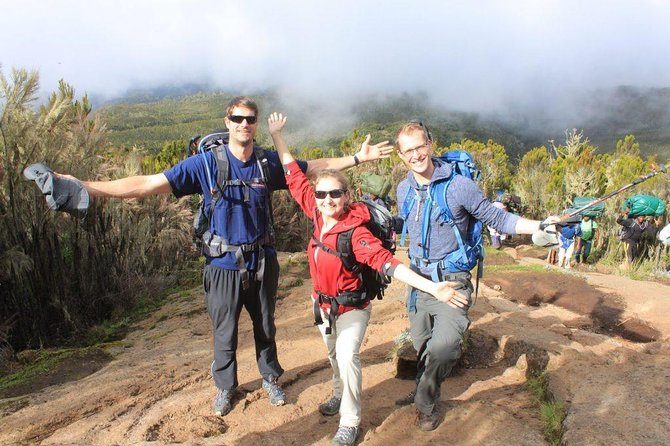
The final morning covers about 10 kilometers and takes three to four hours through rain forest. You descend to Mweka Park Gate, where you receive your summit certificates.
From the gate, you continue for about another hour to Mweka Village. A vehicle meets you there and returns you to your hotel in Moshi or Arusha.
This last walk matters because the vehicle does not meet you directly at the park gate. Plan for one more stretch of trail after the formal end of the climb. By this stage, your legs will likely be tired, but the forest provides a softer finish than the bare upper slopes.
What the $2,200 price includes
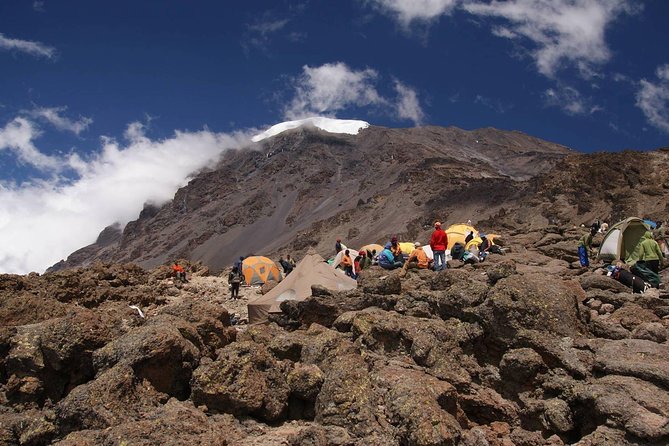
At $2,200 per person, the cost is substantial, but it covers the core services needed for a supported Kilimanjaro climb. Included are private transportation, park fees and taxes, guides and porters salaries, sleeping tents, filtered water, five lunches, five dinners, and six breakfasts.
That package has real value. A mountain climb is not only a guide walking beside you. It also requires camp equipment, food, water handling, transport, and a crew carrying supplies. Having those elements included lets you focus on walking and altitude management.
The price does not include flights, visas, insurance, personal items, laundry, alcoholic drinks, or other alcoholic and non-alcoholic beverages. Crew gratuities are also not included. You should plan for that extra cost separately and carry enough personal supplies for six days.
The listing does not specify the number of porters or the tent arrangement, so ask before booking if those details matter to you. You should also confirm the exact pickup location if you are staying outside central Moshi or Arusha.
The crew, food, and personal support
The strongest part of this experience is the human support. The crew includes guides, porters, and a cook, and the organization places clear emphasis on safety and close attention.
One named contact connected with the operation is Shungu. Ask for Shungu when arranging the climb if you want continuity between planning, gear checks, and the trek itself.
Food is another practical strength. The cook prepares breakfast, lunch, and dinner across the climb, with five lunches and five dinners included, plus six breakfasts. You still need to tell the team about dietary needs before departure, since the supplied information does not give a sample menu.
Filtered water is provided throughout the trek. That is important because hydration becomes harder to manage as the route climbs and the days grow longer. Bring a reusable bottle or hydration system, and make drinking regularly part of your walking routine.
Who should book this route
I would recommend this climb to someone who wants a demanding, varied Kilimanjaro route and accepts tent camping as part of the experience. It suits people who enjoy long walking days, changing terrain, and a strong sense of progression from forest to summit.
It is also a good fit if you value a private group. You get direct support from your own crew rather than joining a large public departure.
I would hesitate to recommend it to anyone seeking a relaxed holiday add-on. Six days is compact, summit day is especially long, and the route includes steep ground, rocky sections, altitude, cold, and a large descent after reaching the top.
If you have limited mountain experience, moderate fitness alone may not tell the whole story. Ask yourself if you can manage five to eight hours of walking on several consecutive days, then handle a 10-hour summit day. That is the more useful test.
Booking details and cancellation
Pickup is offered from Moshi or Arusha, with an 8:00 a.m. start. The activity ends back at the meeting point after the return drive.
Confirmation is provided at booking, and free cancellation is available up to 24 hours before the local start time for a full refund. Within 24 hours, cancellations and changes are not accepted and the payment is not refunded.
Should you book the six-day Machame climb?
Book it if you want a varied, private, tent-based Kilimanjaro climb and you are ready for a demanding summit day. The route gives you the Lava Tower acclimatization climb, the Barranco Wall, views toward Mawenzi and Kibo, and a full change of habitats in only six days.
Think twice if you want a slower schedule or prefer hut accommodation. The value is strong because so many essential services are included, but the compact timetable leaves little margin for fatigue. Bring proper rain protection, gaiters, poles, warm summit layers, and patience. The mountain sets the pace, and this route asks you to respect it.
FAQ
Where does the Kilimanjaro climb start?
The tour starts in Moshi Urban, Tanzania, with pickup offered from a hotel in Moshi or Arusha. The scheduled start time is 8:00 a.m.
How long is the Machame Route experience?
The experience lasts approximately six days. Hiking times range from three to eight hours on most days, while summit day includes seven to eight hours of ascent and four to six hours of descent.
Where do I sleep during the climb?
You sleep in sleeping tents. The Machame Route does not use mountain huts for accommodation.
Is this a private tour?
Yes. Only your group participates in the activity.
What meals are included?
The package includes six breakfasts, five lunches, and five dinners.
Is drinking water provided?
Yes. Filtered water is provided throughout the trek.
What is the highest point reached?
The route reaches Uhuru Peak after passing Stella Point on the Kibo Crater rim. The itinerary also includes an acclimatization climb to Lava Tower at about 4,600 meters.
Can I cancel for a full refund?
Yes, if you cancel at least 24 hours before the local start time. Cancellations or changes made within 24 hours are not accepted and are not refunded.
More Six-Day Trips in Kilimanjaro
- Kilimanjaro climb, Lemosho Route (6-day)
★ 5.0 · 129 reviews - Kilimanjaro climb, Marangu route (6-day)
★ 5.0 · 72 reviews - 6 Days Tanzania Classic Safari
★ 5.0 · 52 reviews - The Best of Machame Route in 6 Days: Your World’s Summit Guide
★ 5.0 · 44 reviews
Just added around Kilimanjaro
- 6 days Machame route climbing Mt.Kilimanjaro★ 5.0 · 8 reviews
- machame route★ 5.0 · 16 reviews
- Mt Kilimanjaro 6 days Marangu route hike★ 5.0 · 3 reviews
- Private Cycle to Kilimanjaro Bike Park Safari★ 5.0 · 6 reviews
- West Kilimanjaro cycling Adventures★ 4.5 · 8 reviews
- Kilimanjaro Climb • Marangu Route ~ 9 Day★ 5.0 · 4 reviews
- 3 Days Private E-Bike Tour in West Kilimanjaro★ 5.0 · 3 reviews
- Kilimanjaro Climb • Machame Route ~ 10 Day★ 5.0 · 6 reviews
Machame Route Climbs, compared.
The Best of Machame Route in 6 Days: Your World’s Summit Guide
Read our review →Browse the lists this tour appears in