
Reviewed · LEMOSHO ROUTE CLIMBS
Lemosho Route 8 Days 7 Nights/Kilimanjaro Climb
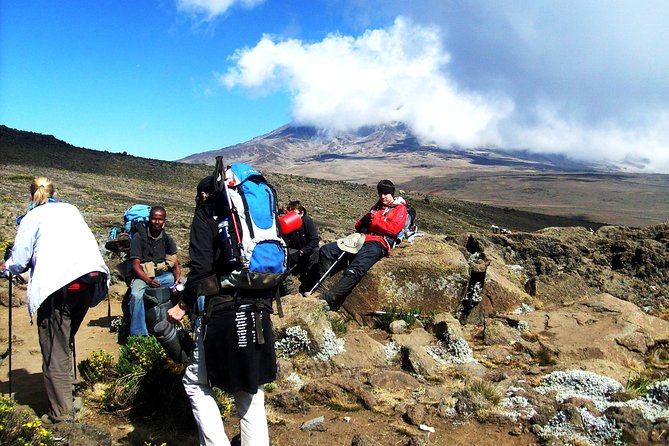
Kilimanjaro’s 8-day Lemosho Route gives you the mountain’s best asset: time. You walk through rainforest, across the high Shira Plateau, past Lava Tower and the Barranco Wall, then reach Uhuru Peak after a carefully paced acclimatization schedule. The route is demanding, but it avoids the rushed feel of shorter climbs.
I like the full day on Shira Plateau and the split between Karanga and Barafu. Those two choices give you time to adjust to altitude and a shorter day before the midnight summit attempt. I also like the small maximum group size of two, plus the fact that park fees, food, porters, camping gear, rescue fees, and transfers are included.
The main drawback is simple: this is a serious physical test. Summit day can last about 13 hours, and the itinerary includes cold, steep, muddy, and sometimes slippery ground. The $2,600 price is fair for the inclusions, but you still need to budget for tips, insurance, visas, flights, and personal equipment.
Key points to know before booking
- Eight days gives your body more time to adjust: The Shira Plateau and Lava Tower days help prepare you for high altitude.
- The route begins in rainforest: Expect wet, muddy footing early on, with gaiters and trekking poles strongly recommended.
- The Barranco Wall is a hands-on mountain day: It is steep and adventurous, though the route is broken into manageable sections.
- Summit night starts around midnight: You climb from Barafu to Uhuru Peak, then descend all the way to a lower camp.
- A maximum of two climbers keeps the trip personal: Guide attention can be more focused than on a large group departure.
- Most major climbing costs are covered: Park fees, camping equipment, meals, crew wages, rescue fees, water, and mountain transport are included.
Why the 8-day Lemosho schedule makes sense
The clever part of this itinerary is not simply the number eight. It is how the extra day is used.
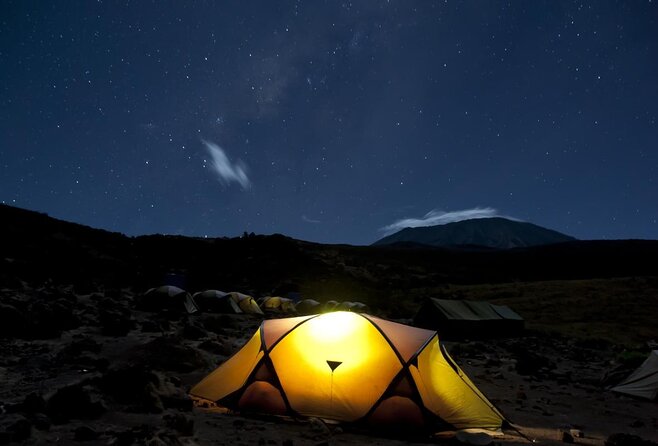
On shorter versions of Lemosho, the stretch from Barranco to Barafu can feel rushed. Here, you spend one night at Karanga before continuing to Barafu the next day. That creates a shorter final walking day before summit night, when you need to rest, eat early, and conserve energy.
You still face altitude, cold, steep trails, and a very long summit day. No schedule removes those challenges. But a gradual climb gives you a better chance to respond well to the height, especially because the route rises to Lava Tower before dropping to Barranco.
The maximum group size is two climbers. That matters on a mountain where pace, hydration, rest, and altitude symptoms differ from person to person. A small party can also feel quieter and more personal, though people who enjoy a large social group may find the format less lively.
More Lemosho Route climbs:
- Kilimanjaro climb by Lemosho Route (7-day)
★ 5.0 · 651 reviews - Kilimanjaro Climbing Lemosho Route 8 Days.
★ 5.0 · 186 reviews - 8-Day Small-group Lemosho Kilimanjaro Summit Trekking
★ 5.0 · 186 reviews
Day 1: Moshi to the 7,800-foot rainforest
Your mountain day begins with a drive of about 45 minutes from Moshi to the Kilimanjaro National Park gate. The road passes through mountain villages before reaching the busy entrance area, where permits are prepared and climbing crews organize supplies.
Once on the trail, you enter rainforest. The route is scenic, shaded, and often wet. Mud and slippery sections are common at this elevation, so gaiters and trekking poles are not just nice extras. They are sensible pieces of equipment.
The first walk lasts about four hours. That is a friendly introduction to the mountain, but you should not treat it as a casual stroll. You are already climbing, and the damp trail can make the footing tiring. Your guide points out local plants and wildlife as the forest changes around you.
This is also your first chance to learn the rhythm of the climb: walk steadily, drink often, eat before you are hungry, and tell your guide early if anything feels wrong.
Day 2: Leaving the forest for the Shira rim
The second day climbs from about 9,500 feet to 11,500 feet and takes roughly six hours. The forest gradually thins, and you reach open high country with wider views toward Kilimanjaro’s summit.
The trail continues upward, and temperatures begin to fall. That change can catch you off guard. You may start warm in the morning and need more layers by afternoon, so keep a fleece or insulated jacket accessible rather than buried at the bottom of your bag.
This is a useful altitude day because the gain is steady rather than sudden. You are not yet near the summit, but your body is beginning to work in thinner air. Move slowly. The local phrase pole pole, meaning slowly slowly, is good mountain advice even though it is not listed as a formal part of the program.
Day 3: A full acclimatization day on Shira Plateau
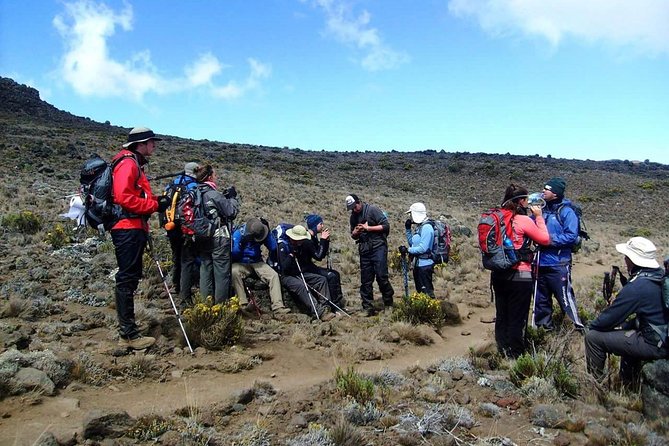
Day three is one of the strongest reasons to choose this eight-day plan. You spend about seven hours exploring the Shira Plateau, walking toward Kibo’s glaciered peak and across high moorland.
The day reaches roughly 13,800 feet. You may walk toward Shira 2 Camp and continue to Moir Hut near the Lent Hills. The route includes gentler walks around the hills, making this a good place to spend time at altitude without charging directly toward the summit.
Shira is one of the highest plateaus on Earth, and its broad, open setting gives you a very different view of the mountain from the forest below. The payoff is not only scenery. This day gives your body more time to adjust before the route climbs higher.
The drawback is that altitude can affect you even during an easy walk. A seven-hour day at this height may feel harder than a longer walk near sea level. Keep your pace modest and listen carefully to your guide.
More treks and hikes around Kilimanjaro:
- Kilimanjaro climb, Machame Route (7-day)
★ 5.0 · 262 reviews - Climbing Kilimanjaro – Machame Route
★ 5.0 · 170 reviews - Climbing Kilimanjaro through 7 days Machame Route
★ 5.0 · 151 reviews - Kilimanjaro climb, Lemosho Route (8-day)
★ 5.0 · 148 reviews
Day 4: Lava Tower and the descent to Barranco
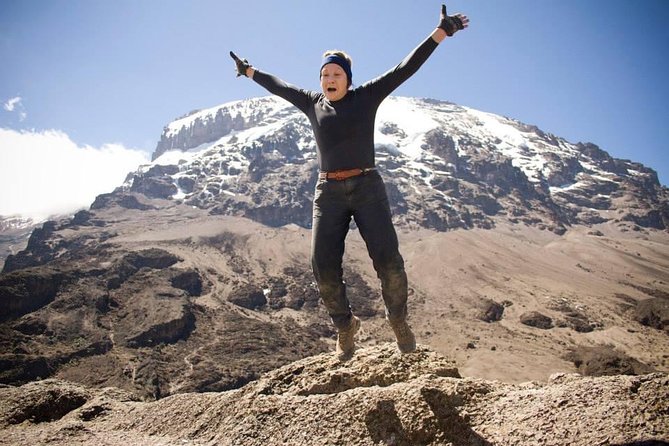
Day four is an important acclimatization day disguised as a scenic mountain crossing. You climb from the Shira Plateau toward Lava Tower, also called the Shark’s Tooth, at about 15,250 feet.
The route reaches roughly 15,350 feet before descending to Barranco Camp at about 13,000 feet. That climb high and sleep lower pattern is valuable because it lets you experience a higher elevation before spending the night at a lower one.
You pass a junction toward Kibo and another route leading toward the Arrow Glacier. These crossings show how the mountain’s trails connect, but your route continues to Barranco rather than toward the glacier.
The day takes about five hours. Conditions can feel cold and exposed, and you need warm layers, water, and snacks close at hand. Barranco Camp is a dramatic stopping place below the wall, but do not mistake the shorter walking time for an easy day. The altitude is the real test.
Day 5: The Barranco Wall and Karanga Valley
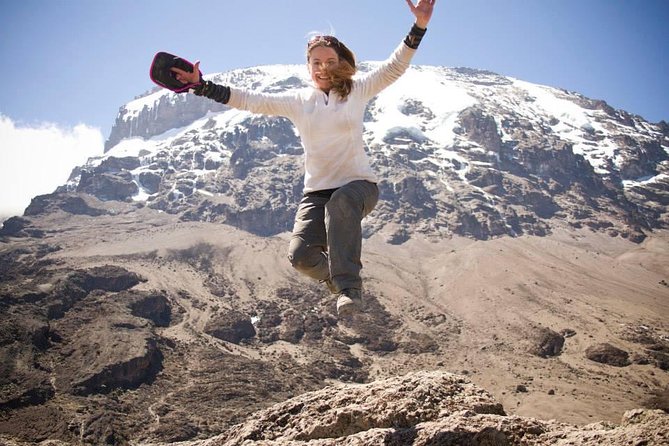
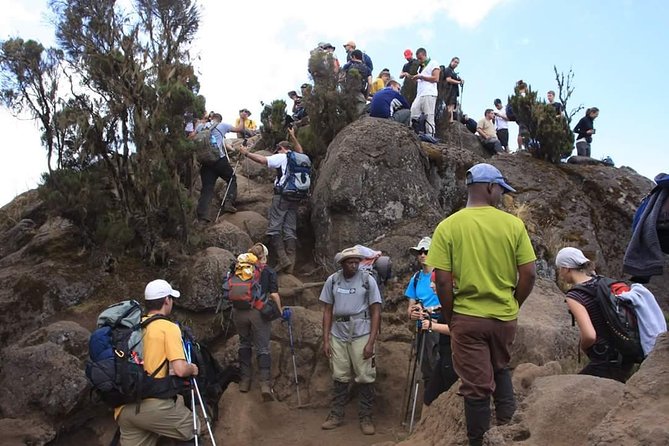
After breakfast, you tackle the Barranco Wall. This is one of the most memorable sections of the route because the trail becomes steep and more hands-on. You use your feet carefully, place your hands where needed, and follow the guide’s instructions rather than rushing.
The crew carries loads over this section with practiced speed, but you should not compare your pace with theirs. Take your time. The wall is a physical challenge, yet it is broken into sections and followed by the route toward Karanga Valley.
The walk is listed as about four hours, and you finish at Karanga Camp around 13,250 feet. The route then connects with the Mweka Trail, which you will use later for the descent.
This split is a major strength of the itinerary. Instead of forcing Barranco, Karanga, and Barafu into one long push, you get a shorter day and a night to recover before going higher.
Day 6: Karanga to Barafu Camp
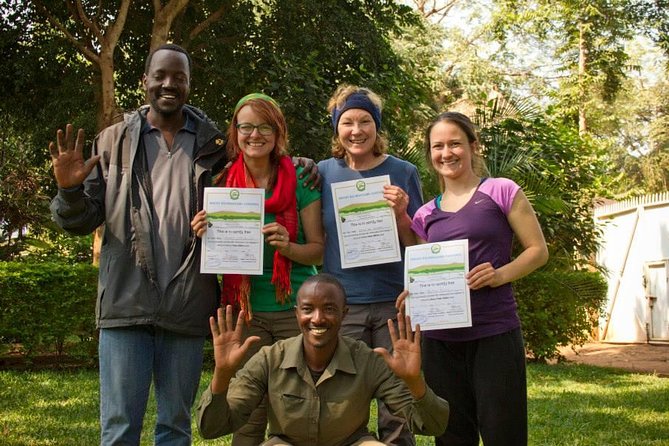
Day six climbs from about 13,250 feet to Barafu Camp at roughly 15,350 feet. The walk takes about five hours, and you complete the southern circuit of the mountain.
The southern circuit gives you changing views of the summit. You see Kibo from different angles, which makes the climb feel like a journey around the mountain rather than a single uphill corridor.
Barafu is the launch point for summit night. After reaching camp, you have an early dinner and rest. This is where the schedule becomes unusual: you arrive during the day, eat early, organize your summit clothing, and try to sleep before waking around midnight.
Do not expect a normal night’s sleep. Even with a short pre-summit walk, the early start and excitement make rest difficult. Prepare your headlamp, warm layers, gloves, water, snacks, and any personal medication before lying down.
Day 7: The midnight push to Uhuru Peak
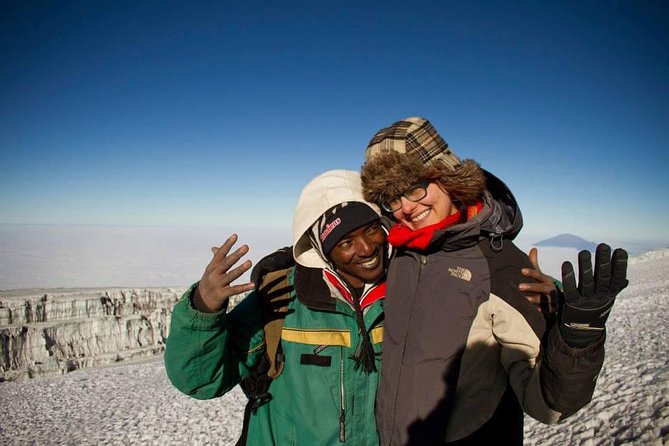
Summit day begins between midnight and 2 a.m. It is the hardest portion of the climb, both physically and mentally.
You leave Barafu and climb between the Rebmann and Ratzel glaciers. The route rises through heavy scree in switchbacks toward Stella Point on the crater rim. The ground can shift beneath your boots, and the cold is often intense at this hour.
The ascent to Stella Point is slow. Your guide sets the pace, and you should focus on small, steady steps rather than the full height still above you. The sunrise from the crater rim can be one of the great moments of the climb, but the air remains cold and the summit is not yet finished.
From Stella Point, you continue around the crater rim toward Uhuru Peak at 19,340 feet. After reaching the top, you descend to about 10,150 feet at the lower camp. The full day lasts around 13 hours.
That descent is not an afterthought. Tired legs, loose gravel, and reduced concentration can make going down surprisingly hard. Drink, eat, and keep your poles ready. You may feel proud at the summit, but your day is only complete after reaching camp safely.
Day 8: Mweka descent and the return to Moshi
The final day drops from about 10,150 feet to 5,500 feet and takes around four hours. After breakfast, there is a ceremony of appreciation and team bonding before you say goodbye to the crew.
You continue to Mweka Park Gate to receive your summit certificate. The lower route is warmer, wet, muddy, and steep, so keep your gaiters and trekking poles available. The descent can be tough on knees and ankles, especially after summit night.
A vehicle meets you at Mweka village for the roughly 30-minute drive back to your Moshi hotel. The reward is a hot shower, dinner, and a proper celebration after a long week on the mountain.
What the $2,600 price covers
At $2,600 per person, this is not a bare-bones mountain package. The price includes park fees, rescue fees, water, camping equipment, crew salaries, crew park fees, mountain transport, and airport transfers in both directions.
Food is also included: eight lunches, seven breakfasts, and eight dinners. That means you do not need to arrange meals during the climb, though you should still carry personal snacks that you know you can eat at altitude.
A summit certificate is included as well. Personal equipment is not. You need to budget for clothing, footwear, a sleeping setup if not supplied in the package details, and other individual gear. The information provided does not list every item of camping equipment, so ask for a precise gear inventory before paying.
The listed price does not include international flights, visas, travel insurance, or tips. Recommended tips are $15 to $20 per guide per day, $10 to $15 per cook per day, and $8 to $10 per porter per day. For a small party, the total can add up quickly, so plan for gratuities before you arrive.
The crew and the feel of the climb
The operator has used guides named Zacariah, Epa, Eric, and Nicholas on Kilimanjaro climbs. Your assigned guide may differ, so treat those names as examples rather than a promise.
The most important crew qualities are patience, clear pacing, and good communication. The climbing team includes a guide, cook, and porters, and their work shapes your day from breakfast through camp setup and dinner.
You should ask how porter welfare is handled and how many porters are assigned to your climb. The price includes crew wages and crew park fees, but the supplied details do not explain the operator’s porter policy in depth.
Who should book this Lemosho climb?
This trip suits you if you have a moderate level of physical fitness, can walk for several hours on uneven ground, and are prepared for a very long summit day. You do not need technical mountaineering details from this itinerary, but you do need stamina, patience, and a calm response to cold and altitude.
It is a good fit for a solo climber who wants to join a small party, or for two friends who prefer focused guide attention. It is less suitable if you dislike camping, muddy trails, steep descents, early starts, or uncertain comfort.
The full eight days are a better choice than squeezing Lemosho into a shorter schedule. The extra time does not guarantee a summit, but it gives you a more sensible pace and a shorter day before the most demanding climb.
Free cancellation is available if you cancel at least 24 hours before the local start time. Changes or cancellations inside that window are not accepted for a refund.
Should you book the 8-day Lemosho Route?
I would choose this itinerary if you want a patient route plan, a small maximum group size, and a package that covers most of the expensive mountain basics. The Shira acclimatization day, the Lava Tower descent, and the Karanga stop all make practical sense.
Book it only after confirming the exact equipment supplied, the final guide assignment, porter arrangements, tipping expectations, and airport transfer details. If you are fit enough for long mountain days and willing to accept a cold, muddy, sleep-short summit attempt, this is a strong way to approach Kilimanjaro. If you want a light outdoor holiday, choose something easier.
FAQ
How long is the Kilimanjaro Lemosho climb?
The climb lasts eight days and seven nights, including the transfer from Moshi to the mountain, the summit attempt, descent, and return to Moshi.
What is the maximum group size?
The activity has a maximum of two climbers.
What meals are included?
The package includes eight lunches, seven breakfasts, and eight dinners.
Are park fees and camping equipment included?
Yes. Park fees, crew park fees, camping equipment, rescue fees, water, crew salaries, and mountain transport are included.
What fitness level do I need?
You should have a moderate level of physical fitness. The route includes walks of four to seven hours on regular days, plus a summit day of about 13 hours.
Is airport transport included?
Yes. Two-way airport transfer is listed as complimentary, and transport to and from the mountain for you and the crew is included.
More Eight-Day Trips in Kilimanjaro
- Climbing Kilimanjaro through 8 days Lemosho Route
★ 5.0 · 52 reviews - Kilimanjaro climb, Northern Circuit route (8-day)
★ 5.0 · 40 reviews - 8 Days Kilimanjaro Hike via Lemosho Route
★ 5.0 · 39 reviews - 8 Days Climbing Mt.Kilimanjaro (Lemosho Route)
★ 4.5 · 37 reviews
Just added around Kilimanjaro
- 6 days Machame route climbing Mt.Kilimanjaro★ 5.0 · 8 reviews
- machame route★ 5.0 · 16 reviews
- Mt Kilimanjaro 6 days Marangu route hike★ 5.0 · 3 reviews
- Private Cycle to Kilimanjaro Bike Park Safari★ 5.0 · 6 reviews
- West Kilimanjaro cycling Adventures★ 4.5 · 8 reviews
- Kilimanjaro Climb • Marangu Route ~ 9 Day★ 5.0 · 4 reviews
- 3 Days Private E-Bike Tour in West Kilimanjaro★ 5.0 · 3 reviews
- Kilimanjaro Climb • Machame Route ~ 10 Day★ 5.0 · 6 reviews