
Reviewed · MARANGU ROUTE CLIMBS
6 Days Marangu Route (Kilimanjaro Trekk)
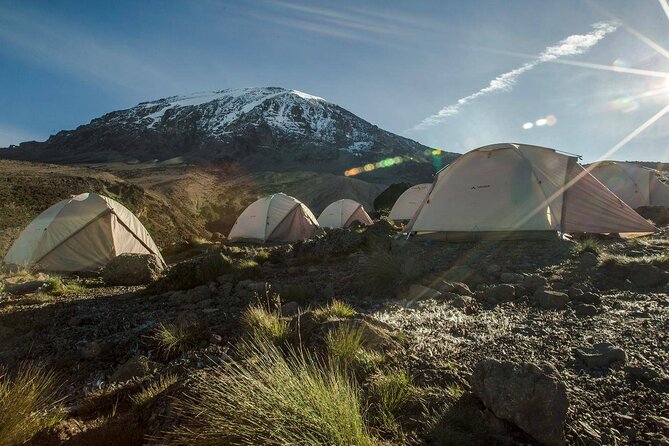
Mount Kilimanjaro rises to 19,340 feet, and this six-day Marangu Route gives you a clear shot at Uhuru Peak without rushing the acclimatization schedule. You’ll pass through rainforest, heath, alpine desert, and the cold upper zone, with an extra day at Horombo Hut to help your body adjust.
I like the built-in acclimatization day and the steady hut-to-hut plan. I also like the support from the guiding team: Sanke is praised for careful health checks, while Rama and William are singled out for calm summit support and good organization.
The main caution is the tour description itself. It mentions both Marangu and Machame, plus camping, while the daily plan clearly uses Marangu huts. Confirm your exact route, accommodation, group size, and assigned guide before paying.
Key points to know before you book
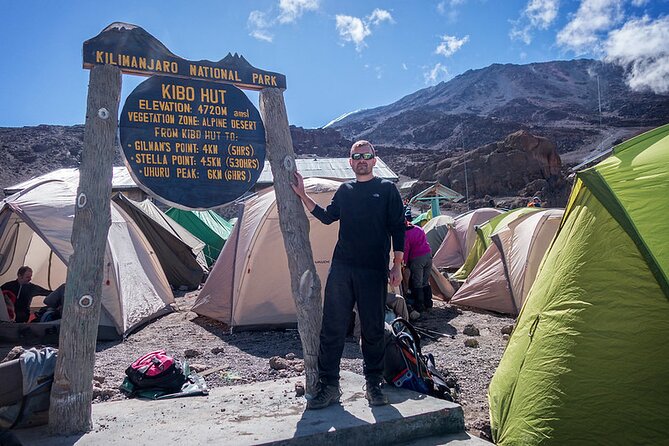
- Horombo Hut gets a full acclimatization day: You can rest or walk to Zebra Rocks before the harder climb to Kibo.
- The route uses Kilimanjaro huts: The daily plan names Mandara, Horombo, and Kibo Huts, despite references to camping elsewhere in the description.
- Summit morning is demanding: You begin in the early hours, reach Uhuru Peak near sunrise, then descend to Kibo and Horombo.
- Guides named in past feedback include Sanke, Rama, and William: Your booking should confirm who will lead your group.
- The $1,980 price covers major trek costs: Park fees, meals, safety equipment, accommodation, guides, taxes, and camping equipment are listed as included.
- Insurance, visa, personal gear, and tips are extra: Budget for these separately, and ask how tipping is handled within the group.
Why the Marangu Route appeals to many climbers
The Marangu Route is a practical choice for you if the idea of sleeping in huts sounds better than carrying a tent or camping every night. The route follows a gradual path toward the summit, and the six-day schedule gives you one night at each main stop, plus a rest and acclimatization day at Horombo.
That extra day matters. Kilimanjaro is not only a test of fitness. Altitude affects people in different ways, and no amount of enthusiasm changes that. The Horombo day lets you sleep at altitude and take a short walk to Zebra Rocks, or simply rest if your body needs it.
I also like the range of scenery packed into one climb. You begin among thick rainforest, continue through heathland, cross open alpine desert, and finish in a cold upper zone with sparse vegetation. The change is gradual enough for you to notice it, but fast enough to make the mountain feel like several trips in one.
The route is not a wilderness walk in the remote sense. Marangu is a well-used path, and the huts make it more structured than some other Kilimanjaro routes. That can be a benefit for first-time high-altitude trekkers, though anyone seeking a quiet, less-used trail may prefer a different route.
More Marangu Route climbs:
- Kilimanjaro climb, Marangu route (6-day)
★ 5.0 · 72 reviews - Climbing Kilimanjaro – Marangu Route
★ 5.0 · 65 reviews - Private Full Day Hiking Experience to Marangu Route
★ 5.0 · 61 reviews
Day 1: Marangu Gate to Mandara Hut
Your trek begins at Marangu Gate, where park formalities are completed and you meet the guides and porters. The listed start time is 9:00 a.m., though confirm the exact pickup arrangement with Spirit of Kilimanjaro if you are staying in Moshi.
The first day covers about 8 kilometers and takes roughly eight hours according to the schedule. That time estimate includes the gate process, walking pace, breaks, and arrival arrangements, so do not treat it as eight hours of hard uphill walking.
The first section passes through rainforest. This is one of the most pleasant parts of the trek because the air is cooler, the vegetation is thick, and you have a chance to settle into the group rhythm before the higher ground begins.
Mandara Hut sits at about 2,700 meters. It is your first night at altitude, so keep the evening simple. Eat, drink, organize your daypack, and let the guide know if you feel unwell. The first night is not the time to prove how tough you are.
Day 2: Heathland and the climb to Horombo
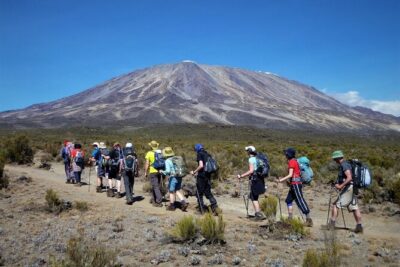
After breakfast, you leave the rainforest and enter the heathland zone. The route becomes more open, with wider views and a clearer sense that you are climbing a very high mountain.
This day covers about 12 kilometers and ends at Horombo Hut, at roughly 3,700 meters. The schedule again allows about eight hours. You may catch views of Mawenzi Peak, one of Kilimanjaro’s distinctive volcanic formations, which gives the day a strong visual reward.
Horombo is an important stop, not just a place to sleep. Your body is now dealing with a major increase in altitude from the previous night. Move slowly, drink regularly, and follow the guide’s advice even if you feel fine.
The route description calls this section relatively straightforward in terms of trail difficulty, but altitude can make ordinary walking feel much harder. You should expect a slower pace and avoid spending your energy racing ahead.
Day 3: A useful pause at 3,700 meters
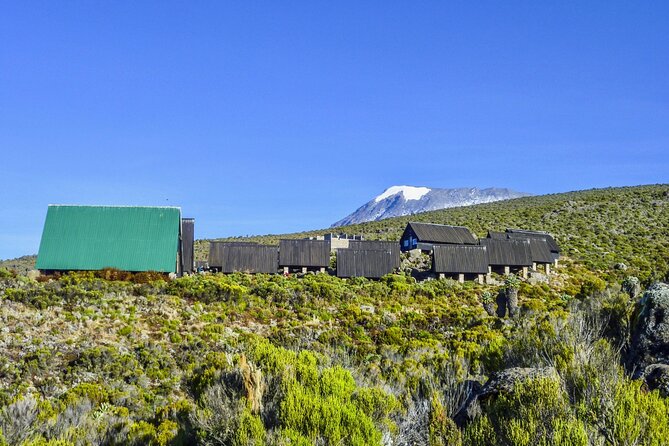
Day three is the most valuable design choice in the itinerary. You remain at Horombo Hut rather than climbing higher immediately. You can take a short walk to Zebra Rocks for views, or stay near the hut and rest.
A seven-hour day is listed, but the plan allows you to choose how active you want to be. That flexibility is useful. If you are sleeping well and feeling strong, the short hike gives you extra time at altitude. If you have a headache, poor appetite, or unusual fatigue, resting is the sensible choice.
I would treat this as a serious acclimatization day, not a spare sightseeing day. Your goal is to arrive at Kibo ready for the upper mountain. A relaxed day here may improve your chances later, while overdoing the walk can work against you.
The guiding team’s role matters most on this day. Sanke is specifically praised for checking health and mood during a Marangu climb. That kind of attention is exactly what you want at altitude, so ask how often the guide checks in and what procedure is followed if someone feels sick.
More six-day trips in Kilimanjaro:
- Kilimanjaro climb, Lemosho Route (6-day)
★ 5.0 · 129 reviews - 6 Days Tanzania Classic Safari
★ 5.0 · 52 reviews - The Best of Machame Route in 6 Days: Your World’s Summit Guide
★ 5.0 · 44 reviews - 6 Days Machame Route Kilimanjaro Climbing
★ 5.0 · 42 reviews
Day 4: Horombo to Kibo Hut
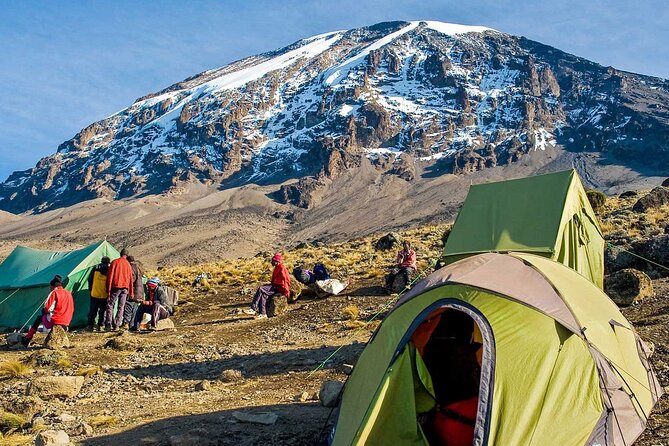
The fourth day takes you toward Kibo Hut at approximately 4,700 meters. The terrain changes again as you cross the alpine desert zone and approach the broad saddle between Mawenzi and Kibo.
This is an eight-hour day, and the altitude becomes the central challenge. The path may not look technically difficult, but the thin air can make every rise feel longer. Keep your pace slow, drink as instructed, and tell the guide about symptoms early.
Kibo is the staging point for the summit attempt. Once you arrive, your time is focused on eating, resting, and preparing for an early start. You will need warm clothing, a headlamp if required by the operator, water, and the personal gear listed for the trek. Headlamp use is not specified in the supplied details, so confirm your full equipment list before departure.
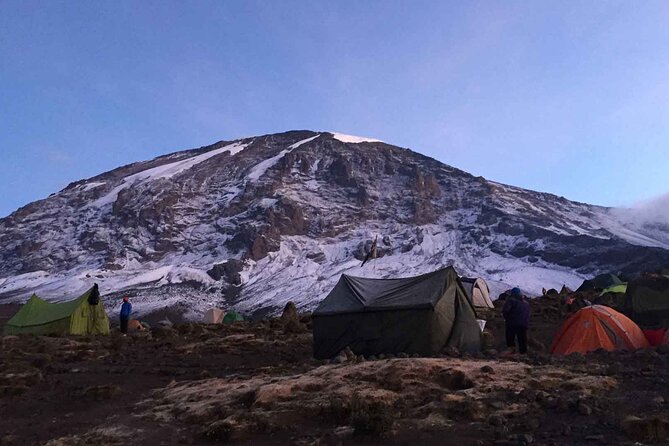
The view toward the saddle and the two volcanic cones is one of the route’s memorable moments. You can see how quickly the mountain has changed since the first day, from thick forest to a spare, exposed upper zone.
Day 5: Uhuru Peak and the long descent
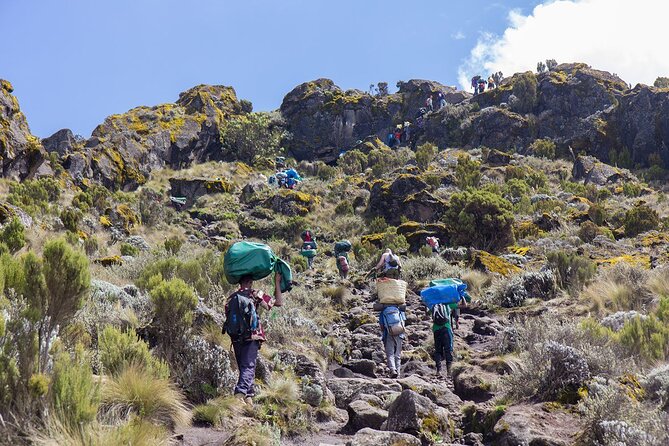
Summit day begins in the early hours. The plan aims to put you at Uhuru Peak near sunrise, giving you the chance to see the first light from Africa’s highest point.
This is the hardest day by a wide margin. You climb from Kibo Hut to the summit, celebrate briefly at 19,340 feet, then descend to Kibo and continue to Horombo Hut. The listed duration is eight hours, but the day combines the steepest climbing, the highest altitude, and a long descent. Your actual time may depend on weather, pace, and how the group is feeling.
The schedule’s biggest strength is that it does not end the day at Kibo. Returning to Horombo gives you a lower sleeping altitude and sets up a more comfortable final day. The drawback is obvious: you still have a substantial descent after reaching the summit, when your legs and concentration may be tired.
Rama is praised for supporting a safe Uhuru Peak attempt, and William is praised for giving climbers confidence during the six-day plan. Those details point to something important: summit success depends on patient pacing and steady decisions, not simply strong legs.
Do not linger too long at the summit. Take your photos, enjoy the moment, and follow the guide’s instructions. The mountain is not finished with you until you are safely back at a lower elevation.
Day 6: Horombo Hut to Marangu Gate
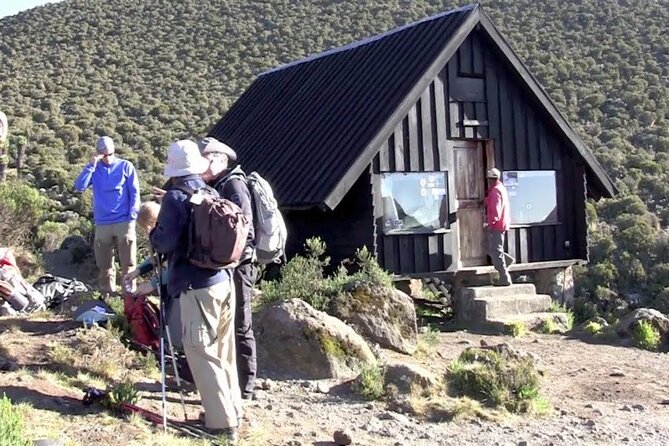
The final day takes you from Horombo back through the heath and rainforest to Marangu Gate. The schedule gives this section about five hours, making it far less demanding than summit day, though tired knees can make downhill walking uncomfortable.
You might spot colobus monkeys or birds in the lower zones. Wildlife sightings are not promised, so enjoy them if they appear, but do not make them the reason for booking this trek. The main reward is watching the vegetation return as you lose altitude.
At the gate, the group receives summit certificates and says goodbye to the guides and porters. This is also the point to make sure any tips are handled according to your group’s plan. Tipping is not included, so carry that cost in your budget and ask for local guidance before the trek begins.
What the $1,980 price really covers
At $1,980 per person, this is a major purchase, but the listed inclusions cover much of what makes a Kilimanjaro climb expensive. Park fees, meals, all fees and taxes, safety equipment, accommodation, camping equipment, and a professional guide are included.
That package gives you more value than a simple trail walk. Park access alone is a necessary part of the climb, while food, porters, huts, safety support, and guide services cover the practical work behind each day on the mountain.
Still, you should read the wording carefully. The itinerary names huts, but the inclusion list also mentions camping equipment and the overview refers to Signature Camping. The Marangu schedule does not describe tent nights. Ask directly whether you sleep in Mandara, Horombo, and Kibo Huts, and what camping equipment means in this case.
The price does not include your visa, travel insurance, personal gear, or tips. Insurance deserves special attention because a Kilimanjaro trek is not an ordinary day hike. The supplied information does not specify the required coverage, so ask the operator what policy limits or evacuation provisions are expected.
Guides, group size, and the human side of the climb
The tour allows up to 100 participants, which is a very large maximum even if your own group is smaller. Ask for the expected group size, guide-to-climber ratio, and how groups are divided before booking.
Names connected with strong praise include Sanke, Rama, and William. Sanke is described as attentive to health and mood. Rama is praised for support during the summit push, and William for organizing the trek and encouraging climbers who were unsure about completing six days.
Those names do not guarantee that one of them will lead your departure. Confirm your guide’s name and role in advance. A good guide is not just someone who knows the route. You want clear pacing, regular health checks, honest advice, and calm decisions if the mountain becomes difficult.
The experience is best suited to you if you are reasonably fit, comfortable walking for several hours, and ready to follow a slow pace at altitude. The information says most people can participate, but that does not replace medical advice or personal preparation.
Pickup, timing, and practical checks
Pickup is offered, and the listed start time is 9:00 a.m. The meeting location is in or around Moshi, with access near public transportation. Confirm the exact pickup point, since the description does not provide a hotel list or transfer timetable.
Booking confirmation is provided at the time of booking. Free cancellation is available if you cancel at least 24 hours before the start time. Cancellations inside that window are not refunded, and changes made within 24 hours are not accepted.
Before you commit, I would ask four direct questions:
- Is this definitely the Marangu Route, not Machame?
- Are all nights in huts, or is any camping involved?
- Who is the assigned guide, and how many people are in the group?
- What personal gear and insurance coverage do you require?
The conflicting route and accommodation wording is not a reason to reject the trek. It is a reason to get the details in writing.
Should you book the six-day Marangu Route?
I would book this trek if you want a structured Kilimanjaro climb with huts, meals, park fees, guide support, and a built-in acclimatization day. The plan is sensible, the scenery changes quickly, and the price includes many large expenses that you would otherwise need to arrange yourself.
I would hesitate if you want a quiet route, guaranteed one-to-one guiding, or a clearly defined camping package. I would also avoid booking until the Machame reference and Signature Camping language are cleared up.
For a first Kilimanjaro attempt, the six-day schedule offers a useful balance of time, support, and cost. It is not easy, and the summit day is long. But with realistic preparation, careful pacing, suitable insurance, and clear confirmation of the route and sleeping arrangements, it gives you a solid way to aim for Africa’s highest point.
FAQ
How long is the Marangu Route trek?
The trek lasts approximately six days, starting at Marangu Gate and ending at the same gate after the summit attempt.
What is the price per person?
The listed price is $1,980 per person.
What time does the experience start?
The listed start time is 9:00 a.m. Pickup is offered, but you should confirm the exact pickup point and timing.
What is included in the price?
Park fees, safety equipment, meals, all fees and taxes, camping equipment, a professional guide, and accommodation are listed as included.
What is not included?
Visa costs, travel insurance, personal gear, and tips are not included.
How high is Uhuru Peak?
Uhuru Peak is listed at 19,340 feet, and the summit attempt takes place on day five.
Can I cancel for a full refund?
Yes. You can receive a full refund if you cancel at least 24 hours before the experience start time. Cancellations made less than 24 hours before the start time are not refunded.
Just added around Kilimanjaro
- 6 days Machame route climbing Mt.Kilimanjaro★ 5.0 · 8 reviews
- machame route★ 5.0 · 16 reviews
- Mt Kilimanjaro 6 days Marangu route hike★ 5.0 · 3 reviews
- Private Cycle to Kilimanjaro Bike Park Safari★ 5.0 · 6 reviews
- West Kilimanjaro cycling Adventures★ 4.5 · 8 reviews
- Kilimanjaro Climb • Marangu Route ~ 9 Day★ 5.0 · 4 reviews
- 3 Days Private E-Bike Tour in West Kilimanjaro★ 5.0 · 3 reviews
- Kilimanjaro Climb • Machame Route ~ 10 Day★ 5.0 · 6 reviews
Marangu Route Climbs, compared.
Browse the lists this tour appears in