
Reviewed · MACHAME ROUTE CLIMBS
6 Days Private Mount Climbing in Kilimanjaro Machame Route
Kilimanjaro’s Machame Route gives you the mountain in changing chapters: rainforest, open moorland, high volcanic ground, ice fields, and a dark, cold summit push. You climb from the southwest, cross the Shira Plateau, pass Lava Tower and Barranco Wall, then descend by the quieter Mweka route.
I like the route’s walk high, sleep low pattern, which gives your body useful time to adjust to altitude. I also like the full private setup, with guides, porters, a cook, meals, camping equipment, boiled water, safety gear, and transport included in the $1,999 price.
The catch is the six-day schedule. It is a hard timetable, especially on summit day, and Machame is now a popular route with busy sections. You need a moderate fitness level, patience, and a willingness to walk slowly when the air gets thin.
Key points to know before you book
- Five climate zones in six days: The route moves from lower forest to high alpine ground and the summit ice zone.
- A strong acclimatization design: Lava Tower and the Barranco section let you climb higher before sleeping lower.
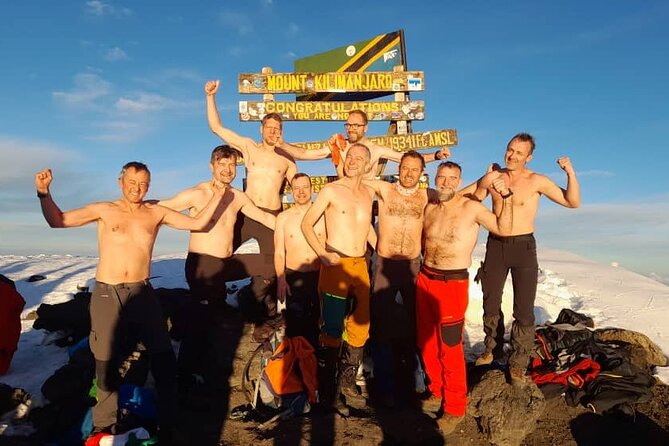
- A serious summit day: You go from Barafu Camp at 4,700 meters to Uhuru Peak at 5,895 meters, then descend to Mweka Camp.
- Private support: Only your group takes part, with guides and a mountain crew assigned to your climb.
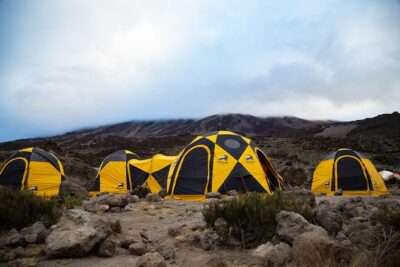
- A full camping package: Tents, mattresses, dining tent, chairs, tables, cookware, meals, boiled water, and rescue equipment are included.
- A busy but scenic route: The views are excellent, but popularity means you will not have the trail to yourself.
What the $1,999 price really covers
At $1,999 per person, this is not simply a guided walk up a mountain. The fee covers return transport between Moshi and the mountain, national park fees, qualified guides, porters, a cook, a waiter, tents, sleeping mattresses, dining equipment, meals, boiled water, first aid equipment, pulse oximeters, and climbing gear.
That package matters on Kilimanjaro because you are not carrying the whole camp. Your crew handles the cooking and much of the camp operation while you focus on walking, resting, eating, and managing your energy. A mess tent with small tables and chairs also gives you a proper place to sit at mealtimes instead of eating in your sleeping tent.
The private format adds value if you want direct attention. The group size is not stated, but only your own party participates, so you are not tied to a large public departure. Previous arrangements have included couples, families, and small groups of friends, with guide teams such as Haji, Joeffrey, William, Musa, Felix, Jamleck, Kivase, Fabian, and Chris mentioned in connection with different climbs.
One cost detail needs careful reading. Tips are not included, with the supplied information advising a tip of no more than $50. Since tipping customs can vary, confirm the exact arrangement with the operator before departure.
The listed package is generous, but the price does not remove the physical challenge. You are paying for logistics and support, not an easy route. The most important value comes from having an organized crew and a private structure during the toughest hours.
More Private Tours in Kilimanjaro
- Private Full Day Hiking Experience to Marangu Route
★ 5.0 · 61 reviews - Private Kilimanjaro Hike 7 Day Lemosho Route
★ 5.0 · 60 reviews - Kilimanjaro 7 Day Private Trekking Experience
★ 5.0 · 40 reviews
Day 1: Machame Gate to Machame Camp
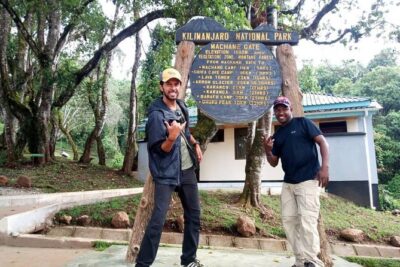
The first walking day begins around Moshi, with pickup and transport to the mountain starting point. From approximately 1,830 meters, you climb to Machame Camp at about 3,050 meters.
The distance is around 11 kilometers, and the stated walking time is five to six hours. This is a full first day, but it gives you a gradual introduction to the route rather than throwing you straight into the highest sections.
Machame is known for its forest approach. The route begins in a lower, greener zone before the vegetation changes as you gain height. You will notice the air cool and the trail become more rugged as the day goes on.
The main job on day one is not speed. Keep your pace steady and listen to the guide. Since this is a private climb, you can usually discuss the pace and stops with your own team rather than matching a large group.
You spend the night at Machame Camp. Tents, mattresses, dinner, and boiled water are included, so your evening is focused on eating, checking your gear, and resting. The first night can also show you how well your clothing and sleeping system work before the colder camps arrive.
Day 2: Machame Camp to the Shira Plateau
Day two is shorter by distance but gains a good amount of height. You climb from about 3,050 meters to Shira Camp at roughly 3,850 meters, covering around five kilometers in four to five hours.
This section opens out from the lower forest into higher moorland and volcanic terrain. The reward is the broad Shira Plateau, one of the route’s most memorable areas. The views feel more open here, and Kilimanjaro begins to look less like a distant mountain and more like the main feature of your day.
The short distance can be misleading. The trail rises steadily, and your body is still adjusting. Walk slowly, drink the boiled water provided by the crew, and avoid treating this as a race.
Shira Camp is also useful from an acclimatization point of view. You gain height, sleep at that camp, and prepare for the longer traverse toward Lava Tower and Barranco. The route’s changing elevations are one of Machame’s biggest strengths.
Day 3: Lava Tower and the Barranco Camp descent
Day three is one of the most important days on the route. You leave Shira Camp at about 3,850 meters, climb toward Lava Tower at approximately 4,000 meters, then continue to Barranco Camp at roughly the same general altitude.
The total distance is around 10 kilometers, with five to six hours of walking. The purpose is not just to reach a new camp. This is the classic high-climb, lower-sleep pattern that helps you spend time at altitude while ending the day lower than the highest point reached.
An optional scramble up Lava Tower is listed as part of the route experience. Scramble means using your hands on steeper ground, so this part may appeal to confident walkers but is not the reason to force yourself upward. Follow the guide’s advice and consider how your body feels that day.
After Lava Tower, the route heads toward Barranco Camp. The descent can feel welcome after the higher section, although the terrain remains demanding. The scenery becomes more dramatic as you approach the large volcanic formations around Barranco.
This is also where the route begins to feel less like a standard mountain hike and more like a real high-altitude expedition. Temperatures drop, the air feels thinner, and a simple task such as arranging your sleeping gear takes more effort.
More Machame Route climbs:
- Kilimanjaro climb, Machame Route (7-day)
★ 5.0 · 262 reviews - Climbing Kilimanjaro – Machame Route
★ 5.0 · 170 reviews - Climbing Kilimanjaro through 7 days Machame Route
★ 5.0 · 151 reviews - 7-Day Machame Kilimanjaro Summit Tour from Arusha
★ 5.0 · 125 reviews
Day 4: The Barranco Wall and Barafu Camp
Day four covers approximately nine kilometers and takes six to eight hours. You climb from Barranco Camp at about 4,000 meters to Barafu Camp at approximately 4,700 meters.
The Barranco Wall is the day’s signature feature. It is a steep climb rather than a technical rock climb, and the route requires careful footwork in places. This is one reason Machame feels harder than the gentler approach of some other Kilimanjaro routes.
After the wall, the trail crosses the southern side of the mountain beneath Kilimanjaro’s southern ice field. The scenery changes again, with fewer signs of lower vegetation and more exposed volcanic ground.
Barafu Camp is the staging point for your summit attempt. The day’s six to eight hours of walking, followed by a short rest period, can make this the hardest regular trekking day. You should organize your summit clothes, headlamp, water, and personal items before trying to sleep.
The schedule is demanding because the summit departure normally follows after a brief rest. Your guide team, which may include a lead guide and assistant guides depending on the size of your party, is responsible for managing the pace and monitoring how you are coping. Pulse oximeters and first aid equipment are included in the mountain setup, but they are support tools, not a guarantee against altitude problems.
Day 5: Barafu Camp to Uhuru Peak and Mweka Camp
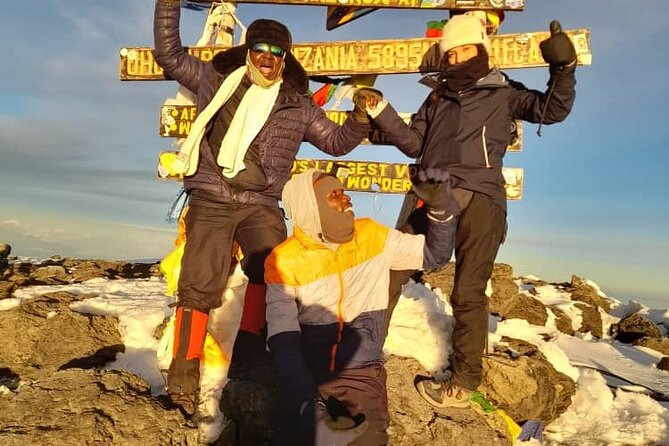
Summit day is the test. You climb from Barafu Camp at 4,700 meters to Uhuru Peak at 5,895 meters, then descend all the way to Mweka Camp at about 3,090 meters.
The listed figures give five to seven hours for the ascent and another five to six hours for the descent. The distances are about five kilometers up and 13 kilometers down. That combination tells you what to expect: the upward walk is slow and strenuous, but the long descent is also hard on tired legs.
The summit section is cold, dark, and steep. Progress is deliberately slow. You may spend much of the climb concentrating on one step at a time, following the guide’s rhythm and taking short breaks.
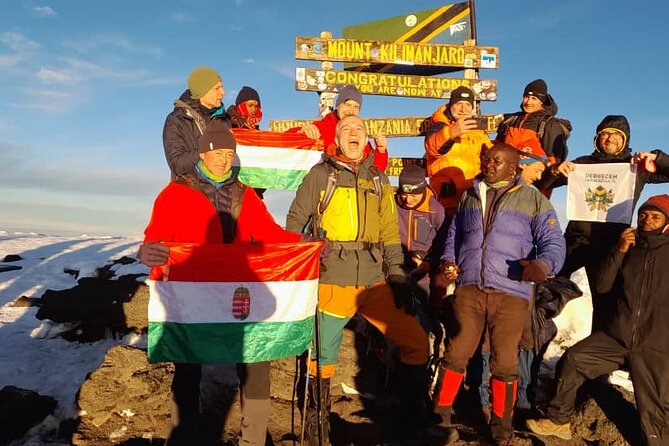
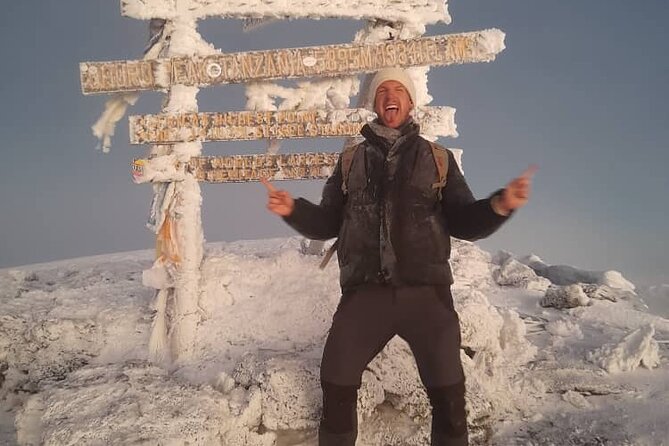
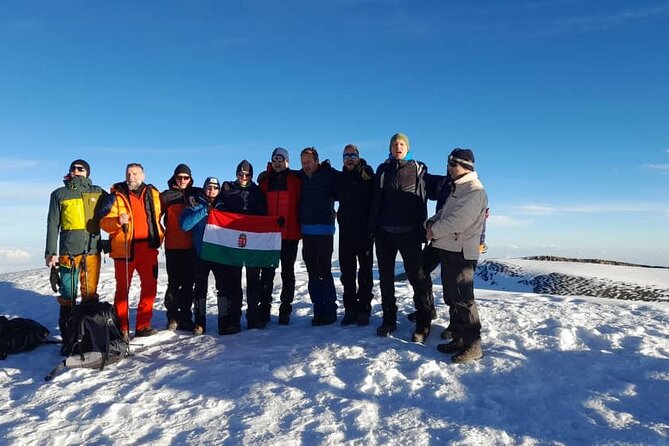
At Uhuru Peak, you reach 5,895 meters, the highest point on Kilimanjaro. Weather can affect the views, and the supplied information does not promise clear conditions. The achievement is still significant, but you should judge success by reaching a safe personal limit, not by pushing past serious symptoms.
The descent to Mweka Camp brings relief because you return to a lower altitude. It also brings fatigue. Trekking poles, well-fitting boots, and careful attention to your feet matter here, though the tour details do not specify which personal equipment you must bring.
This is the day when private support can matter most. Previous climbers have specifically praised the encouragement and care provided by guides during the summit push. Names connected with different climbs include Teacher, Haji, Joeffrey, Musa, William, Felix, and Jamleck. Your assigned team may differ, so ask for the names of your guides before setting out.
Day 6: Mweka Camp to the gate and back to Moshi
The final walking day covers around 10 kilometers from Mweka Camp to Mweka Gate, with three to four hours of hiking. The elevation drops from about 3,090 meters to 1,680 meters.
After the strain of summit day, this descent should feel more manageable, though your knees and feet may still be tired. The route returns toward lower forest, and the change in vegetation marks the end of the high mountain portion.
At Mweka Gate, return transport takes you back to your hotel in Moshi. The tour provides transport from Moshi to the mountain and back, so you do not need to arrange separate mountain transfers for the main itinerary.
The day is short on paper, but do not plan an important event immediately afterward. The exact arrival time can vary with walking pace, group condition, and gate procedures.
The crew and the private format
The strongest theme in the available feedback is the human support. Specific praise has focused on patient guides, clear preparation help, smooth communication, and encouragement during difficult sections.
Teacher and Edward are associated with planning and guest coordination, while guides such as Haji, Joeffrey, Musa, William, Felix, and Jamleck have been named in different climbing accounts. One family climb specifically praised Haji and Joeffrey for being friendly and patient. Another account described William as attentive to the group’s condition.
You should still ask who will lead your particular climb. A company may use different guide teams, and a name mentioned in one departure does not guarantee that person will be assigned to yours.
Private does not mean luxurious. You will sleep in mountain tents and follow a demanding route. It does mean you have a more direct channel to your guides and are not automatically matched to an unrelated group’s speed or preferences.
Food, camp equipment, and safety support
Breakfast, lunch, and dinner are included for all six days on the mountain. A cook and waiter are part of the crew, while the dining tent, cutlery, crockery, tables, chairs, candles, mattresses, and tents are supplied.
That is useful because high-altitude walking makes regular food and warm drinks important, even though the exact menu is not provided. Ask in advance how dietary requirements are handled if you have allergies or restrictions, since the available details do not explain this.
Boiled water is provided on the mountain. The package also includes a first aid kit, pulse oximeters, and rescue equipment. Guides and porters have their accommodation and mountain entry fees covered by the operator.
You should not treat the presence of safety equipment as a substitute for preparation. The route reaches 5,895 meters and includes a summit day of up to 12 hours of walking. Your guide’s assessment of your condition should take priority over a fixed goal.
Who should choose this six-day climb?
I would recommend this itinerary to you if you want a private Kilimanjaro climb with a scenic route and a full support crew. It suits people who prefer camping to staying in mountain huts and who value having meals, transport, park fees, and crew logistics handled in one package.
It is also a good fit if you want the Machame route’s variety: Shira Plateau, Lava Tower, Barranco Wall, the southern ice field, and a Mweka descent. The route offers more visual change than a simple up-and-down path.
I would be cautious if you are looking for a relaxed holiday or have limited walking fitness. The six-day schedule is compact, and the summit push follows a demanding climb to Barafu Camp. A longer itinerary may feel more comfortable, but this specific experience is six days.
The route’s popularity is another consideration. You will get excellent scenery, but some sections can feel busy. If solitude is your top priority, Machame may not meet that expectation.
Booking details and cancellation terms
Pickup is offered, the meeting time is 8:00 a.m., and confirmation is provided when you book. The activity is near public transportation, though the main mountain transfer is already included.
You can cancel for a full refund if you do so at least 24 hours before the experience start time. Cancellations or changes made within 24 hours are not accepted for a refund. The cut-off uses local time.
Should you book the Machame Route?
Book this climb if you want a demanding but highly varied Kilimanjaro route, private guide attention, and a package that covers the major mountain costs. The route’s best features are the Shira Plateau, the high and low camp pattern, Barranco Wall, and the descent through Mweka.
Think twice if six days feels rushed or if you want a quieter route. The summit day is long, the trail can be busy, and Machame asks more of you than a casual trek.
For a fit and determined climber who understands the effort involved, the $1,999 price offers solid practical value. You get the mountain crew, meals, camping system, park fees, transport, and safety equipment in one organized plan, with private participation rather than a general group departure.
FAQ
How long is the Kilimanjaro Machame Route experience?
The climb lasts approximately six days, including transport from Moshi to the mountain, five nights of mountain trekking and camping, and the return to your hotel.
What is the highest point reached?
The summit is Uhuru Peak at 5,895 meters, or 19,340 feet.
Is transport from Moshi included?
Yes. Return transportation from Moshi to the mountain starting point and from the finishing point back to Moshi is included.
Are meals included?
Yes. Breakfast, lunch, and dinner are provided on the mountain for the duration of the climb.
Is this a private tour?
Yes. Only your group takes part in the activity.
What equipment and camp facilities are included?
The package includes tents, sleeping mattresses, a dining tent, mini camping chairs, tables, candles, cutlery, crockery, eating utensils, climbing gear, boiled water, and safety equipment including a first aid kit and pulse oximeters.
What is the cancellation policy?
You receive a full refund if you cancel at least 24 hours before the experience start time. Cancellations or changes made less than 24 hours before the start are not refunded or accepted.
More Six-Day Trips in Kilimanjaro
- Kilimanjaro climb, Lemosho Route (6-day)
★ 5.0 · 129 reviews - Kilimanjaro climb, Marangu route (6-day)
★ 5.0 · 72 reviews - 6 Days Tanzania Classic Safari
★ 5.0 · 52 reviews - The Best of Machame Route in 6 Days: Your World’s Summit Guide
★ 5.0 · 44 reviews
More Trekking Tours in Kilimanjaro
- Kilimanjaro climb by Lemosho Route (7-day)
★ 5.0 · 651 reviews - 8-Day Small-group Lemosho Kilimanjaro Summit Trekking
★ 5.0 · 186 reviews - Kilimanjaro Climbing Lemosho Route 8 Days.
★ 5.0 · 186 reviews - Kilimanjaro climb, Lemosho Route (8-day)
★ 5.0 · 148 reviews
Just added around Kilimanjaro
- 6 days Machame route climbing Mt.Kilimanjaro★ 5.0 · 8 reviews
- Mt Kilimanjaro 6 days Marangu route hike★ 5.0 · 3 reviews
- machame route★ 5.0 · 16 reviews
- Private Cycle to Kilimanjaro Bike Park Safari★ 5.0 · 6 reviews
- West Kilimanjaro cycling Adventures★ 4.5 · 8 reviews
- Kilimanjaro Climb • Marangu Route ~ 9 Day★ 5.0 · 4 reviews
- 3 Days Private E-Bike Tour in West Kilimanjaro★ 5.0 · 3 reviews
- Kilimanjaro Climb • Machame Route ~ 10 Day★ 5.0 · 6 reviews
Machame Route Climbs, compared.
The Best of Machame Route in 6 Days: Your World’s Summit Guide
Read our review →Browse the lists this tour appears in