
Reviewed · LEMOSHO ROUTE CLIMBS
Mt. Kilimanjaro Climb – 8 Day Lemosho Route
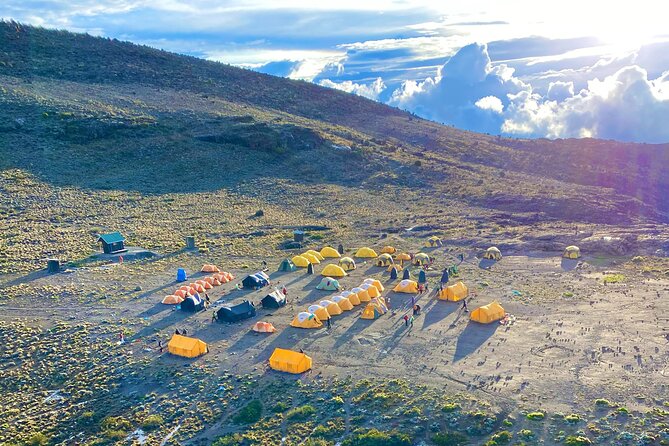
The Lemosho Route gives you Kilimanjaro at its most gradual and scenic. You begin on the quiet western side, pass through forest, moorland, volcanic rock, and high desert, then join the southern circuit for the final push to Uhuru Peak. The extra acclimatization day matters, especially when the mountain rises to 19,341 feet.
I like the route’s combination of beautiful scenery and a slower climbing plan. I also like that the price includes trained guides, porters, cooks, camping equipment, two hotel nights, meals on the mountain, and airport transfers. The main consideration is the physical demand: this is not a casual hike, and summit night means climbing for hours in darkness after a short rest.
The company lists a 95 percent summit success rate for this route, though no mountain statistic can promise your own result. Guide Ezekiel receives repeated praise for pacing, judgment, safety, and attention to small details, while the wider team is described as warm, organized, and helpful.
Key things to know before you book
- Lemosho starts quietly on Kilimanjaro’s western slope, with forest and wide views toward Mount Meru and Moshi.
- The eight-day schedule gives you a useful acclimatization day on the Shira Plateau and Lent Hills.
- The Barranco Wall looks intimidating but is non-technical, with a steep climb that requires confidence rather than climbing equipment.
- Summit morning begins around midnight, leading to sunrise near Stella Point and the final walk to Uhuru Peak.
- The $3,099 price includes substantial support, including guides, porters, cooks, tents, hotel lodging, meals, and transfers.
- The group is limited to 12 people, which should make communication and pacing easier than on a large departure.
Why Lemosho is a smart eight-day choice
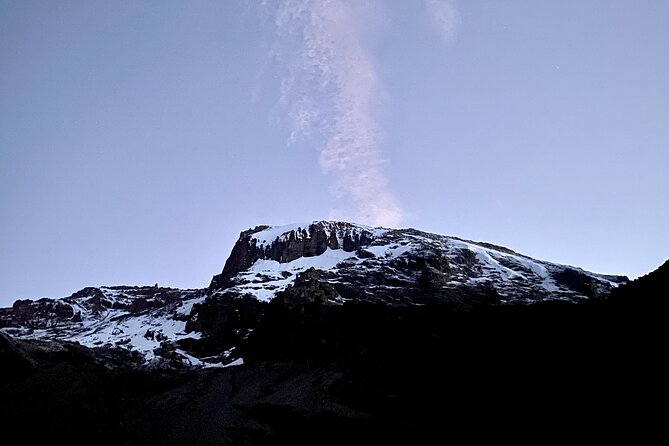
Kilimanjaro is often described as an achievable high-altitude climb, but that does not mean it is easy. The key challenge is altitude, not technical rock climbing. The mountain asks your body to adjust while you keep walking, eating, sleeping, and managing cold, fatigue, and changing weather.
Lemosho helps by giving you time. Day 3 is spent exploring the Shira Plateau rather than rushing higher, and Day 4 uses the climb-high, sleep-lower pattern. You climb toward Lava Tower at about 15,000 feet, then descend to Barranco Camp at roughly 13,000 feet. That extra time at altitude can be useful before summit night.
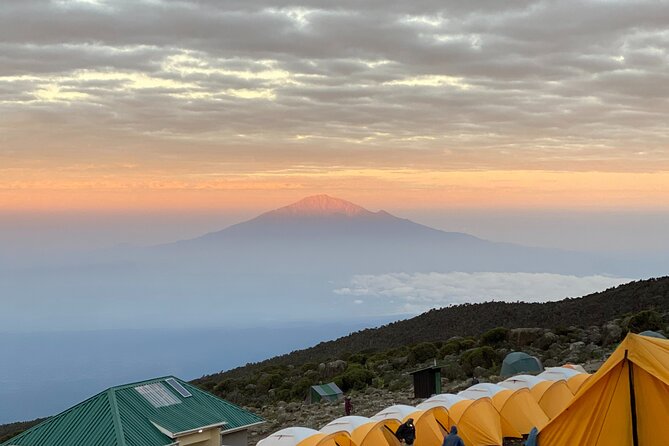
I also like the route’s change of scenery. The first days feel like a forest trek, then the trees thin out into heather, grass, volcanic rock, and giant senecio plants. Later, the surroundings become stark and high, with Mawenzi and Kibo providing constant reminders of the climb ahead.
The tradeoff is time and cost. Eight days on the mountain costs more than a shorter route, and you spend another night in a tent. For Kilimanjaro, though, a longer schedule is usually the more sensible place to spend your money. A failed summit attempt can cost more in disappointment, extra arrangements, and missed time than a better-acclimatized itinerary.
More Lemosho Route climbs:
- Kilimanjaro climb by Lemosho Route (7-day)
★ 5.0 · 651 reviews - Kilimanjaro Climbing Lemosho Route 8 Days.
★ 5.0 · 186 reviews - 8-Day Small-group Lemosho Kilimanjaro Summit Trekking
★ 5.0 · 186 reviews
Day 1: Londorossi Gate to the first forest camp
The day begins with a roughly four-hour drive from Moshi to Londorossi Gate. You complete park entry formalities there, then continue to the Lemosho trailhead before walking into undisturbed forest.
This opening section is a pleasant contrast to the scale of the mountain. The trail winds through trees, and blue monkeys may be swinging through the canopy. You are not yet staring at a giant summit cone. Instead, the first day gives you a quiet start and lets your legs settle into the rhythm of walking.
The route description assigns 16 hours to the day, as it does to each itinerary day. That appears to represent a full operational day rather than 16 hours of hiking, but I would confirm the expected walking time with Roam Wild Adventure before booking. The drive, gate formalities, trailhead transfer, and camp arrival all make this a long day even if the hiking itself is moderate.
Day 2: Shira Ridge and the first view of Kibo
The forest gives way to tall grasses, heather, volcanic rock, and lichen. The change is striking. You climb across rolling ground, cross streams, and reach Shira Ridge before making a gentle descent to Shira 1 Camp.
This is the first point where Kilimanjaro feels wide open. From the Shira Plateau, you can catch your first view of Kibo, the main summit cone. You may also see toward Mount Meru and Moshi, depending on conditions.
The walking is not described as technical, but altitude begins to shape the day. Move slowly, drink regularly, and resist the urge to race ahead simply because the trail looks manageable. The guides’ experience with pacing is important here, and Ezekiel is specifically praised for judging speed and timing well.
Day 3: A full acclimatization day on the Shira Plateau
Day 3 is one of the strongest reasons to choose this itinerary. You walk east across moorland meadows toward Shira 2 Camp, then take a less-used route toward Moir Hut at the base of the Lent Hills.
The Lent Hills offer several walking options, making this more than a rest day. You gain altitude during the day, then return to a lower camp to sleep. That pattern gives you time to see how your body responds without pushing directly toward the summit.
The Shira Plateau is also one of the more memorable parts of the route. It is among the highest plateaus on earth, yet the walking is described as gentle compared with the steeper sections ahead. I would treat this day as useful preparation, not spare time. Eat properly, keep your pack light, and tell the guide early if you have a headache, nausea, or unusual fatigue.
More treks and hikes around Kilimanjaro:
- Kilimanjaro climb, Machame Route (7-day)
★ 5.0 · 262 reviews - Climbing Kilimanjaro – Machame Route
★ 5.0 · 170 reviews - Climbing Kilimanjaro through 7 days Machame Route
★ 5.0 · 151 reviews - Kilimanjaro climb, Lemosho Route (8-day)
★ 5.0 · 148 reviews
Day 4: Lava Tower, Senecio Forest, and Barranco Camp
Today brings one of the best-designed sections of the climb. You ascend along a ridge toward Lava Tower, a roughly 300-foot volcanic rock formation, reaching about 15,000 feet before descending to Barranco Camp at approximately 13,000 feet.
The point is not only the rock formation. The day lets you spend time higher than your sleeping altitude, which is useful preparation for the summit. You finish among the strange giant senecio plants of the Senecio Forest, a distinctive high-altitude setting that makes Kilimanjaro feel far removed from ordinary hiking country.
You may feel the altitude here even if the trail is not technical. The descent can be welcome, but it does not erase the effort of climbing high first. Keep your pace steady and avoid treating the downhill section as a chance to make up time.
Day 5: The Barranco Wall and Karanga Valley
The morning starts by dropping into a ravine below the Great Barranco Wall. Then comes the climb: nearly 900 feet up a steep but non-technical cliff. The narrowest part is about three feet wide, which explains the nickname Kissing Wall. You may need to hug the rock and move carefully, but climbing equipment is not required according to the route description.
This is likely to be the day when the mountain looks more dramatic than expected. The wall can seem imposing from camp, yet the route is designed as a walk rather than a technical climbing pitch. If you dislike exposure or narrow passages, ask your guide how the group will handle this section.
Above the wall, you cross a series of hills and valleys before descending into Karanga Valley. One final steep climb brings you to Karanga Camp. This is a shorter day, which is helpful because the next stage brings you close to the summit zone.
Day 6: Barafu Camp and the final preparation
From Karanga, you reach the junction with the Mweka Trail and continue over rocky ground to Barafu Hut. You have now completed the Southern Circuit, with views of Kibo and Mawenzi from different angles.
Barafu is the staging point for summit night. You rest, eat an early dinner, and try to sleep before the midnight start. That rest may be broken or brief, so keep your evening routine simple. Organize warm layers, headlamp batteries, water, snacks, and any personal medication before lying down.
The package includes a three-person mountaineering tent, sleeping mat, private toilet tent, and a support team of guides, porters, and cooks. It does not include a sleeping bag, so that is a major item to bring or rent. The company also lists rental gear as an extra, along with drinks and snacks.
Day 7: Midnight ascent, Stella Point, and Uhuru Peak
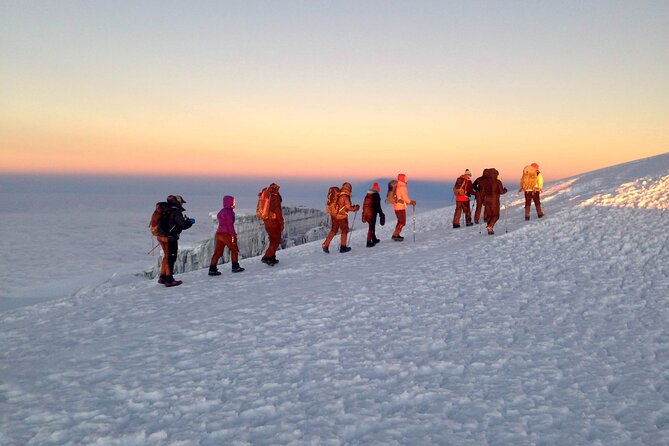
Summit day is the hardest part of the experience. Around midnight, you begin climbing in darkness, taking frequent short breaks as you move toward Stella Point at about 18,900 feet.
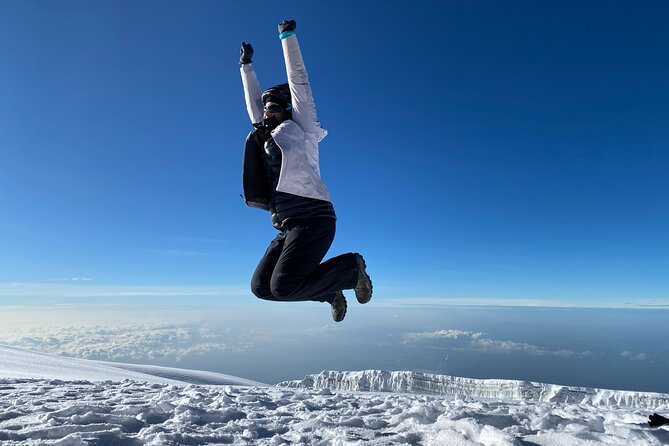
The sunrise near Stella Point, with light coming over Mawenzi Peak, is the visual payoff of the climb. From there, you continue to Uhuru Peak, the highest point on Kilimanjaro and in Africa. You have time for photographs and a short pause before beginning the descent.
The summit is not the end of the effort. You still need to descend after reaching the top, and the combination of cold, low oxygen, poor sleep, and tired legs can make the return especially demanding. Listen closely to the guide’s instructions and do not hide symptoms to protect your pride. A careful guide will care more about getting you safely down than about forcing a summit attempt.
Day 8: Mweka Gate, certificates, and back to Moshi
The final day continues downhill to Mweka Gate. A driver meets you there and takes you onward to Mweka Village, where another vehicle transfers you back to your hotel in Moshi.
Lower elevations can be wet and muddy, so keep your footwear and clothing practical until the very end. At the hotel, you can relax with refreshments, perhaps a Kilimanjaro beer, and receive your summit certificate.
That return to a bed and a shower has real value after several nights camping. The package includes the hotel night after the climb, which means you do not need to arrange your own recovery night as soon as you return.
What the $3,099 price covers
At $3,099 per person, this is not a bargain climb, but the package includes many costly and important elements. You receive airport pickup and drop-off, hotel lodging the night before and after the climb, park fees and taxes, tents, sleeping mats, a private toilet tent, guides, porters, cooks, and six breakfasts, six lunches, and six dinners.
The support team is a major part of the value. One February group of five had a lead guide, two assistant guides, a chef, a waiter, and 17 porters. Staffing can vary by group, but that example gives you an idea of the logistical effort behind a properly supported climb.
Food and camp service are also given strong praise. One account specifically describes the gear rental, meals, guides, and support as carefully handled, with staying warm and dry treated as an important part of the experience. You should still ask exactly what rental equipment is available and at what cost.
You must budget separately for airfare, visa, personal travel insurance, tips for the support team, sleeping bag, other personal gear, rental gear, hotel lunches and dinners, drinks, and snacks. Tips deserve particular attention. The listed price does not include them, and they are an important part of the final cost.
Guide quality and group size
The maximum group size is 12. That is large enough to create a social atmosphere, but small enough for the guide team to keep track of people more easily than in a mass departure.
Ezekiel is repeatedly singled out for more than 20 years of industry experience, careful pacing, sound judgment, and attention to safety. Other accounts mention guides including Michael, as well as a wider camp crew that handled food, gear, and daily needs with care.
That human support matters on a mountain where small problems can grow quickly. A good guide notices when you are walking too fast, not eating, or struggling with altitude. You should still ask about the exact guide team assigned to your departure, since names and staffing may vary.
The operator is described as a small, woman-owned, eco-minded company that gives back to the local community. The provided package also includes a substantial porter and camp support system. I would ask how the company handles porter welfare, luggage weight, waste, and tipping before you go.
Who should choose this climb?
This trip suits you if you want a scenic route, can commit to eight days, and prefer a gradual acclimatization plan over the shortest possible schedule. It is also a good fit if you value a small group and a full support team.
You need a strong level of physical fitness. The route includes long uphill sections, steep descents, rough volcanic ground, a narrow section on the Barranco Wall, and a midnight summit push. You do not need technical climbing experience based on the route description, but you do need endurance and patience.
This may not suit you if you want flexible daily schedules, private luxury, or a simple mountain walk. Camping is part of the experience, and the mountain can be cold, wet, muddy, and tiring. The 16-hour notation shown for each day is worth clarifying before you book, since the actual hiking hours and camp routines are not broken out.
Booking confirmation is provided at the time of purchase. Pickup is offered, and free cancellation is available if you cancel at least 24 hours before the local start time. Changes or cancellations inside that window are not accepted for a refund.
Should you book the Lemosho climb?
I would choose this route if your main goals are scenery, a better acclimatization schedule, and a serious but well-supported attempt at Uhuru Peak. The extra day, quiet western approach, experienced guide team, and included camp services give the $3,099 price a reasonable foundation.
Book it only after you are comfortable with the physical demands and extra costs. Confirm the guide lineup, rental gear, expected hiking hours, tipping guidance, and sleeping bag arrangements. If you can prepare properly and accept that summit success is never guaranteed, the eight-day Lemosho plan offers one of the stronger ways to approach Kilimanjaro.
FAQ
How long is the Mt. Kilimanjaro Lemosho climb?
The climb lasts approximately eight days. The itinerary begins with a drive from Moshi to Londorossi Gate and ends with a descent to Mweka Gate, followed by transport back to Moshi.
What is included in the price?
The $3,099 price includes guides, porters, cooks, a three-person mountaineering tent, sleeping mat, private toilet tent, airport pickup and drop-off, hotel lodging the night before and after the climb, taxes and fees, and six breakfasts, six lunches, and six dinners.
Is a sleeping bag included?
No. Sleeping bags and other personal gear are not included. Rental gear is also listed as an additional cost.
How large can the group be?
The activity has a maximum of 12 travelers.
What fitness level is required?
A strong level of physical fitness is required. The route includes steep climbs, high altitude, a midnight summit attempt, and a long descent after Uhuru Peak.
Can I cancel for a full refund?
Yes, if you cancel at least 24 hours before the experience start time. Cancellations or changes made less than 24 hours before the local start time are not accepted for a refund.
More Eight-Day Trips in Kilimanjaro
- Climbing Kilimanjaro through 8 days Lemosho Route
★ 5.0 · 52 reviews - Kilimanjaro climb, Northern Circuit route (8-day)
★ 5.0 · 40 reviews - 8 Days Kilimanjaro Hike via Lemosho Route
★ 5.0 · 39 reviews - 8 Days Climbing Mt.Kilimanjaro (Lemosho Route)
★ 4.5 · 37 reviews
Just added around Kilimanjaro
- 6 days Machame route climbing Mt.Kilimanjaro★ 5.0 · 8 reviews
- machame route★ 5.0 · 16 reviews
- Mt Kilimanjaro 6 days Marangu route hike★ 5.0 · 3 reviews
- Private Cycle to Kilimanjaro Bike Park Safari★ 5.0 · 6 reviews
- West Kilimanjaro cycling Adventures★ 4.5 · 8 reviews
- Kilimanjaro Climb • Marangu Route ~ 9 Day★ 5.0 · 4 reviews
- 3 Days Private E-Bike Tour in West Kilimanjaro★ 5.0 · 3 reviews
- Kilimanjaro Climb • Machame Route ~ 10 Day★ 5.0 · 6 reviews