
Reviewed · LEMOSHO ROUTE CLIMBS
8 Day Climbing Kilimanjaro Via Lemosho Route
The best part of this 8-day Lemosho climb is the gradual change in scenery. You begin in rainforest, cross the broad Shira Plateau, pass giant senecios and volcanic rock, then reach the cold alpine desert beneath Kibo. By summit night, the world has narrowed to snow, wind, darkness, and one long push toward Uhuru Peak.
I like the extra acclimatization time at Moir Camp and Karanga Camp, and I like that the trip uses the scenic western approach rather than rushing up a shorter route. The main consideration is the physical demand: long days, high altitude, a midnight summit start, and a rough descent all come with this price.
Key points to know before booking
- The Lemosho Route gives you eight days to adjust: The schedule includes time at Moir and Karanga instead of racing straight toward the summit.
- The scenery changes sharply: You move from Afromontane rainforest to heather, moorland, alpine desert, and the harsh arctic zone.
- The Barranco Wall is a hands-and-feet section: It is not described as technical climbing, but you should expect a steep, scrambly ascent.
- Summit night begins before midnight: You climb toward Stella Point in the cold and wind, then continue to Uhuru Peak.
- The camp setup is more comfortable than basic trekking: Spacious tents, prepared meals, breakfast, lunch, and dinner are included.
- Named guides connected with this route include Yobu Eliamani Mbwambo, Rama, and Paulo: Ask Spirit of Kilimanjaro who will lead your departure and how many support staff will accompany you.
Why the 8-day Lemosho Route is worth considering
At $2,670 per person, this is not a casual mountain walk. It is a full high-altitude expedition with park access, camping, meals, transportation from Moshi or Arusha, and a trained mountain crew built into the experience.
The extra time is the main value. Kilimanjaro is not usually difficult because of climbing technique. The challenge is altitude, fatigue, cold, and the way your body responds as you go higher. An eight-day plan gives you more nights to adjust than a very short ascent.
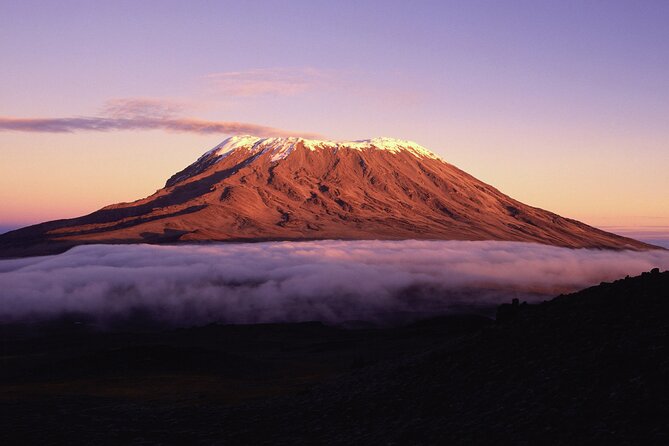
The Lemosho approach is also one of the most scenic choices on Kilimanjaro. You start on the quieter western side, then join the mountain’s upper route. The first days feel like a journey through several different worlds rather than a repeated uphill march.
I would not choose this trip if you want a quick holiday add-on from a safari. I would choose it if reaching the summit is the main purpose of your time in Tanzania and you want scenery, a measured pace, and a proper camp program.
More Lemosho Route climbs:
- Kilimanjaro climb by Lemosho Route (7-day)
★ 5.0 · 651 reviews - Kilimanjaro Climbing Lemosho Route 8 Days.
★ 5.0 · 186 reviews - 8-Day Small-group Lemosho Kilimanjaro Summit Trekking
★ 5.0 · 186 reviews
Day 1: Rainforest from Londorossi Gate to Forest Camp
Your day begins with a long vehicle transfer from Arusha to Londorossi Gate, the western entry point for the Lemosho Route. The trail starts at about 7,742 feet and climbs to roughly 9,498 feet over four miles.
The first hours take you through Afromontane rainforest. This is the greenest part of the climb, with tall trees, damp paths, and a chance to look for wildlife as you walk. The pace is intentionally easy, which matters on day one. You are not trying to prove anything yet.
Lunch is taken on the trail, and Forest Camp is reached in the middle of the afternoon. That early arrival gives you time to settle into camp, meet the crew, and rest before the harder altitude days ahead.
The drawback is the transfer. You spend a good portion of the morning in a vehicle before walking. Still, it is a sensible trade for beginning on the western route, where the forest and early scenery are a major part of the appeal.
Day 2: From forest to the open Shira Plateau
The second day covers about five miles and climbs from 9,498 feet to 11,500 feet. You leave the main forest behind, passing through podocarpus and juniper woodland before reaching heather and volcanic rock draped with lichen.
This is where Kilimanjaro begins to feel less like a forest hike and more like a high mountain journey. The vegetation becomes shorter and stranger. The air gets thinner. Views open toward Kibo, the main summit, and the mountain finally begins to look like the objective ahead.
You spend the night at Shira 1 Camp. The Shira Plateau formed when an earlier volcanic peak collapsed, and its broad, elevated setting gives the day a strong sense of space. It is one of the first points where you can look back and see how much ground you have gained.
The five to six hours of walking are manageable for someone with moderate fitness, but you should not confuse a moderate fitness requirement with an easy trip. The altitude is already high, and a slow pace is your friend.
Day 3: Across Shira and up to Moir Camp
Day three is a longer high-altitude walk of about seven miles, taking five to seven hours. You cross the Shira Plateau through moorland meadows, with the distant summit often visible across the open ground.
The plateau is one of the most memorable sections of the route because it feels exposed and vast. There are fewer trees to frame the view, so the mountain, sky, and volcanic terrain dominate your attention.
After lunch, you climb toward Moir Camp at about 13,800 feet. The altitude gain is serious, but the schedule allows you to reach camp in the afternoon rather than pushing late into the evening. If you still have energy, an optional walk in the Lent Hills provides extra acclimatization.
That optional walk is a good example of how the route uses time well. You are not simply gaining height and sleeping immediately. You can spend more time at altitude while keeping the next day’s main walking distance reasonable.
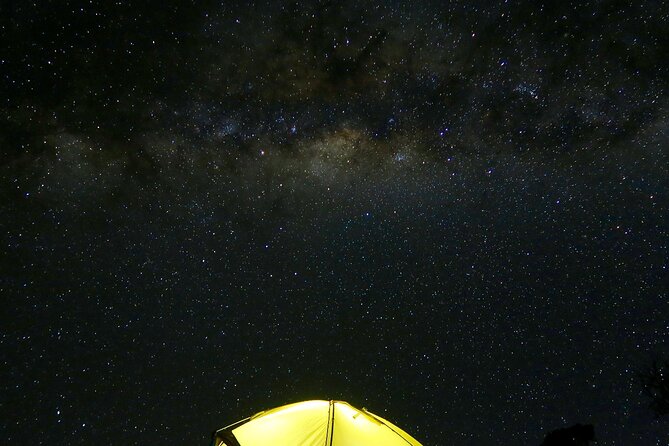
Moir Hut is not a luxury hotel. High camps are cold and basic. The reward is the setting and the chance to let your body begin adapting before the route rises farther.
More treks and hikes around Kilimanjaro:
- Kilimanjaro climb, Machame Route (7-day)
★ 5.0 · 262 reviews - Climbing Kilimanjaro – Machame Route
★ 5.0 · 170 reviews - Climbing Kilimanjaro through 7 days Machame Route
★ 5.0 · 151 reviews - Kilimanjaro climb, Lemosho Route (8-day)
★ 5.0 · 148 reviews
Day 4: Lava Tower, giant senecios, and Barranco Valley
From Moir, you traverse the upper slopes of Kibo. The route climbs to about 15,223 feet at Lava Tower, then drops to roughly 13,044 feet at Barranco Camp. The walk covers about seven kilometers and takes four to six hours.
This up-and-down profile is important. You gain height during the day, then sleep lower. That pattern is useful for acclimatization, even though the climb to Lava Tower can feel demanding.
The terrain becomes sparse. Few plants or animals tolerate the wide temperature swings at this elevation. The volcanic rock and open slopes make the setting feel severe, but the route then changes character as you descend toward the Barranco Valley.
The Garden of the Senecios is a highlight. Giant groundsel plants and giant lobelias create an odd, prehistoric-looking scene against the dark volcanic slopes. Barranco Valley is also one of the prettiest sections of the entire route, so keep your camera accessible, but do not let photos distract you from footing.
You can optionally climb the roughly 300-foot Lava Tower if you feel strong. I would treat that as a bonus, not a test. The next day includes the Barranco Wall, and saving energy is more useful than collecting an extra challenge.
Day 5: Up the Barranco Wall to Karanga
Day five is shorter, about three miles and four to five hours, but it contains one of the route’s most talked-about sections: the Barranco Wall.
The wall looks intimidating from camp. The route requires you to use all four limbs in places as you work upward, but it is a scrambling section rather than a technical rock-climbing pitch according to the provided itinerary. Your guide sets the pace, and patience matters more than speed.
Once over the wall, you cross the top of the Karanga Valley. The trail rises and drops several times before reaching Karanga Camp at about 13,123 feet. The short distance can be misleading because the repeated inclines and declines still take effort.
The camp selection is practical. You spend meaningful time at altitude rather than immediately rushing to Barafu. That extra night can make the difference between feeling steady and arriving at summit camp already drained.
The sunset views are a major reward. From Karanga, you can look toward the southern glacial valleys and ice fields high above. Conditions change quickly on the mountain, so the view may vary, but this is one of the camps where you will want to pause before dinner.
Day 6: Barafu Camp and preparation for summit night
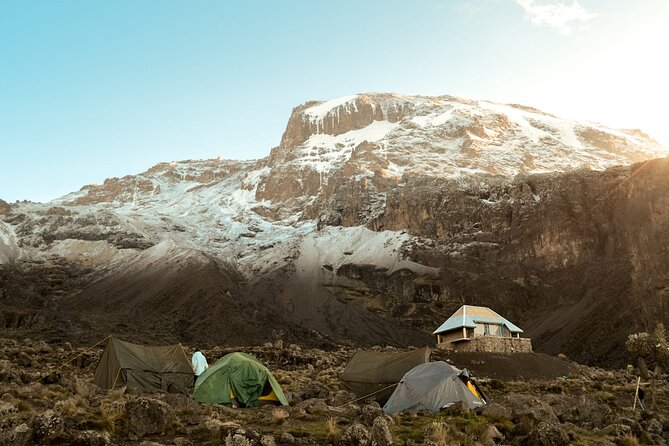
The route to Barafu Camp is a half-day climb through increasingly barren alpine terrain. You reach roughly 15,288 feet, eat lunch, and have time to rest before the summit attempt.
Barafu means ice, and the setting suits the name. The camp is desolate, exposed, and sometimes windy. Mawenzi Peak provides the main visual reward, especially when the evening air is clear.
This is not a normal camping night. Dinner is taken early, and you rest before the midnight or just-before-midnight start. Keep your gear organized before lying down. Gloves, warm layers, headlamp, water, and summit snacks should be ready rather than buried in your bag.
The supplied schedule places the summit ascent and descent across the sixth and seventh days, so you should confirm the exact timing with Spirit of Kilimanjaro before departure. The practical point is clear: Barafu is the staging camp, and the final climb begins during the night.
Summit night: Stella Point and Uhuru Peak
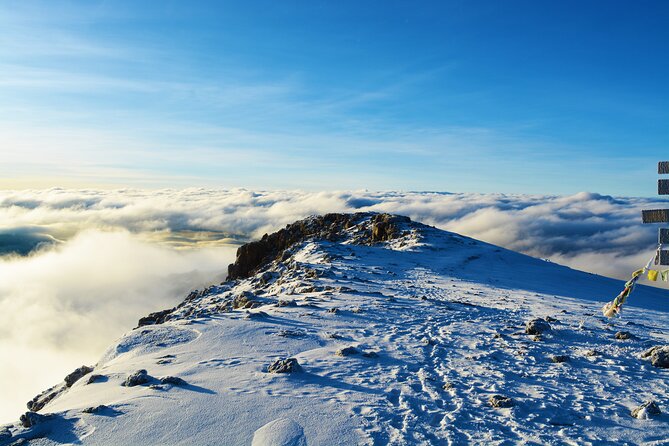
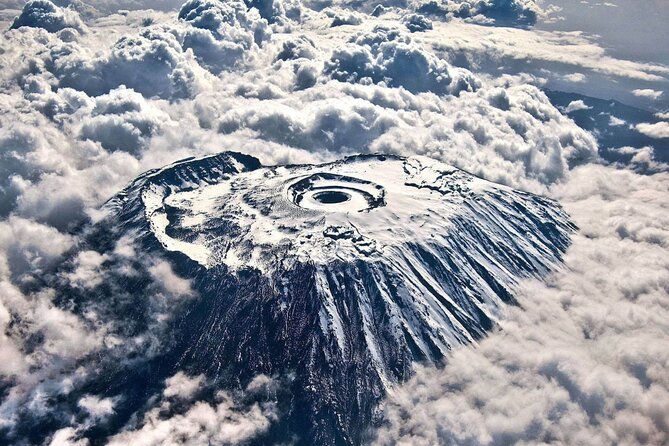
The summit push is the hardest part of the experience. You climb in darkness, cold, and wind toward Stella Point at about 18,652 feet. The climb is slow by design. Patience matters more than pace.
At dawn, you may reach the crater rim near Stella Point as sunlight spreads over the Tanzanian terrain and Mawenzi Peak. That sunrise is one of the strongest rewards of the route, but the cold and altitude can make even a short pause feel demanding.
From Stella Point, you continue around the rim to Uhuru Peak, listed at 19,341 feet in the itinerary. The overview gives the mountain’s height as 19,340 feet, a minor difference caused by rounding. Either way, this is the highest point in Africa and the emotional high point of the trip.
The summit celebration should be brief. You still have a long descent ahead, and going down can be rough on tired legs. The return from high camp is not simply a gentle walk back. Loose volcanic ground, fatigue, and the sudden loss of elevation all require care.
Day 7 and Day 8: The long descent and return to Moshi
After the summit section, the route drops sharply toward lower camp and then through montane forest. The published schedule gives a descent of several miles on the first return day, with the final return to Moshi on day eight after breakfast.
The last day is not just paperwork and a vehicle ride. It includes more walking through forest, farewell time with the crew, and a transfer back to your hotel around midday. A well-earned shower and celebratory dinner are part of the appeal, even if they are not listed as formal tour inclusions.
The timing can feel confusing because the summit night crosses from one calendar day into the next, and the itinerary text combines ascent and descent details. Ask for a day-by-day camp chart when booking. You want to know exactly where you sleep after the summit and when your hotel transfer is scheduled.
Guides, meals, and camp comfort
Spirit of Kilimanjaro provides African mountain guides and a camp service described as Signature Camping. That means spacious tents, prepared meals, and more comfort than a bare-bones trek.
Breakfast, lunch, and dinner are included across the eight-day program. Lunch is often taken on the trail, while breakfast and dinner fit around the camp schedule. You should still confirm what personal snacks and drinks you need to bring, since the information provided does not give a full packing list.
The people named in the supplied trip accounts include Yobu Eliamani Mbwambo, Rama, and Paulo. Yobu is connected with a June 2024 eight-day Lemosho ascent, while Rama and Paulo are named as guides on another Lemosho departure. Ask which guide team is assigned to your date rather than assuming a particular person will lead.
One useful detail from the trip accounts is that guides may adjust the pace and, in one case, the route was completed in six days. I would not treat that as a target. The eight-day schedule exists for a reason, and shortening it reduces the time available for altitude adjustment.
Is $2,670 a fair price?
The $2,670 price is best judged as the cost of a supported mountain expedition, not as a simple park walk. It includes eight days of meals, camping, guides, and the planned transfer back to your Moshi hotel, while international flights and a visa are excluded.
The value is strongest if you want a scenic route and do not want to assemble the mountain logistics yourself. The cost also buys time, especially the nights at Moir and Karanga, which are useful parts of the acclimatization plan.
You should ask for a full list of inclusions before paying. The supplied details do not specify airport transfers, hotel nights, tips, gear rental, emergency evacuation arrangements, or park fees as separate line items. Those questions matter at this price.
The advertised group capacity is up to 100 people, which is a large maximum for a mountain experience. That does not mean your actual climbing group will contain 100 people, but I would ask for the expected group size and the guide-to-climber ratio. Small teams generally make pace decisions and support easier.
Who should book this Kilimanjaro climb?
This trip suits you if you have moderate physical fitness, can walk for several hours on consecutive days, and are prepared for a cold midnight summit attempt. You do not need to be a technical climber based on the route description, but you do need stamina and a sensible attitude toward altitude.
It is a good fit for someone who values scenery as much as the summit. The route gives you rainforest, the Shira Plateau, high moorland, Lava Tower, giant senecios, Barranco Valley, alpine desert, and the arctic summit zone.
I would be cautious if you are looking for a relaxed holiday, dislike camping, or want a guaranteed summit. One published account describes a family member who developed altitude sickness and did not reach the top. That is an important reminder: the guides can support you, but nobody can promise how your body will respond.
Free cancellation is available up to 24 hours before the experience begins. After that point, the amount paid is not refunded, and late changes are not accepted. The start time is listed as 8:00 a.m., with pickup offered.
Should you book it?
I would book this tour if Kilimanjaro is the central goal of your Tanzania trip and you want the scenic Lemosho approach with a generous eight-day schedule. The best reasons are the varied terrain, the careful altitude profile, the extra nights at Moir and Karanga, and the comfortable camp service.
Before booking, confirm your actual guide team, group size, included transfers, tipping expectations, equipment arrangements, and the precise summit-day schedule. If those answers are clear, $2,670 can be a sensible price for a supported ascent.
If you prefer a shorter, cheaper, less demanding outing, this is the wrong choice. If you want the time and scenery to give yourself a solid chance at Africa’s highest summit, the Lemosho Route is a strong option.
FAQ
Where does the Kilimanjaro climb start?
The experience begins with pickup and a drive from Arusha to Londorossi Gate, the western starting point of the Lemosho Route. The listed meeting time is 8:00 a.m.
How long is the tour?
The climb lasts approximately eight days. The summit ascent begins just before midnight during the summit sequence, followed by the descent and return to Moshi.
What route does the climb use?
The tour uses the Lemosho Route. It passes through rainforest, the Shira Plateau, moorland, alpine desert, and the arctic zone near the summit.
Are meals included?
Yes. Breakfast, lunch, and dinner are included during the eight-day experience. Lunch is often eaten on the trail.
What is not included?
International flights and a visa are not included. The supplied details do not specify other possible costs, so you should ask Spirit of Kilimanjaro for a complete list before booking.
How fit do I need to be?
The activity states that you should have a moderate physical fitness level. You should also be ready for walking days of up to seven hours, a cold summit attempt, the Barranco Wall, and a long descent.
More Eight-Day Trips in Kilimanjaro
- Climbing Kilimanjaro through 8 days Lemosho Route
★ 5.0 · 52 reviews - Kilimanjaro climb, Northern Circuit route (8-day)
★ 5.0 · 40 reviews - 8 Days Kilimanjaro Hike via Lemosho Route
★ 5.0 · 39 reviews - 8 Days Climbing Mt.Kilimanjaro (Lemosho Route)
★ 4.5 · 37 reviews
Just added around Kilimanjaro
- 6 days Machame route climbing Mt.Kilimanjaro★ 5.0 · 8 reviews
- machame route★ 5.0 · 16 reviews
- Mt Kilimanjaro 6 days Marangu route hike★ 5.0 · 3 reviews
- Private Cycle to Kilimanjaro Bike Park Safari★ 5.0 · 6 reviews
- West Kilimanjaro cycling Adventures★ 4.5 · 8 reviews
- Kilimanjaro Climb • Marangu Route ~ 9 Day★ 5.0 · 4 reviews
- 3 Days Private E-Bike Tour in West Kilimanjaro★ 5.0 · 3 reviews
- Kilimanjaro Climb • Machame Route ~ 10 Day★ 5.0 · 6 reviews