
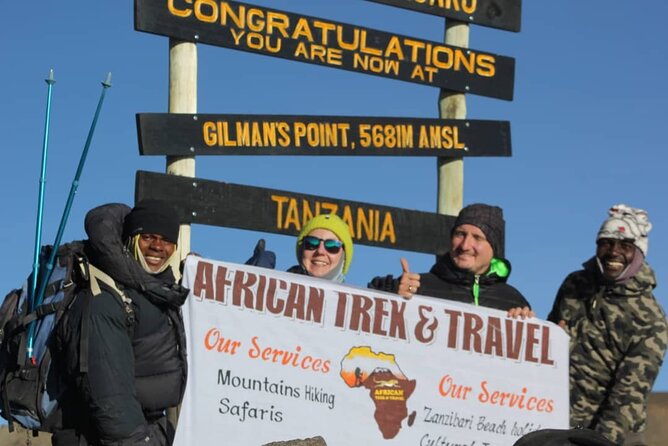
Reviewed · MACHAME ROUTE CLIMBS
6 Days Machame route Kilimanjaro climbing
Kilimanjaro’s Machame Route gives you a full mountain story in six days: coffee country near Moshi, dripping rainforest, open moorland, the stark alpine desert, and a cold midnight push to Uhuru Peak at 5,895 meters. Habari Adventure adds local guides, camp meals, private transport, oxygen, an oximeter, and a first-aid kit.
I like the route’s climb high, sleep lower plan on day three, which gives your body a useful acclimatization day before the summit. I also like the strong guiding presence described by past clients, with names such as Stan, Abdi, Inno, Leon, and Mudy appearing repeatedly in accounts of careful, encouraging support.
The catch is simple: six days is a demanding schedule. Summit day can last 12 to 15 hours, and the itinerary moves quickly from Barafu Camp to the summit, back down to Barafu, and then onward to Millennium Camp. You need moderate physical fitness, patience, and a willingness to spend much of one night walking.
Key points to know before booking
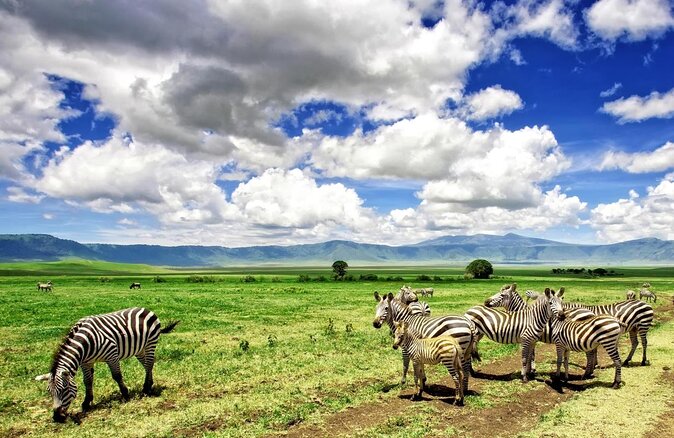
- The route crosses five distinct habitats, from montane forest to moorland and alpine desert.
- Day three reaches Lava Tower at 4,600 meters before descending to Barranco Camp at 3,900 meters.
- Summit morning begins around midnight, with tea and cookies before the climb.
- The price is $1,948.72 per person, with meals, transport, park costs, mountain equipment, oxygen, and first-aid supplies included.
- This is a private experience, so only your own group takes part.
- Porter tips, flights, visas, personal items, and a portable flush toilet cost extra.
What the six-day Machame Route feels like
The Machame Route is often chosen for its changing scenery and its more gradual approach to high altitude. You do not simply walk uphill for six straight days. The path rises, drops, crosses ridges, and moves through several climate zones.
That variety is the route’s great strength. On the first day, you are in tropical forest. By the third day, you are looking across bare volcanic ground. On summit morning, the vegetation is gone and the climb becomes a slow negotiation with cold, darkness, fatigue, and thin air.
This is not a sightseeing walk with a mountain in the background. You spend six days carrying yourself uphill, sleeping in camps, and following a guide’s pace. The reward is a proper high-altitude expedition without technical climbing. The Barranco Wall involves scrambling over rocks, but the route is described as nontechnical.
Habari Adventure uses local Tanzanian guides from Kilimanjaro and other parts of the country. The company says its guides are trained in safety and first aid and can discuss subjects such as plants, wildlife, geography, astronomy, and local culture. English is spoken by all guides, with some also speaking other foreign languages.
The personal side of the guiding team matters here. Names connected with the company include Stan, Abdi, Inno, Leon, Mudy, Evance, Michael, and Nixon. Ask before departure who will lead your group and how many assistants will join you. That is especially useful if you are traveling alone, as several past accounts describe solo climbers receiving steady help throughout the trek.
More Machame Route climbs:
- Kilimanjaro climb, Machame Route (7-day)
★ 5.0 · 262 reviews - Climbing Kilimanjaro – Machame Route
★ 5.0 · 170 reviews - Climbing Kilimanjaro through 7 days Machame Route
★ 5.0 · 151 reviews
Day one: Machame Gate to Machame Camp
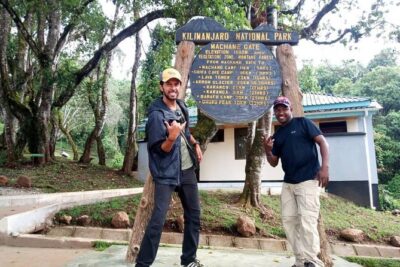
Your first morning begins with hotel pickup around 8:00 a.m. in Moshi, followed by the drive to Machame Gate. Along the way, you may see coffee and banana plantations cultivated by the Chagga people. This short transfer gives the trip a local setting before the mountain work begins.
At the gate, you complete park registration and other formalities. Then the trail enters montane forest, where the air is warmer and the path is shaded. The planned hike covers about 11 kilometers and takes roughly six to seven hours, ending at Machame Camp at 2,835 meters.
You receive breakfast, lunch, and dinner on this day, with picnic lunch served along the route. The first day is not usually the altitude shock of the trek, but it is still a long walk. The humid forest, uneven path, and steady uphill grade can surprise anyone arriving with an image of an easy opening stroll.
Take this day slowly. You want to finish feeling fresh, not prove how fast you can climb. Your guide’s pace and early attention to hydration will matter more than speed.
Day two: Moorland and the Shira Plateau
Day two is shorter, with about five kilometers of walking and a stated hiking time of roughly three hours. You begin around 8:00 a.m., climb through the upper forest, and reach the moorland zone.
The route then follows a gentler gradient before continuing along a rocky ridge toward the Shira Plateau. The change in scenery is striking. The thick forest gives way to open ground, wider views, and a cooler feel.
A short lunch and snack break is planned. From the Shira Plateau, you may see toward the Western Breach and its glacier. This is a good day for photographs, but it also gives you time to notice how your body responds as the altitude increases.
The short mileage does not mean the day is unimportant. You are sleeping higher than the night before, and the mountain is beginning to test your breathing. Eat even if your appetite is fading, drink regularly, and tell your guide about headaches, nausea, or unusual tiredness.
Day three: Lava Tower and Barranco Camp
Day three is one of the smartest parts of the route plan. You hike up to Lava Tower at 4,600 meters, then descend to Barranco Camp at 3,900 meters. This is the classic climb high, sleep lower pattern, giving you exposure to high altitude without making you sleep at the day’s highest point.
The day covers about 10 kilometers and lasts around six hours. You leave the moorland behind and enter alpine desert, where the ground becomes more bare and volcanic. Lava Tower is a major altitude point even though you do not camp there.
After reaching the tower, the descent to Barranco takes about three hours. You get views toward the Western Breach and Barranco Wall, with time to take photographs along the way. Barranco Camp sits in a valley below the wall, and the position is intended to give you a memorable sunset before dinner.
This is also a day when the itinerary’s physical demands become clearer. The ascent to Lava Tower can feel hard, especially if you have not adjusted well to altitude. The descent is helpful for sleeping, but it does not erase the effort you have already made.
More treks and hikes around Kilimanjaro:
- Kilimanjaro climb by Lemosho Route (7-day)
★ 5.0 · 651 reviews - 8-Day Small-group Lemosho Kilimanjaro Summit Trekking
★ 5.0 · 186 reviews - Kilimanjaro Climbing Lemosho Route 8 Days.
★ 5.0 · 186 reviews - Kilimanjaro climb, Lemosho Route (8-day)
★ 5.0 · 148 reviews
Day four: Barranco Wall, Karanga, and Barafu
Day four begins at Barranco Camp among giant groundsels, unusual plants that make this section feel very different from the lower forest. The main challenge is the Barranco Wall, which divides the camp from the southern slopes of Kibo.
You climb over rocks rather than technical climbing equipment. The route is described as nontechnical, but that does not mean easy. It is long, tiring, and can require careful foot placement. If you dislike exposed scrambling or feel uneasy on uneven rock, tell your guide before setting out.
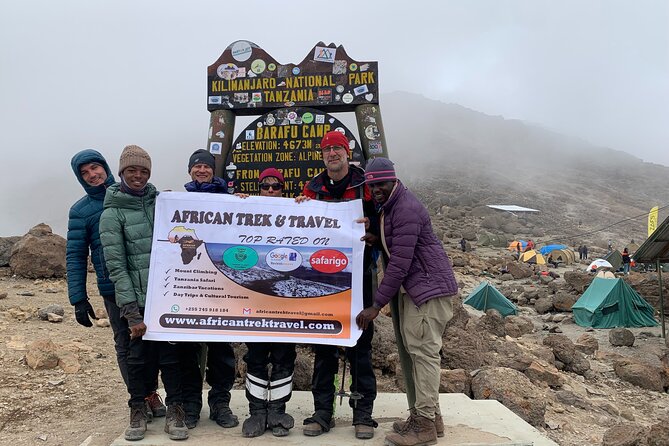
After the wall, you continue to Karanga Camp, where lunch is served. Karanga is also the last planned water stop before the summit push. From there, the trail crosses alpine desert toward Barafu Camp at 4,640 meters, the base camp for your summit attempt.
The day covers only about eight kilometers, but the stated hiking time is around seven to eight hours. That tells you what matters here: altitude and terrain, not distance alone. You should reach Barafu tired, but with enough energy to rest, eat, and prepare for the midnight start.
Keep your summit clothing and headlamp accessible. The supplied itinerary does not list every personal item you need, so ask Habari Adventure for its current packing list before you arrive.
Day five: Stella Point and Uhuru Peak
Summit day is the heart of the trip and its hardest physical test. You wake at about midnight. Light tea and cookies are prepared before you begin the climb over loose volcanic scree.
The ascent to the crater rim takes roughly four to five hours. You gain a great deal of height over a short distance, and the slow pace becomes essential. The goal is Stella Point at 5,756 meters, reached around sunrise if conditions and timing cooperate.
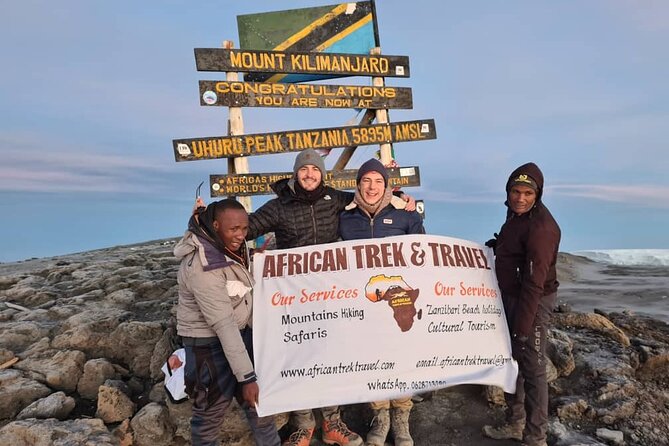
The first light can be one of the most memorable sights of the trek. From Stella Point, you continue for about an hour toward Uhuru Peak, the highest point on Kilimanjaro, at 5,895 meters. The planned summit stop is short, giving you time for photographs before beginning the descent.
The summit is only one part of the day. You return to Barafu Camp for lunch and rest, then continue downhill to Millennium Camp at 3,950 meters for dinner and overnight accommodation. The complete day covers about 15 kilometers and may last 12 to 15 hours.
This schedule is the main reason I would not treat the trek as a casual holiday activity. Cold, darkness, altitude, and fatigue arrive together. Your guide’s judgment is important, and a summit attempt should always depend on your condition and safety, not just determination.
The company includes oxygen, an oximeter, a first-aid kit, and mountain equipment. Those items are useful safety support, but they do not remove the risks of high altitude. You still need to report symptoms honestly and follow your guide’s instructions.
Day six: Millennium Camp to Mweka Gate
The final day is a long downhill walk of about 14 kilometers, taking roughly five hours. You leave Millennium Camp after breakfast and descend through moorland and tropical rainforest toward Mweka Gate.
Downhill walking sounds easy after summit day, but tired knees and sore feet can make it a slow finish. Use trekking poles if you have them, shorten your stride, and protect your feet from rubbing. The route is easier when you are patient.
At Mweka Gate, you complete the final park formalities and collect your certificates. A private vehicle then takes you back to your hotel, where a hot shower and a proper celebration await.
The final drive matters more than it may seem. After six days on foot, having private transport arranged means you do not need to organize a transfer while tired and carrying gear.
What the $1,948.72 price includes
At $1,948.72 per person, this is not a bare trail permit. The package includes all fees and taxes, private transportation, meals, breakfast, oxygen, an oximeter, a first-aid kit, and mountain equipment.
The meal information is slightly uneven in its wording, but the daily schedule specifies breakfast, lunch, and dinner through the first five days, followed by breakfast and lunch on day six. Confirm the exact meal plan before booking, particularly if you have dietary needs.
The value comes from having the main logistics arranged in one package. You are not separately organizing park costs, camp food, transfers, medical supplies, and mountain support. The private format also means the pace and decisions apply to your own group rather than a large mixed party.
Several important costs remain outside the price. You pay separately for flights, entry visa, tips for the mountain crew, personal items, and a portable flush toilet. Crew tips deserve special planning because the porters and support staff are an important part of the operation. Ask Habari Adventure for current tipping guidance before you leave home.
A group discount is offered, but the amount is not given. If you are climbing with friends or family, ask for the price for your exact group size.
The local guiding style and support team
The strongest part of this experience is the human support. Past accounts connected with Habari Adventure repeatedly identify guides and team leaders by name, including Stan, Abdi, Inno, Leon, Mudy, and Evance. The descriptions emphasize patience, organization, reassurance, and careful attention to health.
That matters most on day five. A guide who sets a measured pace, watches how you are coping, and keeps communication clear can make the summit attempt feel controlled rather than chaotic.
You should still ask practical questions before paying. Who is your head guide? How many porters and assistant guides are assigned to your group? What mountain equipment is supplied? What is the plan if a member cannot continue? Clear answers are part of choosing a responsible operator.
The company presents itself as a local Tanzanian business, which may appeal to you if you want to spend your money with an operator rooted in the area. Its guides also offer more than route finding, with stated interests in local flora, fauna, history, archaeology, anthropology, and astronomy.
Who should book this climb
This trek suits you if you want a serious Kilimanjaro experience with a private group, daily meals, arranged transport, and a defined six-day schedule. It is especially suitable for people who enjoy changing scenery and want to reach Uhuru Peak without technical mountaineering.
It can also work well for a solo climber who prefers personal support rather than joining a large group. The private format means you should discuss your preferred pace and expectations in advance.
I would be cautious about booking this route if you have little experience with long uphill walks, dislike sleeping in mountain camps, or want a relaxed vacation. Six days leaves limited recovery time, and summit day is extremely long.
You should arrive with moderate physical fitness and prepare for sustained walking. The company does not present this as an accessible or easy activity, and the itinerary includes high-altitude camps, rock scrambling, cold conditions, and a midnight start.
Booking details and cancellation
Pickup is offered, and the stated start point is Kilimanjaro Airport and Kilimanjaro National Park in Tanzania. Operating hours are listed as Monday through Sunday, 10:00 a.m. to 11:00 p.m., for the published operating period.
Booking confirmation is provided at the time of reservation. You can cancel for a full refund up to 24 hours before the start time. Cancellations or changes made inside that period are not refunded or accepted, and poor weather may lead to a different date or a full refund.
Should you book the Habari Adventure Machame trek?
I would consider booking this trek if you value local guiding, private transport, practical safety equipment, and an all-in-one price. The route gives you excellent variety, and the climb high, sleep lower section on day three is a real advantage in a short itinerary.
The main question is not the scenery. It is the six-day schedule. You need to be ready for a long summit night, a fast return to Barafu, and another descent to Millennium Camp the same day.
Ask for the current equipment list, tipping guidance, group discount, guide assignment, and exact meal arrangements. If the answers are clear and you are fit for the pace, this is a well-supported way to attempt Kilimanjaro with a Tanzanian company and a small private party.
FAQ
How long is the Machame Route experience?
The climb lasts approximately six days. The itinerary begins with hotel pickup and a transfer to Machame Gate, then ends at Mweka Gate before private transport returns you to your hotel.
What is the highest point reached?
The summit is Uhuru Peak at 5,895 meters. On summit day, you first reach Stella Point at 5,756 meters before continuing for about an hour to Uhuru Peak.
Is this a private tour?
Yes. Only your own group participates in the activity. Group discounts are also offered, although the discount amount is not specified.
What meals are included?
The itinerary lists breakfast, lunch, and dinner on days one through five. On day six, breakfast and lunch are included. The package also lists six breakfasts among the included items.
What is included in the price?
The $1,948.72 price includes fees and taxes, private transportation, meals, oxygen, an oximeter, a first-aid kit, mountain equipment, and breakfast. Flights, an entry visa, crew tips, personal items, and a portable flush toilet are not included.
How difficult is the climb?
You need a moderate level of physical fitness. The route includes long uphill walks, high-altitude camps, a rocky ascent over Barranco Wall, and a 12 to 15-hour summit day beginning around midnight.
More Six-Day Trips in Kilimanjaro
- Kilimanjaro climb, Lemosho Route (6-day)
★ 5.0 · 129 reviews - Kilimanjaro climb, Marangu route (6-day)
★ 5.0 · 72 reviews - 6 Days Tanzania Classic Safari
★ 5.0 · 52 reviews - The Best of Machame Route in 6 Days: Your World’s Summit Guide
★ 5.0 · 44 reviews
Just added around Kilimanjaro
- 6 days Machame route climbing Mt.Kilimanjaro★ 5.0 · 8 reviews
- machame route★ 5.0 · 16 reviews
- Mt Kilimanjaro 6 days Marangu route hike★ 5.0 · 3 reviews
- Private Cycle to Kilimanjaro Bike Park Safari★ 5.0 · 6 reviews
- West Kilimanjaro cycling Adventures★ 4.5 · 8 reviews
- Kilimanjaro Climb • Marangu Route ~ 9 Day★ 5.0 · 4 reviews
- 3 Days Private E-Bike Tour in West Kilimanjaro★ 5.0 · 3 reviews
- Kilimanjaro Climb & Safari – Lemosho Route – 13 Day★ 5.0 · 10 reviews
Machame Route Climbs, compared.
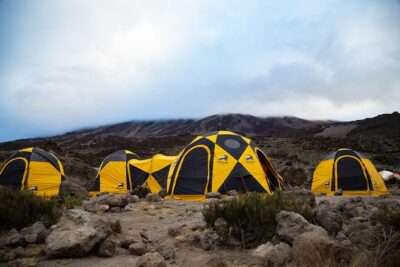
The Best of Machame Route in 6 Days: Your World’s Summit Guide
Read our review →Browse the lists this tour appears in