
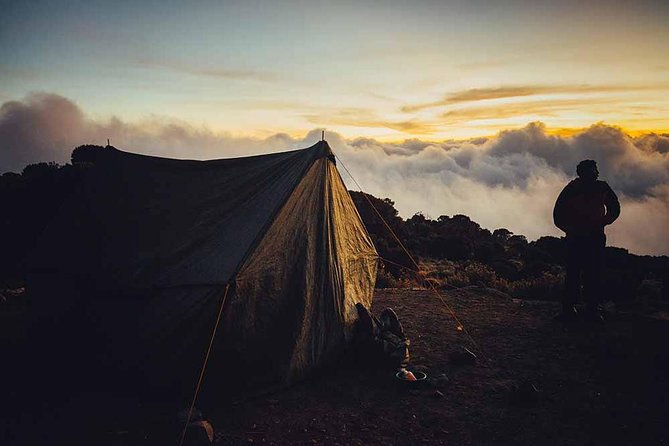
Reviewed · MACHAME ROUTE CLIMBS
6 Days Kilimanjaro Trekking – Machame Route
Africa’s highest mountain rises from coffee and banana country to Uhuru Peak at 5,895 meters. This six-day Machame Route trek gives you the classic Kilimanjaro progression: rainforest, heather, high moorland, rocky ridges, glaciers, and a final push under the stars.
I like the route’s built-in acclimatization day, which takes you high toward Lava Tower before dropping you to Barranco. I also like the private format, with a guide and porter team focused on your group rather than a large mixed party. The main caution is simple: six days is demanding, and the summit night is physically and mentally tough.
The guiding team has included Peter, Alex, Adam, Habibu, and Kijaji on recent climbs. The strongest practical points are their adjustable walking pace, clear communication, plant knowledge, and support from chef and porter staff. One recent menu included a surprising range of dishes for mountain conditions, though you should still expect basic camp life rather than comfort.
Key points to know before booking
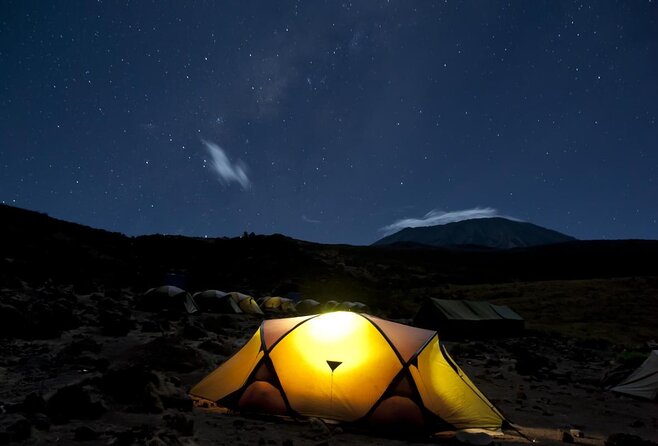
- The summit push begins around midnight to 2 a.m., with a steep ascent to Stella Point and then Uhuru Peak.
- You cross several climate zones, from coffee and banana plantations to rainforest, heather, rock, snow, and glacier country.
- The Barranco day helps with acclimatization, taking you to about 4,876 meters near Lava Tower before descending to camp.
- A private tour keeps the group together, with professional guides, porters, meals, transfers, and five nights of accommodation included.
- The descent can be wet and muddy, so gaiters, trekking poles, rain gear, and warm layers are useful.
- The $1,715 price covers the main climbing package, but tips, alcoholic drinks, and the driver’s tip are extra.
Starting from Moshi and entering the Machame forest
Your Kilimanjaro day begins with pickup arrangements linked to Moshi, Kilimanjaro Airport, or the national park meeting point. The stated operating hours cover the full day, but you should confirm your exact pickup time when booking. The package includes hotel pickup and drop-off, and the final transfer can return you to Moshi, Arusha, or the airport.
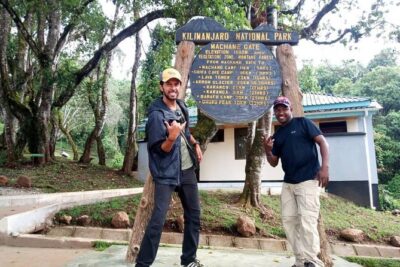
The drive toward the Machame Gate passes coffee and banana plantations. This is a useful reminder that Kilimanjaro is not an isolated postcard mountain. People farm the lower slopes, and these crops are both food and income for local communities.
At Machame, the trail enters the forest. The first walking day is more than a warm-up, but it is usually the most gentle section of the climb in terms of altitude. You move through thick rainforest on an ascending path toward Machame camp. The air is often damp, and the trail can become slippery in wet weather.
Dinner and an overnight stay follow at camp. The schedule encourages an early night, which is sensible. You will need every bit of energy for the next morning, and the six-day plan leaves little spare time if your body reacts poorly to the altitude.
More Machame Route climbs:
- Kilimanjaro climb, Machame Route (7-day)
★ 5.0 · 262 reviews - Climbing Kilimanjaro – Machame Route
★ 5.0 · 170 reviews - Climbing Kilimanjaro through 7 days Machame Route
★ 5.0 · 151 reviews
Machame to Shira, where the forest gives way to heather
After breakfast, the trail leaves the glades of the rainforest. The setting changes quickly as you climb over a little valley and follow a steep, rocky ridge covered with heather.
This section feels more exposed and rugged than the opening day. The path eventually turns west toward a river gorge, with roughly three to four hours of walking before you reach Shira Camp. That distance is not the whole story. The slope, uneven rocks, and rising altitude make the pace slower than a similar walk at home.
Shira is one of the important transition points on Kilimanjaro. The trees have thinned, and you begin to get broader views toward the mountain’s volcanic features. The mountain has three major volcanic centers: Shira at 4,160 meters, snow-capped Kibo at 5,895 meters, and Mawenzi.
You spend the night at the Shira campsite. Meals are included, and vegetarian food is available if you request it when booking. Specific dietary needs should also be given in advance. That small step matters on a trek where your appetite and energy can change from day to day.
The Lava Tower day, the route’s best altitude lesson
From the Shira Plateau, the path continues east along a ridge. You pass the junction toward Kibo, then turn southeast toward Lava Tower, also called the Shark’s Tooth. The route reaches about 4,876 meters near the Arrow Glacier junction before descending to Barranco at about 3,860 meters.
This is the most useful day in the schedule for altitude adjustment. You climb high, then sleep lower. Although you finish at roughly the same elevation where you began, your body gets a chance to experience thinner air before summit day.
You should not judge this day by distance alone. The slow, steady rhythm is the point. Guides who adjust the pace to your ability can make a real difference here. The guiding service has included people such as Peter, Alex, Adam, Habibu, and Kijaji, with particular praise for clear communication, encouragement, and explanations of mountain plants.
The route is also visually varied. Rock replaces much of the softer forest setting, and the high slopes begin to feel stark. You can rest at Barranco, eat dinner, and sleep before the next major climb. The itinerary refers to both Barranco and Millennium Camp in this portion, so confirm the exact overnight camp name and arrangement before departure.
Barranco Wall and Barafu Camp
After breakfast, you tackle the Barranco Wall. It is a steep ridge section and one of the most memorable parts of the Machame Route. You do not need technical climbing equipment according to the information provided, but you should be comfortable using your hands for balance on uneven ground and following a careful pace.
From the wall, the path continues through the Karanga Valley. Lunch is listed at about 4,200 meters, followed by the junction connecting with the Mweka Trail. The route then climbs to Barafu Camp.
Barafu means ice in Swahili, and this camp marks the high staging point for your summit attempt. You have completed the Southern Circuit, which gives you views of Kibo and Mawenzi from different angles. At camp, you eat, rest, and prepare clothing and equipment for the hardest part of the trek.
This is where the six-day schedule becomes especially demanding. You arrive after a full climbing day, but you cannot simply sleep late and start fresh. The summit attempt begins around midnight to 2 a.m. A private guide can help set a pace that matches your condition, but no guide can remove the effects of altitude or fatigue.
More treks and hikes around Kilimanjaro:
- Kilimanjaro climb by Lemosho Route (7-day)
★ 5.0 · 651 reviews - Kilimanjaro Climbing Lemosho Route 8 Days.
★ 5.0 · 186 reviews - 8-Day Small-group Lemosho Kilimanjaro Summit Trekking
★ 5.0 · 186 reviews - Kilimanjaro climb, Lemosho Route (8-day)
★ 5.0 · 148 reviews
The midnight ascent to Stella Point and Uhuru Peak
The summit day is the emotional and physical center of the trek. You leave Barafu in darkness and climb northwest through heavy scree between the Rebmann and Ratzel glaciers.
Scree is loose volcanic rock. Each step can slide slightly, and progress may feel slow. The cold, darkness, steep slope, and lack of sleep combine to make this the hardest section. You should expect a test of patience more than speed.
The first major target is Stella Point on the crater rim at 5,685 meters. If the weather cooperates, sunrise from here can be extraordinary. You stop briefly, then continue for about an hour toward Uhuru Peak. Snow may appear along this upper section.
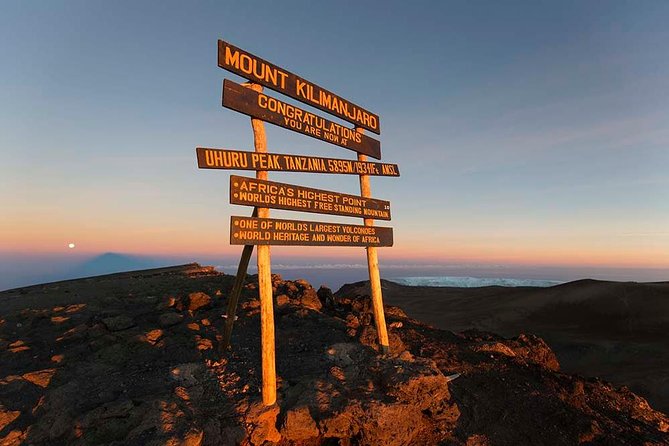
At 5,895 meters, Uhuru Peak is the highest point in Africa and the summit of Kibo. The achievement is real, but you should keep your expectations practical. Summit success depends on preparation, weather, altitude response, and the support you receive on site. The package provides a professional guide and porters, but success is never guaranteed.
The descent begins after the summit. You return to Barafu and then continue toward the lower camp listed for the trip. The supplied schedule is abbreviated at this point and mentions Millennium Camp, so ask the operator to confirm where you will sleep after the summit before you set out.
Descending through Mweka to the park gate
After the summit section, the route descends toward Mweka Gate. The lower trail can be wet and muddy, especially in poor weather. Gaiters will help keep mud out of your boots, while trekking poles can reduce strain on your knees and improve balance.
At lower elevation, shorts and a T-shirt may be comfortable, but keep rain gear and warmer clothing easy to reach. Mountain weather changes quickly, and your pack should not require a full unpacking every time clouds gather.
At Mweka Park Gate, you receive summit certificates. From there, the schedule continues for about another hour to Mweka Village, where a vehicle takes you back to your hotel in Moshi or Arusha, or to the airport. The return transfer is included.
The descent is not just a formality. It can be tiring after the summit, and the muddy surface may slow you down. Plan for a proper meal, a shower, and a quiet evening rather than more sightseeing immediately after arrival.
What the $1,715 price really covers
At $1,715 per person, this is not a low-cost walk in the park. It is a serious mountain package that includes five nights of accommodation, park fees and taxes, lunch, a professional guide, porters, hotel transfers, and a private tour format.
The value comes from having the main climbing logistics handled for you. You are not arranging park access, porter support, mountain meals, and transfers separately. The private setup also gives your group more control over pace and communication, within the limits of safety and the mountain schedule.
The price does not include alcoholic drinks or the driver’s tip. Tips for guides and porters are also an important practical expense, even though the listed exclusions specifically mention the driver. Budget for tipping separately and ask the operator for current guidance on the local custom.
Food appears to be a strength of the support team. Chef Daniel has prepared varied meals in difficult mountain conditions, and the package can accommodate vegetarian diets when requested ahead of time. Still, do not expect restaurant service. Meals are part of a working camp routine, and appetite can be unpredictable at altitude.
Who this six-day climb suits best
This trip suits you if you want a classic Kilimanjaro route, a private group, and an organized support team. It is also a good match if you value transfers, meals, porters, and guide service bundled into one price.
You need a moderate level of physical fitness. That means being ready for repeated uphill walking, rough ground, long days, cold conditions, and a sleepless summit attempt. The final climb is not simply a longer version of the first day.
The six-day schedule is efficient, but that efficiency has a cost. You have less time for your body to adjust than on longer Kilimanjaro itineraries. If you are worried about altitude or prefer a slower pace, ask whether a longer version of the Machame Route is available. The supplied information includes successful seven-day and eight-day Machame climbs by the same operator, but this specific package is six days.
Children must be accompanied by an adult, and the child rate applies only when sharing with two paying adults. The experience operates in all weather, so clothing choices are your responsibility.
Simple preparation that will make the trek better
Bring layers rather than one bulky coat. You need clothing for warm lower slopes, cool camp evenings, possible rain, and freezing summit conditions. Keep rain gear and warm layers where you can reach them quickly.
Wear proper trekking shoes and bring gaiters for the descent. Trekking poles are useful on steep ridges, the loose summit scree, and muddy lower trails. You should also keep important personal items protected from rain.
Tell the operator about dietary requirements when you book. Vegetarian meals are available, but advance notice is required. Confirmation is provided at booking, and the activity is private, so clarify the meeting point, hotel pickup, camp sequence, and airport transfer details before arrival.
Cancellation is free if you cancel at least 24 hours before the local start time. Within 24 hours, the payment is not refunded, and late changes are not accepted.
Should you book the Machame Route trek?
Book this trip if you want a well-supported Kilimanjaro attempt with a private group, included transfers, porter help, and a route that shows off several distinct mountain zones. The strongest reasons are the high-altitude acclimatization day, the varied Machame scenery, and the guide team’s reported ability to adjust pace and keep communication clear.
Think twice if you want a relaxed holiday or if six days feels too compressed for a major high-altitude climb. The midnight summit start and steep Barranco and Barafu sections require real preparation.
For a fit hiker who accepts basic camping, difficult weather, and a demanding summit night, the $1,715 package offers solid practical value. Confirm the overnight camp names and the exact summit-day schedule before paying, then pack for mud, cold, rain, and a very long day.
FAQ
Where does the Kilimanjaro trek start?
The experience is based in Moshi, Tanzania, with pickup offered. The stated meeting point is Kilimanjaro Airport and Kilimanjaro National Park, so confirm your exact pickup location and time when booking.
How long is the Machame Route trek?
The advertised duration is six days, with five nights of accommodation included.
What altitude does Uhuru Peak reach?
Uhuru Peak reaches 5,895 meters above sea level. Stella Point on the crater rim is listed at 5,685 meters.
Is this a private tour?
Yes. Only your group participates in the activity.
Are meals and porters included?
The package includes lunch, a professional guide, and a porter. Five nights of accommodation, fees, taxes, and hotel pickup and drop-off are also included. Vegetarian food is available if requested in advance.
What fitness level is required?
A moderate level of physical fitness is required. The trek includes steep, rocky sections, high altitude, a midnight-to-2 a.m. summit start, and a demanding descent.
Can I cancel for a full refund?
Yes, if you cancel at least 24 hours before the experience start time. Cancellations or changes made within 24 hours are not refunded or accepted.
More Six-Day Trips in Kilimanjaro
- Kilimanjaro climb, Lemosho Route (6-day)
★ 5.0 · 129 reviews - Kilimanjaro climb, Marangu route (6-day)
★ 5.0 · 72 reviews - 6 Days Tanzania Classic Safari
★ 5.0 · 52 reviews - The Best of Machame Route in 6 Days: Your World’s Summit Guide
★ 5.0 · 44 reviews
Just added around Kilimanjaro
- 6 days Machame route climbing Mt.Kilimanjaro★ 5.0 · 8 reviews
- machame route★ 5.0 · 16 reviews
- Mt Kilimanjaro 6 days Marangu route hike★ 5.0 · 3 reviews
- Private Cycle to Kilimanjaro Bike Park Safari★ 5.0 · 6 reviews
- West Kilimanjaro cycling Adventures★ 4.5 · 8 reviews
- Kilimanjaro Climb • Marangu Route ~ 9 Day★ 5.0 · 4 reviews
- 3 Days Private E-Bike Tour in West Kilimanjaro★ 5.0 · 3 reviews
- Kilimanjaro Climb • Machame Route ~ 10 Day★ 5.0 · 6 reviews
Machame Route Climbs, compared.
The Best of Machame Route in 6 Days: Your World’s Summit Guide
Read our review →Browse the lists this tour appears in