
Reviewed · MACHAME ROUTE CLIMBS
6-Day Private Guided Machame Hike Tour at Kilimanjaro
Kilimanjaro’s Machame Route gives you the mountain in changing chapters: rainforest, giant heathers, bare ridges, volcanic rock, glaciers, and a midnight push to Africa’s highest point. This private six-day climb uses a local Moshi company, with staff gear checks and a crew built around guides, porters, a cook, and a waiter.
I like the practical pre-climb meeting, where guides such as Martin, Jackson, and Steward have checked equipment and explained the route. I also like the company’s stated porter-care policy and its effort to direct climb profits toward a child’s schooling. The main caution is simple: this is a serious altitude trek, not a scenic walk, and the six-day schedule leaves little room for a slow acclimatization plan.
Key points to know before you book
- A private Machame Route climb: Only your group participates, though you meet the full mountain crew at the gate.
- Gear checked before departure: The company inspects both customer and staff equipment before the hike begins.
- A demanding summit night: The climb toward Stella Point and Uhuru Peak starts between midnight and 2 a.m.
- Five days of included meals: Breakfast, lunch, and dinner are included on five days of the trip.
- Real high-altitude terrain: Lava Tower reaches 14,850 feet, while Uhuru Peak is listed at 5,895 meters.
- A responsible local operator: The company says it is licensed and certified, pays staff well, and supports a child’s schooling from climb profits.
Why the six-day Machame Route works
The Machame Route is popular for good reason. In six days, you get a clear change in scenery and a classic Kilimanjaro rhythm: climb high, descend to sleep, then climb again. That pattern helps you adjust to thinner air, although six days remains a demanding timetable.
This is a private tour, so your group does not have to fit into a large public departure. That can make the pace and daily breaks easier to manage. You still join a larger working crew of guides, porters, cooks, and support staff, which is normal for a Kilimanjaro climb.
The price is $2,000 per person. That is a serious amount of money, but it covers the major mountain service rather than just transport and a guide. Pickup, park entry for the scheduled route, five breakfasts, five lunches, five dinners, porter and cooking support, and the return transfer are part of the package as described.
You must still budget for personal hiking gear. The company checks your equipment, but the price does not include your boots, clothing, pack, or other personal kit. That distinction matters. A gear check can identify a problem, but it does not supply every item you need.
More Private Tours in Kilimanjaro
- Private Full Day Hiking Experience to Marangu Route
★ 5.0 · 61 reviews - Private Kilimanjaro Hike 7 Day Lemosho Route
★ 5.0 · 60 reviews - Kilimanjaro 7 Day Private Trekking Experience
★ 5.0 · 40 reviews
Day 1: Moshi to Machame Gate and the rainforest
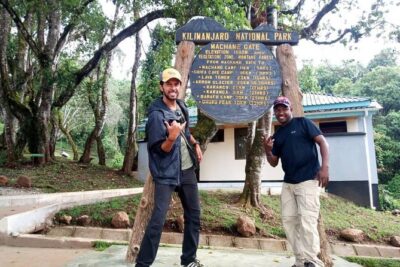
Your guide picks you up from your accommodation and drives you to Machame Gate for registration. This is where the trip becomes official. You meet the rest of your mountain crew, then begin walking through rainforest and giant heathers toward the first camp.
The first day is listed at about six hours of hiking, though the full day can take much longer once pickup, registration, loading, and camp arrangements are included. The rainforest gives you shade and a softer introduction than the exposed upper mountain, but wet ground and changing weather can still make the trail tiring.
This is a good day to settle into the group’s routine. You will learn how the guide sets the pace, how breaks work, and how the support team handles camp. If you have borrowed or replaced missing clothing before starting, as has happened on past climbs with this company, make sure you are fully comfortable with it before leaving the gate.
Day 2: Bare ridges, dust, and the first altitude test
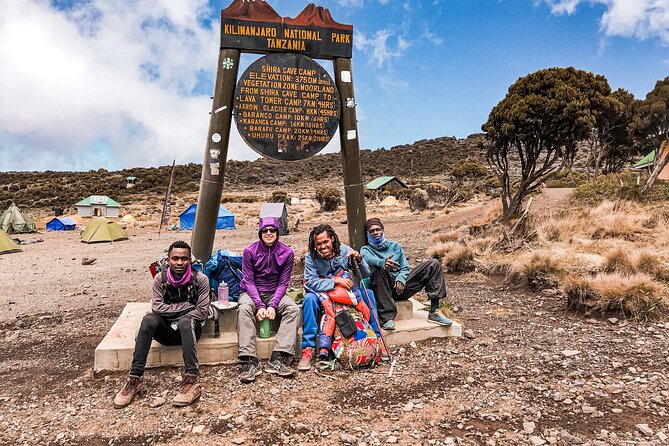
The second day trades much of the forest for short, steep, rocky, and dusty trails. You cross several ridges and begin seeing giant senecias, among the memorable plants of the upper mountain.
There is little shade here, so sun protection and water management become more important. The pace is intentionally slow, with frequent breaks to give your body time to adjust. That sounds easy on paper, but slow uphill walking can feel surprisingly hard when the air is thinner and the trail stays exposed.
I like that the schedule builds in time for acclimatization rather than treating every hour as a race. Still, the stated day description is long and strenuous. You should expect a full day on your feet, not a short transfer between camps.
Day 3: Lava Tower and the descent to Barranco
Day three begins with boulders and a steady uphill climb toward Lava Tower. Lunch is planned around noon, and the route reaches about 14,850 feet at the tower. You may climb the tower itself if conditions and the guide’s judgment allow.
This is one of the most useful days for understanding how your body handles altitude. A mild headache can begin around Lava Tower. Do not hide symptoms to prove toughness. Tell your guide early, follow the pace set by the crew, and treat the descent to Barranco as part of the acclimatization plan.
From Lava Tower, you descend for about two hours along dusty, rocky trail to Barranco Camp at roughly 13,000 feet. The climb high and sleep lower pattern is one of the important features of this section. It is also a tiring day because the route asks you to gain and then lose elevation before camp.
More Machame Route climbs:
- Kilimanjaro climb, Machame Route (7-day)
★ 5.0 · 262 reviews - Climbing Kilimanjaro – Machame Route
★ 5.0 · 170 reviews - Climbing Kilimanjaro through 7 days Machame Route
★ 5.0 · 151 reviews - 7-Day Machame Kilimanjaro Summit Tour from Arusha
★ 5.0 · 125 reviews
Day 4: Barranco Wall and the exposed Barafu Camp
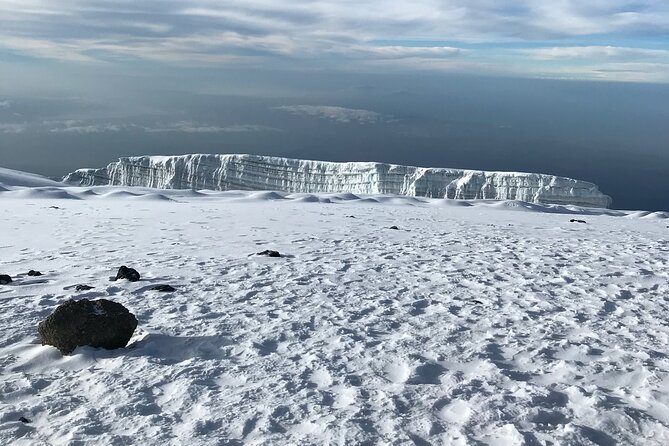
Barranco Wall looks intimidating when you first see it. The route takes you up the obstacle, with some scrambling over rock, but the description correctly prepares you for a challenge that is often less frightening once you are moving.
At the top, you are just below the Heim Glacier and get one of the finest views of Kilimanjaro’s upper reaches. This is a visual reward, but do not confuse it with an easy afternoon. You still continue toward Barafu Camp, the staging point for the summit attempt.
Barafu means ice in Swahili, but the camp is described as bleak, stony, exposed, and perched on a narrow ridge. Strong winds are possible, and the terrain can be hazardous. The practical advice here is excellent: familiarize yourself with the route around camp before dark. After the summit briefing and an early rest, you may need to move around while tired and in poor light.
This is also where the private format can help. Your guide can focus on your group’s condition, but the mountain still sets the rules. If weather or altitude becomes unsafe, a responsible guide must adjust the plan.
Day 5: The midnight push to Stella Point and Uhuru Peak
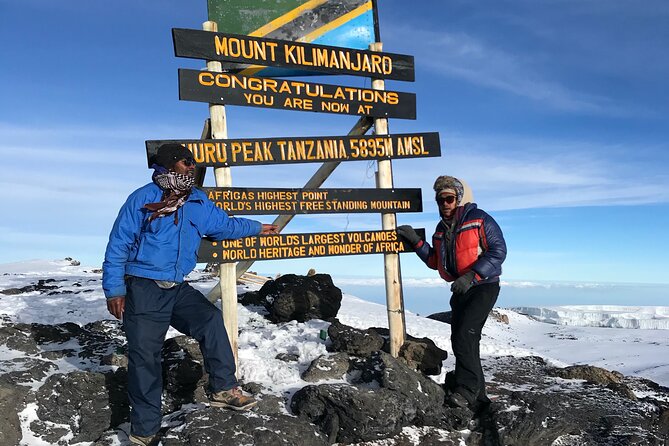
The summit attempt begins very early, between midnight and 2 a.m. You climb in the dark toward Stella Point, moving between the Rebmann and Ratzel glaciers before heading toward the crater rim.
This is the hardest physical and mental section of the trip. The slow pace may feel frustrating, especially when the summit seems close but the air is thin and each step costs effort. You should expect cold, darkness, fatigue, and a long day that does not end at the crater rim.
At Stella Point, listed at about 5,700 meters, you stop for a short rest. If the weather cooperates, sunrise provides the day’s great reward. From there, the route may remain snowy for about an hour to Uhuru Peak, the highest point on Kilimanjaro and in Africa.
The schedule information for this day is abbreviated, so you should ask the operator for the full summit-day timing before booking. That includes the expected time at Uhuru Peak, the descent plan, and where you sleep after the summit. Those details affect how much rest you receive before and after the push.
Do not plan this as a photo stop alone. The summit is an achievement, but the descent can also be hard. Your guide’s job is to watch your condition, keep the group together as needed, and make safe decisions if the weather turns or altitude symptoms worsen.
Day 6: The long descent through Mweka Gate
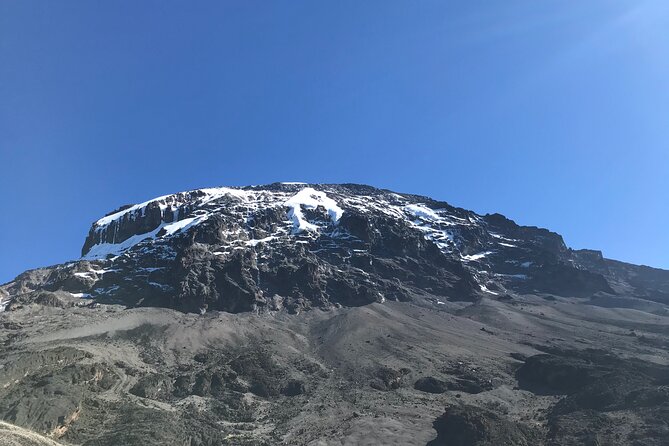
After breakfast, you descend for about four to six hours toward Mweka Gate. The route is scenic, but descending is not automatically easy. Knees can become painful after the summit, and a planned four-hour walk may take longer.
At Mweka Gate, you sign the register and receive a summit certificate if you reached the required point. Climbers who reach Stella Point receive green certificates, while those who reach Uhuru Peak receive gold certificates. A vehicle then takes you from Mweka village back to your accommodation.
One useful piece of advice is to wait before paying porter tips until you, your group, and all your gear have reached the gate safely. That is not a criticism of the crew. It is simply a sensible way to settle the final part of the climb once the service is complete and your equipment is accounted for.
Guides, porters, meals, and the human side of the climb
The strongest part of this experience may be the attention given before and during the climb. Peter arranges the planning side, while guides named Martin and Jackson have handled pre-trip explanations and equipment checks. Steward is also named among the people who have supported climbers on the mountain.
A crew can make or break a Kilimanjaro climb. Here, the working team may include a guide, porters, a waiter, and a cook. The company says it pays staff well and checks staff equipment, not just customer gear. It also says profits from each climb help send a child to school.
Those promises are meaningful, but you should still ask clear questions before departure. Confirm the tipping expectations, porter workload, sleeping arrangements, meal schedule, and equipment standards. A good ethical policy should be easy for the operator to explain.
Food is included as breakfast, lunch, and dinner for five days. Past climbs with this company have included hot meals three times daily, which is especially welcome after wet or exposed sections. You should confirm the menu and any dietary arrangements directly, since the supplied details do not specify special diets or particular dishes.
What the $2,000 price really covers
At $2,000 per person, this is not a budget day hike. You are paying for a multi-day mountain operation with transport from your accommodation, route support, camp logistics, meals, guides, porters, and the return transfer.
The value improves if you want a private departure and prefer one company to handle the moving parts. The gear inspection is also useful because small equipment problems become large problems above the forest. The stated support for staff and education gives the trip a social purpose, though you should judge that commitment by asking for details before paying.
The price does not cover personal hiking equipment. Set aside money for suitable clothing, footwear, and other essentials if you do not already own them. Group discounts are offered, so the per-person cost may change for a larger private group. Ask for the exact discount rather than assuming it applies automatically.
Who should book this climb?
This trip suits you if you have strong physical fitness, accept basic mountain conditions, and want a private climb with a local company. It is a good fit for a small group that values direct guide attention and wants a structured route from Moshi and back.
It is less suitable if you want a relaxed holiday with generous spare days. The six-day schedule is active, the summit night begins after midnight, and the route includes exposed ridges, loose rock, steep sections, cold, wind, and possible snow.
You also need to be comfortable with uncertainty. Weather can affect the experience, and the operator requires good conditions. If the climb is canceled because of poor weather or because the minimum number of participants is not met, you are offered another date, another experience, or a full refund.
Free cancellation is available up to 24 hours before the start time. Changes or cancellations inside that period are not accepted for a refund.
Should you book the six-day Machame hike?
Book it if you want a serious Kilimanjaro attempt with a private group, a local support crew, included meals, and a pre-climb gear check. The strongest practical advantages are the slow pacing on the early high sections, the personal attention possible on a private trip, and the company’s stated concern for porter welfare.
Before paying, ask for the complete Day 5 schedule, the exact camp names, the gear checklist, the group discount terms, and the tipping guidance. If you are fit, prepared, and realistic about altitude, this can be a well-supported route to Uhuru Peak. If you need more acclimatization time or dislike hard overnight climbs, compare it with a longer itinerary.
FAQ
Where does the Kilimanjaro hike begin?
The tour begins with pickup from your accommodation in Moshi, followed by a drive to Machame Gate for registration and the start of the hike.
Is this a private tour?
Yes. Only your group participates in the private tour or activity, although you meet the wider guide and porter crew at Machame Gate.
Are meals included?
Yes. Breakfast, lunch, and dinner are included for five days. Personal hiking equipment is not included.
How physically fit do I need to be?
The tour requires a strong physical fitness level. The route includes steep, rocky, dusty, exposed, and high-altitude sections, plus a midnight-to-2 a.m. summit start.
What happens if bad weather cancels the climb?
If poor weather causes cancellation, you are offered a different date or a full refund. The same applies if the minimum number of participants is not met and the experience is canceled.
What is the cancellation policy?
You can cancel at least 24 hours before the experience start time for a full refund. Cancellations or changes made less than 24 hours before the start time are not accepted for a refund.
More Six-Day Trips in Kilimanjaro
- Kilimanjaro climb, Lemosho Route (6-day)
★ 5.0 · 129 reviews - Kilimanjaro climb, Marangu route (6-day)
★ 5.0 · 72 reviews - 6 Days Tanzania Classic Safari
★ 5.0 · 52 reviews - The Best of Machame Route in 6 Days: Your World’s Summit Guide
★ 5.0 · 44 reviews
More Trekking Tours in Kilimanjaro
- Kilimanjaro climb by Lemosho Route (7-day)
★ 5.0 · 651 reviews - 8-Day Small-group Lemosho Kilimanjaro Summit Trekking
★ 5.0 · 186 reviews - Kilimanjaro Climbing Lemosho Route 8 Days.
★ 5.0 · 186 reviews - Kilimanjaro climb, Lemosho Route (8-day)
★ 5.0 · 148 reviews
Just added around Kilimanjaro
- 6 days Machame route climbing Mt.Kilimanjaro★ 5.0 · 8 reviews
- machame route★ 5.0 · 16 reviews
- Mt Kilimanjaro 6 days Marangu route hike★ 5.0 · 3 reviews
- Private Cycle to Kilimanjaro Bike Park Safari★ 5.0 · 6 reviews
- West Kilimanjaro cycling Adventures★ 4.5 · 8 reviews
- Kilimanjaro Climb • Marangu Route ~ 9 Day★ 5.0 · 4 reviews
- 3 Days Private E-Bike Tour in West Kilimanjaro★ 5.0 · 3 reviews
- Kilimanjaro Climb • Machame Route ~ 10 Day★ 5.0 · 6 reviews
Machame Route Climbs, compared.
The Best of Machame Route in 6 Days: Your World’s Summit Guide
Read our review →Browse the lists this tour appears in