
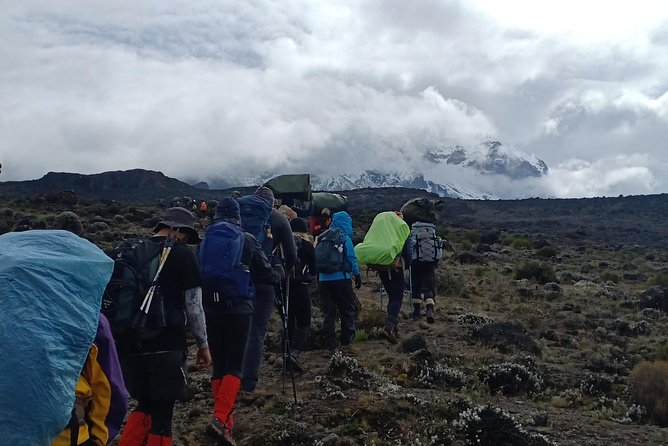
Reviewed · MARANGU ROUTE CLIMBS
Best Kilimanjaro Adventures 6 Days Marangu Route Experience
The most appealing part of this climb is its six-day pace, which gives you a full acclimatization day at Horombo before the hard push toward Uhuru Peak. You sleep in huts with mattresses rather than tents, and the route changes scenery quickly, from Kilimanjaro’s wet forest to a stark upper-mountain desert.
I like the extra night at Horombo and the solid practical package: meals, purified water, porters, guides, cooks, and hut beds are included. The main drawback is that the $1,000 price excludes Kilimanjaro National Park fees and tax, so you need the full final cost before booking. The summit day is also a serious 11-hour effort, not a casual walk.
Key points to know before you book
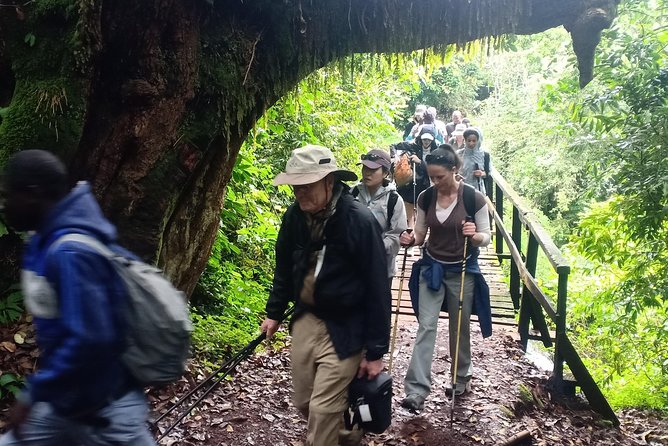
- Maundi Crater is an easy first-day option: A short walk from Mandara Hut can bring broad views toward Taveta and Mawenzi Peak when the weather is clear.
- Horombo gets a full acclimatization day: The hike toward Mawenzi Hut adds altitude gradually and can help your summit attempt.
- Every night is in a hut: Mandara, Horombo, and Kibo provide beds with mattresses, though Horombo can be very busy.
- The summit starts around midnight: You climb by headlamp to Gillman’s Point, then continue along the crater rim toward Uhuru Peak.
- Named guides include Thomas, Erick, Gewa, Victor, and Steve: The company has also used cooks, waiters, and large porter teams on group climbs.
- The price needs checking: Park fees and tax are extra, as are tips, personal items, and optional trips after the climb.
Why the six-day Marangu Route works
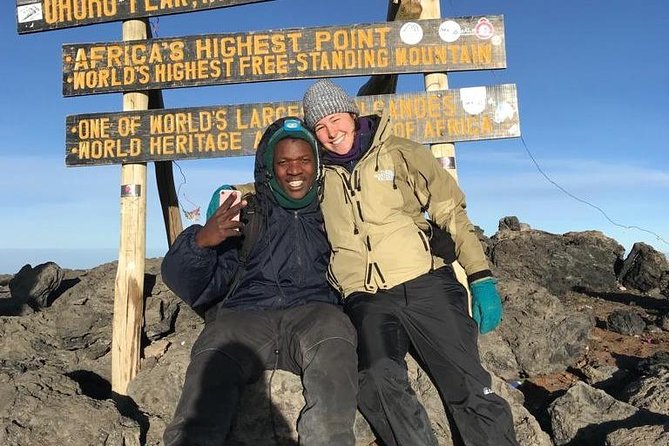
The Marangu Route is often called the Coca-Cola Route, but that friendly nickname can hide the effort involved. You still climb to 5,895 meters at Uhuru Peak, and altitude is the central challenge. The route is not difficult because of technical climbing. It is difficult because your body has less oxygen at every step.
This six-day version improves on a rushed five-day schedule by adding a day at Horombo Hut. You walk higher toward Mawenzi Hut, then return to sleep at the same altitude. That pattern gives you a useful climb high, sleep lower rhythm, at least in broad terms, and gives your guide time to watch how you respond.
You start from Moshi or Arusha, with pickup offered. The schedule gives an 8:30 a.m. meeting time, while the first day says to leave at 8 a.m., so confirm the exact pickup time before the morning of departure. That small detail matters when you have transport, gate registration, and a long first walk ahead.
More Marangu Route climbs:
- Kilimanjaro climb, Marangu route (6-day)
★ 5.0 · 72 reviews - Climbing Kilimanjaro – Marangu Route
★ 5.0 · 65 reviews - Private Full Day Hiking Experience to Marangu Route
★ 5.0 · 61 reviews
Day 1: Marangu Gate to Mandara Hut
The first day begins at Marangu Gate, where registration comes before the trail. The walk then enters Kilimanjaro’s rainforest, a cool and shaded start that feels far removed from the dry upper mountain.
You spend most of the day under trees, with lunch at roughly the halfway point. After lunch, the path continues through the forest to Mandara Hut. The listed walking time is short compared with later days, but you should still keep an easy pace. The point is not to race into camp. It is to begin adjusting to steady movement and a slower mountain routine.
Mandara’s A-frame huts can accommodate up to 70 people. Beds and mattresses are provided, along with a dining area. That makes this route simpler for anyone who does not want to carry camping equipment or sleep in a tent every night.
If you still have energy, walk to Maundi Crater. This is one of the best small additions to the first afternoon. From the viewpoint, you can see toward Taveta to the east and Mawenzi Peak to the northwest when clouds stay away. The walk is short, but the views give you an early sense of the mountain’s scale.
The first day is also a good test of your clothing system. The forest may feel damp, while the trail can become slippery. Keep rain protection handy rather than buried deep in your bag.
Day 2: Mandara to Horombo through moorland
After breakfast, you leave the forest behind and enter Kilimanjaro’s moorland. The change is striking. Trees thin out, rocky ground takes over, and unusual high-altitude plants replace the dense greenery of the lower slopes.
The destination is Horombo Hut, with most of the day spent walking upward. A picnic lunch is planned at Kambi ya Taabu before the route continues. You can expect about five hours of walking, although your personal pace and stops may change the timing.
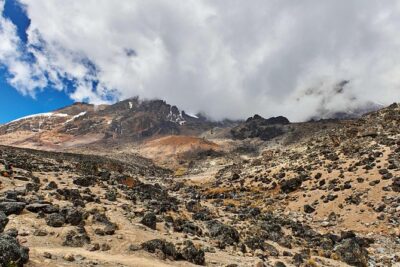
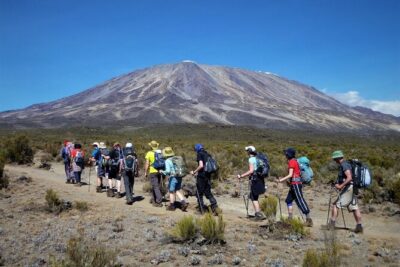
Clear weather can bring views of both Mawenzi and Kibo. Mawenzi has a sharp, broken profile, while Kibo looks broader and more rounded. Seeing both peaks together helps you understand the route ahead: Mawenzi sits to one side, while the main summit lies on Kibo.
Horombo is the largest and busiest camp on this route. Its small A-frame huts hold up to eight people each, and the camp also accommodates many other climbers, porters, cooks, and guides. The benefit is a lively shared mountain atmosphere. The cost is less privacy and more activity around camp.
You should not judge the whole climb by how you feel at Horombo. Some people feel fine at this stage and struggle higher up. Others need more rest. Tell your guide about headaches, nausea, dizziness, or unusual tiredness early, rather than trying to hide symptoms.
Day 3: The Mawenzi Hut acclimatization walk
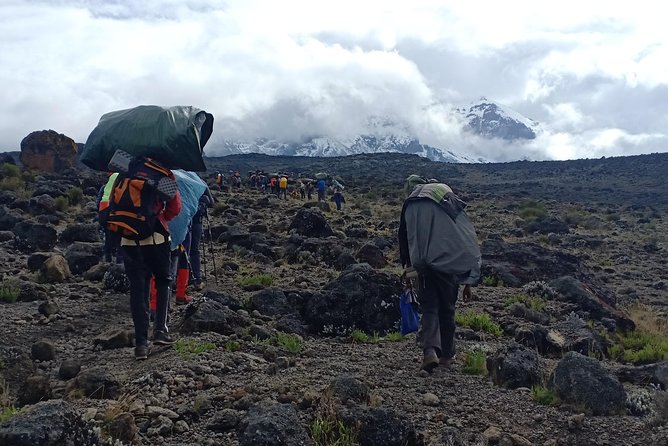
Day three is the reason to consider this six-day version. Instead of moving camp, you hike higher toward Mawenzi Hut and return to Horombo for lunch and another night.
The walk takes about five hours. It gives you more time at altitude without forcing you to sleep as high as Kibo. The route also offers views back toward Kibo, so the day has both a physical purpose and a scenic reward.
This is not a throwaway rest day. You still gain height, walk on rough ground, and spend time outside in changing weather. The right approach is steady and conservative. You do not need to prove anything by pushing ahead of the group.
After returning to Horombo, you have the afternoon and evening to rest. Use that time well. Eat, drink the provided water, organize your summit clothing, and ask the guide what to expect on the following day. Guides named on past climbs include Erick, Gewa, Victor, Steve, and Thomas, though your assigned guide should be confirmed directly.
A full acclimatization day cannot guarantee a successful summit. It can, however, give you a better chance than a schedule that moves directly from Mandara to the upper mountain.
More six-day trips in Kilimanjaro:
- Kilimanjaro climb, Lemosho Route (6-day)
★ 5.0 · 129 reviews - 6 Days Tanzania Classic Safari
★ 5.0 · 52 reviews - The Best of Machame Route in 6 Days: Your World’s Summit Guide
★ 5.0 · 44 reviews - 6 Days Machame Route Kilimanjaro Climbing
★ 5.0 · 42 reviews
Day 4: Horombo to Kibo across the Saddle
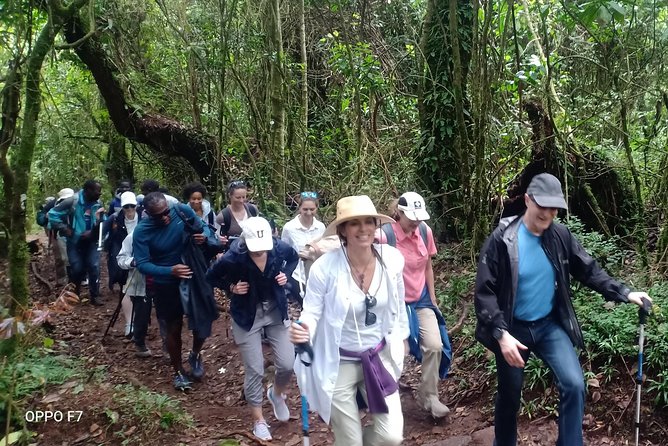
The fourth day moves through moorland and into alpine desert. After about an hour, you reach the Maua River, a small stream. Beyond it, vegetation fades and the ground becomes flatter and more exposed.
Lunch is planned at Middle Red Hill. After the break, the route continues for about two hours across the Saddle toward Kibo Hut. The walking time is listed at roughly eight hours, so this is a long day even before the summit attempt begins.
The Saddle is a stark stretch between Mawenzi and Kibo. There is little vegetation, and the open terrain can make the summit feel both close and very far away. You get fine views of the two peaks, but the area offers little shelter from weather.
You reach Kibo Hut around 3 p.m. The early arrival is important because your night will be broken by the midnight start. Rest as much as possible, eat the evening meal, and prepare your layers before lying down.
Kibo Hut is the last overnight point before the summit. Unlike Horombo, the setting is more exposed and the mood is quieter and more serious. From here, the route is no longer about settling into the climb. It is about conserving enough strength for the hardest section.
Day 5: The midnight climb to Uhuru Peak
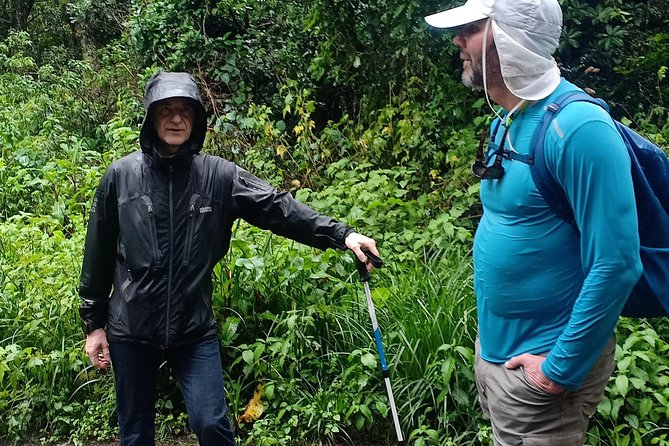
Around midnight, you wake for the summit attempt. The first target is Gillman’s Point on the crater rim, at 5,681 meters. The climb takes about five hours and follows rocky switchbacks.
William’s Point, at 5,000 meters, is roughly two hours from Kibo Hut. After another stretch of about 30 minutes, the route begins its harder switchbacks toward Gillman’s Point. This is where the slow pace matters. Your guide will set the rhythm, and you should expect frequent short pauses.
The route to Gillman’s Point is described as the easiest of Kilimanjaro’s three crater ascent paths. That does not make it easy. At this height, ordinary walking can feel draining, and cold, darkness, and thin air add to the strain.
From Gillman’s Point, the path follows the crater rim toward Uhuru Peak. The grade is more gradual than the first ascent, but altitude still makes the walk tiring. The crater rim section can take several more hours, and the day is listed at about 11 hours.
Reaching Uhuru Peak is the main goal, but safety comes first. A good guide will pay attention to your pace and condition, not just the clock. Past groups have praised guides and porter teams for encouragement, organization, and hands-on help, including a 16-person group that reached the summit together. That result should not be treated as a promise, but it does show the value of a well-coordinated support team.
After the summit section, you return from the upper mountain before the final descent on day six. The exact rest point and timing should be confirmed with the operator, since the supplied schedule gives the full day length but does not spell out every stop after Uhuru Peak.
Day 6: Descent through the cloud forest
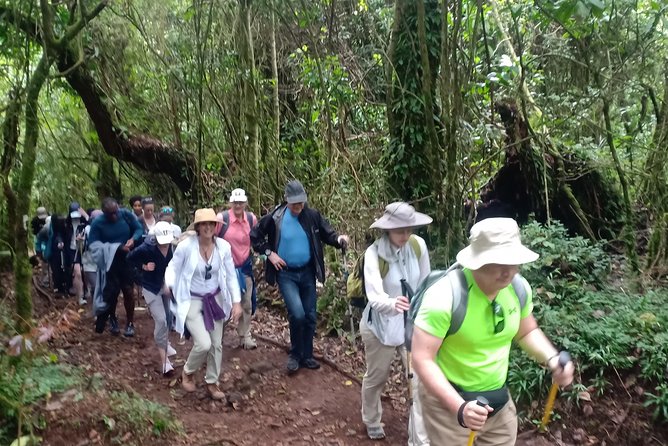
After breakfast, you descend to Marangu Gate. The final walk passes back through Kilimanjaro’s cloud forest, giving you a very different view from the dry upper slopes.
The descent is listed at about six hours. Your legs may feel worse than expected after the summit day, so take care on the way down. The trail can be slippery, especially in the forest.
Vehicles wait at Marangu Gate for the return to Moshi or Arusha. You can buy T-shirts and sodas at the gate, which makes for a simple end to a demanding week. Pickup and transport back to town are part of the practical appeal of this arrangement, though you should confirm your exact drop-off plan.
The descent also reveals one limitation of the Marangu Route: you walk up and down the same general route. Other Kilimanjaro routes offer a different descent path, while Marangu trades that variety for hut accommodation.
Hut beds, food, porters, and support
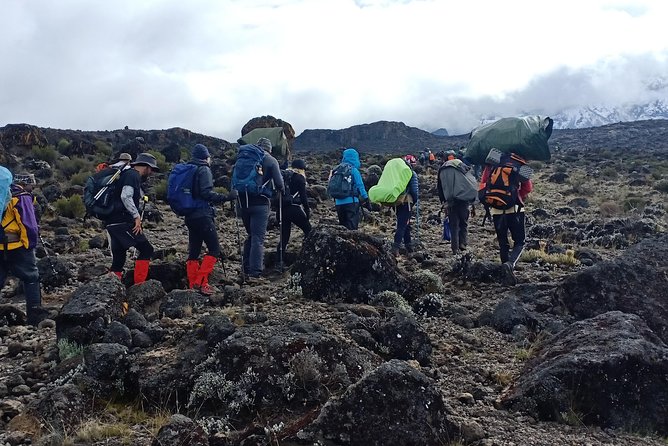
The package includes hut accommodation, five dinners, six breakfasts, and six lunches. It also includes fresh food, purified drinking water, sleeping mattresses, professional mountain guides, porters, and cook salaries.
That food and water provision has real value. A long climb is easier when you do not need to plan every meal or carry all your drinking water from the start. The food is described as generous, healthy, and nutritious, though menus are not specified, so ask about dietary needs before you go.
The porters are a major part of the operation. The company states that it aims for fair and ethical treatment and includes porter salaries in the price. You should still ask how luggage limits are handled and what tipping expectations are, since tips are not included.
Past groups have singled out cooks, waiters, and porters as important to the experience. Names connected with previous climbs include Elia, Richard, Fred, Julius, Edward, and Tumarini. Your own crew may be different, but it is worth recognizing that the climb depends on more than the person walking beside you.
Is $1,000 good value?
At $1,000 per person, the price covers six days of mountain services, hut accommodation, meals, drinking water, guides, porters, cooks, mattresses, and transport from the gate back to Moshi or Arusha. That is a substantial amount of support for a high-altitude trek.
The price is not all-inclusive. Kilimanjaro National Park fees and tax are excluded, as are tips, personal items, and optional tours such as a short safari after the climb. Park costs can materially change your final budget, so ask for a written total before paying.
The value is strongest for you if you want a hut-based climb with an extra acclimatization day and a support team handling food and camp work. It is less attractive if you expect a private trek, a small group, or every cost to be included in the advertised amount.
The maximum group size is listed as 100 people. That is a very large possible group, although your own climbing party may be smaller. Ask how many people will be in your actual group and how guides divide responsibility.
Who should choose this climb?
This trip suits you if you want a structured Kilimanjaro attempt without camping. It also fits people who value a slower six-day schedule, organized meals, and a full acclimatization day.
You do not need to be an experienced mountaineer based on the participation information provided, but you do need to take the physical demands seriously. The summit day is long, the altitude is extreme, and the route includes steep, rocky sections.
The experience may not suit you if you want a quiet, private mountain retreat. Horombo can be crowded, the group limit is high, and all hikers use the same huts and main route. It may also disappoint you if clear summit views are essential, since weather can hide Mawenzi, Kibo, and the crater rim.
The company’s strongest pattern is personal support. Past trips have named Thomas, Erick, Gewa, Victor, and Steve as guides who helped with organization, encouragement, and summit efforts. That is useful information, but guide assignment should be confirmed rather than assumed.
Booking details and cancellation
Confirmation is provided at booking, and pickup is offered. The stated start time is 8:30 a.m., while the first day mentions an 8 a.m. departure, so confirm the exact meeting plan.
Free cancellation is available up to 24 hours before the local start time for a full refund. Changes or cancellations inside that 24-hour window are not accepted for a refund. If poor weather cancels the experience, you are offered another date or a full refund.
Should you book the six-day Marangu climb?
I would consider this trip if you want the convenience of huts, the safety advantage of an acclimatization day, and a company with repeated praise for its guides, porters, food team, and organization. The extra Horombo day is the key feature, not a minor add-on.
Before booking, ask three direct questions: What is the full cost after park fees and tax? How large will my actual group be? Who will be my lead guide? If the answers are clear and you are prepared for an 11-hour summit day, this is a sensible value-focused route to Uhuru Peak.
If you want less crowded camps or a different descent, compare other Kilimanjaro routes. If hut beds, organized support, and a straightforward six-day plan matter most, Kilinge Adventures’ Marangu program is a strong option.
FAQ
Where does the Kilimanjaro climb take place?
The experience begins near Moshi or Arusha in Tanzania and uses the Marangu Route on Mount Kilimanjaro.
How long does the experience last?
The climb lasts six days, approximately.
What time does the experience start?
The stated meeting time is 8:30 a.m. The first day also mentions leaving at 8 a.m., so confirm the exact pickup time with Kilinge Adventures.
Are airport or hotel pickups offered?
Pickup is offered, but the provided details do not specify every pickup location. Confirm your arrangement before the start date.
Where do I sleep during the climb?
You sleep in huts at Mandara Hut, Horombo Hut, and Kibo Hut. The huts have beds with mattresses.
Is food included?
Yes. The package includes five dinners, six breakfasts, and six lunches, along with fresh food and purified drinking water.
Is a guide included?
Yes. Professional, experienced mountain guides are included. Guides named on past climbs include Thomas, Erick, Gewa, Victor, and Steve, but your assigned guide should be confirmed.
Is the Kilimanjaro National Park fee included?
No. Kilimanjaro National Park fees and tax are listed as extra costs.
What is the hardest part of the climb?
The midnight summit attempt on day five is the hardest section. It takes about five hours to reach Gillman’s Point, followed by the crater rim walk toward Uhuru Peak. The full day is listed at about 11 hours.
What is the cancellation policy?
You can cancel at least 24 hours before the local start time for a full refund. Cancellations or changes made less than 24 hours before the start are not accepted for a refund. If poor weather causes cancellation, you are offered another date or a full refund.
Just added around Kilimanjaro
- 6 days Machame route climbing Mt.Kilimanjaro★ 5.0 · 8 reviews
- machame route★ 5.0 · 16 reviews
- Mt Kilimanjaro 6 days Marangu route hike★ 5.0 · 3 reviews
- Private Cycle to Kilimanjaro Bike Park Safari★ 5.0 · 6 reviews
- West Kilimanjaro cycling Adventures★ 4.5 · 8 reviews
- Kilimanjaro Climb • Marangu Route ~ 9 Day★ 5.0 · 4 reviews
- 3 Days Private E-Bike Tour in West Kilimanjaro★ 5.0 · 3 reviews
- Kilimanjaro Climb • Machame Route ~ 10 Day★ 5.0 · 6 reviews
Marangu Route Climbs, compared.
Browse the lists this tour appears in