
Reviewed · MARANGU ROUTE CLIMBS
5 Days Marangu Route Kilimanjaro hiking
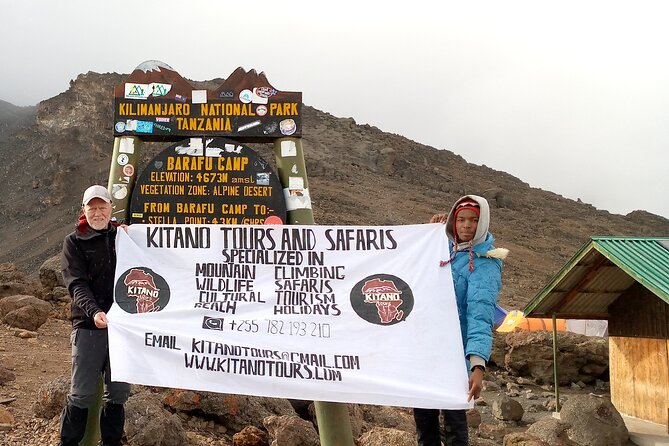
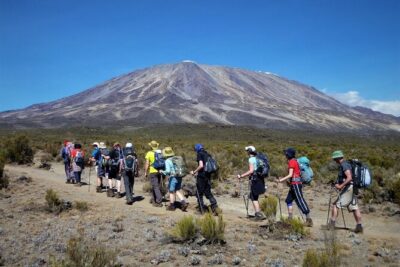
The big draw here is a five-day walk to Uhuru Peak, Africa’s highest point, using Kilimanjaro’s direct Marangu Route. You begin among rainforest and colobus monkeys, cross open moorland, then climb through a stark high-altitude moonscape before the cold, dark push to the summit.
I like the hut accommodation, which means you are not carrying camping gear or sleeping in a tent, and I like the steady change of scenery from eucalyptus trees to giant lobelias and bare volcanic slopes. The main catch is that the five-day schedule is still demanding, with a long summit night and limited time for altitude adjustment.
Key points to know before you book
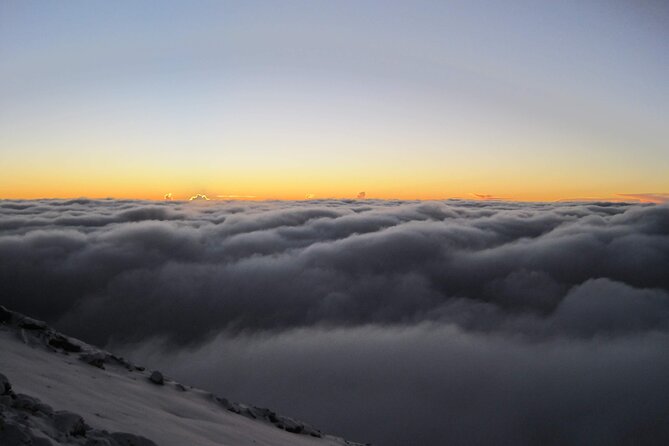
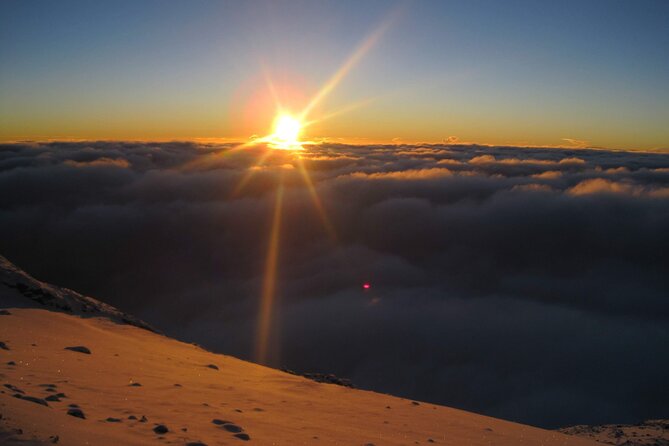
- Sunrise from Gilman’s Point: The summit day begins around midnight to 2 am, using headlamps on steep scree or snow.
- Huts instead of tents: Nights are spent at Mandara, Horombo, and Kibo huts, with the crew handling cooking and portering.
- A direct route with a hard finish: Marangu is technically straightforward, but the final ascent is physically serious.
- Guide and crew support: Guides named on past departures include Mudi, Daniel, Martin, Michael, and David.
- A $1,014 price with an important check: Crew wages, meals, transfers, and huts are listed as included, while park fees and tax are listed separately.
- Free cancellation deadline: You can receive a full refund if you cancel at least 24 hours before the 8:30 am start time.
Why the Marangu Route appeals to first-time climbers
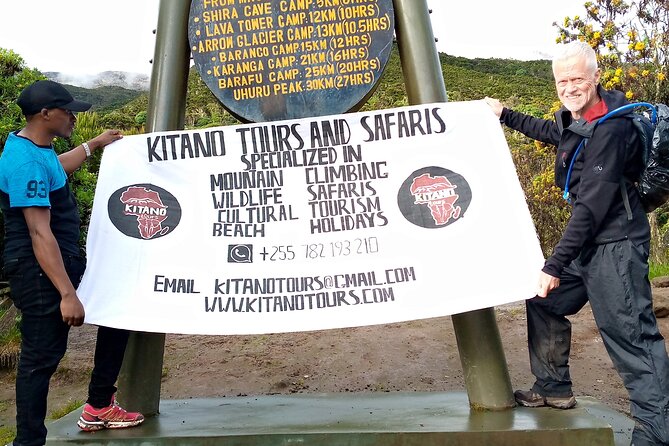
Marangu is often called the Coca-Cola Route because it follows a clear, direct trail and uses permanent huts. That nickname can make the walk sound easy. It is not. The path is less technical than some Kilimanjaro routes, but altitude, cold, darkness, and the summit schedule still demand patience and fitness.
I would choose this route if you prefer a simple trail and a bed in a mountain hut instead of camping. You walk uphill for several days, sleep, eat, and continue. There is less equipment to manage, and the route is easy to follow with a guide.
The five-day plan covers a large altitude range, from about 1,700 meters at the Marangu Gate to 5,895 meters at Uhuru Peak. That is a huge change in air pressure. The itinerary gives you an overnight at Horombo before moving to Kibo, but the schedule remains brisk. If you know you struggle at altitude, ask the operator if a longer version is available.
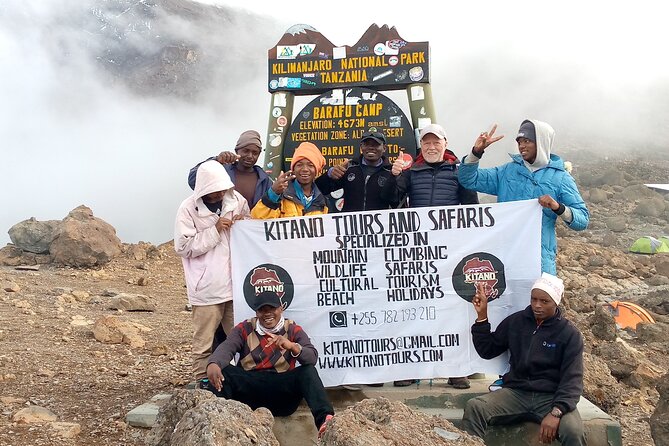
The crew is a major part of the experience. Past groups have been guided by people including Mudi, Daniel, Martin, Michael, and David, with cooks, porters, and other support staff. The strongest praise has focused on encouragement, organization, safety, good meals, and personal attention. That matters most on summit night, when a calm guide can help you keep a slow pace and decide when you need to stop.
More Marangu Route climbs:
- Kilimanjaro climb, Marangu route (6-day)
★ 5.0 · 72 reviews - Climbing Kilimanjaro – Marangu Route
★ 5.0 · 65 reviews - Private Full Day Hiking Experience to Marangu Route
★ 5.0 · 61 reviews
Day 1: Marangu Gate to Mandara Hut
The morning begins with breakfast and a briefing, followed by a drive of about 45 minutes to Kilimanjaro National Park. The stated meeting time is 8:30 am, with pickup offered from the listed meeting point in Tanzania. At the gate, you register and begin walking.
The first day is a pleasant introduction to the mountain. The trail passes through rainforest, where you might see tall eucalyptus trees, birds, and colobus monkeys. The forest is greener and more enclosed than the higher parts of the climb, so this section feels like a proper walk through nature rather than a march toward a summit.
You cover about 7 kilometers in four to five hours, climbing from roughly 1,700 meters to 2,740 meters. Mandara Hut is the night’s base. Lunch and dinner are included, and the crew prepares the evening meal while you settle in.
If your energy allows, the side trip to Maundi Crater is worth considering. It offers views toward northern Tanzania and Kenya and gives you a wider sense of the country around Kilimanjaro. It is an extra outing on a day when your legs are still fresh, but you should not treat it as mandatory if you are tired.
The first day is also the time to notice how the crew works. Ask questions, check your clothing, and make sure your daypack contains the items you need. Porters carry the main load, but you remain responsible for your water, warm layer, rain gear, and personal essentials during the walk.
Day 2: Mandara Hut to Horombo
On the second morning, the forest gives way to open moorland. The trail continues upward to Horombo Hut, with views toward Mawenzi and Kibo, two of Kilimanjaro’s major peaks.
This is one of the most scenic parts of the route. The trees thin out, the sky opens, and giant lobelias and groundsels begin to appear. These unusual plants make the high moorland feel very different from the forest below.
The walk is listed at about eight hours, so you should expect a full day rather than a short transfer between huts. The precise distance and altitude gain are not stated in the schedule, but Horombo is high enough that you may begin to notice headaches, breathlessness, poor sleep, or a slower walking pace.
This is where the advice pole pole, meaning slowly, becomes practical. Do not race ahead to prove that you feel fine. Walk at a measured pace, drink regularly, and tell your guide about symptoms early. A guide can respond better to a problem that is mentioned at Horombo than to one that is hidden until summit night.
The open moorland also brings more exposure to sun, wind, and rain. Keep a waterproof layer close, even if the morning begins warm. The weather can change as you gain height.
Day 3: Horombo to Kibo Hut
Day 3 takes you across the saddle between Mawenzi and Kibo. You pass the last watering point, cross upper heathland, and move into a stark area described as a moonscape. Vegetation fades away, leaving a more austere volcanic setting.
The day covers about 10 kilometers in six to eight hours, rising from around 3,700 meters to 4,700 meters. That altitude gain is the reason this day deserves respect. You may feel slower, less hungry, or more tired than the distance suggests.
Kibo Hut is not simply another overnight stop. It is your staging point for the summit attempt. After dinner, you rest and prepare for a very early start. Keep your summit clothes organized before going to sleep, and make sure your headlamp or flashlight is ready. The final ascent begins in darkness.
This is also the point where the difference between a scenic hike and a high-altitude climb becomes clear. The trail may not require technical climbing equipment, but the thin air changes everything. A normal uphill walk can feel unusually hard. The best strategy is steady movement, quiet breathing, and close attention to your guide.
More treks and hikes around Kilimanjaro:
- Kilimanjaro climb by Lemosho Route (7-day)
★ 5.0 · 651 reviews - Kilimanjaro climb, Machame Route (7-day)
★ 5.0 · 262 reviews - 8-Day Small-group Lemosho Kilimanjaro Summit Trekking
★ 5.0 · 186 reviews - Kilimanjaro Climbing Lemosho Route 8 Days.
★ 5.0 · 186 reviews
Day 4: Gilman’s Point and Uhuru Peak
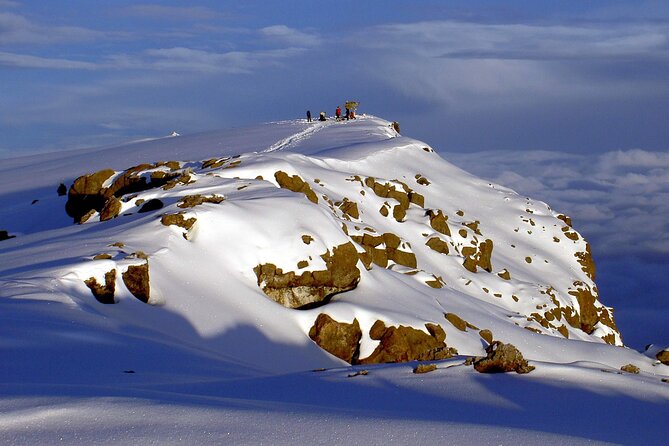
Summit day begins between midnight and 2 am. You leave Kibo Hut in darkness, wearing your warmest layers and using a headlamp or flashlight. The trail climbs through steep, loose scree or snow toward Gilman’s Point on the crater rim.
This is the hardest part of the trip. It is cold before sunrise, the ground can shift beneath your boots, and the ascent is long. The itinerary allows about 10 hours for the day, but that includes the summit climb, descent to Kibo, rest, lunch, and the continued walk to Horombo Hut.
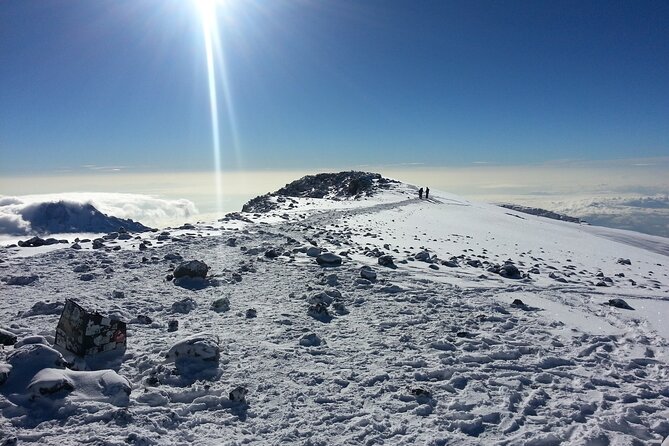
At Gilman’s Point, you reach the crater rim. From there, the route continues toward Uhuru Peak, the highest point in Africa. The final section can feel emotionally powerful, but it is not a place to hurry. Stay with the pace set by your guide, protect your hands and face from the cold, and keep drinking small amounts.
At Uhuru Peak, you have time for the traditional summit photograph. The bright sunrise and broad views are the reward for the night’s work. The exact weather and visibility are never guaranteed, so treat the summit itself as the goal and the view as a bonus.
The descent to Kibo is a relief, but it is not the end of the day. You stop for lunch and rest, then continue to Horombo Hut. Your knees may feel the downhill strain, and the total day is long. This is the day when the quality of the support crew matters most. Guides including Daniel and Martin have been singled out for staying attentive and helping hikers through difficult conditions.
Do not plan anything demanding for the evening after the climb. Eat, drink, and sleep. Your body has just handled the most strenuous section of the route.
Day 5: Horombo to Marangu Gate
The final morning starts with breakfast and a long descent through moorland toward Mandara Hut. You then continue through the forest to Marangu Gate.
The distance is listed at about 18 kilometers, taking five to seven hours. That is a substantial walk after summit day, though descending feels easier on your breathing. The lower forest can be wet and muddy, so gaiters and trekking poles are useful. At this altitude, you may be comfortable in shorts and a T-shirt, but keep rain gear and a warmer layer within reach.
At the gate, a vehicle takes you back to your hotel in Moshi or Arusha. Lunch is included, and the day ends with a chance to celebrate the achievement. The crew expects tips, which are not included in the price, so plan for that expense and carry suitable cash.
The final descent also gives you time to think about the range of environments you have crossed in only five days: rainforest, moorland, alpine desert, crater rim, and summit ice or scree. The route is direct, but it does not feel repetitive.
What the $1,014 price really covers
At $1,014 per person, this is not a budget day hike, but Kilimanjaro trips require a sizable support team. The stated inclusions cover guides, cooks, porters, crew wages, gate transfer, hut accommodation, four dinners, five breakfasts, and five lunches.
That support has real value. You are not arranging separate hut bookings, carrying all your food, or moving your own main luggage up the mountain. You also have people managing meals and route support while you focus on pacing and altitude.
There is one important point to settle before paying: park fees and tax are listed under exclusions, even though the price is presented as a complete per-person tour cost. Ask for the exact total and a written breakdown. Also budget for flights, visa costs, personal items, laundry, and crew tips.
The operator allows free cancellation up to 24 hours before the local start time. Any cancellation or change inside that window is not accepted for a refund. The tour can hold up to 100 people, although your actual hiking group size is not specified, so ask about that if you prefer a smaller team.
Food, huts, and the support team
You sleep in huts rather than tents. That is the route’s most practical advantage for many people, especially if you are new to multi-day mountain walking. Still, hut accommodation is basic, and the schedule does not provide details about room arrangements or facilities, so ask what to expect before departure.
Meals are included throughout the climb according to the supplied schedule. The food has been praised as good and tasty, and the cooks are part of the support team. You should still bring any personal snacks or dietary items you need, because the available information does not specify special diet arrangements.
The porters and guides are central to the trip. The strongest reports focus on a friendly, family-like atmosphere, singing and conversation, careful organization, and support for individual hikers. Names associated with past trips include Mudi, Tadey, Emmanuel, Migaan, Michael, Daniel, Martin, Gaby, Mathew, and David. Your assigned crew may be different, so treat these as examples rather than a promise.
A fair and sustainable salary is listed for the crew, which is encouraging. You should still confirm how tipping works and what amount is customary before departure. Tip money is not included.
Who should choose this five-day climb?
Choose this trip if you want:
- A nontechnical route with a clear path
- Hut sleeping rather than tent camping
- A guided climb with cooks and porters
- A direct five-day schedule
- A chance to reach Uhuru Peak without carrying the full expedition load
Think twice if you need a relaxed altitude schedule. Five days is not generous for acclimatization, and the itinerary includes a very long summit day followed by a descent to Horombo. The route may be technically accessible, but fitness and altitude response still decide how comfortable you feel.
It also suits people who value human support. The guide and crew are not a minor extra here. Their pacing, encouragement, meals, and attention can shape the entire experience.
Practical preparation for the Marangu Route
Bring warm layers for the summit, even if Moshi feels hot. The summit climb starts in darkness and remains very cold until you descend.
Pack rain protection and gaiters for the lower forest. The trail can become wet and muddy on Day 5, and your clothing needs to handle a sharp change from high-altitude cold to humid forest.
Use a headlamp or flashlight for the summit start. This is specifically required by the dark approach to Gilman’s Point, and a phone light is not a sensible substitute for a long climb.
Keep your walking pace slow from the first day. You are not trying to win the route below Horombo. Save strength for the altitude and the summit night.
Finally, discuss health concerns with the guide as soon as they appear. The schedule notes that altitude effects may begin on Day 2. Do not hide symptoms to protect your summit goal.
Should you book this Kilimanjaro trek?
I would book the five-day Marangu Route if I wanted hut accommodation, a direct trail, and a well-supported attempt at Uhuru Peak. The rainforest, Maundi Crater option, high moorland, Mawenzi views, and sunrise climb give the trip plenty of variety.
I would not book it without first confirming the total price, park fee treatment, group size, hut arrangements, and tipping expectations. I would also be honest about the five-day schedule. It is a serious climb with a difficult summit night, not an easy walk simply because the path is straightforward.
For a fit hiker who wants strong crew support and prefers huts to tents, this can be a sensible Kilimanjaro choice. For someone concerned about altitude or eager for a slower pace, ask about adding an acclimatization day before committing.
FAQ
Where does the Kilimanjaro hike begin?
The listed meeting point is Cable Millan, 3445 Rengua Road, Tanzania. The start time is 8:30 am, and pickup is offered.
How long is the Marangu Route experience?
The trek lasts approximately five days. The itinerary ends with transport from Marangu Gate back to a hotel in Moshi or Arusha.
Where do I sleep during the climb?
You sleep in huts at Mandara Hut, Horombo Hut, and Kibo Hut. The supplied information does not provide further details about room arrangements.
Is the summit climb done during the day?
No. The climb toward Gilman’s Point begins very early, between midnight and 2 am, so you need a headlamp or flashlight.
Are meals included?
Four dinners, five breakfasts, and five lunches are listed as included. Personal snacks and any special dietary arrangements are not specified.
Are park fees and tipping included in the $1,014 price?
Crew wages, guides, cooks, porters, transfers, huts, and listed meals are included. Park fees and tax, tipping, visas, flights, personal items, and laundry are listed as excluded. Confirm the final total before booking.
More Five-Day Trips in Kilimanjaro
- Kilimanjaro Climbing 5 days Marangu route
★ 5.0 · 22 reviews - Best 5 Days Marangu Route Climbing on Kilimanjaro
★ 5.0 · 12 reviews - Our Top 5-Day Kilimanjaro Marangu Route: 2025 and 2026 Updates
★ 5.0 · 11 reviews - Conquer Kilimanjaro: 5-Day Marangu Route Adventure
★ 5.0 · 9 reviews
Just added around Kilimanjaro
- 6 days Machame route climbing Mt.Kilimanjaro★ 5.0 · 8 reviews
- machame route★ 5.0 · 16 reviews
- Mt Kilimanjaro 6 days Marangu route hike★ 5.0 · 3 reviews
- Private Cycle to Kilimanjaro Bike Park Safari★ 5.0 · 6 reviews
- West Kilimanjaro cycling Adventures★ 4.5 · 8 reviews
- Kilimanjaro Climb • Marangu Route ~ 9 Day★ 5.0 · 4 reviews
- 3 Days Private E-Bike Tour in West Kilimanjaro★ 5.0 · 3 reviews
- Kilimanjaro Climb • Machame Route ~ 10 Day★ 5.0 · 6 reviews
Marangu Route Climbs, compared.
Browse the lists this tour appears in