
Reviewed · MARANGU ROUTE CLIMBS
5 Days Kilimanjaro Trekking – Marangu Route
Kilimanjaro’s Marangu Route gives you a direct path to Africa’s highest point, with rainforest at the bottom and snow near Uhuru Peak. The five-day plan includes hut accommodation, a useful acclimatization day at Horombo, and a private guide team. I especially like the gentle walking pace praised in the trip feedback and the chance to see giant senecio, lobelias, Mawenzi, and Kibo along the way.
The price of $1,460 per person covers the major trek costs, including park fees, guide, pickup, four nights, lunch, and private transport. The main concern is the schedule: five days is a short time for acclimatization, so the summit push is demanding, and you should confirm exactly which meals are included before booking.
Key points to know before you book
- The summit night begins around midnight to 2 a.m., with four to five hours of steep climbing to Gilman’s Point, followed by another one to two hours to Uhuru Peak.
- You sleep in huts rather than tents, including stays around Mandara and Horombo.
- An acclimatization day at Horombo is built into the schedule, with an optional walk to Zebra Rocks and Mawenzi Tarn Hut.
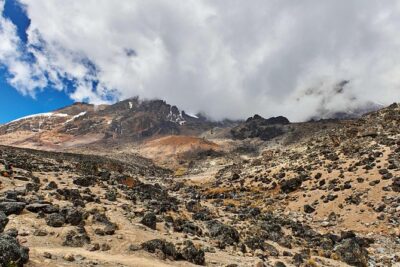
- The route crosses several climate zones, from wet rainforest to open moorland, semi-desert terrain, scree, and possible snow.
- This is a private tour, so the pace and attention are focused on your own group.
- The crew has received especially strong praise for pacing, food, care, and porter support, with past trips naming guides Alex and Godfrey.
Why Marangu is often called the Coca Cola Route
Marangu is often described as the easier Kilimanjaro route because the trail is fairly direct and uses hut accommodation. That nickname can be misleading, though. The route may be simpler logistically than camping routes, but the mountain is still 5,895 meters high, and the final ascent is hard.
I like Marangu for two clear reasons. First, you do not need to sleep in a tent every night. Second, the changing scenery is easy to follow: thick forest gives way to open moorland, then to stark high-altitude terrain around Kibo. You get a strong sense of the mountain’s different zones without adding extra camping equipment to your load.
The drawback is the five-day timetable. The itinerary includes one acclimatization day at Horombo, which helps, but a short ascent gives your body less time to adjust to thin air. You need a moderate fitness level, patience, and a willingness to turn back if altitude symptoms become serious.
More Marangu Route climbs:
- Kilimanjaro climb, Marangu route (6-day)
★ 5.0 · 72 reviews - Climbing Kilimanjaro – Marangu Route
★ 5.0 · 65 reviews - Private Full Day Hiking Experience to Marangu Route
★ 5.0 · 61 reviews
What the $1,460 price covers
At $1,460 per person, this is not simply a guided walk. The cost includes all fees and taxes, professional guide service, hotel pickup and drop-off, four nights of accommodation, lunch, and private transport. That makes the package easier to budget than arranging each major part separately.
The private format also matters. You are not placed into a large mixed group, so your party can discuss pace and comfort directly with the guide. Past feedback puts repeated emphasis on the crew’s calm pace, patient support, food, and service from guides, cook, and porters. One earlier trip identified the guides as Alex and Godfrey, though you should confirm the current guide team before departure.
There are still a few details to clarify. Alcoholic drinks cost extra, and souvenir photos are not included. The daily plan refers to breakfast, lunch, and dinner at different points, but the stated inclusions specifically list lunch. Ask the operator to confirm the full meal plan, as well as what equipment is supplied and what you must bring yourself.
The price also does not remove the need for proper preparation. You should budget for suitable clothing, personal snacks if you want them, tips for the mountain crew, and any extra accommodation or airport arrangements outside the stated pickup and drop-off service.
Day 1: Marangu Gate and the first rainforest climb
The trip begins with an early pickup from the airport or your accommodation. You then drive to the Marangu starting gate, where the trek begins.
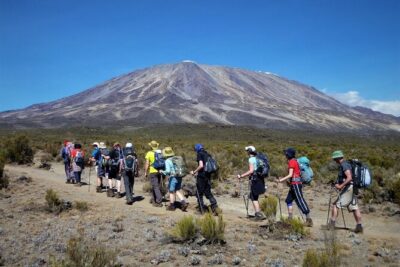
Kilimanjaro is the world’s tallest free-standing mountain, rising to 5,895 meters above sea level. It has three main volcanic centers: Shira, Mawenzi, and Kibo. The Marangu Route takes you toward Kibo, the snow-capped summit cone.
The first major change is the rainforest. Expect damp conditions, thick vegetation, and a path that feels very different from the exposed upper mountain. This is a good day to settle into a slow rhythm rather than burn energy trying to move quickly.
The supplied schedule names Mandara Hut as the first overnight area, although the first stop description does not provide a walking time or distance. That is one detail worth confirming before departure. You should also ask what time you leave the gate and how long the transfer from Moshi or the airport is expected to take.
Rain is possible in the forest, and the tour operates in all weather conditions. Keep rain protection near the top of your pack, not buried under spare clothing. Wet socks on the first day can create problems later.
Day 2: Leaving the trees for Horombo Hut
The walk from Mandara Hut to Horombo Hut takes about three to four hours. After roughly 15 minutes, the forest begins to open, and you move onto rising moorland.
This section is one of the route’s visual highlights. You can see Mawenzi and Kibo, while giant senecio and lobelias give the high slopes a distinctive look. These plants make the mountain feel unlike an ordinary hiking destination. They are a reminder that you are entering a cold, high-altitude plant zone.
Horombo Hut sits at about 3,700 meters. That increase matters. You might notice a headache, unusual tiredness, poor sleep, or shortness of breath. The schedule warns that altitude effects may begin here, so do not treat this as a normal night in the mountains.
I would keep your daypack light and your walking pace steady. Tell the guide early if you feel unwell. A guide who knows your condition can make better decisions than one who hears about symptoms only after dinner.
Past trip feedback gives the crew high marks for moving at an easy pace and slowing down when needed. That is exactly the approach you want on this section. Fast walking saves little time but can make the next day much harder.
More treks and hikes around Kilimanjaro:
- Kilimanjaro climb by Lemosho Route (7-day)
★ 5.0 · 651 reviews - Kilimanjaro climb, Machame Route (7-day)
★ 5.0 · 262 reviews - 8-Day Small-group Lemosho Kilimanjaro Summit Trekking
★ 5.0 · 186 reviews - Kilimanjaro Climbing Lemosho Route 8 Days.
★ 5.0 · 186 reviews
Day 3: The Horombo acclimatization day
Day three stays around Horombo Hut and is described as optional, but I would regard it as an important part of the plan. You can rest at camp or take a higher walk toward Zebra Rocks at 4,200 meters and Mawenzi Tarn Hut at 4,300 meters before returning to Horombo.
This is the day that gives the five-day schedule its best chance of working. Walking higher and sleeping lower can help your body begin adjusting to altitude, although it does not guarantee that you will avoid problems. You also get a chance to see more of the area without carrying your full overnight load.
If you feel strong, the optional walk adds useful scenery and altitude practice. If you have a headache or feel weak, resting is the sensible choice. You should not feel pressured to take the optional hike simply because it appears in the itinerary.
The Horombo area also gives you time to ask questions, check clothing, refill water, and prepare for the summit attempt. Use it well. The next day is the hardest part of the trek, and small problems with gloves, headlamps, layers, or snacks become much more serious during a midnight start.
Day 4: The long push to Gilman’s Point and Uhuru Peak
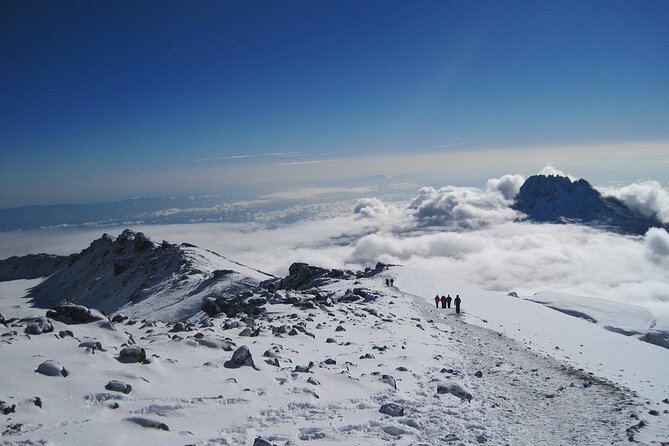
The summit day begins very early, between midnight and 2 a.m. You climb steep scree or snow toward Gilman’s Point, located on the crater rim at about 5,861 meters. The ascent takes roughly four to five hours.
This is the part of the trip that demands the most from you. It will be dark, cold, and slow. The combination of thin air, loose ground, and limited sleep can make each step feel deliberate. The guide’s pace matters greatly here, and the feedback repeatedly highlights patient staff and a steady rhythm.
From Gilman’s Point, you continue for another one to two hours toward Uhuru Peak at 5,895 meters, the highest point in Africa. The route description promises broad views, but conditions can change quickly at this height. You may have clear views, cloud, wind, snow, or a mixture of all four.
Give yourself permission to focus on the next few steps rather than the full distance. Keep drinking as directed, eat small amounts if you can, and protect your hands and head from the cold. Your summit photograph is part of the experience, but reaching the highest safe point for your condition matters more than a picture.
After the summit, you descend to Kibo for lunch and a rest, then continue to Horombo Hut for dinner and the night. The descent takes another three to four hours. This makes the summit day extremely long, even though downhill walking may feel easier at first.
The return to Horombo is not an afterthought. Your legs may be tired, and the loose scree can be awkward on the way down. Keep your poles handy and let the guide know if you need a slower pace.
Day 5: Forest descent and the return to Moshi
After breakfast, you descend through moorland to Mandara Hut at about 2,700 meters. From there, the route continues through lush forest on a good path toward Marangu Gate at about 1,830 meters.
The lower trail can be wet and muddy. Gaiters and trekking poles are specifically recommended, and I would keep rain gear accessible even if the morning starts dry. At lower elevations, shorts and a T-shirt may be comfortable, but keep warmer layers and waterproof clothing close until you are sure the weather has settled.
A car waits at the gate for the return journey. The plan includes a hot lunch before driving back to Moshi or Arusha for an overnight stay, or to the airport if you are flying out that day. If you have a same-day flight, confirm the timing carefully. The descent, gate formalities, lunch, and road transfer all take time.
This last day is more than a simple exit. It lets you feel the temperature rise as you move from high moorland back into forest, then toward town. After the stark summit terrain, the greenery at the bottom can feel almost startling.
Food, huts, guides, and porter support
The strongest praise in the supplied feedback centers on the people supporting the climb. The food is described as excellent, the pace as well judged, and the guides, cook, and porters as helpful and caring. Another account says the service from the whole crew helped the entire group reach Uhuru Peak.
That matters on Kilimanjaro. You spend several days relying on a small team for route decisions, meals, camp routines, and altitude monitoring. Good communication is more important than polished sales language.
Accommodation is in huts, which is one of Marangu’s main practical advantages. The itinerary refers to Mandara Hut, Horombo Hut, and Kibo, with four nights included overall. The supplied information does not describe the hut layout, bedding, bathroom facilities, or sleeping capacity, so ask for current details before you go.
The food reports are encouraging, but dietary needs must be given at booking. Vegetarian meals are available if requested in advance. You should also state allergies clearly rather than assuming the kitchen will know.
The package refers to professional guides and support from a cook and porters in the trip feedback. Ask how porter loads are handled and what you should carry yourself. Even with support, your daypack should hold the items you need during the day, including water, rain gear, warm layers, snacks, and personal medication.
Fitness, altitude, and the short schedule
You need a moderate level of physical fitness for this trip. That does not mean you must be an elite athlete, but you should be ready for several days of uphill walking and a very long summit day.
The largest concern is altitude, not technical climbing. The route involves no mention of ropes or specialist climbing skills, but the summit reaches nearly 5,900 meters. The symptoms described in the itinerary include possible altitude effects beginning at Horombo. Take that warning seriously.
The day at Horombo is valuable, but five days remains a compressed schedule. You may prefer a longer itinerary if you have never been at high altitude or if you want more adjustment time. The supplied information does not provide a summit success rate, so you should not assume that reaching Uhuru Peak is guaranteed.
Tell the guide about symptoms as soon as they appear. You should also be ready to follow the guide’s safety advice, including stopping or descending if necessary. A summit is optional. Returning safely is not.
Who will get the most from this trek
This trip suits you if you want a private Kilimanjaro climb with hut accommodation, a clear route, and a compact five-day plan. It is also a good fit if you value a personal guide team and prefer not to camp.
You will likely appreciate the route if you want several distinct scenery zones in one climb. The rainforest, moorland, giant plants, Mawenzi views, semi-desert surroundings, and Kibo summit area give the trek plenty of visual variety.
It may be less suitable if you want a relaxed altitude schedule or dislike midnight starts. The summit day is long, and the short itinerary leaves less room for your body to adjust. I would favor a longer climb if your priority is giving yourself the best possible acclimatization plan.
The experience is private, but the information does not state the maximum group size. Ask how many people may join your booking and how many guides and porters will support the group.
Booking, weather, and cancellation details
Pickup is offered from the airport or your accommodation, and the activity operates every day across the stated operating period. It runs in all weather, so you need proper rainwear, warm layers, and footwear suited to mud and cold.
Confirmation is provided at booking. Children must be accompanied by an adult, and the child rate applies only when sharing with two paying adults. The activity is described as private, so only your group participates.
You can cancel up to 24 hours before the start time for a full refund. Changes made less than 24 hours before the start are not accepted, and late cancellations are not refunded. The operator also requires a minimum number of participants for the experience to operate. If that minimum is not reached, you are offered another date or experience, or a full refund.
FAQ
How long is the Marangu Route tour?
The tour lasts approximately five days and includes four nights of accommodation.
Where does the trek begin?
The trek begins at the Marangu starting gate. Pickup is available from the airport or your accommodation before the drive to the gate.
How high is Uhuru Peak?
Uhuru Peak is listed at 5,895 meters above sea level.
Where do I sleep during the trek?
The itinerary includes hut accommodation, with stops at areas including Mandara Hut, Horombo Hut, and Kibo.
Is an acclimatization day included?
Yes. Day three is based at Horombo Hut and can be used for rest or for a higher walk to Zebra Rocks and Mawenzi Tarn Hut before returning to Horombo.
What meals are included?
Lunch is listed among the inclusions. The daily plan also refers to breakfast and dinner, so you should confirm the complete meal arrangement with Afrishare before booking. Vegetarian food is available if requested in advance.
Is this a private tour?
Yes. Only your group participates in the activity.
Can I cancel for a full refund?
Yes, if you cancel at least 24 hours before the experience start time. Cancellations made later are not refunded, and changes within 24 hours are not accepted.
Should you book this five-day climb?
I would book it if you want the convenience of huts, private support, a direct route, and a price that includes the main park and transport costs. The crew’s strongest qualities appear to be its patient pacing, good food, and attentive guide and porter support.
I would pause before booking if this is your first high-altitude trek and you want the most forgiving acclimatization schedule. Ask for the current guide names, group size, hut details, equipment list, and full meal plan. If those answers are clear and you are comfortable with the demanding summit day, this Marangu Route package offers a practical and focused way to reach Kilimanjaro’s highest point.
More Five-Day Trips in Kilimanjaro
- Kilimanjaro Climbing 5 days Marangu route
★ 5.0 · 22 reviews - 5 Days Marangu Route Kilimanjaro hiking
★ 5.0 · 13 reviews - Best 5 Days Marangu Route Climbing on Kilimanjaro
★ 5.0 · 12 reviews - Our Top 5-Day Kilimanjaro Marangu Route: 2025 and 2026 Updates
★ 5.0 · 11 reviews
Just added around Kilimanjaro
- 6 days Machame route climbing Mt.Kilimanjaro★ 5.0 · 8 reviews
- machame route★ 5.0 · 16 reviews
- Mt Kilimanjaro 6 days Marangu route hike★ 5.0 · 3 reviews
- Private Cycle to Kilimanjaro Bike Park Safari★ 5.0 · 6 reviews
- West Kilimanjaro cycling Adventures★ 4.5 · 8 reviews
- Kilimanjaro Climb • Marangu Route ~ 9 Day★ 5.0 · 4 reviews
- 3 Days Private E-Bike Tour in West Kilimanjaro★ 5.0 · 3 reviews
- Kilimanjaro Climb • Machame Route ~ 10 Day★ 5.0 · 6 reviews
Marangu Route Climbs, compared.
Browse the lists this tour appears in